
Reviewed · FOOD TOURS
Tokyo: 3-Hour Food Tour of Shinbashi at Night
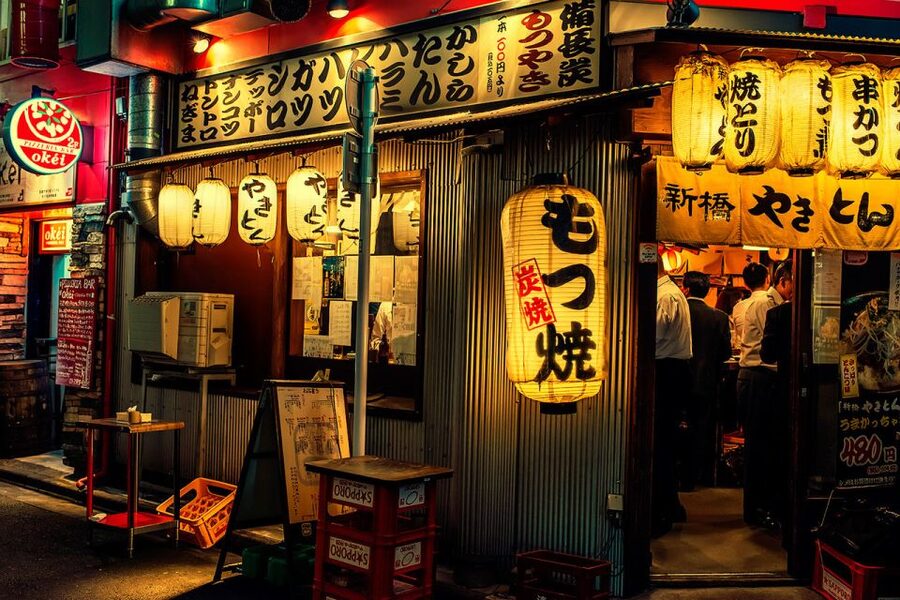
Shinbashi after dark is less about postcard Tokyo and more about the city’s office crowd letting its hair down. This three-hour food walk takes you through narrow backstreets, small eateries, and drinking spots where local workers gather after work. You can expect ramen, smoky Wagyu, regional sake, and a traditional dessert, with your guide explaining what you are eating and how to act at the table.
I like two things here. First, the tour gives you a useful look at Japanese pub culture, not just a checklist of famous foods. Second, a group capped at 10 people makes it easier to ask questions and follow your guide into places you might skip on your own. The main consideration is price: at $170 per person, this is not a cheap meal, and extra drinks, food, transportation, and gratuity cost more.
Key points to know before you book
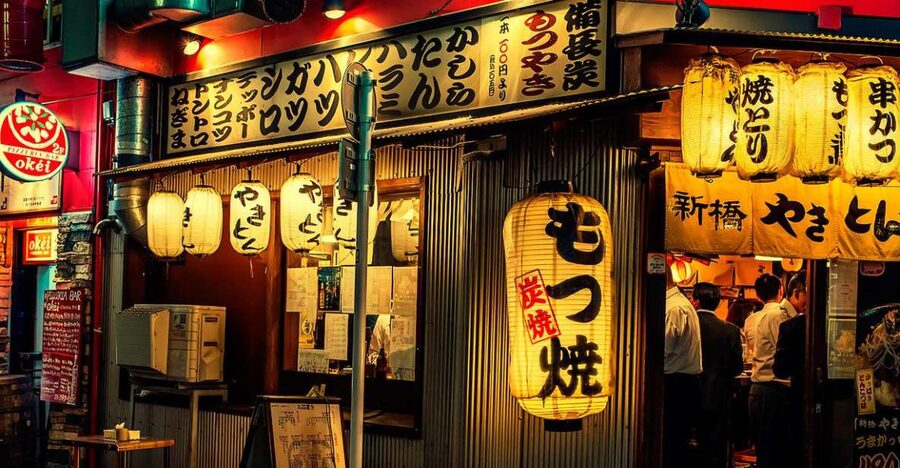
- Shinbashi after work: Walk through a retro office district where Japan’s salary workers gather for food and drinks after the day ends.
- Several local stops: Expect dishes that can include ramen, Wagyu, sake, and dessert rather than one large restaurant meal.
- Guides add cultural context: Guides such as Ray, Yappy, Francois, Tommy, and Marc have led groups with food explanations, restaurant tips, and help with Japanese dining customs.
- Small group size: The tour accepts no more than 10 participants, which suits people who want conversation without a large coach-group feel.
- Adults only: Everyone must be at least 20 years old, and smoking is allowed in most parts of Shinbashi.
- Exact meeting point matters: Meet in front of the decommissioned steam engine at the Hibiya exit of Shinbashi Station, and arrive early.
Why Shinbashi is a good place for a Tokyo food walk
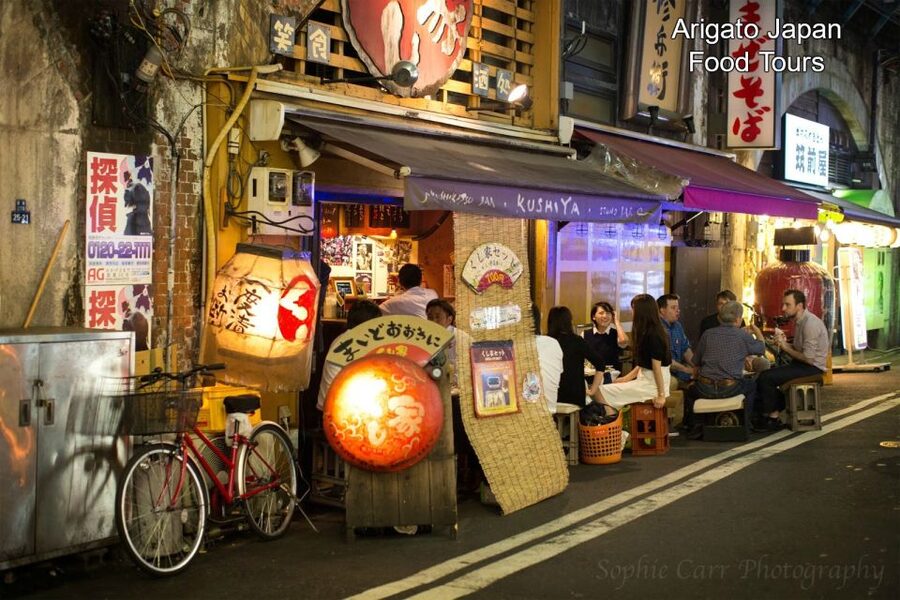
Shinbashi has a different mood from Tokyo’s polished shopping districts. It is known for compact restaurants, small bars, office workers, and old-fashioned drinking streets packed around the station. The area makes sense for a night food tour because the food is tied closely to the working day. People come here to eat quickly, share plates, have a drink, and unwind.
That setting gives the tour more purpose than simply moving from one restaurant to another. You get to see how food fits into ordinary city life. The focus is not on grand dining rooms or famous chef counters. It is on the places that help office workers relax after a long day.
I also like the timing. A three-hour evening tour leaves most of your day free for temples, museums, shopping, or a day trip. It also puts you in Shinbashi when the neighborhood has its strongest character. The tradeoff is that the streets may feel crowded, smoky, and noisy. That is part of the setting, but it may not suit anyone seeking a quiet or polished night out.
Other food tours in Tokyo people book:
- Tokyo: Shinjuku Food Tour (13 Dishes at 4 Local Eateries)
★ 5.0 · 6,603 reviews - Tokyo: Shinjuku Food Tour (15 Dishes and 4 Eateries)
★ 4.9 · 2,033 reviews - Best of Shinjuku: Izakaya Food Tour (4 Stops, 14+ Tastings)
★ 5.0 · 1,863 reviews
Meeting the guide beside the steam engine
The meeting point is in front of the decommissioned steam engine at the Hibiya exit of Shinbashi Station. This is a useful landmark, but Shinbashi has several exits and can feel confusing when you first arrive. I would allow extra time to find the correct side of the station rather than aiming to arrive at the last minute.
The guide can wait only five additional minutes after the scheduled start. Once the walk begins, the guide cannot provide directions by phone. This rule protects the timing of the meal stops and the provider’s arrangements with the restaurants, but it also means you need to be organized.
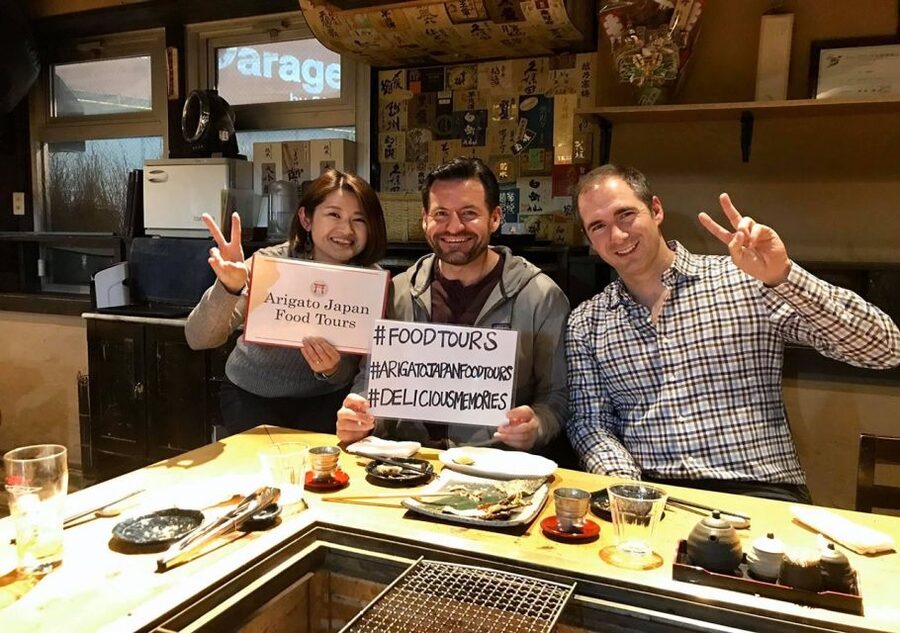
Your English-speaking guide is a major part of the experience. Guides who have led this tour include Ray, Francois, Tommy, Marc, Yappy, Yoko, Ryan, Anne, and others. The tone can vary by guide, but the best reports point to clear food explanations, cultural background, practical Tokyo advice, and a relaxed way of handling the group.
One especially useful feature is the attention to small social details. Ray used visual aids to show how to bless a meal and thank restaurant staff when leaving. Those gestures can feel awkward when you do not know the custom, so a quick demonstration is worth more than a page in a guidebook.
Walking the backstreets with office workers
The walking is part of the meal, not just transportation between restaurants. Your guide leads you through Shinbashi’s lesser-known streets and points out the places that are easy to miss when you stay on the main roads. The tour description does not promise a fixed restaurant list, so you should think of the stops as a guided introduction to the neighborhood rather than a guaranteed set menu at named venues.
The local setting is the main attraction. You may see compact dining rooms, after-work groups, and the easy movement between food and drink that defines Japanese pub culture. The tour is designed to let you eat in the same general setting as local workers, though the exact restaurants and dishes can change.
This is where a small group helps. Ten people or fewer can usually fit into tighter spaces more easily than a large tour group. It also gives you a better chance to ask why a dish is served in a particular way or how to order something similar later.
Still, Shinbashi is not a quiet district. Smoking is permitted in most areas, and that is important for anyone sensitive to smoke. You should also wear comfortable shoes. The walk is not presented as strenuous, but you will be on your feet for three hours, with food stops along the way.
Ramen, the warm first taste of the evening
Ramen is one of the clearest ways to begin understanding Japanese comfort food. Here, the appeal is not simply the noodles. It is the hot broth, the savory umami taste, and the quick, focused rhythm of eating in a local noodle shop.
Expect a steaming bowl that gives the evening a warm start. Your guide can explain the ingredients and the role ramen plays in everyday Japanese dining. This is useful if you have eaten ramen abroad but want more context for how the dish fits into Japan.
A ramen stop also comes with a practical caution: the meal can be filling. Since the tour includes several stops, pace yourself. You do not need to finish every bite immediately, and you may want to avoid a large meal before meeting the group.
The exact ramen style is not specified, so you should not book this expecting a particular broth, noodle thickness, or topping. The value is in trying the dish as part of a larger food route and learning how your guide frames it.
More eating your way round Tokyo:
- Tokyo Night Foodie Tour in Shinjuku – Seasonal Sushi, Wagyu Beef
★ 5.0 · 1,161 reviews - Eat and Drink Like a Local: Tokyo Ueno Food Tour-Taverns&Ramen
★ 5.0 · 957 reviews - Tokyo: Shibuya Food Tour (13 dishes and 4 Eateries)
★ 5.0 · 770 reviews - Tsukiji Fish Market: Street Food & Culture Walking Tour
★ 5.0 · 669 reviews
Wagyu with a smoky edge
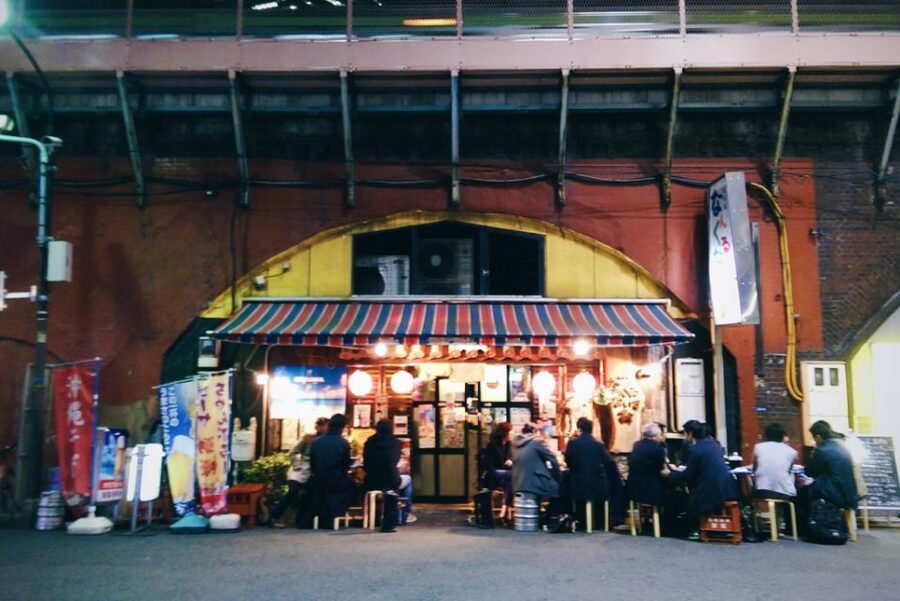
The Wagyu stop brings a richer flavor to the tour. The description emphasizes buttery meat seared until it develops a delicate smoky char. That makes it a contrast to the brothy ramen and shows how the evening moves across different textures and cooking methods.
Wagyu can be expensive when ordered alone, so including a tasting within a guided food route helps explain part of the $170 price. You are not only paying for a plate of meat. You are paying for several food stops, restaurant coordination, a guide, and an evening built around the neighborhood.
Keep your expectations measured. This is not described as a full Wagyu dinner or a luxury steak meal. It is one part of a three-hour sequence, and portions may be tasting-sized. The tour works best if you value variety and explanation more than a large serving of one premium ingredient.
Regional sake and the difference between a drink and a tasting
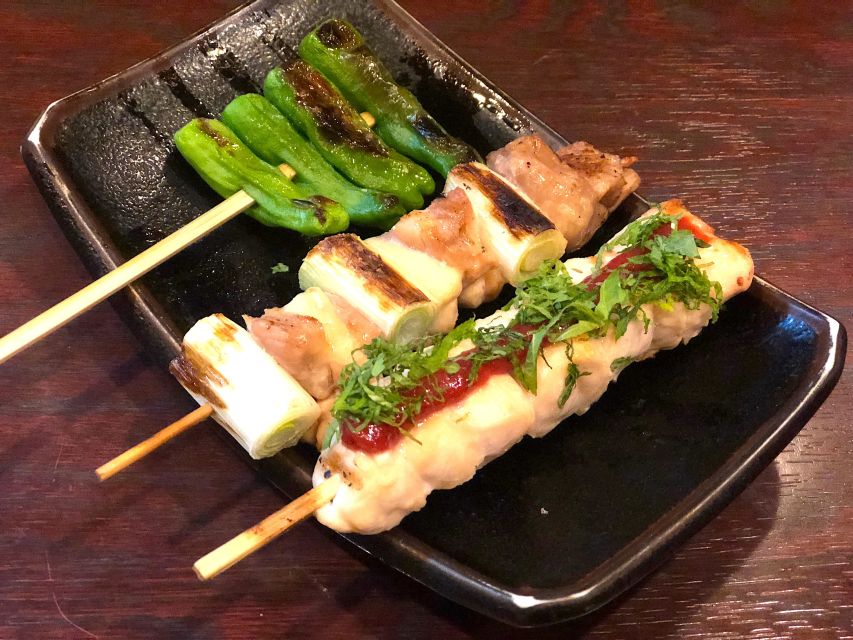
The sake tasting is one of the more distinctive parts of this experience. You will try regional sake and pay attention to how its aroma, crispness, and flavor change from one sip to the next. The tasting gives the drink a place in Japanese food culture instead of treating it as a simple alcoholic extra.
Sake is often called nihonshu in Japan, a useful term to know when talking about brewed rice alcohol. One person who joined the tour discovered through the tasting that they did like nihonshu after all. That is a good reason to keep an open mind. Sake is not one single flavor, and regional examples can differ in sweetness, dryness, aroma, and body.
The tasting is included, but additional drinks are not. If you want more sake, beer, or another beverage, you pay at your own expense. You should also remember that this is an adults-only experience, with a minimum age of 20.
Because alcohol is part of the evening, the tour may be a better fit for people who enjoy trying drinks in moderation rather than for anyone looking for a strictly food-only walk. You can ask your guide about the tasting, but the supplied details do not specify the number of pours or exact sake regions.
Dessert and the final taste
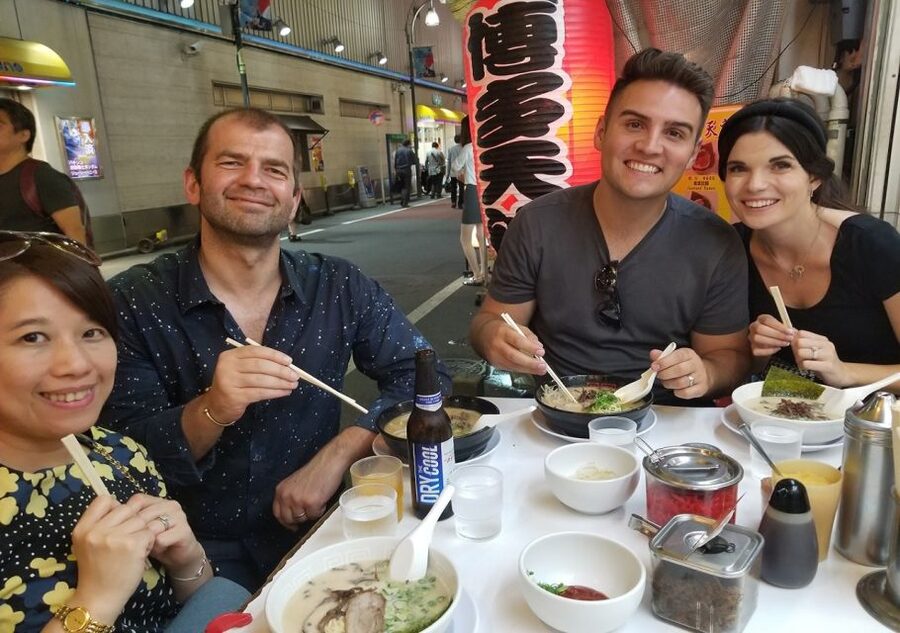
The dessert provides a lighter finish after the savory stops. You will try a traditional Japanese sweet, although the specific dessert is not guaranteed. That uncertainty is worth noting if you have a particular dish in mind.
I like the inclusion of dessert because it gives the meal a clear shape. You move from broth to meat, from savory food to sake, and then finish with something sweet. It also gives your guide another chance to explain how traditional sweets fit into Japanese eating habits.
Do not expect dessert to be a separate pastry-shop visit unless your guide’s route calls for it. The experience is built around several food stops, and the final sweet is part of that sequence.
What the guide adds beyond the food
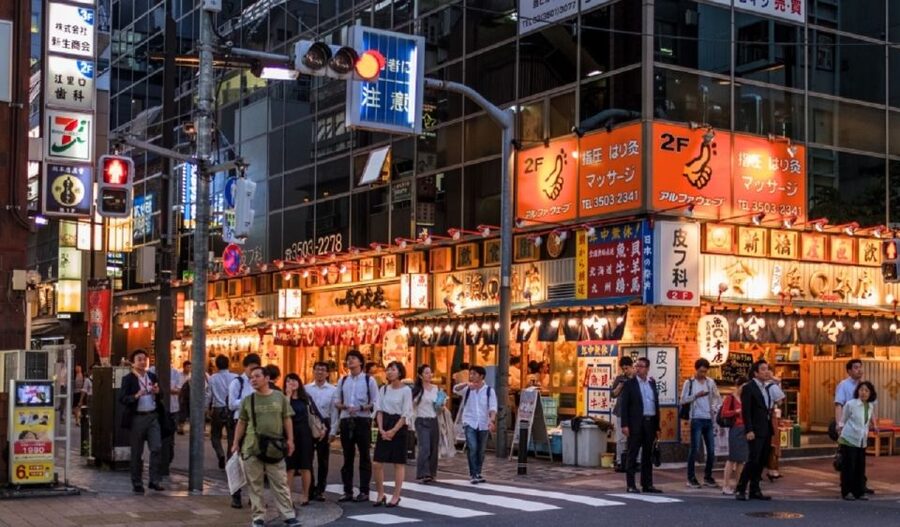
A good food tour should help you make sense of what you are eating. This one also aims to help with the rest of your time in Japan. Guides have offered suggestions for other places to eat, explained pub customs, and answered questions about local food.
The human side matters here. Francois arranged a birthday surprise for one group and later joined them for karaoke. Yappy has led tours that included an optional karaoke experience in a private room. Karaoke is not part of the advertised three-hour food tour, so treat it as a possible extra rather than a promised stop. If it interests you, ask about availability and cost.
These details show how the evening can become social without forcing you into a formal performance. You can enjoy the food walk on its own, or use it as a first step into Tokyo’s after-work nightlife.
The guide style will not be identical every time. Names and personal touches can change, and no tour can guarantee a particular guide. What you can count on is an English-speaking leader, food stops, a sake tasting, and a small group.
Is $170 good value for three hours?
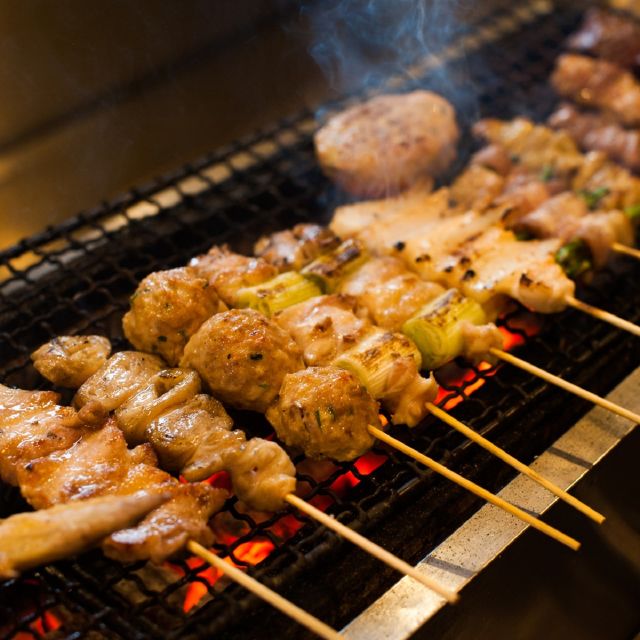
At $170 per person, this tour is a splurge. You pay for more than the food itself, since the price also covers the guide, the planned route, the sake tasting, and access to several establishments. You also avoid the uncertainty of choosing restaurants in an unfamiliar district.
I see the value most clearly for a first visit to Tokyo, especially if you are nervous about ordering in small local places. The guide gives you a starting point, teaches you some dining manners, and can suggest places for later in your trip. The tour also saves you from spending an evening guessing which door to enter.
The value is weaker if you already know Shinbashi well, speak Japanese, or prefer to order your own food at ordinary prices. Transportation, gratuity, extra food, and extra drinks are not included. Hotel pickup can be arranged for an added fee, but the standard tour begins at the station.
A free cancellation policy applies when you cancel at least 24 hours ahead, and you can reserve now and pay later. Those options help if your Tokyo schedule is still changing, but the important practical issue remains the meeting time. Arrive early.
Who should book this Shinbashi food tour?
I would recommend it to you if you want food paired with local context. It suits first-time visitors, couples, solo travelers who like meeting a small group, and anyone curious about Japanese drinking streets without wanting to plan every stop alone.
It is also a good match for people who want a social evening but do not need a formal cooking class. You will walk, eat, listen, and ask questions. The tour is less suitable if you dislike alcohol, smoke, crowded local streets, or tasting-style portions.
Families with children cannot join because everyone must be at least 20. You should also choose another activity if you need hotel pickup included in the standard price or if you want a fixed menu with exact restaurant names confirmed in advance.
Should you book it?
Book this tour if you want to see Tokyo through its after-work food culture rather than only its major sights. The combination of Shinbashi’s backstreets, ramen, Wagyu, sake, dessert, and a small English-speaking group gives you a useful introduction to everyday dining in the city.
Skip it if $170 feels too high for a three-hour meal or if you prefer to explore independently. For the right person, the real value is the guidance: you get a neighborhood route, several tastes, help with local customs, and a better sense of where Tokyo workers go when the office day ends.
FAQ
How long is the Shinbashi food tour?
The tour lasts three hours. Starting times vary, so check availability when booking.
Where does the tour meet?
Meet in front of the decommissioned steam engine at the Hibiya exit of Shinbashi Station.
How large is the group?
The tour is limited to 10 participants.
What food and drinks are included?
The tour includes local dishes at several food stops, a sake-tasting experience, and a traditional dessert. The food stops can include ramen and Wagyu.
Are additional drinks included?
No. Additional drinks or food can be purchased at your own expense.
Can children join the tour?
No. Only adults aged 20 and over are permitted.
What happens if I am late?
The guide can wait only five minutes after the scheduled start time. After that, the tour departs, and the guide cannot provide directions by phone once the walk has begun.
Just added in Tokyo
- The 10 Tastings of Tokyo With Locals: Private Street Food Tour★ 5.0 · 48 reviews
- Small Town in the Big City: Tasting Tokyo’s Kichijoji★ 5.0 · 195 reviews
- Small Town in the Big City: Tasting Tokyo’s Kichijoji★ 5.0 · 16 reviews
- EXCLUSIVE Tokyo Secret: Kichijoji Small-Group Food & Bar Hopping★ 5.0 · 29 reviews
- Explore Kichijoji: Walk Through One of Tokyo’s Beloved Districts★ 5.0 · 21 reviews
- :Tokyo,Shibuya/ Pro Photography in Kimono / English-Friendly★ 5.0 · 26 reviews
- 【R34】Tokyo:Private Daikoku tour in Modified R34★ 4.9 · 92 reviews
- Tokyo:Calligraphy &Make your original folding fan in Asakusa★ 5.0 · 62 reviews
Food Tours, compared.
Shinjuku Food Tour (13 Dishes at 4 Local Eateries)
Read our review →
Osaka Food Tour: 13 Dishes at 5 Local Eateries
Read our review →
Best of Shinjuku: Izakaya Food Tour (4 Stops, 14+ Tastings)
Read our review →
Kyoto Night Foodie Tour in Gion (9+ dishes + 6 Sake tastings)
Read our review →
Hungry Osaka Street Food Tour:15 Tastings & 3 Drinks with a Local
Read our review →
Tokyo Night Foodie Tour in Shinjuku – Seasonal Sushi, Wagyu Beef
Read our review →
Osaka Local Foodie Walking Tour in Dotonbori and Shinsekai
Read our review →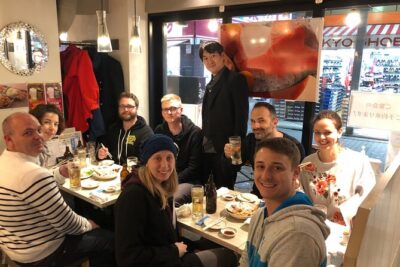
Eat and Drink Like a Local: Tokyo Ueno Food Tour-Taverns&Ramen
Read our review →Browse the lists this tour appears in