
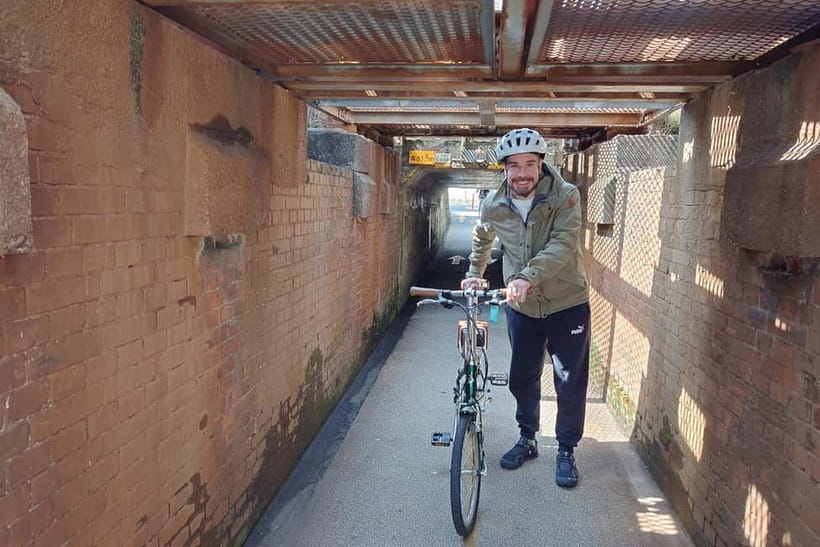
Reviewed · CYCLING TOURS
Tokyo: 3h Private E-bike Tours, Starting at Your Hotel
Tokyo makes far more sense from a bicycle seat than from behind a taxi window. On this private e-bike tour, Kazuma meets you at your hotel, then guides you across a mix of famous districts, riverside paths, shrines, and ordinary back streets. The route covers roughly 15 to 20 kilometers, with frequent short stops.
I like the hotel pickup and drop-off, especially in a city where finding an unfamiliar meeting point can cost precious time. I also like the easygoing e-bikes, which take the sting out of hills and let you cover much more ground than a walking tour. Kazuma is praised for careful riding, excellent English, historical context, and taking useful group photos along the way.
The main consideration is the price: $141 per person is a serious outlay for three hours. You also need to meet the height and weight limits, wear proper cycling clothes, and accept that your chosen sights may require an extra fee or a changed route.
Key points at a glance
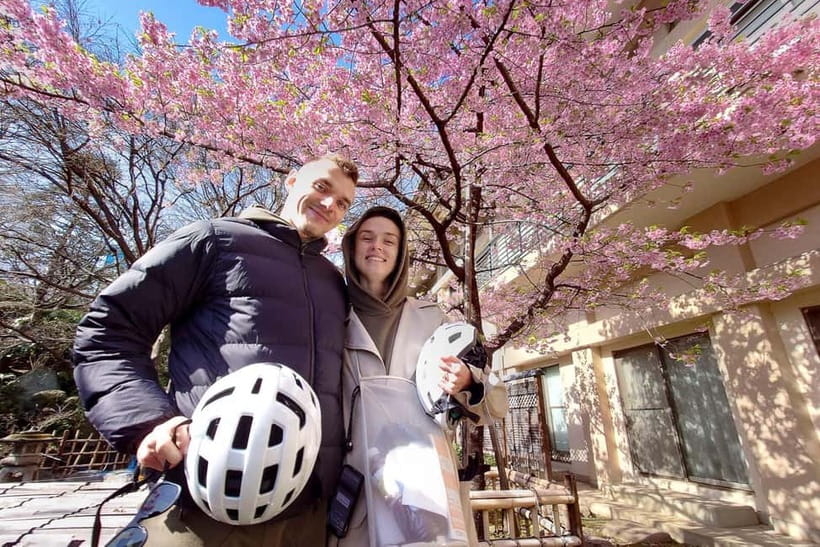
- Your hotel is the meeting point: Find Kazuma in the lobby with a bicycle helmet, five minutes before departure.
- A 15 to 20 km Tokyo sampler: Cover several districts and switch quickly between skyscrapers, shrines, grand avenues, and quiet streets.
- A private route, not a fixed parade: Ask for a different start time, extra duration, or particular sights, with added charges where applicable.
- Kazuma makes safety part of the experience: Bikes are adjusted to fit, and the pace includes regular stops for water, photos, and explanations.
- The e-bike does the hard work: You still pedal, but the motor helps on hills and makes the long distance manageable.
- Know the limits before booking: The tour suits people aged 10 and over, between 145 and 185 centimeters tall and under 100 kilograms.
Why a bicycle is a smart way to see Tokyo
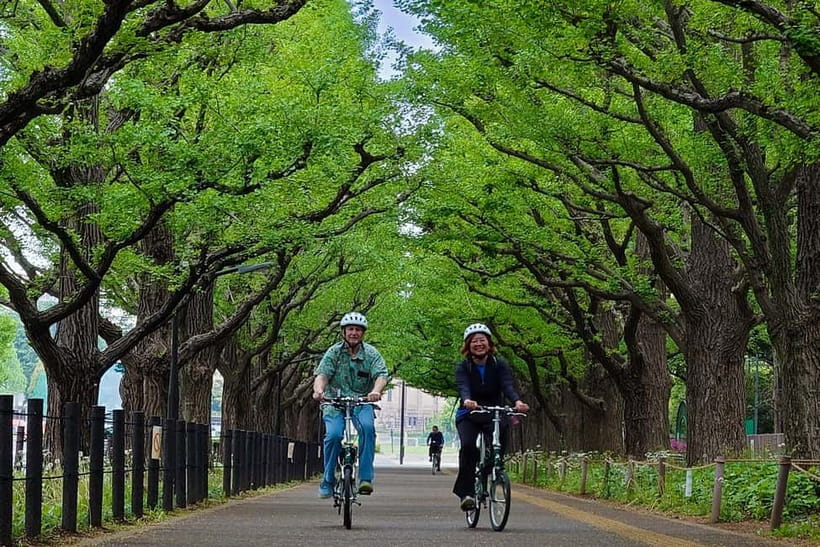
Tokyo is too large for a short walking tour and too interesting to experience only through train stations and taxi windows. An e-bike gives you a useful middle ground. You can cross from one district to another, then stop where the city suddenly changes character.
In three hours, a route of around 15 to 20 kilometers can link modern Shinjuku with small lanes, formal gardens, temple grounds, Olympic sites, or the Sumida River. I like this format because you get a feel for how Tokyo fits together, rather than seeing one neighborhood in isolation.
The private setup matters. You are not waiting for a large group to catch up, and you can tell Kazuma if you want more architecture, local streets, major sights, or photo stops. The route is proposed in advance, but it can be shaped around your interests and riding pace.
This is not a hard cycling workout. The motor assists when you pedal, and the tour is broken up by short stops. Still, you should expect active sightseeing, road riding, and enough distance to make comfortable clothing important.
Other rides on two wheels around Tokyo:
- Tokyo Great Cycling Tour
★ 5.0 · 811 reviews - Tokyo Top Highlights 3h Guided E-bike Tour
★ 5.0 · 714 reviews - 3h Tokyo E-Bike Tour: Hidden Gems, and Local Life with guide
★ 5.0 · 670 reviews
Meeting Kazuma at your hotel
Pickup is one of the tour’s most useful details. Instead of finding a city meeting point, you meet Kazuma in your hotel lobby five minutes before the scheduled start. He can then fit the bike and helmet before you set off.
The available pickup areas cover a wide central stretch of Tokyo, including Shinjuku, Shibuya, Ginza, Marunouchi, Nihonbashi, Roppongi, Asakusa, Ueno, Akihabara, Shinagawa, Hamamatsucho, and several other districts. If your hotel is outside the normal range, you can discuss another starting point, but an extra charge may apply.
The operator uses WhatsApp, iMessage, or SMS to keep in touch. Make sure the contact number you provide works during your stay. That small step matters when the guide is trying to find you in a busy hotel lobby.
Kazuma has a particularly useful combination of skills for this tour. He is described as careful, friendly, patient, and very comfortable explaining Tokyo in English. He also adjusts each bicycle to the rider, which is especially helpful if you are not a regular cyclist.
What the e-bike changes
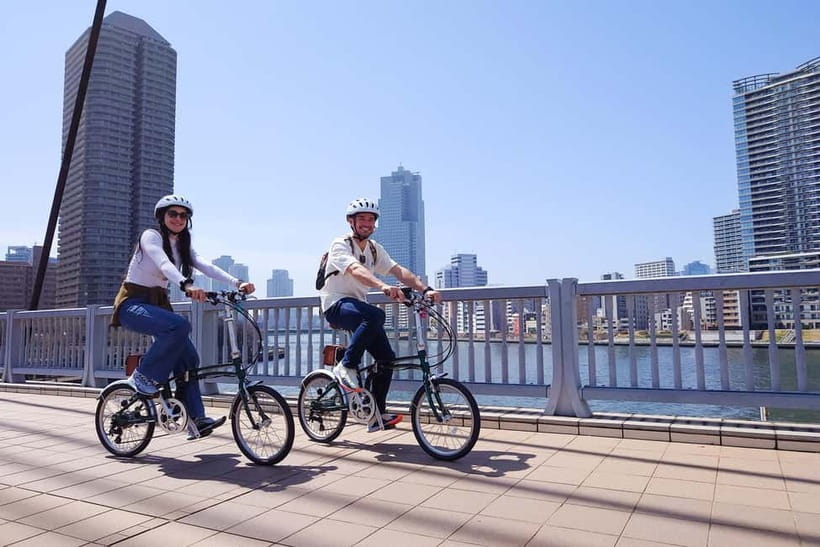
The motor does not remove cycling from the experience. You still pedal, steer, and pay attention to the road. It does mean that hills and longer stretches are less tiring, so you can concentrate on the city rather than on your legs.
That makes this a good option for someone who can ride a bicycle but does not want a demanding day outdoors. It also works well for a family or group with mixed fitness levels, provided everyone meets the age, height, and weight requirements.
The bikes are intended for riders between 145 and 185 centimeters tall, or about 4 feet 8 inches to 6 feet 1 inch. The tour is not suitable for anyone over 100 kilograms, or 220 pounds. Children under 10 cannot join.
Wear closed shoes. High heels, sandals, flip-flops, and skirts are not allowed. You should also avoid alcohol before the ride, and smoking and drug use are prohibited. These rules are basic, but they are worth taking seriously in a city where you will be sharing roads and paths with other traffic.
The route: from skyscrapers to small streets
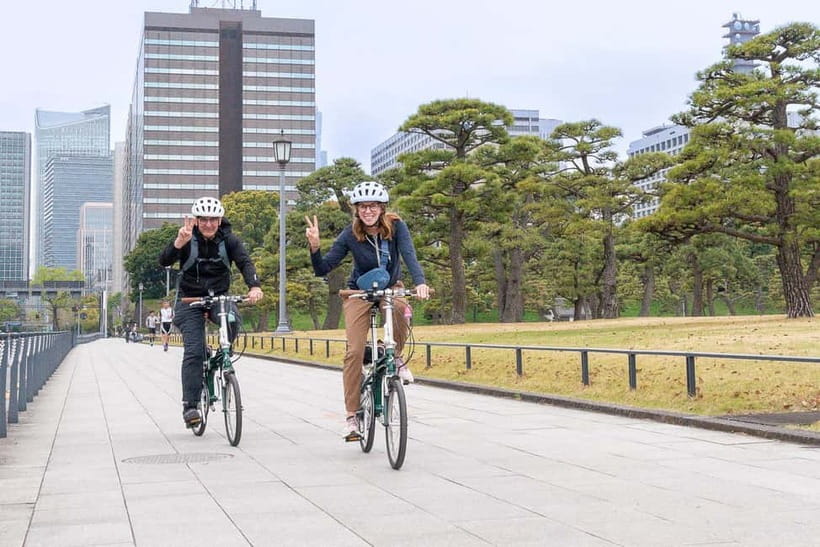
There is no single guaranteed sightseeing sequence. The exact route depends on your hotel, interests, pace, and the time available. The following places are among the possible stops, so think of them as a menu rather than a promise that every one will fit into three hours.
Same base, a different sort of day:
- Mt Fuji and Hakone 1-Day Bus Tour Return by Bullet Train
★ 5.0 · 26,383 reviews - 1-Day Tokyo Bus Tour
★ 5.0 · 14,250 reviews - Tokyo: TOKYO SKYTREE® Admission ticket
★ 4.5 · 11,192 reviews - Tokyo: teamLab Planets TOKYO Digital Art Museum Entry Ticket
★ 4.6 · 9,779 reviews
Shinjuku and the Tokyo Metropolitan Government Building
The Tokyo Metropolitan Government Building is listed as a 10-minute photo stop. It gives you a quick introduction to the scale of western Tokyo, with tall towers and broad city streets around it.
Nearby, Shinjuku Omoide Yokocho, also called Memory Lane, offers a much tighter contrast. Its narrow lanes and small restaurant fronts feel worlds away from the government district. You should not expect a long meal stop, since food and drinks are not included and the tour keeps moving, but a short look helps show the sharp changes in Tokyo’s streetscape.
Shinjuku is also a practical starting area for a first morning in Tokyo. Several people have used this ride early in their stay to get their bearings before exploring by train and on foot.
Shibuya and the western central districts
Shibuya Crossing is one of Tokyo’s most recognizable sights, but the value of reaching it by bike is the approach. You see the city shift from quieter streets into a major commercial center instead of simply arriving beneath the station and leaving again.
The route may also include Aoyama’s Ginkgo Tree Avenue, the National Stadium, and the cherry blossom street near Aoyama Cemetery. These places give you broad avenues and major public spaces, while the smaller roads between them provide a break from Tokyo’s biggest crowds.
You will not be able to film or take photos while cycling. That is sensible, but it means you should be ready to stop when you want a picture. Kazuma has taken photos for groups during the ride, including action shots and group portraits, which is useful when nobody wants to be left out of the frame.
Imperial Palace, Hibiya, Marunouchi, and Tokyo Station
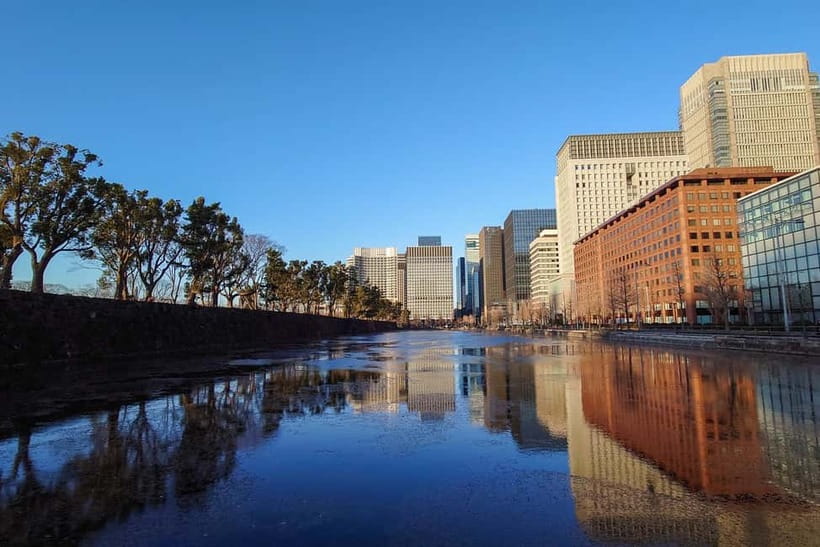
The Imperial Palace area brings a more formal side of the city. Hibiya Park, described as Tokyo’s first Western-style park, offers another change of pace, with open green space among government and office districts.
From there, a route might continue toward Tokyo Station and Marunouchi. This section works well if you want grand architecture and a sense of central Tokyo’s business core. Nihonbashi Bridge is another possible stop, linking the modern city to one of its older commercial corridors.
The advantage of cycling here is distance. These areas are walkable in pieces, but connecting them on foot would take much of your three-hour window. On an e-bike, you can pause for a short explanation, then continue before the heat, crowds, or traffic wear you down.
Tsukuda Island and Tsukishima Monja Street
Tsukuda Island and Tsukishima offer a different kind of Tokyo, with older local streets and a more residential feel. Tsukishima is known for monja, a local savory dish cooked on a hot griddle, but food is not part of the tour.
If you want to eat, ask about the timing before booking. An extended food stop could change the route and may bring an additional charge. For most people, a brief look at Monja Street works better as a cultural stop, with a separate meal planned later.
This part of the route is also a reminder that Tokyo is not only neon signs and high-rise buildings. The city keeps older neighborhood patterns close to its newest districts.
Zojo-ji Temple and Tokyo Tower
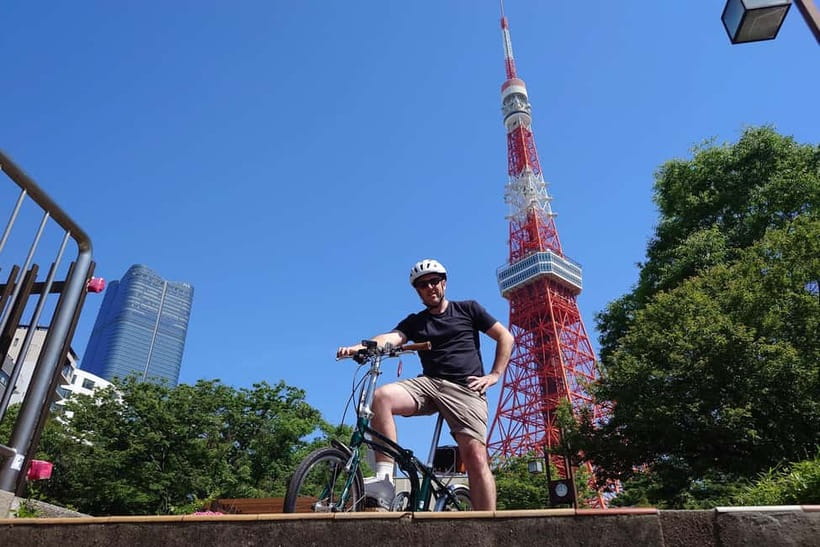
Zojo-ji Temple and Tokyo Tower make a strong pair. The temple offers traditional religious architecture, while the tower represents Tokyo’s postwar modern identity. Together they show how old and new can sit within a short bicycle ride.
A stop at Zojo-ji should be treated respectfully. The tour includes commentary, but it is not a long temple visit or formal religious experience. Tokyo Tower is a photo-friendly landmark, though the three-hour schedule is designed for viewing from outside rather than going up the tower.
This section may suit you if you want classic Tokyo images without spending much of your tour inside one attraction.
Asakusa, Kaminarimon Gate, and the Sumida River
Asakusa’s Kaminarimon Gate is another possible destination. The gate is one of Tokyo’s clearest visual introductions to traditional temple-town culture, and the surrounding streets can be busy.
The bicycle gives you a chance to see more than the gate itself. A route may continue along the Sumida River or toward Tokyo Skytree, letting you view the water, bridges, and skyline in a single outing. You should expect a quick-paced sightseeing ride rather than a full Asakusa temple tour.
If you want to spend serious time at Senso-ji, shop along Nakamise, or stop for snacks, say so before the tour. The guide can discuss a tailored route, but extra time or a distant detour may cost more.
Kitasenju and the Arakawa Riverside
Kitasenju is included as a possible local neighborhood, while the Arakawa and Sumida rivers offer a more open setting. This is where the tour can feel less like a checklist of famous sights and more like a look at everyday Tokyo.
The riverside sections may appeal to you if you have already seen the major landmarks or want a calmer route. They also provide a useful change from dense central streets. The tradeoff is that these areas may feel less essential if this is your only few hours in the city and you mainly want famous landmarks.
The guide, pace, and safety
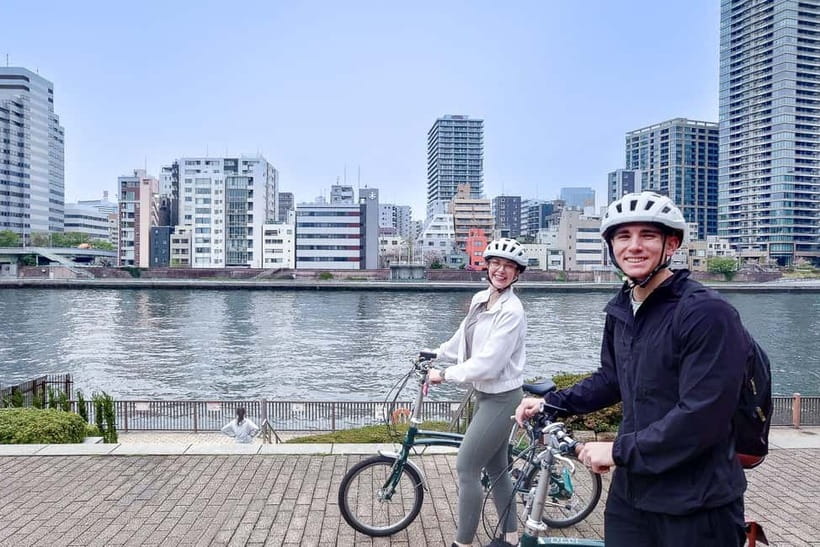
The strongest part of this experience is the guide-led format. Kazuma is repeatedly praised for clear English, careful riding, historical explanations, patience, and a willingness to adjust the route. He also takes time for water breaks and photos instead of treating the ride as a race.
Safety instruction and insurance are included, and you receive a helmet. Still, this is cycling in Tokyo, not a closed park course. You need to follow the guide, obey traffic rules, and stay alert. If you are a novice cyclist, say so at the start. The pace can be adapted, but the tour remains an active ride.
I would book this early in your Tokyo stay if you want a broad introduction. It can help you decide which districts deserve a longer return visit. If you have only one free morning, tell Kazuma your priorities so the route does not become too spread out.
What $141 per person gets you
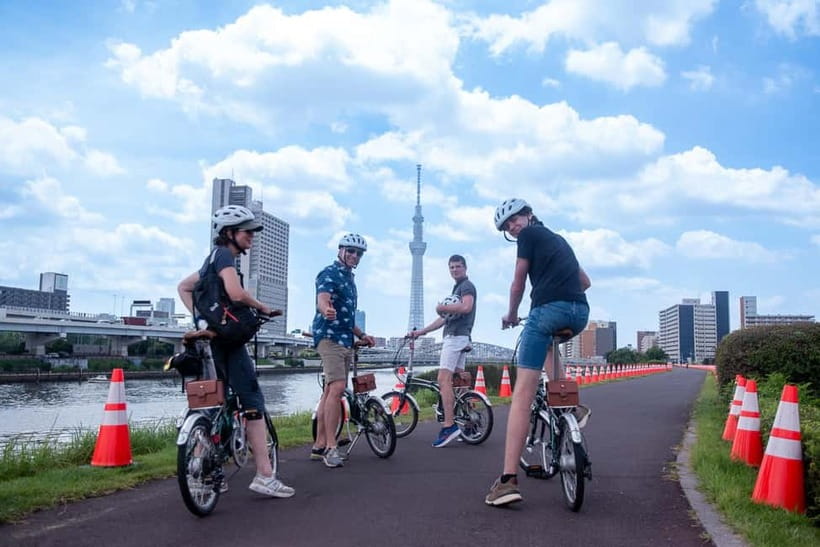
At $141 per person, this is not the cheapest way to see Tokyo. You are paying for a private guide, hotel pickup and drop-off, an e-bike, helmet, safety briefing, insurance, and a route shaped around your group.
The value improves for people who would otherwise spend time and money arranging several train journeys between far-flung districts. It also makes more sense for a small group that wants one shared experience rather than several separate ticketed attractions.
The price is harder to justify if you mainly want a single neighborhood, prefer a slow walking pace, or are happy using public transport. Food and drinks are not included, and custom requests such as a changed start time, longer duration, or far-off sights may add to the cost.
Free cancellation up to 24 hours ahead and the reserve-now, pay-later option reduce some booking risk. I would still check the final price carefully if you request changes.
Who should book this ride?
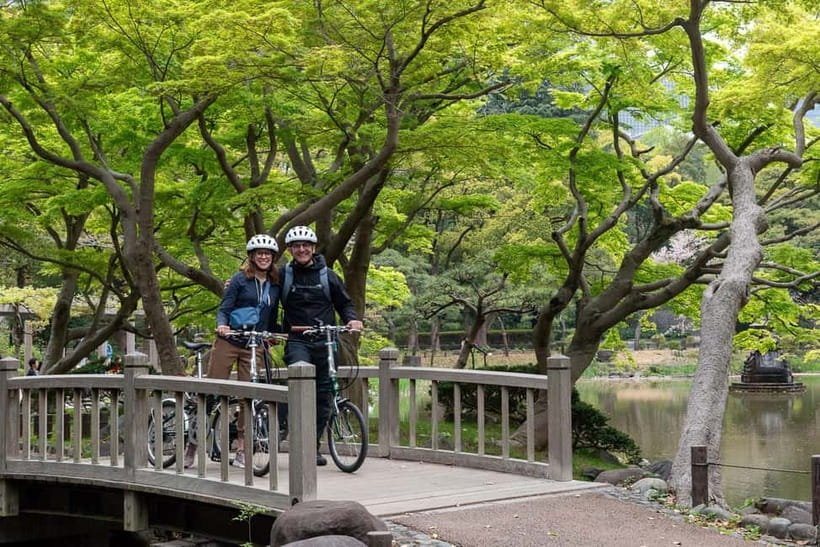
I would recommend it to first-time visitors who want an overview, couples who prefer a private outing, families with children aged 10 and over, and active adults who can ride comfortably for three hours.
It is also a good fit if you are short on time. A walking tour may show you one district well, while this ride can connect several parts of Tokyo in one morning or afternoon.
I would choose something else if you dislike road cycling, cannot meet the height or weight limits, need a fully indoor activity, or want long visits inside temples, museums, or observation decks. The tour is about moving through Tokyo and stopping often, not settling in one place.
Practical details before you reserve
Bring water, comfortable closed shoes, and clothes that allow easy movement. Do not wear a skirt, sandals, flip-flops, or high heels. You cannot take photos or videos while riding, so keep your phone safely stored until the next stop.
Tell the operator about your preferred sights when you sign up. A request for Asakusa, Tokyo Tower, Shibuya, or the Imperial Palace may affect the route and price. Also confirm that your hotel is within the pickup area.
The tour is offered in English or Japanese. Pickup and drop-off locations include 23 listed areas, with options such as Ginza, Shibuya, Ueno, Asakusa, Marunouchi, Shinjuku, Roppongi, and Shinagawa.
Should you book Tokyo Bike Bliss?
Book it if you want to cover ground, prefer a private guide, and like the idea of seeing both famous Tokyo and ordinary side streets in one outing. Kazuma’s careful approach, clear explanations, bike fitting, and helpful photos add real value.
Skip it if $141 feels too high for three hours or if you want a relaxed, stationary sightseeing experience. For the right rider, though, this is a practical and enjoyable way to get a first sense of Tokyo’s size, variety, and surprising changes from block to block.
FAQ
Where does the tour start and finish?
The tour starts and ends at your hotel when it is within the operator’s pickup range. If your hotel is outside that area, you can discuss another starting point, and an additional charge may apply.
How long is the tour?
The standard tour lasts three hours. You can request a longer duration, but an additional fee may apply.
How far does the tour go?
Routes generally cover about 15 to 20 kilometers. The exact distance depends on your chosen sights, starting point, and pace.
Which Tokyo sights can the tour visit?
Possible sights include the Tokyo Metropolitan Government Building, Shibuya Crossing, the Imperial Palace, Tokyo Station, Nihonbashi Bridge, Tokyo Tower, Zojo-ji Temple, Asakusa’s Kaminarimon Gate, Tokyo Skytree, Tsukishima, Kitasenju, and riverside areas.
Is the route fixed?
No. A route is proposed, but this is a private tour. You can request specific places and set a comfortable pace, subject to time, route suitability, and possible extra charges.
Are e-bikes and helmets included?
Yes. The tour includes an e-bike, helmet, safety instruction, insurance, and a live guide.
What languages are available?
The tour is offered in English and Japanese.
Who cannot join the tour?
The tour is not suitable for children under 10, people under 145 centimeters tall, or people over 100 kilograms. It is intended for riders between 145 and 185 centimeters.
What happens if I need to cancel?
You can cancel up to 24 hours in advance for a full refund. The reserve-now, pay-later option lets you book without paying immediately.
Just added in Tokyo
- The 10 Tastings of Tokyo With Locals: Private Street Food Tour★ 5.0 · 48 reviews
- Small Town in the Big City: Tasting Tokyo’s Kichijoji★ 5.0 · 195 reviews
- Small Town in the Big City: Tasting Tokyo’s Kichijoji★ 5.0 · 16 reviews
- EXCLUSIVE Tokyo Secret: Kichijoji Small-Group Food & Bar Hopping★ 5.0 · 29 reviews
- Explore Kichijoji: Walk Through One of Tokyo’s Beloved Districts★ 5.0 · 21 reviews
- :Tokyo,Shibuya/ Pro Photography in Kimono / English-Friendly★ 5.0 · 26 reviews
- 【R34】Tokyo:Private Daikoku tour in Modified R34★ 4.9 · 92 reviews
- Tokyo:Calligraphy &Make your original folding fan in Asakusa★ 5.0 · 62 reviews
Cycling Tours, compared.
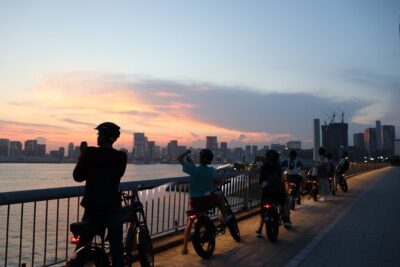
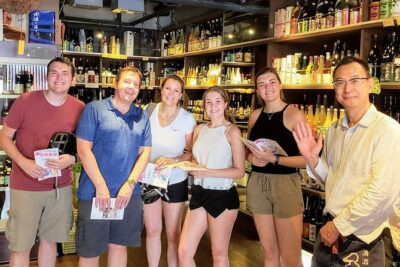
3h Tokyo E-Bike Tour: Hidden Gems, and Local Life with guide
Read our review →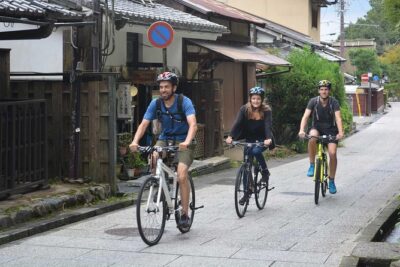
Arashiyama Bamboo Forest & Hidden Gems Bike Tour (Early Bird)
Read our review →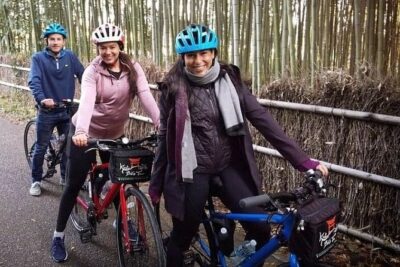
5 Top Highlights of Kyoto Full Day Bike Tour (E-bike option)
Read our review →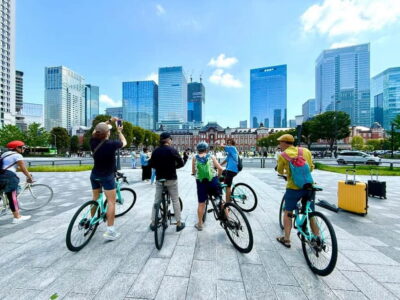
Hiroshima 2hr Peace Cycling Tour with Local Guide
Read our review →Browse the lists this tour appears in