
Reviewed · ANIME & MANGA TOURS
Tokyo: Akihabara/Asakusa Go-Karting Tour (including guide)
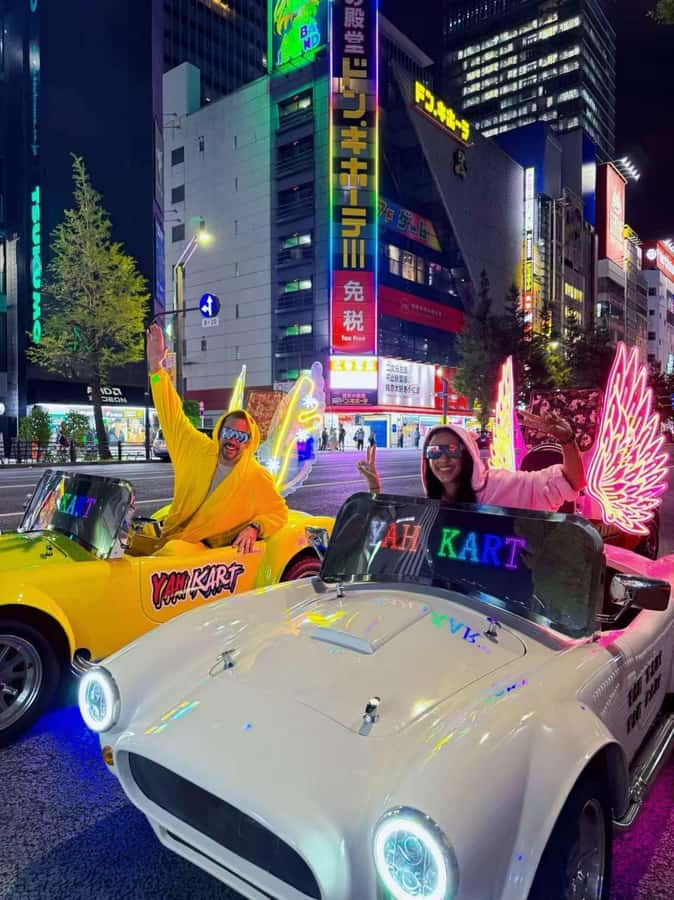
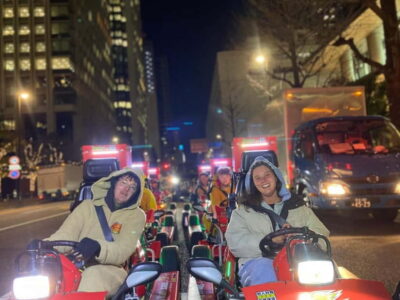
Tokyo’s neon-and-temple contrast becomes the main event on this street go-kart tour. You steer through Akihabara, Ueno, and Asakusa, taking in the city from road level instead of behind a tour-bus window. The karts attract plenty of attention, so expect to feel a little like a moving parade.
I like the mix of modern Akihabara and traditional Asakusa, plus the practical keepsakes: photos, a magnetic frame, and a small mystery gift. I also like that guides keep the group together and focus on safe driving. The main catch is serious: you need the correct physical driving documents, and driving through city traffic may feel thrilling to some people and stressful to others.
Key points at a glance
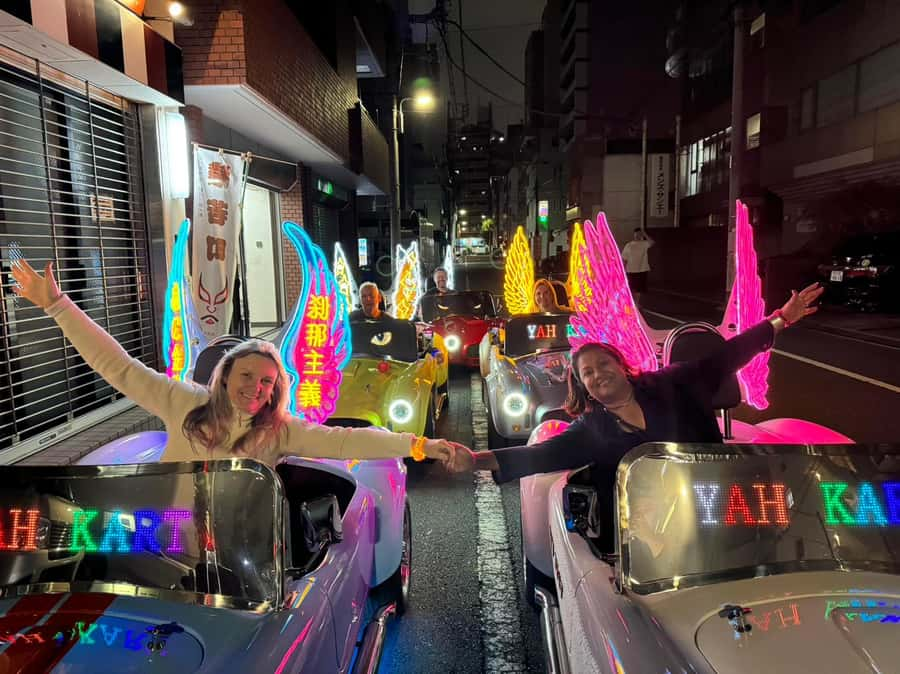
- Akihabara to Asakusa: See Tokyo’s electronic center, Ueno, and the Kaminarimon area near Senso-ji on one route.
- A real street-driving experience: You operate the kart yourself on public roads, not on a closed amusement-park track.
- Guide-led and photo-friendly: The lead driver helps manage the ride, with photo opportunities along the way.
- Night rides add neon: Evening departures can make Akihabara’s lights and Tokyo’s signs more striking.
- Documents matter: Bring your physical passport and the correct IDP or official Japanese license translation.
- Extras and keepsakes: Glowing accessories and a 360-degree camera cost extra, while photos, a magnetic frame, and a mystery souvenir are included.
Why this tour feels different from ordinary sightseeing
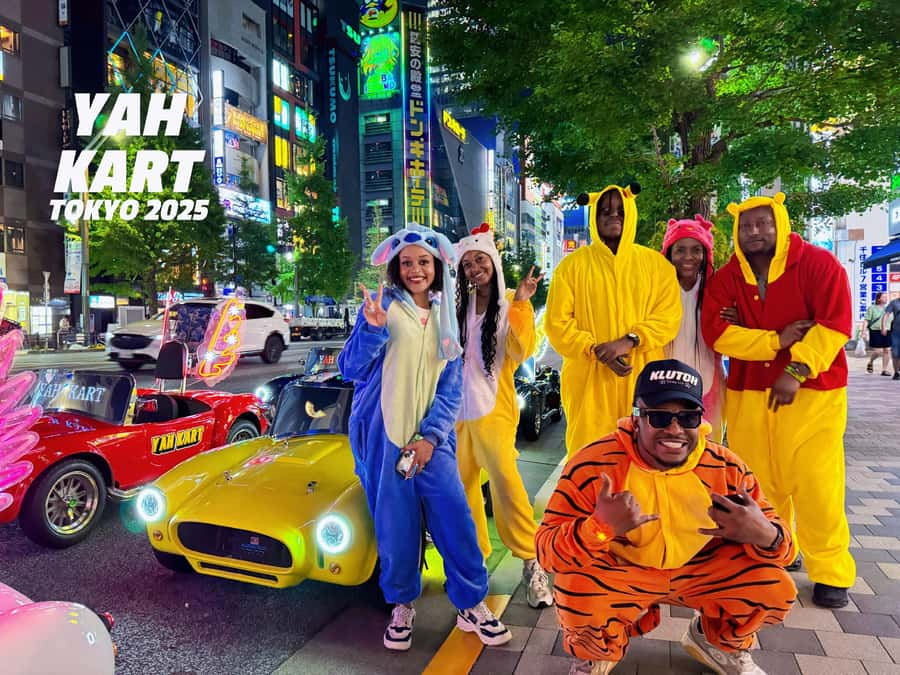
Most Tokyo sightseeing keeps you on foot, underground, or inside a vehicle driven by someone else. Here, you sit low in a mini kart and take an active role in the route. That changes the way the city feels. Buildings seem taller, intersections feel closer, and the familiar act of crossing town becomes part of the attraction.
You are not simply looking at Tokyo. You are also learning to handle a small vehicle while following a guide through city streets. That makes this best for adults who want an unusual activity and feel comfortable paying attention to traffic, signals, and the group.
The public-road setting is important. This is not a go-kart race, and you should not expect to drive as fast as possible or compete with the other participants. The point is the experience of moving through Tokyo in formation, seeing the city from a very different angle.
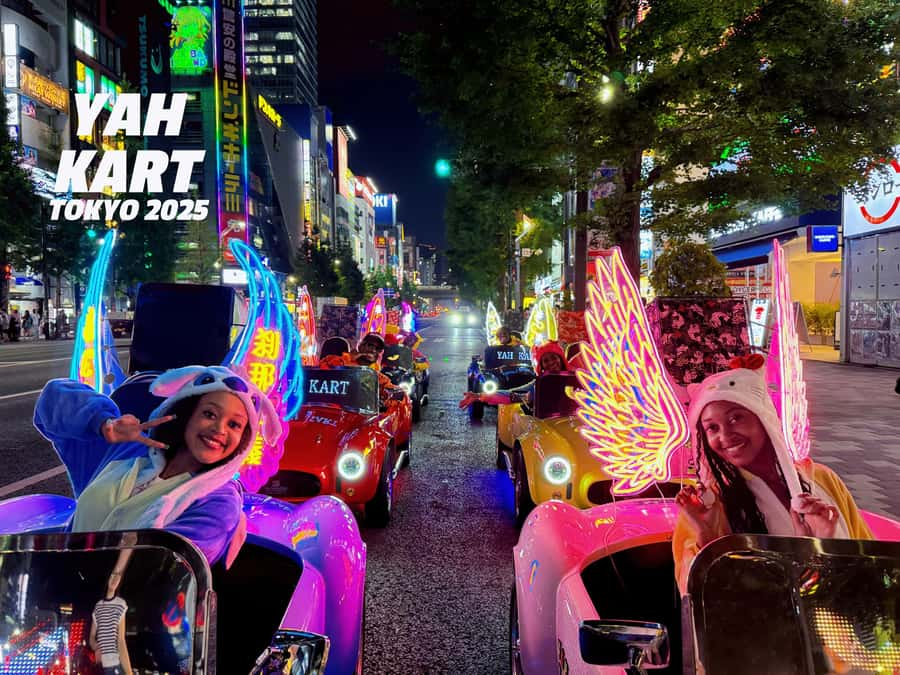
The karts also draw attention. People along the route may look over as the group passes, and that audience is part of the fun. If you enjoy being noticed and taking photos, you will likely find the attention entertaining. If you prefer to blend into the crowd, this may feel a little too theatrical.
Other anime and game stops in Tokyo:
- Official Street Go-Kart Tour – Akihabara
★ 5.0 · 1,578 reviews - Tokyo Go Kart: Asakusa, Skytree, and Akihabara **IDP MUST**
★ 5.0 · 988 reviews - Tokyo Studio Ghibli Museum and Ghibli Film Appreciation Tour
★ 4.5 · 421 reviews
From Akihabara’s neon to Ueno’s city streets
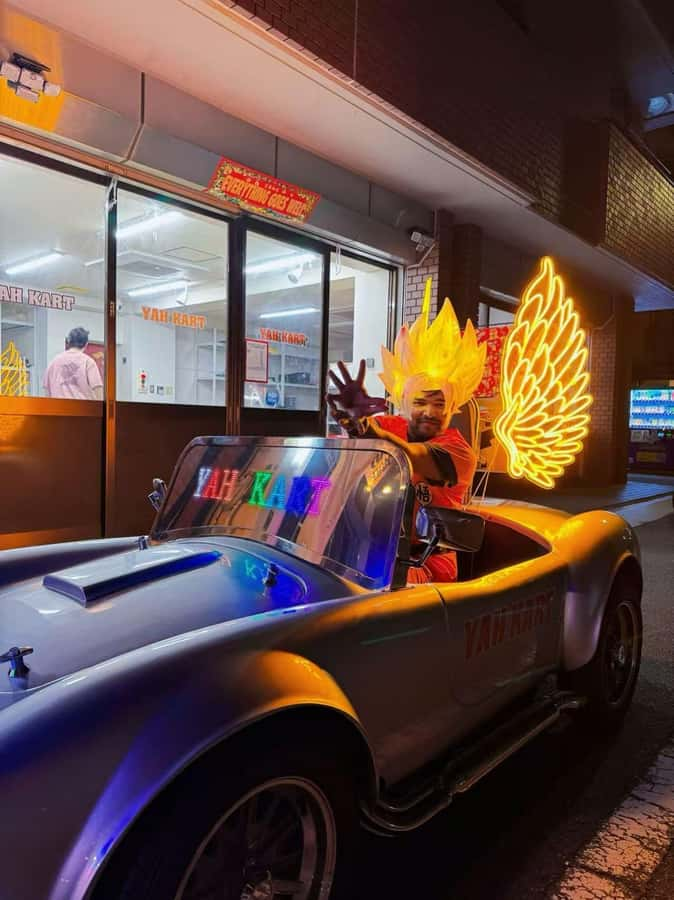
The route begins at the YAH KART meeting point, inside the first floor of a red building marked with a YAH KART sign on the door. After preparation and instructions, you set off behind the guide.
Akihabara supplies the strongest dose of modern Tokyo. Known for electronics, anime culture, gaming, and bright signs, the district gives the ride its most obvious visual punch. At night, the lights make the setting even more memorable, and this is the departure time I would consider if neon city scenes are a priority.
You should keep your attention on driving rather than trying to photograph every sign. A moving kart is a poor place to manage a phone, and the guide’s job is to keep the group safe and together. The reward is a moving view of Tokyo that feels more immediate than walking through one shopping street.
The route also includes Ueno, which helps connect the high-energy feel of Akihabara with the more traditional character of eastern Tokyo. The supplied details do not promise a stop or extended visit at every location, so think of these areas as points along a guided driving route rather than separate sightseeing sessions.
That distinction matters. You will see more of the city, but you will not have time to tour a temple, browse shops, or pause at every landmark. This is a panoramic city ride, not a full cultural walking tour.
Asakusa and the Kaminarimon view
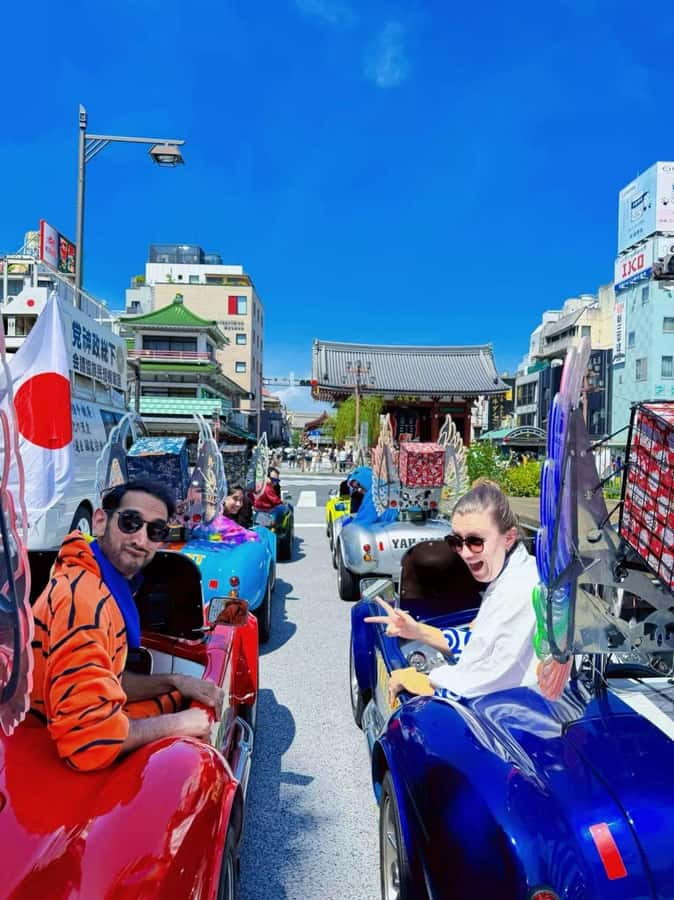
Asakusa brings a different mood. The route passes the Kaminarimon area near Senso-ji Temple, one of Tokyo’s best-known traditional sights. After the bright commercial feel of Akihabara, the temple district gives the ride a strong change of character.
From a kart, you get a quick visual impression of the gate and surrounding streets. You should not expect the time or format of a temple visit, and the activity does not include a guided explanation of Senso-ji’s history. Still, seeing the area from the road gives you useful orientation if you plan to return on foot later.
This modern-to-traditional sequence is the tour’s strongest sightseeing idea. You begin with the Tokyo of screens, signs, and pop culture, then reach a district associated with older religious and cultural traditions. The route does not pretend to replace a proper Asakusa visit. It gives you a lively preview while adding the unusual pleasure of getting there under your own control.
The experience ends back at the original meeting point. You are not left at a different neighborhood, so you can plan the rest of your evening from the same location where you started.
What the guide adds to the experience
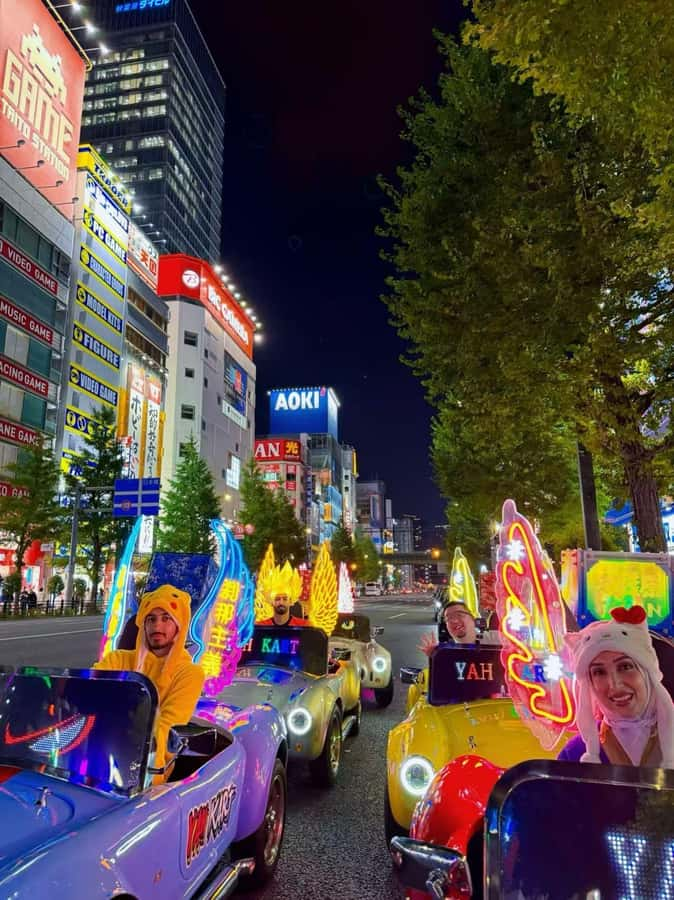
A guide leads the group from the front, sets the pace, and helps you handle the city streets. That guidance is especially valuable if you have never driven a kart on public roads before. You need to watch the route, respond to traffic conditions, and stay with the group.
Ryu is identified as a lead driver who pays close attention to safety while leaving room for photos and sightseeing. The staff also speak Japanese, Chinese, and English, which makes the basic instructions more accessible to a wider range of participants.
The guide is not just there to point out sights. The practical job is keeping the group organized and helping drivers feel at ease. That support can make a big difference during the first few minutes, when you are getting used to the kart and the road setting.
You should still take personal responsibility. Follow Japanese traffic rules, avoid alcohol before driving, and listen carefully to the instructions. The guide can manage the group, but cannot make driving decisions for you.
Other street-level rides in Tokyo:
- Flagship 2-Hours Official Street Go-Kart Tour – Tokyo Bay Shop
★ 5.0 · 4,974 reviews - Official Street Go-Kart in Shibuya
★ 5.0 · 3,435 reviews - Tokyo: Street Kart Experience in Shibuya
★ 4.9 · 1,484 reviews - Shibuya Official Street Go-Kart in Shibuya Annex
★ 5.0 · 972 reviews
Night lights, optional gear, and the photo package
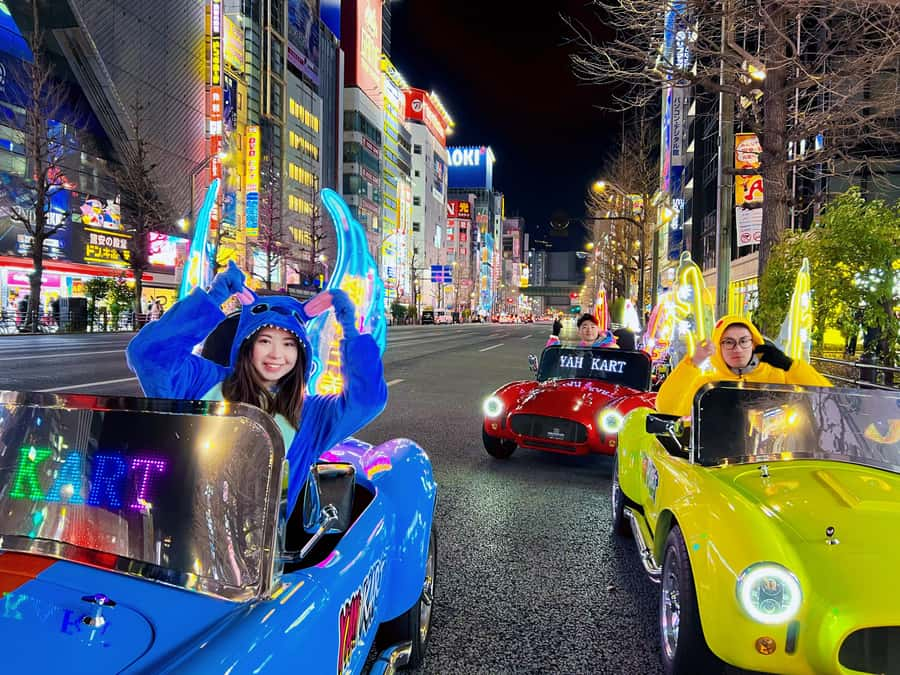
Several details make the experience more memorable after the ride. The included package provides a photo, a magnetic photo frame with a custom Japanese stamp, and a mysterious souvenir. These are modest extras, but they give you something physical to take home instead of relying only on phone pictures.
You can also add glowing accessories to the kart or use a 360-degree panoramic camera. These options are not included in the listed price, so ask about the cost before adding them. The lights make most sense at night, while the camera may appeal if you want a more complete record of the route.
The best photo moments may come when the group is stopped safely or when the guide creates a suitable opportunity. Do not treat busy streets as a photo studio. Keep your hands and attention where they belong while the kart is moving.
I like the balance here: the core ride includes a few keepsakes, while the more specialized visual extras remain optional. You can enjoy the tour without buying every add-on.
The license rules are the real booking test
This is the most important practical point. You must confirm before booking that you hold a Japanese government-approved driving document. For most eligible participants, that means a physical International Driving Permit issued under the 1949 Geneva Convention by a government-authorized association.
Participants with licenses issued in Switzerland, Germany, France, Taiwan, Belgium, or Monaco need a Japanese translation from the Japan Automobile Federation, known as JAF. In those cases, carry both the physical domestic license and the official translation.
You must also carry your physical passport. Digital copies are not presented as an acceptable substitute, so do not leave the original documents in your hotel room.
Licenses from countries not covered by the 1949 Geneva Convention are not accepted for this activity. The supplied examples include China, Indonesia, Mexico, Qatar, and Saudi Arabia. Check your exact eligibility before paying, because the operator says the booking cannot be arranged without confirmation and refunds will not be available for that reason.
This is not a minor paperwork issue. A normal home-country driver’s license may not be enough. Verify the format, issuing authority, and physical documents well before your Tokyo trip.
Is $71 a fair price?
At $71 per person, the value depends on what you want from a city tour. You are paying for the kart experience, a guide, the route through several Tokyo districts, and the included photo and keepsakes. Meals, drinks, hotel transfers, insurance, glowing accessories, and the 360-degree camera are not included.
For someone who wants a standard overview of Tokyo’s landmarks, $71 may feel high because the tour does not include temple entry, food, or a conventional sightseeing guide. You are also not getting long stops at each district.
For someone who sees the driving itself as the attraction, the price is easier to justify. The unusual vehicle, public-road route, guide support, and included mementos make this more than a simple ride around a track. You are buying an activity and a city view at the same time.
Do remember that vehicle insurance is not included. Ask the provider what coverage applies and what your responsibilities are before driving. That question is worth asking for any motorized activity, especially one on public roads.
Who will enjoy it most
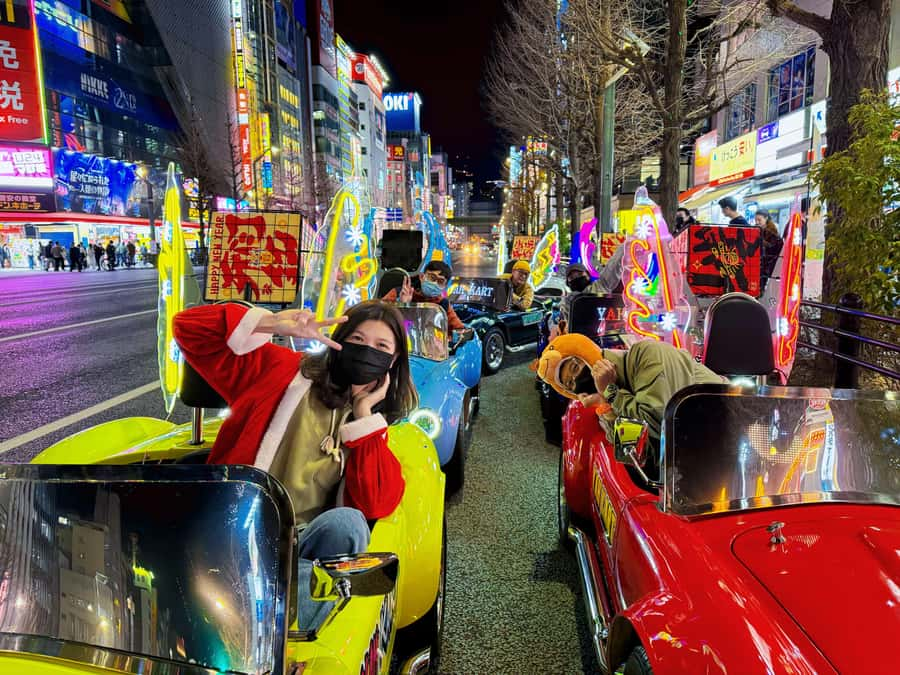
This suits adults who want an active, photogenic way to see Tokyo and who already meet the driving requirements. It is particularly appealing if you enjoy city lights, unusual transport, and the feeling of being part of the street scene rather than simply observing it.
Couples can make good use of the experience, since the route offers shared memories and a photo afterward. Small groups should book together rather than as separate individual reservations. Separate bookings do not guarantee that everyone can join the same departure.
The activity is not suitable for children under 18. It is also a poor match for anyone who cannot produce the required physical documents, dislikes public-road driving, or wants a quiet cultural tour with lengthy explanations.
Comfortable clothing is recommended. Drinks are not allowed in the vehicle, and you should avoid drinking alcohol before driving. These rules are simple, but they shape the experience: treat it like a driving activity first and a sightseeing outing second.
A few drawbacks to consider before you commit
The biggest drawback is the level of preparation required. The license rules are strict, country-specific, and easy to misunderstand. A booking confirmation alone does not solve the document problem, so check the requirements before reserving.
The second concern is the road environment. One participant described the experience as exciting but not for the faint-hearted because you drive through busy streets. That is useful advice. The karts may be easy to operate, but operating one in Tokyo traffic still demands concentration.
The sightseeing is also necessarily brief. You pass through major districts, but you are not stopping for a long temple visit or a detailed neighborhood walk. If you want deep cultural context, pair this with a separate walking tour of Asakusa and Ueno.
Finally, optional accessories can raise the total cost. The included photo and magnetic frame help, but the lights and 360-degree camera are extras. Decide in advance how much you want to spend.
Should you book the YAH KART tour?
Book it if you have the correct driving documents, enjoy active city experiences, and want to see Tokyo from a low, open road-level view. The route works especially well for anyone who wants both Akihabara’s modern energy and Asakusa’s traditional setting in one outing.
I would choose an evening departure if neon lights are a major reason you are interested. I would also confirm the insurance details and document requirements before making a nonrefundable decision.
Skip it if you want a relaxed sightseeing vehicle, a detailed temple tour, or a quiet way to move through the city. For the right person, though, this is a memorable Tokyo activity: part guided tour, part driving challenge, and part public spectacle.
FAQ
Where does the go-kart tour start?
It starts on the first floor of a red building. Look for the YAH KART sign on the door.
Where does the tour finish?
The activity ends back at the same meeting point.
Which Tokyo areas does the route include?
The route includes Akihabara, Ueno, and Asakusa, with the Kaminarimon area near Senso-ji Temple included in the route.
Do I need an International Driving Permit?
Most participants need a physical International Driving Permit issued under the 1949 Geneva Convention by a government-authorized association.
Which participants need a JAF translation instead?
Participants with licenses issued in Switzerland, Germany, France, Taiwan, Belgium, or Monaco need an official Japanese translation from the Japan Automobile Federation.
Do I need to bring my passport?
Yes. You must carry your physical passport along with your physical International Driving Permit, or your physical domestic license and official JAF translation where required.
Can I use a license from any country?
No. Licenses from countries not covered by the 1949 Geneva Convention are not permitted for driving in Japan. Examples provided include China, Indonesia, Mexico, Qatar, and Saudi Arabia.
Is the tour suitable for children?
No. The activity is not suitable for children under 18.
Are glowing accessories and the 360-degree camera included?
No. Glowing accessories and the 360-degree camera are optional extras and are not included in the listed price.
What is included after the ride?
The package includes a mysterious souvenir, a photo, and a magnetic photo frame with a custom Japanese stamp.
Just added in Tokyo
- The 10 Tastings of Tokyo With Locals: Private Street Food Tour★ 5.0 · 48 reviews
- Small Town in the Big City: Tasting Tokyo’s Kichijoji★ 5.0 · 195 reviews
- Small Town in the Big City: Tasting Tokyo’s Kichijoji★ 5.0 · 16 reviews
- EXCLUSIVE Tokyo Secret: Kichijoji Small-Group Food & Bar Hopping★ 5.0 · 29 reviews
- Explore Kichijoji: Walk Through One of Tokyo’s Beloved Districts★ 5.0 · 21 reviews
- :Tokyo,Shibuya/ Pro Photography in Kimono / English-Friendly★ 5.0 · 26 reviews
- 【R34】Tokyo:Private Daikoku tour in Modified R34★ 4.9 · 92 reviews
- Tokyo:Calligraphy &Make your original folding fan in Asakusa★ 5.0 · 62 reviews
Anime & Manga Tours, compared.
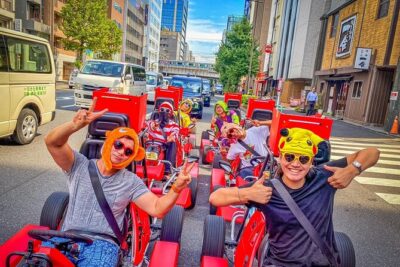
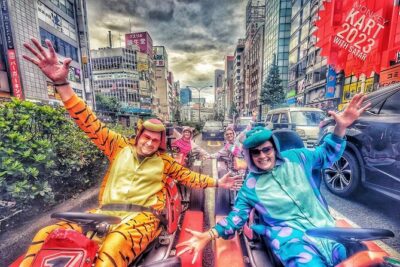
Tokyo Go Kart: Asakusa, Skytree, and Akihabara **IDP MUST**
Read our review →
Tokyo Studio Ghibli Museum and Ghibli Film Appreciation Tour
Read our review →
Akihabara Anime & Game Adventure Walking Tour (Group or Private)
Read our review →
Manga Drawing Workshop Guided by Pro Manga Artist
Read our review →Browse the lists this tour appears in