
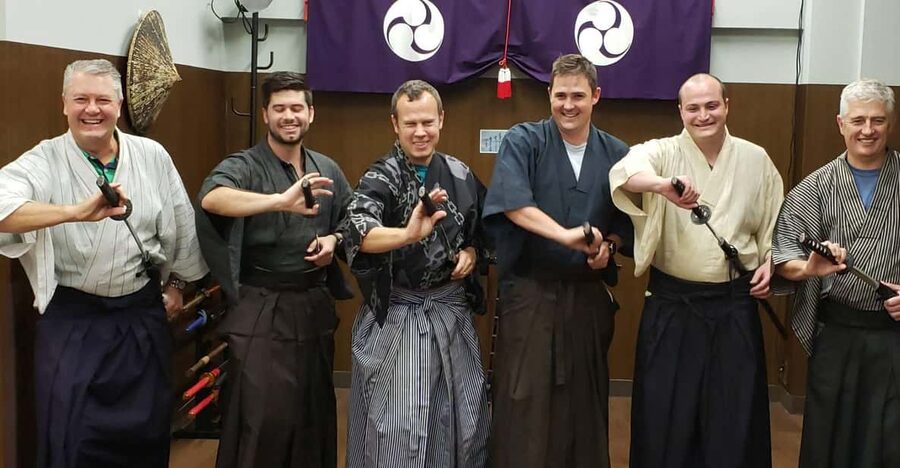
Reviewed · SAMURAI & NINJA EXPERIENCES
Tokyo: Best Samurai Experience
Tokyo’s Best Samurai Experience puts you in a kimono and hakama, hands you a safe practice sword, and turns a one-hour lesson into a small stage show. You learn the basic moves, then use them in a choreographed fight with samurai performers, complete with music, lights, photos, and phone videos.
I like the small groups of up to 10, which gives the instructors room to help with costumes and movement. I also like that staff record the action on your own phone, so you can leave with more than a posed picture. The main consideration is that this is theatrical swordplay with a fake, non-cutting sword, not serious martial-arts training.
Key points
- A full samurai costume: Choose a kimono and hakama before the lesson begins.
- Safe sword practice: Learn how to draw, hold, swing, and return a non-cutting sword.
- A staged chanbara fight: Use simple offensive and defensive moves in a choreographed battle.
- A musical finale: The session builds toward a performance with lights and soundtrack.
- Real screen experience: The teachers have appeared in major Japanese dramas and films.
- Useful flexibility: Solo bookings, same-day reservations, and cancellation up to 24 hours before the activity are available.
Choosing Your Kimono and Hakama
The experience begins with the costume, not a lecture. You choose a kimono and hakama, then change with help from the instructors and assistants. The hakama gives the outfit its unmistakable samurai shape, and the clothing makes even a basic sword movement feel like part of a scene.
This part works well for families and first-time visitors because you do not need to arrive knowing anything about Japanese clothing. The staff guide you through the change, so the costume is part of the activity rather than a chore before it.
You should allow the instructors to help with the fit. A costume that sits properly will make it easier to move, pose, and perform the routine. Since the session lasts only an hour, the changing period also means the lesson moves at a brisk pace.
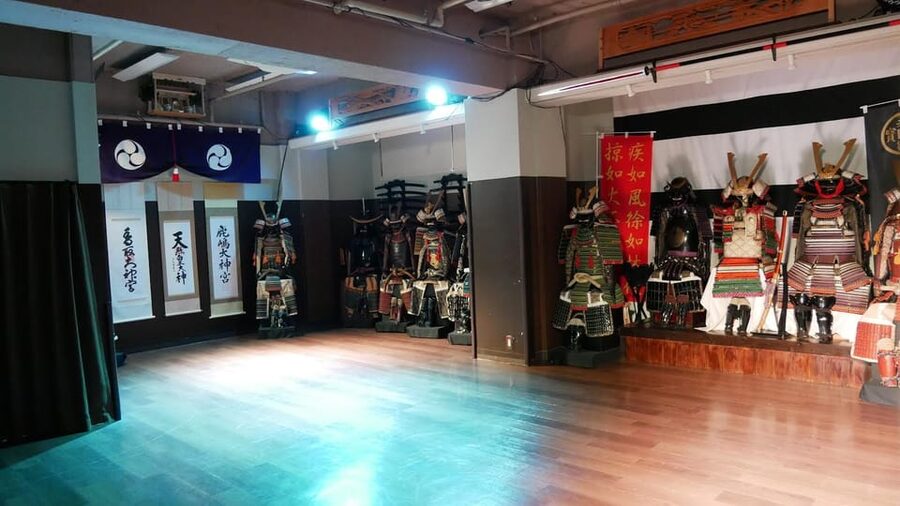
The dojo is decorated with swords, spears, and armor on display. That setting helps create an older, less modern atmosphere, though the activity itself is best understood as a polished performance experience rather than a museum visit. The armor is available to wear for an extra charge, so budget for that only if dressing up fully matters to you.
Other samurai and ninja experiences in Tokyo people book:
- Tokyo: Samurai Restaurant Show Ticket with 2 Drinks
★ 4.5 · 1,307 reviews - Tokyo: Samurai Ninja Museum Guided tour and Experience
★ 4.6 · 1,010 reviews - Tokyo: Samurai Sword & Archery Class from Samurai Descendant
★ 5.0 · 603 reviews
Learning the Sword One Move at a Time
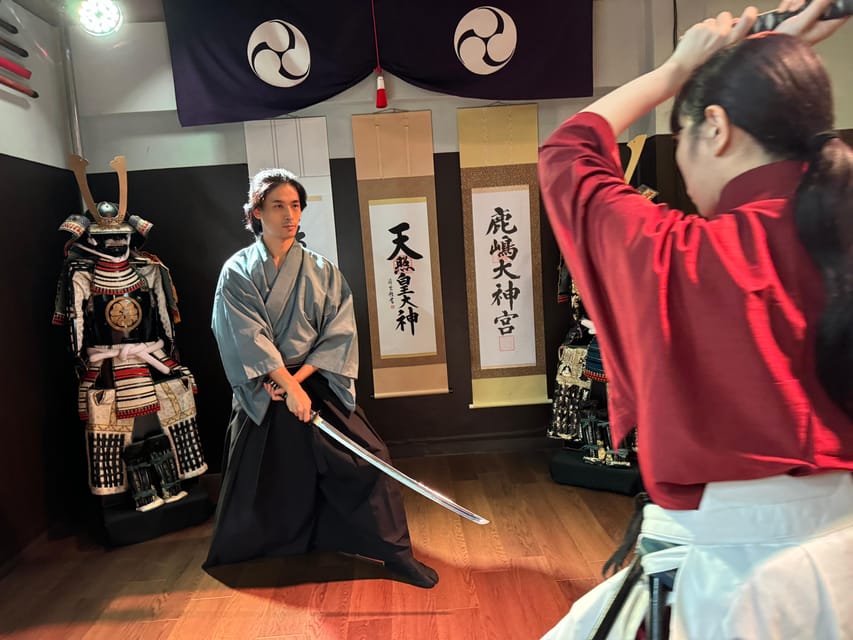
Once you are dressed, the teacher introduces the sword and explains its parts. One useful detail from the lesson is that you learn some blade and stance names in Japanese. That gives the activity a little more substance than simply waving a prop for photographs.
The basic sequence covers drawing the sword, holding it, taking a stance, swinging, and returning it. You repeat each movement after the instructor demonstrates it. The teaching is designed for beginners, and the instructors use clear demonstrations and an energetic style to keep the pace light.
You are not handling a sharp weapon. The activity provides a fake sword that cannot cut, which makes the staged fighting suitable for people with no sword experience. Still, you need to listen closely and copy the movement as shown. A sword may be harmless as a prop, but it can still bump another person if you swing carelessly.
The lesson includes both offensive and defensive movements. That small detail gives the final fight some structure. You are not simply striking at random. You learn a short sequence, remember the timing, and use it later with the instructor or another participant.
I would not book this expecting a serious lesson in kenjutsu or a formal study of samurai history. The value is in learning enough technique to make the final scene feel convincing. You get a taste of stance, movement, and ceremony, then put it to work right away.
From Practice to a Choreographed Chanbara Fight
The main turning point comes when the practice movements become a simple chanbara sword fight. Chanbara is screen-style sword action, so the emphasis is on timing, clear gestures, and safe theatrical movement.
The instructors keep the fight within a beginner-friendly routine. You may face a samurai performer or take part in a group sequence, depending on the session. The supplied details describe fighting samurai and practicing a faux fight, so you should expect a staged battle rather than competitive sparring.
This is where the small group matters. With no more than 10 people, the instructors can help keep everyone in position and make corrections. The group also remains small enough for individual photographs and short video clips without the room turning into a crowd.
The performance has a playful story element: you work to defeat the bad guys to music. That phrasing tells you a lot about the tone. This is family entertainment with sword technique, not a solemn cultural ceremony. If you enjoy samurai films, martial-arts shows, cosplay, or interactive theater, the mixture should suit you.
You might feel self-conscious during the first few movements. That is normal, especially if you are not used to performing in front of other people. The instructors keep the mood friendly and inviting, and several people have found the activity comfortable even when they were not naturally outgoing.
A Finale With Music, Lights, and Camera Time
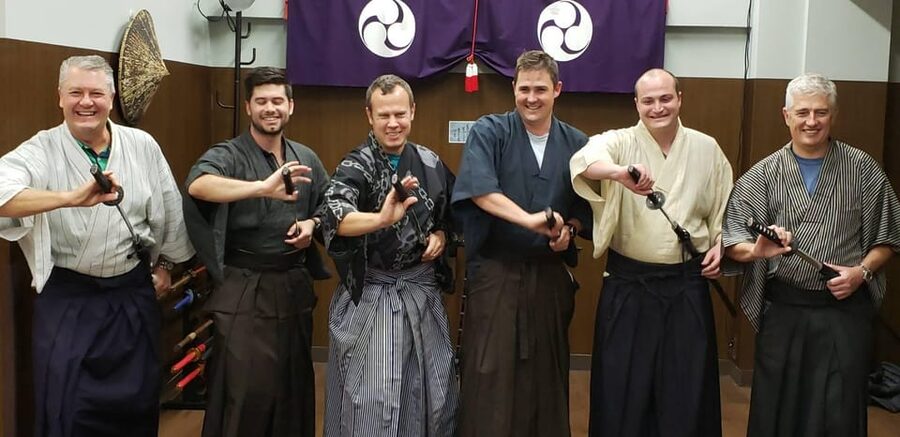
The session builds toward a final performance. Music and lights give the short routine more force than it would have in an ordinary practice room. The instructor brings energy to the mock fight, which helps you feel part of a show rather than a class exercise.
Bring a charged smartphone. The staff can take photographs and record video on your phone while you perform, which is one of the strongest practical features of this experience. You can also take pictures with the samurai after the lesson.
This is especially useful for couples and families. You do not need to choose between joining the action and taking pictures from the side. The staff can help capture the sword movements, poses, and final scenes. The result should be more memorable than a standard costume portrait.
You should still keep your expectations sensible. Phone video quality, angles, and the amount of footage can vary with the session. The information provided confirms that instructors and assistants help with photos and videos, but it does not promise a professionally edited film.
The photo opportunities are not limited to the final fight. You can pose with the samurai, show off the costume, and use the dojo displays as a backdrop. If wearing armor is important to you, ask about the optional fee before changing, since armor is not included in the $63 price.
Other swordplay and stealth sessions in Tokyo:
- Best Samurai Experience in Tokyo
★ 5.0 · 458 reviews - Ninja Experience (Family Friendly) at Samurai Ninja Museum TOKYO
★ 5.0 · 441 reviews - Tokyo: Samurai Entertainment Night Show in Kanda Shrine
★ 4.6 · 417 reviews - Tokyo Sword Experience – includes Museum Ticket/Ninja Experience
★ 5.0 · 314 reviews
What the Instructors Add
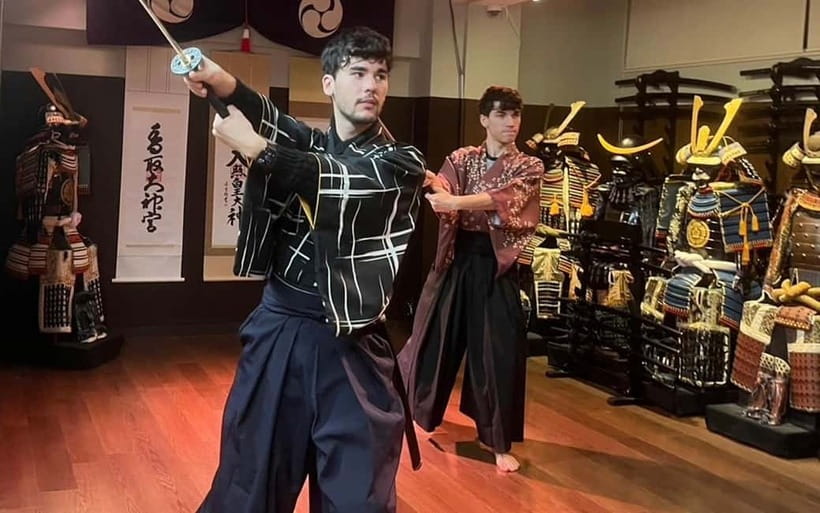
The teachers are described as authentic instructors who have appeared in major Japanese dramas and films. That screen experience helps explain the confident movement, timing, and stage energy used in the session.
The teaching is available in English and Japanese. You do not need to speak Japanese to take part, and the movements are shown rather than explained only through words. Learning a few Japanese names for sword parts and stances adds a cultural touch without making the class difficult to follow.
The instructor’s attitude matters here. You are asked to repeat movements, learn a routine, and perform it soon after. A patient teacher can make that process feel manageable, while an overly formal instructor could make it stiff. The activity has been designed around encouragement, humor, and participation.
You can also expect assistants to help with costumes, practice swords, poses, and phone recording. That support is useful because the one-hour schedule is tight. You spend more of the session doing the activity and less time trying to work out what comes next.
Is One Hour Enough?
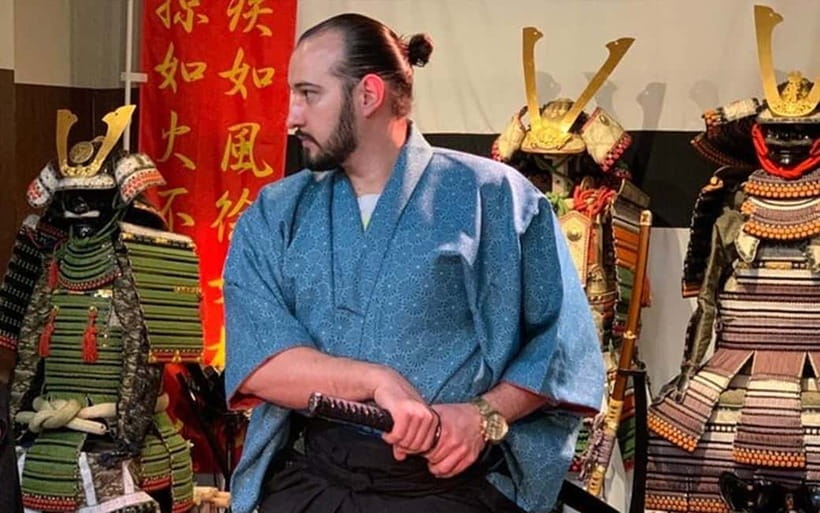
One hour is short, but it matches the activity well. You have enough time to change, learn the basic techniques, practice the routine, perform the fight, and take photos. The compact format also makes it easy to place between sightseeing plans in Tokyo.
The trade-off is depth. You will not cover advanced sword work, a long historical presentation, or a detailed study of samurai customs. The lesson gives you a focused introduction, then moves quickly to the fun part.
I see the duration as an advantage for families, first-time visitors, and anyone building a busy Tokyo schedule. At $63 per person, the price is reasonable if you value the costume, instruction, staged performance, and phone footage as one package.
The value is weaker if you want a quiet cultural lecture or serious martial-arts training. In that case, much of the cost goes toward performance, costume, staff support, and entertainment rather than technical study.
Who Will Enjoy This Most?
This experience suits people who want to take part rather than sit and watch. You will learn, move, pose, and perform within the hour. It is a strong match for:
- Families with older children who can follow instructions
- Couples looking for unusual photos
- Samurai-film and martial-arts fans
- Solo visitors who want an easy activity to join
- People who enjoy costumes and interactive theater
- Visitors with limited time who want a compact Tokyo experience
The activity can work across a wide age range. A 61-year-old participant described the session as a blast, and family groups have enjoyed it together. The stated restrictions exclude babies and very young children, pregnant women, wheelchair users, visually impaired people, people over 95, and children under 90 centimeters.
Those restrictions are important. Sword movements require standing and moving space, and the activity is not presented as wheelchair accessible. If your mobility or vision affects your ability to follow the routine, contact the provider before booking.
Solo visitors are welcome. You do not need to assemble a large group, and the small-group format should make it easier to join without feeling out of place.
Getting to Samurai Theater Tokyo
The meeting point is found by searching Google Maps for Samurai Theater Tokyo. That exact search is more useful than relying on a broad neighborhood description, especially in Tokyo, where similarly named venues can cause confusion.
Check the meeting point before leaving your hotel and plan to arrive ready for a prompt start. The session has several parts, including changing clothes and learning the routine, so arriving late can cut into your own costume and practice time.
Same-day reservations are possible, subject to availability. You can also reserve now and pay later, which helps if your Tokyo schedule is still changing. Free cancellation is available up to 24 hours before the activity for a full refund.
The provider is 株式会社テイク. The group limit is 10 people, and instruction is offered in English and Japanese.
How This Compares With a Regular Costume Photo
A regular costume rental gives you control over where and how long you pose. This activity gives you less free time in the outfit, but much more structure. You learn a routine, handle a practice sword, fight a samurai performer, and take part in a finale.
That difference matters when choosing. If your main goal is a polished portrait, a costume studio may be a better fit. If you want photos that show movement and a story, this experience offers more.
The staged fight also gives children and adults a clear focus. Instead of wondering what to do in costume, you receive a sequence to follow. The result is less formal than a history lesson and more active than a photo session.
What to Know Before You Book
Wear or bring clothing that is comfortable under the costume. The provided information does not specify a dress code, but you will be changing and moving, so simple clothing is the practical choice.
Keep your smartphone accessible and charged. Staff can record on your phone, and that is one of the best ways to preserve the experience. If you want the armor option, confirm the extra charge before the session.
Think of the activity as safe stage combat. The sword cannot cut, but you still need to respect spacing and follow the teacher’s instructions. The strongest moments come from matching the timing, not from swinging with force.
The overall rating is 4.9 from 124 reviews, with repeated praise for the friendly staff, clear demonstrations, beautiful clothing, small-group setting, and help with photos and videos. Those strengths line up with what the activity is built to do: give you a memorable, guided performance in a short amount of time.
Should You Book This Samurai Experience?
Book it if you want to wear samurai clothing, learn simple sword movements, and appear in your own short action scene. The combination of costume, instruction, mock combat, music, lights, and phone footage gives the $63 price solid value for an interactive hour.
Skip it if you want advanced martial-arts training, a long cultural lecture, or a quiet museum-style visit. This is playful, active, and theatrical by design.
For most first-time visitors to Tokyo, I would consider it a strong pick for a free morning or afternoon slot. Families, solo visitors, and anyone who has ever wanted to step into a samurai film will get the most from it. Just remember that the armor costs extra, the sword is a safe prop, and the real goal is a well-run performance you can enjoy and remember.
FAQ
Where does the samurai experience take place?
The meeting point is Samurai Theater Tokyo. Search for that exact name on Google Maps.
How long does the activity last?
The experience lasts one hour.
How much does it cost?
The listed price is $63 per person.
What languages are available?
The instructors speak English and Japanese.
What do I wear during the activity?
You change into a kimono and hakama provided as part of the experience.
Is the sword real?
No. You use a fake, non-cutting sword for the lesson and staged fight.
Is armor included?
No. Wearing the armor on display requires an optional extra fee.
Can I cancel for a refund?
Yes. You can cancel up to 24 hours in advance for a full refund.
Just added in Tokyo
- The 10 Tastings of Tokyo With Locals: Private Street Food Tour★ 5.0 · 48 reviews
- Small Town in the Big City: Tasting Tokyo’s Kichijoji★ 5.0 · 195 reviews
- Small Town in the Big City: Tasting Tokyo’s Kichijoji★ 5.0 · 16 reviews
- EXCLUSIVE Tokyo Secret: Kichijoji Small-Group Food & Bar Hopping★ 5.0 · 29 reviews
- Explore Kichijoji: Walk Through One of Tokyo’s Beloved Districts★ 5.0 · 21 reviews
- :Tokyo,Shibuya/ Pro Photography in Kimono / English-Friendly★ 5.0 · 26 reviews
- 【R34】Tokyo:Private Daikoku tour in Modified R34★ 4.9 · 92 reviews
- Tokyo:Calligraphy &Make your original folding fan in Asakusa★ 5.0 · 62 reviews
Samurai & Ninja Experiences, compared.
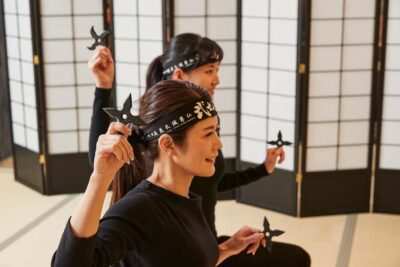
Samurai Ninja Museum Guided tour and Experience
Read our review →
Kendo and Samurai Experience with Uniform and Gear
Read our review →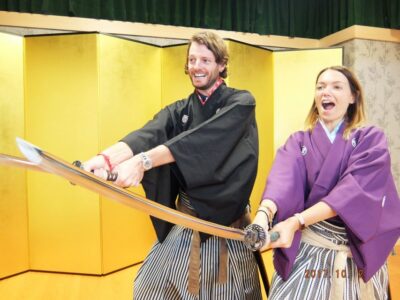
Samurai Sword Class by Experts in Traditional Arts
Read our review →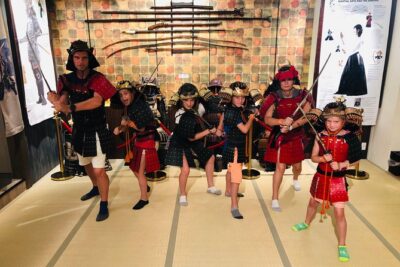
Skip the lines Basic Ticket at SAMURAI NINJA MUSEUM KYOTO
Read our review →
Samurai Sword & Archery Class from Samurai Descendant
Read our review →
Browse the lists this tour appears in