Reviewed · TOURS IN KYOTO
Treasures of Kyoto: Geishas & Traditions Private Tour
Kyoto’s geisha district is best understood on foot, one quiet lane and old theater at a time. This private walk connects Gion’s traditional streets with Shinto shrines, Buddhist temples, and the stories behind Japan’s performing arts. I like the small private format, which lets you ask questions freely, and the way the route links famous sights with lesser-known corners such as Tatsumi Daimyojin Shrine. The main trade-off is simple: 2 hours 30 minutes goes quickly, and you’ll see many places from outside rather than spending long periods inside them.
I also like the relaxed pace and the guides’ ability to adjust the conversation for families, including children aged 10 and 14. Guides named Ted, Guia, Maha, Kako, and Shohei have been praised for explaining geiko traditions, Buddhism, Shinto, and Kyoto’s past in an easy, personal way. You should still expect a fair amount of walking, steps, and streets that can be crowded around Gion’s best-known lanes.
Key points to know before you book
- A private Gion walk: Only your own party joins, so you can ask questions and set the pace more easily than on a large group outing.
- Geisha culture explained with care: The route takes you past traditional banquet buildings and gives context about geiko training, work, and customs.
- Several major sights in one compact outing: Minamiza Theatre, Yasaka Shrine, Chion-in Temple, Maruyama Park, and Nene-no-Michi all fit into the walk.
- Good guides for families: Ted in particular has been praised for answering children’s questions and keeping younger participants involved.
- A useful first look at Kyoto: The walk is well suited to a first day in town, when you want local orientation without spending half a day on transport.
- Mostly an exterior walking tour: Admission is listed as free, but the experience focuses on streets, grounds, views, and explanations rather than extended interior visits.
Why Gion works so well for a private walk
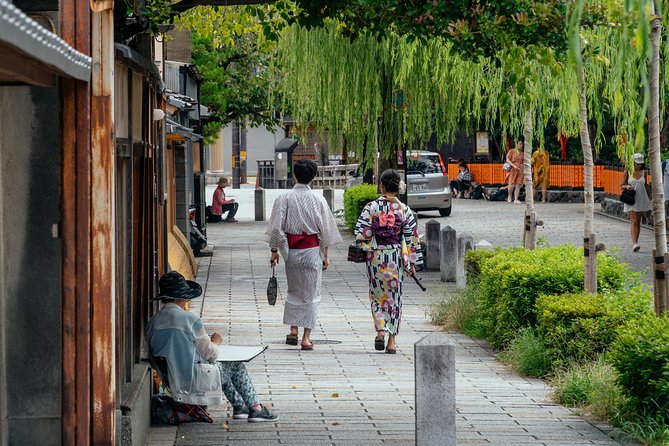
Gion is more than a place to spot people in kimono. It is a working district shaped by theater, religion, hospitality, and old city planning. A guide helps you read the details: the style of a wooden building, the purpose of a shrine, the difference between a geiko and a maiko, and why certain lanes are preserved.
The route begins near Kawabatacho in Higashiyama Ward. From there, you move into the traditional quarter rather than being whisked between distant sights by vehicle. That matters in Kyoto. The character of Gion appears in the short transitions between landmarks, especially along narrow streets and canals where a guide can point out details you could easily miss.
Because this is a private tour, you are not locked into a lecture delivered to a crowd. You can ask about clothing, religion, theater, family travel, or anything else that catches your eye. Guides such as Ted and Guia have been praised for their warmth and clear explanations, while Shohei has been described as creating the feeling of walking with an informed local friend.
The walk is also useful for orientation. If you have just arrived in Kyoto, this gives you a sense of how Gion, Shijo Dori, Maruyama Park, Yasaka Shrine, and the Higashiyama streets fit together. You won’t see every major attraction in the city, but you will understand one of its most important historic areas.
Other experiences people book in Kyoto:
- PERFECT KYOTO 1-Day Bus Tour
★ 5.0 · 13,518 reviews - Kyoto: Fushimi Inari, Kinkakuji, Bamboo Grove 1 Day Bus Tour
★ 4.8 · 4,316 reviews - Kyoto: Tea Ceremony in a Traditional Tea House in Kiyomizu
★ 4.9 · 3,519 reviews
Izumo no Okuni and the story of kabuki
The first stop is the statue of Izumo no Okuni, credited as the originator of kabuki theater. This is a small stop, but it gives the tour a strong opening because it connects Gion to performance, entertainment, and the public life of Kyoto.
Your guide can explain why this figure matters and how theater became part of the district’s identity. The planned visit lasts about 20 minutes, though the exact time may depend on questions and the walking pace of your group.
This is not a major monument that requires a long visit. Its value comes from the story attached to it. If you know little about kabuki, this stop gives you a useful thread to follow as you continue toward Minamiza Theatre.
Minamiza Theatre and Kyoto’s performing arts
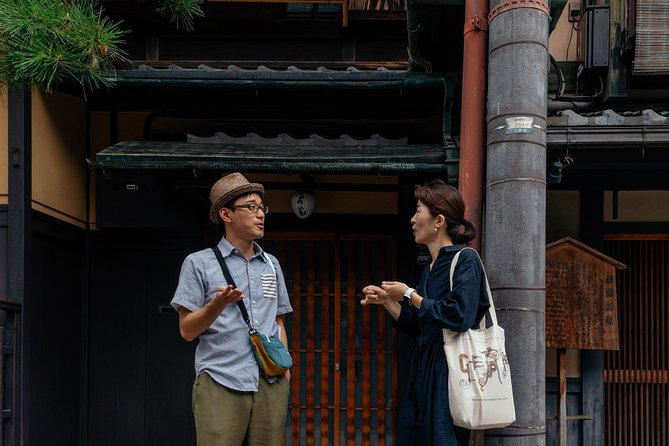
Minamiza Theatre is one of the most meaningful stops on the route. Its roots reach back to the early Edo period, and it remains closely tied to kabuki in Kyoto. Even if you do not attend a performance, seeing the theater helps place the surrounding entertainment district in context.
The tour allows about 20 minutes here. That is enough time for an explanation and photographs, but not for a full theater visit or performance. Keep that distinction in mind when you book. This is a cultural walk, not a ticketed theater outing.
I like this stop because it prevents the geisha quarter from being reduced to costumes and photo opportunities. Gion grew around formal entertainment, theater, restaurants, and traditional arts. Minamiza gives you a clearer picture of that larger world.
Gion Shinbashi and the rules of a traditional district
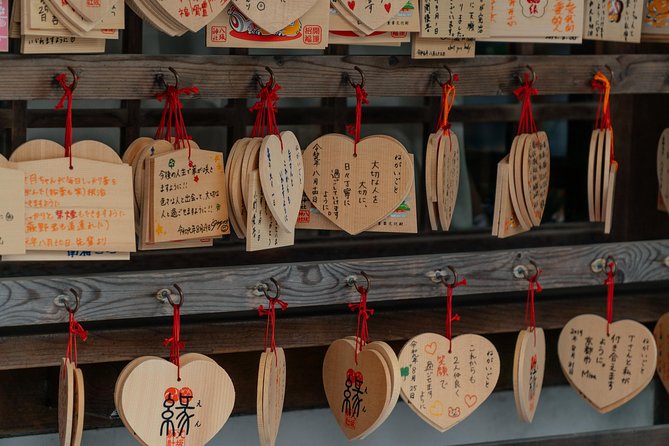
The walk continues through Gion, including the Shinbashi area. Gion Shinbashi is protected as a traditional business preservation area, while the section south of Shijo Street is recognized for its historic scenery.
Those designations help explain why the streets feel carefully maintained and why the wooden facades matter. This is not a museum set. It is a neighborhood with businesses, residences, and strict expectations about respectful behavior.
Your guide can also explain the difference between geiko and maiko traditions, the education involved, and the role of traditional banquet houses. The route passes buildings where geisha entertained customers, but it does not promise an arranged meeting or performance. You may see women dressed in geisha or maiko clothing, but the focus is on understanding the culture rather than treating people as photo subjects.
That distinction is important. Gion is a place to observe quietly, follow local rules, and keep your camera under control when signs or circumstances call for it. A private guide can help you behave appropriately, which is one of the strongest reasons to take this walk rather than explore the district with no context.
Same base, a different sort of day:
- Kyoto Geisha Walking Tour: Gion District & Hidden Gems
★ 4.7 · 3,273 reviews - Kyoto: Tea Ceremony Ju-An at Jotokuji Temple
★ 4.9 · 3,207 reviews - Kyoto: Gion Magical Night Walking Tour with Geisha Trivia
★ 4.9 · 2,393 reviews - Kyoto: 45-Minute Tea Ceremony Lesson Experience
★ 4.3 · 2,378 reviews
Tatsumi Daimyojin Shrine and Kyoto’s blended faiths
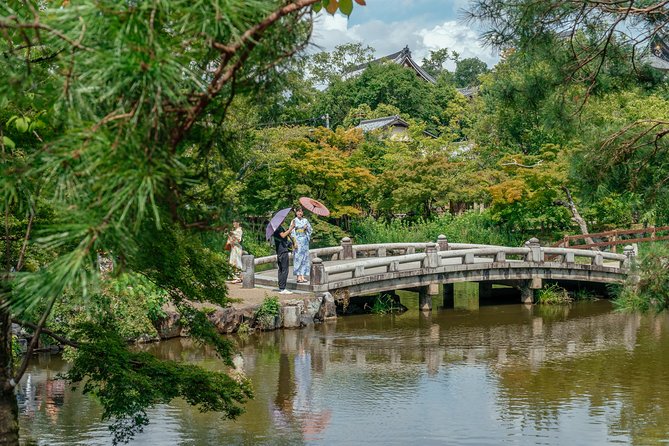
Tatsumi Daimyojin Shrine is scheduled for about 20 minutes and provides the clearest religious lesson of the outing. Here, you learn about Shinto and Buddhism, two traditions that have shaped Japanese life together and sometimes separately.
A guide can help you make sense of shrine customs without turning the stop into a dry vocabulary lesson. You’ll encounter the practical difference between a Shinto shrine and a Buddhist temple, along with the way the two traditions have influenced Kyoto’s buildings, rituals, and festivals.
This is one of the stops that benefits most from having a local interpreter. A small shrine can appear easy to pass by, but its meaning is less obvious without explanation. If you enjoy cultural context more than checklist sightseeing, this may be one of the tour’s best moments.
Shinbashi Dori and the geiko tradition
Along Shinbashi Dori, the guide points out traditional banquet buildings and explains how geisha culture works. The scheduled stop is only about 10 minutes, but the subject may come up throughout the walk.
Expect an introduction rather than an insider performance. You won’t be invited into a banquet house, and no meal or drink is included. Instead, you learn about the women’s training, education, work, and place within Kyoto’s traditional arts.
Past participants have especially valued guides who treat this subject with respect. Ted has been praised for explaining geiko life without sensationalizing it, while Guia has been noted for making the history and religious customs easy to follow. That tone matters. Gion deserves curiosity, but it also deserves restraint.
Chion-in Temple and the reward of the steps
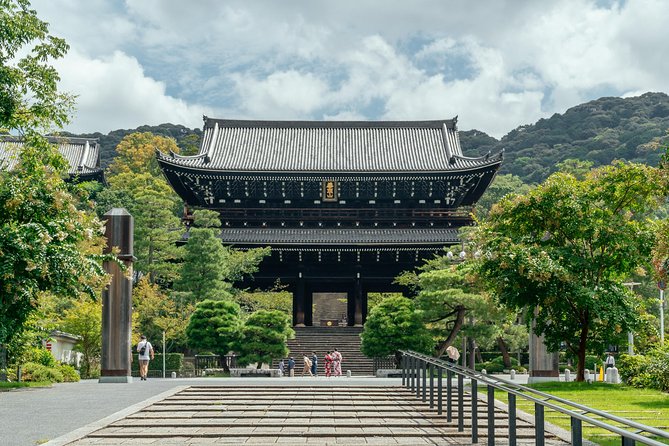
The route then heads toward Chion-in Temple. You’ll walk up steps for a better view of the temple and its garden area, with roughly 10 minutes planned for the stop.
This is one of the points where comfortable shoes matter. The tour is not a hard hike, but the steps and steady walking make a moderate level of fitness useful. If you have mobility concerns, ask about the route before booking, since the walk includes steps and uneven city surfaces.
The brief visit gives you a taste of the temple grounds rather than an extended temple tour. Still, the change in atmosphere is welcome. After the close streets of Gion and Shinbashi, the temple area provides more space and a quieter setting.
Maruyama Park and Yasaka Shrine
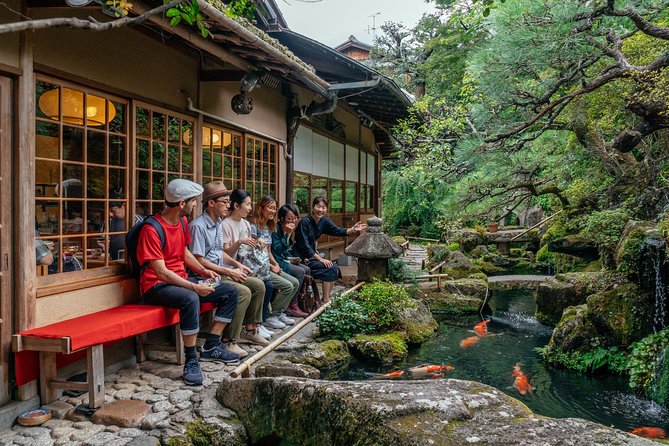
From Chion-in, you walk toward Maruyama Park. About 20 minutes are allotted here, enough to stroll through the park area and hear how it fits into the surrounding temple and shrine district.
Maruyama Park is a useful breathing space in the itinerary. The route is not just a parade of buildings. You move from theater streets to shrine lanes, then into a greener public area before reaching Yasaka Shrine.
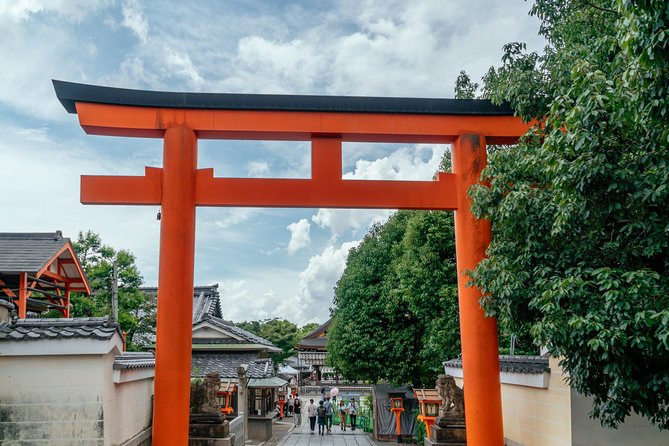
Yasaka Shrine receives another short stop of about 10 minutes. Its origins are linked by legend to AD 656, long before Kyoto became the imperial capital of the Heian era. Your guide can separate legend from historical tradition and explain why the shrine remains so important to local religious life.
This is a good place to ask about shrine etiquette. The tour is not a formal religious ceremony, but the setting gives you a chance to learn how to approach a Shinto shrine respectfully.
Shijo Dori and Nene-no-Michi
Shijo Dori is Kyoto’s Fourth Avenue, named for the old grid plan of Heian-kyo, the ancient capital. The stop lasts around 10 minutes and shows you the link between modern city movement and Kyoto’s older layout.
The street can feel much busier than the quieter lanes, so your guide’s navigation is useful. You’ll get a short explanation of the avenue’s name and place in the city, then continue toward Nene-no-Michi.
Nene-no-Michi takes its name from Nene, the wife of Toyotomi Hideyoshi. Kodaiji Temple was built in 1605 at her request, and the street connects that history with the walk’s wider look at Kyoto’s powerful families, religious institutions, and preserved neighborhoods.
Again, the tour gives you an exterior view and historical context rather than a full Kodaiji visit. If Kodaiji is high on your list, plan a separate visit. This walk gives you a useful introduction to the area and helps you find it.
The final pagoda view and nearby cafe
The published route ends in the Yasaka Kamimachi area near Yasaka no To temple, with a picturesque five-story Buddhist pagoda and broad views from the top described as the final sight. The final stop is listed at about 10 minutes, followed by the option to finish at a local cafe nearby.
The wording around the final Yasaka Shrine stop can be confusing, since the route names Yasaka Shrine earlier and ends near Yasaka no To. Treat the ending as the Higashiyama pagoda area rather than another full shrine visit.
The nearby cafe finish is not a listed food inclusion, so plan to pay for anything you order. It is still a pleasant way to end a walking tour, especially if you want to continue talking with your guide or pause before exploring more of Higashiyama.
What the $135.45 price buys you
At $135.45 per person, this is not the cheapest way to see Gion. The value depends on your group size and how much you want personal explanation. You are paying for a private guide, a route that joins several districts and cultural themes, and the freedom to ask questions without waiting for a large group to catch up.
For a couple or small family, the price can make sense if you want more than photographs. You receive a local guide for about two and a half hours, with no separate attraction admission listed. For a larger private party, group discounts may improve the per-person value.
I would not choose this tour if your main goal is long temple visits, a kabuki performance, a meal, or an arranged geisha encounter. Food and drinks are not included, hotel pickup is not included, and the walk is primarily outdoors.
The strongest value comes from interpretation. A shrine, pagoda, theater, or preserved street is easy to see on your own. Understanding what you are looking at, and how to behave around a working cultural district, is what makes the cost easier to justify.
Timing, meeting point, and physical demands
The meeting point is on Kawabatacho in Higashiyama Ward, and the tour ends near Yasaka no To in Yasaka Kamimachi. Since the start and finish are in different parts of the district, you should allow time to reach the meeting point and arrange your next stop from the ending area.
The tour lasts approximately 2 hours 30 minutes. It is close to public transportation, but hotel pickup and drop-off are not included. Wear shoes suited to walking and steps, and bring water in warm weather.
The activity calls for moderate physical fitness. Service animals are allowed. The private format means only your party participates, but it does not remove the need to walk through busy lanes and climb some steps.
Free cancellation is available up to 24 hours before the start time for a full refund. Changes or cancellations made inside that 24-hour window are not accepted for a refund, with cut-off times based on Kyoto local time.
Who will get the most from this walk
I would recommend it most to first-time visitors with limited time in Kyoto, families who want questions answered in plain language, and couples who prefer a private pace. It also suits anyone curious about the difference between geisha culture, kabuki, Shinto, and Buddhism.
The tour works particularly well for children who ask a lot of questions. Ted has been praised for adapting explanations for children aged 10 and 14, and other guides have been described as friendly, engaging, and able to keep the walk interesting in bad weather.
You may want something else if you dislike walking, need long indoor visits, or already know Gion well. A visitor seeking a formal geisha performance or a ticketed theater experience will need a separate activity.
Should you book Treasures of Kyoto?
Book it if you want a compact, personal introduction to Gion with cultural explanation rather than a simple photo walk. The best part is the combination of geisha traditions, kabuki, shrine customs, temple grounds, and old streets, all tied together by a private guide.
Before booking, confirm the meeting point, wear sensible shoes, and keep your expectations clear. This is a walking orientation with strong storytelling, not a full-day sightseeing tour or a guaranteed geisha sighting. For a first visit to Kyoto, especially with children or a small private group, it offers a useful and respectful way to get your bearings in one of the city’s most famous districts.
FAQ
How long does the tour last?
The tour lasts approximately 2 hours 30 minutes.
Is this a private tour?
Yes. Only your own party participates, with a private local guide.
What sights are included?
The route includes the statue of Izumo no Okuni, Minamiza Theatre, Gion, Tatsumi Daimyojin Shrine, Shinbashi Dori, Chion-in Temple, Maruyama Park, Yasaka Shrine, Shijo Dori, Nene-no-Michi, and the Yasaka no To area.
Are entrance tickets included?
Admission tickets are listed as free for the stops. The experience focuses mainly on outdoor areas, streets, temple grounds, shrines, and explanations.
Is food included?
No. Food and beverages are not included. The tour may finish at a nearby local cafe, but you pay for anything you order.
Is hotel pickup provided?
No. Hotel pickup and drop-off are not included. The meeting point is on Kawabatacho in Higashiyama Ward, and the tour ends near Yasaka no To in Yasaka Kamimachi.
Can I cancel for a full refund?
Yes, if you cancel at least 24 hours before the experience start time. Cancellations or changes made less than 24 hours before the start time are not refunded.
Just added in Kyoto
- Private Cooking Class Udon in Kyoto Japan★ 5.0 · 23 reviews
- Your Private Vacation Photography Session In Kyoto★ 5.0 · 110 reviews
- Kyoto: Zen Meditation at a Private Temple with a Monk★ 5.0 · 25 reviews
- Private Pewter Sake Cup Experience with a Kyoto Artisan★ 5.0 · 31 reviews
- Kyoto Wagashi(Japanese sweets) Cooking Class near Fushimiinari★ 5.0 · 60 reviews
- Kyoto: Gion Geisha District & Sake-in-Hand Walking Tour★ 5.0 · 37 reviews
- Kyoto:Family-Friendly Kimono & Yukata Experience at WARGO★ 5.0 · 147 reviews
- Private Guided Traditional Buddhist Cooking in Japan★ 5.0 · 16 reviews
Tours in Kyoto, compared.

Tea Ceremony in a Traditional Tea House in Kiyomizu
Read our review →
Kyoto Geisha Walking Tour: Gion District & Hidden Gems
Read our review →


Gion Geisha District Walking Tour – Stories of Geisha
Read our review →
Best of Kyoto: Gion, Geisha, Pagodas & Cobblestones
Read our review →