
Reviewed · CALLIGRAPHY & CRAFT WORKSHOPS
Osaka: Private Japanese Calligraphy Experience
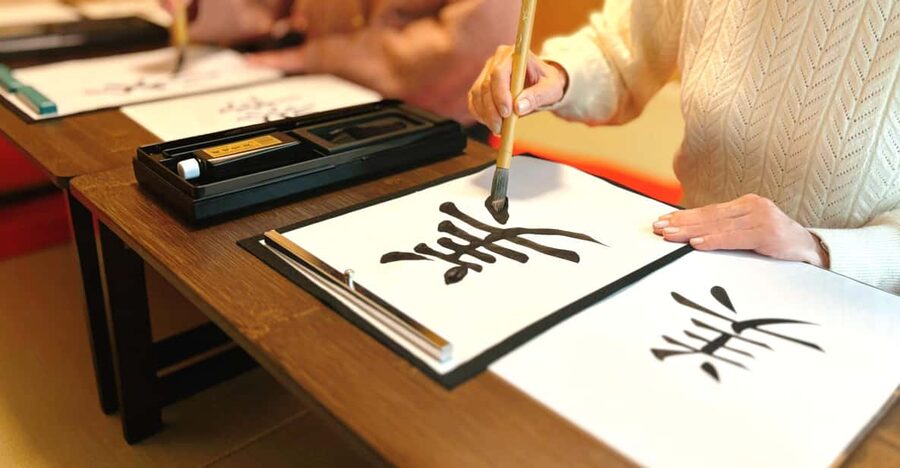
Japanese calligraphy becomes much more personal here than simply copying a few characters. Your instructor helps turn your name and personality into kanji, then guides you through the brushwork needed to create a finished piece on colored paper. The private setting keeps the mood calm, and you can ask for photos or a slower pace as you work.
I especially like the custom name artwork and the patient, hands-on teaching from Wa No Ma. I also like that children can use water calligraphy to avoid dirty hands and clothes. The one drawback is practical: you must wear socks, and the studio is not suitable for wheelchair users.
Key points to know before booking
- Your name becomes the centerpiece: Choose favorite letters or words, then work with the instructor to find kanji that suit your personality.
- The lesson is fully private: Your group receives personal attention, with time to ask questions and adjust the pace.
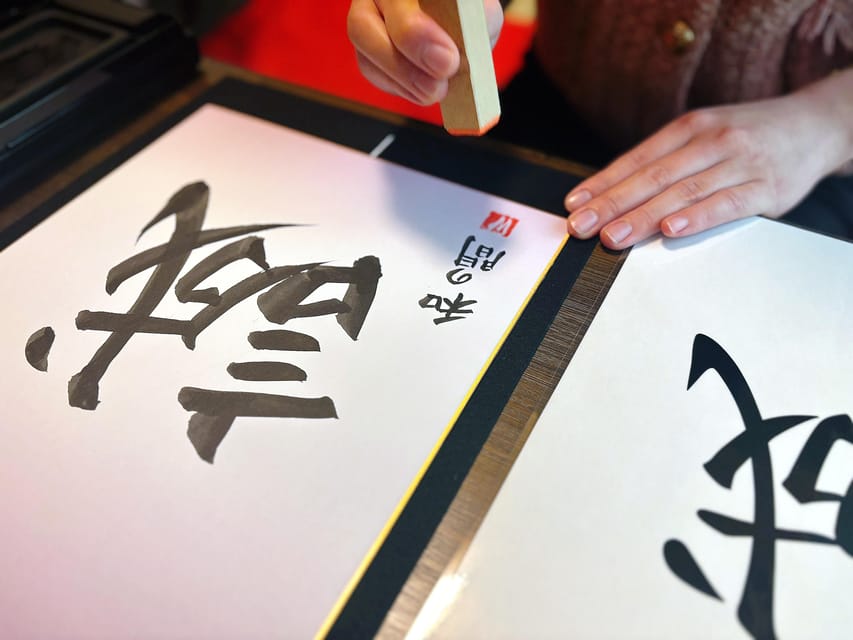
- You leave with handmade art: Colored paper, your kanji name, and a personal stamp turn practice into a keepsake.
- The instructor teaches more than brush control: Expect explanations of Japanese writing systems, stroke order, meaning, and calligraphy culture.
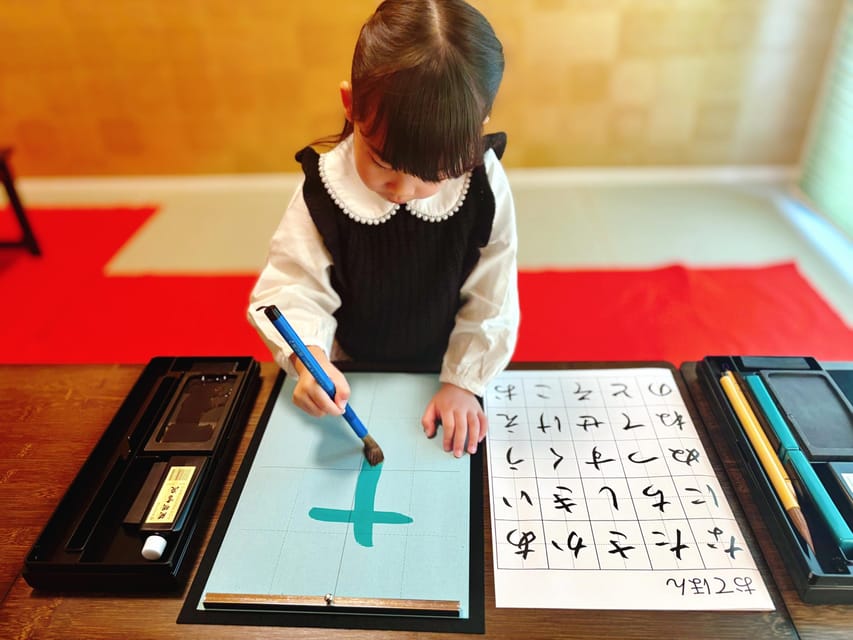
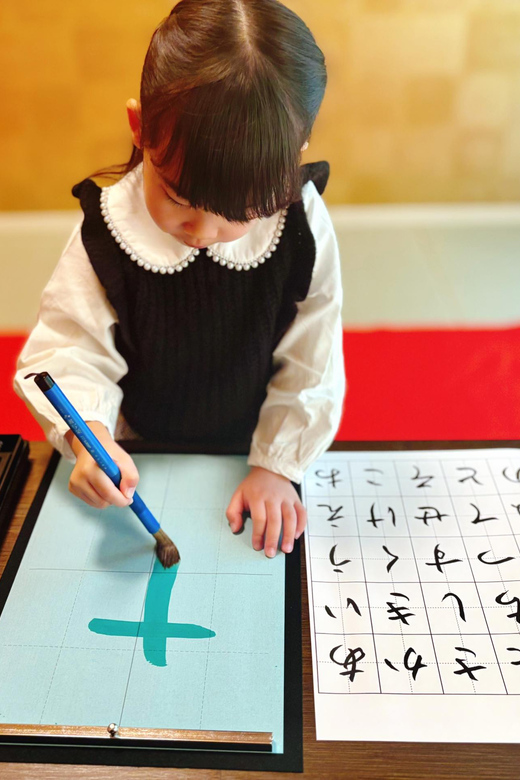
- Families can join comfortably: Water calligraphy is available for young children, and the lesson can slow down to suit them.
- The location is convenient: The meeting point is near Shinsaibashi-suji and in Namba, making this easy to pair with shopping or sightseeing.
A quiet creative break in central Osaka
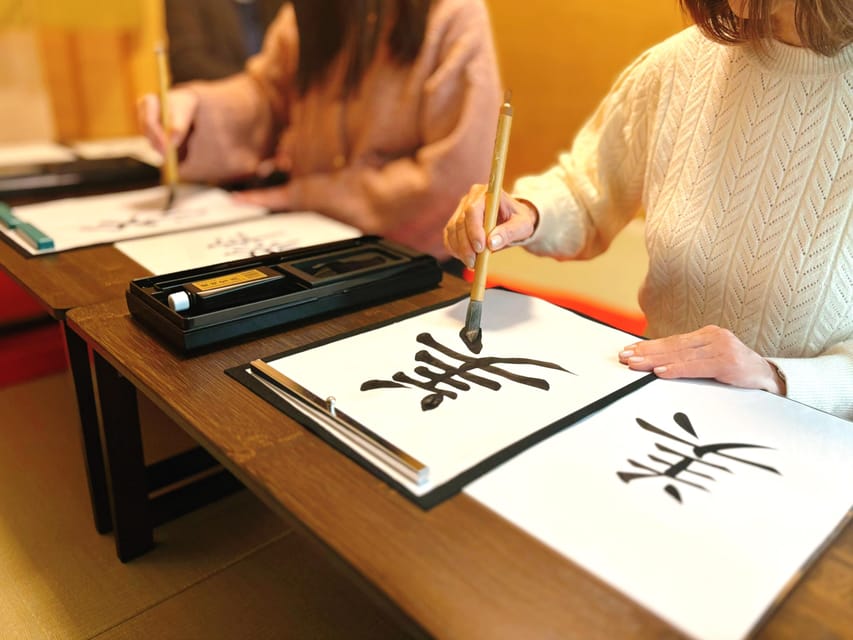
Osaka is famous for food, shopping, bright signs, and a quick-moving city center. This 90-minute lesson gives you a very different side of the city. You sit down, focus on the brush, and work one stroke at a time.
That change of pace is part of the appeal. Calligraphy demands attention, but it is not presented as a stiff formal class. The instructor explains each step in English or Japanese, answers questions, and offers direct help when your hand or brush does not do what you intended.
The private format matters. You are not sharing the lesson with a large room of strangers, so you can take photos when you want, ask for more explanation, or request a slower pace for children. If you are traveling as a couple, family, or small private group, the class feels personal rather than packaged.
Other things to make with your hands in Osaka:
- Osaka Sushi Making Experience
★ 5.0 · 400 reviews - Osaka: Matcha Making Experience with Japanese Sweets
★ 5.0 · 146 reviews - Osaka Dotonbori: Sushi Making Experience
★ 4.9 · 122 reviews
Finding the studio near Shinsaibashi
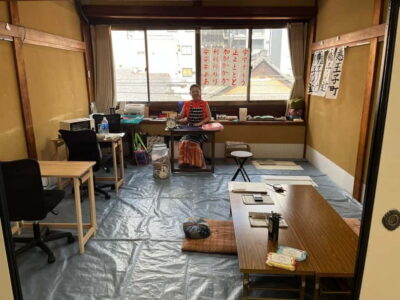
The meeting point is outside the main entrance of New Osaka Hotel Shinsaibashi. Walk west for about 30 seconds, and look for a blue vending machine near the entrance. The instructor waits outside five minutes before your scheduled time and wears a kimono, which makes the meeting fairly easy to spot.
The studio sits in Namba, close to the center of Osaka tourism and within easy reach of Shinsaibashi-suji shopping street. This is useful when planning your day. You can shop before the class, take the lesson as a calm break, then continue toward the many restaurants and sights around Namba.
I would allow a little extra time to find the hotel entrance, especially if you are coming from a busy station or carrying shopping bags. The meeting directions are short, but Osaka’s central streets can feel confusing when you are moving between large buildings and shopping arcades.
Choosing a theme, word, or personal message
The lesson begins with a choice. You select a theme, favorite letter, or word you would like to write. You can also ask the instructor to suggest kanji that express your personality.
This personal step gives the artwork more meaning than a random character chosen only because it looks attractive. You might focus on an idea such as happiness, connection, or another quality that matters to you. The exact choice is made during the lesson, so you do not need to arrive with a finished plan.
The instructor also explains the basic Japanese writing systems before you begin. This helps you understand how kanji differs from the other forms of Japanese writing and why a character can carry both a sound and a larger idea.
That cultural context is one of the strongest parts of the class. You are not simply tracing symbols. You are learning why the character was selected and how the written form connects to Japanese language and artistic practice.
Learning the brush strokes before making the final piece
After choosing your theme, the instructor gives a practical lesson in basic calligraphy technique. You practice the movements before working on the final artwork, which is important because brush control is harder than it looks.
You learn how pressure, direction, and rhythm affect the mark on the paper. A small change in the way you hold or move the brush can make a stroke look heavy, thin, sharp, or soft. The instructor watches your work and gives feedback as you go.
The teaching style is patient and encouraging. If a stroke is difficult, you receive hands-on guidance rather than being left to guess. That is especially helpful for children and anyone who has never handled a calligraphy brush.
Do not expect every line to look perfect at once. The point is not to produce professional-level calligraphy in 90 minutes. The value is in learning the movements, understanding the character, and making a finished piece that carries your own effort.
The class can feel almost meditative because the brush requires steady breathing and concentration. It is still a hands-on activity, so you will have some imperfect strokes and possibly a shaking hand. That is normal, and it is part of the charm of making the work yourself.
Same base, a different sort of day:
- Osaka Go Karting Tour with Funny Costume
★ 5.0 · 2,658 reviews - Osaka Castle: Museum and Tower Entry Ticket
★ 4.5 · 2,380 reviews - Osaka: Shinsekai Food Tour with 13-15 Dishes at 5 Eateries
★ 4.8 · 2,204 reviews - Osaka Food Tour: 13 Dishes at 5 Local Eateries
★ 5.0 · 2,149 reviews
Selecting colored paper and creating the artwork
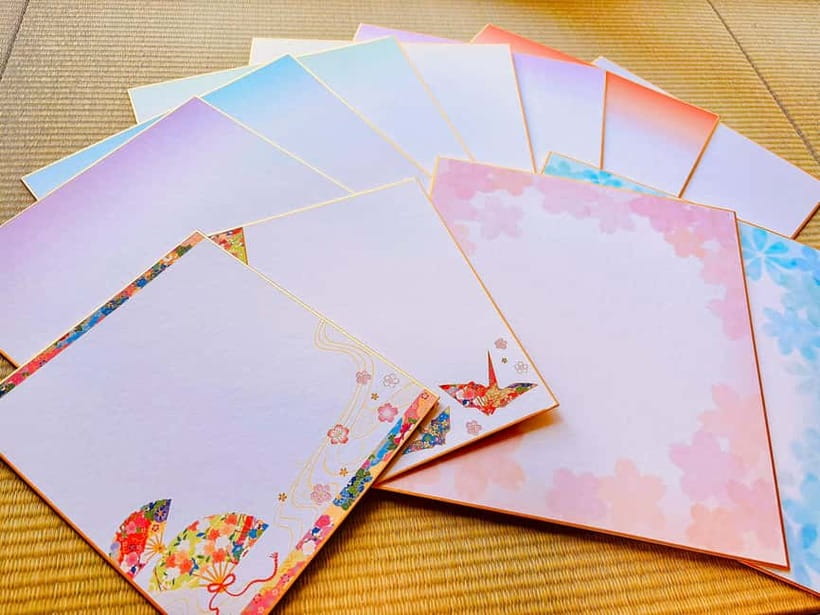
Once you have practiced, you choose a favorite piece of colored paper from the available selection. This small decision gives you control over the final appearance and helps the finished work feel like your own design.
You then print the selected kanji on the paper. The instructor can continue to guide your hand and offer suggestions about the form. After that, you write your name in Japanese characters and stamp your initials.
The stamp is a simple but effective finishing touch. It gives the work the look of a traditional calligraphy piece while marking it as your personal creation. You leave with a one-of-a-kind souvenir rather than a factory-made item bought from a shop.
The final artwork should be treated carefully while you continue sightseeing. The supplied information does not specify protective packaging, so I would ask the instructor how best to carry it before leaving the studio.
Why the private format is worth paying for
The price is $51 per person for 90 minutes. That is not the cheapest short activity in Osaka, but the price includes the instructor, colored paper, and all fees and taxes. Most importantly, it pays for a private lesson rather than a large shared class.
For two people, the value is particularly strong. You receive direct instruction, have time to ask questions, and can get help with difficult strokes without waiting for a teacher to move around a crowded group. Couples can make related pieces, while families can work at different speeds.
The private arrangement also allows reasonable adjustments. You can request lots of photos, ask the instructor to proceed slowly with a child, or make other changes aimed at making the session work for your group.
There is no tea ceremony included in this plan. If you want both activities, you need to reserve the separate Osaka private tea ceremony and calligraphy option. That distinction matters when comparing prices and planning your afternoon.
A good choice for families with children
The class works well for families because calligraphy gives children a concrete activity and a souvenir they helped make. Children as young as seven have enjoyed the session, and the pace can be adjusted to suit younger participants.
For young children, the studio offers water calligraphy. This avoids dirtying hands and clothes, which makes the activity less stressful for parents. You should still bring socks, as they are specifically required.
Older children and teenagers may appreciate the personal nature of the kanji name. A teenager who is less interested in a standard museum visit may enjoy creating something connected to their own identity.
Parents should keep expectations realistic. Brushwork requires patience and concentration, and the final result may not look polished. The instructor’s support helps, but this is a lesson in an art form, not a quick craft activity where everyone produces an identical perfect item.
What the teaching is like
The instructor speaks English and Japanese, and clear explanations are a major part of the session. You can ask about the meaning of a character, the history of calligraphy, Japanese writing, or the logic behind a particular stroke.
The strongest praise for this activity centers on the instructor’s kindness, patience, and personal attention. That combination is important because a first calligraphy lesson can feel intimidating. You need someone who can explain the technique without making mistakes feel embarrassing.
The instructor also takes photos during the process if you request them. This is useful because your hands are occupied, and it lets you record the stages from first practice strokes to the final kanji piece.
The class is not built around a formal tea ceremony, elaborate costume session, or long cultural lecture. Its focus is narrower: learn basic calligraphy, understand the writing, and produce your own work. That clear focus makes the 90-minute schedule feel well suited to a busy Osaka itinerary.
Who should book this Osaka calligraphy class
I would recommend it most strongly to:
- Couples who want a shared keepsake with personal meaning
- Families looking for a calm, creative activity
- Visitors interested in Japanese language and writing
- First-time calligraphy students who want close instruction
- Anyone seeking a break from shopping, food tours, and crowded city streets
It is also a good option if you prefer activities where you make something rather than only watch a demonstration. The final artwork gives the class a clear purpose, while the cultural explanation keeps it from feeling like a generic souvenir workshop.
You may want to skip it if you dislike seated, detail-focused activities or want a larger group atmosphere. It is also not suitable for wheelchair users, and smoking is not allowed.
Timing, cancellation, and what to bring
The activity lasts 90 minutes, with starting times based on availability. The schedule can be arranged around your group’s requests, but you should confirm the available start time before building the rest of your day around it.
Bring socks. No other special equipment is listed, and the class fee covers the instructor, colored paper, and taxes. I would wear comfortable clothes that allow you to sit and move your arm freely, while remembering that children can use water calligraphy if mess is a concern.
You can cancel up to 24 hours before the scheduled activity for a full refund. The reserve-now, pay-later option also gives you some flexibility while arranging a Japan trip.
Should you book this experience?
Book it if you want a personal Osaka souvenir, enjoy learning through practice, and value a private teacher who can adjust the pace to your group. The custom kanji name, personal stamp, colored paper, and English guidance give the session more substance than a quick photo opportunity.
At $51 per person, the class is best value for couples and small groups who will use the private attention. Families should appreciate the child-friendly water calligraphy option, while culture-focused visitors will enjoy the explanations of writing and meaning.
I would not book it expecting a polished professional artwork or a full Japanese cultural ceremony. Book it for the quiet concentration, the chance to ask questions, and the satisfaction of carrying home something you made in Osaka.
FAQ
How long does the Japanese calligraphy experience last?
The activity lasts 90 minutes.
How much does the experience cost?
The listed price is $51 per person.
Is the calligraphy lesson private?
Yes. The experience is for a private group, with close attention from the instructor.
Which languages does the instructor speak?
The instructor speaks English and Japanese.
Where is the meeting point?
Meet outside the main entrance of New Osaka Hotel Shinsaibashi. Walk west for about 30 seconds and look for a blue vending machine near the entrance.
How will I recognize the instructor?
The instructor waits outside the main entrance five minutes before the scheduled time and wears a kimono.
What do I create during the class?
You choose a theme or word, select colored paper, write kanji, add your name in Japanese characters, and stamp your initials.
Can children take part?
Yes. The pace can be adjusted for children, and water calligraphy is available for young children to help prevent dirty hands and clothes.
Is a tea ceremony included?
No. Tea ceremony is not included in this plan. A separate private tea ceremony and calligraphy plan is available.
Just added in Osaka
- Private arrival transfer from Kansai International airport to Kyoto City★ 5.0 · 32 reviews
- (Ticket Included) Explore Osaka Castle & Museum of History★ 4.8 · 21 reviews
- Hidden Osaka – Yukaku Red Light Tour & Culinary Adventure★ 4.8 · 96 reviews
- Osaka: Walking Tour and Top Highlights★ 4.8 · 104 reviews
- Pickleball in Osaka, Kobe & Kyoto with Locals!★ 4.7 · 80 reviews
- Osaka: Private Ceramic Painting Workshop★ 5.0 · 13 reviews
- Osaka:SUMO BEATS SHOWCASE: Taiko Drum and Wagyu burger!★ 4.2 · 37 reviews
- Eat Like a Local in Osaka – Private Custom Street Food Tour★ 4.3 · 33 reviews
Calligraphy & Craft Workshops, compared.
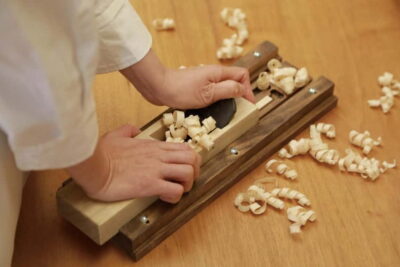
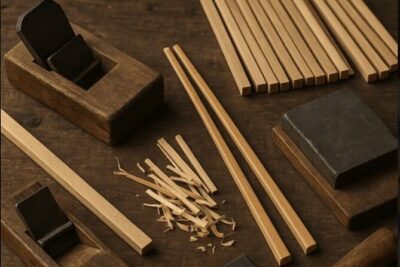
Chopsticks Making Workshop in Gion with Engraving Option
Read our review →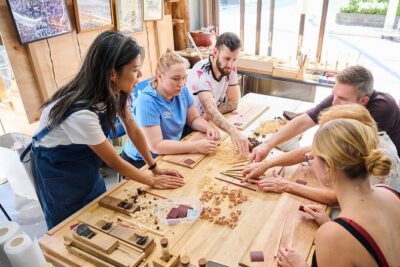
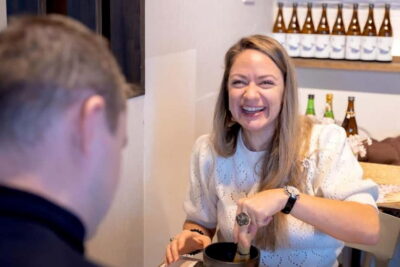
Matcha Making Experience with Mochi Sweets in Asakusa
Read our review →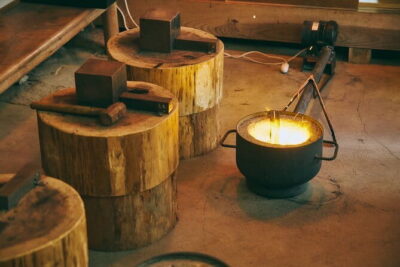
Authentic knife making experience at a blacksmith in Kyoto
Read our review →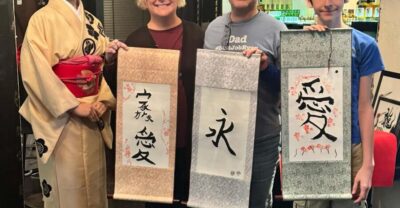
Calligraphy class at Buddhist temple in city center
Read our review →Browse the lists this tour appears in