
Reviewed · ARASHIYAMA & BAMBOO GROVE TOURS
Osaka Temple :Warm Bamboo Oil Massage – Deep Restore〈90min〉
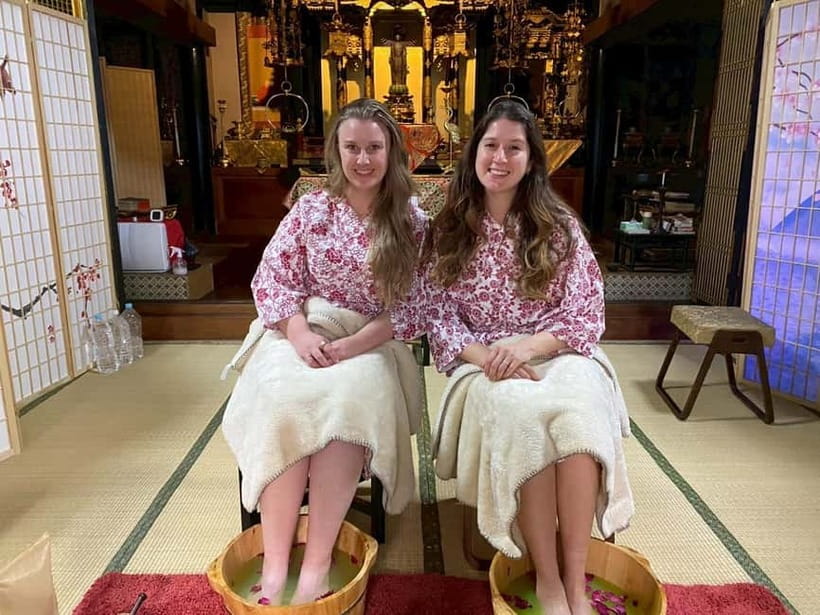
The most unusual part of this Osaka experience is the setting: you receive a warm bamboo oil massage inside a temple, then sit down for Zen meditation and a matcha ceremony. It is not simply a spa appointment with a few Japanese touches added. The visit is shaped around quiet rituals, from incense and kneaded incense to a yukata change and temple worship customs.
I like the thoughtful order of the visit, with the foot bath and meditation helping you slow down before the massage. I also like that the tea ceremony includes cultural and historical explanation, rather than treating matcha as a quick green drink. The main consideration is time: the massage itself lasts 90 minutes, while the full visit takes about two hours, so this is a substantial stop in your Osaka plans.
Key points to know before booking
- Warm bamboo bodywork: A full-body oil massage combines hand techniques with bamboo and myofascial release.
- Temple rituals first: Incense offering, bell meditation, and kneaded incense give the visit a clear Japanese cultural focus.
- Matcha with context: The tea ceremony comes with an explanation of Japanese customs and history, plus original sweets.
- Small group setting: The experience is limited to three participants, though meditation may be shared with other people.
- Yukata and phone photos: You change into a simple yukata and receive complimentary smartphone photos as a keepsake.
- A practical location warning: Use Japanese Massage -the one&only- in Google Maps, not the temple name.
A temple visit with a massage at its center
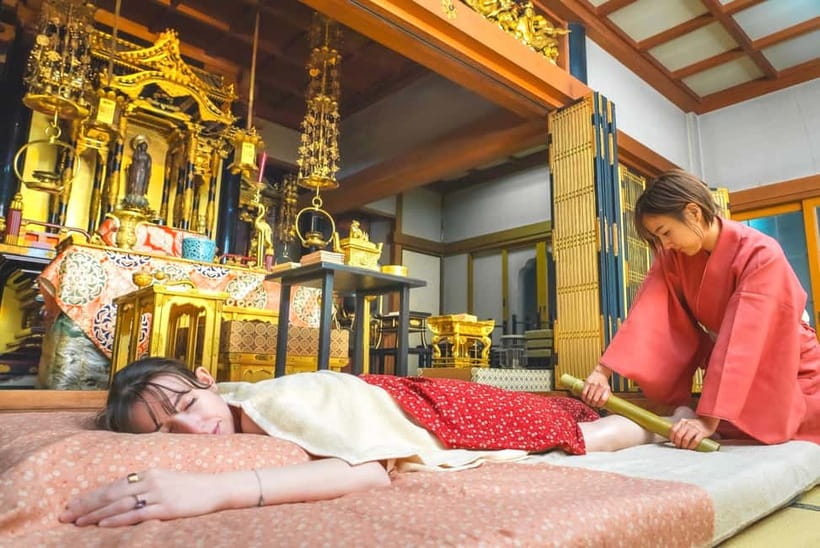
Many Osaka spa appointments are designed around efficiency. You arrive, change, receive treatment, and leave. This experience takes a different route. The massage remains the main event, but the temple setting and small rituals give the appointment a slower rhythm.
The experience provider, japanese massage 唯一無二 -the one&only-, offers the session in English and Japanese. The group is limited to three people, which helps keep the setting personal without making it fully private by default.
The overall visit lasts two hours. The treatment portion is listed as 90 minutes, and the remaining time covers the welcome, changing into a yukata, temple visit, meditation, tea ceremony, and other cultural elements. You should not book this expecting two full hours on the massage table.
The massage practitioner Arisa is specifically identified in the experience information. If you are hoping to request her, ask when booking rather than assuming she will lead every session.
Other temples and shrines in Osaka people book:
- Osaka: Minoh, Katsuoji Temple, & Minoh Falls Full-day Tour
★ 4.9 · 172 reviews - Full Day Kyoto Tour : Bamboo Forest, Golden Temple, Fushimi Inari
★ 5.0 · 84 reviews - Osaka Temple Cool Foot Bath & Matcha Experience〈45min〉
★ 4.9 · 82 reviews
Finding the meeting point without a wrong turn
The meeting instructions deserve attention. When entering the location into Google Maps, search for Japanese Massage -the one&only-. Do not enter the temple name, because that can send you to a back entrance where it may be hard to find the correct arrival point.
If the address still causes trouble, search for the restaurant Tossa de coracao. The meeting point is right next to it. This is exactly the kind of small Osaka detail that can save you from beginning a relaxing appointment while already flustered and late.
The instructions provided do not give a transport route or a station name, so you should check the map before leaving your hotel. Allow extra time to identify the correct entrance, especially if you are unfamiliar with the area.
Yukata, incense, and the first quiet moments
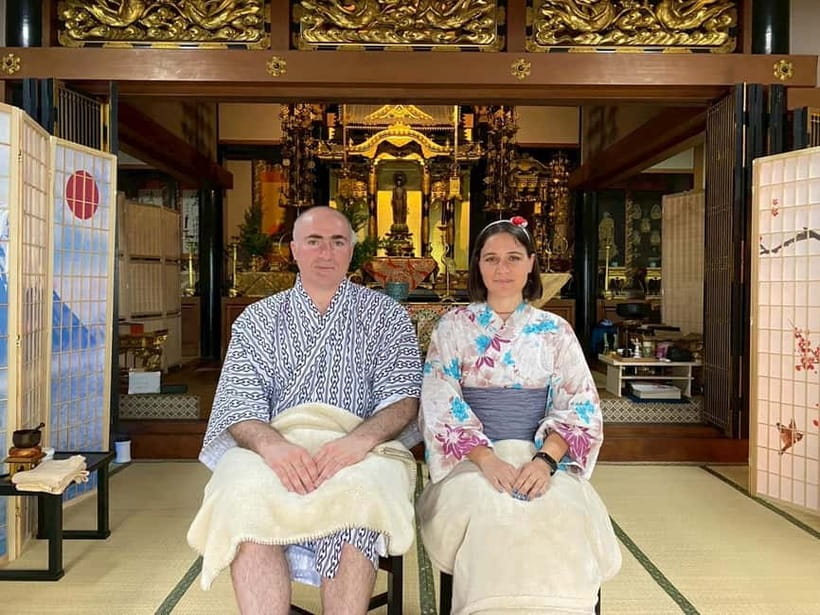
The visit begins with a welcome drink and a change into a simple yukata. This is not presented as a formal costume rental or a long dressing lesson. It is a practical way to shift out of sightseeing mode and into the calm pace of the session.
You then visit the temple and offer incense. The introduction covers the temple’s background and Japanese worship culture, giving you a framework for what you are doing rather than asking you to copy a gesture without context.
That explanation is useful for anyone who wants more than a decorative cultural stop. Incense offering is a small action, but it connects the visit to the place itself. You are not only receiving a treatment in a room styled to look Japanese.
The meditation includes a bell and kneaded incense. The bell marks a change in pace, while the scent and stillness help prepare you for the bodywork. Meditation may be shared with other people unless you arrange a private experience, so do not assume this part will be completely solitary.
Foot bath and scrub before the main treatment
The foot bath and scrub massage come before the full-body work. This is a sensible beginning after a day of walking around Osaka. It gives your feet attention first and lets you settle before the oil massage starts.
The information does not specify the scrub ingredients, water temperature, or exact length of this step. You can expect it to be part of the treatment sequence, but not a separate spa service with a long menu of choices.
The session then moves into warm bamboo and hand oil massage. Bamboo is used alongside hands for full-body work and myofascial release. The purpose is not only surface relaxation. Myofascial techniques focus on tension in the connective tissue around muscles, so the treatment may appeal to you if ordinary light massage feels too gentle.
Pressure preferences are not detailed in the activity information. If you need a particular pressure level or have an area that requires care, explain that before the massage begins. English and Japanese support is available, but clear requests are still important in any body treatment.
The warmth of the bamboo is part of the appeal. It adds a different sensation from hand massage and gives the treatment a clear identity. Still, the bamboo work should not be confused with a medical therapy or a guaranteed solution for chronic pain. This is a relaxation experience with myofascial techniques, not a clinical appointment.
Other mornings on the western edge of Osaka:
- Kyoto: Immersive Arashiyama & Fushimi Inari by Private Car
★ 5.0 · 35 reviews - From Osaka: Kyoto, Nara, Fushimi Inari & Arashiyama Day Tour
★ 4.4 · 19 reviews - Osaka/Kyoto: Arashiyama, Nara Park, Fushimi Shrine Tour
★ 4.1 · 13 reviews - Kyoto: Fushimi Inari, Kinkakuji, Bamboo Grove 1 Day Bus Tour
★ 4.8 · 4,316 reviews
What the bamboo massage is likely to feel like
The warm bamboo gives the practitioner another tool for broad, steady pressure. In practice, that can create a rolling or gliding sensation across larger areas of the body, while hand massage can address more focused tension.
The treatment is described as a full-body oil massage, so you should expect oil to be part of the main bodywork. Wear something that is easy to change out of and do not schedule an immediate formal event unless you have time to freshen up afterward.
The massage is the strongest reason to choose this activity. The cultural program is appealing, but the visit would not make much sense if you wanted only a temple tour or only a tea ceremony. You are paying for a combined experience, with the bodywork taking up most of the formal treatment time.
Arisa is praised in the supplied information as a talented masseuse, and the warm bamboo technique is repeatedly described as relaxing. The practical message is simple: if massage quality matters most to you, this is the part to focus on when making your choice.
Matcha, sweets, and a slower cultural lesson
After the bodywork and temple elements, you take part in a traditional Japanese tea ceremony. The session includes matcha and original Japanese sweets, with cultural and historical explanation.
I like this part because it gives you something to do with your attention after the massage. You learn how the tea ceremony fits into Japanese culture instead of simply drinking matcha as a souvenir activity. The sweets also provide a small contrast to the earthy bitterness of the tea.
The ceremony is not described as a formal, multi-course tea gathering. It is one element within a two-hour appointment. Keep that scale in mind. You receive a taste of the practice and its meaning, not an entire afternoon devoted to tea.
The cultural explanation is available in English and Japanese. That makes a difference here, since tea ceremony gestures can seem mysterious when you do not understand why they are performed. The activity is designed for people who want a brief introduction alongside relaxation.
A yukata photo to take home
Your yukata is also part of the keepsake side of the experience. Complimentary smartphone photos are taken during your time at the temple, and you can take them home afterward.
This is a modest but useful inclusion. You do not need to arrange a separate photographer, and the photos record the cultural side of the visit as well as the setting. The information does not promise professional camera equipment, edited portraits, or a fixed number of images. Think of it as a simple phone photo service.
The yukata is described as simple, so you should not expect an elaborate formal kimono dressing experience. That is not a weakness if you want comfort and a clear cultural touch without turning the appointment into a costume session.
Price and the value of the two-hour format
At $129 per person, this costs more than a basic massage. The value comes from combining several services: a 90-minute full-body oil treatment, foot bath and scrub, temple introduction, incense offering, Zen meditation, matcha, Japanese sweets, yukata use, and smartphone photos.
For you, the price makes the most sense if you want both relaxation and a cultural activity. If your only goal is a massage, you may find a simpler treatment better suited to your budget. If you have limited time in Osaka and want to pair bodywork with Japanese customs, the bundled format is easier to justify.
The small group limit also matters. A maximum of three people is more intimate than a large class, though it does not guarantee that every part will be private. Zen meditation may be shared unless you request a private experience.
Couples are a natural fit. The session has enough structure to feel like a special occasion, while the massage provides genuine downtime during a busy trip. Solo visitors can also enjoy it, especially if they like guided cultural activities but do not want a full-day tour.
Who will enjoy this most
I would recommend this experience to you if you want:
- A substantial massage in a distinctive setting
- A calm break after several busy sightseeing days
- A gentle introduction to incense, Zen meditation, yukata, and matcha
- An activity suitable for a couple or a very small group
- English-language support during the cultural explanations
- A keepsake photo without arranging a separate photo session
It may not suit you if you want a completely private spa visit by default. The meditation can be shared, and the group limit of three means the setting is small rather than automatically exclusive.
It may also be a poor match if you are searching for a formal temple ceremony, a full traditional tea school experience, or a medical massage. The program offers short cultural introductions around a long relaxation treatment.
Booking details that matter in Osaka
You can cancel up to 24 hours before the activity for a full refund. The reserve-now, pay-later option lets you hold a place without paying immediately, which is useful when your Osaka schedule is still shifting.
Reservations for three people are available by email. Since the standard format is limited to three participants, contact the provider directly if your group size or privacy needs require special planning.
The listed duration is two hours, with starting times depending on availability. English and Japanese are supported. There is no separate ticket line to deal with, which keeps arrival simple once you locate the correct meeting point.
The experience information does not provide accessibility details, age limits, medical restrictions, oil ingredients, or instructions about clothing after the massage. If any of those points affect your booking, ask the provider before paying.
The description also explains Reiki as a non-contact Japanese energy healing method intended to support relaxation and emotional balance. It is not clear from the listed treatment sequence whether Reiki is a separate scheduled part of every booking, so ask for clarification if that is important to you.
Should you book the Osaka Temple massage?
Book it if you want your massage to feel connected to Japan rather than separated from it. The best part is the balance: a serious 90-minute body treatment, followed by quiet temple customs, matcha, sweets, and a yukata photo.
I would choose it for a couple, a solo visitor who values calm cultural activities, or anyone needing a proper reset in the middle of an Osaka itinerary. I would skip it if you want the lowest-cost massage, a fully private meditation by default, or a long and formal tea ceremony.
The meeting-point warning is easy to solve, and the cancellation terms are flexible. Use the correct map search, allow time to find the entrance, and treat the $129 price as payment for a combined spa and cultural visit rather than just a massage.
FAQ
How long does the experience last?
The full experience lasts about two hours. The massage and treatment portion is listed as 90 minutes, with the remaining time used for the welcome, yukata change, temple visit, meditation, and tea ceremony.
How much does it cost?
The listed price is $129 per person.
What massage is included?
The treatment includes a full-body oil massage using warm bamboo and hands, along with myofascial release. It also includes a foot bath and scrub massage.
Is a yukata included?
Yes. A simple yukata is included, and you can change into it during the experience.
Is matcha included?
Yes. The activity includes a traditional Japanese tea ceremony with matcha, original Japanese sweets, and cultural and historical explanation.
Can the meditation be private?
Zen meditation may be shared with other people. A private experience can be requested, but the standard format does not guarantee private meditation.
What languages are available?
The experience is offered in English and Japanese.
Where should I meet the provider?
Enter Japanese Massage -the one&only- in Google Maps. Using the temple name may take you to a back entrance. If you cannot find it, search for the restaurant Tossa de coracao, which is right next to the meeting point.
More temples and shrines elsewhere in Japan
- Osaka: Mind & Spirit Balance Temple Reiki Healing
★ 5.0 · 41 reviews - Osaka: Minoh Waterfall & Katsuo-ji Temple Half-Day Tour
★ 4.7 · 27 reviews - Osaka Temple Head Spa &Matcha Facial – Refresh & Glow〈90min〉
★ 5.0 · 24 reviews - Osaka: Temple Tour and Traditional Calligraphy Lesson
★ 4.9 · 24 reviews
Just added in Osaka
- Private arrival transfer from Kansai International airport to Kyoto City★ 5.0 · 32 reviews
- (Ticket Included) Explore Osaka Castle & Museum of History★ 4.8 · 21 reviews
- Hidden Osaka – Yukaku Red Light Tour & Culinary Adventure★ 4.8 · 96 reviews
- Osaka: Walking Tour and Top Highlights★ 4.8 · 104 reviews
- Pickleball in Osaka, Kobe & Kyoto with Locals!★ 4.7 · 80 reviews
- Osaka: Private Ceramic Painting Workshop★ 5.0 · 13 reviews
- Osaka:SUMO BEATS SHOWCASE: Taiko Drum and Wagyu burger!★ 4.2 · 37 reviews
- Eat Like a Local in Osaka – Private Custom Street Food Tour★ 4.3 · 33 reviews
Arashiyama & Bamboo Grove Tours, compared.
Osaka/Kyoto:Kinkakuji,Arashiyama,FushimiInariShrine,NaraPark
Read our review →
Kyoto/Osaka: Nara, Fushimi Inari Taisha, Arashiyama Bus Tour
Read our review →
Kyoto Arashiyama Walking Tour: Bamboo, Monkeys, Gardens & Secrets
Read our review →
Arashiyama Bamboo, Temple, Monkeys, or Secret Sake Brewery
Read our review →
Arashiyama Bamboo Forest, Monkeys, Matcha & Temple Tour
Read our review →
Osaka/Kyoto: Arashiyama, Nara & Fushimi Inari Shrine w/Lunch
Read our review →
Nijo, Kinkaku-ji, Arashiyama, Kiyomizu & Fushimi Inari
Read our review →
Kyoto Ghost Tour: Dark Tales, Urban Legends, Bamboo Forest Night
Read our review →Browse the lists this tour appears in