
Reviewed · NARA & THE DEER PARK
Private Nara Tour from Osaka – Meet at Your Hotel
Nara’s biggest surprise is how easily a half-day from Osaka can shift you from city trains to sacred temples, free-roaming deer, and quiet garden paths. The centerpiece is Todai-ji, where a 15-meter bronze Buddha fills the immense temple hall. Before that, you get time at Kofuku-ji and Nara Park, two places that give the visit both history and a little fun.
I like the private format, since your guide can adjust the pace, answer every question, and make an extra snack or sightseeing stop when time allows. I also like the clear explanations of temples and shrines, a distinction that can be confusing on a first visit. The main caution is cost: $514 covers up to six people, but train fares, lunch, and drinks are extra, so the value is strongest for a small group rather than one or two people.
Key points to know before booking
- A true private outing: The $514 rate covers one group of up to six, with hotel pickup and return from Osaka.
- Todai-ji is the main event: You see the Great Buddha, a 15-meter bronze statue, and learn why the temple matters in Japanese Buddhism.
- Nara Park adds a playful break: You can buy deer crackers locally and feed the famous sacred deer while walking between the major sights.
- Masa may be your guide: He is praised for excellent English, patience, careful explanations, and adapting the day to personal interests.
- The route includes more than the headline sights: Himuro Shrine, Yoshikien Garden, Kofuku-ji, and Higashimuki Shopping Street round out the visit.
- Budget for extras: Entrance fees are included, but transportation, lunch, beverages, and optional gratuity are not.
From your Osaka hotel to Nara in about 70 minutes
The tour begins with a meeting at your Osaka hotel. From there, you travel by train to Nara, with the listed journey taking about 70 minutes each way. Actual travel time can change with your hotel location, so do not plan a tight Osaka booking immediately after the tour.
That train ride matters because it keeps the day simple. You do not need to find Nara’s station, work out the best route, or decide which temple comes first. Your guide handles the movement between Osaka and Nara, while you can use the ride to settle into the day.
The trade-off is that transportation is not included in the advertised price. Ask for the expected train cost before you book so your group can judge the full total. For six people, the $514 private rate works out to about $86 per person before transport and meals. For two people, it is about $257 per person before those extras, which is a much bigger investment than joining a shared excursion.
Other day trips out of Kyoto:
- Kyoto/Osaka: Nara, Fushimi Inari Taisha, Arashiyama Bus Tour
★ 4.7 · 1,275 reviews - Osaka/Kyoto: Arashiyama, Nara & Fushimi Inari Shrine w/Lunch
★ 4.4 · 754 reviews - Kyoto and Nara Day Trip from Kyoto
★ 4.5 · 445 reviews
Higashimuki Shopping Street gives you a quick local orientation
The first stop in Nara is Higashimuki Shopping Street, with about 20 minutes for a guided look. This is a useful opening because it places you near the everyday side of Nara before the temples take over.
Do not expect a long shopping session. Twenty minutes is enough to get your bearings, notice traditional shops, and perhaps spot a snack for later, but not enough for a relaxed browse. If you already know you want local sweets or food souvenirs, tell your guide early. The private setup may allow a quick adjustment, although the day has a fixed six-hour limit.
This stop also helps break up the major temple visits. Nara is not only a collection of famous buildings. Its streets, food shops, and small stores give you a sense of how the old city functions today.
Kofuku-ji makes a calm first temple stop
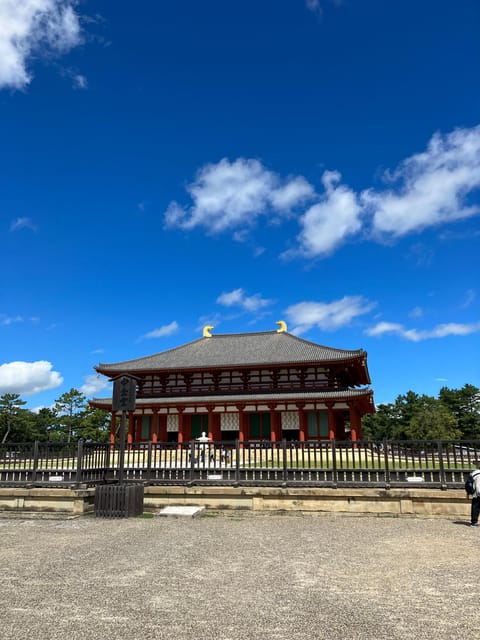
Kofuku-ji follows with around 30 minutes of guided time. Founded in 669, it is one of Nara’s Seven Great Temples and part of the UNESCO World Heritage setting associated with the city’s historic monuments.
The appeal here is less about one single moment than about the atmosphere and wooden architecture. Your guide can explain what you are seeing, point out the temple’s place in Nara’s religious story, and help you tell a temple from a shrine. That last point is especially useful if this is your first visit to Japan.
Thirty minutes is a sensible amount of time for an introduction, but it is not generous if you want to study every building or cultural treasure. Think of Kofuku-ji as a focused visit that prepares you for Todai-ji rather than a full morning at one temple complex.
Bring comfortable shoes. The day includes several walking stops, and the route works best when you can move easily between open grounds, streets, and temple areas without worrying about your feet.
Nara Park is the most playful part of the day
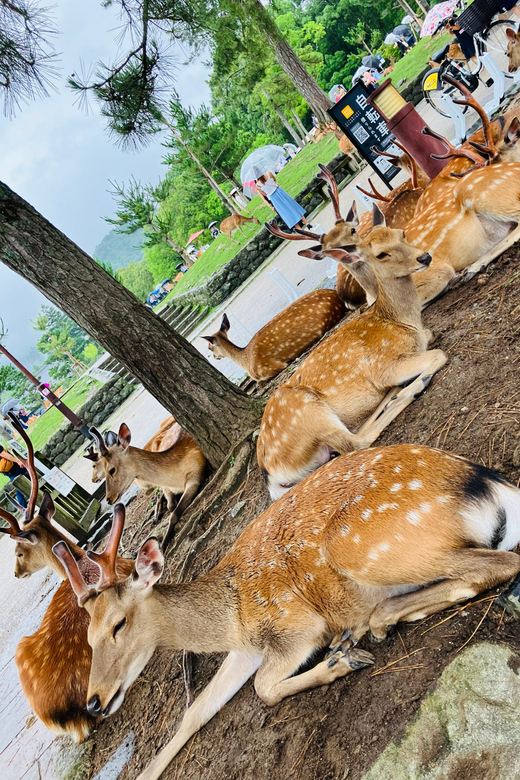
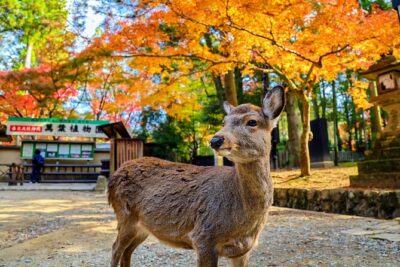
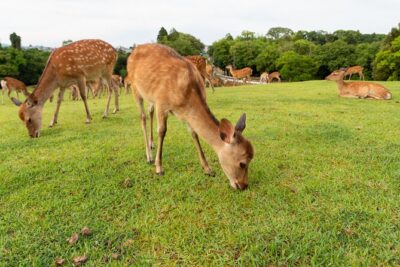
Nara Park receives about 30 minutes of guided attention, though the park also connects several stops on foot. This is where you meet the deer that have symbolized Nara for centuries and are traditionally regarded as messengers of the gods.
Feeding the deer is the simple pleasure here. You can buy special crackers and offer them carefully, then take photos as they approach. The animals are famous for being friendly, but remember that they are still animals. Keep food under control, follow your guide’s instructions, and do not tease them with an empty hand.
The deer make Nara memorable for families and for anyone who needs a lighter moment between temple visits. The park also gives you open views around the historic sites, a welcome contrast to the city streets and large temple halls.
The listed 30 minutes is enough for a first encounter and photos, but you should not expect an unhurried wildlife visit. Much of the experience depends on how quickly your group moves and how long you spend feeding the deer. If this is your top priority, say so at the start. A private guide can often shape the pace better than a fixed group tour, though the other scheduled sites still need time.
Same base, a different sort of day:
- PERFECT KYOTO 1-Day Bus Tour
★ 5.0 · 13,518 reviews - Kyoto: Fushimi Inari, Kinkakuji, Bamboo Grove 1 Day Bus Tour
★ 4.8 · 4,316 reviews - Kyoto: Tea Ceremony in a Traditional Tea House in Kiyomizu
★ 4.9 · 3,519 reviews - Kyoto Geisha Walking Tour: Gion District & Hidden Gems
★ 4.7 · 3,273 reviews
Lunch is a useful pause, but it costs extra
The tour allows one hour at a local restaurant. This is not just a chance to eat. It gives you a seated break after the morning’s walking and a chance to try local food without having to search for a restaurant on your own.
Lunch and beverages are not included, so plan for that expense. The information provided does not name the restaurant or set a menu, which means you should ask your guide about options if you have dietary needs or a strong food preference.
I like the one-hour lunch block because it keeps the day from becoming a string of rushed photo stops. Still, a full meal can make the remaining walking feel short if your group lingers. Keep an eye on the clock, especially since Himuro Shrine, Todai-ji, Yoshikien Garden, and the return train follow.
Himuro Shrine adds a different kind of sacred space
After lunch, the route continues to Himuro Shrine for about 20 minutes. This is a short visit, but it helps show that Nara’s religious heritage is not limited to its largest Buddhist temples.
Your guide can explain the difference between a shrine and a temple, a point several people value on this route. The distinction becomes clearer when you see both types of site in one day rather than trying to memorize terms from a guidebook.
Twenty minutes gives you a quick look and a little quiet time. It is not enough for a long, slow exploration, so treat it as a compact cultural stop. The value comes from the contrast with Kofuku-ji and Todai-ji, not from spending most of the afternoon here.
Todai-ji delivers the day’s grandest sight
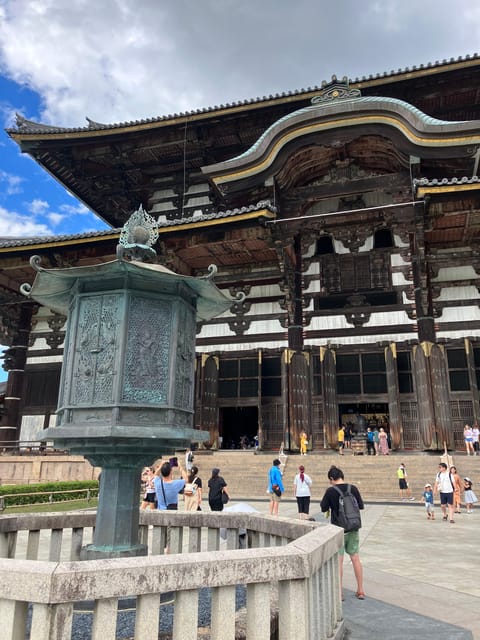
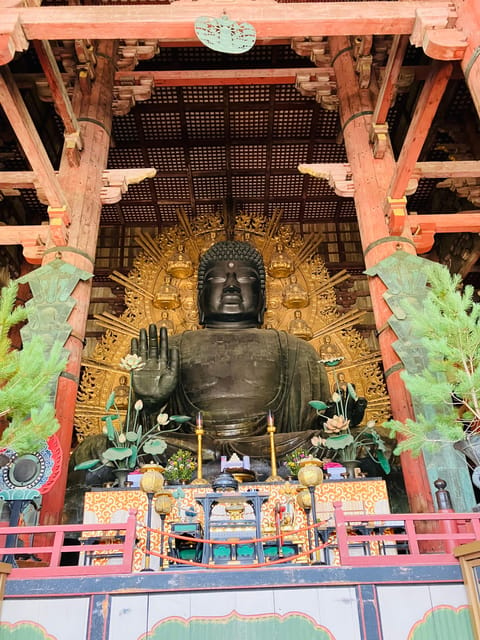
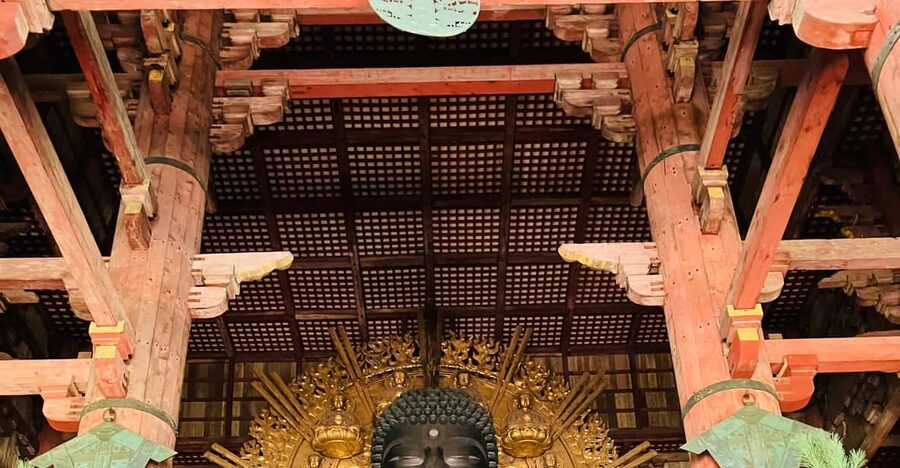
Todai-ji is the tour’s main attraction, with about one hour for a guided visit. The temple was founded in the eighth century and is home to the Great Buddha, a bronze statue around 15 meters tall. Even if you have seen photographs, the scale is different when you enter the hall and look up at it.
This is where a good guide earns the private-tour price. The building, statue, and Buddhist symbolism can feel overwhelming without context. A guide can turn the visit from a quick photograph into a clearer story about Nara’s role as Japan’s first permanent capital and the importance of Buddhism in the country’s past.
One hour is enough for the major points, the Great Buddha, and the surrounding temple grounds. It may feel brief if you want to inspect every detail or take many photos. The private group helps here because your guide can answer your questions directly instead of stopping for a large crowd.
Todai-ji can also be the busiest part of the route. The tour information does not promise a quiet visit, so expect the experience to vary with the time of day. Your guide may help you move efficiently, but no private booking can remove the popularity of Nara’s best-known temple.
Yoshikien Garden closes the sightseeing loop
The final Nara stop is Yoshikien Garden, with around 20 minutes of guided time. After the grand scale of Todai-ji, this is a gentler finish. The short visit gives you space to slow down, enjoy the garden setting, and take a final set of photographs before returning to the station.
Again, twenty minutes is a taste rather than a long garden visit. If gardens are your main reason for visiting Nara, you may want a separate outing with more time. On this tour, Yoshikien works well because it changes the mood at the end of a full day.
The route covers a lot in six hours: shopping street, two major temples, a shrine, a garden, deer, lunch, and two train journeys. That variety is a strength, but it also means the day moves steadily. You will see the essential sights, not linger for hours at each one.
Why the private guide changes the experience
The guide is the reason this tour can feel more personal than a standard sightseeing route. English and Japanese are offered, and the guide is described as Japanese-born and raised. Masa is the guide named most often in the supplied booking comments. If you are paired with him, expect a guide who explains clearly, answers a long list of questions, and adjusts the route to your interests.
That flexibility can be practical. One family wanted extra snack stops and arranged an additional destination ahead of time. Another visitor appreciated printed information in Spanish, even though the stated tour languages are English and Japanese. These details suggest that it is worth contacting the operator before the day if someone in your group needs extra language help or hopes to add a stop.
Do not assume every request can fit. The tour has a six-hour frame and a planned return train. Still, private guiding gives you a better chance of making sensible adjustments than a large group tour does.
The guide also helps with cultural manners. Feeding deer, entering temple grounds, understanding shrine customs, and knowing when to be quiet are all easier when someone explains them as you go. That practical context can make the day feel less like a checklist.
What the $514 price really buys you
The price is $514 per private group of up to six people. Entrance fees to the listed sites, hotel meet-up, return to your hotel, and the guide are included. Train fares, food, drinks, and gratuity are not.
For a family or group of friends, the arithmetic is favorable. Six people sharing the base cost pay about $86 each, before transport and lunch. That buys privacy, a guide for your group alone, and a route that would take more planning to arrange independently.
For one or two people, the price is harder to defend unless convenience and personal attention are your top priorities. You could potentially spend less by taking public transport and visiting Nara on your own, but you would need to plan the route, reserve time for the main sights, and research the cultural background yourself.
The included entrance fees remove some uncertainty, but you still need a cash or card budget for the train and restaurant. Optional gratuity is appreciated, though not required.
Who should book this Nara day trip
This tour suits you best if you are staying in Osaka, want a guided introduction to Nara, and prefer not to manage train connections and temple planning. It is especially useful for families, small groups, and first-time visitors who want explanations in clear English.
You will also like it if you want a mix of famous sights and smaller stops. The route is not only Todai-ji and deer. Kofuku-ji, Himuro Shrine, Yoshikien Garden, and Higashimuki Shopping Street give the day more texture.
The tour may be less suitable if you want a slow, photography-focused day, a long garden visit, or many hours at one temple. The schedule is full, and several stops are only 20 or 30 minutes. It may also be poor value for solo visitors unless private guiding is worth the premium.
Wear comfortable shoes, bring water, sunscreen, and a camera. Tell the guide what matters most to you at the beginning. If you want extra time with the deer, more food stops, or a particular cultural question answered, early guidance can make the six hours work harder.
Should you book it?
Book this tour if you want Nara’s main sights explained by a private guide and you are traveling with enough people to share the $514 rate. The strongest parts are Todai-ji, the deer at Nara Park, and the personal attention from a guide such as Masa.
Think twice if you are traveling alone, watching every yen, or prefer to wander without a schedule. For everyone else, the route offers a practical first look at Nara, with enough variety to make the trip feel like more than a quick temple visit. Just add train fares, lunch, and drinks to the real budget, and do not expect every stop to be leisurely.
FAQ
Where does the tour begin?
The guide meets you at your hotel in Osaka.
How long does the tour last?
The tour lasts six hours, including the train journeys between Osaka and Nara.
How long is the train journey?
The listed train journey takes about 70 minutes each way. Actual travel time can vary depending on your hotel location.
Is this a private tour?
Yes. It is a private group experience for up to six people.
Which languages are available?
Live guiding is available in English and Japanese.
Are entrance fees included?
Yes. Entrance fees to all the mentioned sites are included.
Is lunch included?
No. The tour stops at a local restaurant for a one-hour lunch, but food and beverages cost extra.
Can I cancel for a full refund?
Yes. You can cancel up to 24 hours in advance for a full refund.
Just added in Kyoto
- Private Cooking Class Udon in Kyoto Japan★ 5.0 · 23 reviews
- Your Private Vacation Photography Session In Kyoto★ 5.0 · 110 reviews
- Kyoto: Zen Meditation at a Private Temple with a Monk★ 5.0 · 25 reviews
- Private Pewter Sake Cup Experience with a Kyoto Artisan★ 5.0 · 31 reviews
- Kyoto Wagashi(Japanese sweets) Cooking Class near Fushimiinari★ 5.0 · 60 reviews
- Kyoto:Family-Friendly Kimono & Yukata Experience at WARGO★ 5.0 · 147 reviews
- Private Guided Traditional Buddhist Cooking in Japan★ 5.0 · 16 reviews
- Kyoto: Gion Geisha District & Sake-in-Hand Walking Tour★ 5.0 · 37 reviews
Nara & the Deer Park, compared.
World Heritage Kyoto & Nara Uji Authentic Matcha Experience
Read our review →
Kyoto/Osaka: Nara, Fushimi Inari Taisha, Arashiyama Bus Tour
Read our review →
Nara Half Day Trip Walking Tour (Private Option Available)
Read our review →
Osaka/Kyoto: Arashiyama, Nara & Fushimi Inari Shrine w/Lunch
Read our review →
Nara Early Morning Tour (Kyoto or Osaka Departure Available)
Read our review →
Full Day Guided Tour to Kyoto and Nara from Osaka by Van
Read our review →
Browse the lists this tour appears in