
Reviewed · WALKING TOURS
Takayama: Edo-Period Old Town Walking Tour
Takayama’s old town makes far more sense once you know why its streets look the way they do. This short walk explains how trade, craftsmanship, daily work, and town planning shaped the town during the Edo period, when Takayama grew as a merchant center rather than a castle town.
I like the clear historical context and the way the guide points out meaning in ordinary details. I also like the compact 45-minute format, which fits neatly before or after sightseeing elsewhere. The main drawback is value: at $43 per person, the tour is costly if it runs close to the listed time, and one guest reported a walk of only about 20 minutes with weak English.
Key points at a glance
- Takayama’s merchant past: Learn how trade and local craftsmanship shaped the town without focusing mainly on samurai or castle history.
- Everyday details explained: The guide gives meaning to street layouts, buildings, customs, and other easy-to-miss sights.
- Short, useful introduction: The walk lasts about 45 minutes and gives you a framework for exploring on your own afterward.
- English-led experience: Tours are usually conducted in English, with other languages potentially available by request.
- Guide quality can vary: Yamma received especially warm praise for an engaging and informed approach, while one guest reported poor English and a shorter-than-expected tour.
- Easy to fit into a day: The walk is wheelchair accessible, runs in rain or shine, and includes only the guide and walking tour.
Why Takayama’s old town needs a little explanation
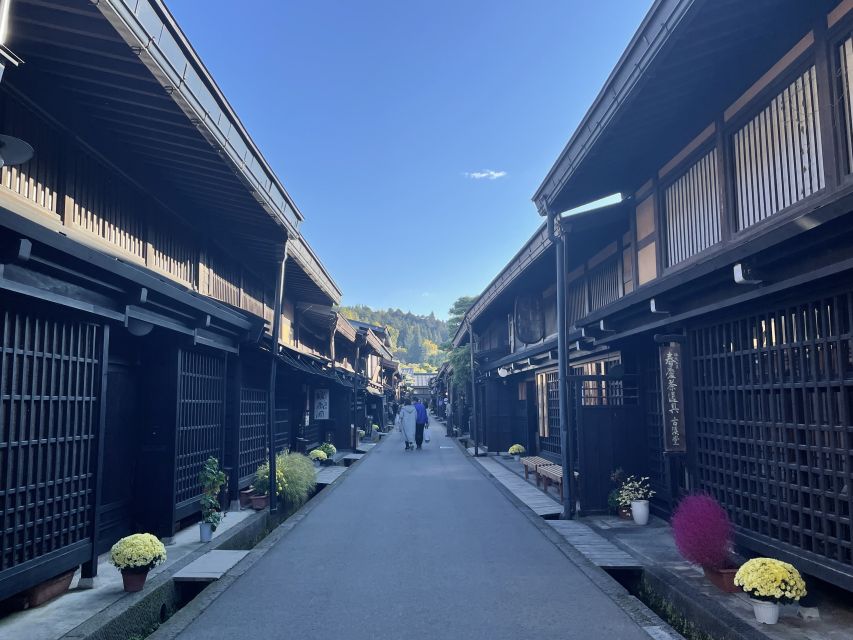
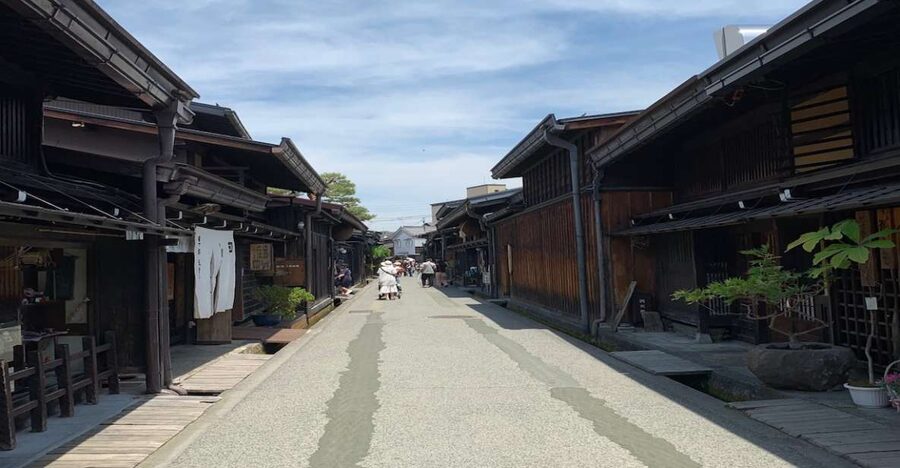
Takayama’s preserved streets are attractive enough to enjoy without a guide. Dark wooden facades, narrow lanes, old shopfronts, and traditional details give you plenty to photograph. But without context, you may see only a handsome row of buildings.
This tour gives those buildings a job in the story. You learn how Takayama developed as a merchant town during the Edo period, shaped by commerce, craft, and daily work. That makes it different from historic places built mainly around a castle, a powerful lord, or samurai residences.
I like that the focus stays close to ordinary life. Instead of turning the walk into a list of dates, the guide explains how people lived, worked, traded, and moved through the town. That approach helps you notice practical details that might otherwise pass by unnoticed.
The guide also gives a short look at what came before and after the Edo period. This wider frame is useful because it shows that Takayama did not appear all at once as a preserved tourist district. Its present character grew from changes over time.
Other guided walks in Takayama:
- Takayama: Takayama Jinya & Old Town Private Walking Tour
★ 4.5 · 32 reviews - Takayama: Private Walking Tour with a Local Guide
★ 4.6 · 29 reviews - Takayama: Private Night Walking Tour with Dinner
★ 4.5 · 13 reviews
The first steps through the preserved streets
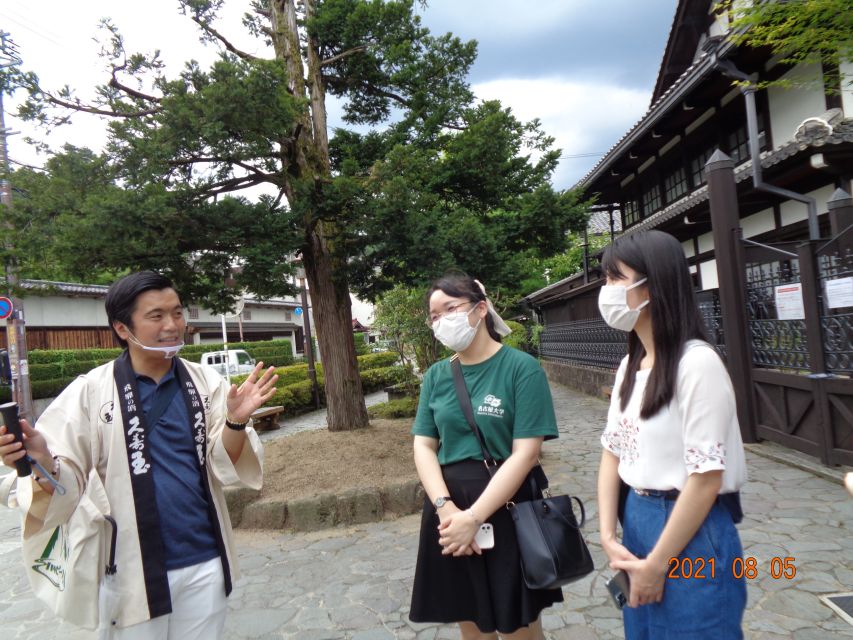
The walk begins at the meeting point in front of the Tours & Activities sign board. To find it, search for happyplus in Google Maps. Give yourself a few extra minutes to locate the sign, since the meeting instructions depend on that landmark rather than a detailed street address.
From there, the guide leads you through Takayama’s old town. The exact order of sights can depend on the day and the flow of the group, so you should not expect a rigid stop-by-stop route. The value lies in how the guide connects the streets and buildings into one readable picture.
You can expect the opening part to establish Takayama’s place in Japanese history. The guide explains what made the town important and how it differed from places centered on castles or military power. That comparison is especially helpful if Takayama is one stop among several on a Japan trip.
This is not a food tour, and food and drinks are not included. You can still use the walk to decide where to return later, but the guide’s role is history and local culture rather than tastings or shopping arrangements.
How trade shaped Takayama’s character
One of the most useful ideas here is that a town can reveal its past through its layout. Takayama’s streets were shaped by the movement of people, goods, and work. As you walk, the guide explains how trade and local craftsmanship influenced the old town.
That context changes the way you look at the buildings. A shopfront is no longer just a photogenic facade. It becomes part of a working town where homes, businesses, storage, and public movement had to fit together.
The tour does not promise a long technical lecture about architecture. Instead, it offers enough explanation to make the visible details meaningful. I prefer that format for a first visit because it gives you a usable framework without exhausting you with names and dates.
The walk is also a reminder that Takayama’s character comes from daily life. You are not simply being shown famous monuments. You are being shown how a town functioned, which is often the more interesting way to understand an old district.
Everyday sights that are easy to miss
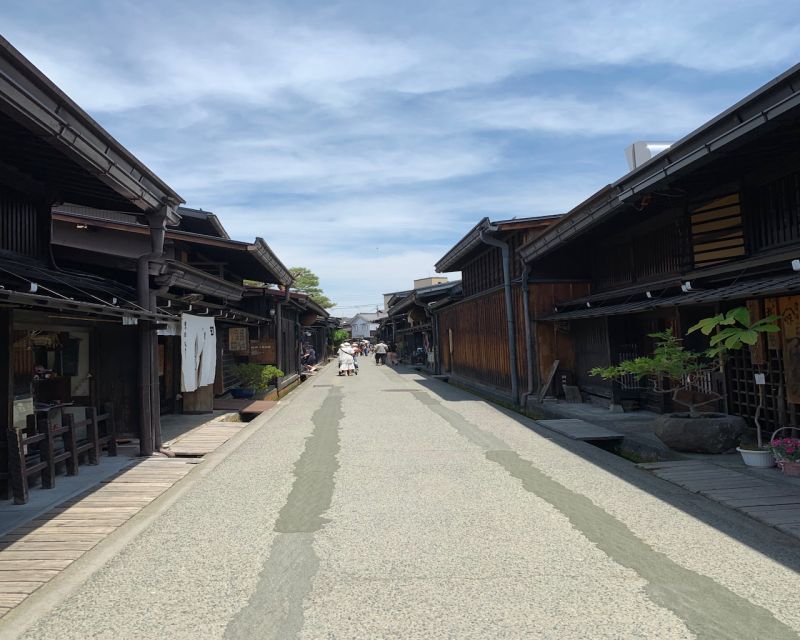
A good local guide can point out details you would probably pass without a second thought. Here, those details may include the relationship between the street layout, buildings, local customs, and the way people used the town.
The supplied description does not promise a fixed list of individual buildings or named stops, so I would not book this expecting a formal tour of every major landmark. Think of it as a guided reading of the old town. The guide helps you understand what you are seeing as you move through it.
That makes the walk particularly useful early in your stay. After 45 minutes, you can revisit parts of the district with better questions in mind. You may notice how buildings face the street, how commercial activity shaped the area, or how local habits fit the historic setting.
The experience also avoids a common problem with short history tours: information overload. The stated aim is a clear and lasting understanding of Takayama’s character. If you want a full academic treatment, this will feel light. If you want a practical introduction before independent sightseeing, the approach makes sense.
Same base, a different sort of day:
- Kanazawa: World Heritage Shirakawa-go Morning Guided Tour
★ 4.9 · 988 reviews - Kanazawa: World Heritage Shirakawa-go & Two Local Experience
★ 4.9 · 274 reviews - Kanazawa/Takayama: Shirakawago & Takayama Private Day Tour
★ 4.8 · 172 reviews - From Takayama: Guided Day Trip to Takayama and Shirakawa-go
★ 4.9 · 113 reviews
What the 45-minute timing means for your day
The listed duration is approximately 45 minutes, though the walk may run a little longer if the route or questions take extra time. That is a useful length for a busy itinerary. You can place it before a meal, between other sights, or near the beginning of your visit.
At the same time, 45 minutes is not long. You will not cover every corner of Takayama’s old town or receive a detailed account of every period in its development. The tour is best seen as an orientation, not a complete day of sightseeing.
The short format also affects the price. At $43 per person, you are paying for a small amount of guided time. The price can feel reasonable if the guide is engaging, the walk runs close to the full duration, and you value having the town explained rather than simply seeing it.
It feels less convincing if you are comfortable reading about Takayama beforehand or exploring at your own pace. One disappointing account described a tour lasting about 20 minutes, with English that was difficult to follow. That appears to be an exception rather than the general pattern, but it is a fair reason to confirm the starting details and stay aware of the expected duration.
Guide quality and the importance of clear English
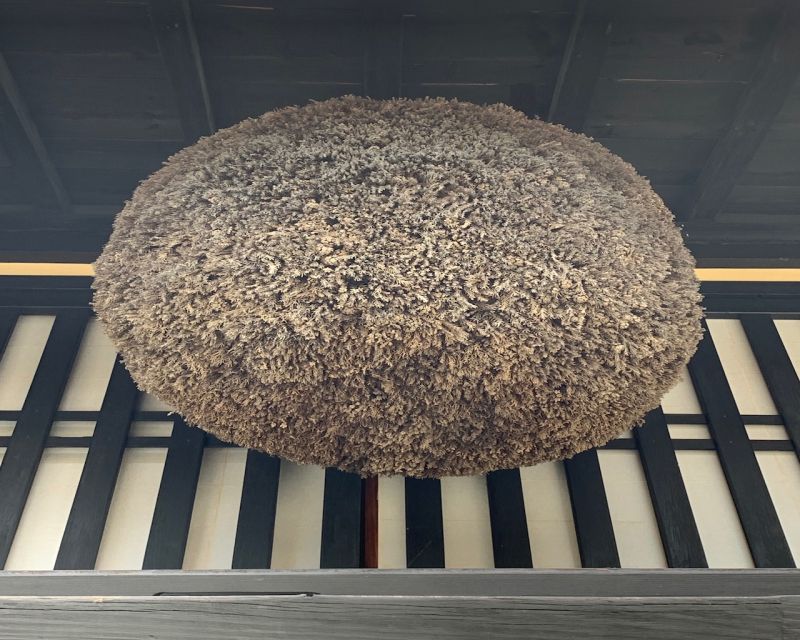
The guide makes or breaks a short walking tour. With only 45 minutes, clear explanations matter more than a large number of stops. A good guide needs to connect the old streets to Takayama’s past without rushing through a pile of facts.
Yamma received particularly strong praise for being engaging and well informed. That description fits the needs of this experience: a guide who can explain local culture in a friendly way and keep the walk moving.
Most of the available feedback is very positive, including comments describing the tour as well organized, interesting, and enjoyable. One guest, however, reported poor English and a much shorter walk. I would treat that as a genuine caution, not something to ignore simply because the overall score is high.
The overall rating is 4.5 from 22 reviews, which suggests a strong experience with some unevenness. Since the tour is sold as an English-led walk, language clarity is central to its value. If you need detailed historical explanations, you may want to ask about the guide and language arrangement before finalizing your plans.
Is $43 a fair price?
The answer depends on what you want from the tour. You are not paying for entrance fees, food, drinks, transport, or a long excursion. The included elements are the local guide and the walking tour itself.
That makes the tour a purchase of interpretation. You pay to have someone explain why Takayama developed as it did and how to read the old town. For a first visit, that can save you from wandering through attractive streets without understanding their purpose.
I see the price as fair only if you place a high value on a guide’s time and the tour lasts close to 45 minutes. The positive feedback suggests that several guides have delivered that kind of experience, with Yamma receiving especially warm attention.
If you are comparing this with a longer tour that includes food, entry tickets, transport, or several districts, $43 may seem high. If you want a brief introduction and have limited time, the compact format may justify the cost. You should decide based on how much help you want interpreting the town, not on the number of sights covered.
Rain, access, and simple practical planning
The tour operates rain or shine, so check the forecast and dress for walking conditions. A wet day will not cancel the activity automatically, and the old town may feel less comfortable if you arrive without suitable clothing.
The walk is listed as wheelchair accessible. That is important for planning, though the supplied information does not describe the exact route surface, slopes, or restroom arrangements. If those details matter for your party, ask the provider before booking.
Wear shoes suitable for a short town walk. The distance is not presented as strenuous, but you will be moving through historic streets rather than sitting in a vehicle. Bring water if you want it, since food and drinks are not part of the tour.
The meeting point is in front of the Tours & Activities sign board. Searching happyplus in Google Maps is the clearest direction provided, so I would use that search rather than relying only on a general search for Takayama old town.
Who will get the most from this walk?
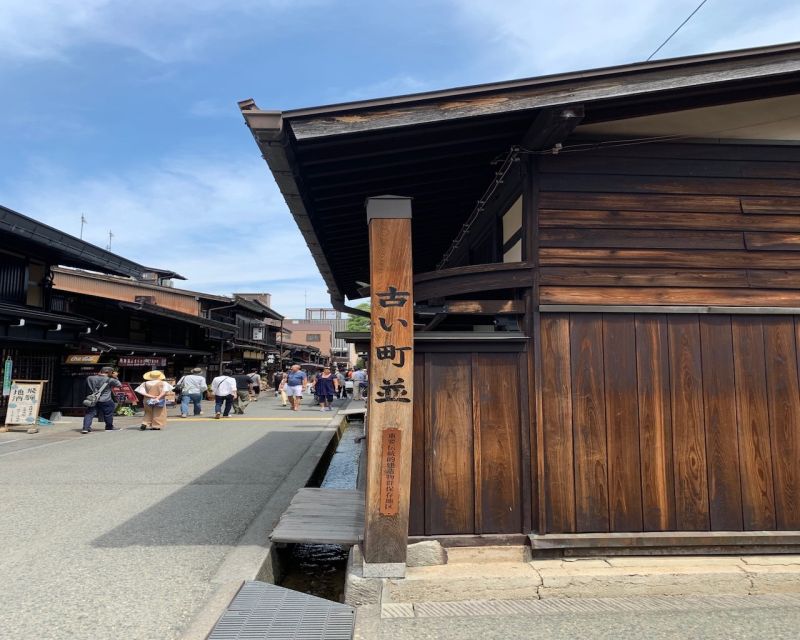
This tour suits you if Takayama is new to you and you want a quick orientation before exploring independently. It is also useful if you enjoy architecture, local customs, and social history more than a parade of famous names.
Families and mixed-age groups may appreciate the short length. The guide’s explanations are intended to be accessible, and you can continue at your own pace once the walk ends.
It is a sensible choice for anyone with a tight schedule. A 45-minute activity can fit around meals, markets, or other plans without taking over the day. The ability to reserve now and pay later, along with free cancellation up to 24 hours in advance, adds flexibility when your schedule is still shifting.
You may want something else if you expect a long, detailed history lecture, a food experience, or a large number of landmark interiors. Those are not part of the stated offering. The tour is about understanding the old town from the street.
How to make the walk more useful
Book it near the beginning of your time in Takayama if possible. The guide’s explanation will give you a better lens for the rest of your visit, and you can return to streets or buildings that caught your attention.
Listen for the links between town planning, trade, work, and ordinary life. Those connections are the heart of the experience. If you focus only on taking photographs, you may miss what makes the walk different from a self-guided stroll.
Ask questions during the tour. The walk may extend slightly depending on guest questions and the flow of the route, so this is your chance to clarify details that interest you. Keep questions focused, since 45 minutes passes quickly.
Finally, judge the experience by the explanation, not by the number of stops. The tour’s purpose is to help you understand Takayama. Once that framework clicks, the rest of the old town becomes easier to explore on your own.
Should you book the Takayama old town walk?
Book it if you want a short, focused introduction to Takayama’s Edo-period merchant past and prefer learning from a local guide rather than reading signs as you go. The strongest reasons are the clear focus on daily life, the useful town-planning context, and the compact schedule.
Think twice if $43 feels high for 45 minutes or if you need guaranteed depth and consistently polished English. The high overall score and praise for guides such as Yamma are encouraging, but the shorter tour and language complaint show that delivery can vary.
For a first morning or afternoon in Takayama, I would consider it a worthwhile orientation, provided you confirm the meeting point and accept that the experience is brief. It works best as a starting key to the old town, not as your entire Takayama sightseeing plan.
FAQ
How long does the Takayama old town walking tour last?
The listed duration is approximately 45 minutes. It may run slightly longer depending on the pace of the walk and questions from the group.
What period does the tour focus on?
The main focus is Takayama during the Edo period, when it developed as a merchant town shaped by trade, craftsmanship, and daily life.
Is the tour conducted in English?
Yes. The activity is listed with a live English-speaking guide. Other languages may be available upon request.
Where is the meeting point?
Meet in front of the Tours & Activities sign board. Search happyplus in Google Maps to help locate the meeting point.
Is the tour wheelchair accessible?
Yes. The activity is listed as wheelchair accessible.
Does the tour operate in bad weather?
Yes. Tours take place rain or shine.
Are food and drinks included?
No. The tour includes a local guide and the walking tour, but food and drinks are not included.
Can I cancel the tour for a full refund?
Yes. You can cancel up to 24 hours in advance for a full refund. You can also reserve now and pay later.
Just added in Takayama
- Gifu Samurai Sword Town;Japanese Damascus Knife Making Experience★ 5.0 · 27 reviews
- Private Afternoon Cycling Tour in Hida-Furukawa★ 5.0 · 109 reviews
- Private-group Morning Cycling Tour in Hida-Furukawa★ 5.0 · 105 reviews
- Short Morning Cycling Tour in Hida★ 5.0 · 17 reviews
- Explore Kiso Valley : Magome – Tsumago Mountain Trail Walk★ 5.0 · 33 reviews
- Magome & Tsumago Nakasendo Trail Day Hike with Government-Licensed Guide★ 5.0 · 38 reviews
- Frozen fall trekking★ 5.0 · 21 reviews
- Magome & Tsumago Nakasendo Full-Day Private Trip with Government-Licensed Guide★ 5.0 · 20 reviews
Walking Tours, compared.
Kyoto Geisha Walking Tour: Gion District & Hidden Gems
Read our review →
Tokyo Tsukiji Fish Market Food and Culture Walking Tour
Read our review →
Imperial Palace and Shogun Historical Walking Tour
Read our review →
Gion Geisha District Walking Tour – Stories of Geisha
Read our review →
Shinjuku Local Bar and Izakaya Guided Walking Tour
Read our review →
Asakusa Walking Tour with Sensoji Temple Visit
Read our review →

Nishiki Market Brunch Walking Tour (7 Tastings + Brunch)
Read our review →Browse the lists this tour appears in