
Reviewed · CYCLING TOURS
Tokyo: 3-hour Guided E-Bike Tour of the City’s Hidden Gems
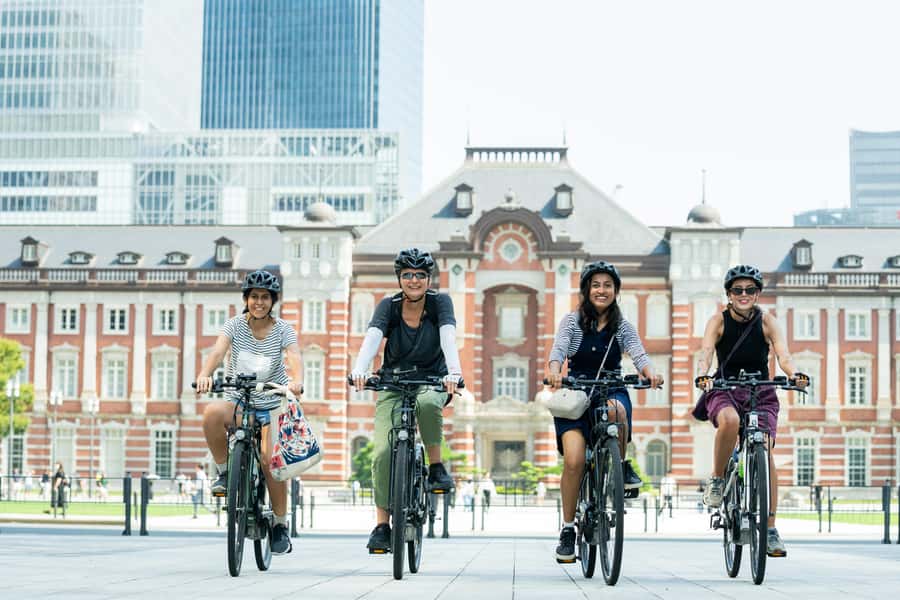
Tokyo is easier to understand from a bicycle seat. On this three-hour e-bike tour, you move from broad city avenues to quiet lanes, temple grounds, gardens, bridges, and waterfront paths that a bus cannot reach. I especially like the local snack stop and the chance to see Tokyo at street level, with guides such as Hiro, Yota, Miki, and Shinobu adding history and small cultural details along the way.
I also like the choice of three routes: a central Tokyo ride, a Tokyo Bay outing, or a Tokyo Tower circuit. The main caution is traffic. You may ride near cars and share some footpaths with pedestrians, so this is best for anyone already comfortable on a bicycle, not someone hoping to learn from scratch.
Key points to know before you book
- Three different routes: Choose central Tokyo, Tokyo Bay, or Tokyo Tower, with very different sights and scenery.
- Electric assistance: The bikes help with hills and heat, so three hours feels manageable for most reasonably active riders.
- Street-level Tokyo: You see ordinary neighborhoods, crosswalks, bridges, shrines, and back streets that are easy to miss by subway.
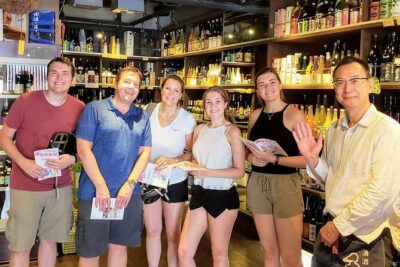
- A real local touch: Each ride includes a traditional Japanese snack, and some stops offer time to try food the way locals do.
- Good guides matter: Hiro, Yota, Miki, Shinobu, Yugo, and others are praised for clear English, patience, stories, and careful pacing.
- Cycling confidence required: The route can include traffic, pedestrians, and busy city crossings. Stay alert and follow the guide closely.
What this Tokyo e-bike tour feels like
At $65 per person, this is a reasonably priced way to cover a lot of Tokyo in one morning or afternoon. You are not paying only for a bicycle. The fee includes the e-bike, helmet, guide, a traditional snack, luggage storage, and a small knapsack if needed. That makes the price fair if you want both transportation and interpretation.
The tour begins and ends at the same meeting point. Arrive 15 minutes early for the safety briefing and bike setup. The guide needs everyone ready at the same time, since late arrivals cannot join partway through the ride.
The electric motor is the key feature. You still pedal, but the assist reduces the effort, especially on the Tokyo Tower route and during warm, humid weather. A few riders find the bike proportions slightly unfamiliar at first. Give yourself a few minutes to get used to the controls before the group moves into city traffic.
I would not call this a sightseeing bus on two wheels. You need to pay attention, steer, brake, and watch the road. Some sections use footpaths shared with pedestrians. The guide leads the way, but you remain responsible for riding carefully and anticipating people who may step across your path.
Other rides on two wheels around Tokyo:
- Tokyo Great Cycling Tour
★ 5.0 · 811 reviews - Tokyo Top Highlights 3h Guided E-bike Tour
★ 5.0 · 714 reviews - 3h Tokyo E-Bike Tour: Hidden Gems, and Local Life with guide
★ 5.0 · 670 reviews
Choosing between the three routes
The route you book makes a large difference. These are not minor variations of one ride. Each one presents a different side of Tokyo.
Tokyo City Route: central sights, gardens, and old neighborhoods
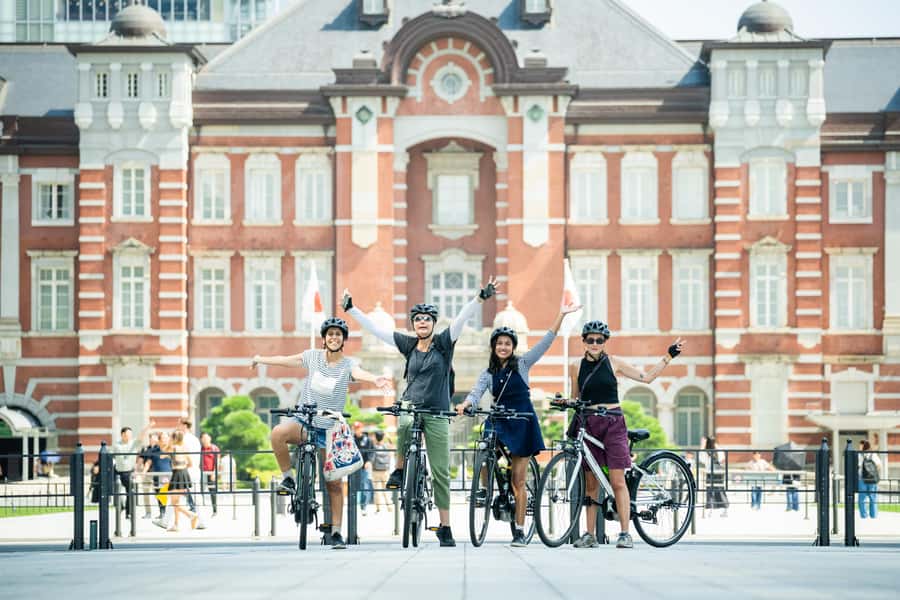
The City Route is the best all-round choice if you want a first look at central Tokyo. It passes through Ginza, the Imperial Palace area, Tokyo Station, and Nihonbashi before moving toward a Japanese garden and Tomioka Hachimangu Shrine.
Ginza is passed rather than explored in depth. That is useful for getting a feel for Tokyo’s polished shopping district, but do not book this option expecting a long shopping stop. The same is true of the Imperial Palace and Nihonbashi. You see these areas from the bike, with the guide explaining what you are passing, but they are not extended walking visits.
Tokyo Station gives the ride a strong architectural and civic center. The huge station area is one of the city’s main meeting points, and seeing it by bicycle gives you a better sense of its scale than a quick subway transfer. Nihonbashi adds a different note, linking the modern city to an older commercial district.
The snack stop breaks up the riding. You receive a traditional Japanese treat, which is a small detail but one that helps the tour feel connected to daily life rather than just a parade of photo stops.
The Kiyosumi Japanese garden is likely the City Route’s most rewarding pause. Here you leave the bike for a short walk and get a quieter view of Japanese design and nature inside the city. This is also a welcome rest on a hot day. The tour then continues to Tomioka Hachimangu Shrine, where you get a taste of traditional religious architecture and customs.
Choose this route if you want a balanced mix of city history, gardens, shrines, and local streets. The tradeoff is that some central sights are viewed from outside, and you will not cover Tokyo’s most famous districts such as Shinjuku, Shibuya, or Asakusa.
Tokyo Bay Route: bridges, open views, and sunset
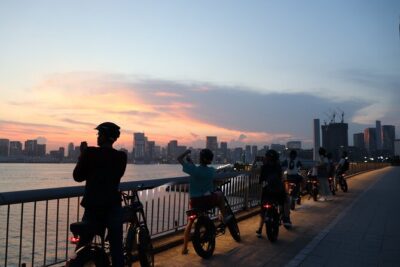
The Tokyo Bay Route is the most scenic choice if you want water, bridges, wide paths, and a sunset ride. The terrain around Odaiba is relatively flat, and the broad reclaimed waterfront gives you more room than central Tokyo streets.
The ride begins with stops such as Sumiyoshi Shrine and Tsukuda Tendai Temple. The temple is described as a lesser-known stop, so this part of the route offers a pleasant change from Tokyo’s major tourist sites. You may find the quieter setting more memorable than another crowded viewing platform.
The route passes TeamLab Tokyo and Tokyo Big Sight. These are viewed from the outside, so this is not a substitute for a TeamLab admission ticket or a convention visit. Still, cycling past these large modern structures helps show how varied Tokyo’s waterfront development is.
The Gundam statue is one of the route’s fun photo stops. The Statue of Liberty replica in Odaiba adds another playful landmark, and the Odaiba Aqua City area provides a chance to pick up a Japanese local snack.
The strongest reason to choose this route is the view. You cross or pass several bridges, feel the breeze from the bay, and see Tokyo from a more open angle. Depending on the season and start time, the ride can include sunset and a nighttime skyline. Guides such as Yota have been praised for planning the timing so riders see both daylight and evening views.
The Rainbow Bridge is passed rather than necessarily crossed on the bicycle, so keep that distinction in mind. This route is not about old Tokyo. It is about water, modern buildings, open space, illuminated views, and the pleasure of riding without constant tight turns.
The start time changes by month because sunset changes. Check the exact departure time carefully if the evening view is your main reason for booking.
Other quiet corners of Tokyo:
- Tokyo: Custom Hidden Gems & Highlights Tour with Local Guide
★ 4.7 · 272 reviews - Kyoto Geisha Walking Tour: Gion District & Hidden Gems
★ 4.7 · 3,273 reviews - Private Kyoto Tour with a Local, Highlights & Hidden Gems, Personalised
★ 5.0 · 1,543 reviews - Osaka Kickstart: Hotspots & Hidden Gems Tour
★ 5.0 · 1,306 reviews
Tokyo Tower Route: temples, government buildings, and city hills
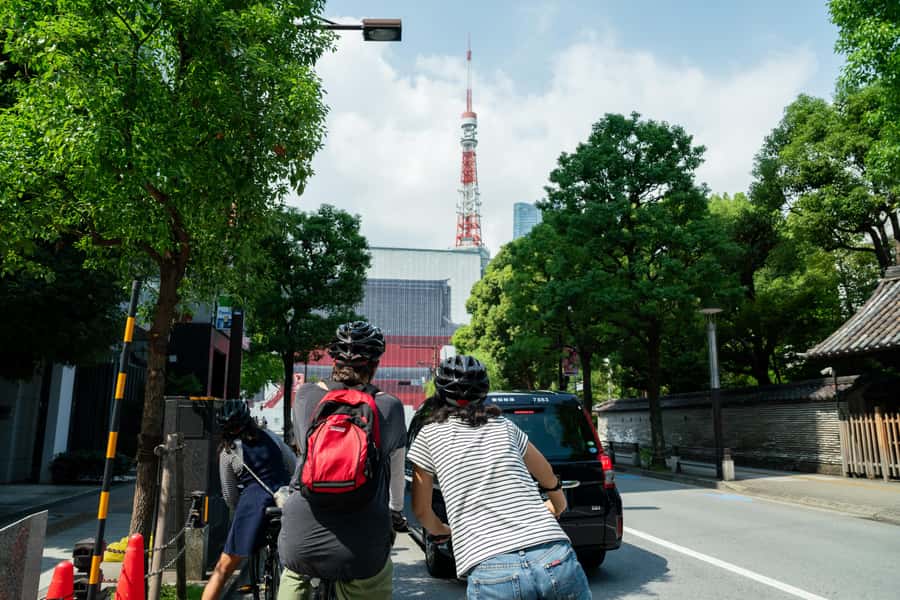
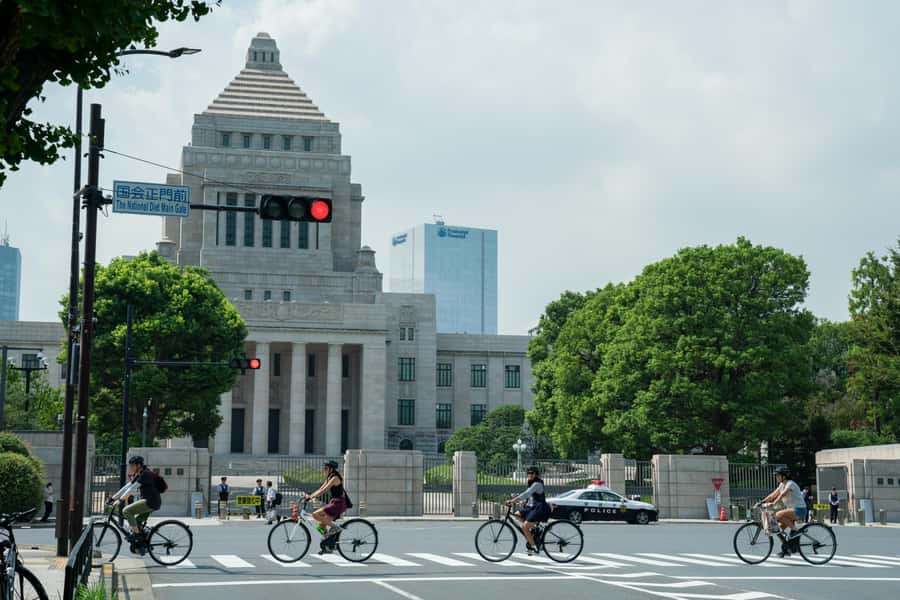
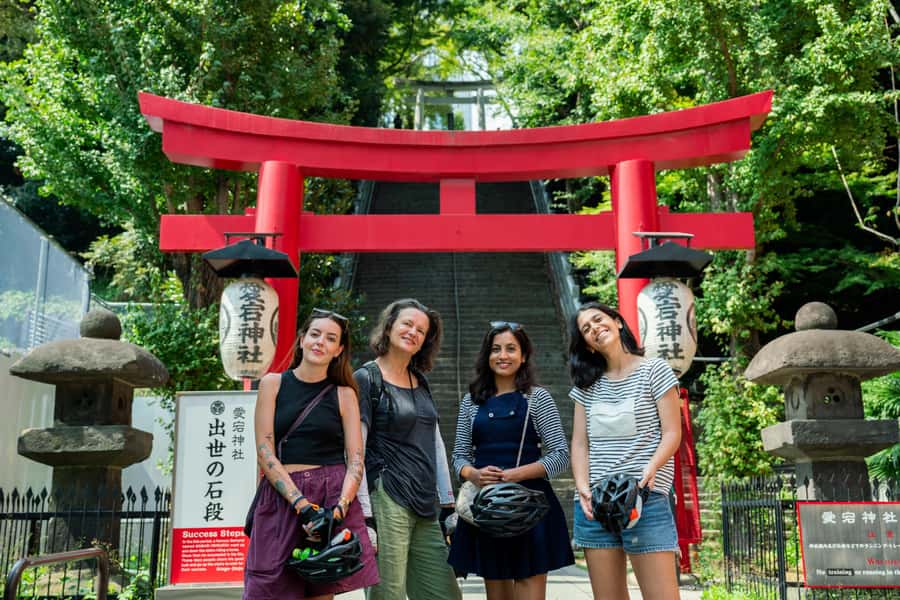
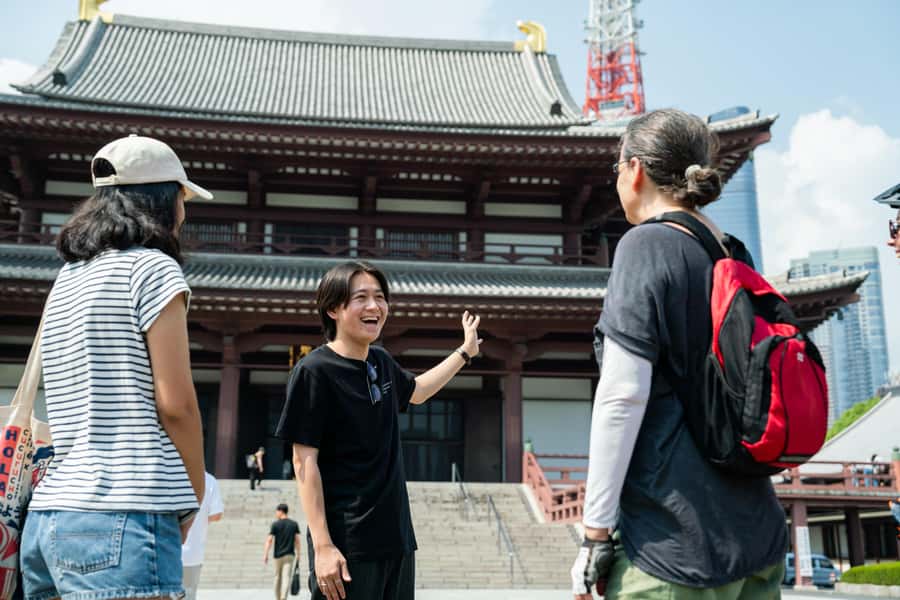
The Tokyo Tower Route works well if you want a stronger mix of traditional architecture and modern Tokyo. It includes Zojo-ji Temple, Tokyo Tower, Atago Shrine, the National Diet Building, the Imperial Palace area, and Hibiya Park.
Zojo-ji Temple is an excellent opening stop because Tokyo Tower rises behind or near the temple precinct. The contrast is one of the city’s classic visual pairings: a major Buddhist temple beside a modern observation tower. The tour includes a photo stop at Tokyo Tower, rather than a visit up the tower.
Atago Shrine adds a traditional site in a more elevated part of the city. This route includes hills, but the e-bike assistance reduces the strain. That does not mean you stop pedaling entirely. It means the climbs should feel manageable for riders in ordinary condition.
The National Diet Building and Imperial Palace area bring in Tokyo’s political and civic side. Hibiya Park then provides a calmer stretch of greenery near the city center. Like the other routes, the tour gives you a series of short visits rather than a long stay at any single attraction.
Choose this option if you like visual contrasts and want temples, towers, government buildings, and a central park in one ride. It is less suited to someone seeking flat waterfront cycling or a long garden visit.
The guides shape the experience
The guide is more important here than on a simple bike rental. You are riding through a complicated city, and the guide sets the pace, chooses safe lines, explains what you are seeing, and keeps the group together.
Guides named in the tour feedback include Hiro, Yota, Miki, Shinobu, Yugo, Yuki, Sho, Daichi, Jun, Parks, and others. Hiro is repeatedly praised for being friendly, patient, and full of useful facts. Yota is noted for pacing the route well and making sure everyone could keep up. Miki is praised for taking care with photo stops and showing quieter places.
The best guides add small extras. One guide helped riders find the train station after the tour. Another brought or selected snacks for the group. Guides also explain Japanese customs and the background of temples and shrines, which gives the stops more meaning than a quick photograph.
The English level is intended to be suitable for an English-speaking group. The tone appears relaxed rather than formal. Expect conversation, jokes, practical help, and short explanations while stopped, not a long lecture at every location.
Group pace can vary. The guide may slow down for photos or wait for a rider who needs more time. That is good for mixed groups, but it also means the tour can run about 30 minutes late in traffic or because of route conditions. Do not schedule a tight restaurant reservation immediately afterward.
What cycling in Tokyo is really like
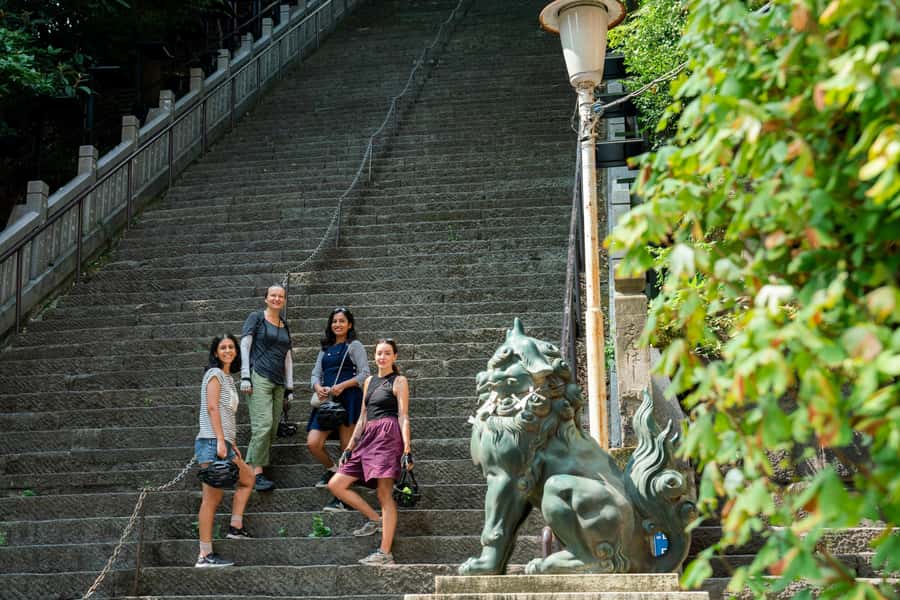
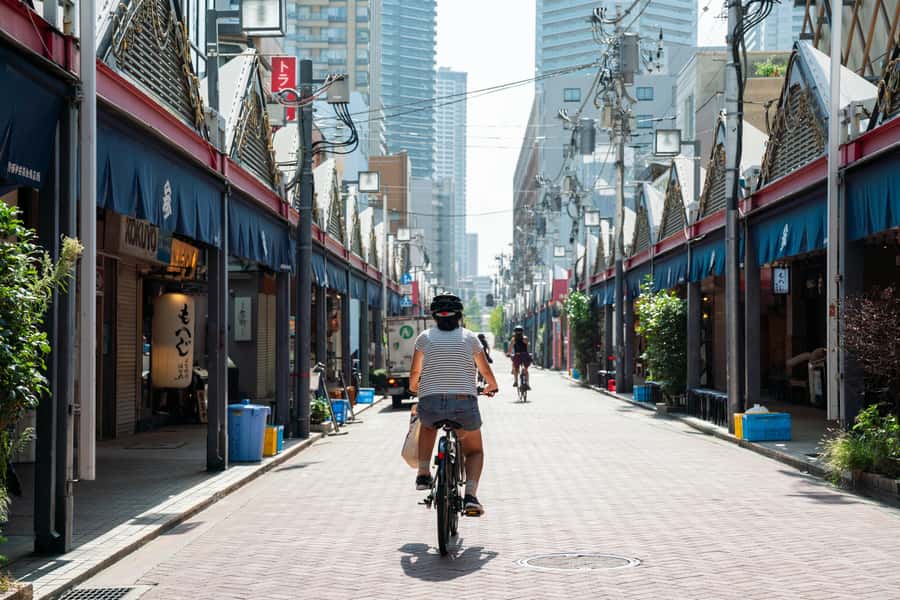
Tokyo has an excellent public transport system, but the subway hides the distance between neighborhoods. On a bike, you see the transitions. A grand avenue gives way to a side street. A shrine appears beside modern apartments. A waterfront path opens up after a busy road.
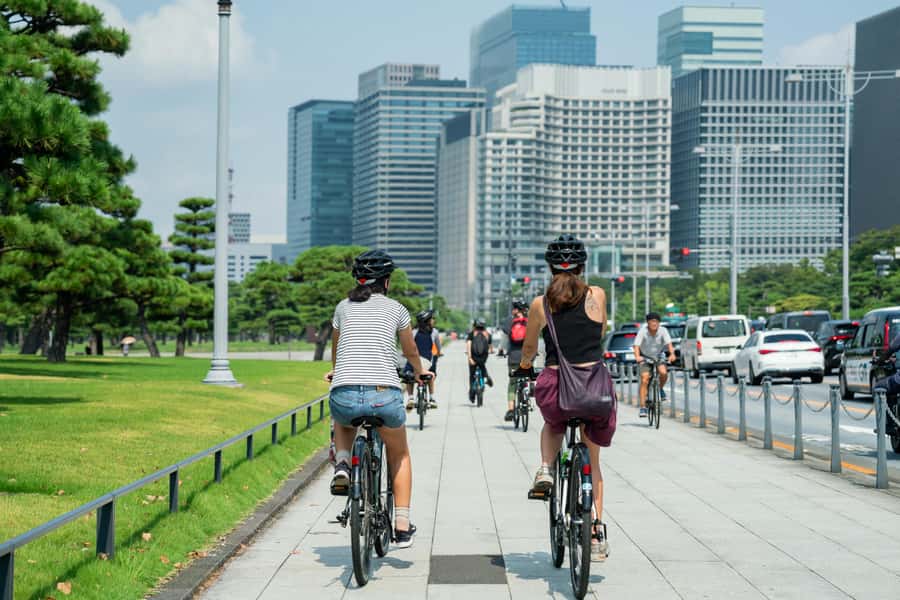
You also need to accept some city riding. Parts of the route may use roads with moving traffic, and parts may use footpaths shared with pedestrians. One important practical tip is to avoid looking only at the guide’s back wheel. Watch for people changing direction, parked bicycles, turning vehicles, and narrow sections.
The e-bike makes the physical side easier, but it does not remove the need for balance and judgment. If you ride regularly, the tour should feel approachable. If you have not ridden a bicycle in years, Tokyo traffic may make this a poor choice.
The provided helmet is included. Gloves are available in winter, which is a useful touch on cooler rides. Luggage storage is also included, and you can request a knapsack if needed. Wear clothing suitable for sitting and pedaling for three hours, and use sun protection in warm weather.
Pregnant participants, wheelchair users, people with heart problems, and people over 120 kilograms are not considered suitable for this activity. Children under 13 are not permitted. The published height information differs slightly, giving 147 centimeters in one place and 145 centimeters in another, so confirm the current requirement before booking if that matters to you.
How the snack and short stops add value
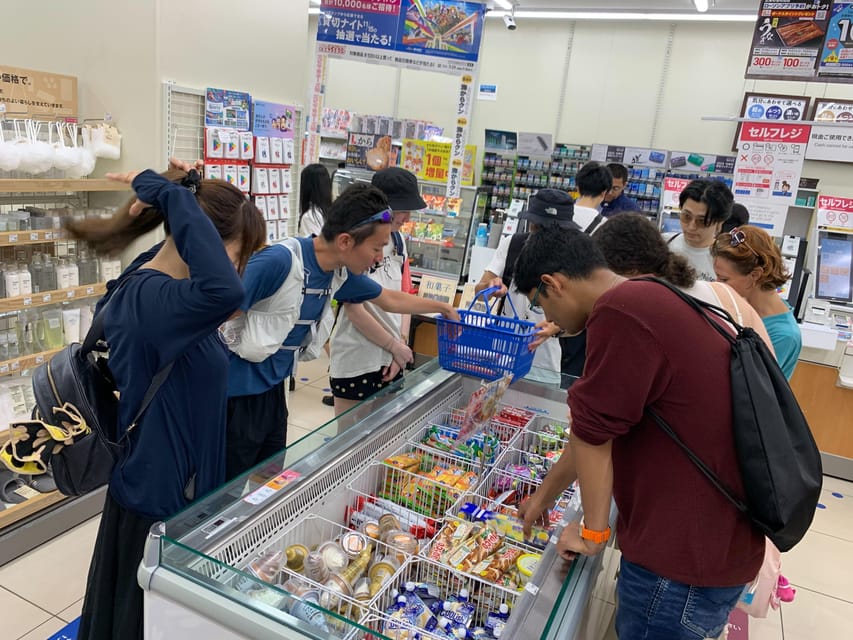
The food stop is not a full meal, and you should eat beforehand if you need substantial food. Its value is cultural and practical. Trying a traditional snack while moving through ordinary neighborhoods gives you a small connection to local routines.
On some routes, the stop may feel like a convenience-store style break. That is part of the appeal. You get to see how a simple snack fits into a day in Tokyo, rather than treating food only as a restaurant event.
The gardens and temples serve a similar purpose. You are not given hours to study each place, but the stops slow the ride down. The Kiyosumi garden, in particular, offers a quiet pause after city streets. A shrine or temple visit gives you a chance to notice details such as gates, grounds, and local customs that can pass unnoticed from a train window.
Who will get the most from this tour
I would choose this tour if you want to cover several parts of Tokyo without spending the entire day underground. It is especially useful early in a trip, when you want a broad sense of the city and ideas for places to revisit later.
It also suits repeat visitors. The routes include less familiar streets and quieter stops, so you can see a side of Tokyo beyond the usual major districts. The Tokyo Bay route is particularly good if you have already spent time in central Tokyo and want open views.
Families with older teenagers may enjoy it, but the age rule is firm: children under 13 cannot join. The activity is not suitable for wheelchair users or pregnant participants. You also need to meet the weight and height limits.
I would be cautious about booking if you dislike riding near cars, struggle with crowded footpaths, or want a slow walking tour. The e-bike reduces effort, not traffic. You still need to steer and make quick decisions.
Practical value at $65
The $65 price is strongest when you view the tour as a combination of transport, guide service, equipment rental, and food. A normal bicycle rental would not give you route planning, explanations, safety leadership, or stops at places you might miss.
The three-hour length is long enough to cover a good portion of the city but short enough to fit into a busy itinerary. You may finish roughly 30 minutes later than planned, so leave a buffer. The tour returns to its meeting point, which makes it easier to continue your day, though the exact transport connection depends on where that meeting point is.
Cancellation is flexible up to 24 hours before departure for a full refund, and you can reserve while paying later. Weather is the main uncertainty. If rain or other safety concerns make the ride unsuitable, the operator may cancel and notify you by email, sometimes the day before and sometimes on the day if conditions change.
Should you book the Tokyo e-bike tour?
Book it if you want an active introduction to Tokyo, enjoy short cultural stops, and feel comfortable on a bicycle. The City Route gives the broadest central overview, the Tokyo Bay Route offers the best sunset and skyline potential, and the Tokyo Tower Route gives you the clearest contrast between old Japan and modern Tokyo.
Skip it if you want long visits inside major attractions, a completely traffic-free ride, or the familiar highlights of Shibuya, Shinjuku, Asakusa, and Akihabara. Those areas are not the focus here.
For many visitors, the real value is seeing Tokyo between the famous sights: the streets, bridges, gardens, temples, snacks, and everyday movement. That is exactly why I would choose this tour early in a Tokyo stay, when a few hours on two wheels can help you understand how the city fits together.
FAQ
How long is the Tokyo e-bike tour?
The tour lasts three hours. It can finish about 30 minutes late because of traffic or route conditions.
Which routes are available?
You can choose a Tokyo City Route, Tokyo Bay Route, or Tokyo Tower Route. The sights and start time vary by the option selected.
What is included in the price?
The price includes an e-bike, helmet, English-speaking guide, traditional Japanese snack, luggage storage, and a knapsack if needed. Winter gloves are also available.
Do I need to arrive early?
Yes. Arrive 15 minutes before the scheduled start for the briefing. If you are late, you cannot join the group partway through the tour.
Are children allowed to participate?
Children under 13 are not permitted. The published information also gives minimum height requirements of either 145 or 147 centimeters, so confirm the current limit when booking.
Is the tour cancelled in bad weather?
If rain or other conditions make the ride unsafe, the tour may be cancelled. You will be notified by email, usually the day before, though changing conditions can lead to cancellation on the tour day.
Can I cancel for a refund?
You can cancel up to 24 hours in advance for a full refund. Reserve and pay later is also available.
Just added in Tokyo
- Nikko: Edo Wonderland Edomura Cultural Theme Park Ticket★ 4.3 · 205 reviews
- 《MEMBERS-ONLY-BAR-HOPPING》Discover Your Special Whiskey in Tokyo!★ 5.0 · 29 reviews
- Japanese Whisky Hunting《HIGH-QUALITY-ONLY》Rare Tasting Class★ 5.0 · 20 reviews
- Luxury Tokyo Sake, Cocktail, Whisky and Pairing Tour★ 5.0 · 18 reviews
- Wagyu & Sake Pairing in Shinjuku – Steak, Shabu-Shabu & More★ 5.0 · 112 reviews
- Small-Group Wagyu Beef and 7 Japanese Dishes Tokyo Cooking Class★ 5.0 · 190 reviews
- Mt. Fuji & Hakone Cherry Blossom private One Day Tour★ 4.5 · 35 reviews
- Mt. Fuji, Hakone Private Tour from Tokyo – Onsen, Arts and Nature★ 5.0 · 79 reviews
Cycling Tours, compared.
3h Tokyo E-Bike Tour: Hidden Gems, and Local Life with guide
Read our review →
Arashiyama Bamboo Forest & Hidden Gems Bike Tour (Early Bird)
Read our review →
5 Top Highlights of Kyoto Full Day Bike Tour (E-bike option)
Read our review →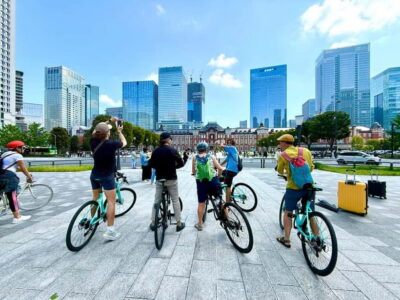
Hiroshima 2hr Peace Cycling Tour with Local Guide
Read our review →Browse the lists this tour appears in