
Reviewed · FOOD TOURS
Tokyo: West-Side Cycling and Food Tour with Guide
Tokyo’s most revealing scenes are often found away from the famous crossings and shrine gates. On this 3.5-hour west-side cycling tour, you ride through Nakano, Koenji, and Asagaya on practical Japanese mamachari bicycles, following narrow lanes, riverside paths, and local activity hubs. I like the easy access to everyday Tokyo, and I like that guide Andy explains customs and city life rather than simply pointing out sights.
The main consideration is the riding itself. You cover roughly 12 to 15 kilometers on narrow, sometimes crowded streets and uneven surfaces. The pace is leisurely, but you should already feel comfortable on a bicycle, and the tour generally runs in rain, so this is not a good choice if you want a dry, effortless sightseeing outing.
Key points at a glance
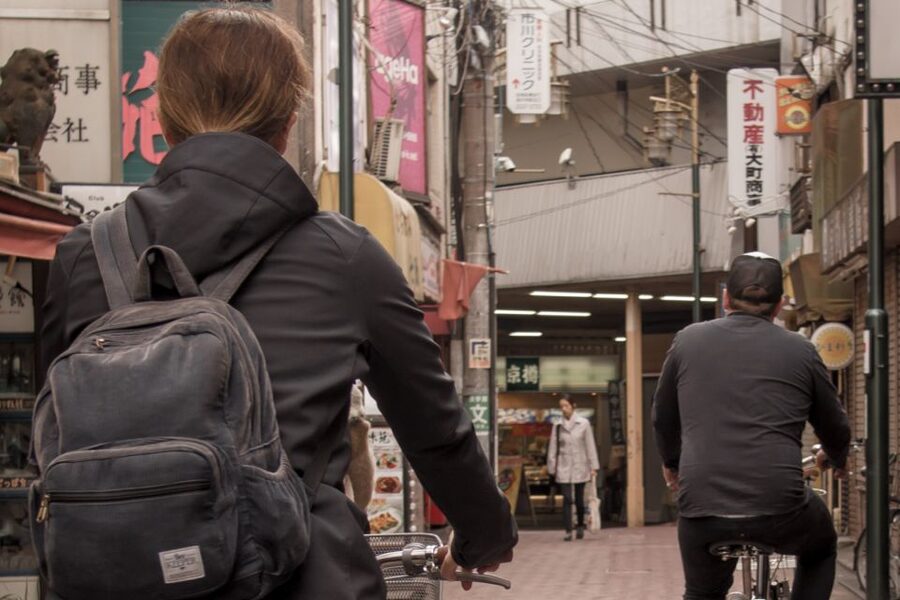
- Ride a real mamachari bicycle: These sturdy neighborhood bikes usually come with a front basket and offer a useful look at ordinary Japanese cycling culture.
- See three local districts: Nakano, Koenji, and Asagaya give you a broad taste of inner west Tokyo without sticking to the main tourist circuit.
- Eat as you go: The price includes two street-food stops, a simple local lunch, and one bottled drink.
- Learn the small city details: Andy explains bicycle parking systems, vending-machine drinks, local habits, architecture, and everyday customs.
- Expect a proper ride: The route covers 12 to 15 kilometers, with tight turns, narrow lanes, and some crowded sections.
- Meet at Koenji Station: The guide waits outside the ticket gates five minutes before departure and wears a baseball cap.
Why west Tokyo works so well by bicycle
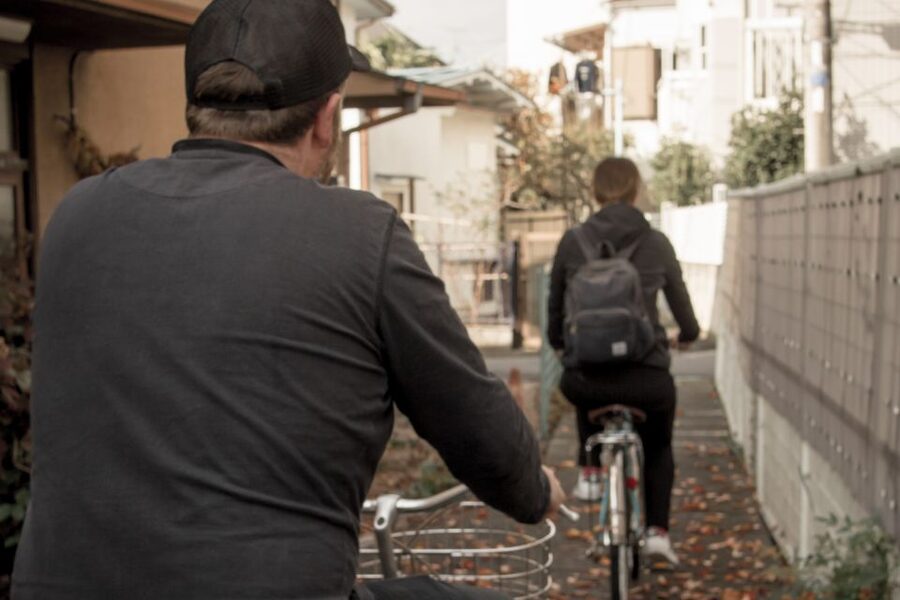
Tokyo can feel hard to read from a train window. You move quickly between major stations, but the quiet streets between them remain a blank. A bicycle changes that. You notice small homes beside apartment blocks, little shops, parked bicycles, local signs, and the way people use narrow streets that cars barely fit through.
This tour focuses on the inner west side of Tokyo, where Nakano, Koenji, and Asagaya sit close to one another. These are not remote districts, and you are not leaving the city behind. Instead, you get a look at the city’s ordinary rhythm, which is often more useful than another famous viewpoint.
The bicycle is part of the experience, not just a way to save time. You ride a mamachari, the plain, upright bicycle commonly used for short local trips. The bikes may be creaky or squeaky, but they are described as carefully maintained, with a front basket and an easy riding position.
That matters because a mamachari gives you a feel for local transport. It is not a sleek road bike built for speed. You will sit upright, ride at a relaxed pace, and use the bike as a practical neighborhood vehicle. If you have only used rental bikes designed for tourists, this is a more grounded introduction to how many people actually move around Tokyo.
Other food tours in Tokyo people book:
- Tokyo: Shinjuku Food Tour (13 Dishes at 4 Local Eateries)
★ 5.0 · 6,603 reviews - Tokyo: Shinjuku Food Tour (15 Dishes and 4 Eateries)
★ 4.9 · 2,033 reviews - Best of Shinjuku: Izakaya Food Tour (4 Stops, 14+ Tastings)
★ 5.0 · 1,863 reviews
Starting at Koenji Station
The meeting point is outside the ticket gates at Koenji Station, on the JR Train Network. Koenji is six minutes from Shinjuku and about 18 minutes from Shibuya, so it is simple to reach from the main tourist centers.
The guide waits there five minutes before the start time. Andy wears a baseball cap, making him easier to spot. The tour leaves on time, and that rule matters more here than on a walking tour. Once the group starts riding, it cannot easily turn around to collect someone who is late.
I suggest arriving early enough to find the station exit without rushing. Bring your passport or another ID card, hand sanitizer or tissues, and a garbage bag. The garbage bag is a practical touch for carrying waste between stops, since Tokyo’s public bins can be limited.
The tour is available as a private or small-group experience. That can make a real difference on a bicycle. A smaller group is easier to manage at crossings, in narrow lanes, and at food counters. You also have more room to ask Andy about customs, neighborhoods, and the things you notice along the way.
Nakano, Koenji, and Asagaya by mamachari
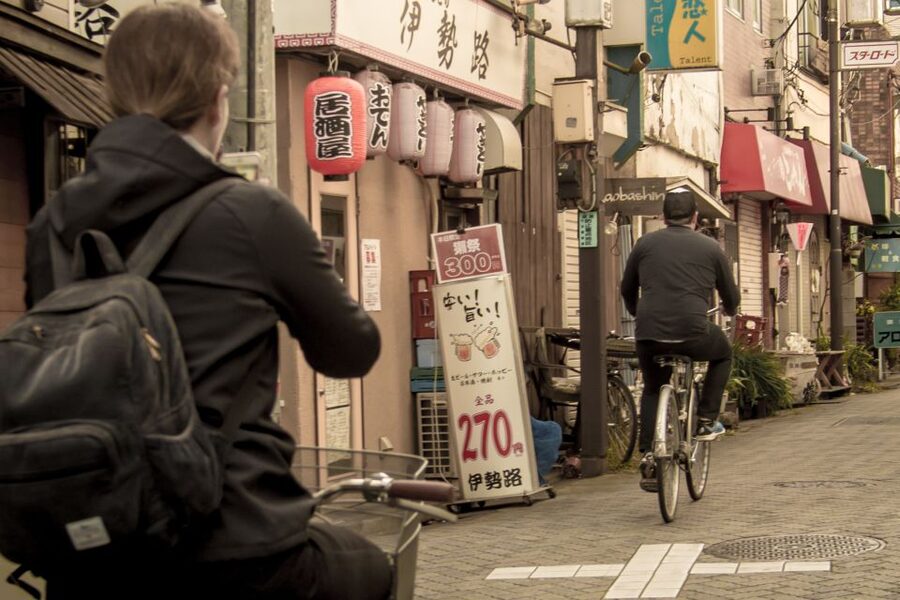
The route passes through Nakano, Koenji, and Asagaya, with the exact balance depending on the day and the group. Together, these districts offer a useful contrast to central Tokyo.
Nakano is known for busy local activity and an energetic mix of shops, residential streets, and eating places. By bicycle, you are not limited to one shopping street or station frontage. You can move through the connecting back streets and see how commercial areas give way to quieter residential pockets.
Koenji has a strong local identity and is a natural starting point for this kind of ride. It feels close to central Tokyo but less polished for sightseeing. You might pass small storefronts, narrow lanes, and ordinary buildings that do not appear in standard city itineraries. The appeal is not one grand sight. It is the accumulation of small details.
Asagaya adds another neighborhood perspective. The route links these districts in a way that helps you understand them as connected parts of west Tokyo rather than isolated station names. You get a sense of how quickly the character of a neighborhood can shift after only a few turns.
The riding includes twisting back streets, riverside bike paths, and busy local areas. Some sections are narrow and crowded, and one person described the tour as including sharp turns. That is useful information, not a warning to panic. The pace is leisurely, but you need to steer, brake, and stay aware of people and other bicycles.
Tokyo’s cycling rules and parking habits
One of the most useful parts of the tour is learning how bicycles fit into city life. Tokyo has limited street space, so simply leaving a bicycle outside a shop or station is not always acceptable. The experience includes bicycle parking fees, giving you a practical look at the systems used to keep bikes from blocking pavements.
This is the sort of subject that can seem minor until you rent a bicycle on your own. Knowing where bicycles may be parked, and understanding that designated areas can involve payment, saves you from an avoidable problem later.
Andy also uses the ride to explain local habits and customs. His background as an Australian living in Japan gives the conversation an accessible angle, especially if you are curious about the gap between what looks familiar and what works differently in Japan. Previous tour descriptions emphasize his humor, patience, and willingness to answer a long string of questions.
Do not expect a formal lecture. The value comes from asking about what you see. A building, a vending machine, a bicycle rack, or a busy lunch counter can become an opening into daily life.
More eating your way round Tokyo:
- Tokyo Night Foodie Tour in Shinjuku – Seasonal Sushi, Wagyu Beef
★ 5.0 · 1,161 reviews - Eat and Drink Like a Local: Tokyo Ueno Food Tour-Taverns&Ramen
★ 5.0 · 957 reviews - Tokyo: Shibuya Food Tour (13 dishes and 4 Eateries)
★ 5.0 · 770 reviews - Tsukiji Fish Market: Street Food & Culture Walking Tour
★ 5.0 · 669 reviews
Street food and a simple Japanese lunch
Food is built into the route rather than added as an afterthought. You receive two popular street-food eats, a simple local lunch, and one bottled drink.
The street-food stops are selected to fit the ride, so you should expect approachable everyday snacks rather than a formal tasting menu. A prior outing included sweet treats, and the food is described as popular local fare. The point is to try things you might otherwise pass by, with Andy helping you understand what you are eating.
Lunch takes place at a local noodle bar on at least some tours. The setting matters. Sitting at a compact counter among hungry office workers gives you a direct look at the practical side of Japanese dining. You are not being served a long, staged meal. You are refueling in the same kind of place where local workers grab lunch.
That makes the lunch both a strength and a limitation. If you enjoy simple food, quick service, and local counters, it should fit the day well. If you want a refined restaurant, a long meal, or careful control over every ingredient, this tour will not meet that expectation.
The food policy is strict: the experience does not cater to vegan diets, food allergies, or individual dietary requirements. People with allergies should not rely on substitutions. This is one of the clearest reasons to choose another food tour if you need guaranteed ingredient control.
The included bottled drink is also a chance to ask about Japan’s vending-machine culture. Andy has helped visitors make sense of the choices in these machines, which can be surprisingly confusing when labels are unfamiliar. It is a small detail, but these small details are exactly what turn a ride into a useful introduction to local life.
What the guide adds to the ride
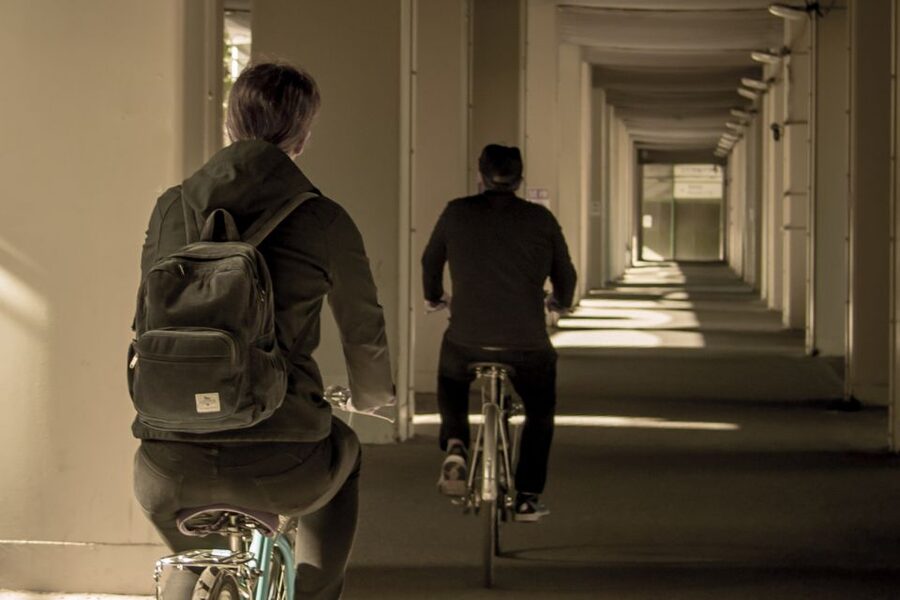
A bicycle route can be enjoyable without a guide, but you would miss much of the meaning behind what you see. Andy’s role is to connect the districts, food, transport habits, and social customs.
He is described as an Australian transplant with strong local knowledge and an easy sense of humor. That combination may suit English-speaking visitors who want explanations in plain language rather than a highly formal history lesson. He is also praised for answering questions and sending extra recommendations after the tour, though you should treat that as a helpful personal touch rather than a guaranteed part of the booked inclusions.
The tour’s most praised feature is not a single stop. It is the chance to ask how Tokyo works while you are moving through it. Why are bicycles parked in certain places? How do locals use vending machines? What makes one neighborhood feel different from the next? Those are the questions that help you navigate the city with more confidence afterward.
I also like that the guide does not seem to treat the route as a race. The stated pace is leisurely, and the ride includes stops for food and conversation. You will still need to handle the bicycle yourself, but the purpose is observation, not speed.
The physical side: distance, streets, and weather
The tour covers approximately 7.5 to 9.5 miles, or 12 to 15 kilometers. That is manageable for most competent cyclists, but it is not a brief spin around one park.
You ride on occasionally narrow and crowded streets, uneven surfaces, twisting lanes, and riverside paths. The sharp turns mentioned in the tour details are worth keeping in mind. A comfortable city cyclist should be fine, but anyone who rarely rides may find the route more demanding than the word leisurely suggests.
The minimum recommended height is 140 centimeters, or about 4 feet 7 inches, so you can ride the bikes comfortably. Children under 10 are not accepted, and the experience is not suitable for people under the height limit.
This is an all-season, all-weather outing. If rain comes, the tour generally continues, so plan to get wet. Wear clothing you can move in and bring weather protection suited to the forecast. Since the information specifically warns about rain, do not book this as a backup plan for a wet day unless you are genuinely comfortable cycling in those conditions.
Cycling liability insurance is included. That is reassuring, but it does not replace careful riding. Keep your attention on the road, listen to the guide, and avoid treating the bicycle like a sightseeing platform.
Is the $110 price fair?
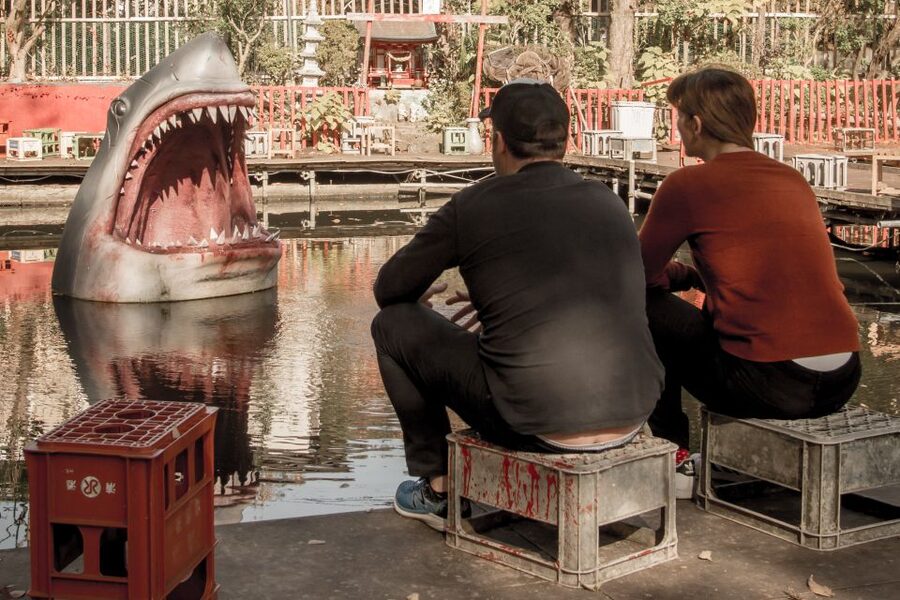
At $110 per person, this is not the cheapest way to see west Tokyo. The price includes a bicycle, guide, cycling liability insurance, bicycle parking fees, two street foods, lunch, and a bottled drink. It also includes something harder to price: a local route that connects several districts and explains what you are seeing.
If you rented a bicycle independently, you might spend less on the equipment. But you would need to find a suitable route, manage Tokyo traffic, locate food stops, pay for legal bicycle parking, and figure out how the neighborhoods fit together. The tour packages those tasks into one half-day.
The value is strongest for a first visit, especially if you have already seen Shinjuku, Shibuya, and the major central sights. It is also useful at the start of a Japan trip because it gives you practical cultural context that can improve the rest of your time in Tokyo.
The value is weaker if you dislike group activities, already know these neighborhoods well, or need a carefully controlled food plan. It is also not ideal if your main goal is famous architecture or major attractions. This is a local-life tour, not a checklist of Tokyo landmarks.
Who should book this experience?
I would choose this for an active visitor who wants Tokyo to feel less like a collection of stations and more like a city where people live. It suits couples, friends, solo visitors comfortable joining a small group, and families with older children who can manage the riding distance.
It is especially good for people who like asking questions. Andy’s explanations are a major part of the experience, so you will get more from the tour if you are curious about food, social habits, transport, and neighborhood life.
I would not choose it for vegans, people with food allergies, children under 10, or anyone below 140 centimeters. I would also think twice if you are unsteady on a bicycle, uncomfortable in narrow streets, or hoping to avoid rain at all costs.
Should you book the west-side cycling tour?
Book it if you want a practical, food-based look at Nakano, Koenji, and Asagaya, and if you are happy to trade famous sights for ordinary Tokyo scenes. The best parts are the mamachari ride, Andy’s explanations, the local noodle lunch, and the chance to see how bicycles and food fit into daily city life.
Skip it if you need dietary flexibility, dislike cycling in traffic, or want a polished sightseeing route with guaranteed weather. For the right rider, the $110 fee buys more than transport and snacks. It gives you a useful way to read west Tokyo after the tour ends.
FAQ
Where does the tour start?
It starts outside the ticket gates at Koenji Station on the JR Train Network. The guide waits there five minutes before the start time and wears a baseball cap.
How long is the experience?
The tour lasts 210 minutes, or 3.5 hours. The cycling distance is roughly 12 to 15 kilometers.
What food and drinks are included?
The price includes a simple local lunch, two popular street-food items, and one bottled drink.
Is the tour suitable for people with dietary restrictions?
No. The experience does not cater to vegan diets, food allergies, or personal dietary requirements.
What type of bicycle do I ride?
You ride a salvaged mamachari bicycle. The bikes are described as well maintained and may include a front basket.
Does the tour run in the rain?
The tour generally proceeds as planned in rainy weather, so you should be prepared for the possibility of getting wet.
More cycling tours elsewhere in Japan
- Tokyo Great Cycling Tour
★ 5.0 · 811 reviews - Tokyo Top Highlights 3h Guided E-bike Tour
★ 5.0 · 714 reviews - 3h Tokyo E-Bike Tour: Hidden Gems, and Local Life with guide
★ 5.0 · 670 reviews - Tokyo: 3-Hour Bike or E-Bike City Highlights Tour
★ 4.8 · 435 reviews
Just added in Tokyo
- The 10 Tastings of Tokyo With Locals: Private Street Food Tour★ 5.0 · 48 reviews
- Small Town in the Big City: Tasting Tokyo’s Kichijoji★ 5.0 · 195 reviews
- Small Town in the Big City: Tasting Tokyo’s Kichijoji★ 5.0 · 16 reviews
- EXCLUSIVE Tokyo Secret: Kichijoji Small-Group Food & Bar Hopping★ 5.0 · 29 reviews
- Explore Kichijoji: Walk Through One of Tokyo’s Beloved Districts★ 5.0 · 21 reviews
- :Tokyo,Shibuya/ Pro Photography in Kimono / English-Friendly★ 5.0 · 26 reviews
- 【R34】Tokyo:Private Daikoku tour in Modified R34★ 4.9 · 92 reviews
- Tokyo:Calligraphy &Make your original folding fan in Asakusa★ 5.0 · 62 reviews
Food Tours, compared.
Shinjuku Food Tour (13 Dishes at 4 Local Eateries)
Read our review →
Osaka Food Tour: 13 Dishes at 5 Local Eateries
Read our review →
Best of Shinjuku: Izakaya Food Tour (4 Stops, 14+ Tastings)
Read our review →
Kyoto Night Foodie Tour in Gion (9+ dishes + 6 Sake tastings)
Read our review →
Hungry Osaka Street Food Tour:15 Tastings & 3 Drinks with a Local
Read our review →
Tokyo Night Foodie Tour in Shinjuku – Seasonal Sushi, Wagyu Beef
Read our review →
Osaka Local Foodie Walking Tour in Dotonbori and Shinsekai
Read our review →
Eat and Drink Like a Local: Tokyo Ueno Food Tour-Taverns&Ramen
Read our review →Browse the lists this tour appears in