
Reviewed · SAMURAI & NINJA EXPERIENCES
Tokyo: Samurai Sword & Archery Class from Samurai Descendant
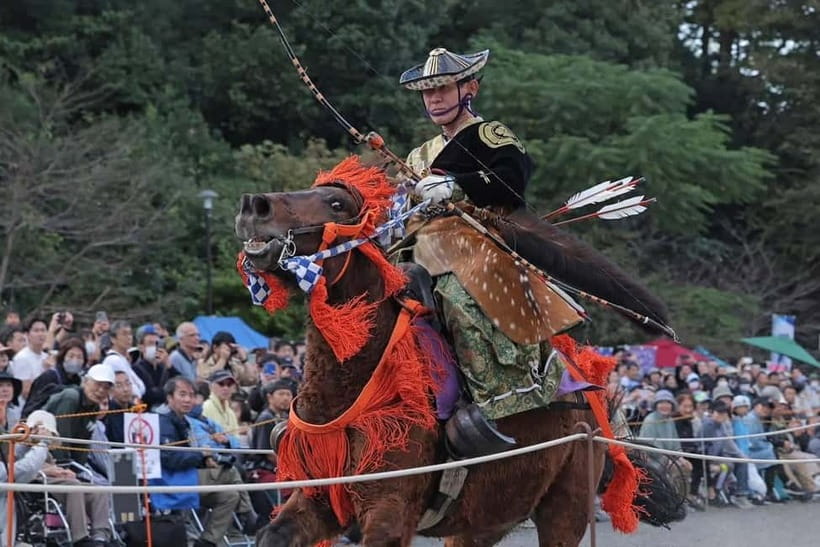
The most unusual part of this three-hour dojo class is that you do not simply watch a sword show. You learn basic forms, practice attack and defense, spar with a practice sword, cut targets, and shoot a traditional Japanese bow. Yoshioki Sumida teaches as a samurai descendant and a master of both swordsmanship and horseback archery.
I like the clear mix of history and hands-on work, and I like that the class takes place in a real dojo rather than a staged tourist venue. The training clothes help set the tone, too. The main catch is the $193 price, plus the class is physical and only suited to people who can safely swing a sword.
Key points at a glance
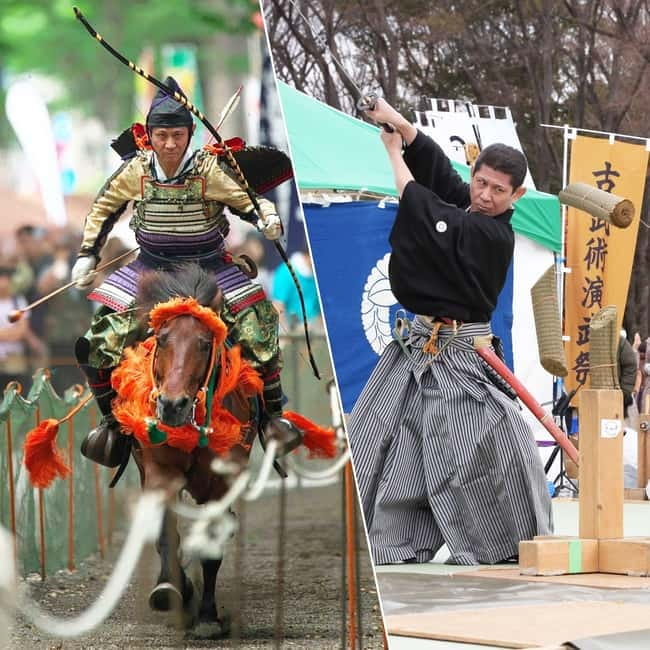
- Cutting while moving: Learn why target slashing takes far more control than movie swordplay.
- Two old Japanese weapons: Study swordsmanship and try a bow based on traditional horseback archery.
- A real lesson, not a short photo stop: Expect instruction, repetition, corrections, and sparring.
- History with useful context: The class explains why bows, matchlock guns, and swords mattered at different points in samurai history.
- Clean training clothes included: Send every participant’s height and weight after booking.
- Small-group setting: The class allows up to 15 people, though the experience can feel more personal with fewer students.
Entering the Machida dojo near JR Station

Toyama-Ryu BIZENKAI is in Machida, a 10-minute walk from JR Machida Station. The dojo is on the third floor, reached by stairs at the back between the sword shop and the vending machines on the first floor.
That last detail matters. This is not a grand museum entrance with large signs and a polished visitor center. Read the directions carefully, arrive on time, and give yourself room to find the stairs. One useful tip is to arrive about 30 minutes early if you want to watch practice or speak with the instructor before class begins.
The setting helps explain the feel of the experience. You are entering a working martial arts space, not a theater built around samurai costumes. Treat the room with respect, follow instructions, and expect the atmosphere to be more like a class than a performance.
The class is shared and can include up to 15 people. That is a manageable maximum, but the amount of personal correction will depend on the group size. Smaller sessions may give you more direct time with Sumida-sensei and his assistant.
Other samurai and ninja experiences in Tokyo people book:
- Tokyo: Samurai Restaurant Show Ticket with 2 Drinks
★ 4.5 · 1,307 reviews - Tokyo: Samurai Ninja Museum Guided tour and Experience
★ 4.6 · 1,010 reviews - Best Samurai Experience in Tokyo
★ 5.0 · 458 reviews
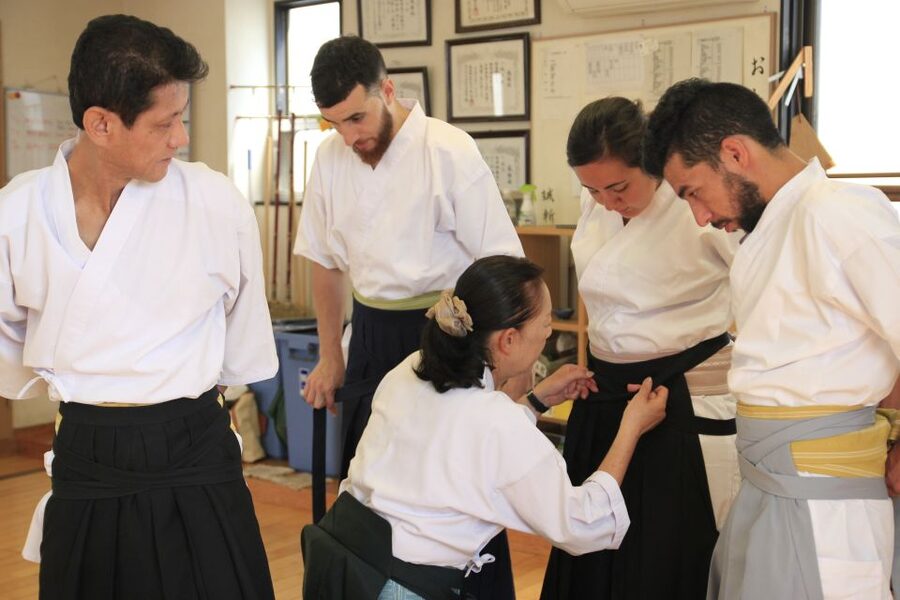
Changing into training clothes
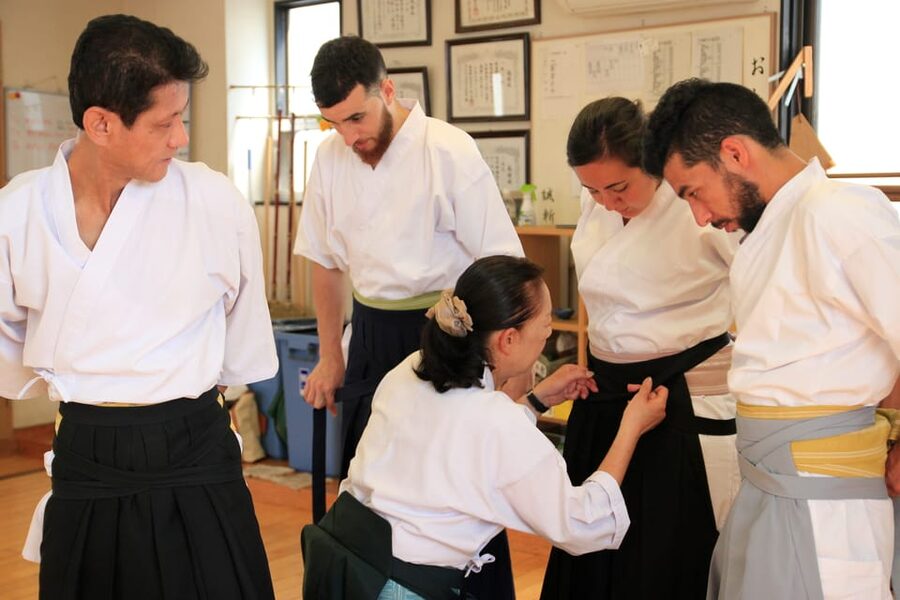
Training wear is provided, which saves you from packing a costume or wondering what to wear. You need to provide the height and weight of every participant after making your reservation so the correct clothing can be prepared.
Changing clothes is more than a photo opportunity. It signals a change from sightseeing to practice. You will be expected to pay attention to posture, movement, etiquette, and safe handling, so comfortable clothes underneath the uniform are sensible.
Bring a drink. The class involves repeated sword movements, stance work, sparring, archery, and target practice. Several people found it tiring enough to feel sore the next day, and the description itself makes clear that this is a physical activity.
The class is taught in Japanese and English. Sumida-sensei uses English for instruction, with support from an assistant when needed. The available feedback points to patient explanations and repeated demonstrations, but you still need to listen closely and copy movements carefully.
Learning what samurai weapons were really for
The opening talk gives the practical background needed to understand the training. Around 1,000 years ago, the bow was the main samurai weapon. About 450 years ago, the matchlock gun became more powerful. After the civil wars ended around 400 years ago, the sword took on a larger role.
That timeline is useful because popular culture often treats the katana as the only samurai weapon. Here, you handle a traditional matchlock gun and see how weapon choice changed with technology and warfare. You also receive a lecture on Japanese swords, including their construction and correct handling.
The history portion is short enough that you will not spend the morning sitting still. The class moves quickly into practice. That balance suits you if you want context but would lose patience with a long museum-style talk.
Sumida-sensei also corrects common movie habits. Details such as how a sword is held, moved, and returned to its scabbard receive attention. You may leave noticing inaccurate sword handling in films and video games, which is a surprisingly useful souvenir from the class.
Iai forms and the discipline of the first swing
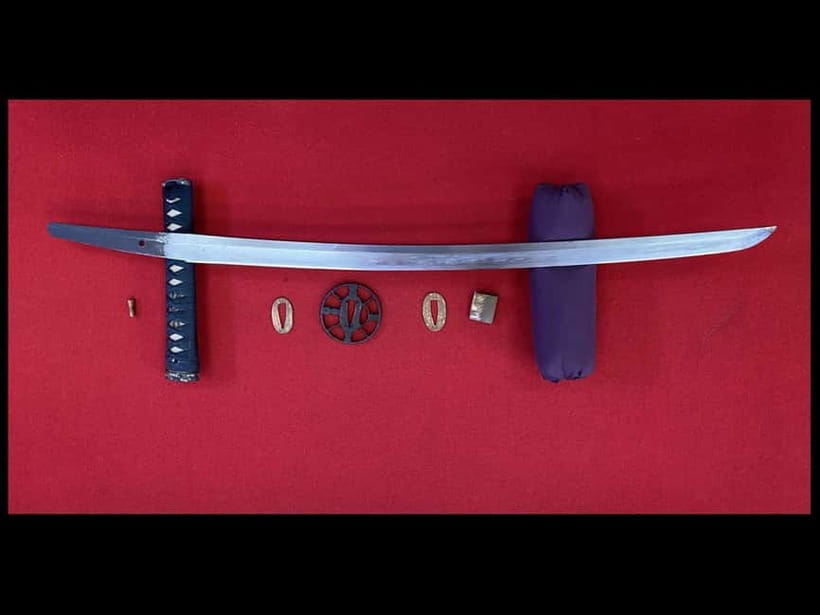
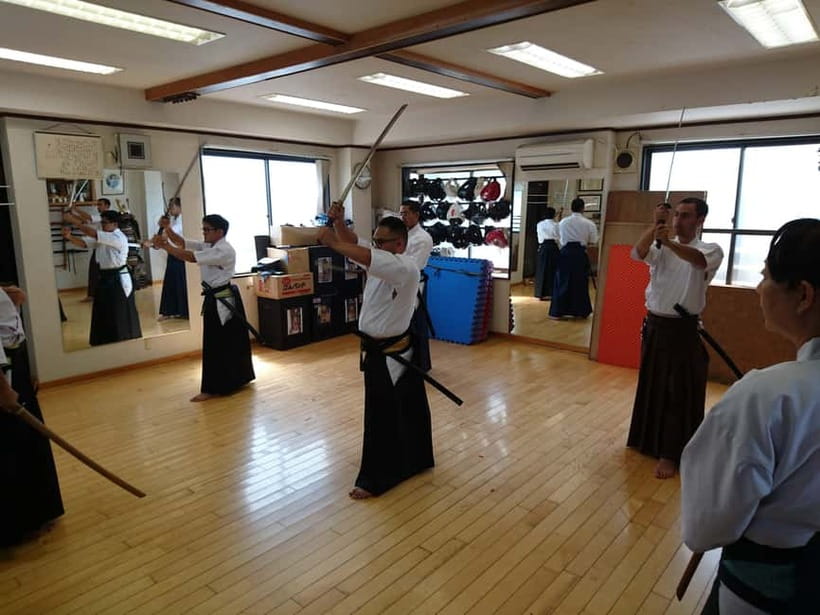
The iai lesson introduces you to the controlled movements used when drawing and handling a sword. You begin with a practice sword and learn basic stance, grip, swing, and form. The goal is not to slash wildly. It is to control the blade line and keep your body aligned.
You will repeat movements while the instructor watches and corrects you. This can feel slow at first, but it is the part that makes later cutting safer and more meaningful. A sword is not impressive because it is heavy or sharp. It is difficult because every part of your body must work together.
The class also includes an activity that lets you check the blade line. This is a practical way to see if your swing is traveling correctly instead of drifting off to one side. For beginners, that kind of immediate feedback is worth more than a long speech about technique.
You do not need previous martial arts experience. The teaching is built around basic instruction, examples, and correction. Still, beginners should expect concentration and physical effort. This is not a casual session where you wave a prop twice for a photograph.
Other martial arts sessions in Tokyo:
- Kyoto: Kendo and Samurai Experience with Uniform and Gear
★ 4.9 · 815 reviews - Samurai Training Experience KENDO in Osaka
★ 5.0 · 515 reviews - Japanesel Archery Experience HIROSHIMA CASTLE SHARAKU
★ 5.0 · 387 reviews - Hiroshima: Traditional Japanese Archery Experience
★ 4.8 · 351 reviews
Gekken sparring and the timing of defense
The gekken lesson focuses on attack and defense. You practice with a training sword and learn how timing affects both movement and safety. Sparring is friendly, but it is still active practice, not a staged duel.
This section may be the most fun for people who like martial arts. It gives you a sense of distance and reaction that solo forms cannot provide. You must watch your partner, respond to an opening, and control your own movement.
The class is taught for beginners, but do not confuse that with effortless. Several activities require muscle strength, and the sword work can become tiring. The experience is not suitable for people with back or heart problems, mobility impairments, epilepsy, or visual impairment. Pregnant women and wheelchair users should not book this activity.
Children under 18 are not accepted according to the suitability information, although another note says minors may participate with parental permission and supervision if they have the strength to swing the sword. Because those instructions conflict, families should confirm eligibility with the provider before booking.
Cutting targets with control, not movie theatrics
Target cutting is one of the class highlights, and it is also where the difference between appearance and technique becomes obvious. You learn how to cut while moving, which is much harder than standing still and making a single dramatic swing.
The instructor emphasizes the blade line, body position, timing, and follow-through. You might manage a clean cut after several attempts, but the point is not to rack up a score. The point is to understand how precise the motion must be.
Descriptions of the activity refer to a mock sword for the iai lesson, while the practical cutting portion and participant accounts describe handling real katana blades under supervision. That means you should take every safety instruction seriously and never treat the sword as a costume prop.
This section also gives you good photo and video opportunities, as long as the instructor allows you to record at that moment. A camera can capture the action, but do not let filming distract you from footwork or from the person beside you.
Trying the Japanese longbow
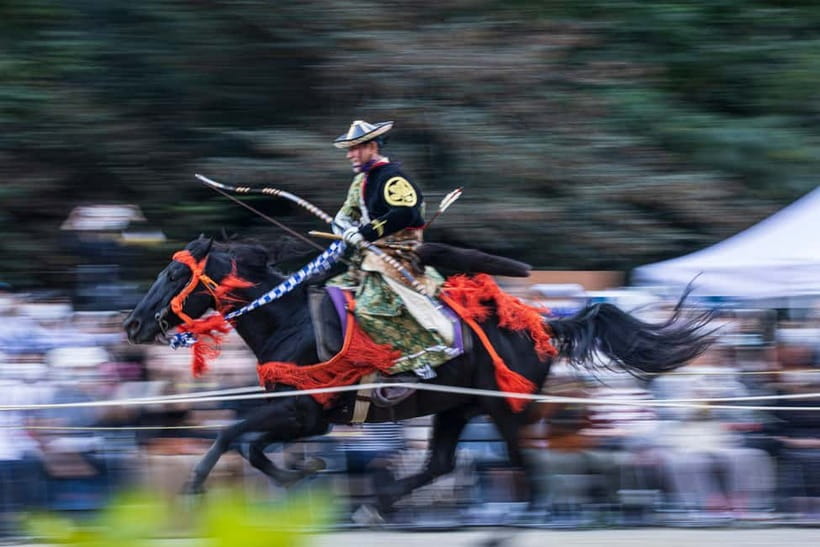
The archery segment shifts the mood. Instead of the compact image many people associate with modern archery, you work with a traditional Japanese-style longbow connected to horseback archery.
The bow was the main samurai weapon around 1,000 years ago, so this section corrects the narrow idea that samurai culture begins and ends with the katana. You learn basic handling and try shooting arrows under instruction. The experience is a sample lesson, not a full course in mounted archery, and there is no claim that you will shoot from horseback.
The bow can be awkward for first-time users, especially if you are left-handed. One participant found the class workable as a left-handed person but noticed the limitation more during archery. If your dominant hand is left, tell the instructor at the start and expect that the standard teaching setup may favor right-handed technique.
For photos, a wide lens is useful during the bow section because the long equipment can be difficult to fit into a close frame. Keep your phone and camera out of the way when arrows are being handled.
The final demonstration and the value of a real teacher
A live demonstration of Toyama-ryu, including advanced technique, may be part of the session. This is not presented as a flashy stage act. The instructors show difficult movements that beginners are not expected to copy immediately.
That demonstration gives you a better sense of the gap between basic practice and mastery. Your own movements may feel clumsy, and that is normal. Watching precise technique after working through the fundamentals can make the lesson feel more grounded.
Sumida-sensei’s teaching style is a major part of the value. He is described as patient, careful, humorous, and serious about correct form. He may correct you repeatedly, but the corrections are meant to make the practice safer and more accurate, not to embarrass you.
An assistant may help with instruction, particularly in a shared class. English is available, though you should still expect martial arts terms, demonstrations, and physical copying to do much of the teaching.
Is $193 a fair price?
At $193 per person, this is expensive compared with a short cultural demonstration or a basic museum visit. You are paying for a three-hour practical class, an instructor, training clothes, a practice sword, sword history, sparring, cutting practice, and archery.
I think the price makes more sense if you value access to instruction rather than a souvenir photograph. You are not just watching an expert swing a weapon. You receive corrections, repeat movements, and try several parts of the discipline yourself.
The value also depends on your interest. If you love Japanese martial arts, historical weapons, or hands-on cultural activities, this could be one of the strongest uses of half a day in Tokyo. If you mainly want a quick samurai-themed photo, the cost and physical demands are harder to justify.
The location adds travel time from central Tokyo. One participant described the trip from Shimbashi as about 90 minutes to the dojo, so check your route and leave plenty of time. The meeting point is close to JR Machida Station, but Machida is not in the central sightseeing core.
Free cancellation is available up to 24 hours before the start time, and you can reserve while paying later. Check the available start times before building this into a busy Tokyo day.
Who should book this class?
I would choose this for adults and older teens who want active participation, not passive entertainment. It suits people who enjoy learning a skill, listening to historical explanation, and accepting that the first attempts may look less graceful than expected.
It is also a good choice for couples or small groups with different levels of experience. Beginners can start with basic handling, while martial arts fans will have more to think about in the form, timing, and corrections.
You should skip it if you have a medical condition affected by exercise, trouble with mobility, or difficulty safely swinging a sword. Alcohol and drugs are not allowed, and sensible behavior is essential around weapons and arrows.
The uniform, dojo setting, and range of activities make this a strong alternative to a standard city tour. The class does not pretend that three hours turns you into a samurai. It gives you a carefully supervised introduction to the work, discipline, and history behind the image.
Should you book Toyama-Ryu BIZENKAI?
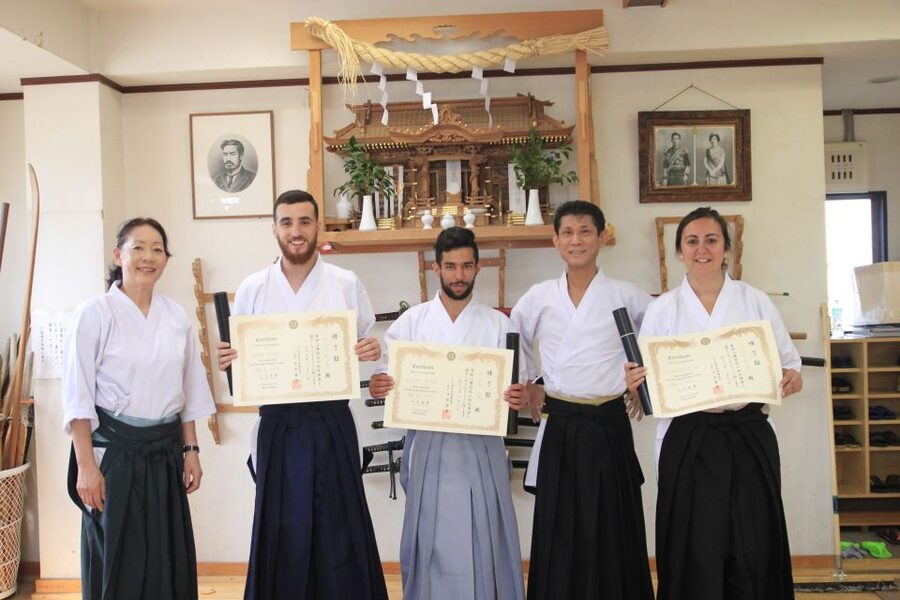
Book it if you want a serious, physical introduction to Japanese swordsmanship and archery, and if the $193 fee fits your budget. The strongest reasons are the direct teaching from Yoshioki Sumida, the chance to practice several disciplines, and the real dojo setting near Machida.
Think twice if you are seeking a short, polished show, dislike exercise, or have only a tight window in central Tokyo. Arrive early, send the requested height and weight details, wear comfortable clothing under the supplied uniform, and leave time for the train ride.
For the right person, this is not a quick samurai costume stop. It is a demanding lesson that lets you feel, in a small way, how much control these arts require.
FAQ
Where is the samurai sword and archery class held?
The class is held at Toyama-Ryu BIZENKAI, also called 戸山流備前会 BIZENKAI. The dojo is about a 10-minute walk from JR Machida Station and is located on the third floor.
How do I find the dojo entrance?
Use the stairs at the back between the sword shop and the vending machines on the first floor. The dojo is on the third floor.
How long does the experience last?
The class lasts three hours. Starting times vary, so check availability when choosing a date.
Is the class taught in English?
Yes. The listed languages are Japanese and English. Yoshioki Sumida teaches the class, with an assistant involved in some sessions.
What equipment and clothing are included?
The experience includes an instructor, the samurai class, a practice uniform, and a practice sword. You need to provide the height and weight of all participants so training clothes can be prepared.
Can children participate?
The suitability information lists the activity as not suitable for children under 18. Another instruction says minors may participate with parental permission and supervision if they have enough strength to swing the sword. Confirm this point directly with the provider before booking.
What should I bring to class?
Bring a camera if you want photos and a drink for the physical session. Alcohol and drugs are not allowed.
More samurai and ninja experiences elsewhere in Japan
- Ninja Experience (Family Friendly) at Samurai Ninja Museum TOKYO
★ 5.0 · 441 reviews - Tokyo: Samurai Entertainment Night Show in Kanda Shrine
★ 4.6 · 417 reviews - Tokyo Sword Experience – includes Museum Ticket/Ninja Experience
★ 5.0 · 314 reviews - Samurai Ninja Museum Asakusa: Samurai Sword Lesson & Tour
★ 4.8 · 306 reviews
Just added in Tokyo
- Nikko: Edo Wonderland Edomura Cultural Theme Park Ticket★ 4.3 · 205 reviews
- 《MEMBERS-ONLY-BAR-HOPPING》Discover Your Special Whiskey in Tokyo!★ 5.0 · 29 reviews
- Japanese Whisky Hunting《HIGH-QUALITY-ONLY》Rare Tasting Class★ 5.0 · 20 reviews
- Luxury Tokyo Sake, Cocktail, Whisky and Pairing Tour★ 5.0 · 18 reviews
- Wagyu & Sake Pairing in Shinjuku – Steak, Shabu-Shabu & More★ 5.0 · 112 reviews
- Small-Group Wagyu Beef and 7 Japanese Dishes Tokyo Cooking Class★ 5.0 · 190 reviews
- From Tokyo: Private Tour to Fuji/Hakone – Onsen, Art, Nature★ 5.0 · 116 reviews
- Tokyo: KABUKI Show at Kabukiza Theatre Admission Ticket★ 4.8 · 152 reviews
Samurai & Ninja Experiences, compared.
Samurai Ninja Museum Guided tour and Experience
Read our review →
Kendo and Samurai Experience with Uniform and Gear
Read our review →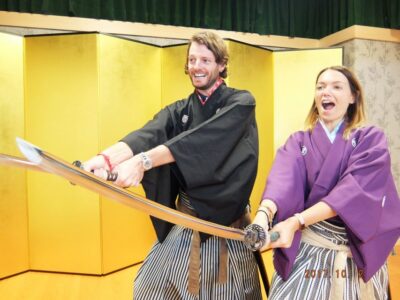
Samurai Sword Class by Experts in Traditional Arts
Read our review →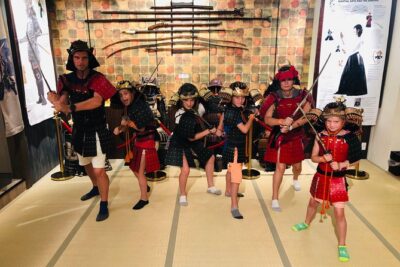
Skip the lines Basic Ticket at SAMURAI NINJA MUSEUM KYOTO
Read our review →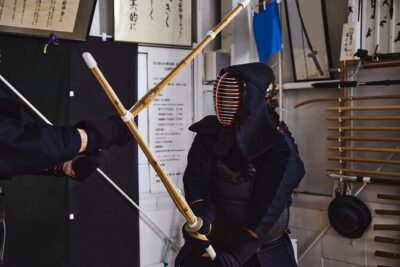
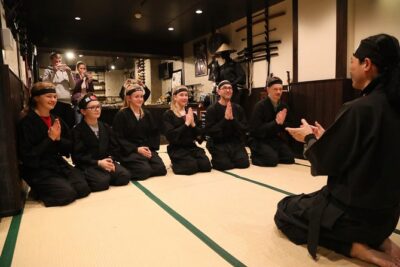
Ninja 1-hour Hands-on Lesson by Japanese master in Kyoto -Entry
Read our review →Browse the lists this tour appears in