
Reviewed · SAMURAI & NINJA EXPERIENCES
Knife Making Experience in Samurai Sword Town
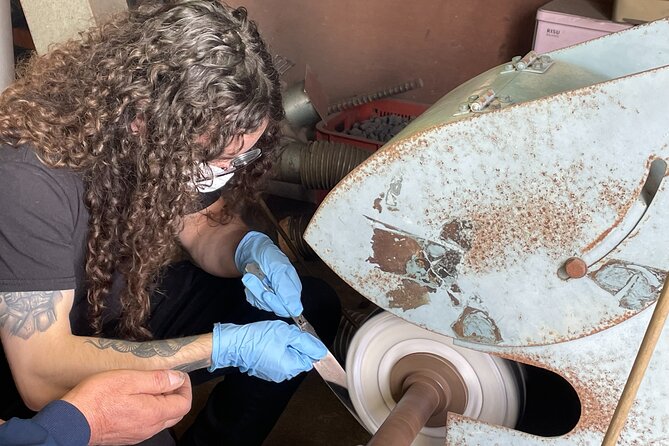
The best part of this Seki experience is that you do not simply buy a Japanese knife. You help finish one in the city known for sword and cutlery making. Under the guidance of bladesmiths with more than 50 years of experience, you polish, sharpen, engrave, and assemble a Damascus kitchen knife, then test its edge on fresh vegetables.
I like the small-group attention and the human side of the day. Sumio, Yoshi, and Hiro are described as warm, humorous instructors who explain the work clearly. I also like the mix of hands-on craft, sword museums, a Japanese lunch, and a temple visit, so the five hours are not spent at a workbench alone.
The main consideration is the price, about $316.27 per person. That is a serious outlay for a half-day activity, and the knife-making portion requires patience and concentration. Still, the fee covers instruction, museum visits, lunch, a certificate, and a one-of-a-kind knife you can use at home.
Key points at a glance
- Finish a Damascus kitchen knife: Polish, sharpen, engrave, and assemble your own blade rather than simply watching a demonstration.
- Learn from experienced hosts: Sumio, Yoshi, and Hiro guide the work and share practical background on Japanese knife making.
- Visit Seki’s sword and cutlery sites: The schedule includes the Knife Museum, Seki Swordsmith Museum, and Gifu Cutlery Hall.
- See the finished edge in action: You test the sharpness of your knife by cutting fresh vegetables.
- Receive useful keepsakes: A signed certificate and, while supplies last, a handcrafted mini knife are included.
- Meet at Sekitomioka Station: The activity begins at 10:30 a.m. and returns to the meeting point.
Why Seki is the right place for a knife-making day
Seki City in Gifu Prefecture has been a sword-making center since the 13th century. That long connection with blades gives this activity more weight than a generic craft workshop. You are working in the place that helped shape Japan’s cutting traditions, then seeing those traditions carried into modern kitchen knives.
The day also shows how sword skills remain part of everyday life. Seki is one of the world’s three major cutlery-producing areas and has Japan’s highest cutlery production volume. The focus here is not only on samurai weapons. It is also on the practical knives used in Japanese kitchens.
That connection makes the activity a good fit for several kinds of visitors. You might come for samurai culture, for Japanese food, for craftsmanship, or simply because you want to take home something more personal than a shop purchase. The finished knife gives the day a lasting purpose, but the museums and temple keep it from feeling like a single-topic class.
Other samurai and ninja experiences in Japan people book:
- Ninja Experience in Takayama – Basic Course
★ 5.0 · 62 reviews - Seki: Samurai Knife Making Experience at the Knife Museum
★ 5.0 · 61 reviews - Ninja Experience in Takayama – Basic Course
★ 4.6 · 59 reviews
The hands-on knife work at the Knife Museum
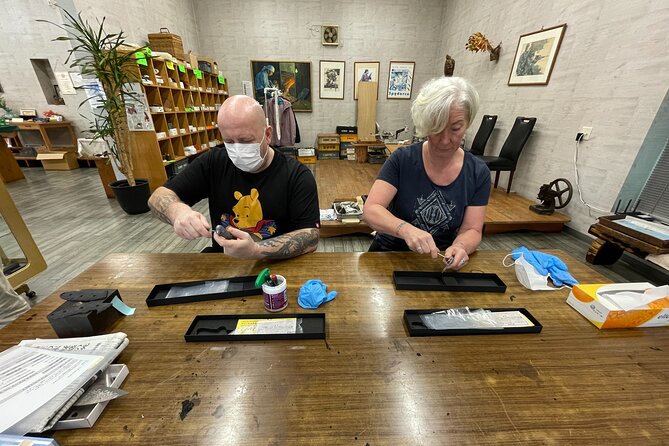
The main workshop takes about two hours at the Knife Museum. Before you begin, you can see unusual knives from around the world, which gives you a wider view of cutlery before turning to your own blade.
The important point is that this is a finishing experience, not a full blacksmithing course in which you forge a knife from raw steel. You work on a prepared professional Damascus kitchen knife through several careful stages. The supplied description lists polishing, sharpening, engraving, and assembly, so you should expect close instruction and hands-on work rather than a passive demonstration.
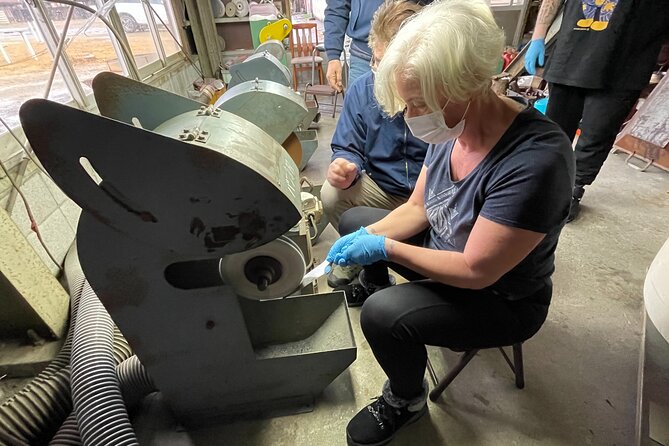
Polishing is not just cosmetic. It affects how the blade looks and helps you understand the care that goes into a finished knife. Sharpening demands more attention, since the angle and pressure matter. The engraving stage gives you a personal mark, while assembly brings the separate parts together into a usable kitchen tool.
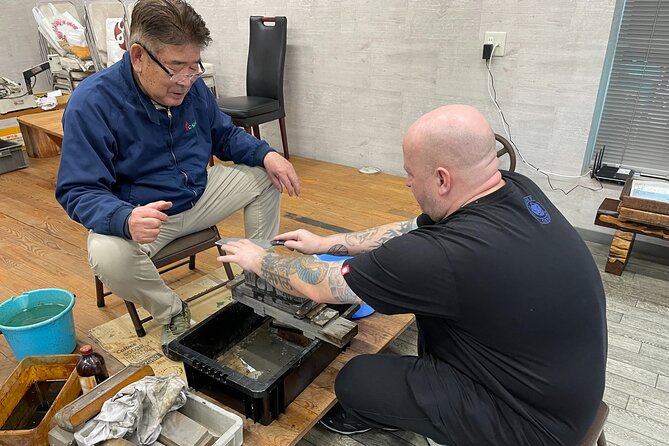
The hosts are a major part of the experience. Sumio and Yoshi are described as brothers who are passionate about the process, and Hiro is also part of the hosting team. Their humor and clear instruction help keep the work friendly rather than stiff or overly formal. In a small private group, you can ask questions and get help when a step feels unfamiliar.
You also get to test the blade on fresh vegetables. That simple test is useful because it turns an abstract lesson about sharpness into something you can see and feel. It also gives the knife a practical connection to cooking, rather than leaving it as a decorative souvenir.
Plan to give the workshop your full attention. This is a craft activity, so you should not expect to rush through the steps. The exact size of each group can vary, and one account refers to a larger group, but the experience is private to your party and the instruction is designed to provide direct help.
A limited-time bonus adds extra value: a handcrafted mini knife souvenir, along with a signed certificate of completion. Availability of the mini knife is limited, so treat it as a bonus rather than the core reason to book. The full-size knife you finish is the central keepsake.
The Seki Swordsmith Museum and the story behind the blade
The Seki Swordsmith Museum takes about one hour. This is the place to connect your hands-on work with the older traditions of Japanese sword making.
Seki developed as a major sword center as early as the 13th century. The museum visit helps explain why the city became associated with blades and how sword-making traditions relate to later cutlery production. After working on a kitchen knife, you will have a better sense of the precision involved in making and maintaining any sharp edge.
This stop is especially useful for visitors who know Japanese swords mainly through films, television, or samurai imagery. The museum gives that interest a more grounded setting. You are not only looking at famous forms. You are learning how a city built an economy and identity around skilled blade work.
The one drawback is pacing. An hour is enough for an introduction, but not enough for an exhaustive study of Japanese sword history. The museum works best as context for the workshop, not as a stand-alone museum day. If sword history is your main reason for visiting Gifu, you may wish you had more time.
Still, the order of the day makes sense. You first work with a knife, then see the sword traditions that helped shape Seki, then visit a modern cutlery center. Each stop adds another layer without asking you to spend the entire day in one exhibition space.
Gifu Cutlery Hall and Seki’s modern craft
The visit to Gifu Cutlery Hall lasts about 30 minutes and admission is free. It is a short stop, but it shows the modern commercial side of Seki’s blade industry.
After the museum and workshop, you can place your own knife in a larger setting. Seki is one of the world’s three cutlery-producing regions and produces more cutlery than any other area in Japan. That scale matters. It shows that the city’s skills are not limited to historical displays or specialty souvenirs.
A half-hour will not allow for a long, relaxed browse, so keep your expectations modest. Think of this stop as a compact look at the range of cutlery associated with Seki. It complements the personal work of the morning with a view of the industry as a whole.
For shoppers, this may be one of the most useful parts of the schedule. Your handmade knife will have a personal mark, while the hall gives you a chance to compare it with the broader tradition of Seki cutlery. The two experiences answer different questions: one shows how a knife is made meaningful to you, and the other shows how Seki became a major producer.
Other swordplay and stealth sessions in Japan:
- Tokyo: Samurai Restaurant Show Ticket with 2 Drinks
★ 4.5 · 1,307 reviews - Kyoto Samurai Experience
★ 5.0 · 1,294 reviews - Tokyo: Samurai Ninja Museum Guided tour and Experience
★ 4.6 · 1,010 reviews - Kyoto: Kendo and Samurai Experience with Uniform and Gear
★ 4.9 · 815 reviews
A quieter finish at Seki Zenko-ji Temple
The final stop is Seki Zenko-ji Temple, with about 90 minutes set aside for the visit. The temple dates back to the mid-18th century and includes a Great Bell and a kaidan tour associated with Japanese history and tradition.
This is a welcome change of pace after the concentration of sharpening, polishing, and museum viewing. You can take in a religious and cultural site without needing to focus on a blade or a display case. The temple gives the day a broader sense of place and keeps the experience from becoming only a shopping or workshop outing.
You can also try ringing the bell. That small act makes the visit more participatory, much like testing your finished knife on vegetables earlier in the day. The schedule allows more time here than at the Cutlery Hall, so you are not forced into a quick photo stop.
The temple will not appeal equally to everyone. If your priority is knife making, 90 minutes may feel generous. If you enjoy Japanese religious sites and quieter cultural visits, it provides a pleasant close to the day. The itinerary gives you both options without adding another major activity after an already full workshop.
Is $316.27 a fair price?
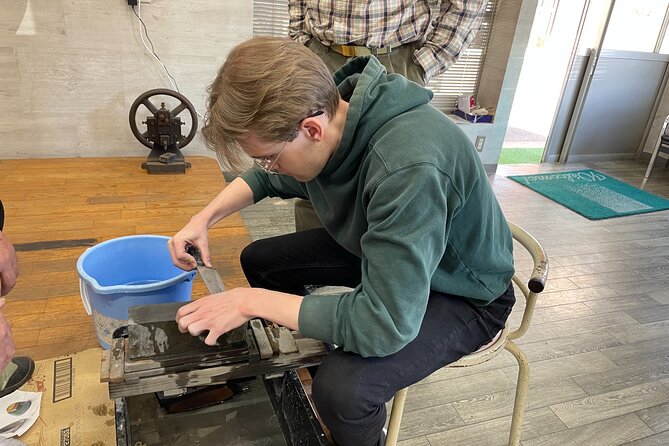
At about $316.27 per person, this is not a budget activity. You should compare it with what the fee includes, not just the five-hour duration.
You receive a private experience for your group, instruction from experienced bladesmiths, the knife-making work, a finished Damascus kitchen knife, a Japanese lunch, admission to the Knife Museum, admission to the Seki Swordsmith Museum, the Gifu Cutlery Hall visit, and the temple visit. You also receive a signed certificate, plus a mini knife while the limited supply lasts.
The strongest value is the finished knife and the access to instruction. A quality Japanese kitchen knife can already be a significant purchase, but this experience adds a personal connection that a retail transaction cannot provide. You know which stages you worked on and you can explain how the blade was finished.
The price makes less sense if you only want a quick introduction to Japanese swords or a short souvenir activity. There are less expensive ways to visit a museum or buy a knife. This is aimed at someone who values time with makers, hands-on work, and a complete cultural day.
Lunch also matters. It saves you from arranging a separate meal during a schedule that runs from 10:30 a.m. for roughly five hours. The exact menu is not specified, so do not book solely on the promise of a particular dish. Think of lunch as a useful part of the day rather than the main attraction.
Getting there and planning the day
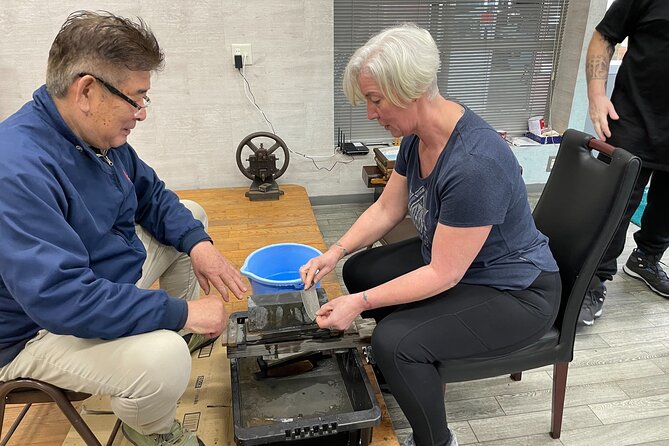
The meeting point is Sekitomioka Station in Seki, Gifu, and the start time is 10:30 a.m. The activity ends back at the meeting point. Pickup is offered, and the experience is near public transportation, but you should confirm the pickup details when booking because the stated meeting point remains the clearest plan.
Seki can work as a day trip, roughly 1.5 to 2 hours by train from Kyoto. That makes the activity possible from a larger base, but the travel time is worth considering. A five-hour experience plus several hours on trains creates a long day, especially if you are also managing luggage or other appointments.
I would keep the rest of your schedule light. The workshop requires focus, and the museum and temple visits fill the remaining time. Arriving late is not ideal, though one participant was still welcomed after arriving late. Do not rely on that kindness. Build in extra time for the train journey and finding the station meeting point.
Most people can take part, and confirmation is provided at booking. The experience is private, so your own group participates together rather than being mixed into a public tour. That setup is useful for families, couples, or friends who want to work at a shared pace.
The cancellation terms are simple but firm. You can cancel for a full refund up to 24 hours before the local start time. Changes or cancellations inside that window are not accepted for a refund.
Who will enjoy this most?
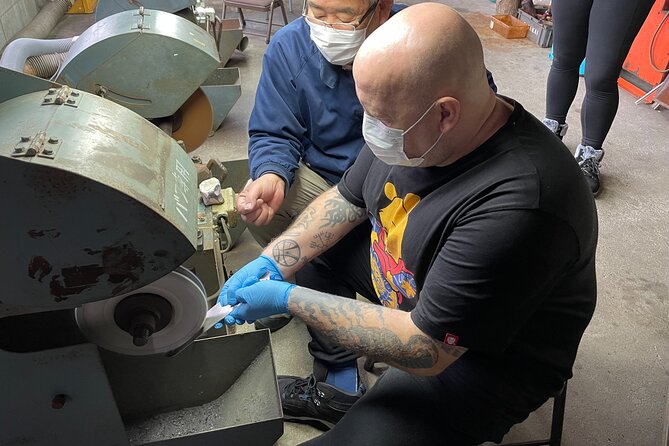
I would recommend this to anyone who wants an activity with a physical result. You do not just look at Japanese craft. You leave with a knife that carries your engraving and the memory of working through its finishing stages.
It is especially well suited to:
- People who cook and want a personal Japanese kitchen knife
- Visitors fascinated by samurai swords and traditional blade work
- Couples or small private groups seeking a shared activity
- Travelers who prefer meeting craftspeople to doing a standard sightseeing loop
- Visitors willing to pay more for instruction, lunch, museums, and a lasting keepsake
It may be less suitable if you want a fast, inexpensive attraction. The work takes patience, and the price is high compared with a museum ticket or ordinary shopping trip. It is also not the right choice if you want to forge a blade from raw metal, since the activity focuses on finishing, sharpening, engraving, and assembly.
Should you book the Seki knife-making experience?
Book it if the idea of using a knife you helped finish sounds more exciting than simply buying one. The combination of Seki’s sword tradition, direct instruction from Sumio, Yoshi, and Hiro, and visits to the city’s museums gives the day real substance.
I would skip it if your budget is tight or if you only have time for a short stop in Seki. At roughly $316.27, this is a special-occasion activity, not a casual add-on. For the right person, though, the personal knife, signed certificate, lunch, and full cultural program make it a memorable use of a day in Gifu.
FAQ
Where does the experience begin?
The activity begins at Sekitomioka Station in Seki, Gifu, Japan. The start time is 10:30 a.m.
Where does the experience end?
The activity ends back at the meeting point at Sekitomioka Station.
How long does the experience last?
The full activity lasts approximately five hours.
What will I do during the knife-making portion?
You will polish, sharpen, engrave, and assemble a Damascus kitchen knife with guidance from experienced bladesmiths. You will also test its sharpness on fresh vegetables.
Are museum visits included?
Admission to the Knife Museum and Seki Swordsmith Museum is included. The visit to Gifu Cutlery Hall is free, and the itinerary also includes Seki Zenko-ji Temple.
Is lunch included?
Yes, a Japanese lunch is included in the experience.
Do I receive anything to take home?
You take home the kitchen knife you finish. You also receive a signed certificate of completion and, while supplies last, a handcrafted mini knife souvenir.
Can I cancel for a refund?
Yes. You can cancel at least 24 hours before the local start time for a full refund. Cancellations or changes made less than 24 hours before the start time are not accepted for a refund.
More craft workshops in Japan
- Chopstick Making Workshop in Ginza
★ 4.8 · 1,366 reviews - Kyoto : Chopsticks Making Workshop in Gion with Engraving Option
★ 5.0 · 958 reviews - Tokyo Chopstick Making Workshop with Artisan
★ 5.0 · 466 reviews - Osaka Sushi Making Experience
★ 5.0 · 400 reviews
Just added in Japan
- 1 Day Tour: Snow Monkeys & Snow Fun in Shiga Kogen★ 5.0 · 52 reviews
- Sapporo: Hokkaido, Noboribetsu and Lake Toya Day Tour★ 4.1 · 88 reviews
- Discover the Wonders of Sakurajima Half Day Tour in Kagoshima★ 5.0 · 34 reviews
- Private sightseeing tour from Shimizu Port / Van Taxi★ 5.0 · 114 reviews
- Hokkaido Seasonal: Lake Toya & Noboribetsu Jigokudani Valley★ 4.7 · 173 reviews
- Kagoshima Private & Custom Tour with Licensed Guide and Vehicle★ 5.0 · 29 reviews
- 《MEMBERS-ONLY-BAR-HOPPING》Discover Your Special Whiskey in Tokyo!★ 5.0 · 29 reviews
- Kobe: Guided Sake Breweries Tour with Tastings★ 5.0 · 55 reviews
Samurai & Ninja Experiences, compared.

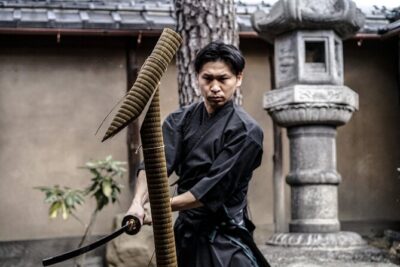
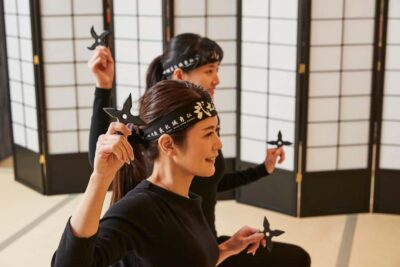
Samurai Ninja Museum Guided tour and Experience
Read our review →
Kendo and Samurai Experience with Uniform and Gear
Read our review →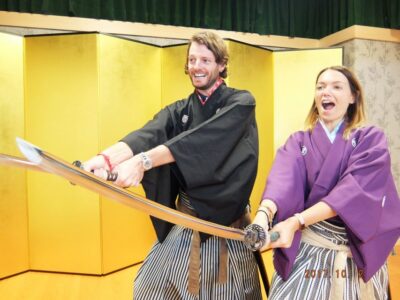
Samurai Sword Class by Experts in Traditional Arts
Read our review →
Skip the lines Basic Ticket at SAMURAI NINJA MUSEUM KYOTO
Read our review →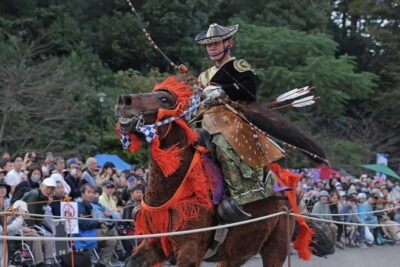
Samurai Sword & Archery Class from Samurai Descendant
Read our review →
Browse the lists this tour appears in