
Reviewed · HIROSHIMA & MIYAJIMA DAY TRIPS
Hiroshima Local guided Hiking Tour&Open-air Tea Ceremony
Hiroshima’s best city view may come after a climb through shrine paths, not from a tall building. This three-hour walk leads you from Hiroshima Station into the Futaba Mountains, where quiet Shinto sites and forest trails end with an open-air tea ceremony above the city.
I like the small groups, capped at six, and the guides who turn each shrine stop into a lesson in local customs. I also like the early start, which leaves most of your day free for Peace Memorial Park or Miyajima. The catch is simple: you must climb about 500 steps, and hot weather can make this gentle-to-moderate hike feel much harder.
Key points to know before booking
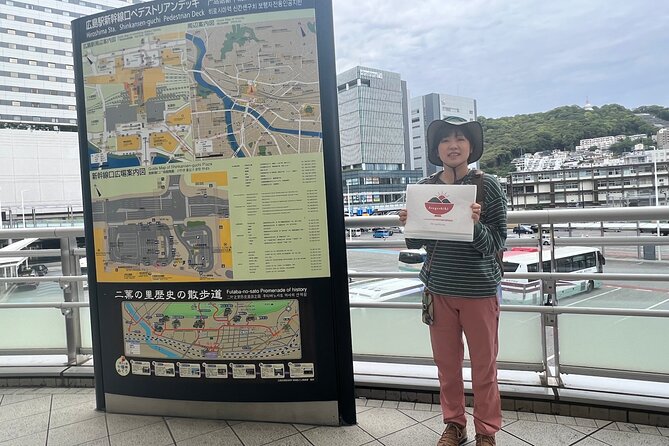
- A mountain route begins beside Hiroshima Station: You move quickly from the city into shrine grounds and wooded paths.
- About 500 steps shape the hike: Frequent pauses help, but this is not a flat sightseeing walk.
- The mountaintop view reaches to Miyajima: You can see Hiroshima, the Seto Inland Sea, and the island on a clear day.
- Nodate tea is served outdoors: The tea ceremony takes place at Kinko Inari’s Okumiya Shrine, with the city below.
- Guides add cultural context: Nana, Michi, and Naomi have been praised for explaining Shinto customs, shrine rituals, and Hiroshima’s past.
- Five percent supports conservation: Part of the tour fee goes to Futaba Mountain conservation activities.
From Hiroshima Station to the Futaba Mountain trail
The meeting point is at the Hiroshima Station Shinkansen Exit, making this a practical choice if you are staying near the station or arriving by train. The scheduled departures are 7:30 a.m., 10 a.m., and 1 p.m. The early departure is the best fit if you want a full afternoon elsewhere, while the later times may work better if you prefer a slower morning.
Your guide begins with introductions and an explanation of the route. This matters because the walk is not simply a climb to a viewpoint. You will visit several religious sites, learn how to behave at them, and hear how the area connects to Hiroshima’s past.
The maximum group size is six. That is a real advantage here. Shrine customs can be confusing if you are seeing them for the first time, and a small group gives you room to ask questions without turning the walk into a lecture. Guides named Nana, Michi, and Naomi have led this route, with their approach described as warm, patient, and conversational.
The tour returns to the same station meeting point. The listed finish times are 10:30 a.m., 1:30 p.m., and 4:30 p.m., depending on your start time. That makes the morning option especially useful for fitting in another Hiroshima sight.
Other long days west of Hiroshima:
- Peaceful Hiroshima & Miyajima UNESCO 1 Day Bus Tour
★ 5.0 · 5,309 reviews - Hiroshima: Hiroshima and Miyajima UNESCO Sites 1-Day Tour
★ 4.9 · 2,330 reviews - Hiroshima / Miyajima Full-day Private Tour with Government Licensed Guide
★ 5.0 · 1,298 reviews
Hiroshima Toshogu, the first cultural stop
The first major stop is Hiroshima Toshogu, a shrine with important cultural assets. This is where the tour shifts from an ordinary city walk to a closer look at Japanese religious practice.
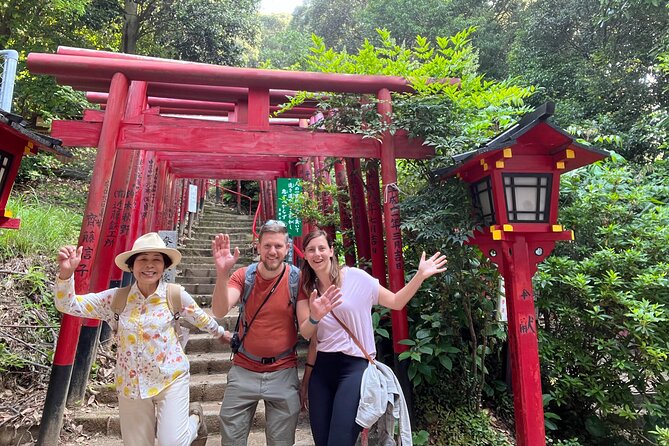
Your guide explains the meaning behind the site and helps you notice details you could easily pass without understanding. You may learn how to approach a shrine, what different features represent, and why certain actions matter. The value is not just seeing another attractive building. It is gaining enough context to recognize the difference between a quick photo stop and a respectful visit.
The stop lasts about 30 minutes. That is long enough to look around and ask questions, but not so long that the tour becomes a formal temple circuit. If you have already visited many shrines in Kyoto or Tokyo, this route can feel more personal and less crowded.
There is also a useful contrast here. Hiroshima Toshogu sits near a major transport hub, yet the walk soon leaves the urban setting behind. You do not need a long bus ride to reach the wooded hills. The change from station traffic to shrine paths is one of the tour’s strongest features.
Kinko Inari and the 500-step climb
From Hiroshima Toshogu, the route continues to Kinko Inari Shrine and into Mt. Futaba. The climb includes about 500 steps. That number deserves attention before you book, especially in summer or if you do not usually hike.
The route is generally described as easy to moderate, with well-kept stairs and trails. Still, the steps can be steep and the ground uneven in places. Guides build in regular pauses, using them to explain the shrines and local customs. This makes the climb manageable for many people, but it does not remove the physical effort.
I would bring water, wear proper walking shoes, and avoid treating this as a city stroll. The route gains about 500 feet according to the tour details shared by participants, but the repeated stairs are what you will feel most. On one especially hot outing, temperatures reached 36 degrees Celsius, with a reported real-feel temperature near 40. The guide made frequent stops and watched hydration closely, but you should still choose your clothing and departure time with the heat in mind.
Kinko Inari adds a spiritual dimension to the walk. Your guide can explain the meaning of the shrine and the customs connected with it. You may also have a chance to make an offering or write a wish, making the stop more participatory than a standard sightseeing visit.
Futabayama Peace Pagoda and the Hiroshima view
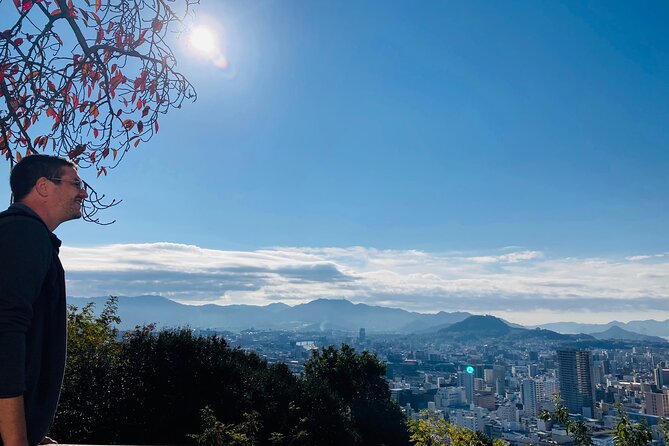
At the Futabayama Peace Pagoda, the climb pays off with a broad view of Hiroshima. From the mountaintop, you can look over the city toward the Seto Inland Sea and Miyajima.
This viewpoint gives Hiroshima’s story a different scale. At Peace Memorial Park, the focus is understandably on the atomic bombing and the city’s destruction. From Futabayama, you see the city’s wider setting and its recovery. The view does not replace the museums or memorials, but it adds a useful sense of place.
Clear weather matters. The view toward Miyajima is a major reason to take the hike, but haze, clouds, or rain can reduce what you see. This is one reason the tour requires good weather. If conditions force cancellation, you are offered another date or a full refund.
The pagoda is also a natural resting point. You can catch your breath, take photographs, and listen as the guide points out features of the city. The stop is not rushed, which helps after the stair climb.
Other tea rooms and ceremonies in Hiroshima:
- Kyoto: Tea Ceremony in a Traditional Tea House in Kiyomizu
★ 4.9 · 3,519 reviews - Kyoto: Tea Ceremony Ju-An at Jotokuji Temple
★ 4.9 · 3,207 reviews - Kyoto: 45-Minute Tea Ceremony Lesson Experience
★ 4.3 · 2,378 reviews - World Heritage Kyoto & Nara Uji Authentic Matcha Experience
★ 5.0 · 1,573 reviews
Forest bathing on the way down
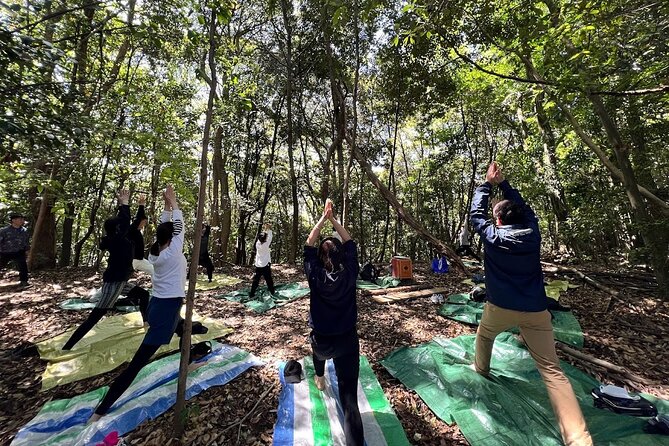
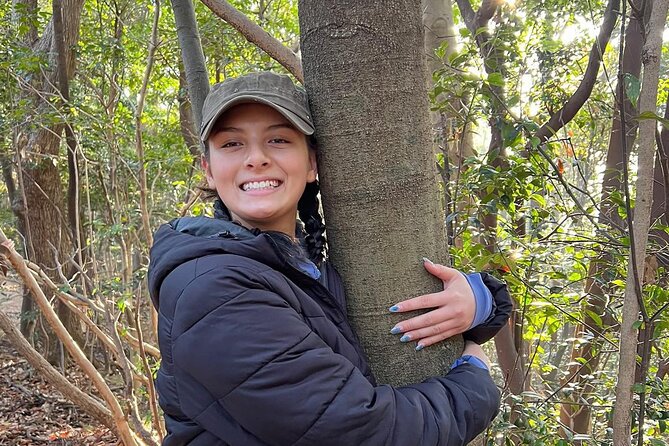
After the summit, the experience changes pace. You spend time on shinrinyoku, or forest bathing, a practice centered on paying attention to the natural setting through your senses.
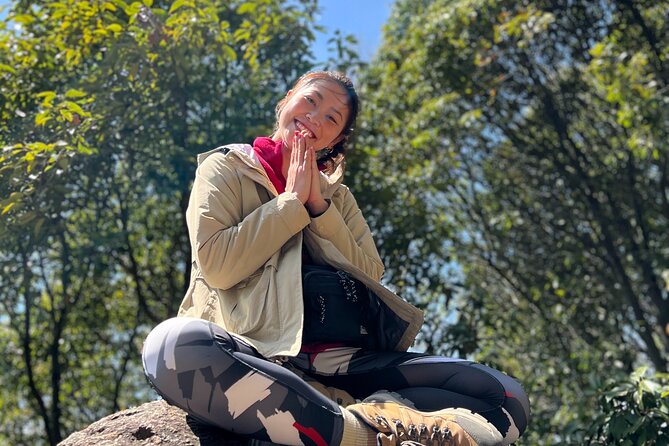
This is not presented as a strenuous activity. The tour includes about 35 minutes for slowing down in the forest, and the guide may lead a simple meditation that asks you to focus on what you can hear, feel, and notice around you. Groundsheets may be laid in a clearing for this part of the visit.
I like this pause because it gives the hike a rhythm. You climb while learning, stop for the view, then quiet down before the tea ceremony. If you want nonstop movement or a long list of monuments, this section may feel slow. If you need a break from crowded streets and scheduled sightseeing, it is one of the more distinctive parts of the morning.
The forest also changes your sense of Hiroshima. You are still close to the city, but the trees and shrine paths create a calmer setting. That contrast is the point. You get nature without giving up the convenience of starting and ending at the station.
Nodate tea at Kinko Inari’s Okumiya Shrine
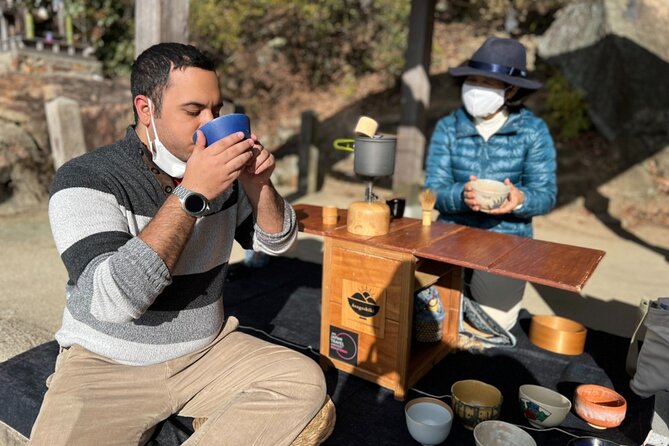
The final major stop is the Nodate tea ceremony at the Okumiya Shrine. Nodate means tea prepared outdoors, and here it is served with the mountaintop view as part of the setting.
This is not the highly formal tea ceremony you might see in a dedicated tea house. That makes it approachable. Your guide prepares and serves the tea, explains what is happening, and gives you a chance to enjoy the custom without needing prior knowledge. Reports from the tour describe green tea, including matcha, served as a welcome refreshment after the climb.
The tea portion is scheduled for about an hour. That gives you time to sit, look out over Hiroshima, and talk with your guide. Naomi, Nana, and Michi have each been singled out for making the experience comfortable and personal, with explanations of Japanese culture that do not feel stiff or overly academic.
The timing is important. Tea comes after the view and forest pause, when you are ready to sit down. It is a small but thoughtful piece of planning. You are not being rushed from one stop to another, and the ceremony gives the morning a clear ending.
Expect an outdoor setting, not a climate-controlled room. Weather, insects, sun, and the condition of the trail are part of the deal. That is also what makes the ceremony memorable. You are having tea at a mountain shrine above Hiroshima, not simply watching a demonstration indoors.
What the $109.43 price gets you
At $109.43 per person, this is not the cheapest way to see a shrine or reach a Hiroshima viewpoint. You are paying for a small group, a guide, cultural explanation, a three-hour route, forest bathing, and the outdoor tea ceremony.
The value is strongest if you would otherwise miss the Futaba Mountain paths or feel unsure about visiting the shrines on your own. The route has several layers that would be easy to lose without guidance: how to approach a shrine, what the rituals mean, how the sites connect to local culture, and why the view matters to Hiroshima’s story.
The price also includes a contribution to the mountain. Five percent of the fee supports Futaba Mountain conservation work. That is a modest but worthwhile detail, particularly because the tour depends on the condition of the forest paths and shrine route.
I would not book this solely for a viewpoint. You can find other city views without paying for a guided hike. Book it for the combination of shrines, forest time, local interpretation, and tea. That mix is what gives the outing its value.
Who will enjoy this morning most
This tour suits you if you want a break from Hiroshima’s main memorial sites and busy shopping streets. It is also a good fit if you enjoy learning how religious places work rather than simply photographing them.
Families can take part, and children aged 0 to 5 join free. Still, parents should think carefully about the steps, heat, and uneven trail. Older children and teenagers who enjoy walking may find the route rewarding, while very young children may need more help during the climb.
The hike also works well for couples, solo visitors, and small groups who want a more personal morning. The limited group size means you are more likely to have direct conversation with the guide.
You should be comfortable with moderate physical effort. The route is not described as highly difficult, and pauses make it more manageable, but the 500 steps are not optional. If you have trouble with stairs or uneven paths, this is probably not the right tour.
Timing, weather, and practical details
Arrive on time at the Hiroshima Station Shinkansen Exit. If you are more than 10 minutes late without contacting the operator, the reservation can be canceled and the full fee charged. The mobile ticket makes the meeting process simple, but it does not replace the need to find the correct station exit early.
Wear walking shoes and bring water. A hat and sun protection are sensible in warm weather, while a light rain layer may be useful when conditions are uncertain. The tour runs only in suitable weather. If poor weather cancels it, you can choose another date or receive a full refund.
Free cancellation is available up to 24 hours before the local start time. Cancellations or changes made inside that window are not refunded or accepted. Since the tour averages booking about 43 days ahead, reserving early is sensible if you want a particular departure, especially the morning one.
The route begins and ends at Hiroshima Station. That saves you from arranging extra transport and makes it easy to continue to another sight after the tour.
Should you book the Futaba Mountain hike?
I would book this if you want to see a quieter side of Hiroshima and are willing to work for the view. The strongest parts are the small group, the guides’ clear explanations of Shinto practice, the forest pause, and the tea ceremony at the mountain shrine.
I would skip it if you want a flat walk, dislike stairs, or have only a short window before another fixed booking. The 1 p.m. departure also finishes late enough to shape the rest of your day.
For most active visitors, the morning departure is the smart choice. You get the shrine route, the mountaintop view, and tea before lunch, then still have time for Hiroshima’s memorial sites or another plan. It is a thoughtful addition to a city visit, especially when you want history and culture in a setting that feels far removed from the station, even though you started there.
FAQ
Where does the Hiroshima hiking tour start and finish?
The tour starts at the Hiroshima Station Shinkansen Exit, at 1-2-37 Matsubaracho, Minami Ward, Hiroshima. It ends back at the same meeting point.
How long does the tour last?
The tour lasts approximately three hours. The listed end times are 10:30 a.m., 1:30 p.m., and 4:30 p.m., depending on whether you choose the 7:30 a.m., 10 a.m., or 1 p.m. departure.
How many steps are included in the hike?
The route includes about 500 steps while climbing Mt. Futaba. Frequent stops are built into the walk, but you should be prepared for stairs and uneven paths.
What will I see during the tour?
You will visit Hiroshima Toshogu, Kinko Inari Shrine, and Futabayama Peace Pagoda. The route also includes views of Hiroshima City, the Seto Inland Sea, and Miyajima when conditions allow.
Is the tea ceremony held indoors?
No. The Nodate tea ceremony is held outdoors at Kinko Inari’s Okumiya Shrine, with a view over Hiroshima.
What happens if the weather is poor?
The tour requires good weather. If it is canceled because of poor conditions, you will be offered a different date or a full refund.
More hiking near Hiroshima
- Fushimi Inari Hidden Hiking Tour (Private Option Available)
★ 5.0 · 1,750 reviews - Kyoto: 3-Hour Fushimi Inari Shrine Hidden Hiking Tour
★ 4.9 · 270 reviews - Hiking the Historic Nakasendo Trail [1 Day Tour from Nagoya]
★ 5.0 · 104 reviews
Just added in Hiroshima
- Day Trip to Hiroshima & Miyajima with Itsukushima Shrine★ 4.6 · 124 reviews
- Hiroshima 3hr Peace Cycling Tour with Local Guide★ 5.0 · 131 reviews
- Hiroshima: Best of Hiroshima Guided Bike Tour★ 4.9 · 89 reviews
- Hiroshima & Miyajima 6.5h Guided Tour – Dome, Park & Shrine★ 4.9 · 83 reviews
- Hiroshima: Food and Culture Guided Walking Tour with Dinner★ 4.9 · 212 reviews
- Hiroshima & Miyajima: Full-Day Private Tour & Licensed Guide★ 4.8 · 252 reviews
- Hiroshima: Peace Cycling Tour with Local Guide★ 4.8 · 286 reviews
- Miyajima Half-day Trip Historical Walking Tour★ 5.0 · 284 reviews
Hiroshima & Miyajima Day Trips, compared.
Peaceful Hiroshima & Miyajima UNESCO 1 Day Bus Tour
Read our review →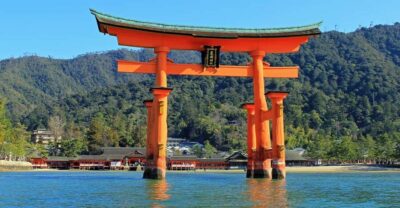
Hiroshima and Miyajima UNESCO Sites 1-Day Tour
Read our review →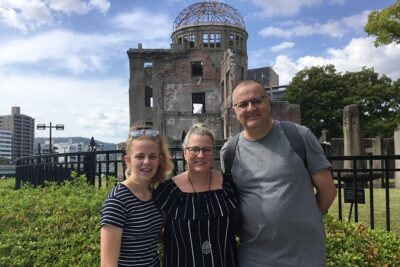
Hiroshima / Miyajima Full-day Private Tour with Government Licensed Guide
Read our review →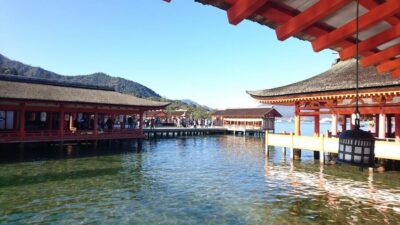
Osaka/Kyoto: Hiroshima Miyajima Bus Tour & Shinkansen Ticket
Read our review →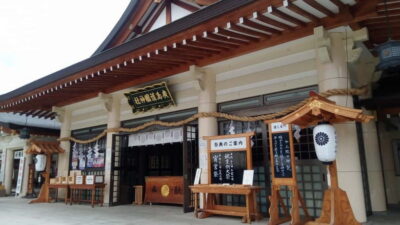
Hiroshima Historical Walking Tour – Why A-Bomb was Dropped
Read our review →
Hiroshima Peace (Heiwa) Walking Tour at World Heritage Sites
Read our review →
Hiroshima in a Nutshell: Morning Bike Adventure
Read our review →
Hiroshima City 4hr Private Walking Tour with Licensed Guide
Read our review →Browse the lists this tour appears in