
Reviewed · GEISHA & GION DISTRICT TOURS
Kyoto: Gion Food Tour 13 Dishes at 4 Eateries
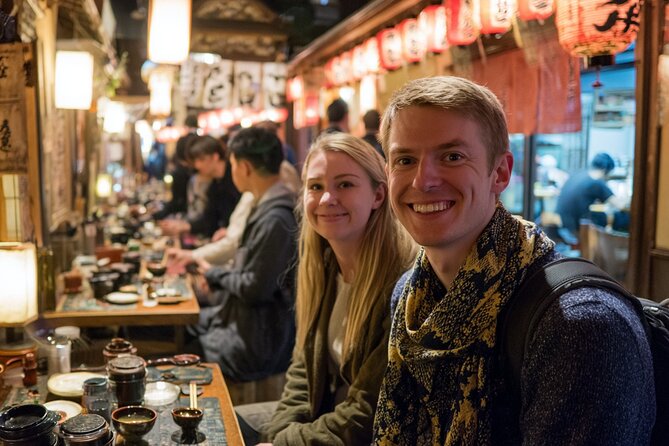
Kyoto’s best evening food experience may be the one that keeps you moving. This three-hour walk links four eateries around Pontocho and Gion, pairing 13 small dishes with lantern-lit lanes, teahouses, and stories about geisha culture. You get more than dinner, but you also get a dinner’s worth of food.
I like the variety: obanzai, yuba, sushi, takoyaki, tempura, drinks, and sweets can all appear across the evening. I also like the small group, capped at 10, and guides such as Amy, Alessio, Yuvia, Pedro, and Mehrab have been praised for making the food and neighborhood easier to understand.
The main caution is that the route may feel lighter on sightseeing than the description suggests. One evening may include only a short walk along one Gion street, and some restaurants require you to remove your shoes. The food is not designed for vegans, people with celiac disease, or those following a gluten-free or FODMAP diet.
Key points at a glance
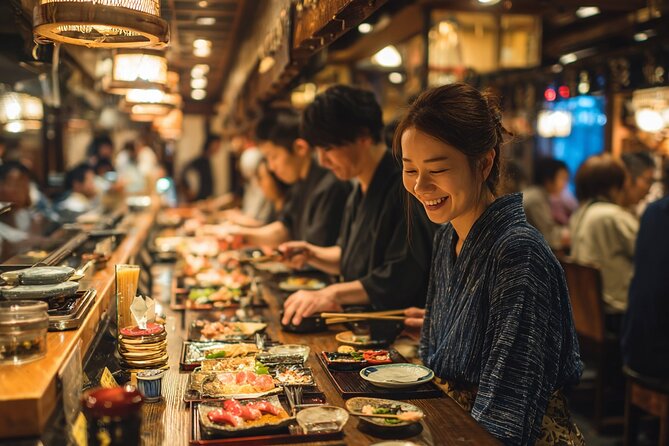
- Four eateries, 13 dishes: You sample several styles of Kyoto food instead of committing to one full restaurant meal.
- Lantern-lit Pontocho and Gion: The evening setting is a major part of the experience, with preserved lanes and traditional teahouses along the route.
- Two complimentary drinks: Alcoholic or nonalcoholic drinks are included at two eateries, with alcohol available only to legal-drinking-age participants.
- Small group format: The maximum group size is 10, which gives the guide a better chance to explain dishes and help with unfamiliar foods.
- Plenty of walking: The stops are connected on foot, and the route includes time in Kyoto’s narrow historic streets.
- Dietary limits matter: There is no vegan, gluten-free, celiac-safe, or FODMAP option.
Four Kyoto eateries in one evening
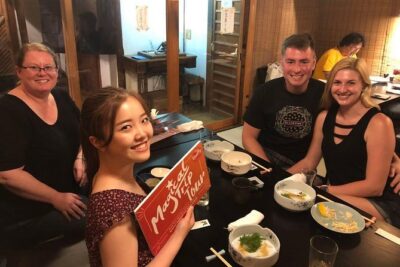
This tour works best as a progressive dinner. Instead of sitting in one restaurant for three hours, you walk between several small places and taste a selection at each. That format lets you try foods you might not order alone, while keeping the evening social and active.
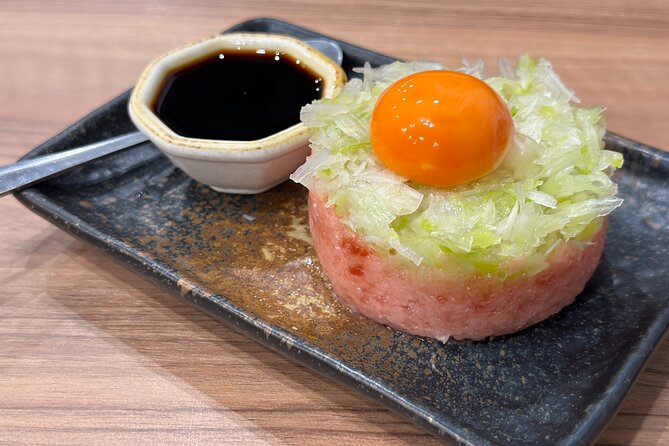
The exact dishes can vary, but the food examples associated with this experience include seasonal obanzai, freshly made yuba, sushi, tempura, takoyaki, potato salad, and sweet taiyaki filled with custard or sweet potato. A few food stops may feel simple rather than luxurious. That is part of the appeal, though it also explains why some people looking for a grand Kyoto kaiseki meal may find the tour too basic.
You should expect tasting portions rather than 13 large courses. Taken together, they are intended to fill you up. One guide described the evening as a route where you leave with a full belly, and that is a useful way to picture it. Eat lightly beforehand, but do not arrive expecting a formal multi-course dinner.
The two included drinks add value, especially at this price. You can choose alcohol or a nonalcoholic option, and the drink selections described by participants include sake, fizzy fruit-style drinks, and mandarin-flavored beverages. The exact choice depends on the stop and your age. Tips are optional and not included.
Other evenings in the old entertainment quarters of Kyoto:
- Kyoto Geisha Walking Tour: Gion District & Hidden Gems
★ 4.7 · 3,273 reviews - Kyoto: Gion Magical Night Walking Tour with Geisha Trivia
★ 4.9 · 2,393 reviews - Kyoto: Gion Geisha District Walking Tour – Stories of Geisha
★ 4.7 · 2,187 reviews
Starting at Pontocho’s lantern-lit lane
The meeting point is the Starbucks Coffee by the Sanjo-ohashi Bridge, at 113 Nakajimacho in Nakagyo Ward. From there, the group heads toward the Pontocho District, one of Kyoto’s most atmospheric old streets.
Pontocho is famous for its narrow passage, wooden facades, lanterns, and restaurants tucked behind understated entrances. In the evening, the lane has a quiet theatrical quality. You may pass traditional teahouses associated with geisha entertainment, but this is not a geisha performance. The guide’s role is to explain the setting, the history of the district, and the place of geisha in Japanese culture without turning the neighborhood into a stage show.
That context makes the food more meaningful. A small Kyoto dish can seem ordinary if you do not know why seasonal ingredients, careful presentation, and restrained seasoning matter. A guide can point out the difference between everyday local cooking and the more formal cuisine Kyoto is known for.
The Pontocho walk takes about an hour in the stated schedule, though the full evening also includes movement between food stops. Wear shoes you can walk in comfortably. The streets are narrow, and you may need to move at the pace of a group rather than your own.
What the food says about Kyoto
Kyoto cooking often leans toward subtle flavors and careful use of vegetables, tofu products, and seasonal ingredients. That is where dishes such as obanzai and yuba fit in.
Obanzai refers to home-style Kyoto cooking, usually served as small vegetable-focused dishes. It is not one fixed recipe. You might find simmered vegetables, tofu, pickles, or other simple preparations that change with the season. Yuba, the delicate skin that forms on heated soy milk, is another Kyoto specialty. Its soft texture and mild flavor can be unfamiliar if your Japanese food experience has mostly been sushi or ramen.
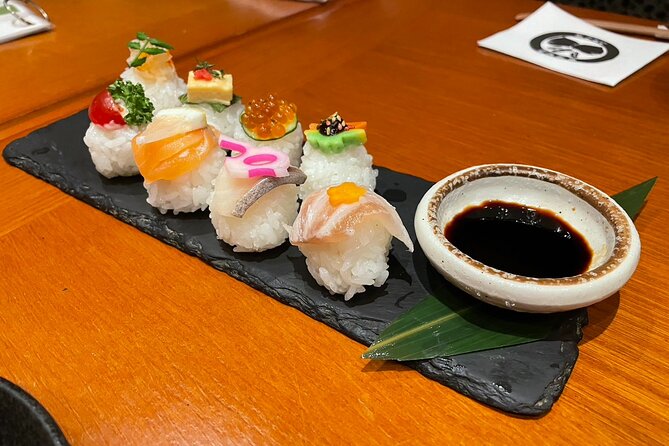
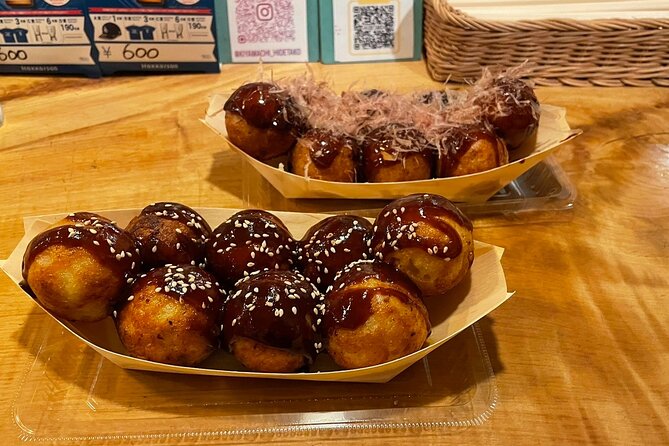
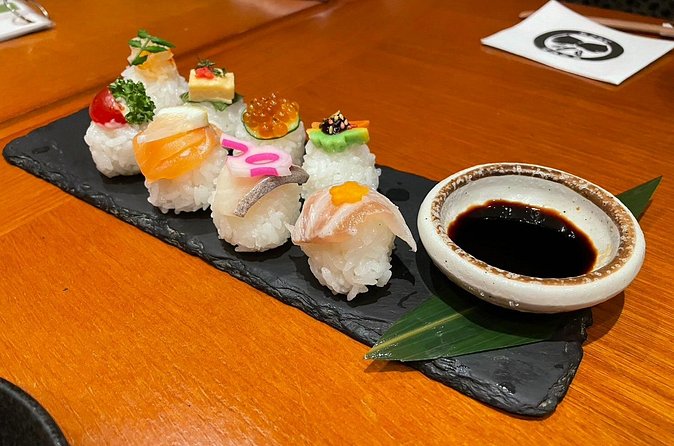
The tour gives you a chance to compare those quieter dishes with more playful food. Takoyaki, the hot batter balls associated with Osaka, can arrive with a spicy sauce and a lively cooking display. Sushi may be presented in small, artful pieces. Tempura and potato salad offer familiar reference points, while taiyaki provides a sweet finish.
Some people particularly enjoy the custard-filled fish-shaped taiyaki, while sweet potato filling is another reported version. Because the menu is seasonal and the tour visits operating restaurants, you should treat these as possible highlights rather than guaranteed courses.
Walking into Gion
The route continues toward Gion and finishes at Gion-Shijo Station, at 1 Chome Miyagawasuji in Higashiyama Ward. The stated itinerary gives roughly an hour to the Gion portion, including food and a stroll through the district.
Gion is one of Kyoto’s best-known historic areas, with wooden buildings, lanterns, narrow lanes, and teahouses. It is a beautiful place to walk after dark, but keep your expectations sensible. The experience does not promise a long, detailed tour of every corner of Gion. One account of the route found the Gion portion limited to one street, which is important if sightseeing is your main reason for booking.
The route’s strongest point is the combination of short walks and food stops. You get time to look around, then a reason to step inside a small eatery. You are not left standing in the street listening to a long lecture, and you are not confined to a restaurant table all evening.
The tradeoff is that the walking can add up. Several stops are separated by walks, and one account specifically noted quite a bit of walking between restaurants. That will be welcome if you want to explore on foot, less so if you hoped for a relaxed seated dinner.
More eating your way round Kyoto:
- Kyoto Night Foodie Tour in Gion (9+ dishes + 6 Sake tastings)
★ 5.0 · 1,762 reviews - Kyoto Foodie Night Tour
★ 5.0 · 376 reviews - Kyoto: Gion & Pontocho Food Tour with 13 Dishes
★ 4.9 · 235 reviews - Tokyo: Shinjuku Food Tour (13 Dishes at 4 Local Eateries)
★ 5.0 · 6,603 reviews
The guides make or break the evening
The tour is conducted in English, and guide quality matters here because the experience combines unfamiliar food with cultural background. Guides named in feedback include Amy, Alessio, Yuvia, Pedro, Mehrab, Maggie, and Gian. The assigned guide will depend on the date, so you should not book on the assumption that a particular person will lead your group.
At their best, the guides explain each dish, help you understand local customs, and keep the group moving without making the evening feel rushed. Pedro has been praised for his knowledge of Pontocho and Japanese food culture. Alessio has been noted for explaining food clearly while adding history about the streets. Amy has been described as friendly and fun, with strong energy at the restaurant stops. Yuvia and her colleagues have received praise for choosing a good mix of eateries and keeping the group engaged.
The feedback is not uniformly glowing. A few people found the presentation repetitive or scripted, and one person had trouble understanding the guide. Another felt the guide tried to sell additional choices. This is a useful warning for anyone who prefers a quiet, highly personal food walk. The quality of the evening can depend heavily on the particular guide and group dynamic.
Still, the small maximum group of 10 is a real advantage. It gives you more opportunity to ask what you are eating, signal if you need help, and share dishes with the people around you. Groups of seven have been mentioned as a comfortable size for conversation.
Value at $72.96 per person
At $72.96, this is not the cheapest way to eat in Kyoto. You could order inexpensive food on your own for less, especially if you are comfortable reading menus and finding small restaurants without help.
The value comes from the combination of 13 tastings, four eateries, two drinks, and a guided walk through Pontocho and Gion. You are paying for access to a planned route, an English-speaking guide, and the chance to sample several dishes without ordering full portions at each stop. For a first evening in Kyoto, that can be a practical way to get your bearings and learn what you might want to eat later.
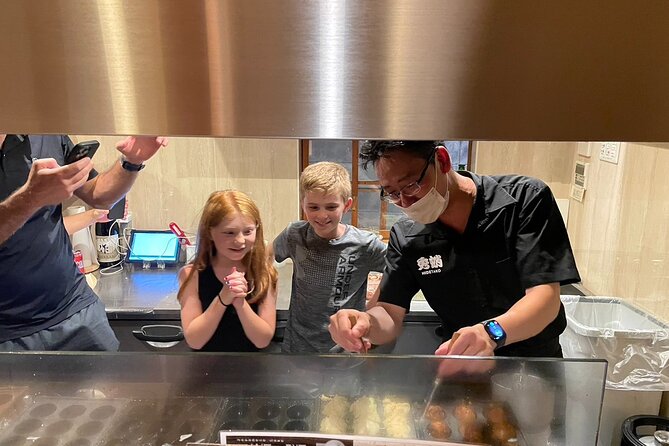
It is also useful for people who feel uneasy entering small Japanese restaurants alone. A guide handles the route and provides cultural explanation. You can watch the takoyaki preparation, try dishes you might otherwise skip, and ask questions in English.
The value drops if you already know Kyoto food well or want premium ingredients at every stop. The food is generally described as good, with occasional standout bites such as takoyaki, taiyaki, or wagyu sushi, but not every course will feel special. Think of this as an introduction to local eating, not a luxury dining event.
Practical details that affect your night
The tour lasts about three hours and uses a mobile ticket. It begins near public transportation at Sanjo-ohashi Bridge and ends at Gion-Shijo Station, a useful finish if you plan to continue around central Kyoto.
Most people can take part, but the experience is not suitable for someone with a mobility impairment. You need to walk between stops, and some restaurants require shoes to be removed. Wear clean socks and footwear that comes off easily. That small detail can make the evening much more comfortable.
The food cannot be adapted for vegans or gluten-free diets. There is no gluten-free option, and the tour is not suitable for people with celiac disease or those following a FODMAP diet. If you have a serious allergy or a strict medical restriction, this is not the right meal to gamble on.
Alcohol is offered only to people of legal drinking age. If you do not drink, a nonalcoholic option is available for the included drinks. Tips are optional.
Free cancellation is available when you cancel at least 24 hours before the start time. Changes or cancellations inside that window are not accepted for a refund. The experience provider is Traveling Kyoto.
Who will enjoy this Kyoto food walk
I would recommend this experience most strongly for a first visit to Kyoto, especially if you want an easy introduction to Japanese food beyond sushi and ramen. It also suits you if you enjoy walking, small group conversation, and trying several modest dishes instead of spending the whole evening in one restaurant.
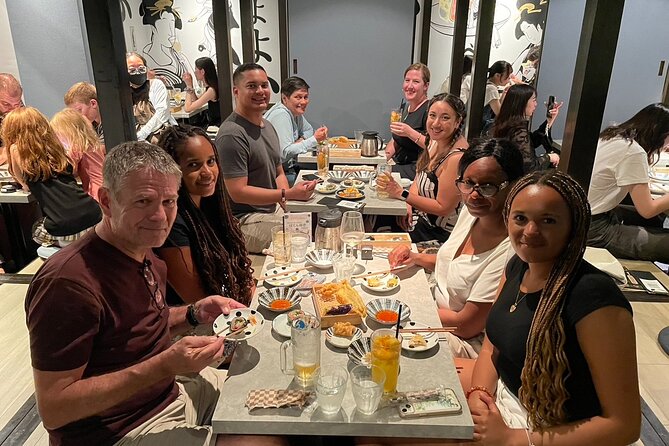
It is a good match for couples, friends, and solo visitors who like meeting people over food. The group can include people from different countries, and the meal format gives you natural conversation between stops.
You may want to skip it if you are seeking formal kaiseki, a long Gion walking tour, or a menu built around rare ingredients. You should also choose another activity if you have strict dietary needs, limited mobility, or no interest in removing your shoes at some venues.
Should you book the 13-dish Gion food tour?
Book it if you want a social, food-filled first night in Kyoto and value guidance more than luxury. The best parts are the four-stop format, the lantern-lit setting, the chance to try Kyoto specialties, and the guides who explain what is on your plate.
Approach it as a tasting walk, not a definitive tour of Gion and not a guaranteed parade of spectacular dishes. If you accept that balance, $72.96 is a fair price for an organized evening with 13 tastings, two drinks, and a small group. If your priorities are precise dietary control, extensive sightseeing, or high-end dining, spend your budget elsewhere.
FAQ
How long does the Kyoto food tour last?
The experience lasts approximately three hours.
How many eateries does the tour visit?
The tour visits four eateries.
How many dishes are included?
The experience includes 13 dishes.
Are drinks included?
One complimentary drink is included at two eateries. You can choose an alcoholic or nonalcoholic drink, subject to legal drinking age for alcohol.
Is the tour conducted in English?
Yes. An English-speaking guide leads the experience.
Where does the tour start?
It starts at the Starbucks Coffee by Sanjo-ohashi Bridge, at 113 Nakajimacho, Nakagyo Ward, Kyoto.
Where does the tour end?
It ends at Gion-Shijo Station, at 1 Chome Miyagawasuji in Higashiyama Ward.
Is the tour suitable for vegans or people needing gluten-free food?
No. The tour cannot cater for vegan or gluten-free diets and is not suitable for people with celiac disease or those following a FODMAP diet.
Is alcohol available on the tour?
Alcoholic beverages are offered to participants of legal drinking age. Nonalcoholic drinks are also available.
How large is the group?
The tour has a maximum of 10 participants.
Is the tour suitable for someone with a mobility impairment?
No. The experience is not suitable for a person with a mobility impairment because it involves walking between eateries.
Can I cancel for a full refund?
Yes, if you cancel at least 24 hours before the experience start time. Cancellations made less than 24 hours in advance are not refunded.
Just added in Kyoto
- Kyoto: Private Photoshoot Service★ 5.0 · 158 reviews
- Kyoto Rickshaw Tour★ 5.0 · 210 reviews
- Izakaya Style Cooking Class★ 5.0 · 219 reviews
- Kyoto: Traditional Concert at Townhouse or Bathhouse★ 4.9 · 224 reviews
- Ninja 2-hour Hands-on Lesson by Japanese master in Kyoto -Medium★ 5.0 · 218 reviews
- Kyoto: Arashiyama Bamboo, Temple, Matcha, Monkeys & secret spots★ 5.0 · 219 reviews
- Kyoto Geisha District Walking Tour in Gion★ 5.0 · 232 reviews
- Kyoto: Gion & Pontocho Food Tour with 13 Dishes★ 4.9 · 235 reviews
Geisha & Gion District Tours, compared.
Kyoto Geisha Walking Tour: Gion District & Hidden Gems
Read our review →
Gion Geisha District Walking Tour – Stories of Geisha
Read our review →
Best of Kyoto: Gion, Geisha, Pagodas & Cobblestones
Read our review →
Kyoto Night Foodie Tour in Gion (9+ dishes + 6 Sake tastings)
Read our review →
Kyoto Gion: 2-Hour Geisha Culture & History Walking Tour
Read our review →
Chopsticks Making Workshop in Gion with Engraving Option
Read our review →
Browse the lists this tour appears in