
Reviewed · GEISHA & GION DISTRICT TOURS
Night Walk in Gion: Kyoto’s Geisha District
Gion after dark is not a stage set for tourists. It is a working district, and this walk helps you see the difference between a photogenic street and a place where geiko and maiko are heading to evening appointments. The guide explains the rules, clothing, training, and daily life behind the familiar image. That context is the real attraction.
I like two things here. First, the tour stresses respectful behavior, including quiet observation and no video recording. Second, the guides bring strong local knowledge. Mia, Mie, Chako, and other guides are praised for clear English, humor, photos, and detailed explanations. The drawback is simple: seeing a geiko or maiko is never guaranteed, and photography is not allowed.
Key points to know before booking
- Nighttime Gion feels more authentic: You walk through streets and beside a stream as the district prepares for evening appointments.
- The focus goes beyond costumes: Learn about geiko and maiko training, hairstyles, kimono, tea-house customs, and daily routines.
- Guides make the difference: Mia, Mie, Chako, Miya, and other English-speaking guides are known for humor and clear explanations.
- Sightings are possible, not promised: Some walks see several geiko and maiko, while others see fewer or none.
- Respect is part of the tour: Video recording is not allowed, and the guide explains how to observe without interrupting people.
- The price is modest: At $21 per person for about 100 minutes, the walk offers useful context at a low cost, though it does not include transport.
Starting near Gion Shijo Station
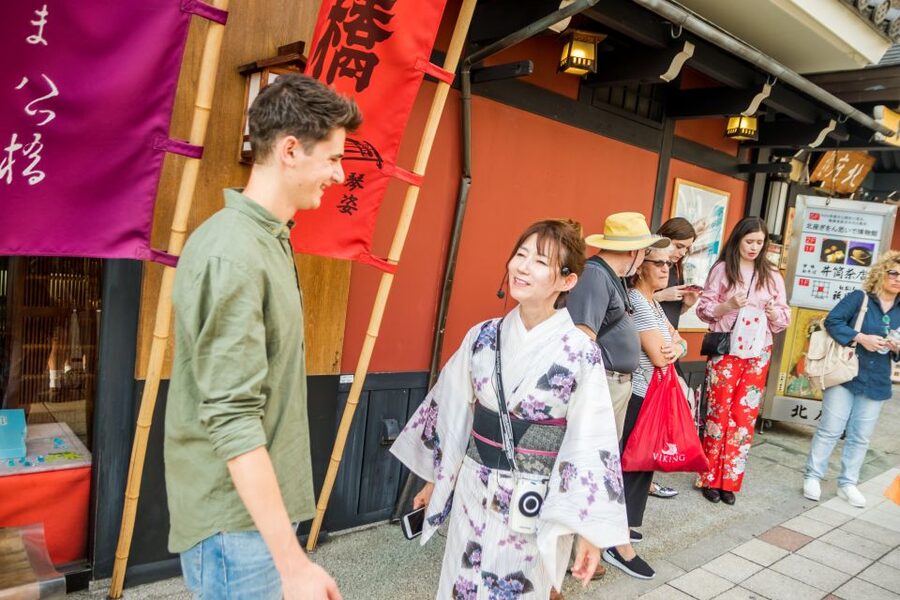
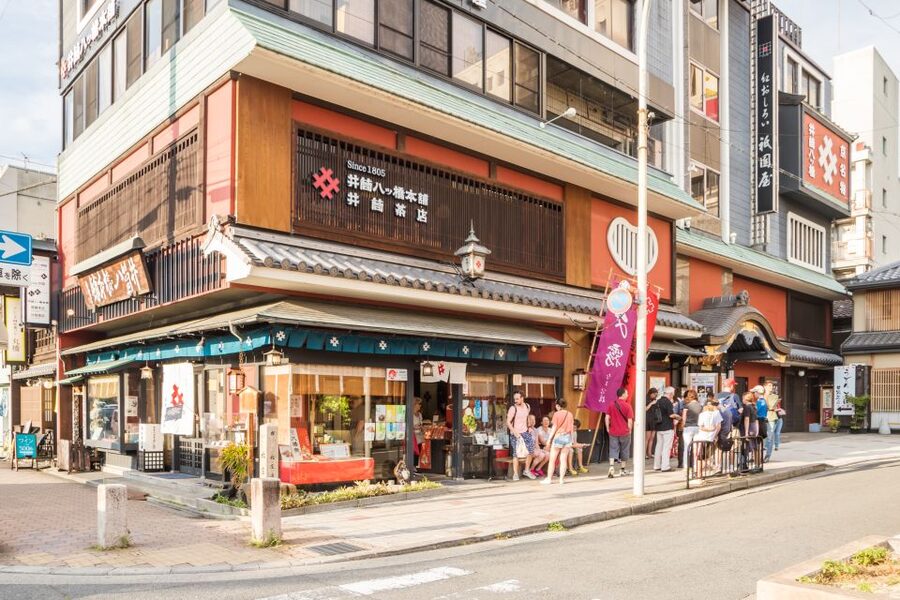
The meeting point is in front of Gion Omoide Museum, connected to the Izutsu Yatsuhashi pastry shop. It is near Gion Shijo Station, at 35.0044519, 135.7723814.
That pastry-shop landmark matters because Gion’s narrow lanes can be confusing after sunset. I would arrive with enough time to find the museum and confirm the exact meeting place rather than relying on a last-minute map search. The tour does not include transport to or from the attractions, and there is no hotel pickup or drop-off.
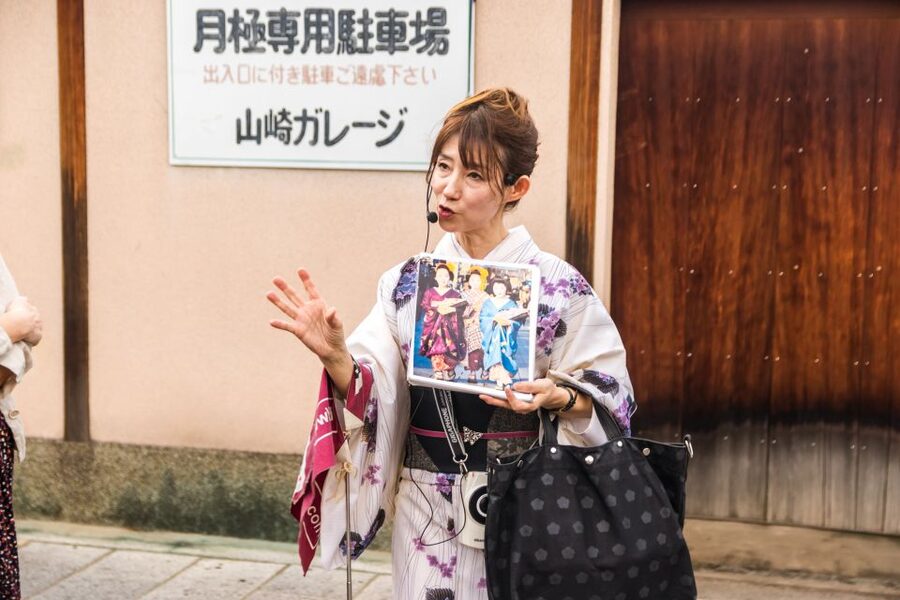
The guide is an English-speaking professional, and the walk has been running since 2007. That long run helps explain why the tour has a settled route and why guides arrive with prepared material. Mie has used photos and charts to explain details that are hard to understand from a quick look at a passing figure. Other guides, including Mia and Chako, are praised for bringing humor without making the subject feel silly.
The experience is listed as 100 minutes. The description also calls it a two-hour guided walk, so allow roughly an hour and forty minutes to two hours for the activity itself. Start times vary, and you need to check availability when booking.
Other evenings in the old entertainment quarters of Kyoto:
- Kyoto Geisha Walking Tour: Gion District & Hidden Gems
★ 4.7 · 3,273 reviews - Kyoto: Gion Magical Night Walking Tour with Geisha Trivia
★ 4.9 · 2,393 reviews - Kyoto: Gion Geisha District Walking Tour – Stories of Geisha
★ 4.7 · 2,187 reviews
Walking through Gion after sunset
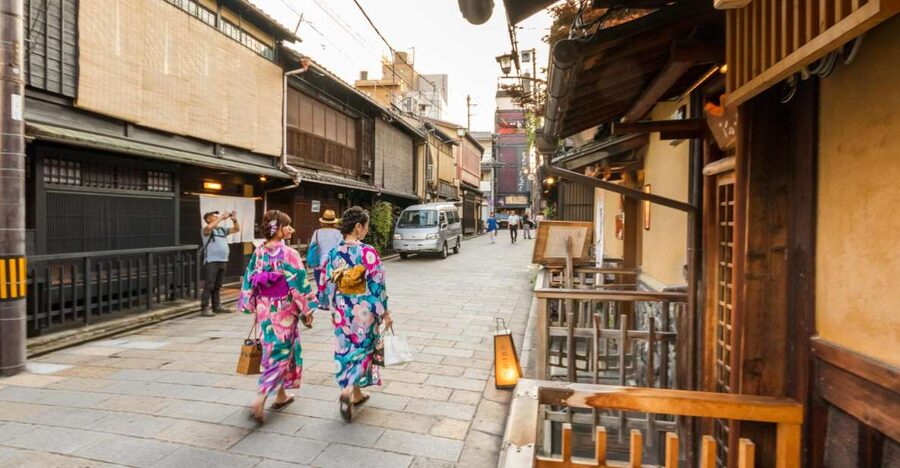
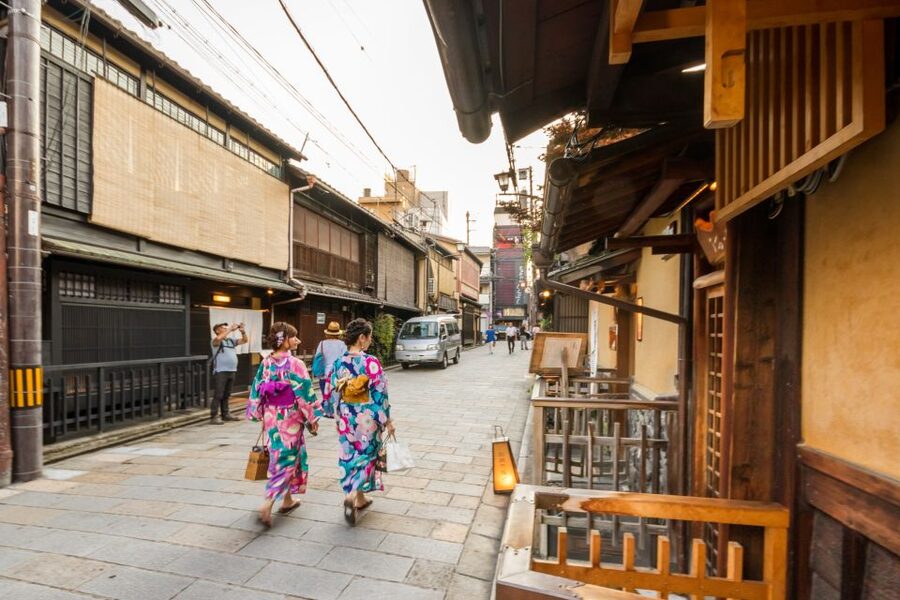
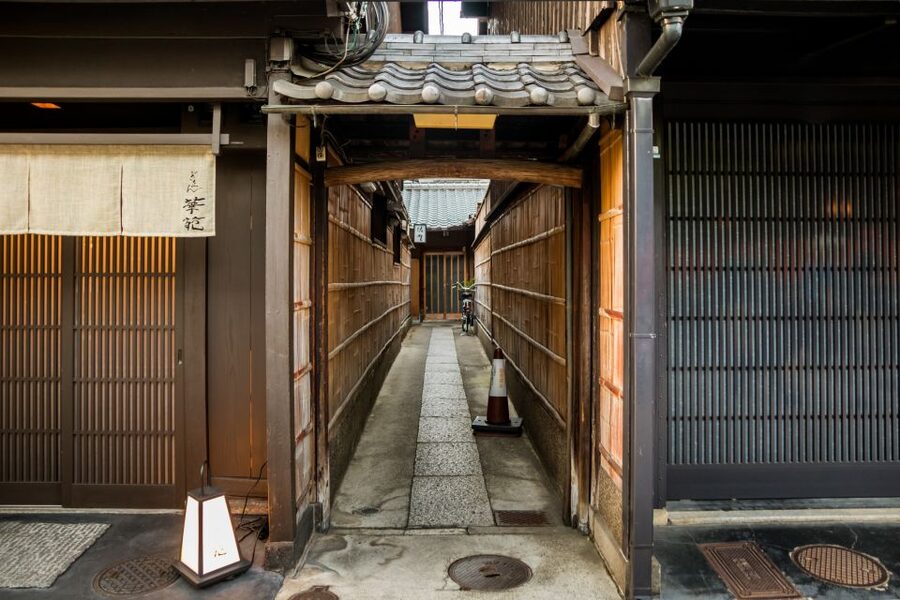
The walk leads through classic Gion streets and areas associated with the city’s geiko districts. You see the district in the softer light of evening, when the streets take on a quieter mood and the traditional buildings become part of the story rather than simply a backdrop.
One scenic section follows a beautiful stream. This is a good place to understand why Gion photographs so well, but the guide’s explanation adds more value than a solo stroll. You learn how the area functions, where tea houses fit into the evening, and why some doors and streets are private.
The route also includes scenery familiar from Memoirs of a Geisha. That connection may interest film fans, but you should not expect the tour to recreate scenes from the book or movie. The point is to place those images in the real streets of Kyoto and then correct some of the simplified ideas that popular culture can create.
The walk is not a museum visit or a performance. You do not enter a geisha boarding house or a tea house as part of the standard experience. One person specifically appreciated the explanation while also understanding that entering a boarding house would cross a privacy line. That is an important distinction: the tour gives you access to information, not access to private working spaces.
Geiko, maiko, and the details you would miss alone
A major strength is the guide’s explanation of the difference between geiko and maiko. You learn how to look at clothing, hairstyle, accessories, and presentation rather than treating every person in traditional dress as simply a geisha.
The discussion can include:
- The years of training involved
- The role of kimono and hairstyle
- Differences between geiko and maiko appearance
- Traditional rules and manners
- Daily routines and professional life
- Tea-house customs
- The difference between a formal Tea House and an ordinary tea house
These details are useful because a quick street encounter gives you only a few seconds. A guide may point out why a hairstyle looks a certain way or explain how the clothing reflects a person’s stage of training. Mie has also shared Japanese slang and lesser-known local details, while other guides have brought photo files or visual charts.
The best guides keep the subject human. Several highly rated guides are described as funny, warm, and easy to talk with. That matters on a walking tour because the information can otherwise become a string of dates and costume terms. Mia, in particular, is praised for combining humor with a strong respect for the people being discussed.
The chance to see geiko and maiko
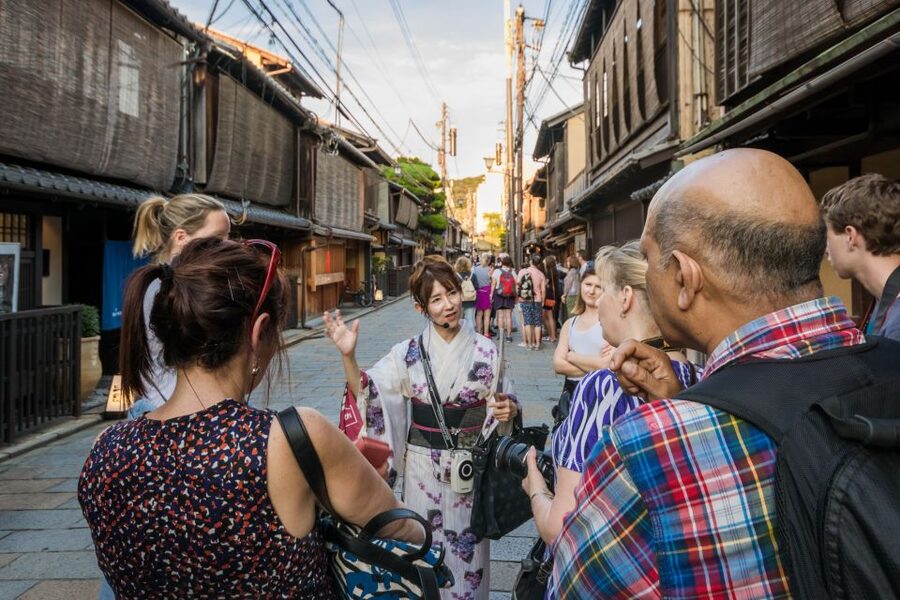
Seeing geiko or maiko is the part many people hope for, but it should not be the reason you book alone. Sightings depend on timing, location, and chance. Some walks have seen several maiko and geiko leaving boarding houses or walking toward tea-house appointments. One evening included more than eight sightings, while another included four maiko and one geiko.
Other walks have seen three geiko, several maiko, or a figure briefly arriving by taxi. These accounts show what is possible, not what is promised. The tour description makes no guarantee, and that is the honest approach.
If you do see someone, the guide explains how to behave. You may be asked to bow, greet quietly, keep your distance, and watch without blocking the street. Video recording is not allowed. Photography is also treated with care in the guidance given during the walk, especially because geiko and maiko have faced unwanted attention from large groups.
This can feel restrictive if you are hoping for a close-up photograph. I think it is also one of the tour’s strongest features. The guide is not using a person’s working evening as a show for the group. You learn how to look without turning a private professional into a tourist prop.
One person felt the guide was perhaps too protective and wished the group could get closer. That is a fair concern if your main goal is a photograph. For most people, though, the respectful distance is part of the value. You see the district as a living neighborhood, not a wildlife-watching exercise.
Same base, a different sort of day:
- PERFECT KYOTO 1-Day Bus Tour
★ 5.0 · 13,518 reviews - Kyoto: Fushimi Inari, Kinkakuji, Bamboo Grove 1 Day Bus Tour
★ 4.8 · 4,316 reviews - Kyoto: Tea Ceremony in a Traditional Tea House in Kiyomizu
★ 4.9 · 3,519 reviews - Kyoto: Tea Ceremony Ju-An at Jotokuji Temple
★ 4.9 · 3,207 reviews
Why the guide matters so much
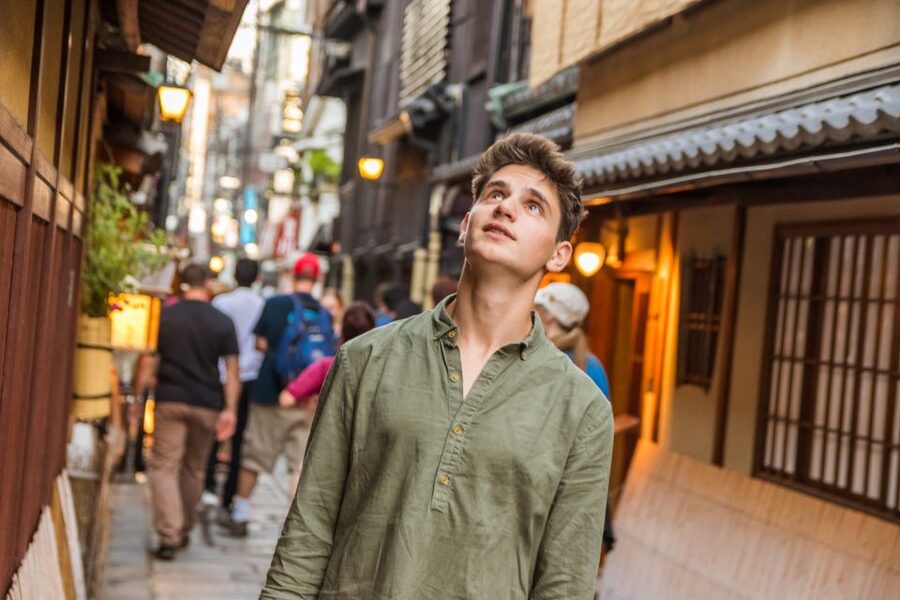
The route itself is appealing, but the guide determines how much you take away. Names that appear repeatedly among strong experiences include Mia, Mie, Chako, Chaco, Miya, Toko, Mai, and Tako. Spelling varies, and guide assignments can change, so you should not assume a particular person will lead your walk.
Mia is praised for knowing the area and explaining geiko and maiko culture with energy and humor. Mie is noted for excellent English, prepared images, local anecdotes, and a strong grasp of both past and present Kyoto. Chako is described as patient, passionate, inclusive, and able to keep children interested.
That last point is worth noting for families. Children who were uncertain at the start have enjoyed the stories, and one family took three children, including a child in a pram. Still, the official guidance says the activity is not suitable for people with mobility impairments. Treat the walk as a street tour over uneven or potentially difficult ground, and ask the provider if your group has specific access needs.
The guides also appear comfortable handling practical problems. One kept track of a large group in the rain and at a crossing. Rain does not cancel the cultural value, but good shoes and weather protection will make the evening easier.
Is $21 good value for Kyoto?
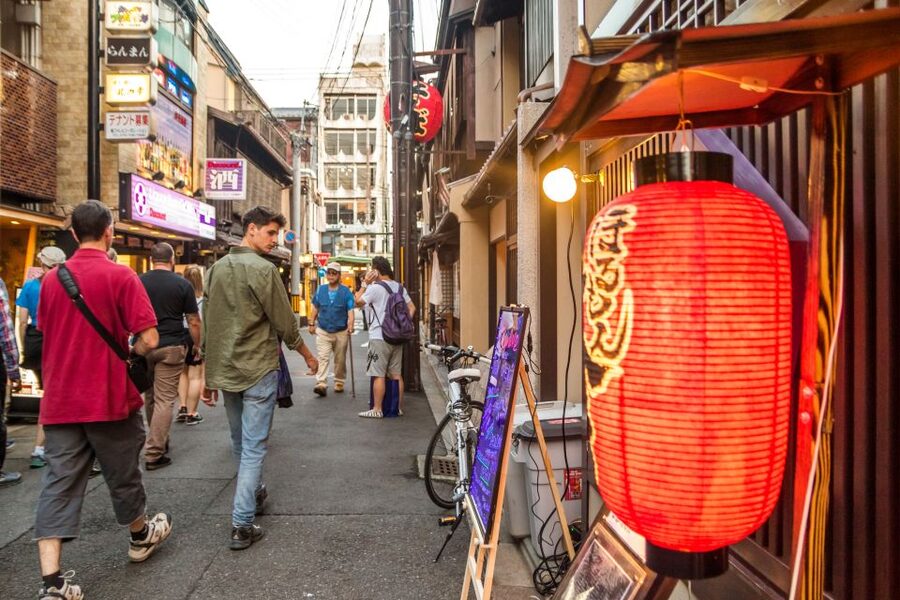
At $21 per person, this is a reasonably priced introduction to Gion. You are paying for a professional English-speaking guide, a planned route, and cultural explanation rather than admission to a venue or a private meeting with a geiko.
I see the value in three parts. You get orientation in a district that is easy to misunderstand, you receive etiquette guidance before a possible encounter, and you gain background that would be difficult to collect during a normal evening walk. A guide can connect the street, the stream, the tea houses, and the people working in the district.
The price is less compelling if you want a guaranteed sighting, a private group, a meal, or entry into a tea house. None of those is included. Transportation is also your responsibility, so budget time to reach the meeting point and continue to your next stop afterward.
For a first night in Kyoto, the walk can help you make better choices for the rest of your stay. You will know which parts of Gion are public, which activities require more planning, and why quiet behavior matters. Several people wished they had taken the tour earlier in their visit, since the information would have helped them understand the district sooner.
Who will enjoy this walk most?
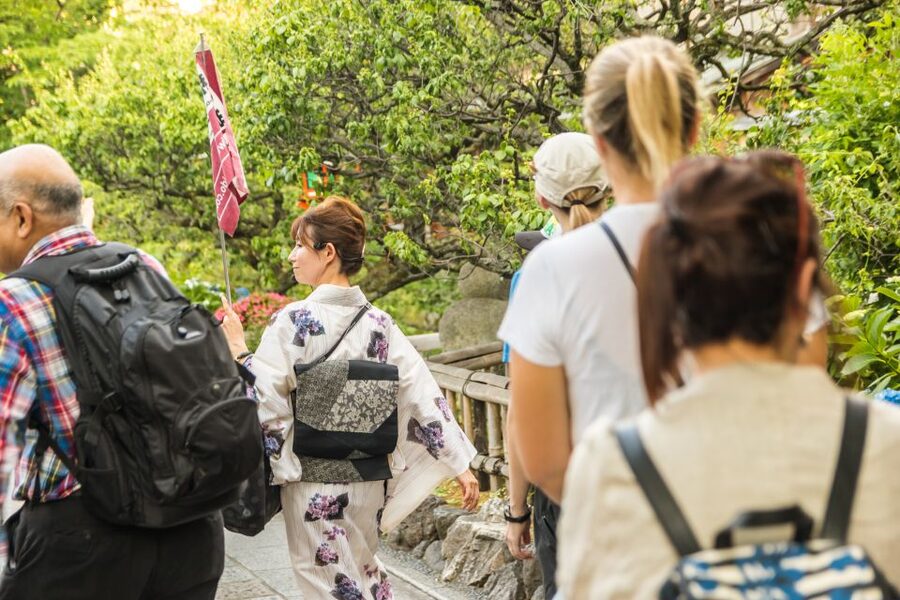
This is a strong choice for you if you want cultural background, like asking questions, and prefer a guide who can explain what you are seeing. It suits first-time visitors to Kyoto, film fans curious about Gion, and anyone interested in traditional Japanese arts without booking a formal dinner or performance.
Families can also enjoy it if children can manage an evening walk and stay attentive. The guides use humor, stories, photos, and visual explanations, which helps keep the subject accessible.
You may want another activity if walking is difficult, if you need guaranteed indoor shelter, or if your only goal is a close photograph of a geiko or maiko. You should also avoid booking with the expectation of entering private buildings. This is an explanation-led walk through public streets.
Free cancellation is available up to 24 hours before the activity for a full refund, and you can reserve now and pay later. Children receive a discount when valid identification is shown. Those policies add flexibility, but the main decision remains your expectations about sightings and walking.
Should you book the Gion night walk?
I would book it if you want to understand Gion rather than simply pass through it. The strongest part is the respectful explanation of geiko and maiko life, supported by guides who use local stories, photos, humor, and practical etiquette.
Book with realistic expectations. You may see several geiko and maiko, or you may see none. You will not record video, and you should not expect close access. At $21, the risk is small, and the cultural grounding is useful even when the streets are quiet. For most first-time visitors who can manage the walk, this is a sensible and respectful way to spend an evening in Gion.
FAQ
How long does the Night Walk in Gion last?
The activity is listed as 100 minutes. The description also refers to it as a two-hour guided walk, so you should allow roughly one hour and forty minutes to two hours.
What language is the tour conducted in?
The tour is conducted in English by a live English-speaking guide.
Where does the tour meet?
The meeting point is in front of Gion Omoide Museum, which is connected to the Izutsu Yatsuhashi pastry shop. The location is near Gion Shijo Station.
Is transportation included?
No. Transportation to and from the attractions is not included, and there is no hotel pickup or drop-off.
Will I definitely see a geiko or maiko?
No. Sightings are possible but are not guaranteed. Some walks see several geiko and maiko, while other walks may have fewer sightings.
Can I take video during the walk?
No. Video recording is not allowed.
Is photography of geiko and maiko allowed?
The tour emphasizes respectful observation and asks people not to intrude. The provided information specifically prohibits video recording and describes guides asking groups to respect privacy, so you should follow the guide’s instructions about photography during the walk.
Is the tour suitable for people with mobility impairments?
The activity is officially listed as not suitable for people with mobility impairments.
Is there a child discount?
Yes. To receive the child discount, you must present valid identification.
Can I cancel for a refund?
Yes. You can cancel up to 24 hours in advance for a full refund. You can also reserve now and pay later.
Just added in Kyoto
- Kyoto: Private Photoshoot Service★ 5.0 · 158 reviews
- Kyoto Rickshaw Tour★ 5.0 · 210 reviews
- Izakaya Style Cooking Class★ 5.0 · 219 reviews
- Kyoto: Traditional Concert at Townhouse or Bathhouse★ 4.9 · 224 reviews
- Ninja 2-hour Hands-on Lesson by Japanese master in Kyoto -Medium★ 5.0 · 218 reviews
- Kyoto: Arashiyama Bamboo, Temple, Matcha, Monkeys & secret spots★ 5.0 · 219 reviews
- Kyoto Geisha District Walking Tour in Gion★ 5.0 · 232 reviews
- The right way to know Kyoto★ 5.0 · 257 reviews
Geisha & Gion District Tours, compared.
Kyoto Geisha Walking Tour: Gion District & Hidden Gems
Read our review →
Gion Geisha District Walking Tour – Stories of Geisha
Read our review →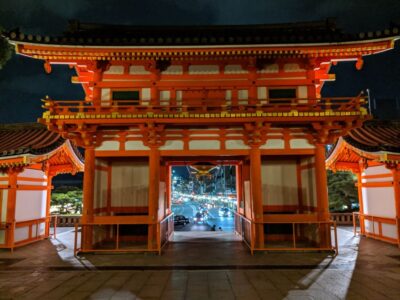
Best of Kyoto: Gion, Geisha, Pagodas & Cobblestones
Read our review →
Kyoto Night Foodie Tour in Gion (9+ dishes + 6 Sake tastings)
Read our review →
Kyoto Gion: 2-Hour Geisha Culture & History Walking Tour
Read our review →
Chopsticks Making Workshop in Gion with Engraving Option
Read our review →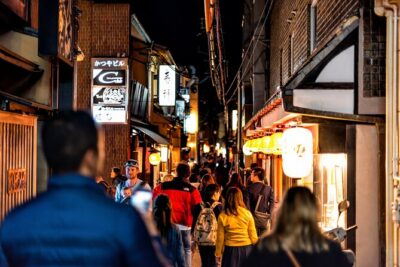
Kyoto Gion Night Walk & Geisha District Guided Tour
Read our review →
Browse the lists this tour appears in