
Reviewed · TEA CEREMONY EXPERIENCES
Kyoto Kiyomizu Tea Ceremony with Scenic Garden Views
Kyoto’s tea ceremony is not just about drinking powdered green tea. At Tea Ceremony Sakaguchian, you watch a tea master turn simple tools, water, matcha, and movement into a quiet performance, with a Japanese garden filling the view beyond the tea room. The small group, capped at 12 people, keeps the setting personal rather than crowded.
I like two things right away: you receive two cups of matcha, and the second one gives you a chance to prepare the tea yourself. I also like the calm setting near Kiyomizu, where the garden, seasonal details, sweets, and traditional room add meaning to the ceremony. The main drawback is time. At about 45 minutes, you get a polished introduction rather than a long study of tea culture, and the price may feel high if you want only a quick cup of matcha.
Key points to know before booking
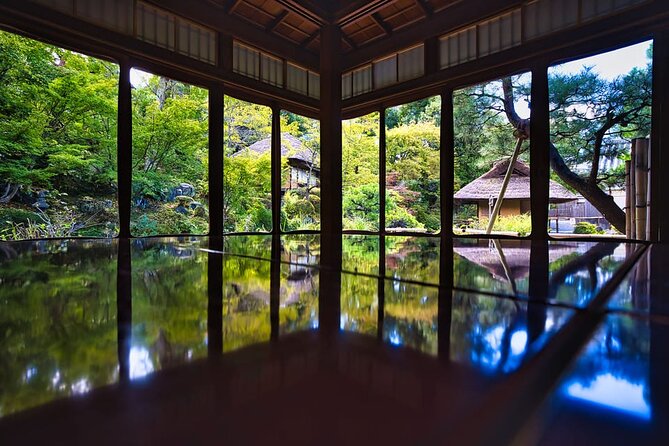
- Garden views shape the experience: Large windows look onto a carefully maintained Japanese garden, giving the ceremony a peaceful setting.
- You taste matcha twice: The tea master prepares the first cup, then you learn to whisk the second.
- The group stays small: A maximum of 12 people makes it easier to hear the explanations and ask questions.
- English support is provided: A host or translator explains the rituals, history, and proper way to handle the bowl.
- Wagashi is included: Traditional Japanese sweets are served with the tea and help balance matcha’s bitter edge.
- Plan for floor seating: The experience is not recommended for people with foot or knee problems, and wearing socks is a useful tip.
Entering the Tea Room Near Kiyomizu
The meeting point is Tea Ceremony Sakaguchian, at 3-chōme-334 Kiyomizu in Kyoto’s Higashiyama Ward. This puts you in one of Kyoto’s most atmospheric sightseeing areas, close to the Kiyomizu neighborhood and its traditional streets. The activity begins and ends at the same place, so it fits neatly into a day built around Kiyomizu-dera and nearby lanes.
The tea room gives you a quick change of pace. Outside, this part of Kyoto can be busy and full of shops. Inside, the mood becomes quiet, measured, and attentive. Garden views through large windows are one of the experience’s strongest features, especially when seasonal changes add color and texture to the scene.
You should expect a traditional setting rather than a modern café. The room and ceremony ask you to slow down, observe, and follow instructions. If sitting on the floor is difficult, take the warning seriously. The activity is not recommended for people with bad feet or knees.
The exact session is listed as approximately 45 minutes. Some descriptions of the experience place the full visit closer to an hour, so I would avoid scheduling a museum or train departure immediately afterward. The extra time also gives you room to arrive, settle in, and enjoy the setting without watching the clock.
Other tea ceremonies in Kyoto people book:
- Kyoto: Tea Ceremony in a Traditional Tea House in Kiyomizu
★ 4.9 · 3,519 reviews - Kyoto: Tea Ceremony Ju-An at Jotokuji Temple
★ 4.9 · 3,207 reviews - Kyoto: 45-Minute Tea Ceremony Lesson Experience
★ 4.3 · 2,378 reviews
Watching the First Bowl Take Shape
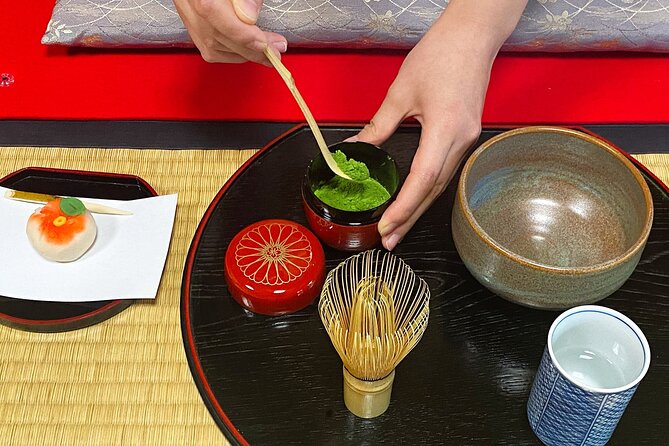
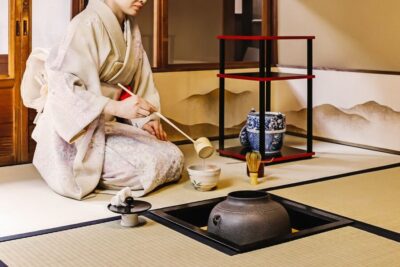
The tea master begins with ritual preparation. You watch the utensils being purified and arranged before the matcha is whisked. These actions can look small at first, but they are the heart of the ceremony. Each movement has a proper order, and the pace gives you time to notice the care given to the tools, the bowl, and the tea.
An English-speaking host or translator explains what is happening and adds background about the customs and history. This help matters because a formal tea ceremony is easy to misread if you do not know what to watch for. Instead of seeing a series of quiet gestures, you begin to understand the ideas behind them: respect, purity, harmony, and calm.
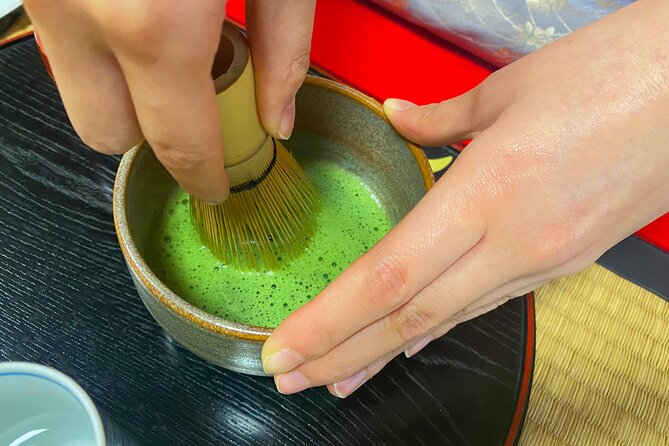
The tea master’s movements are deliberately controlled. There is no rush to get the drink served. You see the matcha measured, combined with hot water, and whisked until it develops a light froth. This is very different from ordering matcha at a restaurant, where the preparation often happens out of sight.
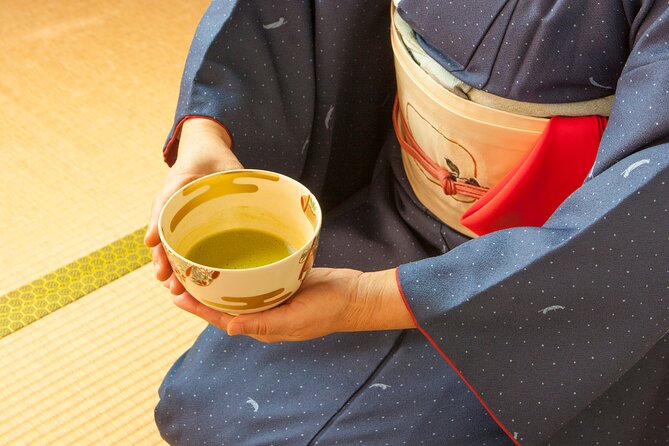
The first cup is made for you. You also receive a traditional wagashi sweet, usually delicate in appearance and designed to pair with the tea. The sweet is not an extra decoration. It gives your palate a softer note before the strong, grassy flavor of matcha.
Learning to Whisk Your Own Matcha
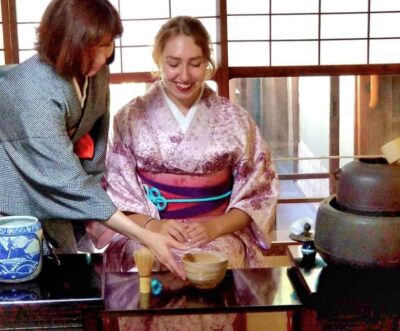
The second cup changes the experience from demonstration to participation. After watching the tea master, you learn how to handle the bowl and create your own frothy matcha. The instructions cover the practical details, including how to hold the bowl and whisk the tea correctly.
Do not expect to produce a perfect bowl immediately. The value is in trying the technique and understanding the work behind a drink that can look simple. The activity gives you a direct connection to the process instead of leaving you as a passive observer.
This part is especially useful if you have never attended a tea ceremony. You can ask questions as you go, and the small group makes it easier to follow the explanation. The tea master and host are described as warm, patient, and willing to explain the details, which helps keep the formal subject approachable.
The two-cup format is a smart choice. One cup lets you watch without distraction. The other lets you test what you have just learned. If you are interested in tea, craft, food, or Japanese customs, this hands-on second round adds real value.
Why the Garden Views Matter
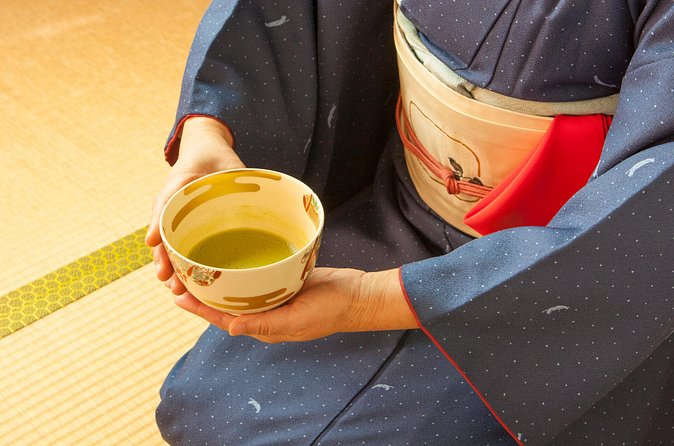
The garden is more than a pretty background. In a tea ceremony, the room, tools, sweets, clothing, garden, and movements work together to create a sense of occasion. Looking out onto a carefully maintained garden gives you a visual pause between each stage of the ceremony.
The setting also helps the activity feel connected to Kyoto. You are not simply attending a lesson in a plain indoor room. You are sitting in a traditional tea house in the Kiyomizu area, surrounded by elements that reflect Japanese design and attention to seasonal beauty.
I would book this experience partly for that setting. The tea itself is important, but the calm room and garden make the lesson easier to remember. On a hot day, air conditioning in the room can also be welcome, while the garden view gives you something quiet to focus on.
The scenery will not turn the activity into a garden tour. You are there for the tea ceremony, and the garden is mainly seen from the room. If you want a long walk through extensive grounds, this is not the right choice. If you want a beautiful place to sit and observe, it works well.
Other tea rooms and ceremonies in Kyoto:
- Kyoto: Table-Style Tea Ceremony at a Kyo-Machiya
★ 4.9 · 1,211 reviews - Kimono Tea Ceremony at Kyoto Maikoya, NISHIKI
★ 5.0 · 911 reviews - Kyoto: Arashiyama Bamboo Forest, Monkeys, Matcha & Temple Tour
★ 5.0 · 759 reviews - Kyoto: Tea Museum Tickets and Matcha Grinding Experience
★ 4.9 · 739 reviews
Matcha, Wagashi, and What You Actually Receive
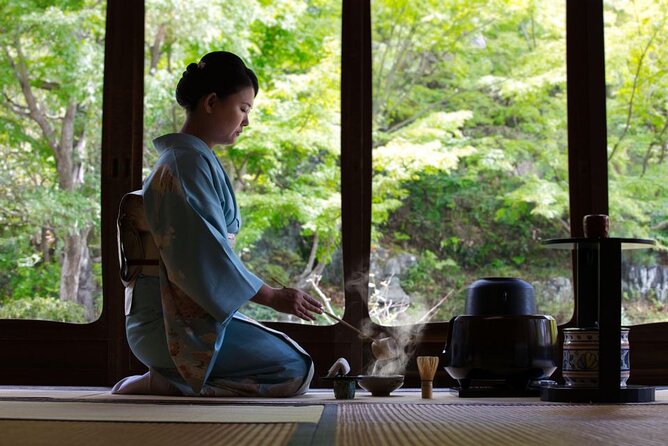
The booking includes two cups of matcha, traditional wagashi sweets, and photos. The first serving is prepared by the tea master. The second is the cup you make under instruction.
Matcha has a stronger and more distinct flavor than many Western-style green teas. It can taste grassy, bitter, and full-bodied. The wagashi provides a sweet counterpoint, making the combination easier for first-time drinkers.
The sweets are part of the cultural lesson, not simply a snack. Their careful presentation and pairing with matcha show how Japanese tea practice pays attention to balance and timing. You will likely remember the contrast between the sweet wagashi and the savory bitterness of the tea.
Photos are included, but video recording is not. Kimono rental is also not included. That distinction matters if you are hoping to build a full dress-up package around the ceremony. This experience focuses on the tea itself, the room, the garden view, and the instruction.
One practical tip is to wear or bring socks. The experience takes place in a traditional tea room, and going barefoot may be uncomfortable or unsuitable. Comfortable clothing will also help if you need to sit in a formal position.
Small Group Size and Language Support
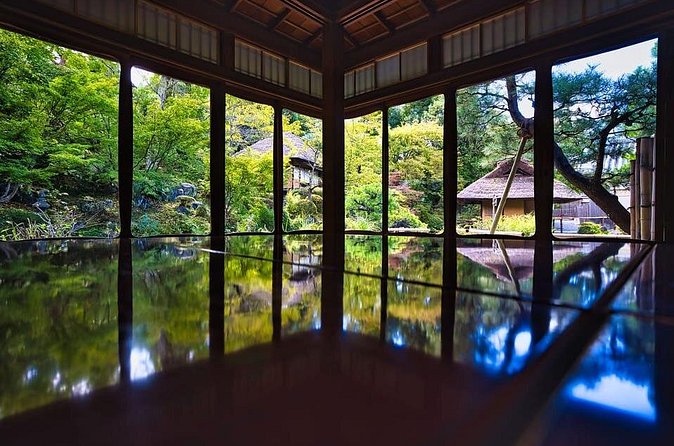
The maximum group size is 12 people. That is small enough for a personal feel, though it is not a private ceremony. If all 12 places are filled, you will still be sharing the room with others and may have less time for individual questions.
The host or translator plays an important role. Explanations cover the ceremony’s history, the meaning of the gestures, how to drink the tea, and how to make the second bowl. This English support makes the activity useful even if you know nothing about Japanese tea customs.
You are also encouraged to ask questions. The subject can sound formal, but the guided explanations make it easier to connect the rituals with everyday ideas about hospitality and respect. The tea master’s careful movements provide the visual lesson, while the translator gives you the cultural context.
The small-group format is a good middle ground. You get more interaction than you would in a large demonstration, but you do not pay for a fully private session. Families, couples, and small groups of friends should find the arrangement comfortable.
Is $50.87 a Fair Price?
At $50.87 per person, this is not the cheapest way to drink matcha in Kyoto. You could spend far less in a café. The price makes more sense when you treat the visit as a short cultural class in a traditional tea room, not as a beverage purchase.
You are paying for the tea master’s performance, English explanation, garden setting, two servings of matcha, wagashi, and the chance to prepare tea yourself. The setting is a large part of the value. A plain room with one cup of tea would not justify the same price.
The main concern is duration. In 45 minutes, you can learn the basic sequence and try the preparation, but you will only scratch the surface of formal tea practice. If you want an in-depth study of tea schools, utensils, ceremony variations, or Japanese aesthetics, you will need a longer activity.
I see the price as reasonable for visitors who want a clear and well-presented introduction during a busy Kyoto trip. It is less appealing if you are mainly looking for a quick refreshment or a long hands-on workshop. The value depends on how much you care about the setting and explanation.
Who Will Enjoy This Most?
I would recommend this to you if you want a calm cultural activity between temple visits. It works well for first-time visitors who want an introduction without committing to a half-day class.
It is also a good pick for families. The combination of garden views, sweets, storytelling, and hands-on tea preparation gives different ages something to follow. Children may not care about every ritual, but the whisking and tasting provide a practical focus.
Tea enthusiasts will appreciate the details more than casual drinkers. You can watch how the utensils are handled, observe the order of the movements, and compare the tea master’s preparation with your own attempt.
This may not suit you if you dislike quiet activities or formal observation. The pace is intentionally slow, and the ceremony rewards attention. It also may not suit anyone with significant foot or knee problems because of the traditional seating arrangement.
Timing, Cancellation, and Practical Details
You receive confirmation when you book, and the ticket is mobile, so there is no need for a printed voucher. The activity returns you to the meeting point after the ceremony.
Free cancellation is available up to 24 hours before the start time for a full refund. Changes or cancellations made within 24 hours are not accepted for a refund. The cut-off follows local Kyoto time, so check the time carefully if you are arranging this close to departure.
The experience requires good weather. If poor weather causes the activity to be canceled, you will be offered another date or a full refund. Since the garden view is part of the appeal, this weather rule is worth noting when planning around a tight schedule.
Allow enough time to reach the Kiyomizu meeting point. The experience does not include transport, and the area can require careful navigation through Kyoto’s older streets. A mobile ticket and a saved meeting address will make arrival simpler.
Should You Book the Kiyomizu Tea Ceremony?
Book it if you want more than a cup of matcha and less than a full-day cultural course. The strongest reasons are the garden-facing tea room, the tea master’s precise preparation, the English explanations, and the chance to make a second cup yourself.
I would skip it if your budget is tight, you want a longer lesson, or you cannot sit comfortably in a traditional tea room. For everyone else, this is a focused way to add quiet, detail, and a little ceremony to a Kyoto sightseeing day. Wear socks, keep your schedule loose, and arrive ready to watch closely.
FAQ
Where does the tea ceremony take place?
It takes place at Tea Ceremony Sakaguchian, located at 3-chōme-334 Kiyomizu, Higashiyama Ward, Kyoto, 605-0043, Japan.
How long does the experience last?
The listed duration is approximately 45 minutes. Some descriptions of the session refer to about an hour, so allow a little extra time around the scheduled activity.
How many people can join?
The activity has a maximum group size of 12 travelers.
What is included in the price?
The experience includes two cups of matcha, traditional wagashi sweets, and photos.
Do I prepare the matcha myself?
Yes. The tea master prepares one cup, and you are taught how to prepare the second cup yourself.
Is English assistance available?
An English-speaking host or translator explains the ceremony, its history, and the preparation and drinking techniques.
Is kimono rental included?
No. Kimono rental is not included.
Can I record video?
No. Video recording is not included or permitted as part of the stated experience. Photos are included.
Is the experience suitable for people with foot or knee problems?
It is not recommended for people with foot or knee problems.
What happens if bad weather cancels the activity?
You will be offered a different date or a full refund if the activity is canceled because of poor weather.
More gardens in Kyoto
- Kyoto Arashiyama Walking Tour: Bamboo, Monkeys, Gardens & Secrets
★ 5.0 · 1,216 reviews - Kyoto Zen Meditation & Garden Tour at a Zen Temple with Lunch
★ 5.0 · 441 reviews - Kyoto Arashiyama Bamboo forest & Garden Half-Day Walking Tour
★ 5.0 · 413 reviews - Kyoto: Zen Garden, Zen Mind (Private)
★ 5.0 · 126 reviews
Just added in Kyoto
- Private Cooking Class Udon in Kyoto Japan★ 5.0 · 23 reviews
- Your Private Vacation Photography Session In Kyoto★ 5.0 · 110 reviews
- Kyoto: Zen Meditation at a Private Temple with a Monk★ 5.0 · 25 reviews
- Private Pewter Sake Cup Experience with a Kyoto Artisan★ 5.0 · 31 reviews
- Kyoto Wagashi(Japanese sweets) Cooking Class near Fushimiinari★ 5.0 · 60 reviews
- Kyoto:Family-Friendly Kimono & Yukata Experience at WARGO★ 5.0 · 147 reviews
- Private Guided Traditional Buddhist Cooking in Japan★ 5.0 · 16 reviews
- Kyoto: Gion Geisha District & Sake-in-Hand Walking Tour★ 5.0 · 37 reviews
Tea Ceremony Experiences, compared.
Tea Ceremony in a Traditional Tea House in Kiyomizu
Read our review →
World Heritage Kyoto & Nara Uji Authentic Matcha Experience
Read our review →
Arashiyama Bamboo Forest, Monkeys, Matcha & Temple Tour
Read our review →Browse the lists this tour appears in