
Reviewed · ZEN & MEDITATION EXPERIENCES
Kyoto Zen Meditation & Garden Tour at a Zen Temple with Lunch
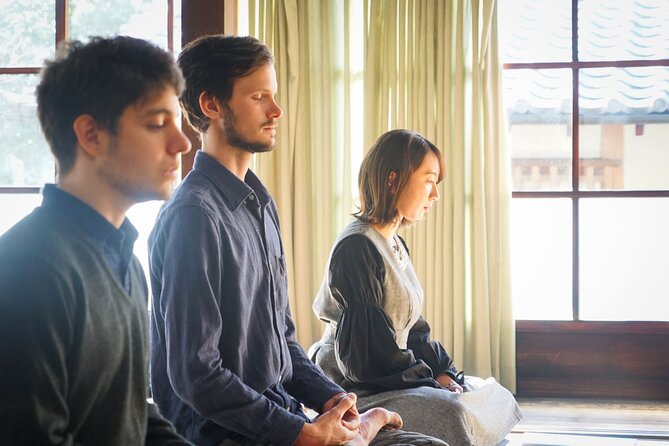
The heart of this Kyoto outing is a real zazen meditation session led by a Zen monk. You walk through the Tofukuji area, visit temple grounds and a dry garden, then sit quietly in a temple setting while the monk explains the practice. This is not a quick photo stop with a nod to Zen. It gives you time to slow down and try the practice properly.
I like two things right away: the small group size, capped at seven, and the way a local guide puts the temples into context. Guides including Yutaka and Hikari have helped explain the difference between Shinto and Buddhism, translate the monk’s guidance, and answer questions afterward. The included Buddhist lunch adds real value, since temple admissions and food are covered in the $110.10 price.
The main consideration is timing. The 10:45 departure may not reach lunch until 2:15 p.m., and you cannot join the group if you arrive late. Food substitutions and allergy-free meals are not guaranteed, so this tour suits you best if you can manage a fixed schedule and a traditional vegetarian meal.
Key points to know before booking
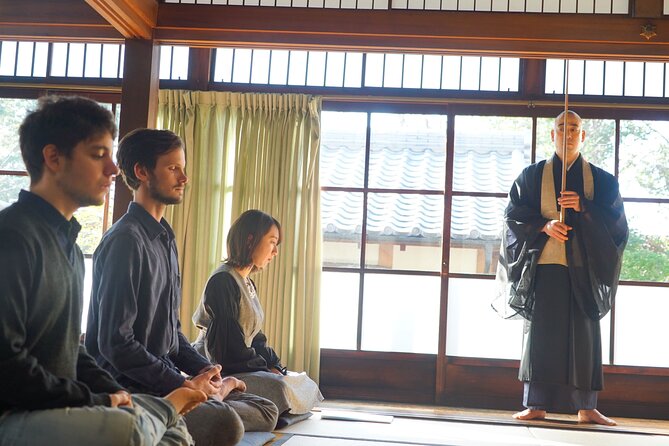
- A monk leads the meditation: You receive instruction in zazen, with the guide helping translate and explain the session.
- Tofukuji is more than a backdrop: You walk through temple grounds and a carefully maintained dry garden while learning about Zen.
- Lunch is part of the experience: A traditional Buddhist meal, historically served at Zen temples, is included.
- The group stays small: A maximum of seven people gives you a better chance to ask questions.
- The meditation is quiet by design: Private conversation is generally not allowed during the sitting, and reading materials are provided.
- Plan for the weather and floor temperature: Bring water and a hat in summer, and wear thick socks in winter.
Why the meditation is the real centerpiece
Kyoto offers plenty of temple visits, but many last only long enough for a few pictures. This experience gives you a different rhythm. You first walk and listen, then spend a sustained period sitting in silence with guidance from a resident monk.
The meditation session can last about an hour, based on the described experience. There is a short break, and the monk may offer further instruction or background. In one arrangement, the monk speaks Japanese, while the guide prepares you beforehand and translates key points afterward. That matters because you are not left to guess what to do with your posture, attention, or breathing.
You do not need prior meditation experience. The tour is designed as an introduction to zazen, so you can arrive curious rather than practiced. At the same time, the setting gives experienced meditators a chance to sit in a working Zen environment instead of simply reading about the tradition.
Be ready for quiet. During zazen, you generally cannot hold private conversations, and the guide may provide material for silent reading. This is a good rule for the room, though it means you should not expect a running commentary throughout the session.
Other temples and shrines in Kyoto people book:
- Kyoto: Tea Ceremony Ju-An at Jotokuji Temple
★ 4.9 · 3,207 reviews - Arashiyama Bamboo, Temple, Monkeys, or Secret Sake Brewery
★ 4.8 · 886 reviews - Kyoto: Arashiyama Bamboo Forest, Monkeys, Matcha & Temple Tour
★ 5.0 · 759 reviews
Walking through Tofukuji with a local guide
The tour begins at the FamilyMart near Tofukuji, at 12-chome-232 Honmachi in Kyoto’s Higashiyama Ward. The meeting point is near public transportation, but arrive early. The group leaves on time, and the operator states that late arrivals cannot join, receive a refund, or reschedule.
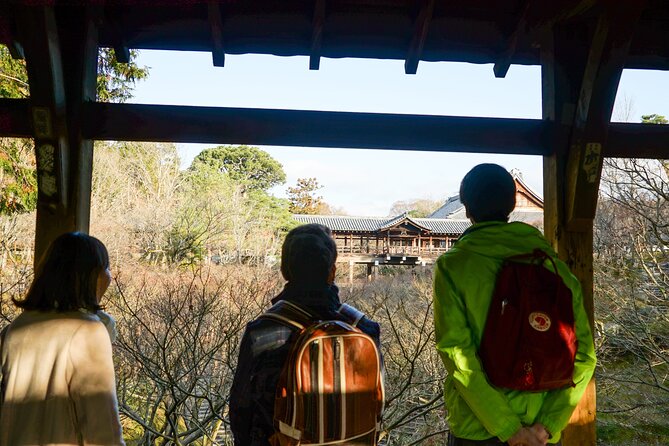
From the meeting point, your guide leads you around the Tofukuji area and its Zen temple grounds. The value here comes from the explanation. A guide such as Yutaka has been praised for connecting the buildings, religious traditions, and local setting rather than treating each stop as an isolated monument. Hikari has also translated details from the monk and explained temple organization and history.
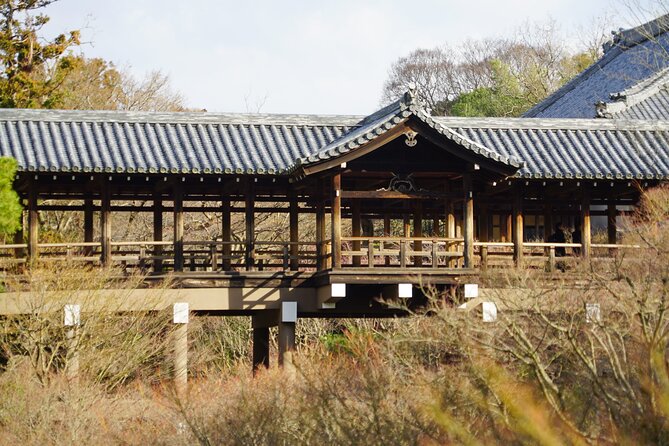
You may see Buddhist temples, a shrine, and smaller temple spaces connected with Zen practice. The exact flow can vary, but the day combines walking, temple visits, garden viewing, meditation, and lunch. That mix keeps the outing from becoming a single long lecture or a silent retreat.
I especially like the chance to ask questions in a small group. With no more than seven people, you can ask about Zen Buddhism, Shinto, temple customs, or the meaning of the garden without trying to catch a guide in a crowd. If you collect goshuin or enjoy temple photography, the guides have also been able to help with those interests.
The dry garden and the value of looking slowly
A dry Zen garden is built with stones, gravel, and carefully arranged forms rather than ponds and flowering displays. Its appeal is not only visual. The garden gives the guide a useful way to discuss Zen attention, simplicity, and the habit of looking carefully.
You can expect time to view the garden with commentary rather than a rushed pass through the grounds. This is a modest but important difference. Without context, a dry garden can look like neat gravel and rocks. With an explanation, you begin to notice how the arrangement directs your eye and creates open space.
Do not expect the same kind of visit as a major sightseeing stop during peak autumn color. The focus here is not on checking off the most famous view in Kyoto. It is on understanding how temple spaces support reflection and practice. You may find that the quieter pace makes the garden more memorable than a faster visit would be.
Meeting a monk and learning the basics of zazen
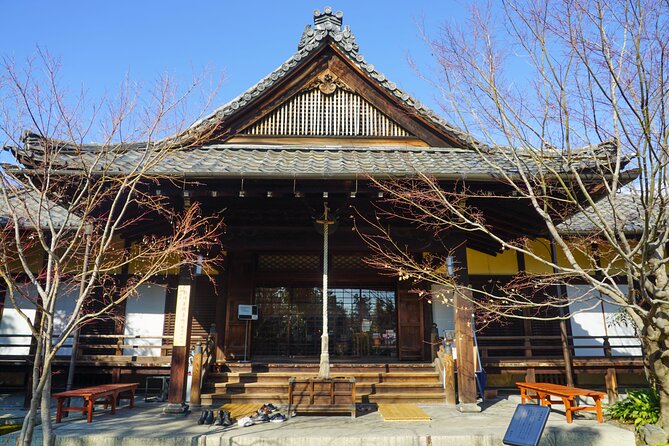
The monk-led session is the part that gives this tour its character. You receive a practical introduction to meditation, then sit in a temple space with someone who practices within that tradition.
The guide prepares you for what will happen, which is useful if the monk speaks mainly Japanese. During or after the session, the guide can help translate additional instruction and questions. At the end, there may be an opportunity to speak with the monk through the guide.
That exchange is valuable. Meditation can feel mysterious when presented only as a pose or a wellness activity. Here, you get a chance to ask about the practice and hear explanations connected to the temple setting. The experience is still introductory, but it has more substance than a brief demonstration.
You should also set realistic expectations. This is not therapy, a private retreat, or a promise of instant calm. You will be part of a group, the meditation has a set schedule, and silence is expected. If you are willing to follow the room’s rules, the structure can help you put aside sightseeing mode for a while.
Other quiet hours in Kyoto:
- Kyoto: Zen Experience in a Hidden Temple
★ 5.0 · 437 reviews - Kyoto: Tea Ceremony Meditation – Make Matcha with Tea Master
★ 4.8 · 406 reviews - Tokyo: Zen Meditation at a Private Temple with a Monk
★ 5.0 · 510 reviews - Miyajima: Cultural Experience in Zen Temple
★ 5.0 · 258 reviews
A traditional Buddhist lunch after the temple visit
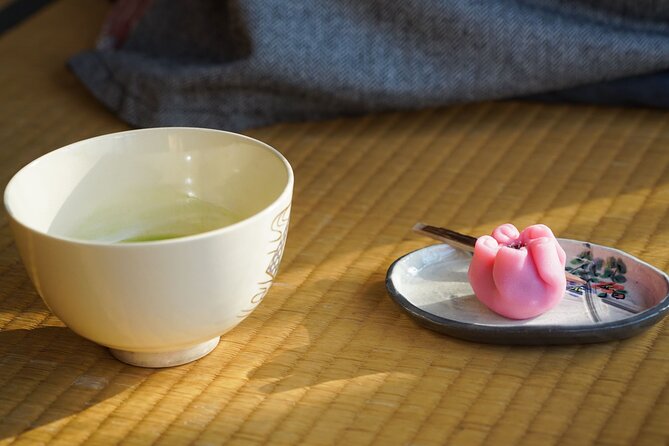
The included meal is described as a traditional Buddhist lunch historically served by Zen monks at temple settings. It is also described as vegetarian, and the portions may be larger than you expect. For many people, this is more than a convenient meal break. It gives you another way to encounter temple culture through food.
The timing deserves attention. For the 10:45 start, lunch is scheduled around 2:15 p.m., after meditation. Eat a proper breakfast or brunch first, especially if you do not handle late meals well. An earlier departure may place lunch at a more comfortable hour, but confirm the available start time when booking.
Dietary planning is important. The food is prepared in kitchens outside the tour company’s control, so allergy-free meals and specific substitutions cannot be guaranteed. Requests must be made by the day before, not on the day itself. The operator may try to compensate at other stops, but you should not book this expecting a fully customized menu.
If you enjoy Japanese food and can eat the meal as offered, lunch strengthens the tour’s cultural focus. If you have serious allergies or strict dietary needs, contact the operator before paying and treat the meal as an unresolved point until they confirm what can be provided.
How the four and a half hours feel
The advertised duration is about four hours and 30 minutes. That is long enough to feel like a proper half-day outing, but short enough to leave room for another Kyoto plan.
The first part is active, with walking between sites and listening to the guide. The middle section slows down for the garden and meditation. Lunch comes afterward, with the 10:45 option reaching the table at roughly 2:15 p.m. The contrast between movement and stillness is one of the tour’s strengths.
You should wear comfortable shoes for the walking portion, though the temple floors create a different concern. In winter, indoor floors can be very cold, so thick socks are a smart choice. Summer brings intense heat and humidity in Kyoto. Carry water and wear a hat to reduce the risk of heat exhaustion.
The tour ends near Chishaku-in Temple, although the information also says the activity returns to the meeting point. The practical detail is that the group plans to disband at the last shop, so do not assume you must walk all the way back to the original FamilyMart. Ask your guide where the group finishes that day if you have a train or reservation to catch.
The $110.10 price and what it covers
At $110.10 per person, this is not a bargain-priced temple walk. The price makes more sense when you count the pieces: a small group, a local guide, temple admissions, monk-led meditation, garden visits, and lunch.
You are paying for access and interpretation as much as for sightseeing. Temple admission is included, so you do not need to carry a stack of small entrance fees. The monk-led session is also a distinct experience that would be difficult to arrange casually during a short Kyoto stay.
The group limit helps justify the cost. Seven people is small enough for questions and translation to work well, especially during a session that depends on clear preparation. A larger group could make the temple walk less personal and the question period less useful.
The value drops if you mainly want famous architecture and quick photos. You can visit Kyoto temples independently for less money, but you would not receive the same organized introduction to zazen, the monk interaction, or the included lunch. I would choose this tour for its access and guidance, not as the cheapest way to see Tofukuji.
Who should book this experience
This tour suits you if you want to understand Kyoto through Buddhism rather than only photograph its buildings. It is especially good for solo visitors, couples, and small groups who appreciate calm pacing, conversation with a guide, and an activity with a reflective purpose.
It also works well for first-time meditators. The guide explains what to expect, and the monk provides instruction rather than assuming you already know how to sit. People with an existing interest in Zen, Buddhism, or meditation may find the temple setting and question period especially worthwhile.
You should think twice if you dislike fixed schedules, cannot tolerate silence, or need guaranteed food substitutions. The tour is also not ideal for anyone who tends to arrive at the last minute. Missing the start means missing the entire group.
Anyone over 12 can join. The maximum group size is seven, which keeps the atmosphere more personal than a standard sightseeing bus tour.
Practical booking advice
Use the mobile ticket, but still save the exact meeting point and arrive early. The start is at the FamilyMart near Tofukuji, not at the temple entrance itself. Give yourself time to find the store and meet the guide without rushing.
When booking, ask about the start time and lunch timing if that affects your day. Make dietary requests by the previous day. Bring water and sun protection in summer, and thick socks in winter.
Free cancellation is available until 24 hours before the start time for a full refund. Changes or cancellations inside that window are not accepted, so keep your Kyoto schedule firm once you pass the cutoff.
Should you book the Kyoto Zen meditation and garden tour?
Book it if you want more than a temple checklist. The monk-led zazen, thoughtful guiding, dry garden, and Buddhist lunch create a well-shaped half-day experience, and guides such as Yutaka and Hikari add useful translation and local context.
I would not book it solely for a flexible meal or a casual walk. The early start, strict punctuality, quiet meditation rules, late lunch option, and uncertain dietary substitutions require some planning. For the right person, though, this is one of the better ways to give a Kyoto sightseeing day a slower, more personal center.
FAQ
How long is the Kyoto Zen meditation and garden tour?
The experience lasts approximately four hours and 30 minutes.
How much does the tour cost?
The listed price is $110.10 per person.
Where does the tour begin?
It begins at FamilyMart Nakai Tofukuji, at 12-chome-232 Honmachi in Kyoto’s Higashiyama Ward.
Where does the tour end?
The activity ends near Chishaku-in Temple. The information also says the group returns toward the meeting point, but the plan is to disband at the last shop.
Is temple admission included?
Yes. You do not need to pay separate admission fees for the temples included in the tour.
Is lunch included?
Yes. A traditional Buddhist meal is included, and it is described as vegetarian.
What happens during the meditation session?
You learn the basics of zazen and meditate with guidance from a Zen monk. Private conversation is generally not allowed during the session, and silent reading materials may be provided.
Can the tour accommodate dietary restrictions?
Requests must be made by the day before. Allergy-free meals and substitutions cannot be guaranteed because the food is prepared in kitchens outside the tour company’s control.
What is the cancellation policy?
You can cancel at least 24 hours before the start time for a full refund. Cancellations or changes made less than 24 hours before the experience are not accepted.
More gardens in Kyoto
- Kyoto Arashiyama Walking Tour: Bamboo, Monkeys, Gardens & Secrets
★ 5.0 · 1,216 reviews - Kyoto Arashiyama Bamboo forest & Garden Half-Day Walking Tour
★ 5.0 · 413 reviews - Osaka: teamLab Botanical Garden Entry Ticket
★ 4.5 · 1,710 reviews - Imperial Palace East Garden and Edo Castle Walking Tour in Tokyo
★ 5.0 · 510 reviews
More temples and shrines elsewhere in Japan
- Osaka/Kyoto: Arashiyama, Nara & Fushimi Inari Shrine w/Lunch
★ 4.4 · 754 reviews - Kyoto: Ninnaji Temple Entry Ticket
★ 4.2 · 650 reviews - KYOTO Tea Ceremony with kimono near by Imamiya Jinjya Shrine
★ 5.0 · 343 reviews - Kyoto: 3-Hour Fushimi Inari Shrine Hidden Hiking Tour
★ 4.9 · 270 reviews
Just added in Kyoto
- Kyoto: Private Photoshoot Service★ 5.0 · 158 reviews
- Kyoto Rickshaw Tour★ 5.0 · 210 reviews
- Izakaya Style Cooking Class★ 5.0 · 219 reviews
- Kyoto: Traditional Concert at Townhouse or Bathhouse★ 4.9 · 224 reviews
- Ninja 2-hour Hands-on Lesson by Japanese master in Kyoto -Medium★ 5.0 · 218 reviews
- Kyoto: Arashiyama Bamboo, Temple, Matcha, Monkeys & secret spots★ 5.0 · 219 reviews
- The right way to know Kyoto★ 5.0 · 257 reviews
- Kyoto Geisha District Walking Tour in Gion★ 5.0 · 232 reviews
Zen & Meditation Experiences, compared.

Tea Ceremony Meditation – Make Matcha with Tea Master
Read our review →
Browse the lists this tour appears in