
Reviewed · NARA & THE DEER PARK
Kyoto and Nara Private Car Tour with a Local English Guide Driver
Kyoto and Nara are packed with famous sights, but they are spread across two cities and connected by busy roads, trains, and long walks. This private car tour lets you set out from your hotel with a local English-speaking guide and licensed driver, then shape the day around your priorities.
I like the flexible itinerary, which can work well for families, older visitors, and groups that do not want to wrestle with train stations. I also like the practical help, including Wi-Fi in the car and assistance with Shinkansen and restaurant reservations. The main drawback is simple: 10 hours is not enough to properly visit every stop listed, and entrance fees plus about ¥10,000 for gas, parking, and highway costs are extra.
Key things to know before booking
- Private transportation for up to 13 people: Your group travels together in an air-conditioned vehicle with hotel pickup and drop-off.
- A local English-speaking guide: Guides such as Yama and Hibiki have been praised for clear English, friendly service, and useful explanations.
- A customizable day: You can focus on Kyoto, add Nara, shop at Nishiki Market, or request other activities and sights.
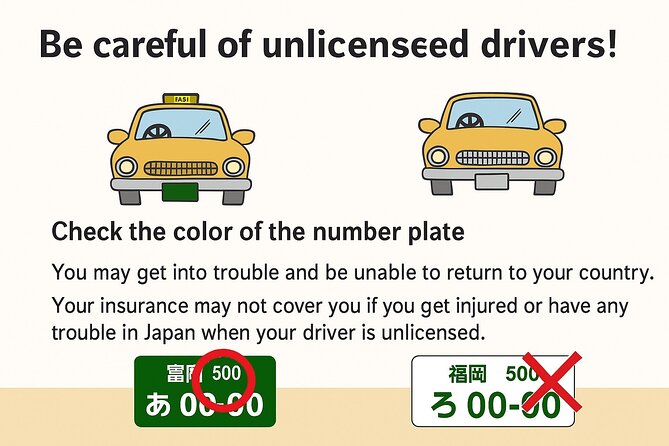
- A licensed green-plate driver: The vehicle is operated by a professional driver, with safety presented as a central part of the service.
- Many famous sights are possible, but not all in one day: Fushimi Inari, Arashiyama, Kinkaku-ji, and Nara Park each need more than a quick photo stop.
- Extra costs matter: Meals and admission are not included, and gas, parking, and highway fees require about ¥10,000 in Japanese cash per booking.
A private car makes Kyoto’s scattered sights easier
Kyoto is not one compact sightseeing zone. Fushimi Inari lies south of the center, Arashiyama is far to the west, Kinkaku-ji is northwest, and the Higashiyama sights sit along crowded streets and hills. Nara adds another city and another set of major temples.
That geography is where this tour earns its keep. You are not changing trains with shopping bags, finding a taxi after a long temple visit, or trying to keep children together on a crowded platform. Your driver handles the road while your guide helps you decide what is worth your limited time.
The vehicle can carry up to 13 people, making the $459.81 group price more attractive for a larger family or group. For two people, it is a premium way to sightsee. For 8 to 13 people, the cost per person can compare favorably with arranging several taxis or paying for separate private transfers.
The plan is flexible, but you should treat the long list of places as a menu, not a promise that you will see every one. Fifteen minutes at each of 24 stops would take six hours before driving, parking, meals, tickets, and real sightseeing time. A good guide should help you choose a sensible route rather than race from one entrance to the next.
Other day trips out of Kyoto:
- Kyoto/Osaka: Nara, Fushimi Inari Taisha, Arashiyama Bus Tour
★ 4.7 · 1,275 reviews - Osaka/Kyoto: Arashiyama, Nara & Fushimi Inari Shrine w/Lunch
★ 4.4 · 754 reviews - Kyoto and Nara Day Trip from Kyoto
★ 4.5 · 445 reviews
Start at Fushimi Inari, where the red gates lead uphill
Fushimi Inari Taisha is one of Kyoto’s essential first stops. Its famous torii gates form long orange-red passageways up Mount Inari, creating the classic Kyoto photograph.
The listed stop is only 15 minutes, which is enough for a quick look near the lower gates but not enough for a full walk uphill. If this shrine matters to you, say so when planning the day. The farther you walk, the quieter the path becomes, but the route turns into a serious climb.
A private car helps with the approach, but it cannot remove the crowds around this popular shrine. Wear comfortable shoes and decide in advance if you want the quick version or a longer walk.
Arashiyama offers a full cluster of Kyoto highlights
Arashiyama is especially useful on a private tour because several major sights sit near one another. The bamboo forest, Tenryu-ji, Togetsukyo Bridge, the Kimono Forest, Monkey Park Iwatayama, and the Sagano Romantic Train all appear in the suggested plan.
The bamboo forest is atmospheric and photogenic, but the main path is short and can become crowded. You will likely spend more time reaching the best section and waiting for a clear photograph than walking through the grove itself.
Tenryu-ji adds substance beyond the bamboo. This UNESCO World Heritage temple is known for its gardens and traditional buildings, with views toward the surrounding hills. Admission is extra, and this is one stop where I would allow more than 15 minutes if gardens interest you.
Togetsukyo Bridge gives you an open view across the Katsura River. It is a good place to pause after the tighter paths around the bamboo forest. The view changes with the season, especially when nearby trees turn color or flower.
Near Arashiyama Station, the Kimono Forest is a modern installation made from pillars wrapped in colorful kimono fabric. It is a quick, easy stop and particularly attractive when the pillars are lit.
The Sagano Romantic Train is a scenic ride through the Hozugawa Gorge. It is not simply another photo stop, though. You need time for the train schedule and ticket arrangements, and the ride may compete with other Arashiyama sights during a 10-hour day. Admission is not included.
Monkey Park Iwatayama requires a climb on foot. At the top, you can see Japanese macaques and look across Kyoto. This is a good choice for active groups, but less suitable if your party has limited mobility or wants a low-effort day.
Gion, Yasaka Shrine, and Higashiyama show old Kyoto
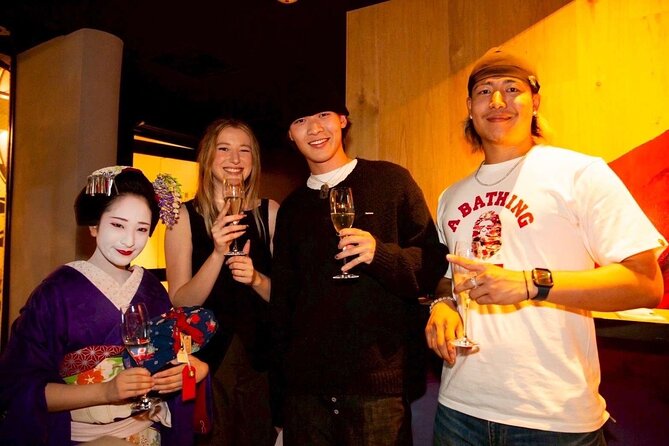
Gion is the traditional district most closely linked with geisha and maiko culture. Hanami-koji Street and the Shirakawa Canal area are the main places to walk, photograph wooden townhouses, and get a feel for Kyoto’s old entertainment quarter.
This is a place to behave carefully. Keep your distance from performers, avoid blocking narrow lanes, and do not assume every traditional-looking doorway is open to the public. The guide can add useful context, but the best part of Gion is often a quiet walk rather than a long lecture.
Nearby Yasaka Shrine is free to enter and easy to combine with Gion. Its lanterns and lively shrine grounds make it a practical stop when you are already in the area. Chion-in Temple is another strong option, with a huge wooden gate and an impressive temple complex.
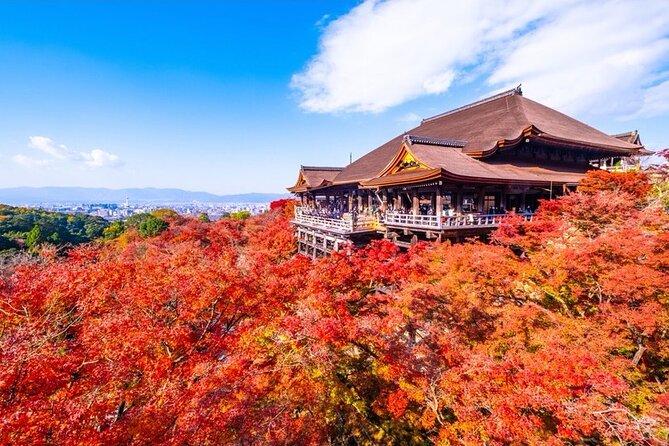
Kiyomizu-dera is one of Kyoto’s most recognizable temples. Its wooden stage reaches out over the hillside, and the approach takes you through a busy old shopping area. Admission is extra. The route includes slopes and crowds, so this stop can take longer than expected.
Sanjusangendo offers a very different experience. Its long wooden hall contains 1,001 life-size statues of Kannon, the Buddhist figure of compassion. Photography rules and interior conditions matter here, so listen closely to your guide before entering.
Same base, a different sort of day:
- PERFECT KYOTO 1-Day Bus Tour
★ 5.0 · 13,518 reviews - Kyoto: Fushimi Inari, Kinkakuji, Bamboo Grove 1 Day Bus Tour
★ 4.8 · 4,316 reviews - Kyoto: Tea Ceremony in a Traditional Tea House in Kiyomizu
★ 4.9 · 3,519 reviews - Kyoto Geisha Walking Tour: Gion District & Hidden Gems
★ 4.7 · 3,273 reviews
Kinkaku-ji and Ginkaku-ji show two sides of Zen design
Kinkaku-ji, the Golden Pavilion, is one of Kyoto’s most photographed sights. The gold-covered building reflects across its pond, and the walk continues through landscaped grounds. Admission is extra, and the visit follows a set path rather than allowing a long wander.
It is worth seeing if this is your first Kyoto visit, but expect crowds and a quick-moving route. The pavilion itself is the main event. If you want detailed temple time, pair it with fewer other stops.
Ginkaku-ji, the Silver Pavilion, is quieter in character. Despite its name, it was never covered in silver. Its appeal lies in restrained architecture, moss, sand gardens, and the Philosopher’s Path area nearby.
Trying to fit both pavilions, Fushimi Inari, Arashiyama, and Nara into one day would make each visit rushed. I would choose one pavilion unless your group mainly wants a fast first look at the major names.
Nishiki Market is best for a flexible lunch stop

Nishiki Market is often called Kyoto’s Kitchen. Its covered passage is lined with food shops, small stalls, and stores selling local products. It can be a fun place to sample foods and browse, but the narrow walkway is not ideal for a large group moving as one unit.
The market is listed as a free stop, but you will pay for anything you eat or buy. It can serve as a useful lunch break, though your guide may need to help your group decide where to stop. If you have dietary restrictions, discuss them before the day begins.
This is also one reason the private format helps. A group can spend 30 minutes here, or longer if shopping matters, without being tied to a fixed sightseeing group. The tradeoff is that every extra market stop reduces time at temples or in Nara.
Nara adds deer, a giant Buddha, and ancient shrines
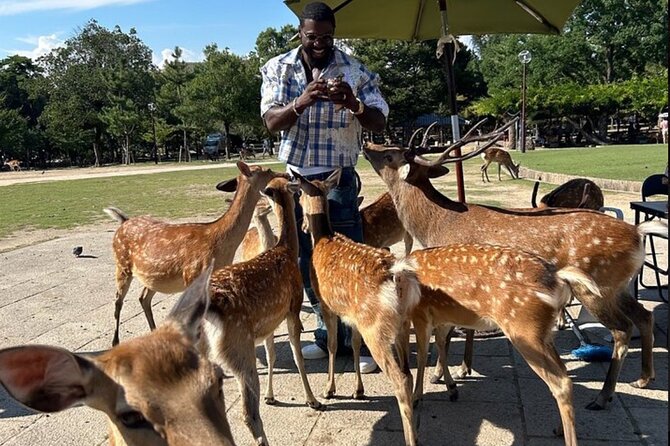
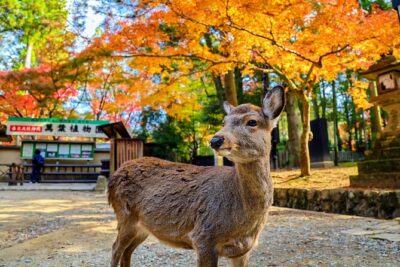
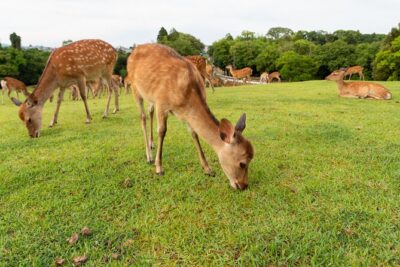
Nara Park is the easiest place to meet the city’s famous free-roaming deer. More than 1,000 deer live in the park, and they are accustomed to people. They are entertaining, but you should still treat them as animals, not toys. Keep food and belongings under control and follow local instructions.
Todai-ji is the major reason to add Nara. Its Great Buddha Hall contains a huge bronze Buddha, and the temple’s scale is impressive even before you enter. Admission is extra. Allow real time here, since the hall and grounds deserve more than a quick glance.
Kasuga Grand Shrine takes you into a wooded setting filled with stone and bronze lanterns. The shrine is a UNESCO World Heritage site and has a different mood from Todai-ji’s massive Buddhist architecture. The walking distance and extra admission should be considered when planning the day.
Kofuku-ji, near central Nara, is known for its five-story pagoda and long importance in the city. It is a convenient photo stop, though access to individual buildings can vary. Again, it is better viewed as one choice in a Nara plan than as another item to squeeze into an already packed route.
If Nara is a priority, I would give it at least half a day and limit Kyoto to two or three carefully chosen stops. If Kyoto is your main goal, Nara may be better saved for another day.
Amanohashidate and Ine require a very different plan

Amanohashidate and Ine no Funaya are included among the possible destinations, but they are not practical additions to a normal Kyoto and Nara sightseeing day. Amanohashidate is a 3.6-kilometer sandbar in northern Kyoto Prefecture, known as one of Japan’s Three Scenic Views. Amanohashidate View Land offers a high viewpoint over the pine-covered sandbar.
Ine is a fishing village known for wooden funaya boathouses built directly over the water. Both places offer a slower, scenic outing far from central Kyoto. They also require substantial driving time, so choose them only if your group is willing to make the day about northern Kyoto rather than the famous city temples.
The private vehicle is particularly useful for this kind of custom trip, but ask the operator to confirm the route, driving time, and final cost before booking. Highway and parking expenses are not included.
What the guide and driver add
The service includes a local English and Japanese-speaking guide and a professional licensed driver using a green-plate vehicle. The company emphasizes Japanese-born staff, local knowledge, and emergency language support. That can be reassuring if you are unfamiliar with Japanese transport or need help making arrangements.
Yama is named in the feedback as a guide who explained the history of major sights and helped with specific requests at Nishiki Market. Hibiki is also named as an English-speaking guide who took a customer to many Kyoto and Nara sights. The operator is described as English-speaking as well, which is useful when plans change.
The guide’s real value is not simply pointing out a temple name. It is helping you decide how long to stay, explaining what you are looking at, and keeping the day workable. Ask for that help. Give the guide your top three priorities, your walking limits, and any food or reservation needs.
The tour includes Wi-Fi onboard and complimentary support for Shinkansen and restaurant reservations. These are practical extras, especially if you are moving between cities or need help with a complicated booking.
Price, vehicle choices, and extra charges
The base price is $459.81 per group of up to 13 people. That price includes private transportation, the driver, the English-speaking guide, hotel pickup and drop-off, air conditioning, and Wi-Fi.
It does not include temple and attraction admissions, meals, or about ¥10,000 in cash for gas, parking, and highway fees. Those charges can affect the final cost more than the headline price suggests, especially if you choose northern Kyoto or a route with many paid parking areas.
A Mercedes-Benz V-Class is available as a higher-cost VIP option. The standard vehicle is not specified in the supplied details, so confirm the exact vehicle if luggage space, seating style, or comfort matters to your group.
For a large group, the price can be sensible because everyone stays together. For a couple, the value depends on how much you prize door-to-door service and a private schedule. Public transport will usually cost less, but it will not provide the same level of personal assistance.
Who should book this Kyoto and Nara day?
I would recommend this tour to families with children, groups with older relatives, and anyone who wants to cover several districts without managing transfers. It also suits first-time visitors who want a local guide to explain the basics and help with practical arrangements.
It is a good match for groups that already know their priorities. You can ask for temples, shopping, deer, gardens, or food, then build the day around those interests.
I would be cautious if you want slow, detailed visits at every temple. A 10-hour private car tour can cover ground, but it cannot turn one day into a week. The best experience will come from choosing a focused route, not trying to collect every famous name.
Free cancellation is available up to 24 hours before the start time for a full refund. Changes or cancellations inside that window are not accepted or refunded.
FAQ
How long is the Kyoto and Nara private car tour?
The tour lasts approximately 10 hours.
How many people can join the private tour?
The private vehicle can accommodate a group of up to 13 people.
Are hotel pickup and drop-off included?
Yes. Hotel pickup and drop-off are included.
Are admission tickets included?
No. Entrance fees for temples and attractions are not included in the tour price.
What extra costs should I bring?
You should bring about ¥10,000 in Japanese cash per booking for gas, parking, and highway fees. Meals and admission tickets are also extra.
Can I cancel for a full refund?
Yes. You can cancel at least 24 hours before the experience start time for a full refund. Cancellations or changes made less than 24 hours before the start time are not refunded or accepted.
Should you book it?
Book this tour if your group values comfort, a private schedule, and help from an English-speaking local guide. It is especially useful for a family or larger party that wants Kyoto’s major sights without a day of train changes and long walks between districts.
Before confirming, decide which three or four places matter most. Fushimi Inari, Arashiyama, Kinkaku-ji, and Nara Park are not a realistic full-day list if you want more than photographs. With a focused route, a good guide such as Yama or Hibiki, and cash set aside for transport costs and admissions, this can be a practical way to see a lot of Kyoto with less logistical strain.
Just added in Kyoto
- Private Cooking Class Udon in Kyoto Japan★ 5.0 · 23 reviews
- Your Private Vacation Photography Session In Kyoto★ 5.0 · 110 reviews
- Kyoto: Zen Meditation at a Private Temple with a Monk★ 5.0 · 25 reviews
- Private Pewter Sake Cup Experience with a Kyoto Artisan★ 5.0 · 31 reviews
- Kyoto Wagashi(Japanese sweets) Cooking Class near Fushimiinari★ 5.0 · 60 reviews
- Kyoto:Family-Friendly Kimono & Yukata Experience at WARGO★ 5.0 · 147 reviews
- Private Guided Traditional Buddhist Cooking in Japan★ 5.0 · 16 reviews
- Kyoto: Gion Geisha District & Sake-in-Hand Walking Tour★ 5.0 · 37 reviews
Nara & the Deer Park, compared.
World Heritage Kyoto & Nara Uji Authentic Matcha Experience
Read our review →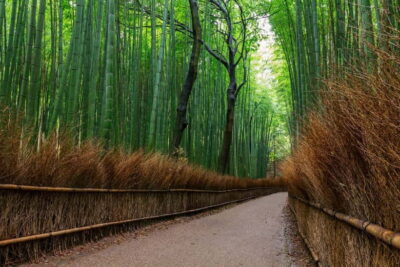
Kyoto/Osaka: Nara, Fushimi Inari Taisha, Arashiyama Bus Tour
Read our review →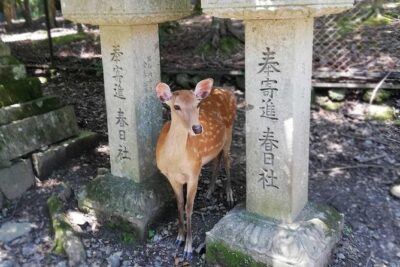
Nara Half Day Trip Walking Tour (Private Option Available)
Read our review →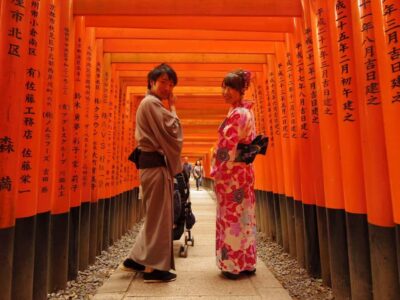
Osaka/Kyoto: Arashiyama, Nara & Fushimi Inari Shrine w/Lunch
Read our review →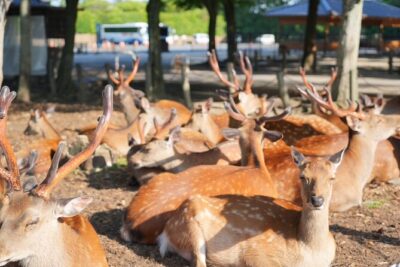
Nara Early Morning Tour (Kyoto or Osaka Departure Available)
Read our review →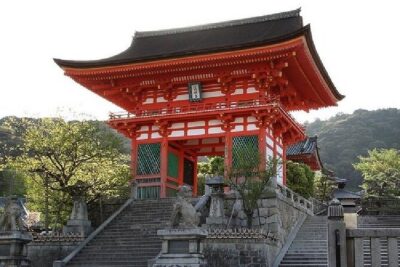
Full Day Guided Tour to Kyoto and Nara from Osaka by Van
Read our review →
Browse the lists this tour appears in