
Reviewed · NARA & THE DEER PARK
Nara Todaiji Kasuga Taisha Private Full Day Tour From Kyoto
Nara’s deer are the first thing you notice, but the real prize is how much history fits into one walk. In about eight hours, you move from the open lawns of Nara Park to Todaiji’s Great Buddha, lantern-lined Kasuga Taisha, and the old merchant streets of Naramachi.
I like the private format, since your group gets one guide rather than a fixed public crowd. I also like the early start, which can help you reach the major sights before the day grows busy. Guides including Katsuhiko Ishida, Yochee, Gustavo, Richard, and Yossi have been praised for clear English and for adding local knowledge.
The main drawback is the cost and the amount of walking. At $195 per person, you still pay separately for train fare and lunch, and the day can feel long if you want a slow, unhurried visit.
Key points at a glance
- Feed Nara’s free-roaming Sika deer: The deer are considered sacred messengers in Shinto and are the city’s best-known symbol.
- See Todaiji’s Great Buddha: Your entrance includes one of Japan’s most famous bronze Buddha statues and the vast Great Buddha Hall.
- Visit lantern-filled Kasuga Taisha: The shrine offers a quieter, more wooded contrast to the open park.
- Eat at Kotoya Restaurant: A traditional lunch of local Nara dishes costs about JPY 2,500 and is not included.
- Walk old Naramachi: Narrow lanes, traditional merchant houses, specialty shops, and retro museums give the afternoon a different pace.
- Travel with only your own group: This is a private activity, with an English-speaking guide meeting you at Kyoto Station.
Why this Kyoto to Nara day trip works
Nara is close enough to Kyoto for an easy day out, but it feels like a change of scene. The train ride is short, the route is straightforward, and the sights are gathered around Nara Park. You do not spend the day crossing a large city by bus or car.
This tour gives you a useful first look at Nara in one day. You see the famous deer, enter two major religious sites, walk an old neighborhood, and have time for lunch. That mix matters. A visit limited to Todaiji can feel like a quick temple stop. Adding Kasuga Taisha and Naramachi gives you a better sense of how Nara works as a place.
The private setup is especially useful if you want to ask questions or move at your group’s pace. The guide can explain the landmarks as you go instead of leaving you to decode signs on your own. The experience is still structured, though, so you should expect a full schedule rather than a loose day with hours of free time.
Other day trips out of Kyoto:
- Kyoto/Osaka: Nara, Fushimi Inari Taisha, Arashiyama Bus Tour
★ 4.7 · 1,275 reviews - Osaka/Kyoto: Arashiyama, Nara & Fushimi Inari Shrine w/Lunch
★ 4.4 · 754 reviews - Kyoto and Nara Day Trip from Kyoto
★ 4.5 · 445 reviews
Meeting your guide at Kyoto Station
The tour begins at the 7-Eleven Heart-In store by the JR Kyoto Station Central Entrance, on Karasuma Street. You meet your guide there and board an express train to Nara. Hotel pickup and drop-off are not included, so you need to reach the station yourself.
Transportation is also separate from the tour price. The stated fare is JPY 1,280 each way, and a JR Pass can be used. Check the exact train arrangements with the provider before setting out, since your rail pass or ticket type may affect how you pay.
The station meeting point is practical, but Kyoto Station is large. Give yourself time to find the Central Entrance and the correct convenience store. The activity begins early enough that arriving at the last minute could create needless stress.
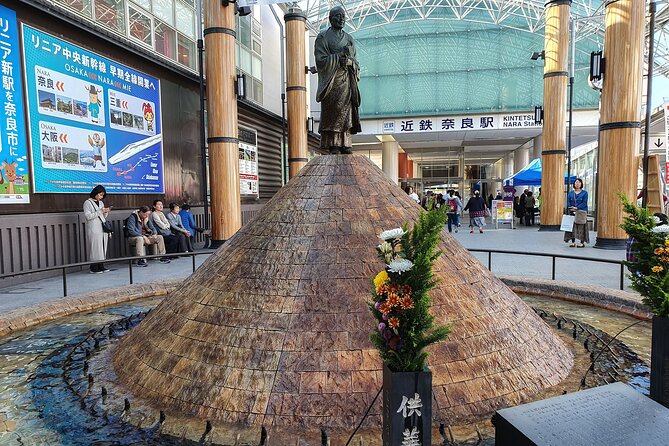
The ride itself is part of the appeal. You leave Kyoto’s dense station area and head toward Nara, with the Gyoki Statue and its fountain marking the start of the Nara portion of the day. This is not a guided luxury transfer. It is public rail travel with a guide, which keeps the route simple but means you should be ready to walk and use the station.
Nara Park and the deer
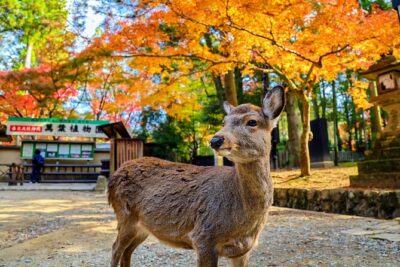
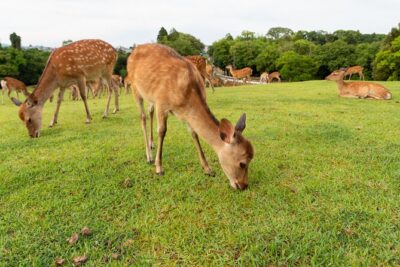
Nara Park is the tour’s most playful stop. Sika deer roam freely across the open green spaces, and you can take photos or feed them. In Shinto tradition, they are seen as sacred messengers of the gods, so they are more than a cute photo opportunity.
The deer are accustomed to people, but you should still treat them as animals rather than toys. Keep food under control, follow your guide’s instructions, and pay attention when several deer gather around you. Feeding them can be fun, but it can also become hectic for a moment.
This stop gives the day breathing room after the train ride. You get open space, greenery, and a chance to look around before entering the large temple complex. It is also a good part of the route for families, since the deer create an immediate connection with the city.
The planned time here is about an hour. That is enough for photos and a short walk, but not an invitation to wander every corner of the park. If you want extensive time with the deer, this schedule may feel brief.
Todaiji and the Great Buddha Hall
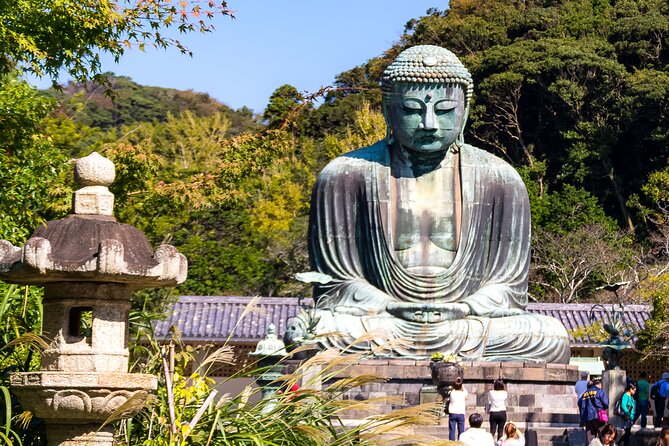
Todaiji is the day’s major cultural stop. The UNESCO World Heritage Site houses the Great Buddha, or Daibutsu, one of the largest bronze Buddha statues in Japan. Your entrance fee is included.
The scale is the point. The Great Buddha Hall is built to make you look up, and the statue has the same effect. Even if you have seen many temples in Kyoto, Todaiji offers a different kind of impact because of its enormous wooden hall and giant bronze figure.
Your guide can provide the background that turns a grand building into a meaningful stop. The route also places Todaiji after Nara Park, so you arrive with a clear sense of the temple’s setting rather than treating it as an isolated building.
Allow for a crowd around the main hall, especially later in the day. The early start is helpful here. Richard, one of the guides named in the tour information, was especially noted for beginning early and reaching the important places before the crowds grew. That makes a practical difference at a sight this famous.
The scheduled visit is about an hour. It is long enough to enter, see the Great Buddha, and hear an explanation, but you will not have unlimited time for every building or corner of the grounds.
Same base, a different sort of day:
- PERFECT KYOTO 1-Day Bus Tour
★ 5.0 · 13,518 reviews - Kyoto: Fushimi Inari, Kinkakuji, Bamboo Grove 1 Day Bus Tour
★ 4.8 · 4,316 reviews - Kyoto: Tea Ceremony in a Traditional Tea House in Kiyomizu
★ 4.9 · 3,519 reviews - Kyoto Geisha Walking Tour: Gion District & Hidden Gems
★ 4.7 · 3,273 reviews
Lunch at Kotoya Restaurant
After Todaiji, the route includes a traditional lunch at Kotoya Restaurant. Local Nara specialties cost around JPY 2,500, and lunch is not included in the $195 tour price.
This is a useful pause in a day with plenty of walking. You can sit down, eat Japanese food, and ask your guide about the dishes or the area. The meal also gives the tour a stronger local character than a stop at a standard chain restaurant would.
Keep the extra cost in mind when comparing tours. Your real spending is the tour price plus round-trip transport, lunch, and personal purchases. Snacks are included, but they do not replace a proper meal.
The supplied details do not specify a menu, so do not book this expecting one particular dish. The important point is that the lunch is traditional and centered on Nara specialties.
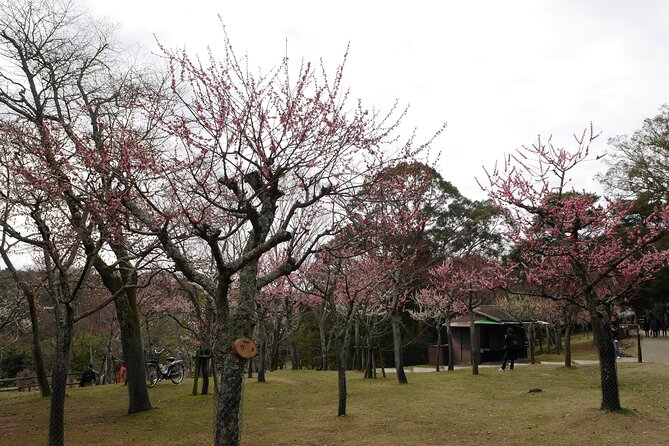
Kasuga Taisha’s lanterns and wooded setting
Kasuga Taisha brings a different mood from Todaiji. The shrine is known for thousands of hanging lanterns, and the setting is more intimate and picturesque. Your admission fee is included.
I like the contrast between the two religious sites. Todaiji is about massive architecture and the Great Buddha. Kasuga Taisha is about shrine details, lanterns, paths, and atmosphere. Seeing both helps you understand why Nara works so well as a day trip.
The scheduled visit is about an hour. You should expect a guided look at the shrine rather than a long period for private exploration. The route can also involve uneven or extended walking, so practical shoes are a good choice.
Kasuga Taisha is one of the places where a guide adds real value. The buildings and lanterns are attractive on their own, but context helps you notice what you are seeing. Yochee, described as a Nara native, has led this route and is known for bringing a local point of view to the day.
Naramachi’s old merchant streets
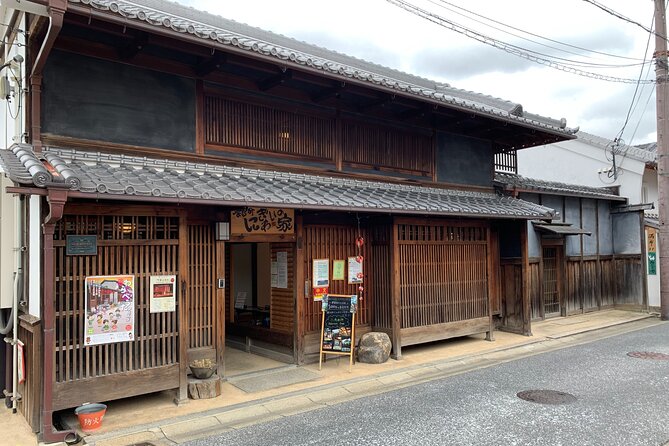
Naramachi is the most neighborhood-like stop. Its narrow lanes are lined with preserved traditional merchant houses, specialty shops, and retro museums. After the large temple grounds, this part of the day feels more personal and close to street level.
The old houses show a different side of Nara. You are not only looking at religious monuments. You are walking through an area shaped by merchants, small businesses, and everyday urban life during the Edo period.
The planned visit is about 30 minutes, which is short. You can get a taste of the district, see some shops, and look into its older streets, but you will not have time to inspect every museum or browse at leisure. If Naramachi is your main interest, consider returning on your own another day.
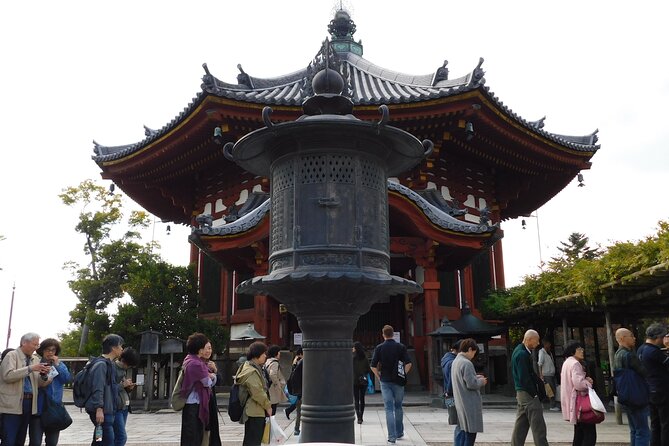
The route also includes Kofukuji Temple grounds and an explanation of how the Heijo-kyo imperial capital was established. The schedule lists this stop separately, with about an hour assigned to it. Since the published sequence places it after the return portion of the day, confirm the exact order and meeting details with the provider before departure.
Guides, group size, and the walking pace
This is a private tour, meaning only your group participates. That is a major advantage for families, couples, or friends who prefer direct attention and do not want to wait for a large party.
The named guides include Katsuhiko Ishida, Yochee, Gustavo, Richard, and Yossi. The strongest pattern in the feedback is clear English, strong knowledge of Nara, and an ability to show places you might miss alone. Katsuhiko Ishida was praised for making the day both interesting and fun. Gustavo was noted for guiding his group to less obvious sections of Nara, while Yossi handled the train journey and local food without communication trouble.
The route is not physically extreme, but it is a long walking day. One detailed account called the walking substantial but worthwhile. You should plan for temple grounds, park paths, shrine approaches, station walking, and old neighborhood streets.
Most people can take part, according to the tour information, and the activity is near public transportation. Still, the long duration and walking deserve attention if you have limited stamina. The private format helps with pace, but it does not remove the distance between stops.
Is $195 a fair price?
The price is $195 per person. That is not a cheap way to make the Kyoto to Nara trip, especially because rail fare and lunch are extra. On the other hand, you receive a private English-speaking guide and included admission to Todaiji and Kasuga Taisha.
For a group that values structure and explanation, the price can make sense. You are paying for someone to handle the route, guide you through the main sights, and add context throughout the day. The private arrangement is more valuable when several people are sharing the experience.
If you are comfortable using trains, reading signs, and visiting temples without help, you can spend less by going independently. Nara’s main sights are reachable by public transportation, and the tour does not include hotel transfers or train tickets.
I would compare the price based on what kind of day you want. Choose this tour for convenience, a private guide, and a planned introduction to Nara. Skip it if your priority is keeping costs low or spending several hours in one neighborhood at your own pace.
Who should book this Nara experience?
I would recommend it to first-time visitors who want to see Nara from Kyoto without planning every train, temple, and meal themselves. It also suits families and small groups who want a private guide and a clear schedule.
It is a good choice if deer, major Buddhist and Shinto sites, and traditional streets all appeal to you. The combination is broad enough to give you a useful first impression of Nara in one day.
You may want a different plan if you dislike early starts, long walks, or fixed timing. The short Naramachi visit may disappoint anyone mainly interested in shops and old houses. Independent visitors with plenty of time can also explore the same city more slowly and spend less.
Cancellation is free up to 24 hours before the start time for a full refund. Changes or cancellations made less than 24 hours before the experience are not accepted for a refund.
Should you book it?
Book this tour if you want a well-organized private day from Kyoto, with the deer, Todaiji, Kasuga Taisha, lunch, and Naramachi all included in one route. The best reasons to choose it are the private guide, early start, included temple admissions, and the chance to hear local context from guides such as Katsuhiko Ishida, Yochee, Gustavo, Richard, or Yossi.
Think twice if $195 feels high before adding train fare and lunch. Nara is easy to visit independently, and the tour’s eight-hour schedule leaves limited time for wandering. For a first visit, though, it offers a sensible mix of the city’s most memorable sights and a friendly guide to help you make sense of them.
FAQ
How long does the tour last?
The tour lasts approximately eight hours.
Where does the tour begin?
It begins at the 7-Eleven Heart-In store by the JR Kyoto Station Central Entrance, at Karasuma Street, Higashishiokojicho, Shimogyo Ward, Kyoto.
Where does the tour end?
The activity ends back at the meeting point in Kyoto.
Is transportation included in the price?
No. Transportation is not included. The stated train fare is JPY 1,280 each way, and a JR Pass can be used.
Is hotel pickup included?
No. Hotel pickup and drop-off are not included.
Is lunch included?
No. Traditional lunch at Kotoya Restaurant costs around JPY 2,500 and is paid separately.
Are entrance fees included?
Yes. Entrance fees for Todaiji Temple and Kasuga Taisha Shrine are included.
Is the tour private?
Yes. Only your group participates in this private activity.
What language does the guide speak?
The tour includes an English-speaking guide.
Can I cancel for a full refund?
Yes. You can cancel at least 24 hours before the experience start time for a full refund. Cancellations made less than 24 hours before the start time are not refunded.
Just added in Kyoto
- Private Cooking Class Udon in Kyoto Japan★ 5.0 · 23 reviews
- Your Private Vacation Photography Session In Kyoto★ 5.0 · 110 reviews
- Kyoto: Zen Meditation at a Private Temple with a Monk★ 5.0 · 25 reviews
- Private Pewter Sake Cup Experience with a Kyoto Artisan★ 5.0 · 31 reviews
- Kyoto Wagashi(Japanese sweets) Cooking Class near Fushimiinari★ 5.0 · 60 reviews
- Kyoto:Family-Friendly Kimono & Yukata Experience at WARGO★ 5.0 · 147 reviews
- Private Guided Traditional Buddhist Cooking in Japan★ 5.0 · 16 reviews
- Kyoto: Gion Geisha District & Sake-in-Hand Walking Tour★ 5.0 · 37 reviews
Nara & the Deer Park, compared.
World Heritage Kyoto & Nara Uji Authentic Matcha Experience
Read our review →
Kyoto/Osaka: Nara, Fushimi Inari Taisha, Arashiyama Bus Tour
Read our review →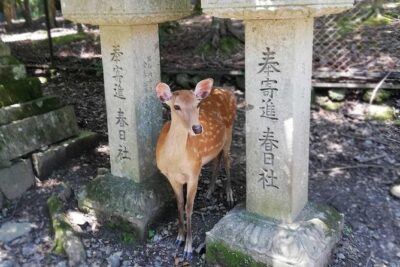
Nara Half Day Trip Walking Tour (Private Option Available)
Read our review →
Osaka/Kyoto: Arashiyama, Nara & Fushimi Inari Shrine w/Lunch
Read our review →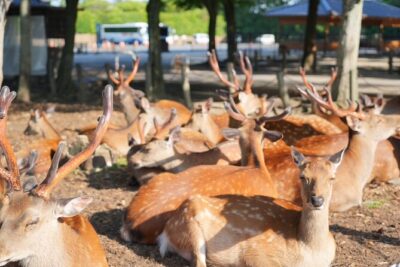
Nara Early Morning Tour (Kyoto or Osaka Departure Available)
Read our review →
Full Day Guided Tour to Kyoto and Nara from Osaka by Van
Read our review →
Browse the lists this tour appears in