
Reviewed · NARA & THE DEER PARK
Nara Early Morning Tour (Kyoto or Osaka Departure Available)
Nara is at its most peaceful early in the day, when the deer are active, the temple grounds are quiet, and the main paths have not yet filled with tour groups. This half-day walk takes you from Kofuku-ji Temple through Kasuga Grand Shrine and Nara Park to Todaiji’s enormous Great Buddha.
I like the small group, capped at 12, and the way the route joins sacred buildings, forest paths, and free-roaming deer in one compact morning. Guides such as Momoka, Haruka, Futaba, Nana, and Koichiro are praised for clear explanations, friendly pacing, and useful local tips. The tradeoff is simple: you will walk about 10,000 steps, and your ride back to Kyoto or Osaka is your responsibility.
Key points at a glance
- Early start: Enjoy Nara before the heaviest daytime crowds arrive.
- Four major stops: Visit Kofuku-ji, Kasuga Grand Shrine, Nara Park, and Todaiji Temple.
- Small-group format: The maximum group size is 12, with some departures much smaller.
- Guide-led context: Expect explanations about Japanese history, religion, architecture, and customs.
- Optional transport: Kyoto Station or Osaka transport to Nara may be included when you choose that option.
- Plan your return: Transportation back to Kyoto or Osaka, food, drinks, and the Todaiji entrance fee are not included.
Why an early morning in Nara makes such a difference
Nara is easy to visit independently, but timing changes the feel of the place. Later in the day, the famous paths around the deer park and Todaiji can become crowded. This tour gets you moving early, giving you a better chance to hear your guide, pause for photos, and enjoy the quieter side of Nara before the main rush.
The route also gives you a useful introduction to Nara’s religious and political past without scattering your time across the city. Kofuku-ji shows you the former capital’s Buddhist heritage. Kasuga Grand Shrine brings Shinto worship into the picture. Nara Park connects the sites through open paths and deer-filled woods, while Todaiji provides the grand finale.
You should think of this as a walking history tour with wildlife along the way, not a bus excursion. The pace is generally relaxed, and guides have adjusted it for families and mixed groups. Still, the distance is real. Comfortable shoes matter more than dressing up for the temples.
Other day trips out of Japan:
- World Heritage Kyoto & Nara Uji Authentic Matcha Experience
★ 5.0 · 1,573 reviews - Kyoto/Osaka: Nara, Fushimi Inari Taisha, Arashiyama Bus Tour
★ 4.7 · 1,275 reviews - Nara Half Day Trip Walking Tour (Private Option Available)
★ 5.0 · 937 reviews
Kofuku-ji begins the story in central Nara
The first stop is Kofuku-ji Temple, founded in 710, the same year Nara became Japan’s capital. Its five-story pagoda is the visual star here. It is the second-tallest wooden pagoda in Japan, only seven meters shorter than the tallest one.
You receive about 30 minutes at Kofuku-ji, with no admission charge listed for this stop. That makes it a good opening visit: you can see an important Buddhist complex without spending extra time on ticket lines before the main attractions.
Your guide helps put the buildings into context, including the connection between the temple and the rise of Nara as an imperial capital. This is where the tour’s guided format begins to pay off. Without background, a pagoda can be simply a beautiful five-story structure. With an explanation of its role and age, it becomes part of the city’s larger story.
The short visit also keeps the morning moving. If you want long interior visits at every temple, this tour may feel brisk. If you prefer a clear route with several major sights, the 30-minute stop is a sensible use of time.
Kasuga Grand Shrine brings you into a lantern-filled forest
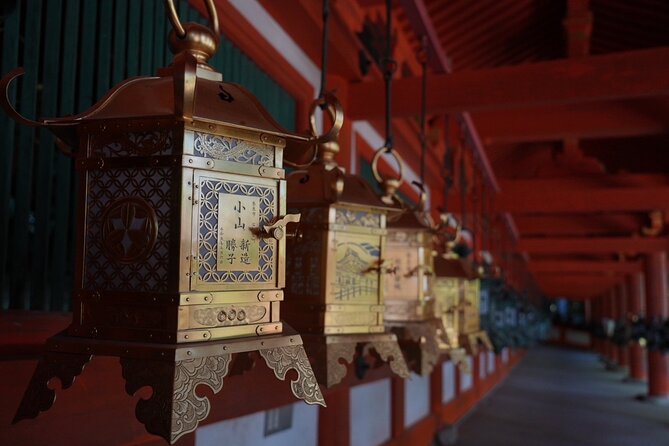
The tour allows about an hour at Kasuga Grand Shrine, one of Nara’s most distinctive religious sites. The shrine is famous for its lanterns, with roughly 3,000 stone and bronze examples donated by worshippers.
The lanterns are not just decoration. They help explain how devotion has shaped the shrine over many generations. Your guide can also explain the difference between the Buddhist and Shinto sites you see during the morning, which is especially useful if this is your first visit to Japan.
Kasuga is also where the setting becomes more atmospheric. The route includes a forest walk, and early morning is a good time for it. The cool, quiet paths make a welcome contrast with the broad open spaces around Nara Park. One guide, Koh, received particular praise for making the morning walk feel peaceful and for patiently answering questions about temples and history.
You will want comfortable shoes here. The tour is not described as difficult, but uneven paths, walking time, and the total step count require a moderate level of fitness. People over 75 are not recommended for the activity, and children under six cannot join.
Nara Park is more than a deer photo stop
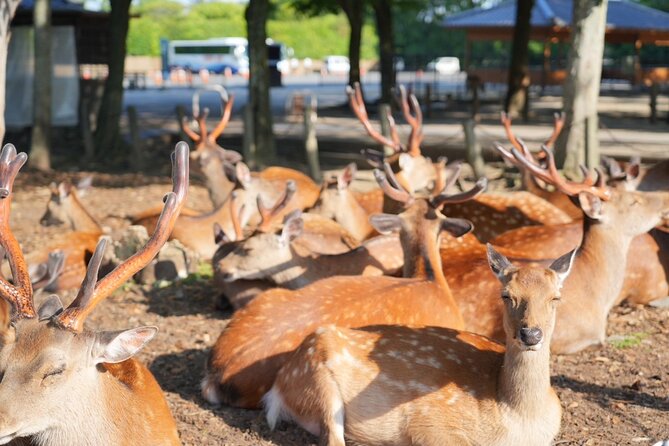
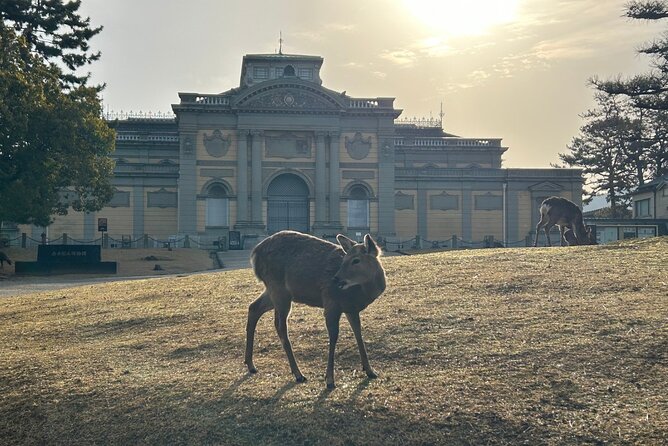
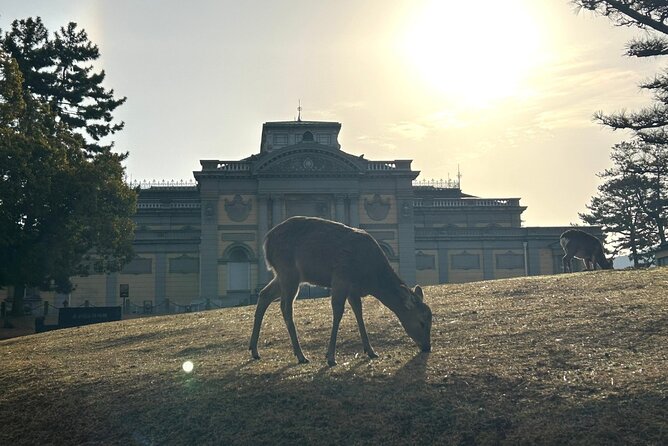
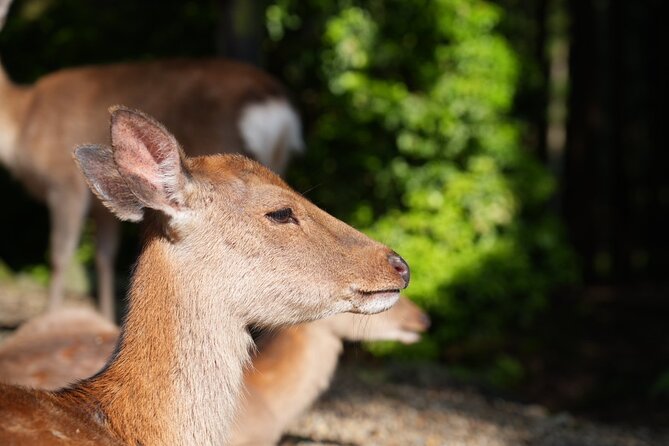
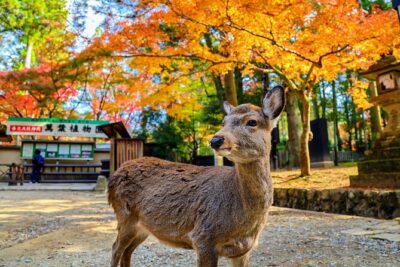
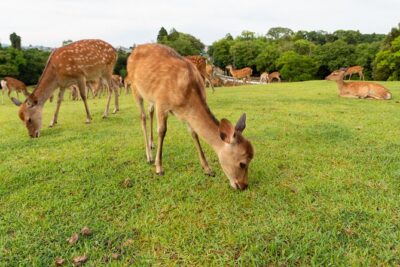
Nara Park is home to thousands of deer, and the animals are one of the morning’s main attractions. They are considered sacred because of the belief that one of the gods associated with Kasuga Shrine rode a deer to Nara.
You may buy special crackers to feed them, although food and drinks are not included in the tour price. Feeding the deer can be fun, especially for children, but do not mistake the animals for tame pets. They are accustomed to people and can be persistent once they see food. The practical advice from the tour experience is to let an experienced guide show you how to handle the interaction.
The deer are often described as bowing for food, which is a charming part of the encounter. Still, keep your attention on your belongings and follow your guide’s instructions. The animals are one of Nara’s great pleasures, but they are not a staged show.
The 30-minute Nara Park stop is enough for photos and a short feeding experience, but it is not a long wildlife visit. The bigger value is the walk connecting the park to the shrines and Todaiji. You get to see how the deer, religious sites, and public park all share the same space.
Same base, a different sort of day:
- Mt Fuji and Hakone 1-Day Bus Tour Return by Bullet Train
★ 5.0 · 26,383 reviews - 1-Day Tokyo Bus Tour
★ 5.0 · 14,250 reviews - PERFECT KYOTO 1-Day Bus Tour
★ 5.0 · 13,518 reviews - Tokyo: TOKYO SKYTREE® Admission ticket
★ 4.5 · 11,192 reviews
Todaiji delivers the morning’s biggest sight
Todaiji Temple receives about an hour, and admission costs ¥800 per person. This fee is separate, so include it when comparing the tour price with a self-guided day out.
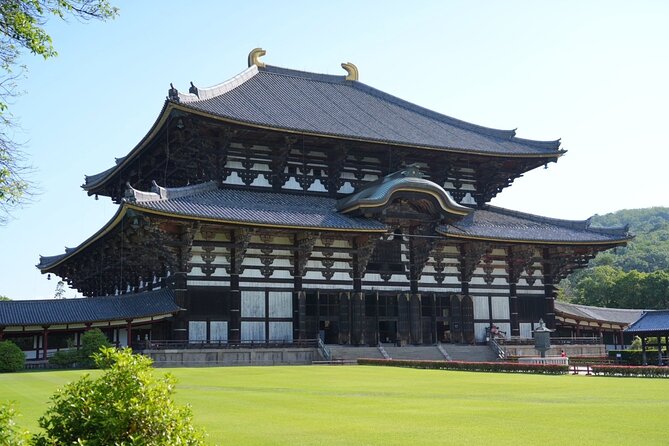
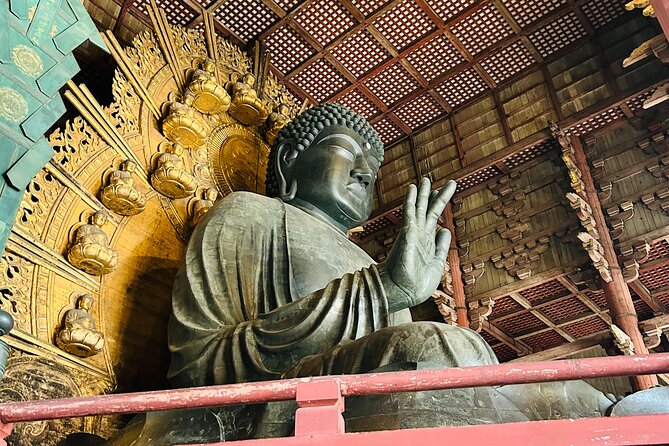
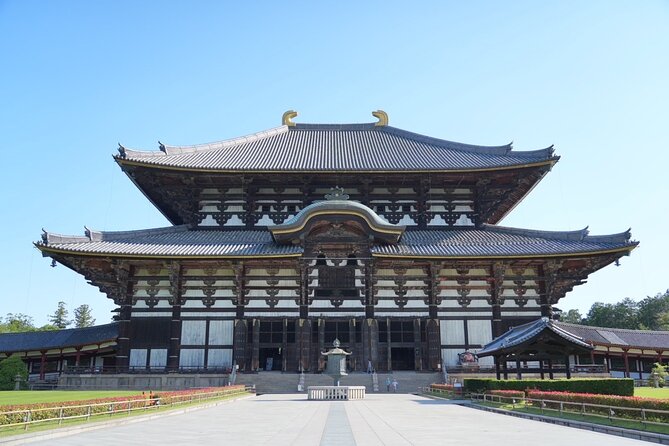
Todaiji is famous for its Great Buddha, described as the largest Buddha statue in Japan. The temple’s main hall was, until recently, the world’s largest wooden building. Even without a guide, the scale is hard to miss. With a guide, you gain more help understanding how the building, statue, and religious purpose fit together.
This is the most grand-scale stop on the route. Kofuku-ji offers a pagoda and a sense of age. Kasuga offers lanterns and forest paths. Todaiji gives you the powerful visual finish of a huge wooden hall built around an enormous Buddha.
The hour is long enough to see the main highlights and listen to explanations, while still leaving you free to take photos. Guides such as Momoka and Koichiro have been praised for explaining architecture, religion, local folklore, and customs in a clear way without turning every stop into a lecture.
How the small group changes the experience
The maximum group size is 12, which is a useful middle ground. You receive more personal attention than on a large coach tour, but you do not pay the premium usually associated with a private guide.
Actual group sizes can be smaller. One departure had only four people, creating something close to a private outing without the private-tour price. You should not assume every date will be that small, but the 12-person cap keeps the group manageable.
The guides are a major part of the experience. The listed guide team includes Momoka, Haruka, Futaba, Nana, Natsuho, Kevin, Shin, Ayame, Toshiki, Koh, Koichiro, Ginko, Itsuku, and Soichiro Toide. You cannot count on a particular person unless the booking arrangement specifically allows it, but the feedback points to a consistent strength: guides explain the sites clearly, welcome questions, and help guests feel comfortable.
Momoka is noted for an easy, unhurried style, interactive explanations, and practical suggestions. Haruka has helped people with the return journey to Kyoto and restaurant ideas. Futaba has used quizzes to make Japanese culture easier for families to understand. Koichiro is especially strong on history, religion, local folklore, and seasonal photo spots.
That range matters. Nara can be visually impressive but confusing if you do not know why a Buddhist temple sits near a Shinto shrine or why deer are tied to the city’s sacred identity. A good guide turns separate sights into one understandable visit.
Transport from Kyoto or Osaka, and the return plan
The tour offers a transport option from Kyoto or Osaka to Nara. If you choose the version that includes transportation, that fee is covered for the trip to Nara. Pickup at Kyoto Station is specifically available as an option.
The meeting and ending point listed for the walking tour is Nara Park. The return trip to Kyoto or Osaka is not included, so plan to handle it yourself after the tour. This is not a serious problem for an independent visitor, but it is an important detail when planning a tightly timed day.
The guides can be helpful with directions. Haruka is specifically praised for helping with the trip back to Kyoto, and another guide made meeting and train travel feel easy. Still, you should not treat return transportation as part of the paid service. Have your next destination in mind before the tour ends.
If you are staying in Kyoto, the added transport option may be worthwhile because it removes some planning at the start of the day. If you are already comfortable reaching Nara by train, you may prefer to arrange that part yourself and focus on the guided walk.
Is $61.02 a fair price?
At $61.02 per person, the tour offers good value if you want a guide and a structured half-day route. The price covers the English-speaking guide and, when selected, transportation from Kyoto or Osaka to Nara. It does not cover the ¥800 Todaiji admission, food, drinks, or your return transportation.
The value comes from what you would otherwise need to organize: finding the four main stops, understanding their religious background, judging the best order, and navigating the deer park while keeping an eye on time. A self-guided visit may cost less, especially if you already know Nara, but it will not give you the same steady stream of explanations or local suggestions.
The tour also keeps the morning focused. You do not spend precious sightseeing time deciding which path leads to Kasuga or how to connect Todaiji with Kofuku-ji. For a first visit to Nara, that structure is useful.
The price is less compelling if you want to explore at your own speed, spend hours inside each temple, or return late in the day. The route is designed as a four-and-a-half-hour introduction, not a full Nara deep exploration.
Who will enjoy this walk most
I would recommend this tour to first-time visitors who want the major sights explained without committing to a full-day excursion. Families can benefit from the early start, the deer, and guides who make room for children’s questions. The small group also helps keep the experience personal.
It suits people who enjoy walking and want a mix of nature, religion, architecture, and local culture. The early schedule is particularly useful during busy seasons, when the quieter first hours can make the shrines and park feel much more relaxed.
You may want another option if you have limited mobility, dislike walking, or need a slow, seated itinerary. The expected total is about 10,000 steps, and the activity calls for moderate physical fitness. It is not recommended for people over 75, and children under six cannot participate.
It is also not ideal if your main goal is shopping or food. The route focuses on temples, the shrine, the park, and the deer. Guides may suggest restaurants or local treats, including freshly made mochi, but food is not part of the tour.
Booking details worth knowing before you go
Confirmation arrives when you book, and the sites are near public transportation. The experience is capped at 12 people, though group size can vary and may be smaller.
Free cancellation is available if you cancel at least 24 hours before the start time. Cancellations or changes made less than 24 hours before the start time are not accepted for a refund, with cut-off times based on local time.
Bring shoes you can walk in for several hours. You should also budget separately for Todaiji, your return fare, and anything you buy to feed the deer. If you want the transport option from Kyoto or Osaka, choose it carefully at booking rather than assuming it is included in every version.
Should you book the Nara Early Morning Tour?
Book it if you want Nara’s essential sights in one well-paced morning, with a friendly English-speaking guide and fewer crowds. The early schedule, small group, and mix of sacred sites and deer make this a strong first introduction to the city.
I would skip it only if you prefer complete independence, need a low-walking plan, or want to spend a full day exploring beyond the main four stops. For most first-time visitors coming from Kyoto or Osaka, the $61.02 price is reasonable once you value the route planning, explanations, and transport option.
FAQ
How long does the Nara Early Morning Tour last?
The tour lasts approximately 4 hours and 30 minutes.
Where does the tour start and end?
The listed meeting point and end point are both in Nara Park, Nara, Japan.
Can I join from Kyoto or Osaka?
Yes. A transportation option from Kyoto or Osaka to Nara is available. Pickup at Kyoto Station can also be selected.
Is transportation back to Kyoto or Osaka included?
No. The return transportation is not included, so you must arrange and pay for your trip back.
How large is the tour group?
The maximum group size is 12 people. Some departures may be smaller.
Is admission to Todaiji Temple included?
No. Todaiji admission costs ¥800 per person and is paid separately.
How much walking is involved?
You will walk about 10,000 steps during the tour and should have a moderate level of physical fitness.
Can young children or older adults join?
Children under six cannot join. The activity is not recommended for people over 75.
Just added in Japan
- 1 Day Tour: Snow Monkeys & Snow Fun in Shiga Kogen★ 5.0 · 52 reviews
- Best of Himeji Castle: 3hr Tour with Licensed Guide★ 5.0 · 186 reviews
- Hakone 8 hour Private Tour with Government-Licensed Guide★ 5.0 · 63 reviews
- Nagasaki Half-Day Private Tour with Government-Licensed Guide★ 5.0 · 53 reviews
- Daikoku & Tokyo Private JDM Tour by 700HP R34 GT-R★ 4.9 · 101 reviews
- Custom Private Tour in Hakone with a Certified Local Guide★ 5.0 · 91 reviews
- [Otaru & Yoichi] Let’s go to Otaru Canal, Sakaimachi Street, Music Box Hall, and Yoichi Nikka Whiskey by private car (arriving and departing from Sapporo)★ 5.0 · 21 reviews
- Nikko: Edo Wonderland Edomura Cultural Theme Park Ticket★ 4.3 · 205 reviews
Nara & the Deer Park, compared.
World Heritage Kyoto & Nara Uji Authentic Matcha Experience
Read our review →
Kyoto/Osaka: Nara, Fushimi Inari Taisha, Arashiyama Bus Tour
Read our review →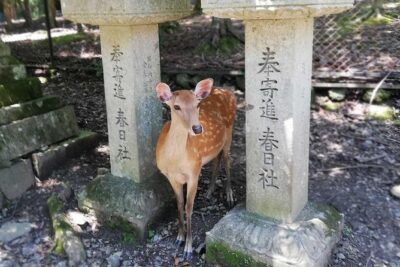
Nara Half Day Trip Walking Tour (Private Option Available)
Read our review →
Osaka/Kyoto: Arashiyama, Nara & Fushimi Inari Shrine w/Lunch
Read our review →
Full Day Guided Tour to Kyoto and Nara from Osaka by Van
Read our review →
Browse the lists this tour appears in