
Reviewed · SAMURAI & NINJA EXPERIENCES
Try Mindful Calligraphy Near Kanazawa’s Ninja Temple
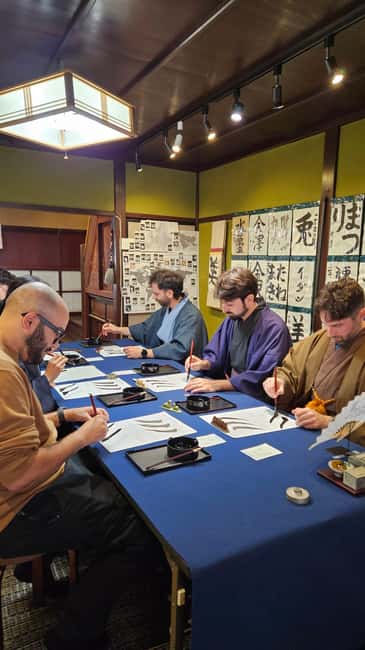
The best part of this Kanazawa activity is that you are not watching a staged demonstration. You sit at a real local calligraphy school, pick up the brush yourself, and work through the same careful strokes that make Japanese writing look so effortless. I especially like the quiet, hands-on format and the fact that your finished work goes home on a hanging scroll or folding fan, not in a disposable souvenir bag.
I also like the cultural setting: a 100-year-old house in the Nomachi area, close to Kanazawa’s Ninja Temple. Naomi and Daiki guide participants in English and Japanese with a patient, low-pressure approach. The main drawback is time. One hour passes quickly, especially if you want to practice several characters or need extra help with brush control.
Key points to know before you book
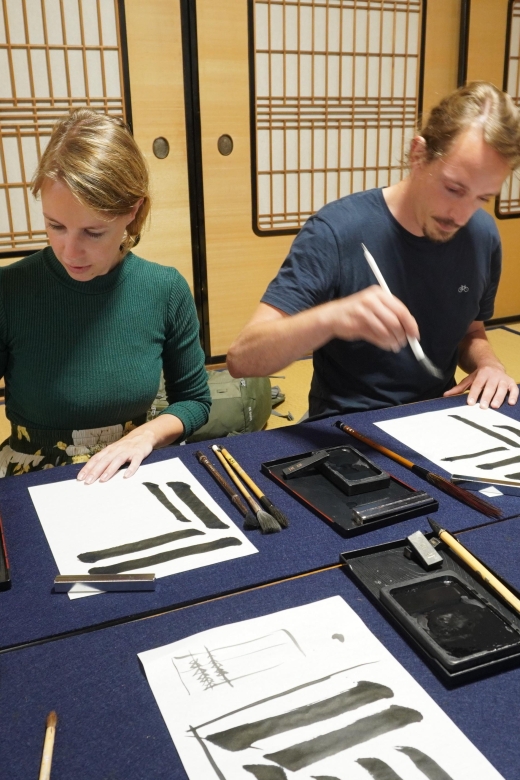
- Practice before creating: You learn basic strokes with guide sheets before attempting your final artwork.
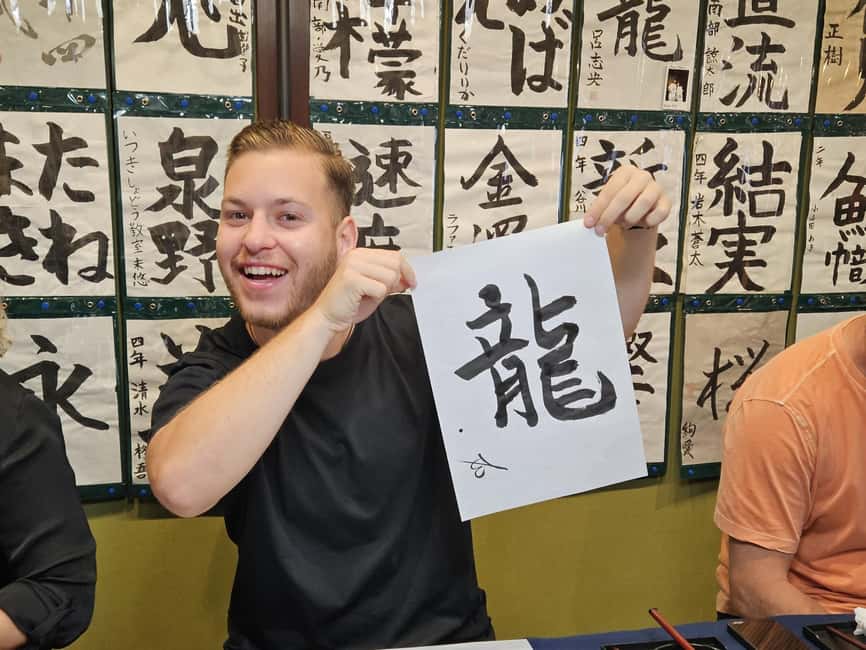
- Choose your own word: Your finished piece can feature a Japanese word or character that has personal meaning.
- A real calligraphy classroom: The lesson takes place in a working studio, not a theatrical cultural display.
- English-friendly instruction: Naomi and Daiki explain both the techniques and the ideas behind kanji, hiragana, and katakana.
- Take-home artwork: Your final calligraphy is made directly on a hanging scroll or folding fan.
- Check the materials policy: Traditional brushes and ink can contain animal-derived materials, so this activity is not suitable for vegans.
A calm hour near Kanazawa’s Ninja Temple
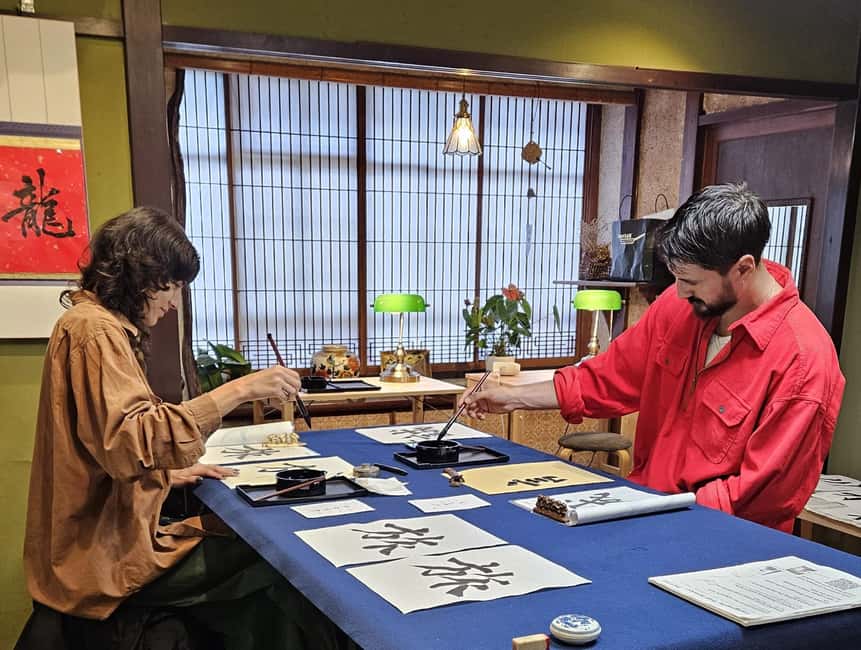
Kanazawa has no shortage of polished cultural attractions, but this class offers something quieter. You enter a traditional house, sit at a calligraphy table, and give your full attention to ink, paper, and the movement of a single brush.
That change of pace matters. After walking through Kanazawa’s historic districts, you may appreciate an activity that asks you to slow down instead of rushing to the next sight. Calligraphy rewards patience. You cannot force a brushstroke into looking graceful, so the class gives you a reason to concentrate on the moment.
The location is 1-1-26 Nomachi, Kanazawa, Ishikawa 921-8031. A Kanazawa Loop Bus stop is nearby, and the building should be easy to identify because calligraphy works are displayed where you can see them from outside. That is useful in Nomachi, where a clear visual marker can save you from wandering around looking for a small studio.
The Ninja Temple is nearby, but this booking is for the calligraphy lesson only. Plan the temple visit separately if it is part of your day.
Other samurai and ninja experiences in Japan people book:
- Kanazawa: Samurai Residence Remains Nomura Family admission
★ 4.4 · 111 reviews - Kanazawa: Samurai, Matcha, Gardens and Geisha Full-Day Tour
★ 4.9 · 75 reviews - Full-Day Tour from Kanazawa: Samurai, Matcha, Gardens and Geisha
★ 5.0 · 68 reviews
What happens during the one-hour class
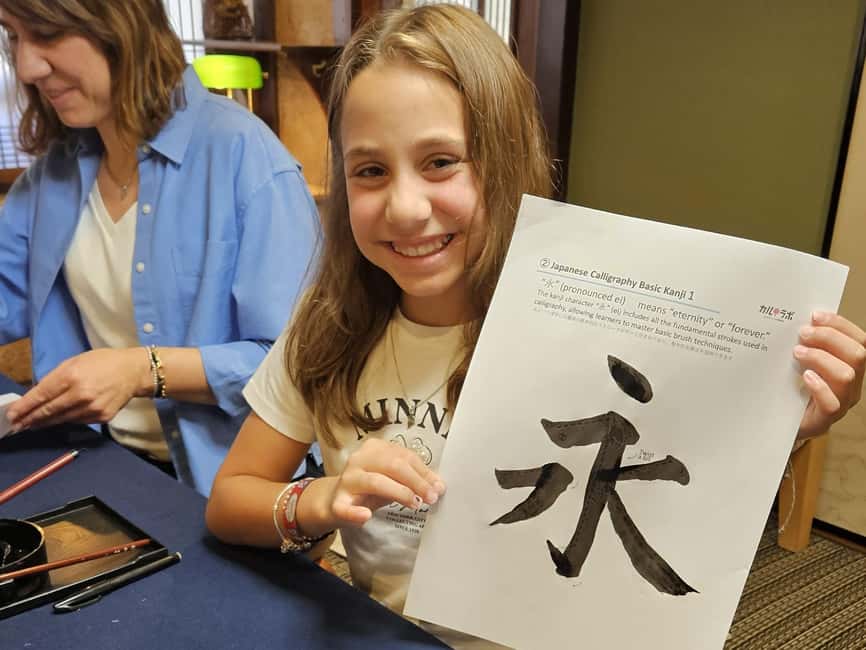
The lesson begins with an introduction to the tools. You learn how the brush and ink are used, then practice the basic strokes on guide sheets. This first stage is more important than it may sound. Japanese calligraphy is not simply a matter of copying a character. The direction, pressure, speed, and finish of each stroke affect the shape and feeling of the finished work.
You are not expected to arrive with artistic training. The instructors work through the movements with you and give you time to try them yourself. The tone is encouraging rather than strict, which helps if your first brushstrokes look more like nervous marks than elegant calligraphy.
Next comes the choice of what to write. You can select a word you like and create a piece with your own meaning. The supplied information does not list a fixed menu of words, so ask the instructor for help if you are unsure what a character means or how it is written.
The class also introduces Japan’s three writing systems. Kanji are characters with meaning, while hiragana and katakana are phonetic scripts. You get more from the activity when you understand that these are not just decorative symbols. Each script has a different role and a different visual quality.
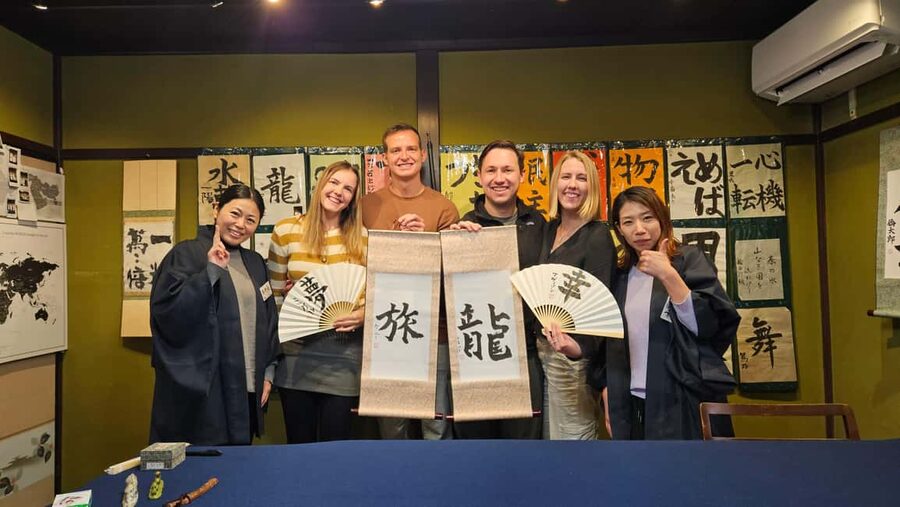
After practice, you make your final piece. The finished work is produced directly on a hanging scroll or folding fan, depending on the format offered during your session, and you can take it home. This is the moment when the class shifts from practice to personal souvenir. Your brushwork will not look like that of a master, and that is part of its appeal. You made it yourself, with all the small variations that come from a first attempt.
Why the traditional house adds value
The setting gives the lesson a sense of place. You are not simply attending an art workshop in a generic room. You are working in a traditional house said to be around 100 years old, in a part of Kanazawa associated with temples and older streets.
The house also connects the activity to everyday Japanese culture. Calligraphy is presented here as a living practice, not an ancient skill brought out only for tourists. On Thursdays and Saturdays after 3:00 PM, the local calligraphy school may be in session, and you might see children studying in the studio.
That detail can make the visit feel more genuine. It also means the atmosphere may be less private at those times, even though the booking itself is for a private group. If you prefer the quietest possible setting, choose another time when available.
The family-run feel is another part of the appeal. Naomi is described as a kind and patient teacher, and Daiki is also able to teach in English. In some sessions, Daiki’s husband, a master calligrapher, has helped explain the craft. The exact instructor mix may vary, but the teaching is clearly built around personal attention rather than a large class lecture.
English guidance and the learning curve
The English support makes this a sensible choice for visitors who want more than a quick photo opportunity. You can ask what a character means, receive help with the brush, and follow the cultural explanation without needing Japanese language skills.
The teachers’ patience is especially useful because the brush behaves differently from a pencil or ballpoint pen. Ink flows according to pressure and speed. A small hesitation can change the shape of a line. You will probably make a few imperfect attempts before you feel comfortable, and the class gives you room to keep trying.
That said, one hour is a compact introduction, not a full course. You will learn the basic idea of the tools, practice some strokes, choose a word, and complete a souvenir. If you are fascinated by calligraphy and want detailed instruction on many characters, the schedule may feel short. One person specifically found that extra time would have been welcome.
For most visitors, the short format is an advantage. You can fit the class between sightseeing plans without giving up half a day. It works well as a creative break after visiting nearby attractions.
Other swordplay and stealth sessions in Japan:
- Tokyo: Samurai Restaurant Show Ticket with 2 Drinks
★ 4.5 · 1,307 reviews - Kyoto Samurai Experience
★ 5.0 · 1,294 reviews - Tokyo: Samurai Ninja Museum Guided tour and Experience
★ 4.6 · 1,010 reviews - Kyoto: Kendo and Samurai Experience with Uniform and Gear
★ 4.9 · 815 reviews
The artwork you take home
Souvenirs are easy to buy in Kanazawa. A souvenir you make yourself is harder to forget.
Your final character is created directly on a hanging scroll or folding fan, giving it a proper presentation rather than leaving you with a loose sheet of practice paper. Some participants have also received attractive folders or frames for their work. The exact presentation can depend on the class arrangement, so think of the scroll or fan as the central take-home item.
Pack it with care for the rest of your trip. The information provided confirms that you can take the artwork home, but it does not specify a mailing service or protective travel tube. If you are carrying a full suitcase or continuing around Japan, allow room for a flat keepsake.
The personal choice of word is what makes the finished piece worthwhile. You might select an idea connected to your trip, a quality you admire, or a character you simply find beautiful. Ask the instructor to explain the meaning before committing it to the final work. A character that looks appealing but has an unexpected meaning would make a poor souvenir.
How the private format works
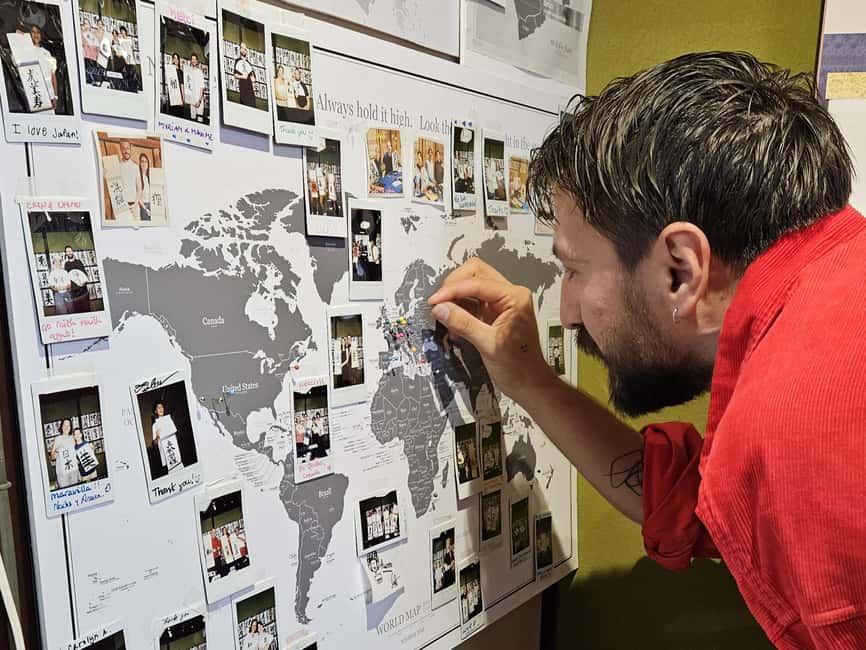
The activity is offered as a private group, which is helpful for couples, families with older children, and small groups of friends. You can work at your own pace without being placed in a large public workshop.
Small groups also allow more direct help with brush handling. A couple can receive individual corrections, and a group of six has been accommodated with attention for everyone. The private format does not remove the need to practice, but it makes it easier to ask questions and try again.
Children under five are not suitable for the activity. Older children may enjoy it if they can sit quietly, follow instructions, and accept that the first attempt may not look perfect. The presence of local children at some afternoon sessions could also make the setting more relatable for families, though it may mean the school feels more active.
This is not an activity for vegans. Calligraphy tools such as brushes and ink traditionally contain animal-derived materials. If that is important to you, contact the provider before booking rather than assuming modern synthetic supplies are used.
Is $44 a fair price?
At $44 per person, this is not the cheapest one-hour activity in Kanazawa. You are paying for more than access to a brush and a sheet of paper, though. The price includes instruction, practice materials, an English-friendly cultural explanation, and a finished piece on a scroll or fan.
The value is strongest if you care about the setting and the personal result. A shop-bought fan may cost less, but it will not carry your own brushwork or the memory of learning how to make it. The class also gives you a chance to ask about Japanese writing rather than just admire it from a distance.
The value is weaker if you want a long technical lesson. You will not become skilled at calligraphy in one hour, and you may wish you had more time once you have found your rhythm. Think of the price as paying for a well-presented cultural introduction and a handmade keepsake, not professional training.
Free cancellation up to 24 hours before the start gives you some planning flexibility, and you can reserve now and pay later. Starting times vary, so check availability around your sightseeing plans.
Who will enjoy this most
I would choose this class for couples looking for a calm shared activity, families with children old enough to follow directions, and solo visitors who want a quiet creative hour. It is also a good fit if you prefer making something to simply collecting photographs.
The lesson suits people who are curious about language and culture, even if they do not think of themselves as artistic. The teacher’s encouragement takes away much of the pressure. You can make mistakes during practice and still finish with something presentable.
It may be less suitable if you want a fast, highly polished demonstration or a large cultural show. It is also not the right choice for children under five, vegans, or anyone who needs a long lesson with extensive technical practice.
Planning this into your Kanazawa day
The class lasts one hour, so it is easy to place between other Nomachi-area stops. Give yourself enough time to reach 1-1-26 Nomachi and look for the calligraphy displayed outside the building. The nearby Kanazawa Loop Bus makes public transport practical.
You may want to visit the Ninja Temple on the same day, but do not assume the calligraphy booking includes temple admission or a guided temple visit. Treat the two as separate activities and allow enough time between them.
If you want to see the school at work, Thursday or Saturday after 3:00 PM may offer the chance to see local children attending class. If you want the most tranquil mood, ask about another available time.
Bring curiosity rather than high expectations of artistic perfection. The point is not to produce museum-quality work. The point is to understand the tools, feel the movement of the brush, and leave with a character you chose and created.
Should you book the Kanazawa calligraphy class?
Yes, if you want an authentic, low-key cultural activity with a personal souvenir. The English-friendly instruction, private-group format, kind teachers, and traditional house make this more meaningful than a quick brush demonstration.
Book it knowing that one hour is an introduction. You will practice the basics, but you will not cover a large number of characters or reach advanced technique. The $44 price makes sense when you value the finished scroll or fan and the chance to learn inside a working local school.
For a quiet break near the Ninja Temple, this is an easy choice. Just check the animal-derived materials issue, remember that children under five cannot join, and leave room in your schedule for the lesson to end before you hurry off to the next sight.
FAQ
How long does the Japanese calligraphy experience last?
The activity lasts one hour.
Where does the calligraphy class take place?
It takes place at Culture Lab Nomachi, 1-1-26 Nomachi, Kanazawa, Ishikawa 921-8031, in a traditional house that is around 100 years old.
Is the activity taught in English?
Yes. The instructors teach in English and Japanese.
What will I make during the class?
You will practice brush techniques, choose a word you like, and create a final calligraphy piece directly on a hanging scroll or folding fan. You can take it home.
Is the class suitable for young children?
Children under five are not suitable for this activity.
Can vegans take part?
No. Traditional calligraphy brushes and ink can contain animal-derived materials, so the activity is not suitable for vegans.
More temples and shrines elsewhere in Japan
- Kyoto: Tea Ceremony Ju-An at Jotokuji Temple
★ 4.9 · 3,207 reviews - Tokyo: Meiji Shrine, Asakusa, Skytree Bus Tour and Cruise
★ 4.7 · 1,986 reviews - Tokyo: Asakusa Walking Tour with Sensoji Temple Visit
★ 4.8 · 1,583 reviews - Nikko: Kegon Falls, Lake Chuzenji & Toshogu Temple
★ 4.6 · 1,577 reviews
More craft workshops in Japan
- Chopstick Making Workshop in Ginza
★ 4.8 · 1,366 reviews - Kyoto : Chopsticks Making Workshop in Gion with Engraving Option
★ 5.0 · 958 reviews - Tokyo Chopstick Making Workshop with Artisan
★ 5.0 · 466 reviews - Osaka Sushi Making Experience
★ 5.0 · 400 reviews
Just added in Japan
- 1 Day Tour: Snow Monkeys & Snow Fun in Shiga Kogen★ 5.0 · 52 reviews
- From Matsumoto/Nagano: Nakasendo Trail Walking Tour★ 4.9 · 33 reviews
- Private Fukuoka Tour with a Local, Highlights & Hidden Gems 100% Personalised★ 5.0 · 143 reviews
- Visit Gunkanjima Island (Battleship Island) in Nagasaki★ 4.0 · 32 reviews
- Best of Himeji Castle: 3hr Tour with Licensed Guide★ 5.0 · 186 reviews
- Hakone 8 hour Private Tour with Government-Licensed Guide★ 5.0 · 63 reviews
- Nagasaki Half-Day Private Tour with Government-Licensed Guide★ 5.0 · 53 reviews
- Daikoku & Tokyo Private JDM Tour by 700HP R34 GT-R★ 4.9 · 101 reviews
Samurai & Ninja Experiences, compared.
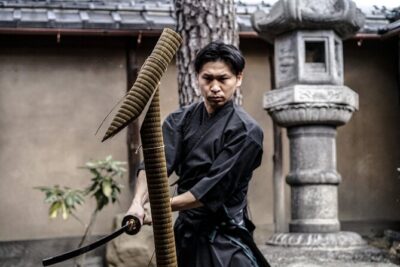
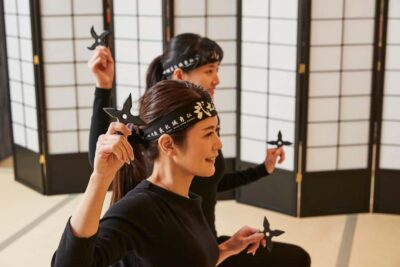
Samurai Ninja Museum Guided tour and Experience
Read our review →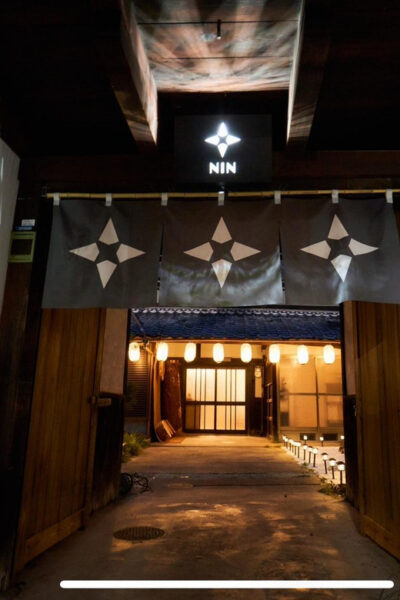
Kendo and Samurai Experience with Uniform and Gear
Read our review →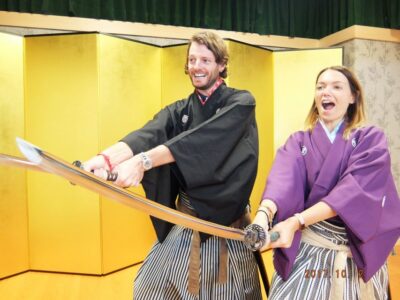
Samurai Sword Class by Experts in Traditional Arts
Read our review →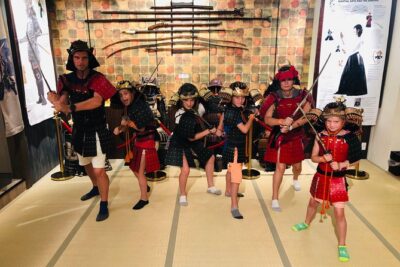
Skip the lines Basic Ticket at SAMURAI NINJA MUSEUM KYOTO
Read our review →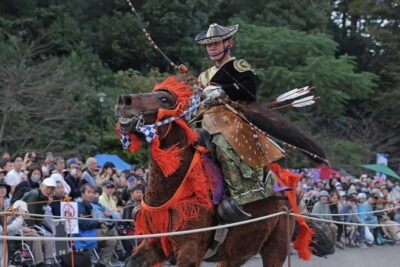
Samurai Sword & Archery Class from Samurai Descendant
Read our review →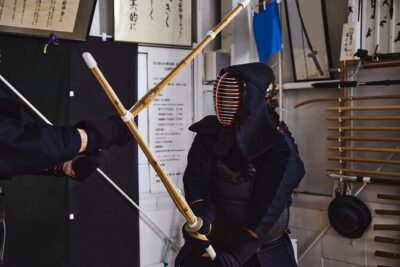
Browse the lists this tour appears in