
Reviewed · GEISHA & GION DISTRICT TOURS
Kanazawa: Samurai, Matcha, Gardens and Geisha Full-Day Tour
Kanazawa’s past comes together in one long, rewarding walk: samurai homes, a castle garden, matcha served by staff in kimono, and old geisha houses with red-painted interiors. The day gives you the city’s main historic sights without the stop-and-start feel of a bus tour.
I like the small-street walking route, which takes you past local homes and wooden temples between major sights. I also like the matcha stop at Gyokusen-an, where tea and wagashi are served beside a garden and castle walls. The main catch is simple: this is a serious day on your feet, sometimes 12 kilometers or more, so good shoes and weather-ready clothing matter.
Key points to know before booking
- Nagamachi gives you real domestic detail: Enter preserved homes and see how lower-ranking samurai lived, not just where the elite worked.
- The walking is substantial: Some days have reached 27,000 steps, with outdoor exposure in rain, heat, snow, and cold.
- Matcha comes with a proper setting: Gyokusen-an offers tea and artistic wagashi beside a carefully arranged garden.
- Kenroku-en is explained, not simply photographed: Your guide covers how the garden was planned over more than 200 years.
- Shima adds an indoor historic stop: See a preserved geisha house in Higashi-chaya and learn how tea-house culture worked.
- Lunch is your responsibility: Your guide can suggest a place, and Omicho Market is a possible choice, but the meal is not included.
Why this Kanazawa walking tour works
At $156 per person, this is not a cheap city stroll. It is priced as a full-day guided experience with entry to Kenroku-en and Shima, a matcha tasting, and an English-speaking guide who stays with you through a large portion of central Kanazawa.
The value depends on how you travel. If you are happy reading signs, finding each entrance, and piecing together samurai, castle, garden, and geisha history on your own, you can spend less. If you want the city’s major historic sights explained in a logical order, this tour saves planning time and adds cultural context that is easy to miss alone.
Guides named in the feedback include Mike, Akari, Gareth, Daniel, Lee, Mohammed, Garrett, Devin, and Adeline. The strongest pattern is that guides adjust the pace, answer questions, help with directions, and sometimes assist with onward train arrangements after the tour. That personal help matters on a long day, especially if you are trying to fit Kanazawa into a tight Japan itinerary.
The meeting point is easy to identify. Meet outside the Shinkansen ticket gates at Kanazawa Station, in front of the information center, near the four large sumo wrestlers. From outside the station, the figures are just inside the East Entrance. Look for a guide wearing a Snow Monkey Resorts tour tag.
Other samurai and ninja experiences in Japan people book:
- Kanazawa: Samurai Residence Remains Nomura Family admission
★ 4.4 · 111 reviews - Full-Day Tour from Kanazawa: Samurai, Matcha, Gardens and Geisha
★ 5.0 · 68 reviews - Try Mindful Calligraphy Near Kanazawa’s Ninja Temple
★ 5.0 · 50 reviews
Starting at Kanazawa Station and entering old neighborhoods
The day begins with Tsuzumi-mon, the station’s modern gate inspired by traditional Japanese architecture. It is a useful introduction to Kanazawa: this is a city that links modern rail travel with older craft and architectural traditions.
The first walk takes about 30 minutes. Rather than sending you straight along a busy main road, the route uses side streets lined with ordinary homes and occasional wooden temples. That transition is one of the best parts of the day. You begin to see Kanazawa as a living city, not just a set of preserved attractions.
The walk also gives your guide time to explain the city’s former importance. Kanazawa grew around a powerful feudal domain and accumulated wealth that supported castles, gardens, crafts, tea culture, and fine architecture. You get this background gradually, while moving through real neighborhoods.
There is no vehicle ride to give your legs a break at this stage. If you have mobility concerns, ask about the walking demands before booking. The tour information specifically warns of several hours outdoors, and the route includes uneven streets, garden paths, bridges, and stairs.
Nagamachi and the practical side of samurai life
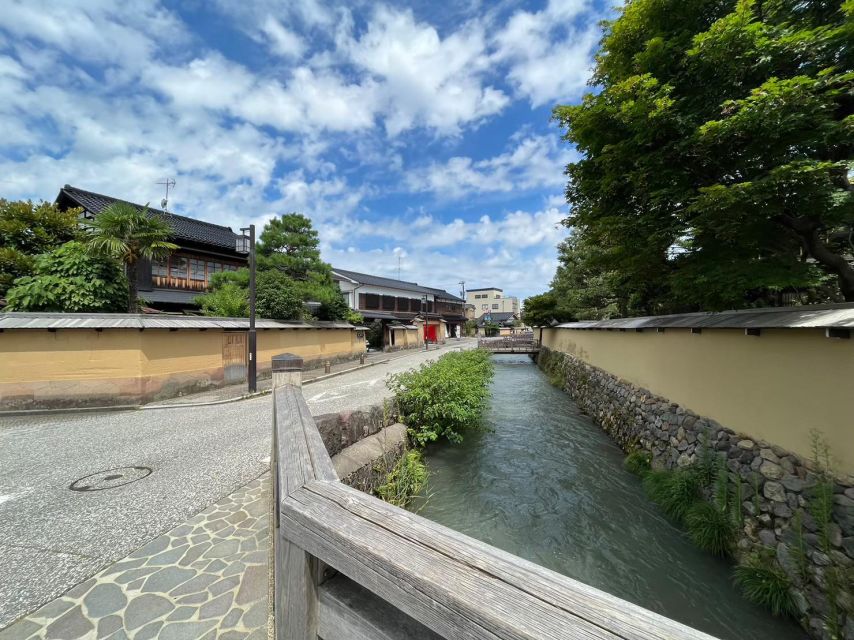
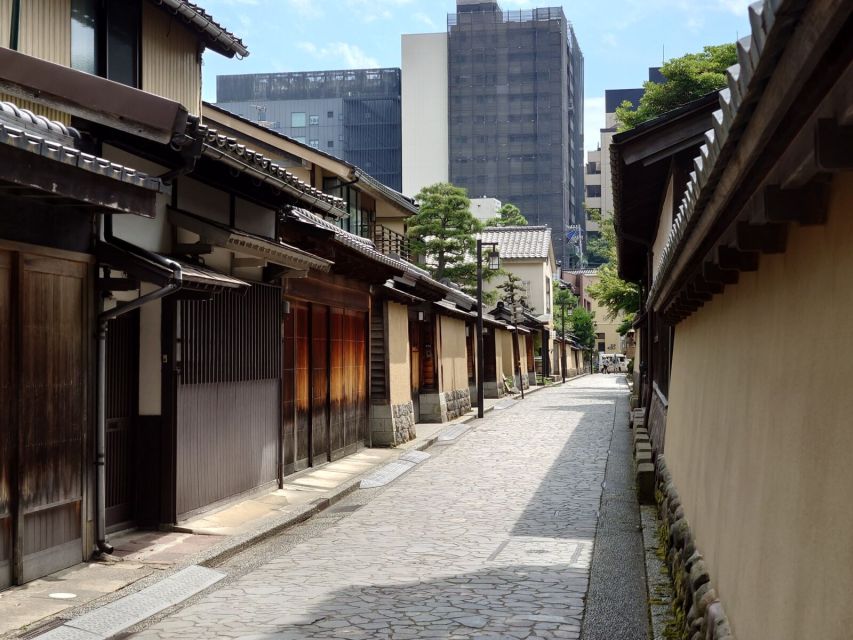
Nagamachi is often presented as Kanazawa’s samurai district, but the useful distinction here is between grand military imagery and daily life. The tour includes preserved homes that belonged to lower-ranking samurai. Entering these residences lets you see how modest samurai households lived, rather than focusing only on wealthy families and castle officials.
The district’s main street bends through walls and traditional buildings. That crooked layout helps you picture an older neighborhood more clearly than a straight modern avenue would. Your guide can explain the samurai social system, family roles, and the difference between the idealized warrior image and the routines of people with limited means.
You also receive free time around Nagamachi to browse local crafts and wares. This is a good place to slow down briefly, but keep track of the agreed meeting time. The tour allows personal exploration, yet the group still needs to move together.
I would give this stop extra weight if you are interested in Japanese history. Without a guide, it is easy to walk past a gate or garden and see only attractive old buildings. The added explanation turns the district into a lesson about class, work, and household life.
Oyama Shrine and the bridge into castle grounds
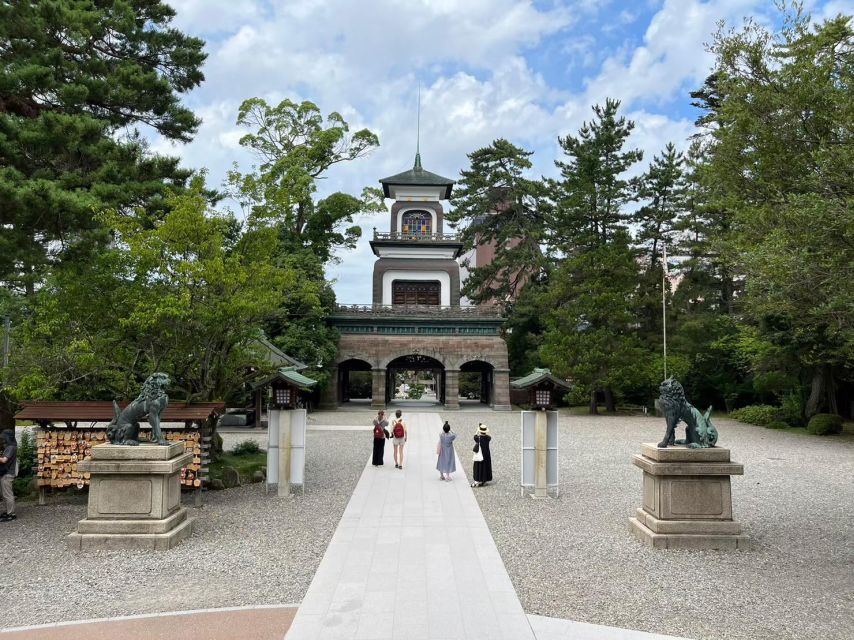
Oyama Shrine offers a sharp change in tone. Its gate combines Japanese design with Western-style stained glass, reflecting the period when Japan was absorbing outside influences in the 19th century. It is an unusual sight in a city better known for traditional wooden districts and feudal architecture.
The stop itself is brief, around 10 minutes, but the route through the shrine grounds adds interest. You pass a koi pond and small garden, then follow a path to a large wooden bridge. Crossing the bridge and passing through another gate leads into the Kanazawa Castle grounds.
This short section is valuable because it connects several periods of Japanese history in a small space. You move from a modern station, through old residential streets, past an unconventional shrine, and into the grounds of a feudal castle. The tour does not treat history as a sealed-off museum display. It shows how buildings and spaces changed as Japan changed.
Other evenings in the old entertainment quarters of Japan:
- Kyoto Geisha Walking Tour: Gion District & Hidden Gems
★ 4.7 · 3,273 reviews - Kyoto: Gion Magical Night Walking Tour with Geisha Trivia
★ 4.9 · 2,393 reviews - Kyoto: Gion Geisha District Walking Tour – Stories of Geisha
★ 4.7 · 2,187 reviews - Best of Kyoto: Gion, Geisha, Pagodas & Cobblestones
★ 4.9 · 2,058 reviews
Matcha at Gyokusen-an beside the castle walls
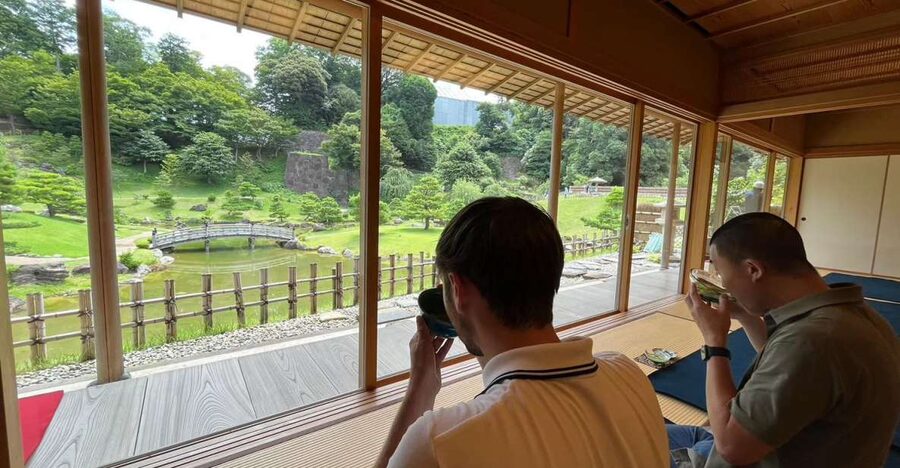
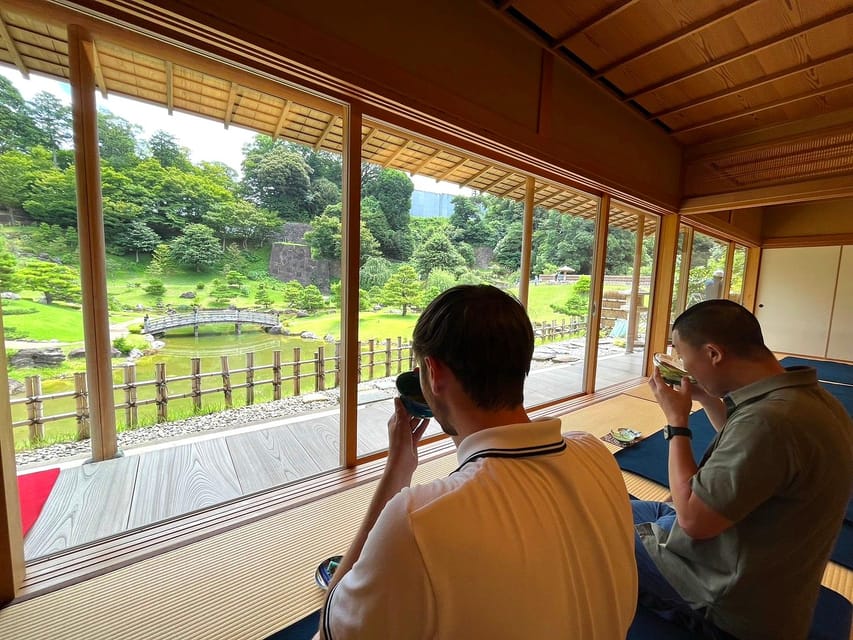
Gyokusen-an is the day’s quietest pause. The tea house sits near the base of the castle’s large stone walls and overlooks a garden. Inside, the design is restrained and traditionally Japanese, with an emphasis on proportion, materials, and calm.
You receive matcha and an artistic wagashi sweet, served by staff in kimono. Your guide explains how to drink the tea properly, so this is more than a quick green tea sample. You get a short lesson in an important part of Kanazawa’s tea culture without needing to commit to a long formal ceremony.
I like this stop because it gives the day a change of pace. After walking through samurai streets and castle grounds, you sit down, focus on the bowl, taste the sweet, and look out at the garden. It is a small experience, but it helps explain why tea houses mattered to wealthy feudal families and local cultural life.
Gyokusen-an can occasionally be unavailable because of special events. In that case, the matcha tasting moves to another location. The experience remains part of the tour, but the setting may differ.
Kanazawa Castle and Kenroku-en Garden
The route continues through the castle grounds before crossing to Kenroku-en. The castle is partially restored, so you should not expect a completely intact feudal complex. Its stone walls, gates, open grounds, and restored structures still show how the domain was organized and defended.
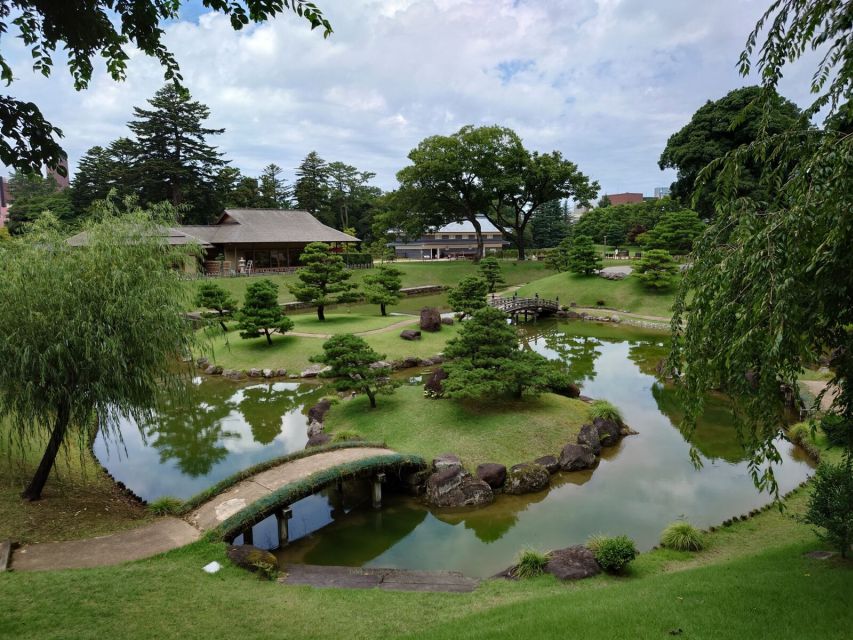
Kenroku-en is the major garden stop, with about an hour and a half set aside. The name is associated with six qualities traditionally valued in a great garden, including spaciousness, seclusion, artifice, antiquity, water features, and fine views. Your guide explains how the garden was developed over more than 200 years under the lords of Kanazawa Castle.
That context changes the way you walk through it. You begin noticing how paths reveal and conceal views, how water and stone shape the composition, and how the garden balances open areas with quieter corners. Kenroku-en is beautiful on its own, but a good explanation helps you understand the work behind its apparent ease.
Weather can improve this stop rather than ruin it. Rain and mist can soften the garden and castle walls, though wet paths may be slippery. In winter, temperatures can fall below 10 degrees Celsius, with mornings and evenings near or below freezing. Snow and ice are possible, so warm, non-slip shoes are essential.
Lunch and the practical middle of the day
Lunch is not included, which keeps the tour flexible but means you should budget for it. Your guide can recommend nearby options, and Omicho Market has been used as a lunch stop during the day.
Do not expect a long restaurant break built into a strict package. The schedule has a lot to cover, and the best choice may be a quick meal that lets you return to the route on time. Ask your guide early in the day about the likely lunch plan, especially if you have dietary needs.
This is also a good moment to refill water, check your shoes, and add or remove layers. The tour moves between indoor heritage buildings and exposed streets, so comfort affects how much you enjoy the afternoon.
Higashi-chaya and the preserved Shima geisha house
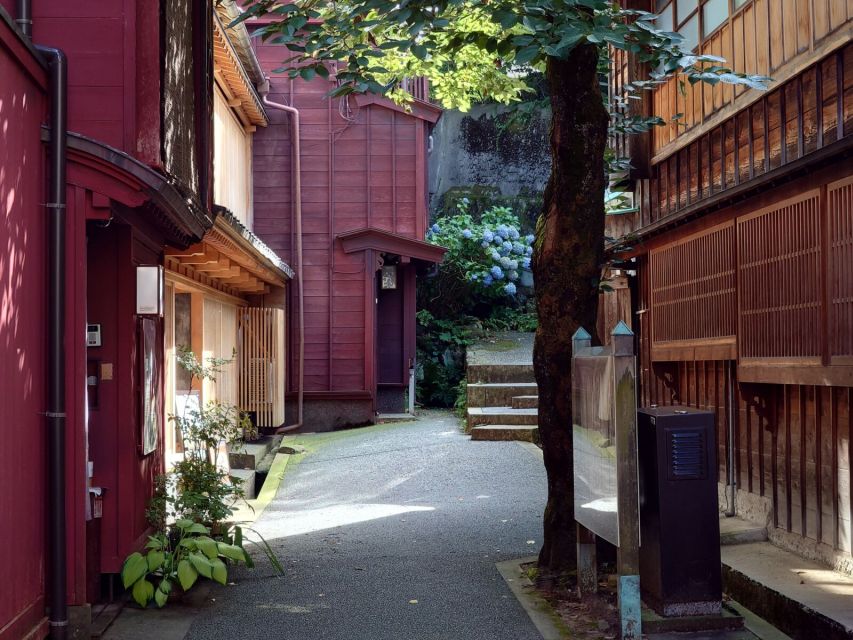
Higashi-chaya is one of Kanazawa’s signature districts. Its streets are lined with tall, two-story wooden tea houses, some with red interiors and details that are especially associated with Kanazawa. The scale feels different from Nagamachi. Here, the buildings face the street in a more theatrical way, reflecting entertainment, hospitality, and tea-house culture.
The guided walk lasts about 40 minutes and includes free time for shopping and looking around. You can browse local crafts, but remember that the district is not only a scenic shopping lane. It remains an important cultural area, and respectful behavior is expected around entrances and private spaces.
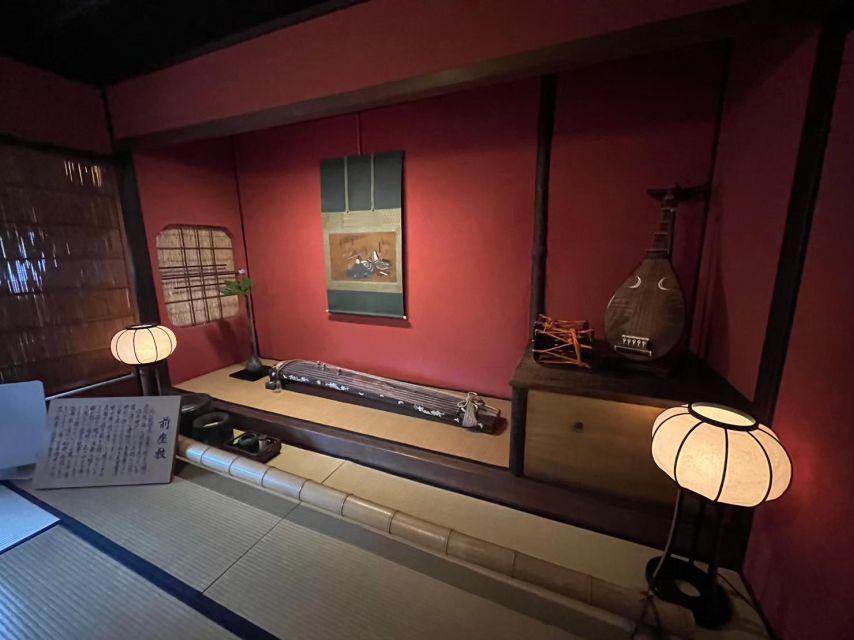
The visit to Shima gives the district more depth. This preserved geisha house, now a heritage site, lets you see the rooms and architecture behind the public image of geisha culture. Your guide can explain how the house functioned and how entertainment, music, conversation, and tea-house hospitality fit together.
This stop is especially useful if you have already seen geisha districts in Kyoto and want a comparison. Kanazawa’s red-painted tea-house interiors and preserved buildings give the experience its own character. Shima is also an indoor stop, which is welcome after hours outside.
The return through Kazue-machi
The final walk heads back toward Kanazawa Station through Kazue-machi. Its backstreets are maze-like and quieter than the main lanes of Higashi-chaya. This last section reinforces one of the tour’s main strengths: you see the city between the famous places.
The tour ends back at the station meeting point. That is practical if you are catching a train, and guides have helped participants with train tickets and onward plans. Still, allow a little extra time if you have a fixed departure, since the total walking day can be affected by group pace and free time.
How demanding is the walking?
Take the walking warning seriously. Individual days have reached roughly 12 kilometers and more than 27,000 steps, though the exact distance will vary with the group, stops, and route.
You should bring:
- Comfortable, supportive shoes
- Warm layers in cold months
- An umbrella or raincoat
- Non-slip footwear for winter conditions
- Socks and weather-appropriate clothing
The tour runs outdoors in rain and cold, and Kanazawa is known for wet weather. A beautiful garden in mist can be memorable, but only if you are dressed for it. In hot or humid weather, pace yourself and use the scheduled pauses.
The tour can suit families and mixed-age groups, but it is not a low-effort sightseeing day. One guide has successfully adjusted the pace for a family ranging from age 11 to 70, yet you should still be comfortable walking for most of the day.
Who should book this tour?
I would choose this tour if you have one full day in Kanazawa and want the main historic districts explained in English. It is particularly useful for first-time visitors, history fans, families wanting structure, and anyone who prefers local streets to a sightseeing bus.
I would be more cautious if you dislike long walks, need a fully accessible route, or prefer to explore each site slowly on your own. Free time is included, but the day still follows a group schedule and covers a lot of ground.
The cancellation terms are sensible: you can cancel up to 24 hours ahead for a full refund, and you can reserve now and pay later. Those features help if your Japan itinerary is still shifting.
Should you book the Kanazawa samurai and geisha tour?
Book it if you want a full cultural overview rather than one isolated attraction. The combination of lower-ranking samurai homes, Oyama Shrine, castle grounds, Kenroku-en, matcha, Higashi-chaya, and Shima gives you a strong first look at Kanazawa’s older character.
The price is fair for a full day with several included admissions and a guide who can connect the sites. Just budget for lunch, wear serious walking shoes, and check the forecast before leaving the station. If you do those three things, this is one of the most efficient ways to understand Kanazawa in a single day.
FAQ
Where does the Kanazawa tour start?
Meet outside the Shinkansen ticket gates at Kanazawa Station, in front of the information center. The meeting point is beside four large sumo wrestlers. From outside the station, they are just inside the East Entrance.
Where does the tour finish?
The activity ends back at the same meeting point at Kanazawa Station.
Is lunch included?
No. Lunch is not included, but you can ask your guide for recommendations. Omicho Market is one possible place to eat during the day.
How much walking is involved?
The tour includes several hours of outdoor walking. Some days have covered about 12 kilometers and more than 27,000 steps, so comfortable shoes are important.
What happens during the matcha experience?
You receive matcha and artistic wagashi sweets at Gyokusen-an, with views of a garden and castle walls. Staff wear kimono, and your guide explains the proper way to drink the tea. Special events may require the tasting to move to another location.
Is the tour offered in English?
Yes. The tour includes a live English-speaking guide.
More tea ceremonies elsewhere in Japan
- Kyoto: Tea Ceremony in a Traditional Tea House in Kiyomizu
★ 4.9 · 3,519 reviews - Kyoto: Tea Ceremony Ju-An at Jotokuji Temple
★ 4.9 · 3,207 reviews - Kyoto: 45-Minute Tea Ceremony Lesson Experience
★ 4.3 · 2,378 reviews - World Heritage Kyoto & Nara Uji Authentic Matcha Experience
★ 5.0 · 1,573 reviews
More samurai and ninja experiences elsewhere in Japan
- Tokyo: Samurai Restaurant Show Ticket with 2 Drinks
★ 4.5 · 1,307 reviews - Kyoto Samurai Experience
★ 5.0 · 1,294 reviews - Tokyo: Samurai Ninja Museum Guided tour and Experience
★ 4.6 · 1,010 reviews - Kyoto: Kendo and Samurai Experience with Uniform and Gear
★ 4.9 · 815 reviews
Just added in Japan
- 1 Day Tour: Snow Monkeys & Snow Fun in Shiga Kogen★ 5.0 · 52 reviews
- Best of Himeji Castle: 3hr Tour with Licensed Guide★ 5.0 · 186 reviews
- Hakone 8 hour Private Tour with Government-Licensed Guide★ 5.0 · 63 reviews
- Nagasaki Half-Day Private Tour with Government-Licensed Guide★ 5.0 · 53 reviews
- Daikoku & Tokyo Private JDM Tour by 700HP R34 GT-R★ 4.9 · 101 reviews
- Custom Private Tour in Hakone with a Certified Local Guide★ 5.0 · 91 reviews
- [Otaru & Yoichi] Let’s go to Otaru Canal, Sakaimachi Street, Music Box Hall, and Yoichi Nikka Whiskey by private car (arriving and departing from Sapporo)★ 5.0 · 21 reviews
- Nikko: Edo Wonderland Edomura Cultural Theme Park Ticket★ 4.3 · 205 reviews
Geisha & Gion District Tours, compared.
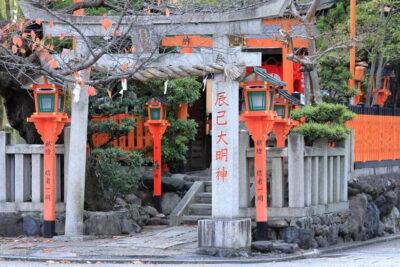
Kyoto Geisha Walking Tour: Gion District & Hidden Gems
Read our review →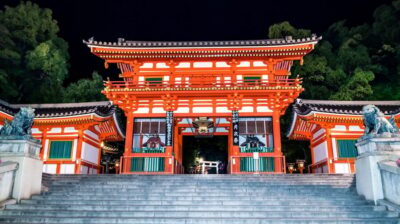
Gion Geisha District Walking Tour – Stories of Geisha
Read our review →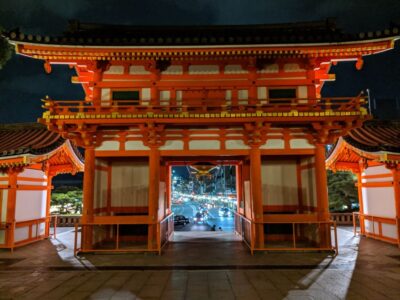
Best of Kyoto: Gion, Geisha, Pagodas & Cobblestones
Read our review →

Kyoto Night Foodie Tour in Gion (9+ dishes + 6 Sake tastings)
Read our review →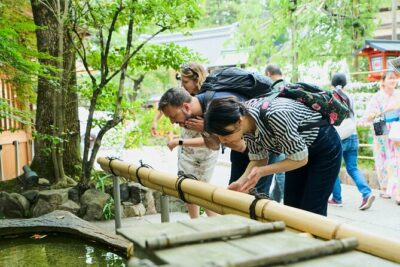
Kyoto Gion: 2-Hour Geisha Culture & History Walking Tour
Read our review →
Chopsticks Making Workshop in Gion with Engraving Option
Read our review →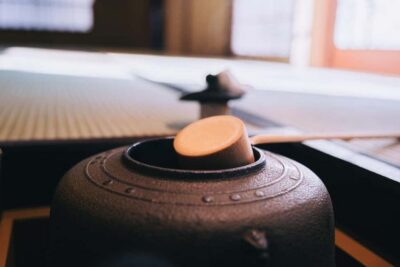
Browse the lists this tour appears in