
Reviewed · GEISHA & GION DISTRICT TOURS
Full-Day Tour from Kanazawa: Samurai, Matcha, Gardens and Geisha
Kanazawa reveals itself best at walking pace, and this full-day route links its samurai homes, castle grounds, famous garden, and old tea districts in one well-planned day. I like the way the route moves through different chapters of the city rather than treating each sight as a separate stop. I also like the small group of no more than 15, since guides such as Mike, Garrett, Lee, Akari, and Daniel can adjust the pace and explain details clearly.
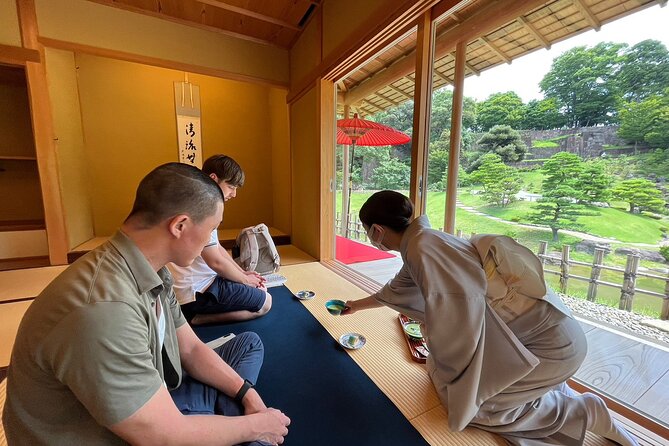
The matcha stop at Gyokusen-an is another strong point, especially with wagashi sweets and a garden view. The main drawback is simple: this is a serious walking day, roughly 10 to 12 kilometers, and older visitors or anyone struggling in heat may find the second half tiring.
Key points to know before booking
- A full day on foot: Expect roughly 10 to 12 kilometers of walking, with sitting breaks at several sights.
- A complete Kanazawa introduction: The route covers samurai homes, a shrine, castle grounds, Kenrokuen Garden, and three historic tea districts.
- Matcha with a garden view: Gyokusen-an includes tea and wagashi sweets in a traditional setting.
- Small-group guiding: The maximum group size is 15, allowing for questions and some flexibility.
- Lunch is your choice: A one-hour lunch break is included, but you pay for lunch yourself and choose the restaurant with guide suggestions.
- Good value for first-time visitors: The price of $151.30 includes the garden, Shima Chaya, matcha, sweets, and an English-speaking guide.
Why this route works so well in Kanazawa
Kanazawa is easier to walk than its spread-out sights first suggest, but the distances between major areas can make a first visit feel disjointed. This route gives you a logical line through the city, beginning near Kanazawa Station and ending back there after passing through the old districts along the Asano River.
You start at 9:00 a.m., which gives the day room to unfold without rushing every stop. The posted duration is about nine hours, including a one-hour lunch break. Actual sightseeing and walking take about eight hours, so you should treat this as a full day rather than a casual morning outing.
I like the mix of major sights and smaller historic buildings. Kenrokuen Garden and Kanazawa Castle are the headline stops, but the Ashigaru Museum and the preserved geisha house add context that you would miss by simply ticking off the city’s best-known attractions.
The English-speaking guide is central to the value. Guides named Mike, Garrett, Lee, Akari, Daniel, Fadir, and Mohamed have led this route at different times. Their strengths, as reflected in the tour experience, include Japanese history, local culture, geography, and practical help during the day. The best guides also adjust the pace when the group moves faster or slower than expected.
Other samurai and ninja experiences in Japan people book:
- Kanazawa: Samurai Residence Remains Nomura Family admission
★ 4.4 · 111 reviews - Kanazawa: Samurai, Matcha, Gardens and Geisha Full-Day Tour
★ 4.9 · 75 reviews - Try Mindful Calligraphy Near Kanazawa’s Ninja Temple
★ 5.0 · 50 reviews
Ashigaru Museum and the samurai social order
The first stop is the Ashigaru Museum, where you enter two homes once occupied by ashigaru families. Ashigaru were low-ranking samurai, so this is a useful counterpoint to grander stories about military leaders and wealthy domain officials.
The houses show a more modest side of samurai-era life. That matters because Kanazawa’s samurai district can otherwise feel like a polished collection of handsome streets with little sense of how different people lived. Here, you get a look at domestic spaces connected to the lower end of the samurai class.
Plan on about an hour at the museum. The admission is included, and the stop provides a calm beginning before the longer stretches of walking. I find this kind of start helpful: you first gain a basic social and historical frame, then see how that past shaped the neighborhood outside.
Nagamachi, where samurai streets still feel coherent
From the museum, the route continues into Nagamachi, the former samurai district. Its preserved streets and walls give the area a strong sense of place, with a look that is more residential than monumental.
This is one of the most rewarding parts of the walk for anyone interested in how old Japan functioned beyond castles and temples. The guide can explain who lived here and why Kanazawa developed as an attractive alternative to Kyoto, a point that Akari reportedly handled especially well during one tour.
You spend about an hour in and around the district. The charm comes from the whole setting rather than one single object. You walk through streets, pause for explanations, and begin to understand how status, residence, and power were arranged in the city.
The tradeoff is that much of the experience is outdoors. Rain, heat, or cold can change how much you enjoy the stop, so comfortable shoes and suitable clothing matter from the first hour.
Oyama Shrine and its unusual entrance
The route then leaves Nagamachi and passes through Oyama Shrine on the way toward Kanazawa Castle. You have about 40 minutes here, and admission is free.
The shrine gate is the visual surprise. Unlike the more familiar wooden or stone entrances found at many Japanese shrines, Oyama’s gate uses brick and has an unusual appearance influenced by outside design. It gives the tour a change of mood after the traditional streets of Nagamachi.
This stop also breaks up the walk before the tea experience. You are not simply moving from one major attraction to another. Instead, the guide points out a place that helps explain how Kanazawa absorbed different styles while retaining its own character.
Other evenings in the old entertainment quarters of Japan:
- Kyoto Geisha Walking Tour: Gion District & Hidden Gems
★ 4.7 · 3,273 reviews - Kyoto: Gion Magical Night Walking Tour with Geisha Trivia
★ 4.9 · 2,393 reviews - Kyoto: Gion Geisha District Walking Tour – Stories of Geisha
★ 4.7 · 2,187 reviews - Best of Kyoto: Gion, Geisha, Pagodas & Cobblestones
★ 4.9 · 2,058 reviews
Matcha and wagashi at Gyokusen-an
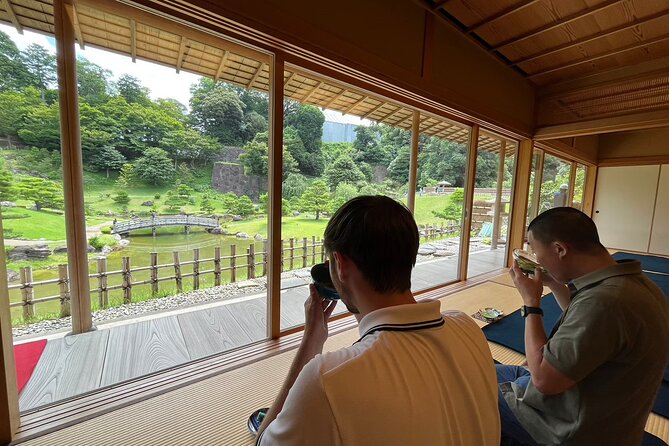
Gyokusen-an is the most restful part of the day. Inside the tea house, you receive matcha and wagashi sweets while looking toward a centuries-old garden beside the castle grounds. The matcha experience is included in the price.
You should not think of this as a quick drink grabbed between sights. The setting gives you time to sit, taste the tea, and take in a traditional garden view. For many people, this becomes the emotional center of the day because it combines food, design, and quiet cultural practice in one short visit.
The wagashi adds a sweet counterpoint to the slightly bitter matcha. If you have never taken part in a Japanese tea service, the guide can help you understand what you are seeing without turning the moment into a lecture.
This is also where the tour’s admission inclusions begin to matter. At $151.30, you are paying not only for a guide but also for entry to Kenrokuen and Shima Chaya, plus the tea and sweets. You could visit many Kanazawa sights independently, but building this route, arranging the tea stop, and understanding what you are seeing would take planning.
Kanazawa Castle and the road to Kenrokuen
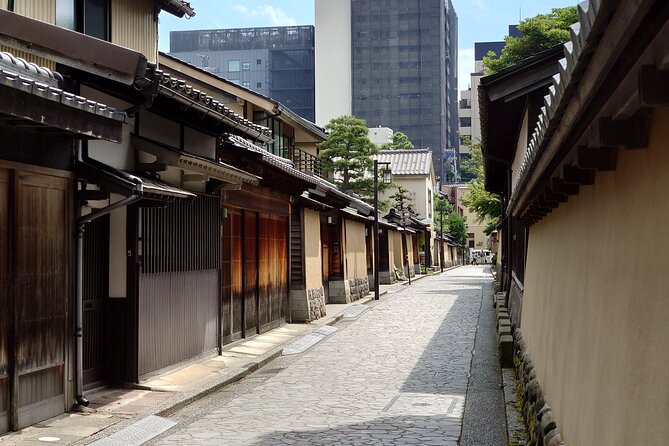
The walk continues through Kanazawa Castle grounds for about 20 minutes. The tour does not treat the castle as a long standalone visit, but you still get a sense of the scale of the restored buildings and the broad open grounds around them.
That shorter stop works well within the day. You see the castle as part of the city’s political and geographic story, then continue toward Kenrokuen instead of spending hours inside every restored structure.
The open lawns and large buildings also provide a change from narrow streets and enclosed homes. Keep in mind that the short scheduled time means this is an overview, not an exhaustive castle tour. If the castle is your main reason for visiting Kanazawa, you may want separate time for a longer visit.
Kenrokuen Garden, the visual high point
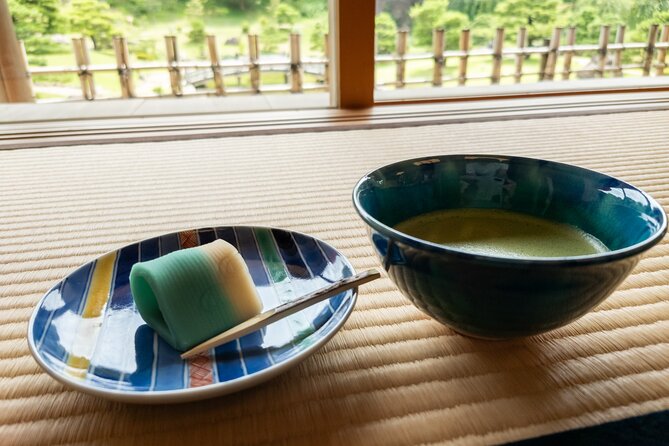
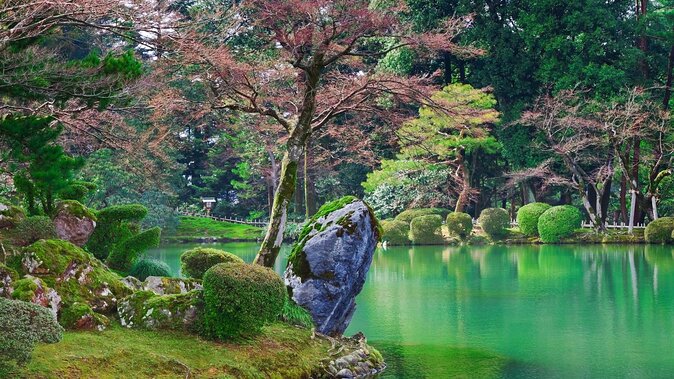
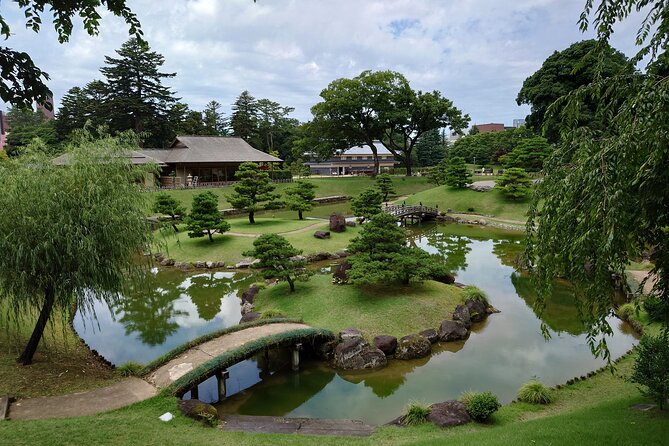
Kenrokuen receives about an hour and 30 minutes, making it the longest sightseeing stop. The garden is famous for its ponds, trees, teahouses, carefully arranged paths, and views over the city.
You have time to stroll rather than merely stop for a photograph. The guide can explain the Japanese design ideas behind the garden, while you also get space to enjoy it at your own pace. In spring, cherry blossoms can add another layer of beauty, though flowering conditions naturally depend on the date.
I especially like that Kenrokuen follows the matcha stop. You first see a garden from a quiet tea house, then walk through a much larger example of traditional garden design. The two experiences make more sense together than they would as unrelated attractions.
Wear shoes you can comfortably use on paths for a long stretch. The garden itself offers places to pause, but this is still only the middle of a day that continues into the tea districts.
Higashi Chaya and the world of geisha entertainment
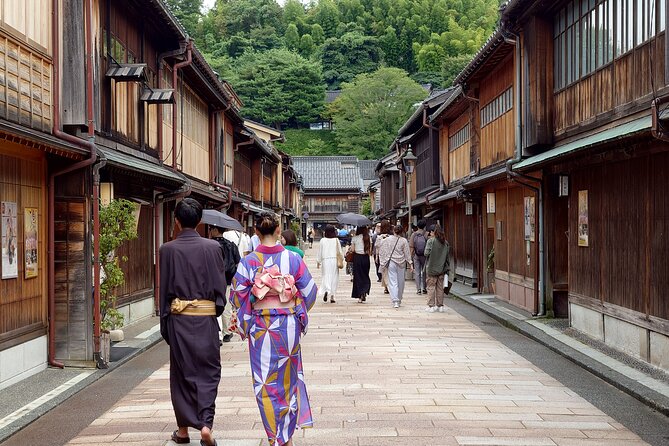
After Kenrokuen, you enter Higashi Chaya District for about an hour. Its streets are lined with historic tea houses, eateries, and craft shops, creating a very different atmosphere from Nagamachi.
This is the part of the route where Kanazawa’s geisha culture becomes most visible. A chaya was a refined entertainment house associated with geisha and wealthy patrons. The guide helps separate the old function of the district from its modern role as a place to browse, eat, and look at traditional buildings.
You have free time here, which is useful. It gives you a chance to look into shops and enjoy the street without having every minute filled with commentary. The exact amount of shopping time will depend on the group’s pace and the guide’s schedule, so do not treat it as a long independent shopping session.
Higashi Chaya is also one of the busier parts of the day. If you prefer quieter streets, the later stop at Kazuemachi may appeal to you more.
Shima Chaya, a preserved geisha house
The tour then takes you inside Ochaya Shima, a preserved tea house once used by geisha and their wealthy patrons. Admission is included.
This indoor visit gives you details that the street view cannot provide. You can see colorful walls, musical instruments, and rooms that reflect the style and expense associated with this form of entertainment.
At about 30 minutes, the stop is compact but worthwhile. It gives shape to the term geisha district by showing you an actual interior rather than leaving you with photos of wooden facades.
I would pay close attention to the guide here. The building’s value comes from the explanation of how the rooms were used and what the objects tell you about the people who gathered there. Without context, it is easy to see only decorative details.
Kazuemachi Chayagai and the quieter finish
The final sightseeing stop is Kazuemachi Chayagai, another historic tea district. You spend about 30 minutes here before returning to Kanazawa Station.
Kazuemachi is less crowded than Higashi Chaya, which makes it a pleasant way to finish the walking route. Geisha still entertain customers in the district, though you should not expect a guaranteed sighting. The value is in the atmosphere, traditional streets, and connection to a living cultural area.
The route back to the station gives you a final chance to ask questions and connect the day’s different parts. You have seen modest samurai homes, a powerful castle setting, formal gardens, shrine architecture, tea culture, and geisha districts. That range is what makes this more useful than a single-neighborhood tour.
The walking demand is the main decision point
You should be comfortable walking for most of the day. The route is described by past participants as roughly 10 to 12 kilometers, or close to 10 miles in some cases. That distance includes the movement between sights, not just walking inside Kenrokuen.
There are chances to sit at attractions, during the tea stop, and over lunch. Still, the distance can be hard in hot weather, and one older couple found the day manageable but demanding. Another participant specifically wished there had been an option to use public transportation during the longer walks.
That is the clearest limitation. This tour is not designed as a bus-assisted city overview. If you have knee, foot, heart, or heat concerns, ask yourself honestly if a full day on foot sounds pleasant. A private or more transport-focused plan may suit you better.
Bring water, wear broken-in shoes, and leave room in your schedule for a slower pace. The guide can adapt to the group, but the route itself cannot erase the distance between Kanazawa’s historic areas.
Lunch, group size, weather, and practical value
Lunch is not included, but a one-hour break is built into the day. You choose your own restaurant, with recommendations from the guide. This arrangement keeps the meal flexible, though you should budget extra for it.
The maximum group size is 15. That is small enough for questions and conversation, while still large enough that the pace may not feel fully private. Some departures may be much smaller, and a small group gives the guide more room to adjust the timing.
The tour requires good weather. If poor weather cancels it, you are offered another date or a full refund. You can also cancel for a full refund up to 24 hours before the 9:00 a.m. start time. Changes or cancellations inside that window are not accepted for a refund.
At $151.30 per person, I see solid value if you want a guided first day in Kanazawa. The price covers the English-speaking guide, matcha, wagashi, Kenrokuen admission, and Shima Chaya admission. It does not cover lunch, and it is more expensive than wandering independently, but the route design and historical explanation are the main benefits.
Who should book this Kanazawa walking tour?
I would choose this tour for a first visit, especially if you want a broad introduction in one day. It is also a good fit if you enjoy Japanese gardens, historic homes, traditional neighborhoods, and cultural explanation more than shopping or nightlife.
You will get the most from it if you like walking and can stay engaged for a full day. Families may appreciate the guide’s ability to adjust the route for different ages, as one guide did for a mixed-age group.
I would hesitate if you want a slow, unstructured day, if you dislike group schedules, or if 10 to 12 kilometers sounds excessive. You might also prefer independent touring if your main interests are only Kenrokuen or the castle and you want to spend several hours at one sight.
Should you book it?
Book this tour if you want Kanazawa’s main historic areas connected by a clear route, with the added value of matcha, wagashi, and entry to a preserved geisha house. The guides, including Mike, Garrett, Lee, Akari, and Daniel, bring much of the day’s value through history, humor, pacing, and practical help.
Skip it if you need frequent transport or a short sightseeing day. For an active visitor who wants to understand how samurai homes, castle power, gardens, tea culture, and geisha districts fit together, this is one of the more efficient ways to get your bearings in Kanazawa.
FAQ
How long does the Kanazawa walking tour last?
The tour lasts about nine hours, including a one-hour lunch break. The sightseeing and walking portion is about eight hours.
What time and where does the tour begin?
It begins at 9:00 a.m. at Kanazawa Station in Kanazawa, Japan.
Where does the tour end?
The activity ends back at the meeting point at Kanazawa Station.
How much walking is involved?
This is a walking-only tour and involves roughly 10 to 12 kilometers of walking, based on the route and past tour details.
Is lunch included?
No. A one-hour lunch break is included, but you choose and pay for your own meal. The guide can recommend restaurants.
What is included in the price?
The price includes matcha tea and wagashi sweets at a tea house, entry to Kenrokuen Garden, entry to the Shima preserved geisha house, and an English-speaking guide.
Can I cancel the tour?
You can cancel up to 24 hours before the start time for a full refund. If poor weather causes the tour to be canceled, you will be offered another date or a full refund.
More tea ceremonies elsewhere in Japan
- Kyoto: Tea Ceremony in a Traditional Tea House in Kiyomizu
★ 4.9 · 3,519 reviews - Kyoto: Tea Ceremony Ju-An at Jotokuji Temple
★ 4.9 · 3,207 reviews - Kyoto: 45-Minute Tea Ceremony Lesson Experience
★ 4.3 · 2,378 reviews - World Heritage Kyoto & Nara Uji Authentic Matcha Experience
★ 5.0 · 1,573 reviews
More samurai and ninja experiences elsewhere in Japan
- Tokyo: Samurai Restaurant Show Ticket with 2 Drinks
★ 4.5 · 1,307 reviews - Kyoto Samurai Experience
★ 5.0 · 1,294 reviews - Tokyo: Samurai Ninja Museum Guided tour and Experience
★ 4.6 · 1,010 reviews - Kyoto: Kendo and Samurai Experience with Uniform and Gear
★ 4.9 · 815 reviews
Just added in Japan
- 1 Day Tour: Snow Monkeys & Snow Fun in Shiga Kogen★ 5.0 · 52 reviews
- Osaka: Mind & Spirit Balance Temple Reiki Healing★ 5.0 · 41 reviews
- Kobe Highlights & Hidden Gems: Private & Custom Tour with a Guide★ 4.5 · 70 reviews
- Sakurajima Century Lava Climb Journey with E-bike★ 4.9 · 27 reviews
- KOBE Sake Tasting Tour at Breweries (tasting fee included)★ 5.0 · 154 reviews
- Tokyo: Best Price Daikoku Parking Area JDM Car Meet★ 4.9 · 192 reviews
- Matsumoto Discovery – Half Day Walking Tour★ 5.0 · 43 reviews
- Fukuoka Your Way: 100% Customisable Private Tour with Local Guide★ 5.0 · 83 reviews
Geisha & Gion District Tours, compared.
Kyoto Geisha Walking Tour: Gion District & Hidden Gems
Read our review →
Gion Geisha District Walking Tour – Stories of Geisha
Read our review →
Best of Kyoto: Gion, Geisha, Pagodas & Cobblestones
Read our review →

Kyoto Night Foodie Tour in Gion (9+ dishes + 6 Sake tastings)
Read our review →
Kyoto Gion: 2-Hour Geisha Culture & History Walking Tour
Read our review →
Chopsticks Making Workshop in Gion with Engraving Option
Read our review →
Browse the lists this tour appears in