
Reviewed · TEA CEREMONY EXPERIENCES
Kyoto: Kimono and Tea Ceremony Experience at Cultural Asset
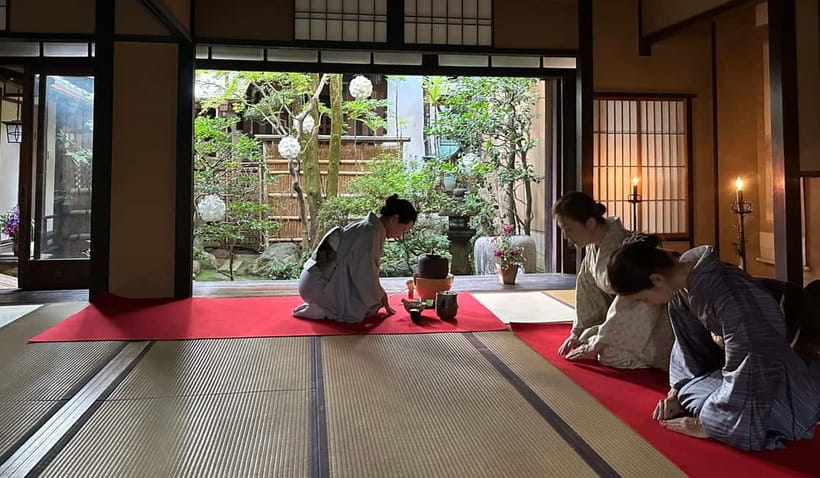
A 140-year-old machiya is the real star here. At Tondaya, you move through a traditional Kyoto townhouse with crafted woodwork, small gardens, and old household artifacts before sitting down for a formal tea ceremony. I like the setting because it feels far more rooted in Kyoto than a hotel activity room. I also like that you have time to take your own photos after dressing.
The best parts are the silk kimono fitting and the calm tea presentation. Staff are warm and patient, and several visitors found the ceremony clear and informative. The tradeoff is group size: a shared session can feel crowded, noisy, or rushed, and English explanations vary by staff member. Pay extra for private time if quiet attention matters to you.
Key points to know before booking
- A real Nishijin machiya: Tondaya is a 140-year-old townhouse recognized as a cultural property by Kyoto City.
- Silk kimono dressing: Staff fit you in about five minutes, though size and pattern choices may vary.
- Tea ceremony first, hands-on lesson second: You watch a seasoned tea master rather than necessarily preparing the tea yourself.
- Photo-friendly rooms and gardens: You get useful time for personal photos, but photography is not allowed while dressing or undressing.
- Group size affects the mood: Shared sessions can be crowded, while a private option offers a quieter visit.
- Bring socks: Bare feet are not allowed, and stockings are discouraged.
Entering Tondaya, a 140-year-old Kyoto townhouse
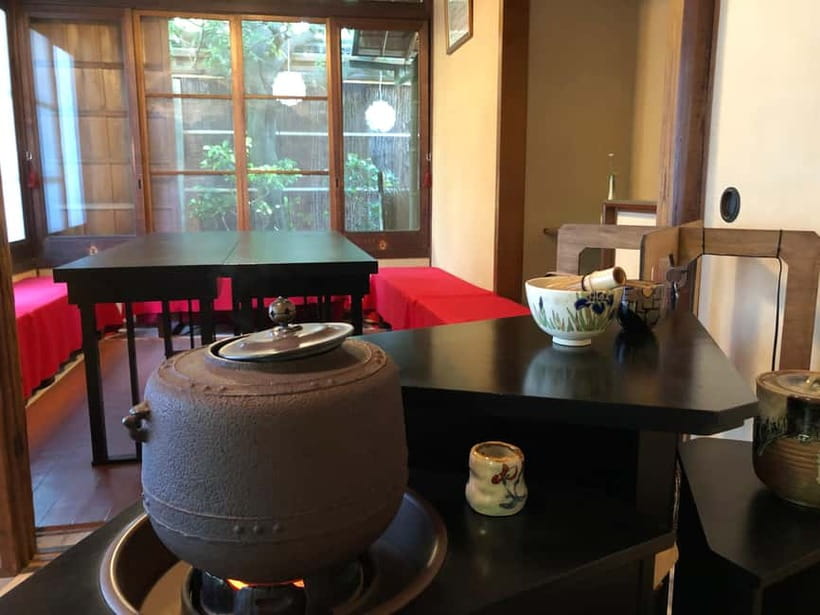
Tondaya is in Kyoto’s Kamigyo Ward, at 697 Ishiyakushicho, in the Nishijin area. You meet at the Tondaya Nishijin Japanese Cultural Experience Museum, not at a large modern attraction. That matters because the building itself provides much of the experience.
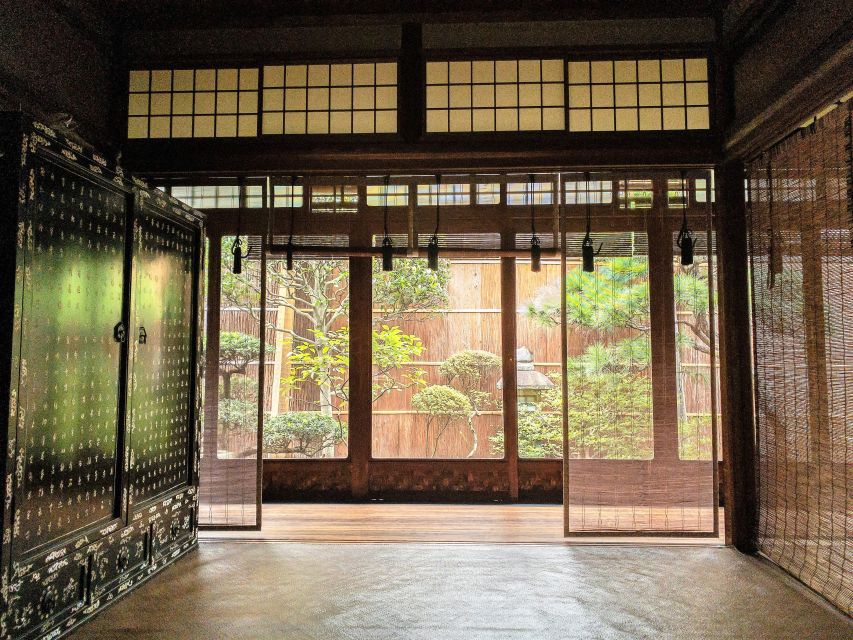
A machiya is a traditional urban townhouse, built for both family life and business. At Tondaya, you’ll see the kind of details that are easy to miss on a quick walk through Kyoto: wooden fittings, quiet interior gardens, and rooms filled with objects connected to earlier generations.
The property has been officially recognized as a culturally significant landmark by the Kyoto City Government. That gives the visit more substance than a simple costume rental. You are not only putting on a kimono for photographs. You are spending time in a preserved home with a long connection to local customs.
The house tour is one of the most praised parts of the experience. Staff explain the building and point out historical objects, although the amount of English information depends on who is working that day. Some staff speak English comfortably. Others use a translation device or translation app, so you’ll need a little patience.
Other kimono experiences in Kyoto people book:
- Kimono Tea Ceremony at Kyoto Maikoya, NISHIKI
★ 5.0 · 911 reviews - Kyoto: Kimono Rental with Hairstyling and Accessories
★ 4.8 · 653 reviews - Kyoto: Kimono Tea Ceremony at Orizuruya Gion
★ 4.9 · 618 reviews
Kimono fitting in about five minutes
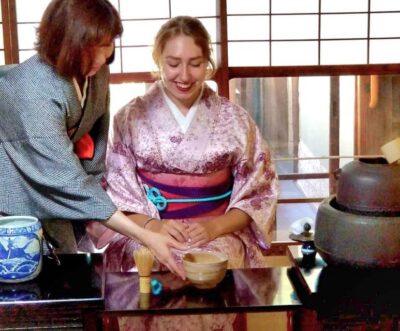
The kimono fitting happens near the start. Staff help you select and put on an authentic silk kimono, with the dressing itself taking about five minutes according to the activity details. The speed is useful, since it leaves more time for the house tour, tea ceremony, and photographs.
Do not expect hair styling or makeup. Those services are not included, so arrive ready for your own photos. You should also wear a top that is not tight around the neck, since the neckline affects how the kimono looks.
The clothing selection is attractive, but it is not identical for every body type. A taller participant found that the larger kimonos were mostly solid colors, while shorter participants had access to more printed designs. Another person felt that the kimono did not fit quite right. These details are worth keeping in mind if the clothing itself is your main reason for booking.
The staff make an effort to get everyone dressed properly, but this is not a personal styling consultation with unlimited options. The activity is better viewed as a chance to wear a genuine silk kimono in an old Kyoto setting, rather than as a fashion appointment.
You must bring socks. Bare feet are not permitted, and the instructions ask you not to wear stockings. Also bring a dry T-shirt if you expect to sweat during a warm day. Staff cannot dress you while your shirt is wet, and you may need to change before the fitting.
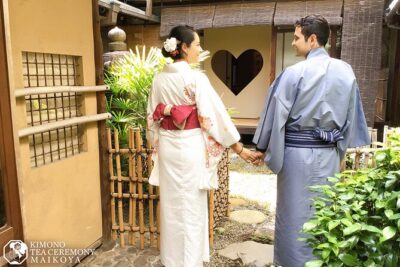
Photography is not allowed while you are being dressed or undressed. Once you are ready, though, there is time to take photographs around the house and gardens. Staff may help take pictures, which is especially useful for couples or friends who want photos together.
A tea ceremony with a quiet, formal rhythm
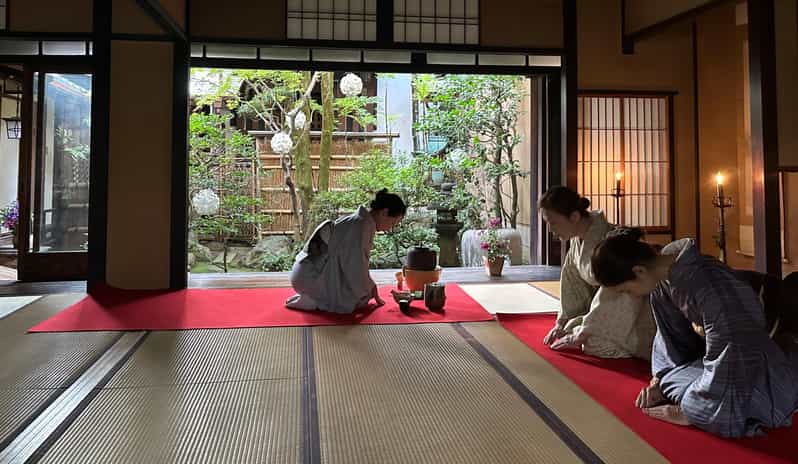
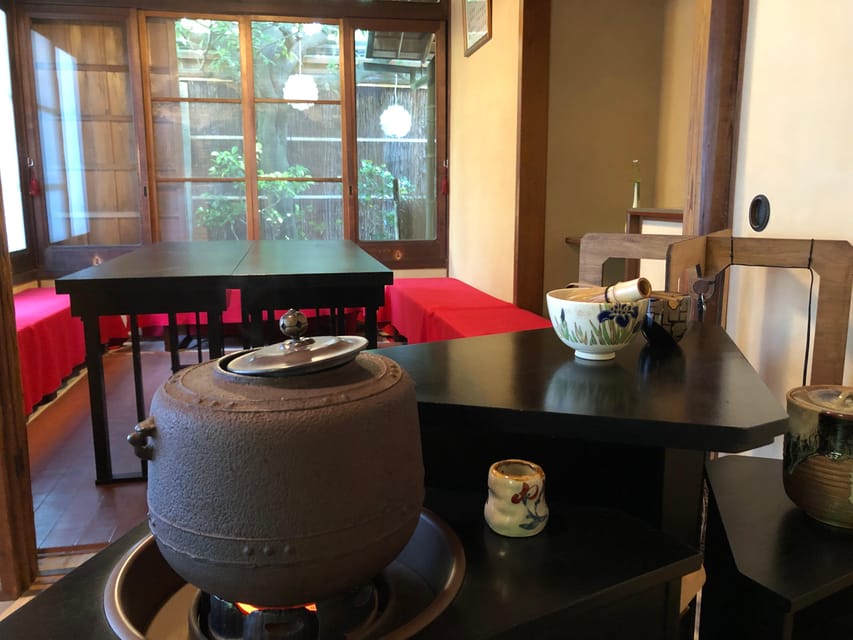
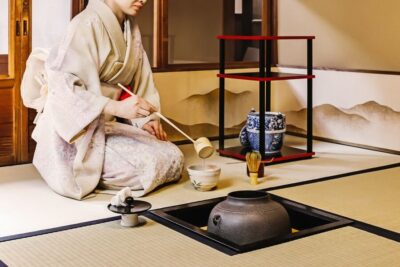
The tea ceremony takes place inside the historic machiya, usually after you have dressed. A seasoned tea master performs the ceremony and explains the meaning behind the movements, utensils, and service. The ceremony is designed as a presentation, so do not assume you’ll be mixing the matcha yourself. One person specifically wished for more hands-on preparation.
The ceremony is fairly short in some sessions, but the total experience can last from 90 minutes to four hours. Timing depends on the chosen option, group arrangements, and how much time is spent on dressing and the house tour.
You may sit on the floor during the ceremony. A small number of chairs may be available, but they are limited. If sitting on the floor is difficult for you, contact the provider before booking and consider the private option. The supplied information does not promise special seating.
The ceremony works best when everyone treats it as a quiet cultural presentation. Phones, loud whispers, late arrivals, and filming directly in front of the tea master can distract from the event and make the room uncomfortable. You are given photo time elsewhere, so the polite choice is to put your phone away during the formal service.
The tea presentation is one of the strongest reasons to book this activity. The setting gives the ceremony context. You are not simply watching someone whisk tea in a generic room. You are seeing the custom performed inside a house built for traditional Kyoto life.
Still, the educational side can vary. Some sessions include clear explanations in English. Other groups have had limited English support and learned less about the tea ceremony’s background. Translation technology helps, but it can slow the conversation and make detailed questions harder.
The house tour and photo time
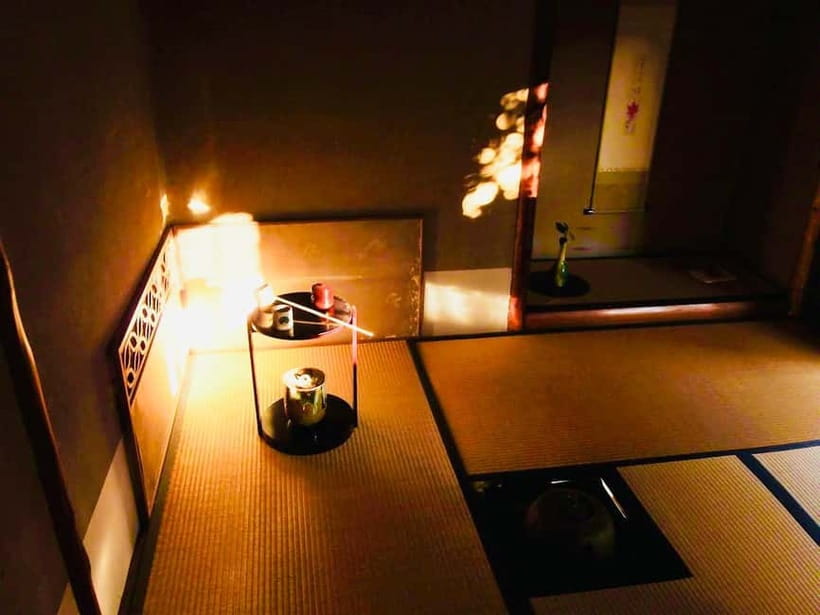
After the ceremony, staff guide you through more of Tondaya. This part connects the kimono and tea experience to the building itself. You’ll see rooms, gardens, woodwork, and old objects that help explain how the townhouse functioned.
I would not rush this section. The photographs are attractive because the setting looks lived-in and traditional rather than newly built for tourists. The garden areas and wooden interiors give you several backdrops, and you can take your own pictures once the formal dressing is over.
You may find the house busy during popular periods. A few sessions have felt crowded, with several groups moving through the same spaces. In a shared booking, wait times can occur, especially around dressing, the tea room, or photo spots.
The contrast is clear: a private visit can feel like being welcomed into a family home, while a full shared session can feel more like a scheduled cultural demonstration. Both provide access to the same type of setting, but the mood is different.
Other tea ceremonies in Kyoto people book:
- Kyoto: Tea Ceremony in a Traditional Tea House in Kiyomizu
★ 4.9 · 3,519 reviews - Kyoto: Tea Ceremony Ju-An at Jotokuji Temple
★ 4.9 · 3,207 reviews - Kyoto: 45-Minute Tea Ceremony Lesson Experience
★ 4.3 · 2,378 reviews - Kyoto: Table-Style Tea Ceremony at a Kyo-Machiya
★ 4.9 · 1,211 reviews
Shared session or private experience
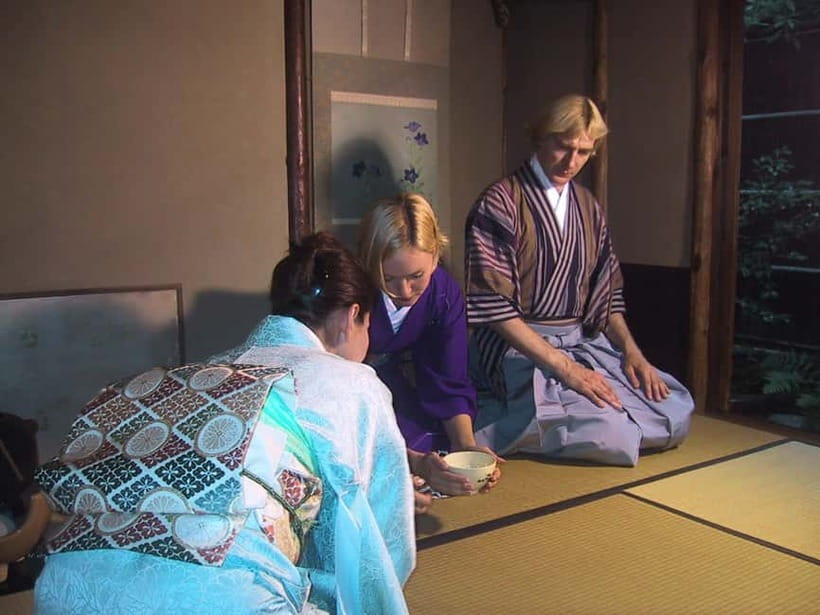
The standard experience includes other participants. This keeps the price from rising even further, but it also means you cannot control the group’s size or behavior. A noisy group can weaken the peaceful quality of the tea ceremony. A respectful group can make the same session feel calm and focused.
The private option is the better choice if you want detailed explanations, more time for questions, or a quieter ceremony. A private group can also make photographs easier, since you are not waiting for several other people to finish dressing or posing.
The activity information also describes the group type as private, so check the exact option you select during booking. The key practical difference is whether you reserve a private session or join the shared tea ceremony. Do not assume that every booking includes exclusive use of the house.
Arrive on time. Staff may be working with a tight sequence of dressing, tea, touring, and undressing. Arriving early may give you more breathing room, but do not assume you can enter far ahead of schedule or start immediately. One early arrival was dressed before the official start, while other sessions may follow a stricter timetable.
How much value do you get for $222?
At $222 per person, this is not a budget activity. The price includes entrance, kimono dressing, and the tea ceremony, but not socks, hair styling, or makeup. You are paying for the setting, the staff time, the silk kimono, and access to a recognized cultural property.
I think the cost is easiest to justify if you value several parts at once: traditional clothing, a historic house, guided explanation, tea ceremony, and photographs. If you only want to rent a kimono for street photos, a lower-cost rental shop may suit you better.
The price also makes group size important. A crowded shared session may feel expensive if you receive only brief explanations and limited personal attention. The private option costs more, but it can make sense for couples, families, or anyone who wants a slower visit.
The strongest value comes from the combination. Many Kyoto activities offer kimono rental, but not all take place inside a 140-year-old machiya. Many tea demonstrations explain the ceremony, but not all let you explore a historic townhouse while dressed in silk. Tondaya brings those elements together in one appointment.
The experience has a 4.3 rating from 306 reviews, which suggests a generally strong response with some predictable limits. The most consistent positives are the friendly staff, beautiful house, kimono photographs, and tea ceremony. The most common concerns are crowding, uneven English support, kimono fit, and the price.
Language, comfort, and small practical details
The listed languages are English and Japanese. Staff may explain the activity in English, but not every staff member speaks English fluently. A translation device may be used when needed.
That arrangement is workable for the broad structure of the visit. You can understand when to dress, where to sit, and when to take photos. Detailed questions about garment symbolism or the history of tea may require patience and simple phrasing.
Wear comfortable clothes under the kimono, especially around the neck. Avoid a wet shirt, and bring a spare T-shirt if the weather is hot. Bring your own socks and avoid stockings.
The experience may involve sitting on the floor. A few chairs can be available, but seating is not guaranteed for everyone. If that could be a problem, ask before booking rather than hoping the room will have enough chairs.
You can cancel up to 24 hours before the activity for a full refund, and the reserve now, pay later option lets you hold a place without paying immediately. Starting times vary, so check availability for the date you want.
Who will enjoy Tondaya most?
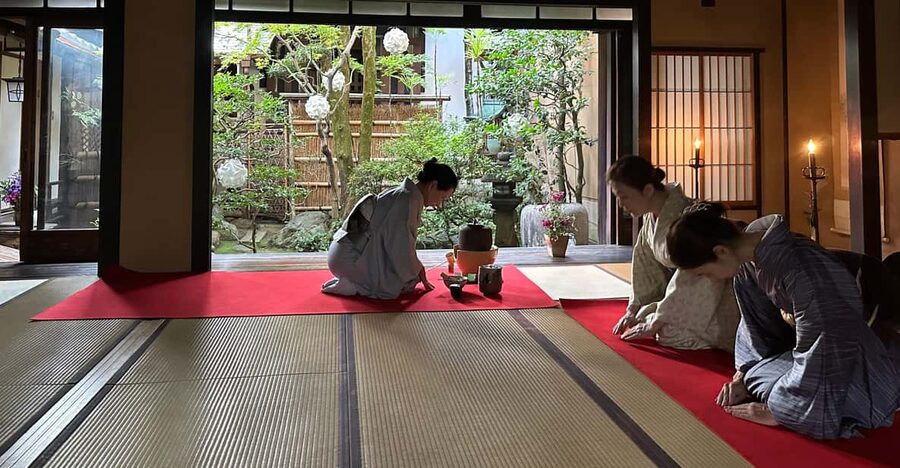
I would recommend this for you if you want a structured cultural activity with plenty of visual appeal. Couples and friends will appreciate the shared photos, while solo visitors can rely on staff to help with pictures.
It also suits first-time visitors to Japan who want an introduction to both kimono and tea ceremony in one place. The explanations may not be equally detailed in every session, but the sequence is easy to follow.
Families with older children may enjoy the dressing and house tour, provided everyone can respect the quiet ceremony. The instructions emphasize calm attention, so this is not a good pick for anyone who wants a loud, casual photo session.
You should think twice if you dislike group activities, need guaranteed English instruction, cannot sit on the floor, or expect a large choice of kimono patterns in every size. A private booking can solve some of those concerns, but it will not change the fact that hair and makeup are not included.
Should you book this Kyoto kimono and tea ceremony?
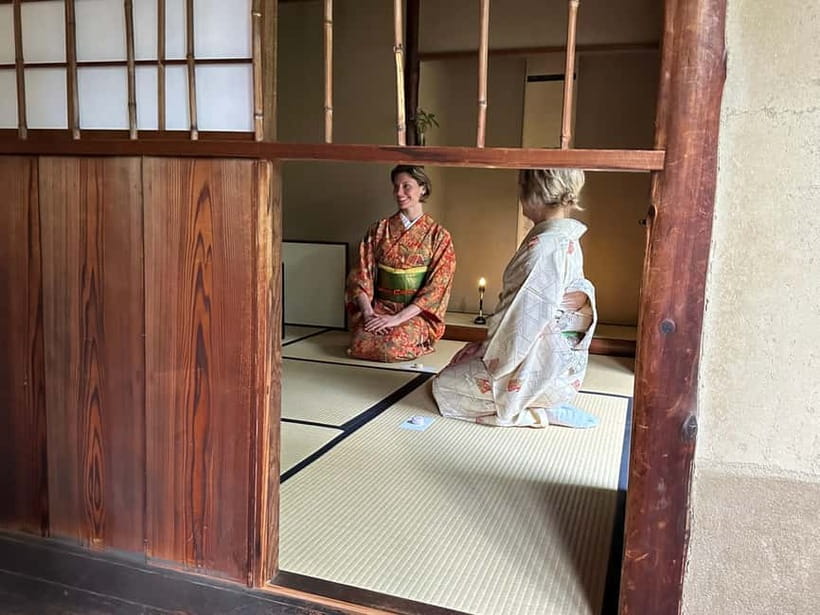
Book it if the idea of wearing silk in a preserved Kyoto townhouse appeals to you more than a basic costume rental. The house, gardens, and photographs give the experience a strong sense of place, while the tea ceremony adds a quiet cultural focus.
Choose the private option if your budget allows and you care about space, questions, or a peaceful atmosphere. Stay with the shared option if you mainly want the setting and clothing, and you can accept some waiting and less personal attention.
At $222, this is a special-occasion activity rather than a cheap add-on. I think it earns that price when you treat the visit as three experiences in one: a historic house tour, kimono dressing, and a tea ceremony. Bring socks, arrive on time, keep your phone away during the ceremony, and you’ll give yourself the best chance of enjoying what Tondaya does well.
FAQ
Where does the experience take place?
It takes place at Tondaya, Nishijin Japanese Cultural Experience Museum, 697 Ishiyakuchicho, Kamigyo Ward, Kyoto, Japan.
How long does the activity last?
The stated duration ranges from 90 minutes to four hours. The exact length depends on the selected option and available starting time.
What is included in the price?
The price includes entrance, kimono dressing, and the tea ceremony.
Do I need to bring socks?
Yes. Socks are required, and bare feet are not allowed. The instructions also ask you not to wear stockings.
Are hair styling and makeup included?
No. Hair styling and makeup are not included.
Can I take photographs?
Yes. You can take photographs in the traditional rooms and garden areas after dressing. Photography is not allowed while you are being dressed or undressed.
Is the tea ceremony private?
A standard booking may include other participants. A private experience is available if you prefer a more personal setting. Check the specific option before booking.
Is English spoken during the activity?
English and Japanese are listed languages. Some staff speak limited English, and a translation device may be used when necessary.
What should I wear under the kimono?
Wear clothing that is not too tight around the neck. Bring a spare T-shirt if your shirt may become wet, since staff cannot dress you while it is wet.
More tea ceremonies elsewhere in Japan
- Kyoto: Arashiyama Bamboo Forest, Monkeys, Matcha & Temple Tour
★ 5.0 · 759 reviews - Kyoto: Tea Museum Tickets and Matcha Grinding Experience
★ 4.9 · 739 reviews - Kyoto: Tea Ceremony in 100-year-old Kyo-Machiya Townhouse
★ 4.8 · 546 reviews - Kyoto: Tea Ceremony Experience
★ 4.8 · 511 reviews
More kimono experiences elsewhere in Japan
- KYOTO Tea Ceremony with kimono near by Imamiya Jinjya Shrine
★ 5.0 · 343 reviews - Kyoto: Traditional Kimono Rental
★ 4.7 · 265 reviews - Kyoto: Kimono Tea Ceremony with Matcha and Sweet
★ 4.9 · 249 reviews - Osaka: Sumo Show & Experience w/ Optional Kimono & Hot Pot
★ 4.5 · 609 reviews
Just added in Kyoto
- Kyoto: Private Photoshoot Service★ 5.0 · 158 reviews
- Kyoto Rickshaw Tour★ 5.0 · 210 reviews
- Kyoto: Arashiyama Bamboo, Temple, Matcha, Monkeys & secret spots★ 5.0 · 219 reviews
- Izakaya Style Cooking Class★ 5.0 · 219 reviews
- Kyoto: Traditional Concert at Townhouse or Bathhouse★ 4.9 · 224 reviews
- Ninja 2-hour Hands-on Lesson by Japanese master in Kyoto -Medium★ 5.0 · 218 reviews
- Samurai Training with Modern day Musashi in Kyoto★ 5.0 · 256 reviews
- Kyoto: Kimono Tea Ceremony with Matcha and Sweet★ 4.9 · 249 reviews
Tea Ceremony Experiences, compared.
Tea Ceremony in a Traditional Tea House in Kiyomizu
Read our review →
World Heritage Kyoto & Nara Uji Authentic Matcha Experience
Read our review →
Arashiyama Bamboo Forest, Monkeys, Matcha & Temple Tour
Read our review →Browse the lists this tour appears in