
Reviewed · FUSHIMI INARI TOURS
Kyoto: Early Morning Fushimi Inari Shrine – Beat the Crowds
Fushimi Inari is one of Kyoto’s great sights, but by late morning its famous orange torii tunnels can feel less like a sacred mountain path and more like a human traffic jam. This early start is the clever part: you get a quieter walk, cooler air, and a much better chance at a clean photo.
I like two things especially. First, a local guide helps you understand the fox statues, torii, worship customs, and Inari’s place in daily Japanese life. Second, the route includes a scenic viewpoint and a lesser-known stop, so you see more than the standard entrance area. The catch is that this is a mountain walk, not a flat shrine visit. It is not suitable for children under 10, people with limited fitness, or those with certain health and mobility concerns.
Key points at a glance
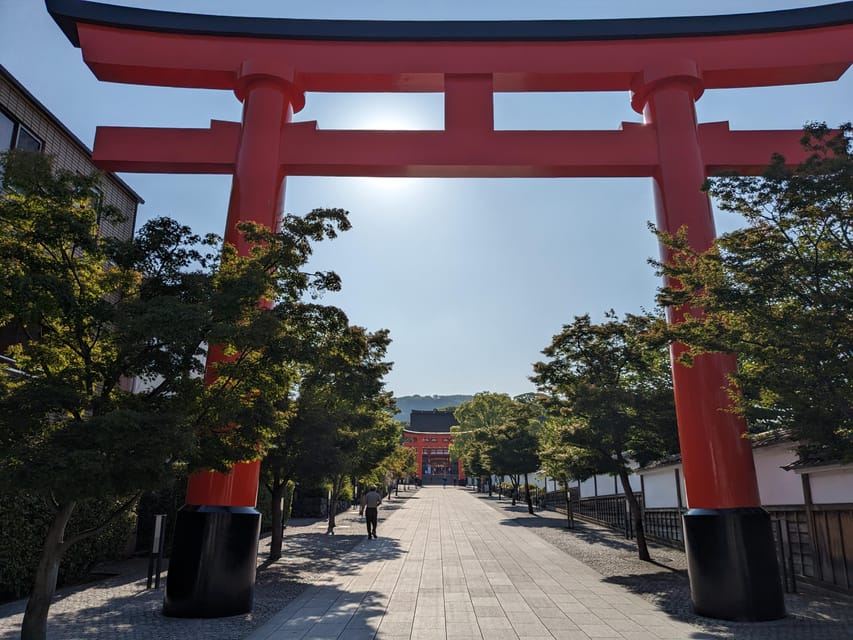
- Early morning timing: Reach Fushimi Inari before the main daytime crowds and avoid much of the summer heat.
- A 150-minute mountain walk: The route combines the main shrine, a viewpoint, and a quieter cultural stop.
- English-speaking local guides: Guides including Teppei, Akino, Hiro, Masa, Maru, Yoshi, and others explain the site in clear, personal terms.
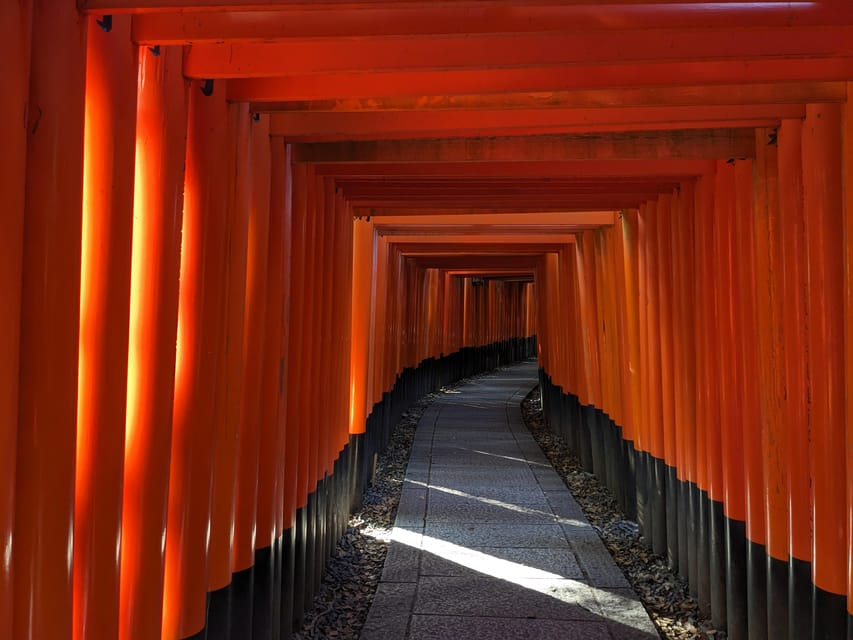
- Better photo chances: Early light and fewer people make the orange torii tunnels easier to photograph.
- Small-group or private options: The experience can suit couples, families with older children, and visitors who want more personal attention.
- Bring proper footwear: Comfortable shoes and clothes matter because the route goes up the holy mountain.
Why an early start changes Fushimi Inari
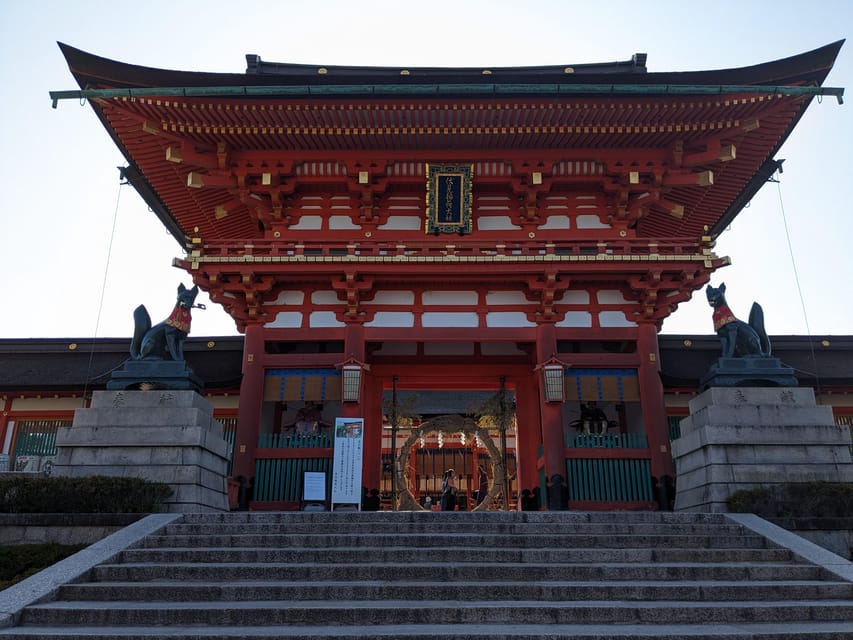
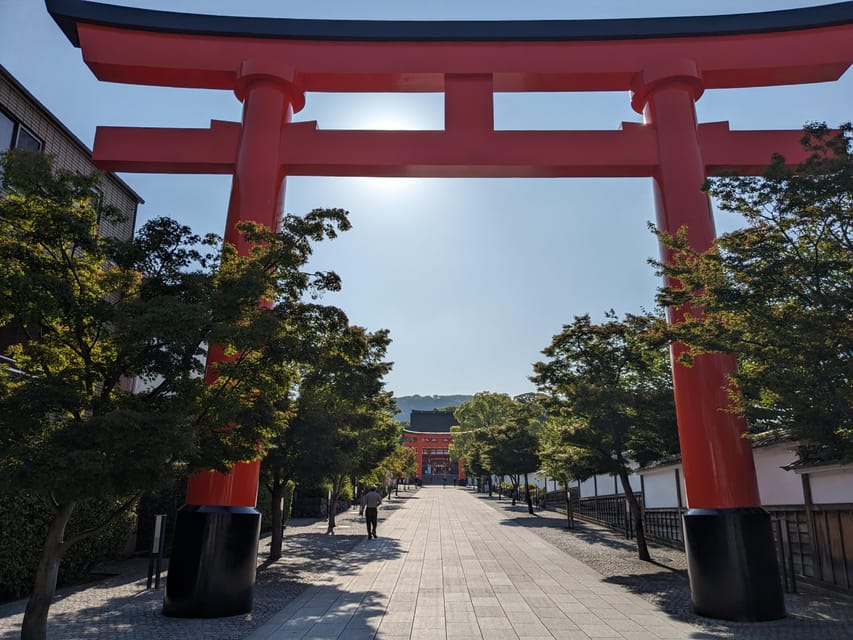
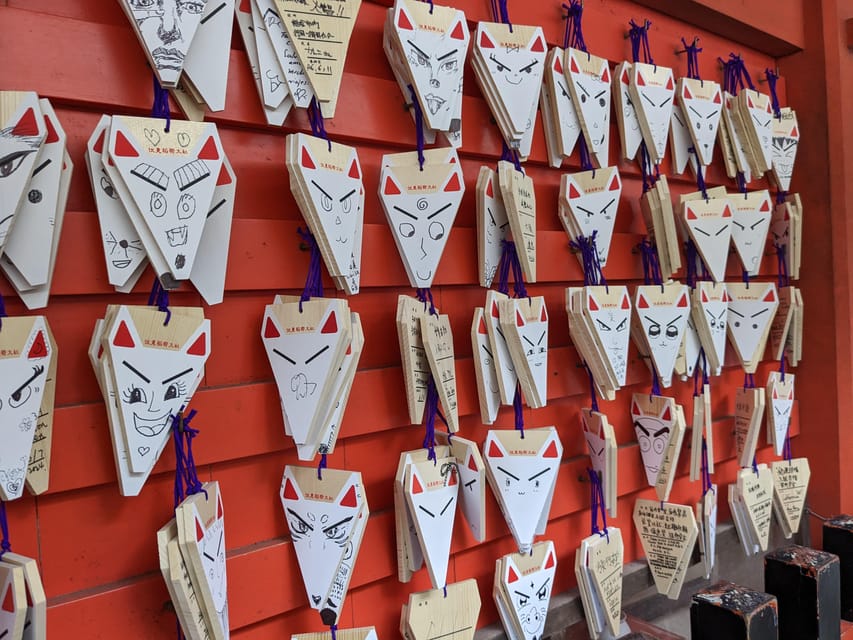
Fushimi Inari Taisha is famous for its thousands of orange torii gates, but the shrine is more than a photo stop. It is a major Shinto site dedicated to Inari, a deity linked with rice, prosperity, and business. Fox figures appear throughout the grounds because foxes are understood as Inari’s messengers.
The timing shapes the whole visit. At a popular site like this, arriving early gives you room to notice small details instead of spending your time avoiding other people’s shoulders and selfie sticks. You can pause beneath the gates, listen to your guide, and take photographs without constantly waiting for a gap.
You also avoid the worst heat. That matters in Kyoto, especially from late spring through summer. One July booking described the early walk as a good way to avoid both crowds and high temperatures. The shrine remains open and atmospheric, but the morning has a calmer feel.
I would not promise complete solitude. Fushimi Inari is too popular for that, and the exact crowd level will depend on the date and start time. Still, an early departure gives you the best chance of a peaceful visit.
Other temples and shrines in Kyoto people book:
- Kyoto: Tea Ceremony Ju-An at Jotokuji Temple
★ 4.9 · 3,207 reviews - Arashiyama Bamboo, Temple, Monkeys, or Secret Sake Brewery
★ 4.8 · 886 reviews - Kyoto: Arashiyama Bamboo Forest, Monkeys, Matcha & Temple Tour
★ 5.0 · 759 reviews
Meeting your guide at JR Inari Station
The meeting point is outside, across from the main entrance to JR Inari Station. Look for a guide holding a bright yellow DeepExperience signboard.
This location is convenient, but pay attention to the train service you choose. One person arrived late after assuming the station was only one stop from Kyoto Station, then taking a slower train that stopped several times. The practical lesson is simple: check the train type and allow extra time. Your guide may be waiting with a small group, so arriving early is kinder to everyone.
JR Inari Station is a useful starting point because Fushimi Inari begins right beside it. You do not need to spend time finding the shrine after leaving the train. Meet your guide, confirm the group, and begin the visit without a long transfer.
The tour is offered in English. Private and small-group formats are available, which can make a real difference if you want to ask many questions or need the guide to adjust the pace. The supplied information does not promise a particular guide, so names such as Teppei, Akino, Hiro, Masa, Maru, and Yoshi should be treated as examples rather than guaranteed assignments.
Through the torii gates at Fushimi Inari Taisha
The main guided portion lasts about 90 minutes. Your guide leads you through the shrine grounds and up the mountain path, explaining what you are seeing rather than simply pointing out the famous orange gates.
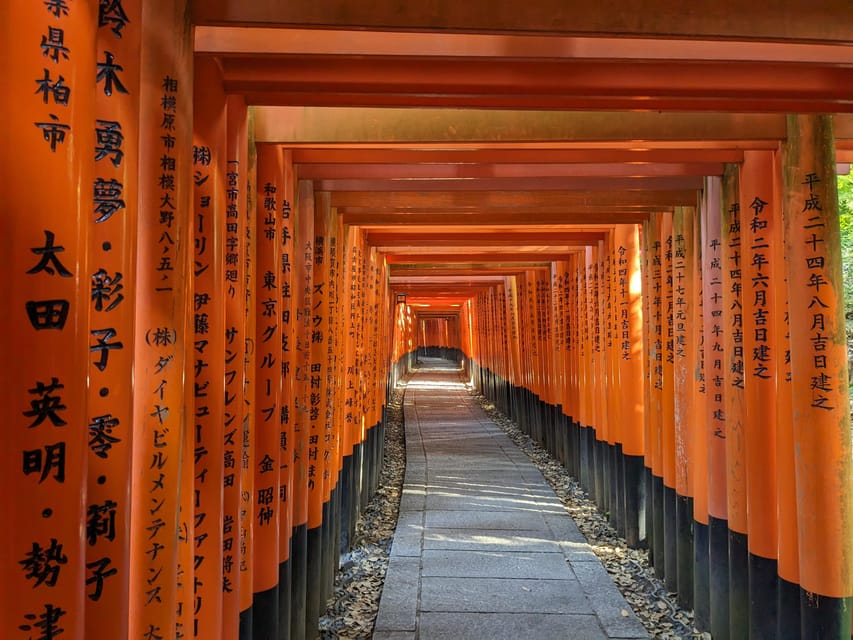
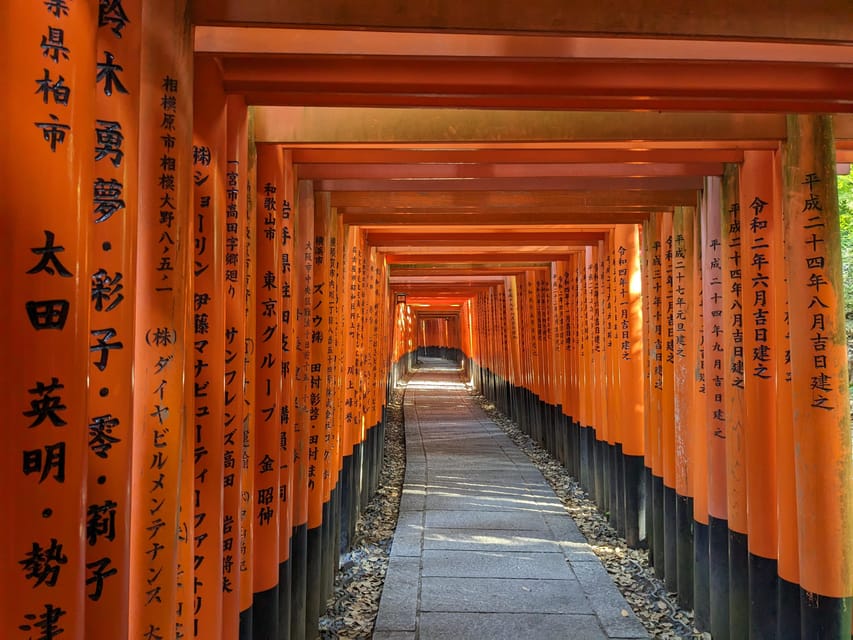
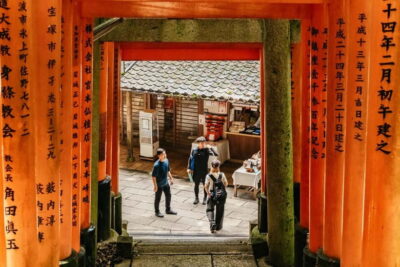
The torii are donated by individuals and businesses, often as an offering connected with success or gratitude. The dense rows create the image most people associate with Kyoto, but a guide can help you see the site as a working religious place rather than a decorative tunnel.
You will also learn how to behave at the shrine. That may include how to show respect at the main worship areas and what the various structures mean. One guide, Hiro, was especially praised for teaching visitors how to pay respect before the main torii and for explaining the site step by step. This kind of instruction is useful if you are unsure when to bow, where to pause, or how to act around worshippers.
The fox statues deserve your attention. Some hold symbolic objects, and their expressions vary. Without context, they can look like repeated decoration. With explanation, they become clues to the beliefs connected with Inari.
The walking route is the main physical challenge. The description calls it a scenic walk through a holy mountain, and one booking described reaching the top after a 2.5-hour hike. The listed itinerary divides the time into a 90-minute guided shrine visit, 30 minutes at a viewpoint, and 30 minutes at another stop. In practice, you should expect sustained walking on an uphill route rather than a quick circuit near the station.
That is why I would wear walking shoes and comfortable clothes. Do not bring a stroller, baby carriage, luggage, or large bag. The route is not suitable for wheelchair users or people with mobility, back, heart, or respiratory problems. It is also not recommended for people with altitude sickness, low fitness, or those over 70.
The viewpoint after the main shrine route
The itinerary includes about 30 minutes for sightseeing at a viewpoint. Exact views can vary with weather and the guide’s route, but this pause gives you a reason to keep going beyond the first torii tunnels.
The reward is not only the view. A mountain route changes how you understand the shrine. The gates continue upward, and the site becomes quieter as you move away from the entrance. You see how large the sacred area is and why a quick photograph at the bottom tells only part of the story.
The viewpoint is also a natural place to catch your breath and take photographs. If you are visiting during a warm season, this break may feel welcome. If you want a gentle sightseeing morning, however, the climb may be more demanding than expected. I would not book this tour simply because you want to avoid walking through the woods. The route is designed for people willing to walk up the mountain.
Other shrine walks around Kyoto:
- Kyoto: Fushimi Inari, Kinkakuji, Bamboo Grove 1 Day Bus Tour
★ 4.8 · 4,316 reviews - Fushimi Inari Hidden Hiking Tour (Private Option Available)
★ 5.0 · 1,750 reviews - Kyoto/Osaka: Nara, Fushimi Inari Taisha, Arashiyama Bus Tour
★ 4.7 · 1,275 reviews - Osaka/Kyoto: Arashiyama, Nara & Fushimi Inari Shrine w/Lunch
★ 4.4 · 754 reviews
The tucked-away stop and the Inari souvenir
The final 30-minute section includes a quieter stop that many people might miss when exploring alone. The supplied details do not name the exact location, so I would treat this as a pleasant surprise rather than a guaranteed specific shrine or fountain.
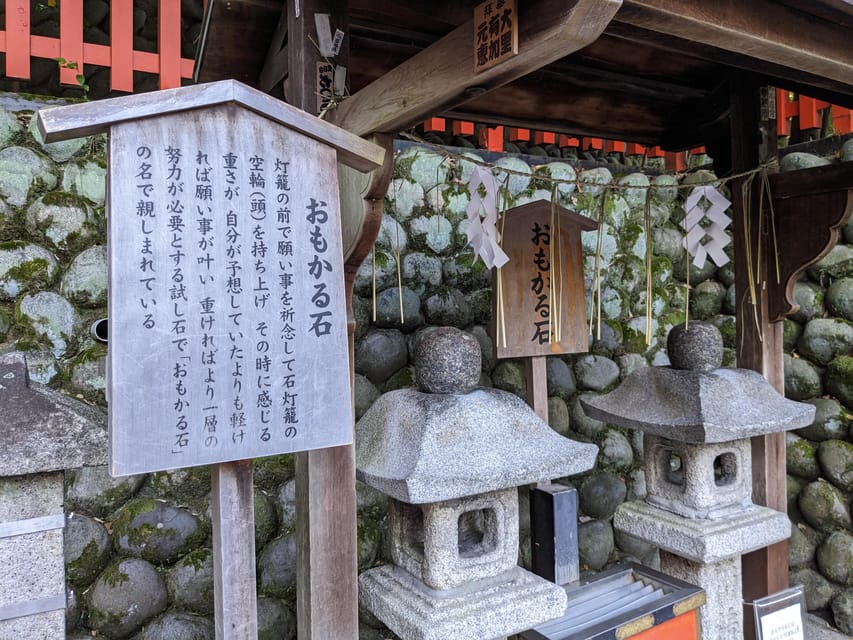
One guide took visitors to a small fountain connected with a local legend about curing illness. That detail gives you an idea of the sort of place the guide may point out: modest, easy to overlook, and meaningful because of the belief attached to it. You should listen closely here. These small features can tell you more about local religious practice than the famous gates do.
You also receive a special souvenir unique to Inari and not available elsewhere. The precise item is not specified, so do not book this expecting a particular charm or object. The value is in having a small reminder tied directly to the shrine rather than a generic Kyoto purchase.
This part of the tour helps prevent the visit from becoming a single-photo mission. You leave with a better sense of the stories, symbols, and customs connected with the mountain.
What the guides add to the experience
The strongest part of this tour is the human element. The guides are local English speakers, and the best accounts describe them as warm, patient, clear, and deeply interested in sharing Kyoto culture.
Teppei received especially strong praise for making the walk both informative and enjoyable. He also helped visitors who arrived late because of a train mistake and kept the situation calm. Several bookings described him as kind, thoughtful, and generous with his time. That matters on a walking tour: a guide who notices when you need a pause can make the uphill route feel far easier.
Akino was praised for her cultural knowledge and practical help. She also offered suggestions for places to eat and drink in Kyoto and Hiroshima, then helped one group with the train journey home. That sort of informal local advice can be worth a lot if this tour comes early in your visit.
Hiro was appreciated for explaining shrine manners and the meaning behind each part of the route. Masa received praise for guiding visitors up the mountain while explaining the shrine and Kyoto. Maru helped with photographs as well as cultural explanations, and Yoshi was described as friendly, generous, and highly personable.
Of course, guide quality can vary by assignment. The repeated strength here is not one scripted performance, but the chance to ask questions and get a personal explanation from someone who knows the place.
Is $70 good value?
At $70 per person, this is not the cheapest way to see Fushimi Inari. You can reach the shrine independently beside JR Inari Station and walk through the grounds without paying for a guide. If your only goal is to take a quick photo under the torii, the tour may not be worth the extra cost.
The value improves if you want cultural context, a quieter start, and help finding parts of the mountain you could easily pass without understanding. You are paying for 150 minutes of guidance, route planning, English explanations, and the chance to ask questions. The souvenir adds a small extra benefit.
The tour is especially useful on a first Kyoto visit or when you want someone else to handle the pace and orientation. A private or small-group option may also feel worthwhile for couples or families who prefer conversation over a large group lecture.
The listed inclusion is an English-speaking local expert guide. The information does not specify food, transportation, entry fees, or other extras, so check the final booking details before assuming anything beyond the guide and souvenir is covered.
Practical details before you book
You can cancel up to 24 hours before the start for a full refund, and the reserve-now, pay-later option keeps your plans flexible. Starting times vary, so check availability for the date you want.
Wear comfortable shoes. This is the most important packing advice. Choose clothes that allow easy movement, and keep your daypack small because large bags and luggage are not allowed.
Do not book this walk if you have serious mobility limits, back or heart problems, respiratory issues, or a low level of fitness. It is also not suitable for children under 10 or people over 70 according to the stated restrictions. Intoxication is not allowed.
I would also avoid placing this tour after a late night. An early morning start only works if you can get up, reach Inari Station on time, and still have enough energy for the mountain walk.
Who should book this Fushimi Inari tour?
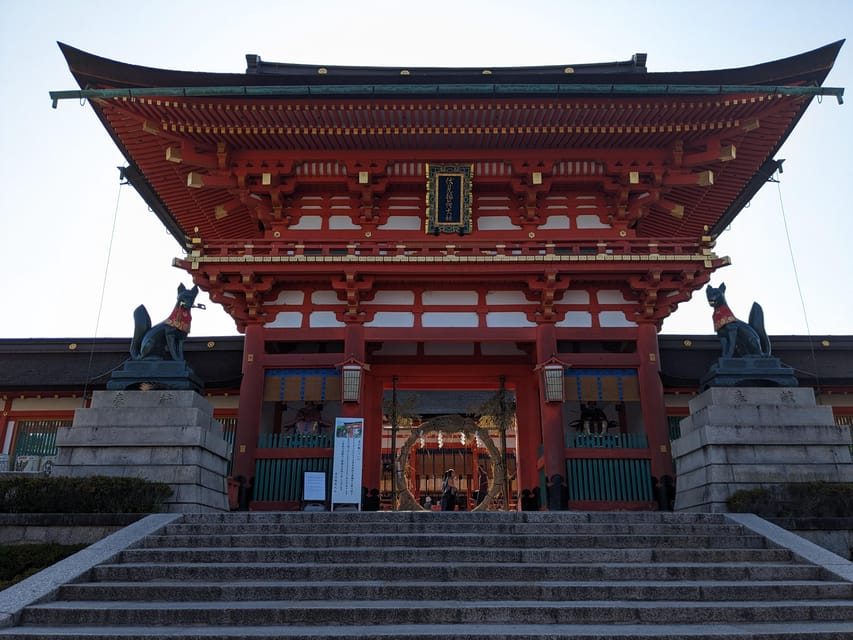
Book it if you want the famous torii gates before the day becomes crowded, prefer learning through conversation, and are ready for a sustained uphill walk. It is a strong fit for first-time Kyoto visitors, photographers who want a better chance at clear shots, and anyone curious about Shinto customs.
Skip it if you only want the lower shrine area, dislike organized sightseeing, or cannot manage a mountain walk. You can visit Fushimi Inari independently, but you will miss the explanations, the quieter route details, and the special Inari souvenir.
My advice is straightforward: if you can handle the walking and the $70 price, the early start makes this a sensible way to see one of Kyoto’s most crowded sights. The guide is the reason to book, not simply the orange gates. Ask questions, wear good shoes, and give yourself enough time to reach the station.
FAQ
Where does the tour meet?
Your guide waits outside, across from the main entrance to JR Inari Station, holding a bright yellow DeepExperience signboard.
How long does the experience last?
The tour lasts 150 minutes, or two and a half hours.
What language is the tour offered in?
The live tour guide speaks English.
What places are included?
The experience includes Fushimi Inari Taisha, a viewpoint, and a quieter additional stop before returning to Inari Station.
Does the tour return to the starting point?
Yes. The route finishes back at Inari Station.
Is this a private tour?
Private and small-group options are available. Check the booking choice for the date you want.
What should I bring?
Bring comfortable shoes and comfortable clothes.
Can I bring luggage or a stroller?
No. Baby strollers, baby carriages, luggage, and large bags are not allowed.
Is the tour suitable for children?
The experience is not suitable for children under 10.
Can I cancel for a refund?
Yes. You can cancel up to 24 hours in advance for a full refund. You can also reserve now and pay later.
More temples and shrines elsewhere in Japan
- Kyoto: Ninnaji Temple Entry Ticket
★ 4.2 · 650 reviews - Kyoto Zen Meditation & Garden Tour at a Zen Temple with Lunch
★ 5.0 · 441 reviews - Kyoto: Zen Experience in a Hidden Temple
★ 5.0 · 437 reviews - KYOTO Tea Ceremony with kimono near by Imamiya Jinjya Shrine
★ 5.0 · 343 reviews
Just added in Kyoto
- Kyoto: Zen Meditation at a Private Temple with a Monk★ 5.0 · 25 reviews
- Private Cooking Class Udon in Kyoto Japan★ 5.0 · 23 reviews
- Your Private Vacation Photography Session In Kyoto★ 5.0 · 110 reviews
- Private Pewter Sake Cup Experience with a Kyoto Artisan★ 5.0 · 31 reviews
- Kyoto Wagashi(Japanese sweets) Cooking Class near Fushimiinari★ 5.0 · 60 reviews
- Kyoto:Family-Friendly Kimono & Yukata Experience at WARGO★ 5.0 · 147 reviews
- Private Guided Traditional Buddhist Cooking in Japan★ 5.0 · 16 reviews
- Kyoto: Gion Geisha District & Sake-in-Hand Walking Tour★ 5.0 · 37 reviews
Fushimi Inari Tours, compared.
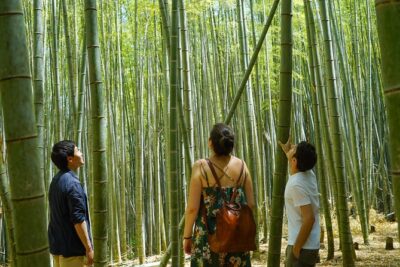
Fushimi Inari Hidden Hiking Tour (Private Option Available)
Read our review →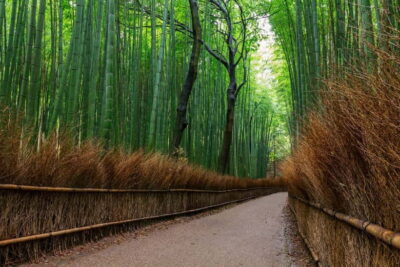
Kyoto/Osaka: Nara, Fushimi Inari Taisha, Arashiyama Bus Tour
Read our review →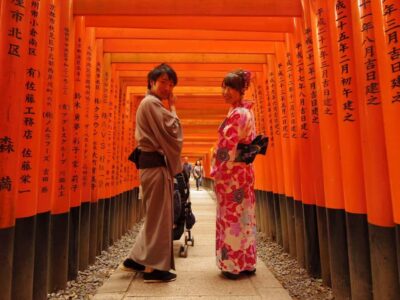
Osaka/Kyoto: Arashiyama, Nara & Fushimi Inari Shrine w/Lunch
Read our review →
Nijo Castle, Kiyomizu & Fushimi Inari Guided Tour
Read our review →
Nijo, Kinkaku-ji, Arashiyama, Kiyomizu & Fushimi Inari
Read our review →
Kyoto Early Bird English Tour: Fushimi-Inari and Arashiyama
Read our review →Browse the lists this tour appears in