
Reviewed · ZEN & MEDITATION EXPERIENCES
Kyoto: Zen Experience in a Hidden Temple
Kyoto’s most useful cultural experiences are often the quiet ones. At Jusho-in, a small sub-temple within the vast Myoshin-ji complex, you sit with Eitetsu Nishida, the 16th-generation abbot, and learn zazen meditation while looking onto a 400-year-old garden. The experience feels personal without asking you to pretend you are a monk.
I like the two 20-minute meditation sessions, with time to stretch and ask questions between them. I also like the careful tea portion, where matcha and seasonal sweets become part of the lesson rather than a quick refreshment. The main consideration is sitting still for 40 minutes. Chairs are available, but this is not a casual temple visit.
Why this two-hour Zen visit is worth your time
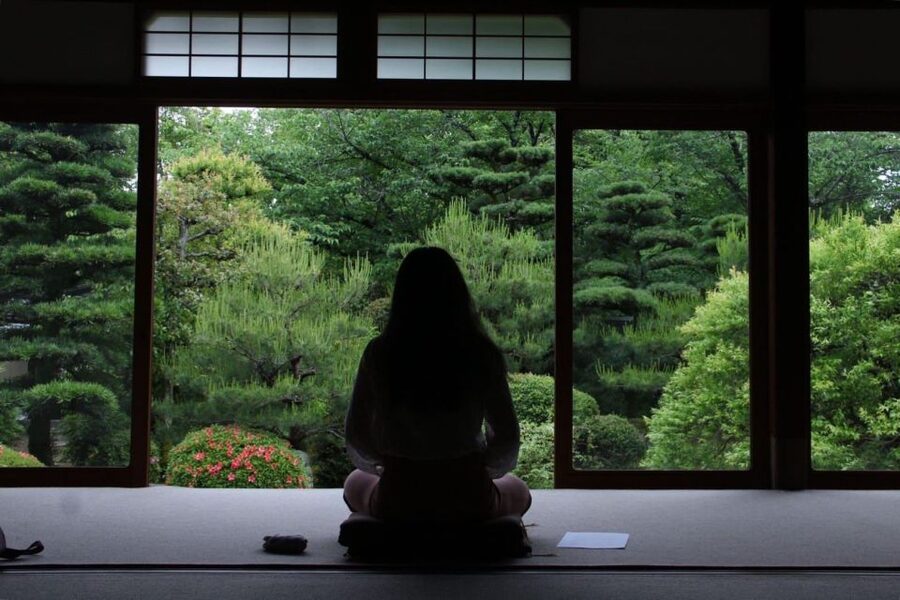
- Two guided zazen sessions: You learn the basics, sit for 20 minutes, take a short break, then sit again.
- A real abbot leads the practice: Eitetsu Nishida explains Zen with warmth, humor, and practical instruction.
- A 1599 temple setting: Jusho-in is one of 46 sub-temples within Myoshin-ji, Japan’s largest Zen temple complex.
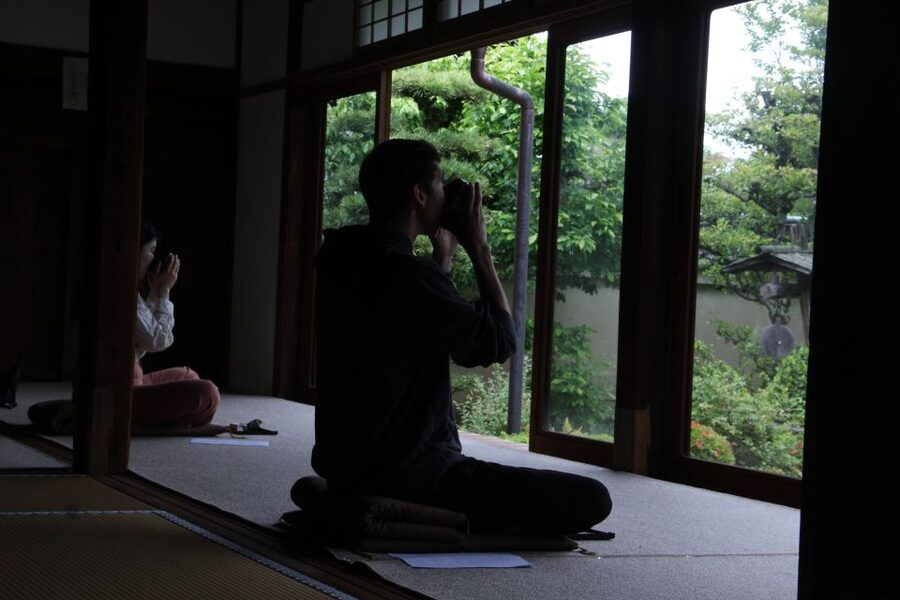
- Tea has a purpose here: Matcha, seasonal wagashi, and tea etiquette show how Zen attention carries into daily life.
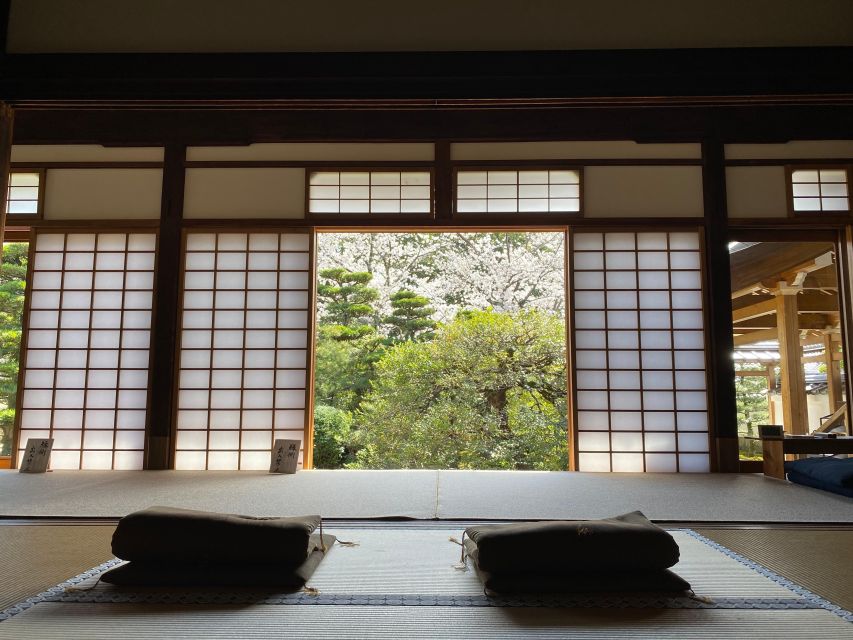
- The garden changes with the seasons: Cherry blossoms, summer greenery, autumn leaves, and snow all frame the tea and meditation room.
- A photographer records the visit: You receive DSLR photo data within a few days, so you can concentrate instead of taking pictures.
Entering Myoshin-ji and finding Jusho-in
Your meeting point is the north gate of Myoshin-ji, listed at 18 Taniguchisonomachi. A guide meets you there and walks with you to Jusho-in. That short walk matters because Myoshin-ji is not one simple building. It is a large temple complex with 46 sub-temples, and the route helps you shift from Kyoto sightseeing to a quieter pace.
Jusho-in was founded in 1599 and has about 420 years of history. Its smaller scale is part of the appeal. You are not being led through a crowded main hall with a long line behind you. You enter a working religious setting designed for concentration.
You should allow a little extra time to reach the north gate, since the meeting point is outside the sub-temple itself. The exact meeting point can vary with the option you book, so check your confirmation carefully.
Other temples and shrines in Kyoto people book:
- Kyoto: Tea Ceremony Ju-An at Jotokuji Temple
★ 4.9 · 3,207 reviews - Arashiyama Bamboo, Temple, Monkeys, or Secret Sake Brewery
★ 4.8 · 886 reviews - Kyoto: Arashiyama Bamboo Forest, Monkeys, Matcha & Temple Tour
★ 5.0 · 759 reviews
Meeting Abbot Eitetsu Nishida
Eitetsu Nishida is the 16th-generation abbot of Jusho-in. Before becoming a monk, he worked as a national public servant for 10 years. He then completed three and a half years of demanding monastic training.
That background gives his teaching an appealing mix of formality and ordinary human warmth. He is known for a cheerful personality and a fondness for animals, and the session is not presented as a stern test of spiritual worth. You can ask questions, listen to his explanation of Zen, and take part at your own level.
The live tour is offered in English, with guides and translation support. One practical point is worth noting: the abbot’s English can be difficult for some listeners because of his strong accent. A translator may speak alongside him at times, but not always. If a point is unclear, ask for it to be repeated or explained. The support team is there to help.
What happens during the two zazen sessions
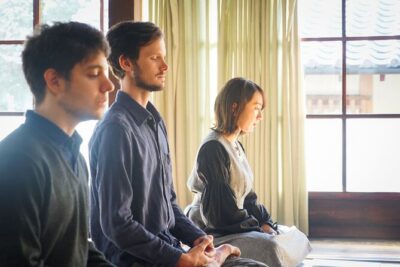
The meditation portion begins with an explanation of zazen. You learn how to sit, how to hold your posture, and how to direct your attention. The goal is not to produce a blank mind on command. In fact, noticing how often your thoughts wander is part of understanding the practice.
The first session lasts 20 minutes. For a beginner, that can feel longer than expected, especially if you are used to moving from one Kyoto sight to the next. You then have time to stretch and ask questions before the second 20-minute session.
I like this structure. A single long sitting could be intimidating, while two shorter sessions let you adjust your posture and absorb the first lesson. The break also gives you a chance to ask about breathing, concentration, or the physical challenge of sitting upright.
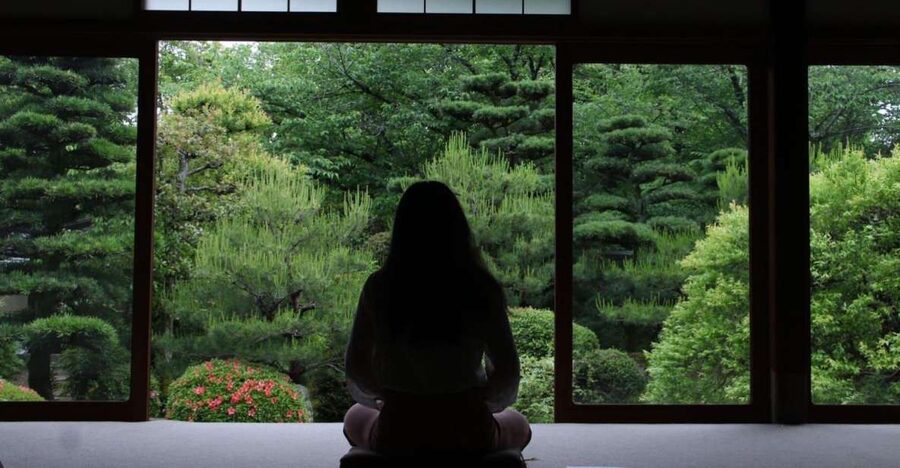
The room looks toward Jusho-in’s garden, and sessions may take place with doors open to the outside. That creates a strong connection with the seasons, though it can also mean cool air. Blankets may be available, but dress for comfort rather than ceremony.
You do not need previous meditation experience. The format suits complete beginners, occasional yoga or meditation practitioners, and people who simply want to understand why zazen matters in Zen Buddhism.
Rinzai Zen explained without a lecture hall
Zen is a branch of Mahayana Buddhism that places great weight on direct experience. Zazen, or seated meditation, is central. Rather than relying only on religious texts or abstract ideas, the practice asks you to pay attention to what happens in your own mind and body.
Jusho-in follows the Rinzai tradition. Rinzai Zen came to Japan in the 12th century and is associated with intense practice and sudden insight, often called satori. You do not need to master those ideas during a two-hour visit. The value is more immediate: you learn the posture, try the practice, and hear how Zen connects attention with ordinary actions.
The abbot’s sermon is included, along with explanations from the guide. This gives the experience more substance than a photo stop at a temple. You leave with a clearer sense of what zazen involves, even if your mind spends much of the session planning dinner.
Other quiet hours in Kyoto:
- Kyoto Zen Meditation & Garden Tour at a Zen Temple with Lunch
★ 5.0 · 441 reviews - Kyoto: Tea Ceremony Meditation – Make Matcha with Tea Master
★ 4.8 · 406 reviews - Tokyo: Zen Meditation at a Private Temple with a Monk
★ 5.0 · 510 reviews - Miyajima: Cultural Experience in Zen Temple
★ 5.0 · 258 reviews
A 400-year-old garden as your meditation view
Jusho-in’s garden is attributed to Eitoku Kano, a celebrated 16th-century painter. Its design has remained unchanged since its creation. That continuity gives the tea and meditation room a strong sense of place.
The garden is not treated as a background for a rushed photograph. You sit and look at it as part of the practice. In spring, you might see cherry blossoms. Summer brings fresh green foliage, autumn brings colored leaves, and winter can bring snow. Each season changes the mood without changing the garden itself.
I find this one of the strongest parts of the visit. Kyoto has many famous gardens, but crowds and photo-taking can make it hard to sit quietly in one. Here, the garden is part of a guided activity, so you have a reason to slow down and observe it.
The garden is also why this experience works well in poor weather. The tour operates rain or shine, and the view remains part of the visit even if the day outside is wet or cold.
Matcha, wagashi, and the Zen connection
After meditation, Eitetsu Nishida introduces matcha and its history. You learn how to enjoy powdered green tea and how tea practice relates to Zen attention.
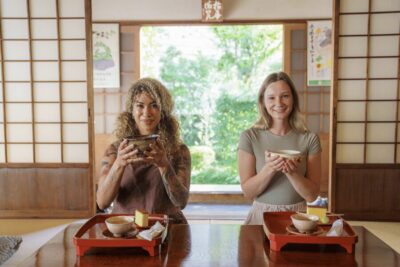
The tea is served with seasonal Japanese sweets, usually wagashi. The pairing is not an afterthought. The sweetness of the wagashi balances the tea, and the presentation gives you another chance to notice small details: how the sweet is served, how you receive the tea, and how you drink it.
The tea experience is more informal than a long, formal tea ceremony, but it still includes etiquette and explanation. You can ask questions while sitting in the historic setting. The result is a useful cultural lesson rather than simply a cup of matcha added to the itinerary.
If you have already attended a full tea ceremony in Kyoto, this may feel more compact and instructional. If you have never learned how to receive and drink matcha, it offers a friendly starting point.
Why the included photographs are useful
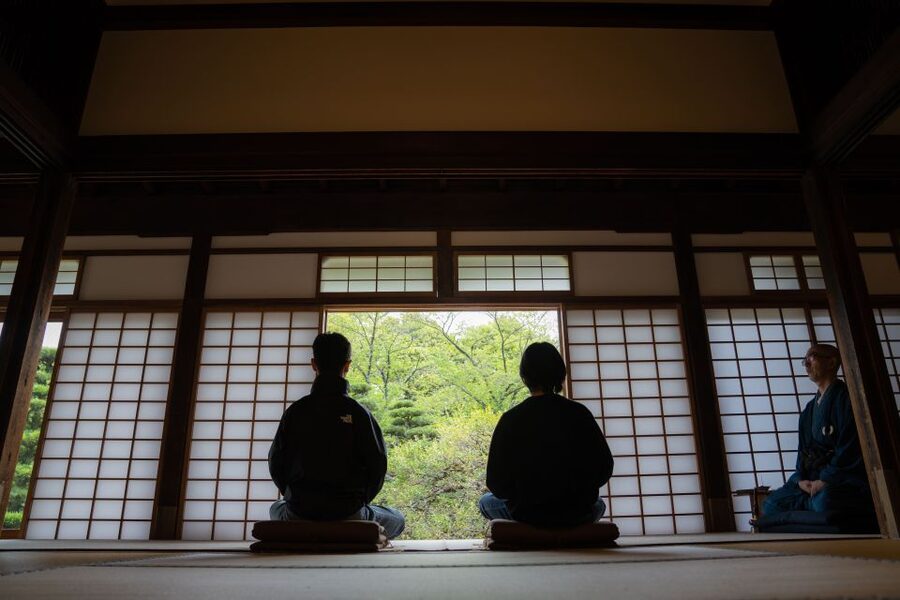
A photographer uses a single-lens reflex camera during the visit, and the photo data is sent within a few days after the experience. This is a small but smart feature.
During meditation, taking pictures would defeat the purpose. During the tea portion, you may also want to pay attention rather than reach for your phone. The photographer can capture the temple, tea, garden, and group moments while you remain present.
Do not treat the photo service as a professional portrait session. It is best understood as a set of visual memories from an activity where photography is deliberately limited.
Price, group size, and practical value
The experience costs $109 per person for two hours. That is not cheap compared with a standard temple admission, but admission is not what you are buying. The price includes the English guide, temple entry, the abbot’s teaching, two meditation sessions, matcha, seasonal sweets, and the later photo data.
The value is strongest if you want a structured cultural experience with access to a priest and a quiet temple room. It is less compelling if you only want to wander around Myoshin-ji or take garden photographs.
Private and small-group options are available. A smaller group makes it easier to ask questions and can make the meditation feel more focused. Seating is assigned in reservation order, so booking earlier may help if sitting position matters to you.
The experience lasts about two hours and does not include hotel pickup or drop-off. Afterward, you can continue exploring Myoshin-ji on your own. The larger complex includes other temples and additional sights, so this activity can anchor a longer visit to the area.
What to wear and how to sit comfortably
There are no special clothing requirements, but comfort matters. Loose clothing is a better choice than restrictive trousers or formal outfits.
A rented kimono is not recommended for this activity. The fabric and limited leg movement can make sitting through the meditation sessions uncomfortable. If you are wearing one for other Kyoto plans, schedule this visit separately.
Chairs are available for anyone who cannot sit on the floor. That makes the experience more accessible, though the temple itself is not wheelchair accessible. The meditation is open to all ages, but parents should decide if younger children can manage quiet sitting and temple etiquette.
You should not bring weapons or sharp objects, alcohol, or drugs. The tour runs in all weather, and blankets may be offered if the room is cold.
Who will appreciate this Kyoto experience
I would recommend this to you if you want a quieter activity between crowded sights. It works especially well for first-time visitors who want a basic introduction to Zen without committing to a longer retreat.
It also suits people who already meditate and want to practice in a traditional temple setting. The session is approachable, but it is not superficial. You still need to sit upright, remain quiet, and notice your own restlessness.
Couples, families with older children, and solo visitors can all fit the format. The small-group setup keeps it personal, while a private booking may suit you if you want more time for questions.
You should think twice if you dislike sitting on the floor, want a fast-moving sightseeing tour, or expect a grand formal tea ceremony. This is a calm lesson in Zen practice, not a performance.
Cancellation and booking details
You can cancel up to 24 hours before the start time for a full refund. A reserve-now, pay-later option is available, which helps if your Kyoto schedule is still changing.
Check the meeting-point details for your selected option. The usual starting point is the north gate of Myoshin-ji, followed by a guided walk to Jusho-in. English guidance is available, and the activity may be private or shared with a small group.
Should you book the Jusho-in Zen experience?
I would book it if you want your Kyoto schedule to include something slower and more personal than shrine visits and shopping streets. The combination of an experienced abbot, two properly explained meditation sessions, matcha, seasonal sweets, and a historic garden gives the $109 price a reasonable purpose.
Book with realistic expectations. You will not become a Zen master in two hours, and sitting still may be harder than the peaceful setting suggests. But you will gain a practical introduction to zazen, time in a quiet temple, and a better sense of how tea, attention, and Zen fit together.
For a first visit to Kyoto, this is a strong choice for a meaningful cultural pause. For repeat visitors, it offers something even more useful: a chance to experience Myoshin-ji at a human pace.
FAQ
Where does the Zen experience begin?
The usual meeting point is the north gate of Myoshin-ji Temple at 18 Taniguchisonomachi. Your guide then walks with you to Jusho-in. The meeting point may vary by booking option, so check your reservation details.
How long does the experience last?
The full experience takes about two hours, including explanations of zazen, the meditation sessions, the matcha lesson, sweets, and the closing photo.
Is the tour offered in English?
Yes. The experience includes a live English-speaking guide. Translation support is used during the abbot’s teaching, although it may not be provided continuously.
Who leads the meditation?
Eitetsu Nishida, the 16th-generation abbot of Jusho-in, leads the zazen practice and explains Zen philosophy.
How long are the meditation sessions?
You take part in two 20-minute zazen sessions. There is time between them to stretch and ask questions.
Is meditation experience required?
No. The activity is open to beginners as well as people who already practice meditation or yoga.
Can I sit on a chair instead of the floor?
Yes. Chairs are available for people who need assistance during zazen. The temple itself is not wheelchair accessible.
What does the price include?
The price includes the guide, temple entry, the abbot’s sermon, Japanese tea and sweets, and photographs taken with a single-lens reflex camera. Hotel pickup and drop-off are not included.
What happens if I need to cancel?
You can receive a full refund if you cancel at least 24 hours before the experience. Cancellations after that time are not refundable.
More temples and shrines elsewhere in Japan
- Osaka/Kyoto: Arashiyama, Nara & Fushimi Inari Shrine w/Lunch
★ 4.4 · 754 reviews - Kyoto: Ninnaji Temple Entry Ticket
★ 4.2 · 650 reviews - KYOTO Tea Ceremony with kimono near by Imamiya Jinjya Shrine
★ 5.0 · 343 reviews - Kyoto: 3-Hour Fushimi Inari Shrine Hidden Hiking Tour
★ 4.9 · 270 reviews
Just added in Kyoto
- Kyoto: Private Photoshoot Service★ 5.0 · 158 reviews
- Kyoto Rickshaw Tour★ 5.0 · 210 reviews
- Izakaya Style Cooking Class★ 5.0 · 219 reviews
- Ninja 2-hour Hands-on Lesson by Japanese master in Kyoto -Medium★ 5.0 · 218 reviews
- Kyoto: Traditional Concert at Townhouse or Bathhouse★ 4.9 · 224 reviews
- Kyoto: Arashiyama Bamboo, Temple, Matcha, Monkeys & secret spots★ 5.0 · 219 reviews
- Kyoto: Gion & Pontocho Food Tour with 13 Dishes★ 4.9 · 235 reviews
- Kyoto: Afternoon Japanese Izakaya Cooking Class★ 4.9 · 241 reviews
Zen & Meditation Experiences, compared.
Kyoto Zen Meditation & Garden Tour at a Zen Temple with Lunch
Read our review →
Tea Ceremony Meditation – Make Matcha with Tea Master
Read our review →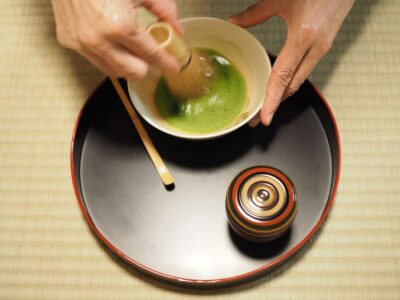
Browse the lists this tour appears in