
Reviewed · FUSHIMI INARI TOURS
Kyoto/Osaka: Nara, Fushimi Inari Taisha, Arashiyama Bus Tour
Nara’s deer, Fushimi Inari’s endless red gates, and Arashiyama’s bamboo forest give you three of Japan’s most recognizable sights in one long day. The route moves quickly, but it removes the fuss of piecing together several train rides and local buses.
I like the easy bus transport and the mix of wildlife, shrine, temple, and scenery. I also like the freedom at Arashiyama, where you can choose between bamboo, Tenryu-ji, the bridge, food stops, or a footbath.
The tradeoff is time. You get about an hour at Nara Park and Fushimi Inari, with roughly two and a half hours in Arashiyama, so this works best if you want a first look rather than a slow, private exploration.
Key points to know before booking
- Three major sights in one day: Nara Park, Fushimi Inari Taisha, and Arashiyama form a strong introduction to the Kyoto area.
- Feed the deer carefully: Special shika senbei crackers are available at Nara Park, where more than 1,000 deer roam freely.
- Expect a full schedule: The day lasts 9 to 10 hours, with fixed departure times and return traffic that can affect the final arrival.
- Arashiyama gives you choices: Visit the bamboo forest, Nonomiya Shrine, Tenryu-ji, Togetsukyo Bridge, Kimono Forest, or local food shops.
- The guide makes a real difference: Guides such as Amy, Willa, Christine, and Fiona are praised for clear instructions, humor, photos, and keeping the group together.
- Best for first-time visitors: It suits you if you value coverage and convenience more than setting your own pace.
What this Kyoto and Nara day covers
This is a sightseeing sweep through three very different places. Nara gives you open parkland and deer. Fushimi Inari gives you a powerful shrine setting and its famous torii tunnel. Arashiyama brings bamboo, Zen gardens, old shrines, a river bridge, shopping, and street food.
You can join from Osaka at about 8:00 in the morning or from Kyoto at about 9:00. The exact meeting place depends on your booking option, with pickup points listed at Harimaya Nippombashi 1-chome in Osaka and Kyoto Station Hachijo Entrance Square Sunken Garden in Kyoto.
The air-conditioned vehicle is the main practical advantage. You do not need to work out separate rail connections between Nara, southern Kyoto, and western Kyoto. That matters because these places sit in different parts of the region, and a self-guided day can involve several transfers and careful timing.
The bus also creates a firm rhythm. You need to return at the stated time after every stop. Guides such as Christine, Amy, Laura, and Fiona are praised for giving clear meeting instructions and keeping departures on schedule. That organization is useful, but you should not expect the flexibility of a private car.
Other shrine walks around Kyoto:
- Kyoto: Fushimi Inari, Kinkakuji, Bamboo Grove 1 Day Bus Tour
★ 4.8 · 4,316 reviews - Fushimi Inari Hidden Hiking Tour (Private Option Available)
★ 5.0 · 1,750 reviews - Osaka/Kyoto: Arashiyama, Nara & Fushimi Inari Shrine w/Lunch
★ 4.4 · 754 reviews
Nara Park and the famous deer
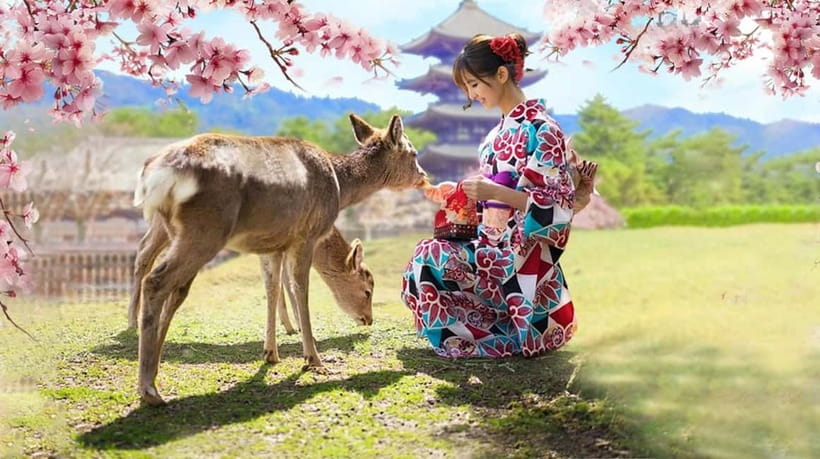
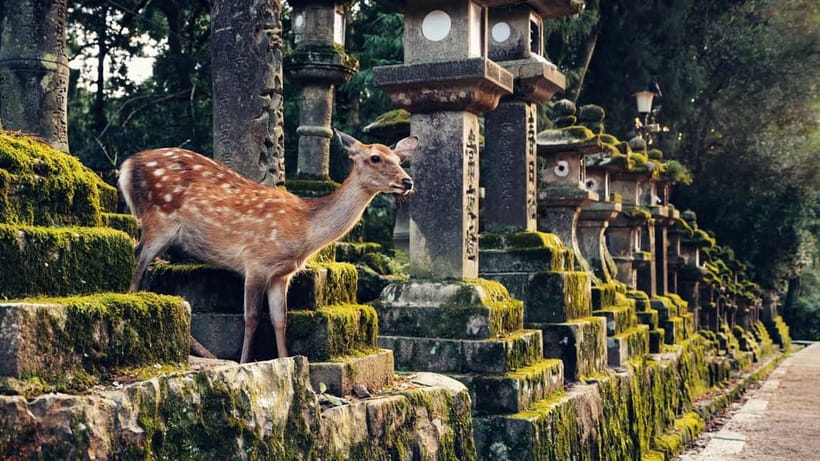
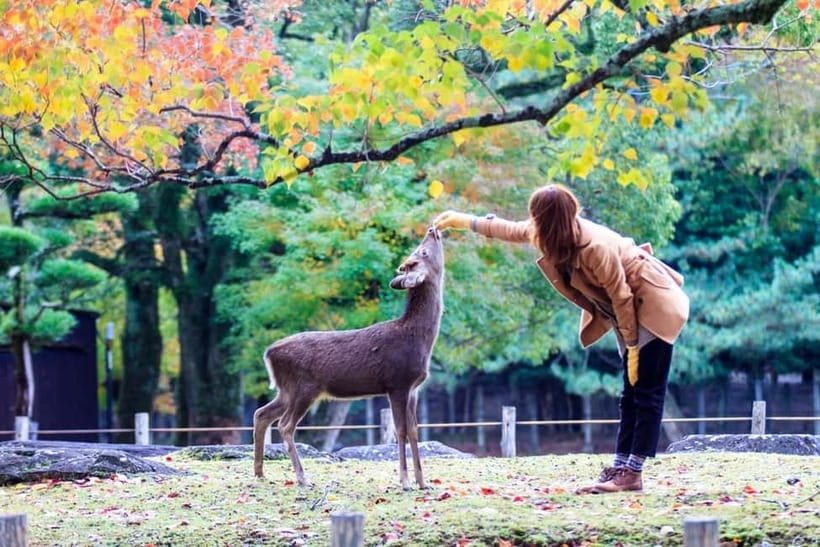
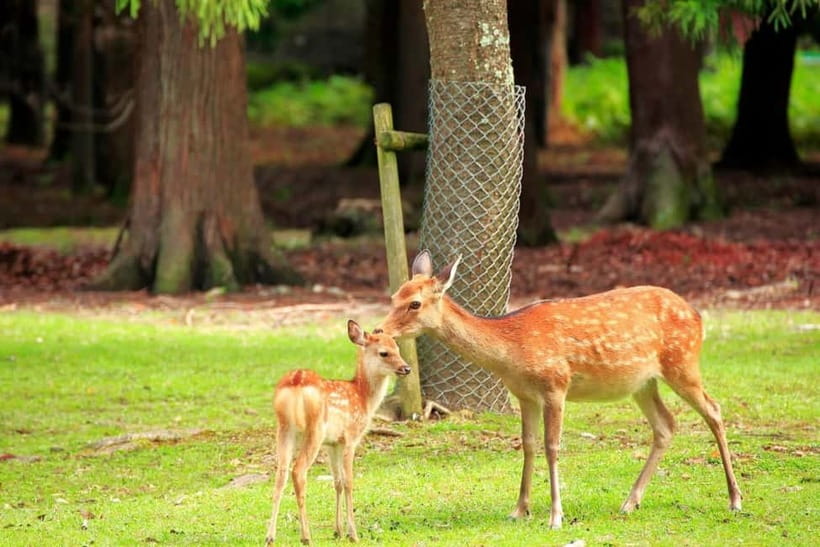
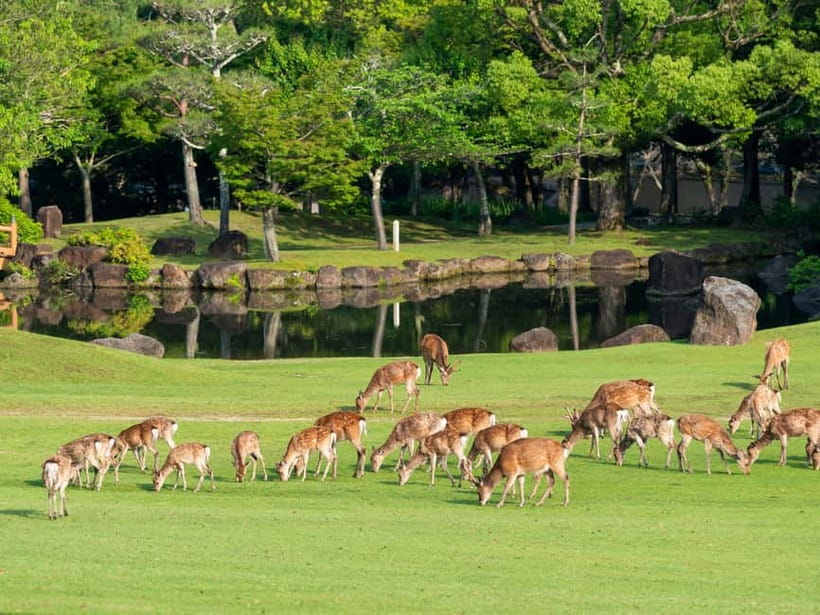
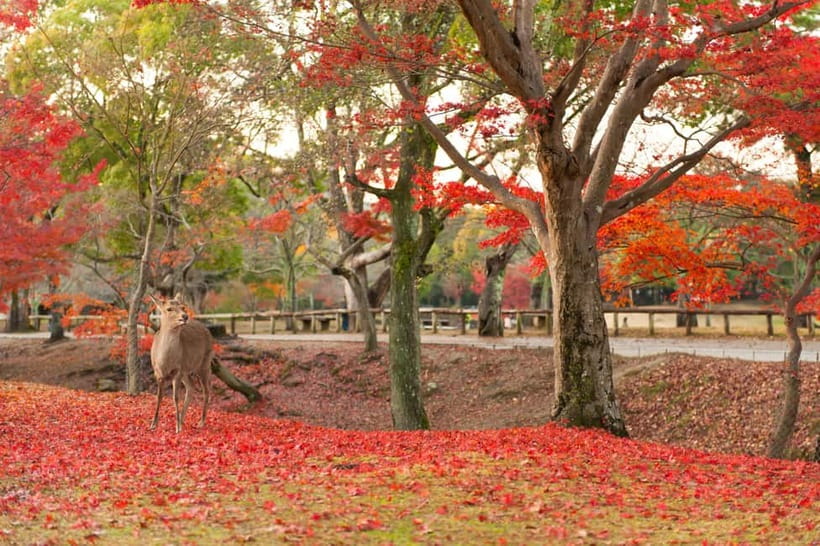
Nara Park is the day’s most playful stop. More than 1,000 deer roam freely here, and they are treated as divine messengers. You can buy special shika senbei and offer the crackers by hand.
The deer are a memorable way to begin because the setting feels unusual even before you reach the temples. You are not looking at animals behind a fence. They move through the park and approach people who appear to have food.
Use some common sense. Keep the crackers together until you are ready, feed calmly, and pay attention once the food is gone. The animals are accustomed to people, but you still need to respect their space.
The scheduled visit lasts about one hour. That is enough for feeding deer, taking photos, and getting a feel for the park. It is not enough for an extended visit to every major temple area in Nara. If Todai-ji or other Nara sights are a priority, you will need a separate visit.
This stop suits families and first-time visitors especially well. It also gives solo visitors an easy way to start the day, since the deer provide an immediate activity while the group gathers and explores.
Fushimi Inari Taisha and its red gate tunnel
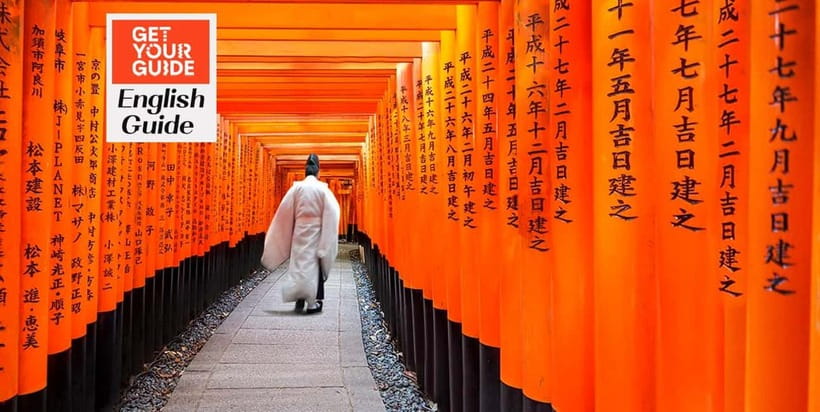
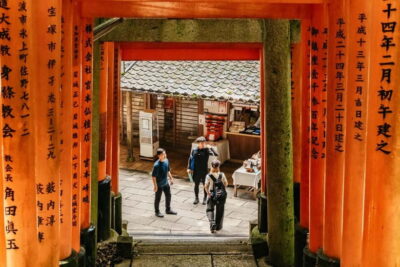
At Fushimi Inari Taisha, you walk beneath rows of vermilion torii gates dedicated to Inari, the deity linked with prosperity and successful business. The gates rise along the mountain, with more than 10,000 spread through the shrine complex.
The first section is the most famous and the easiest to reach during a short visit. The gates create a striking corridor for photographs, but the place is more than a photo backdrop. The repeated gates, wooded slopes, and shrine buildings give the walk a quiet, slightly mysterious mood.
You have about 70 minutes here. That allows time to enter the gate paths, take photographs, and look around the lower shrine area. It does not allow a full climb up the mountain and back. Keep your watch handy, since it is easy to walk farther than planned.
The shrine has also appeared in popular films and television, including Memoirs of a Geisha and Detective Conan. That connection may add interest, but the real appeal is the experience of walking through a long sequence of gates that gradually changes from crowded to calmer as you continue uphill.
Fushimi Inari is likely to be the strongest stop for you if you enjoy Japanese religious sites and atmospheric walks. It is also the place where comfortable shoes matter most. The route includes steps and slopes, and the schedule leaves little room for a leisurely climb.
Arashiyama’s bamboo forest and Nonomiya Shrine
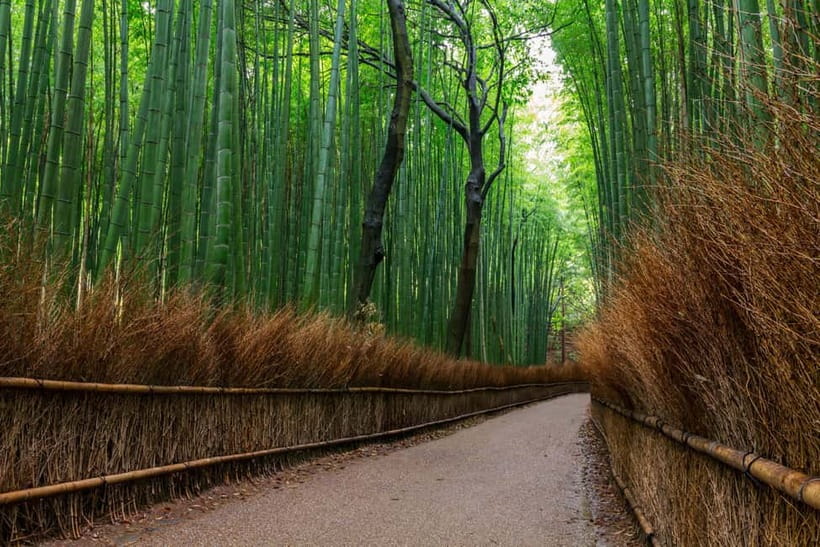
Arashiyama receives the longest visit, with about two and a half hours in the area. Even so, you must choose what matters most. The bamboo forest alone can take your whole allotted time if you stop often for photos.
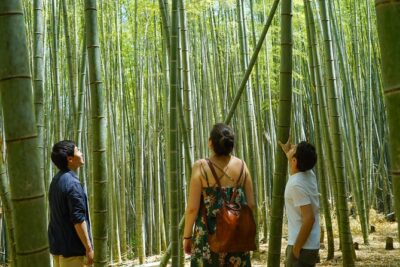
The bamboo path is famous for its tall stalks and filtered light. It is a short, scenic walk rather than a remote wilderness experience. Expect other people, especially around the most photographed section, and use the time to notice the changing light, the sound of the stalks, and the narrow path through the grove.
Nonomiya Shrine sits within the Arashiyama area and dates from the Heian Period more than 1,000 years ago. It is associated with love and academic success. Look for its Kuroki Torii, a rare unpainted wooden gate that has a simpler look than the bright gates at Fushimi Inari.
The bamboo forest and Nonomiya Shrine work well together. One gives you a natural setting, while the other adds a small sacred site with a long connection to Kyoto’s past. The short stop at Nonomiya is best treated as part of your Arashiyama walk, not as a separate major attraction.
Other mornings on the western edge of Kyoto:
- Osaka/Kyoto:Kinkakuji,Arashiyama,FushimiInariShrine,NaraPark
★ 4.1 · 1,596 reviews - Kyoto Arashiyama Walking Tour: Bamboo, Monkeys, Gardens & Secrets
★ 5.0 · 1,216 reviews - Arashiyama Bamboo, Temple, Monkeys, or Secret Sake Brewery
★ 4.8 · 886 reviews - Kyoto: Arashiyama Bamboo Forest, Monkeys, Matcha & Temple Tour
★ 5.0 · 759 reviews
Tenryu-ji, Togetsukyo Bridge, and free time
Tenryu-ji is a UNESCO World Heritage Site and one of Arashiyama’s key sights. Entry costs extra, so you need to decide if the temple and its Sogenchi Garden are worth part of your available time and budget.
I would consider Tenryu-ji if gardens and Zen temple design matter to you. Sogenchi Garden uses borrowed scenery, allowing the surrounding hills to become part of the view. In autumn, the colors can make the garden especially attractive, though the experience depends on the season and weather.
The practical issue is choice. You cannot comfortably do every Arashiyama activity in depth during one short visit. If you enter Tenryu-ji, you may have less time for food, shopping, the bridge, or the bamboo path. If the temple is not a priority, stay outside and use the time for other parts of the district.
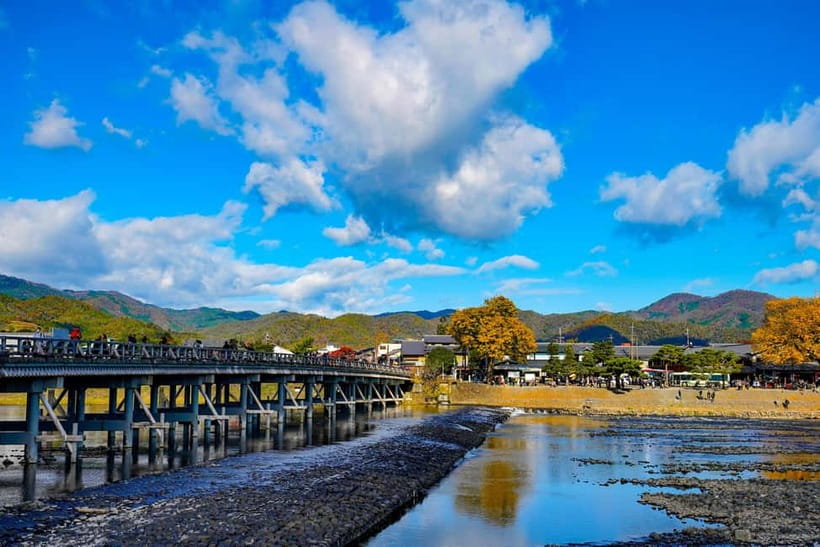
Togetsukyo Bridge gives you one of Arashiyama’s broadest views. From here, you can look across the river toward the hills and see rickshaws passing through the area. The bridge stop is only about 15 minutes in the planned schedule, but the wider Arashiyama free time lets you return for a closer look.
Arashiyama also has local restaurants and street food. You may find snacks and meals that are easier to fit into your day than a formal restaurant visit. The Rilakkuma Tea House offers character-themed photos and food, while the Arashiyama Station footbath provides a simple way to rest tired feet if it is available during your visit.
Kimono Forest and the final photo stop
Kimono Forest is a modern installation near Arashiyama Station. About 600 pillars display Kyoto Kyo-Yuzen textile patterns, creating a colorful contrast with the older shrines and temple gardens.
The stop lasts about 15 minutes, making it a good final photo break. It is not a historic site, and you should not expect a long cultural visit. Its value is visual: the pillars turn a station area into an art display and give you a different side of Kyoto’s design tradition.
This is also where the day’s blend of old and new becomes clear. You may spend the morning with sacred deer and shrine gates, then finish beside a contemporary installation and a station footbath. That variety is one reason the itinerary works for a first visit.
How the timing affects your day
The tour runs for 9 to 10 hours, but some of that time is spent on the road. Traffic between Osaka, Nara, and Kyoto can affect the return, so avoid booking an evening activity that requires a precise arrival.
The schedule is structured around short visits. Nara gets one hour, Fushimi Inari about 70 minutes, and Arashiyama about two and a half hours, with individual stops inside Arashiyama ranging from 15 minutes to self-guided time.
Some people will find this pace efficient. You see a lot without spending a day planning routes. Others may find it tight, especially at Fushimi Inari or Tenryu-ji. I would choose this tour if you want an overview and plan to return later to the place you like best.
The guides are a major part of the experience. Amy is often praised for organization, humor, helpful messages, and taking photos. Willa is described as warm, punctual, and good at explaining each stop. Christine is noted for clear communication, recommendations, and keeping the group on schedule. Fiona is praised for her energy, language skills, and practical help.
Guide assignments can change, so you should not book expecting one particular person. The useful pattern is clear: the tour depends on a guide who gives firm meeting times, explains the next stop, and gathers everyone before the bus leaves.
Is $52 good value?
At $52 per person, the price is reasonable for a full day of transport between Osaka or Kyoto and three major sightseeing areas. Your fee includes the English-speaking guide, air-conditioned vehicle, taxes, parking, gas, and handling charges.
You still pay for food, drinks, personal purchases, and the optional entrance fee at Tenryu-ji. Deer crackers, meals, souvenirs, and extra attractions can increase the day’s total.
The value comes from saved effort. A solo plan may cost less in some cases, but you must manage train routes, station transfers, walking directions, and departure times yourself. The bus also lets you treat the day as a guided introduction rather than a transport puzzle.
I would not choose this option if you already know Kyoto well or want long, quiet visits at one or two sites. I would choose it if you are staying in Osaka, have limited time, and want to cover Nara and Kyoto without arranging each connection.
What to bring and who should skip it
Wear comfortable shoes and clothing. Bring water and an umbrella, since the day includes outdoor walking and weather can change. Smoking is not allowed.
The tour is not suitable for wheelchair users or people with mobility impairments. Fushimi Inari includes slopes and steps, and the various stops require walking between the vehicle and attractions.
Tell the operator in advance if you have an infant, stroller, or large luggage. Japanese traffic rules count babies as passengers, so the transport team needs accurate information.
Arrive 10 to 15 minutes before departure. The bus leaves on time, and missing the departure can disrupt the whole day. You also need to state your preferred drop-off point, Osaka or Kyoto. If you do not, the default is usually the same place as pickup.
Should you book this Kyoto and Nara bus tour?
Book it if you want a well-organized first look at Nara and Kyoto, especially from an Osaka base. The deer, torii gates, and bamboo forest make a strong trio, and the bus saves you from handling several connections.
Skip it if you prefer to linger, climb all the way through Fushimi Inari, spend hours in Tenryu-ji, or explore Arashiyama at your own speed. For most first-time visitors with one free day, though, $52 is a fair price for the coverage, transport, and guide support.
FAQ
How long does the tour last?
The tour lasts approximately 9 to 10 hours. Traffic and weather can affect the schedule and return time.
Where can I join the tour?
There are departure options from Harimaya Nippombashi 1-chome in Osaka and Kyoto Station Hachijo Entrance Square Sunken Garden. The exact meeting point depends on the option booked.
What languages are available?
Live guiding is available in English and Chinese.
Is Tenryu-ji Temple included in the price?
Tenryu-ji is listed as an optional visit with an extra entrance fee. Food, drinks, and personal expenses are also not included.
Can I choose to return to Osaka or Kyoto?
Yes. You should tell the operator your preferred drop-off point when you book. If you do not provide a preference, drop-off defaults to the pickup point.
What happens if I need to cancel?
You can cancel up to 24 hours in advance for a full refund. The tour also offers a reserve now and pay later option.
More bus tours from Kyoto
- PERFECT KYOTO 1-Day Bus Tour
★ 5.0 · 13,518 reviews - Kyoto: Hop-on Hop-off Sightseeing Bus Ticket
★ 3.9 · 2,034 reviews - Mt Fuji and Hakone 1-Day Bus Tour Return by Bullet Train
★ 5.0 · 26,383 reviews - 1-Day Tokyo Bus Tour
★ 5.0 · 14,250 reviews
More Nara day trips from Kyoto
- Kyoto and Nara Day Trip from Kyoto
★ 4.5 · 445 reviews - Full Day Guided Tour to Kyoto and Nara from Osaka by Van
★ 5.0 · 420 reviews - Nara Afternoon Tour from Kyoto or Osaka
★ 4.5 · 390 reviews - From Kyoto: Nara Guided Morning Tour
★ 4.6 · 335 reviews
Just added in Kyoto
- Kyoto: Private Photoshoot Service★ 5.0 · 158 reviews
- Kyoto Rickshaw Tour★ 5.0 · 210 reviews
- Izakaya Style Cooking Class★ 5.0 · 219 reviews
- Ninja 2-hour Hands-on Lesson by Japanese master in Kyoto -Medium★ 5.0 · 218 reviews
- Kyoto: Traditional Concert at Townhouse or Bathhouse★ 4.9 · 224 reviews
- Kyoto: Arashiyama Bamboo, Temple, Matcha, Monkeys & secret spots★ 5.0 · 219 reviews
- Kyoto Geisha District Walking Tour in Gion★ 5.0 · 232 reviews
- The right way to know Kyoto★ 5.0 · 257 reviews
Fushimi Inari Tours, compared.
Fushimi Inari Hidden Hiking Tour (Private Option Available)
Read our review →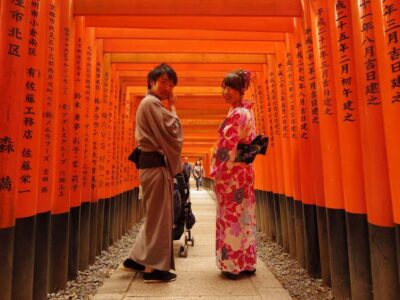
Osaka/Kyoto: Arashiyama, Nara & Fushimi Inari Shrine w/Lunch
Read our review →
Nijo Castle, Kiyomizu & Fushimi Inari Guided Tour
Read our review →
Nijo, Kinkaku-ji, Arashiyama, Kiyomizu & Fushimi Inari
Read our review →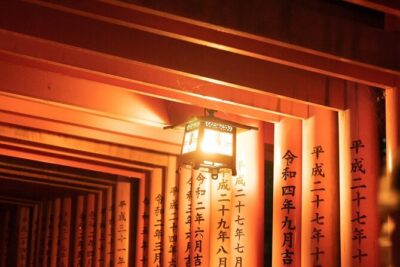
Full Day Kyoto Tour : Bamboo Forest, Golden Temple, Fushimi Inari
Read our review →Browse the lists this tour appears in