
Reviewed · ARASHIYAMA & BAMBOO GROVE TOURS
Bamboo LED Lantern Making Experience in Kyoto Arashiyama
Arashiyama’s bamboo grove is easy to admire and just as easy to leave without understanding. This small-group class changes that. You walk partway through the grove with Noriko, learn how bamboo grows and is used, then work with the material yourself in a family workshop.
I like the personal scale and the fact that you take home something you made, not just another shop purchase. I also like the careful instruction from Noriko and her husband, especially for children using drills and other tools. The main consideration is that fresh bamboo can hold moisture, so you need to unpack and dry your lantern properly at home.
Key points to know before booking
- Meet at 2 p.m. at Saga-Arashiyama Station: The class begins with a walk toward the bamboo forest and ends back at the station.
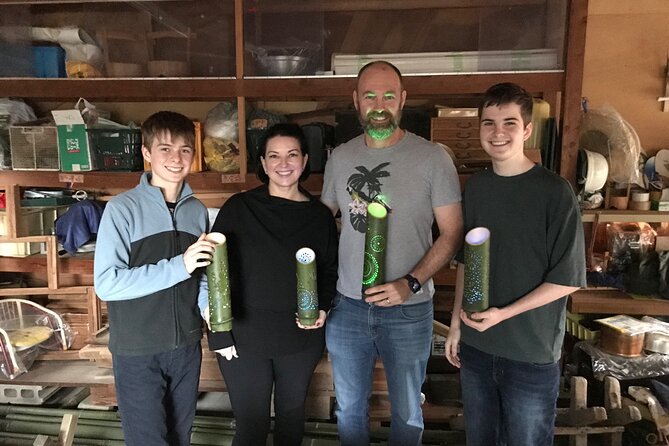
- Make more than a souvenir: You choose the bamboo and design, then drill the pattern yourself with guidance.
- Several craft options are available: The LED lantern is the main choice, but you may also make a sake cup, sake bottle, teacup, or smartphone holder.
- Noriko leads the walk and class: Her English is described as excellent, and she explains bamboo, local culture, shrines, and the area.
- Good for families: Children as young as 7 have taken part, with close help around the equipment.
- Allow about three hours: Lunch is not included, so plan a meal before or after the activity.
Why this Arashiyama class is different from a forest walk
The bamboo grove is one of Kyoto’s most photographed places. It is also a place where you can spend twenty minutes taking pictures and leave with little sense of what you saw. This activity gives the grove a purpose.
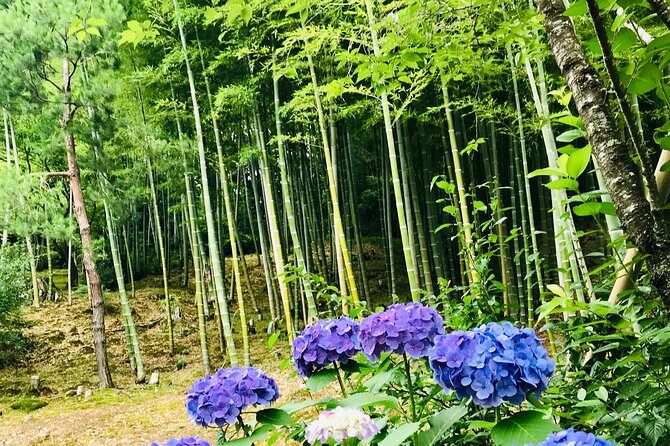
You meet Noriko at Saga-Arashiyama Station, then walk toward the famous forest. The route includes part of the Bamboo Forest Trail and may also pass through a quieter neighborhood and by a shrine. Noriko explains the bamboo plant, the surrounding area, and local customs as you go.
That short walk matters. You begin to notice the material itself: the segmented stalks, the way bamboo is cut, and why it has such a long place in Japanese craft. You are not simply checking off Arashiyama’s most famous sight before moving on.
The forest portion is not described as a long hike. If your main goal is a full-length nature walk, this may feel brief. If you want a useful introduction before sitting down to make something, the timing works well.
Other mornings on the western edge of Kyoto:
- Kyoto: Fushimi Inari, Kinkakuji, Bamboo Grove 1 Day Bus Tour
★ 4.8 · 4,316 reviews - Osaka/Kyoto:Kinkakuji,Arashiyama,FushimiInariShrine,NaraPark
★ 4.1 · 1,596 reviews - Kyoto/Osaka: Nara, Fushimi Inari Taisha, Arashiyama Bus Tour
★ 4.7 · 1,275 reviews
Meeting Noriko at Saga-Arashiyama Station
The meeting point is Saga-Arashiyama Station at 2 p.m., at 11-1 Sagatenryuji Kurumamichicho, Ukyo Ward. Starting at the station is practical because Arashiyama has several major sights and several transport stops, and it gives you a clear place to begin.
The tour ends back at the meeting point. That makes it easier to fit the class into a wider afternoon plan. You could visit another Arashiyama sight before the 2 p.m. start, then return to the station, or save the bamboo forest for the class itself.
Arrive with enough time to find the station meeting point. The activity uses a mobile ticket, and confirmation is provided when you book. The exact walking route can vary, but the central plan is clear: station, bamboo forest, workshop, station.
Walking through the Bamboo Forest Trail
The forest walk is a guided introduction rather than a formal botanical tour. Noriko explains the mysterious plant bamboo and gives context about the area, shrines, and Japanese culture. Her English makes this useful for visitors who want to ask questions instead of simply following a silent route.
The forest is likely to be the busiest part of the afternoon. Arashiyama’s bamboo path is famous, and no craft class can remove the crowds from a public attraction. The small group does help once you leave the most photographed section and continue toward the workshop.
This is one of the strongest parts of the schedule because it links the setting to the finished object. You see bamboo growing in Arashiyama, then handle a piece of it a short time later. That connection gives the lantern more meaning than a ready-made souvenir from a shop.
Do not expect lunch or a long break in the forest. Food is not included, and the experience is built around walking and making. A meal before the 2 p.m. meeting time is a sensible plan.
Entering a family workshop in Arashiyama
After the walk, you go to Noriko’s workshop, located at her home. The setting is a quiet contrast to the public forest. The space has been described as clean, bright, and set up for small classes, with Noriko and her husband helping participants through the process.
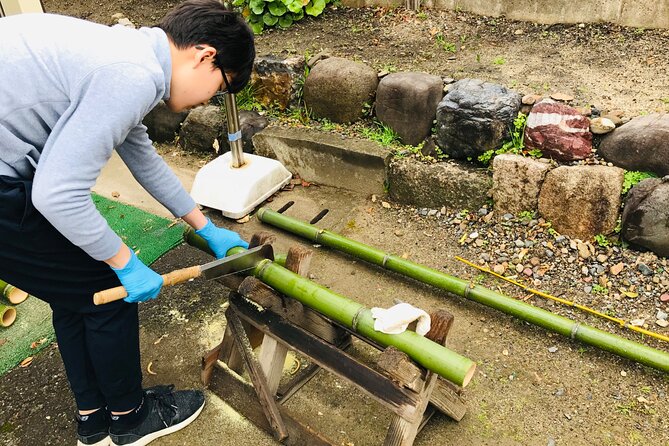
The family setting is a real part of the appeal. You are not being moved through a large production class. Noriko talks with you, answers questions, and adjusts her help to the people in the room. Her husband assists with cutting and stays close when children use the equipment.
The activity is advertised as an intimate class, with a cap of eight people. The additional details give a maximum of six participants, so the exact limit is not perfectly consistent. Either way, it is designed to be a small group rather than a crowded workshop.
That size matters. You have time to ask how the tools work, change a design, or get help with a tricky section. It also means the class depends on everyone working at a comfortable pace. You will not be in a huge room with dozens of people making identical pieces.
Other things to make with your hands in Kyoto:
- Kyoto : Chopsticks Making Workshop in Gion with Engraving Option
★ 5.0 · 958 reviews - Authentic knife making experience at a blacksmith in Kyoto
★ 4.8 · 350 reviews - Kyoto: Calligraphy class at Buddhist temple in city center
★ 5.0 · 167 reviews - Kyoto: Small-Group Authentic Sushi Making Workshop
★ 5.0 · 137 reviews
Choosing your bamboo and your design
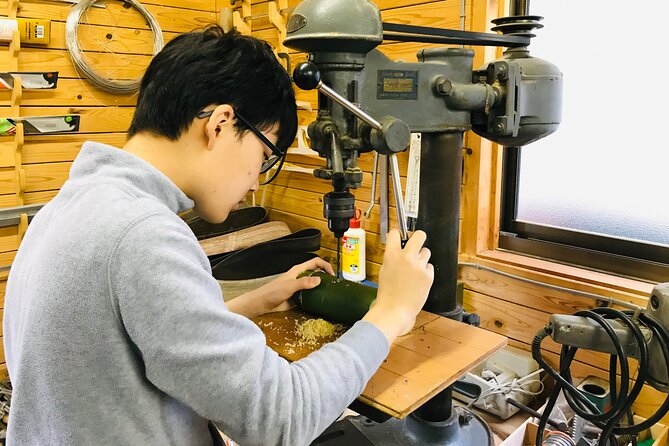
For the lantern, you select a piece of bamboo and choose a pattern. Paper templates are provided, but you can modify one or create a design of your own. Several people have found it useful to think about a pattern before arriving, especially if they want a personal symbol or a more unusual shape.
You do not need to arrive as an experienced craftsperson. The templates give you a starting point, and the instructors explain each stage. The process includes preparing the bamboo, applying the pattern, and drilling the holes that allow the light to show through.
The ability to choose your material is a small but important detail. Your finished lantern will not look like something picked from a shelf. The shape of the bamboo and the pattern you select make it your own.
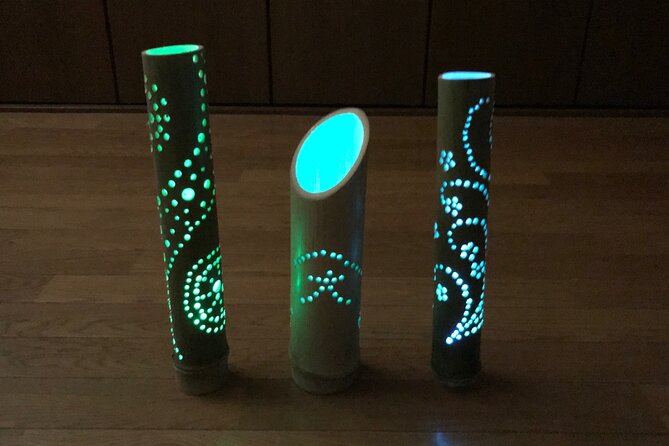
The lantern is the best fit if you want a useful object to display at home. It takes an LED light rather than a flame, so it works as a small mood-lighting piece. Other options listed for the workshop include a sake cup, sake bottle, teacup, and smartphone holder. Ask about the available choices when you arrive, since the selected project may affect the work involved.
Using drills and workshop tools safely
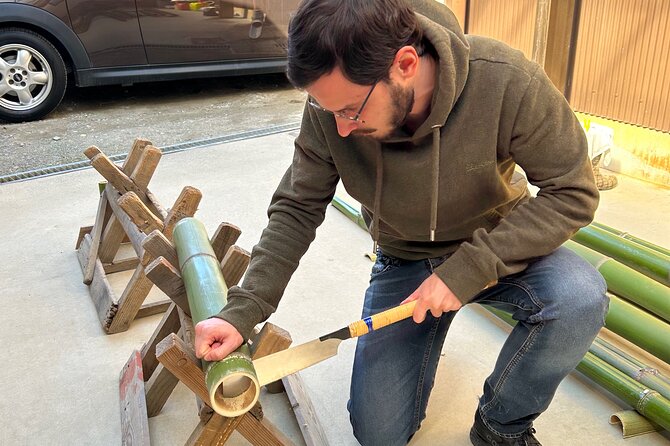
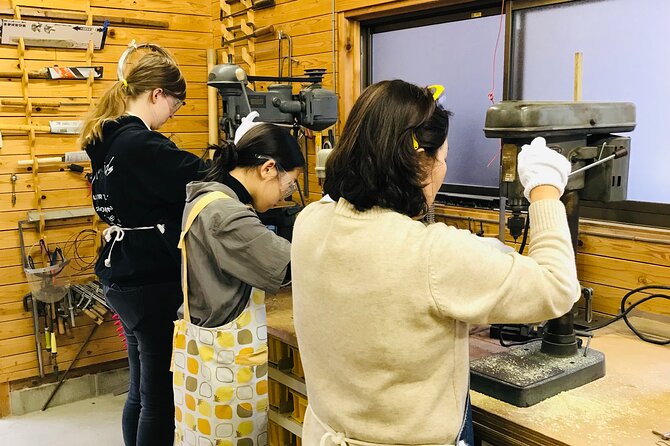
The class includes the materials and the use of tools and machines. You receive an explanation before working on your own piece, and participants have described getting practice with the drill press before starting on the bamboo.
This is where the quality of instruction matters most. A bamboo lantern may look simple, but the pattern requires repeated holes and steady handling. Noriko and her husband provide close supervision, and children are not simply left to figure out the equipment alone.
The activity has worked well for families with children aged 7, 11, and 13. One seven-year-old was given a chance to help with sawing under supervision, while older children were able to use the machines after instruction. Still, parents should stay involved and follow the workshop’s safety guidance.
If you dislike hands-on work, the class may feel slower than a normal sightseeing stop. You will spend much of the time making, correcting, and waiting for help when needed. That is the point of the activity, but it is worth knowing before you book.
Tea, conversation, and the human side of the class
The class is not only about tools. Noriko and her husband make time for conversation, and a short break with tea and snacks has been included during the work. That pause is useful, particularly for families or anyone arriving after a full day of sightseeing.
Noriko also answers questions about Japanese culture and the area. Her role covers several parts of the afternoon: guide on the walk, craft teacher in the workshop, and host at the family home. Her English is described as very good, which helps the class feel easy to follow for international visitors.
That personal contact is the experience’s strongest feature. You get a local connection without signing up for a formal lecture. The class has structure, but it does not sound rigid.
What you take home, and how to care for it
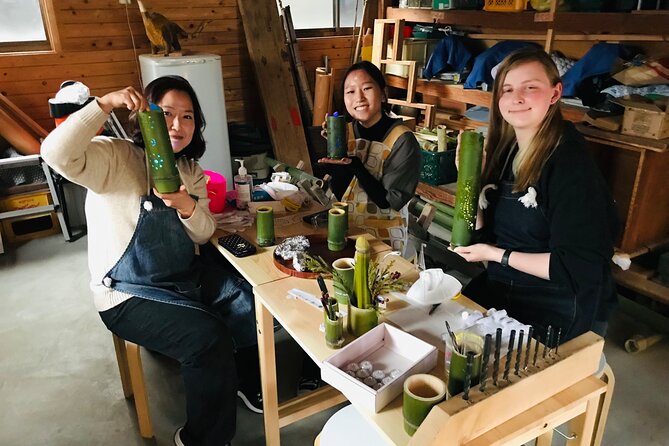
The finished bamboo item is the main value of the afternoon. A handmade LED lantern gives you a souvenir with a practical use, and the act of making it helps you remember the place more clearly. You can put a small light inside for soft illumination at home.
There is one care point you should take seriously. Fresh green bamboo may still contain moisture. A past participant found mold after the lamp had been wrapped in bubble wrap, and the provider explained that the wrapping method would be improved and that heated, dried bamboo would also be introduced as a more stable option.
When you receive your piece, ask how it should be stored and transported. At home, unpack it rather than leaving it sealed in plastic or bubble wrap. Keep it dry and allow air around it while the bamboo settles. This is not a reason to reject the class, but it is a practical issue that deserves attention.
The finished work may have small irregularities. That is part of making a craft by hand. If you want a perfectly uniform factory-made lamp, shop for one instead. If you want an object that carries evidence of your own work, the unevenness is part of its charm.
Is $79.26 a fair price?
At $79.26 per person, this is not the cheapest way to see Arashiyama. You can walk the bamboo grove for free and buy a bamboo souvenir for less. The price makes more sense when you count the guided walk, workshop access, materials, equipment, instruction, and the finished item.
You are also paying for a small class rather than a large demonstration. Noriko and her husband help with the cutting, pattern, drilling, and safety steps. For a family, the fee can replace a more passive attraction with an activity everyone does together.
The value is strongest for people who would otherwise spend money on a craft workshop or a special souvenir. It is weaker for visitors who only want photographs of the bamboo forest or who dislike making things.
The class is booked about 16 days ahead on average, so it is sensible to reserve before your Arashiyama day is fixed. Free cancellation is available if you cancel at least 24 hours before the 2 p.m. start time. Cancellations or changes inside that window are not refunded or accepted, and a minimum group size applies.
Who will enjoy this afternoon most
I would choose this for families, couples, solo visitors who like practical activities, and anyone who wants a quieter second act after seeing the bamboo grove. It is especially suitable if you want to ask questions and work at a human pace.
Children can take part, but the class is not a drop-off activity. Adults need to remain attentive around the machines, even with the close help provided by the instructors.
It also suits repeat visitors to Kyoto. If you have already seen the grove, this gives you a reason to return to Arashiyama without repeating the same sightseeing routine.
You may want to skip it if your schedule is tight, if you need a fully accessible route that has not been specifically described, or if your only goal is a quick bamboo forest visit. Most people can participate, and service animals are allowed, but detailed accessibility information is not provided.
Should you book the bamboo lantern class?
Book it if you want to understand bamboo through your hands, not only through photographs. The walk with Noriko, the quiet home workshop, the chance to select a design, and the finished LED lantern make this a thoughtful use of three hours in Arashiyama.
I especially like it for families and for visitors who value local contact over a polished tourist production. Just plan lunch separately, arrive at Saga-Arashiyama Station before 2 p.m., allow time for the craft process, and care for the fresh bamboo properly once you get home.
FAQ
Where does the bamboo craft experience begin?
It begins at Saga-Arashiyama Station at 2 p.m. The listed address is 11-1 Sagatenryuji Kurumamichicho, Ukyo Ward, Kyoto, 616-8373, Japan.
How long does the activity last?
The activity lasts approximately three hours.
Does the experience include a visit to the Bamboo Forest?
Yes. The activity begins with a walk through part of the Bamboo Forest Trail, where Noriko explains bamboo and the surrounding area before taking you to the workshop.
What can I make during the workshop?
You can make an LED bamboo lantern or select another bamboo craft such as a sake cup, sake bottle, teacup, or smartphone holder.
Are materials and tools included?
Yes. The materials and use of the required tools and machines are provided.
Is lunch included?
No. Lunch is not included, so plan to eat before the 2 p.m. start or after the activity.
How many people can join the class?
The experience is designed as a small-group activity. Its information gives a maximum of six travelers in one place and also describes the class as capped at eight, so the exact limit may vary by booking details.
Can I cancel for a full refund?
Yes, if you cancel at least 24 hours before the local start time. Cancellations or changes made less than 24 hours before the experience are not refunded or accepted.
Just added in Kyoto
- Private Cooking Class Udon in Kyoto Japan★ 5.0 · 23 reviews
- Your Private Vacation Photography Session In Kyoto★ 5.0 · 110 reviews
- Kyoto: Zen Meditation at a Private Temple with a Monk★ 5.0 · 25 reviews
- Private Pewter Sake Cup Experience with a Kyoto Artisan★ 5.0 · 31 reviews
- Kyoto Wagashi(Japanese sweets) Cooking Class near Fushimiinari★ 5.0 · 60 reviews
- Kyoto:Family-Friendly Kimono & Yukata Experience at WARGO★ 5.0 · 147 reviews
- Private Guided Traditional Buddhist Cooking in Japan★ 5.0 · 16 reviews
- Kyoto: Gion Geisha District & Sake-in-Hand Walking Tour★ 5.0 · 37 reviews
Arashiyama & Bamboo Grove Tours, compared.
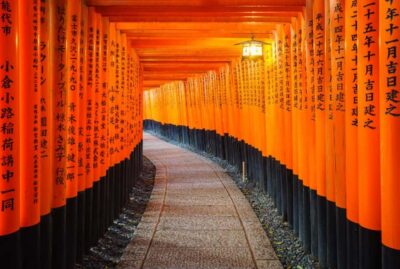
Osaka/Kyoto:Kinkakuji,Arashiyama,FushimiInariShrine,NaraPark
Read our review →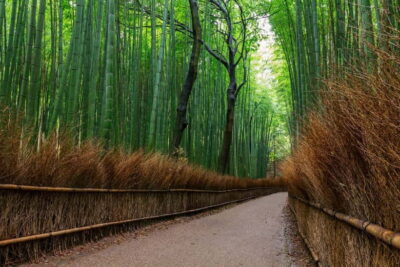
Kyoto/Osaka: Nara, Fushimi Inari Taisha, Arashiyama Bus Tour
Read our review →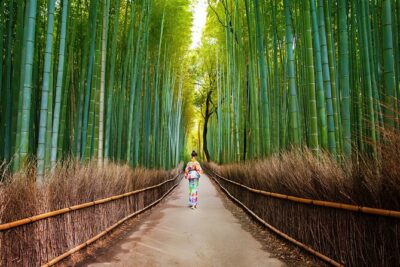
Kyoto Arashiyama Walking Tour: Bamboo, Monkeys, Gardens & Secrets
Read our review →
Arashiyama Bamboo, Temple, Monkeys, or Secret Sake Brewery
Read our review →
Arashiyama Bamboo Forest, Monkeys, Matcha & Temple Tour
Read our review →
Osaka/Kyoto: Arashiyama, Nara & Fushimi Inari Shrine w/Lunch
Read our review →
Nijo, Kinkaku-ji, Arashiyama, Kiyomizu & Fushimi Inari
Read our review →
Kyoto Ghost Tour: Dark Tales, Urban Legends, Bamboo Forest Night
Read our review →Browse the lists this tour appears in