
Reviewed · NARA & THE DEER PARK
From Kyoto / Osaka: Kyoto Must-see Spots & Nara Park One Day Tour
Nara’s bowing deer and Kyoto’s endless red torii gates give this day trip its punch. You move from Nara Park to Fushimi Inari and then west to Arashiyama, covering three major sights without wrestling with several train lines.
I like the efficient route and the guides’ hands-on coordination. Amy, Fiona, Mia, Laura, and Tina are all singled out for keeping groups on time, sharing useful local tips, and making the long day lively. I also like the low $60 price, especially if you are staying in Osaka and want one simple day of sightseeing.
The trade-off is pace. With a maximum group of 45 and many stops packed into about nine hours, you get an overview rather than a slow, detailed visit. Tenryu-ji’s 500-yen entry is extra, lunch is not included, and one stop may appeal less to you than another.
Key points to know before booking
- Three major Kyoto and Nara areas in one day: Nara Park, Fushimi Inari, and Arashiyama form the backbone of the route.
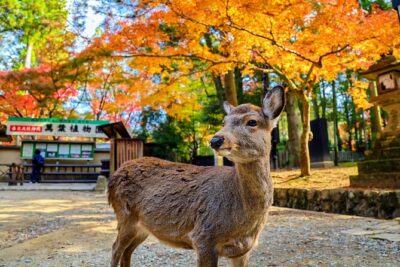
- Free-roaming deer are the family favorite: Bring small change for deer crackers if you want to feed them, and follow the posted feeding rules.
- Arashiyama gets many short visits: You see the Bamboo Forest, Nonomiya Shrine, Kimono Forest, Tenryu-ji, the Rilakkuma Tea House, and Togetsukyo Bridge, but not in depth.
- The guide can make or break the day: Guides named Amy, Fiona, Mia, Laura, Tina, Willa, Theodore, and others have been praised for clear directions and cheerful organization.
- Bring lunch money and 500 yen: Food is not included, and Tenryu-ji admission costs 500 yen.
- Expect a large group and a fast pace: The vehicle can carry up to 45 people, and you need to watch the time at each stop.
What this Kyoto and Nara day trip is really designed to do
This is a sightseeing sampler for a tight schedule. You are not signing up for a scholarly temple tour or a quiet walk through Kyoto. You are buying transport, basic guiding, and a carefully packed route through places that can be awkward to combine on your own.
The tour lasts about nine hours and leaves from either Kyoto or Osaka. That starting choice matters. If you are based in Osaka, the bus removes the need to plan separate rail connections to Nara and western Kyoto. If you are based in Kyoto, it gives you a broad east-to-west sweep of the city and a trip into Nara.
The price is $60 per person. I consider that reasonable for an air-conditioned vehicle, a guide, and this much ground covered, particularly if you value convenience over independent timing. You still need to budget for lunch, deer crackers if you choose to buy them, and the 500-yen Tenryu-ji ticket.
The group may reach 45 people. That helps explain why the experience sometimes feels more like a coordinated sightseeing transfer than a traditional walking tour. Your guide gives instructions and background, then you often explore a site on your own before returning to the meeting point.
Other day trips out of Kyoto:
- Kyoto/Osaka: Nara, Fushimi Inari Taisha, Arashiyama Bus Tour
★ 4.7 · 1,275 reviews - Osaka/Kyoto: Arashiyama, Nara & Fushimi Inari Shrine w/Lunch
★ 4.4 · 754 reviews - Kyoto and Nara Day Trip from Kyoto
★ 4.5 · 445 reviews
Nara Park: deer first, temples by location
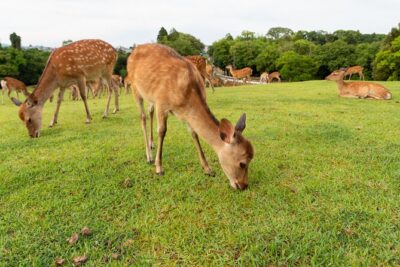
Nara Park covers about 660 hectares and is known for its free-roaming deer and major Buddhist sites. You have about one hour here, enough to meet the deer and get a taste of the park, but not enough to see every major attraction.
The deer are the instant draw. Some will bow when they expect a treat, though you should not mistake this for a perfectly trained performance. Once you buy deer crackers, the animals can become very focused on you. Feed them carefully, then show empty hands when the crackers are gone.
The key practical point is that the tour does not include the Great Buddha. Do not assume that visiting Nara Park means you will enter the hall containing it. If that statue is a top priority, you would need separate time in Nara.
An hour passes quickly. Stay alert for the guide’s meeting instructions, and do not wander far into the park. Families often get the most from this stop, since feeding the deer gives children a clear activity rather than a long temple explanation.
Fushimi Inari: the famous red gates
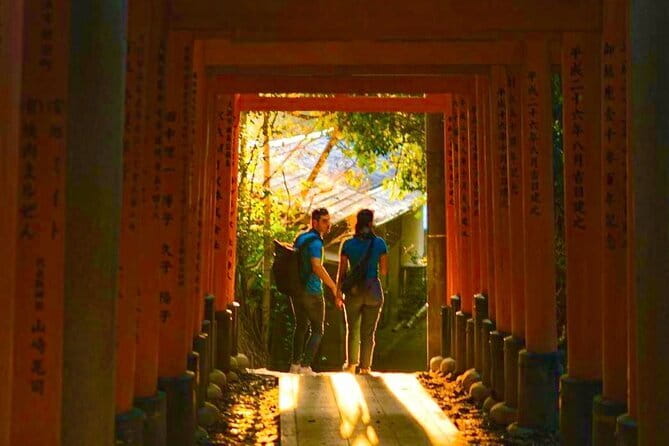
Fushimi Inari Taisha is the head shrine of the roughly 30,000 Inari shrines in Japan. It honors Inari, the Shinto deity associated with rice, and is famous for its Senbon Torii, the long rows of vermilion gates climbing the wooded hillside.
You have about 70 minutes here. That is enough to pass through the lower torii tunnels, see the main shrine area, and walk uphill for a taste of the path. It is not enough for a full climb to the upper shrines and back.
The gates are the visual star, but the place works best when you notice the small details too. Inari shrines are linked with fox figures, regarded as messengers of Inari. The bright gates are donated by individuals and businesses, with inscriptions on the back recording the donor and date.
This is one stop where I understand the desire for more time. The route is compelling, and you may find yourself wanting to continue upward just as the schedule requires you to turn around. Wear shoes suitable for stairs and uneven walking, and keep an eye on the clock.
Arashiyama Bamboo Forest: beautiful, brief, and busy
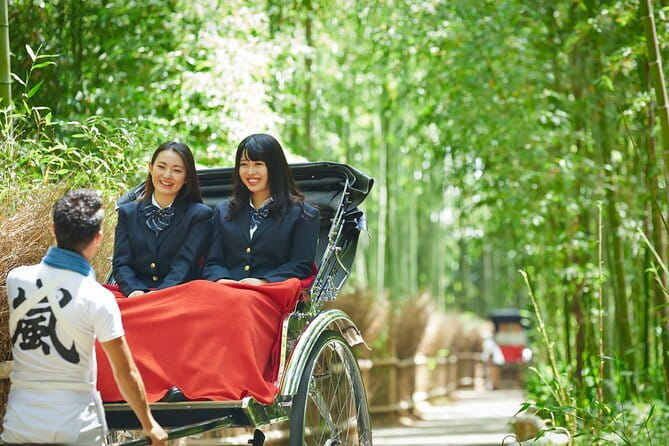
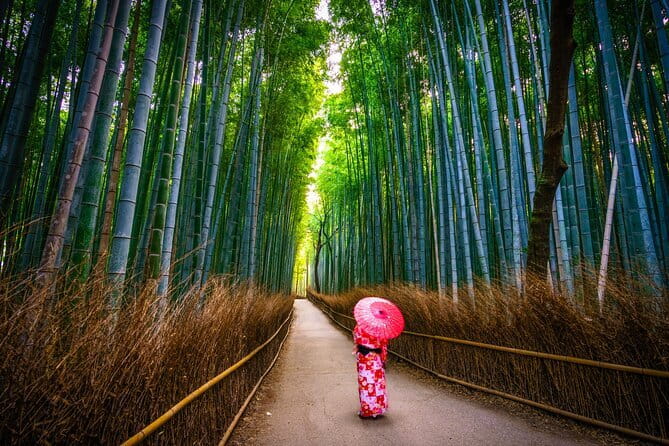
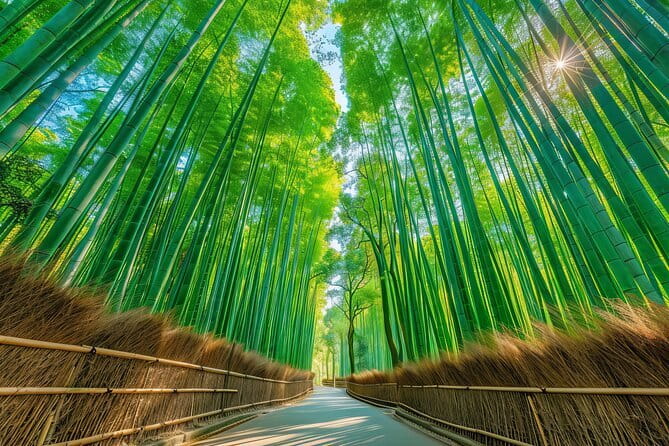
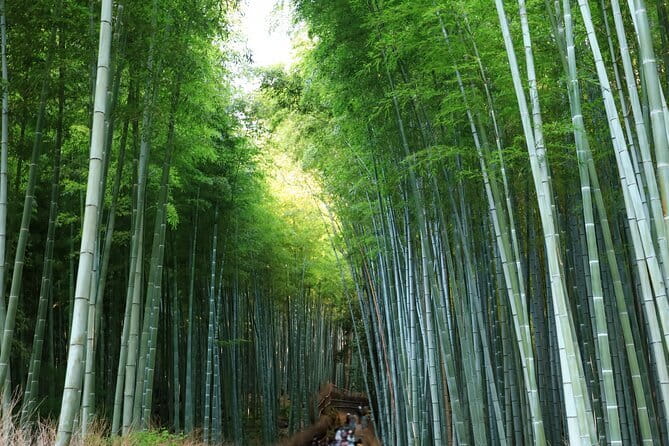
Arashiyama is the broad western Kyoto district, while the Bamboo Forest is one of its best-known corners. The tour allows about 50 minutes in the bamboo area, plus separate short stops nearby.
The bamboo path can feel calm in photographs, but the actual experience depends heavily on crowd levels. You walk beneath tall green stalks, take photos, and enjoy a change from shrine architecture to plant life. The walk is not long enough to become a full countryside outing, and the path can be crowded.
One important scheduling point comes from the structure of the day: the tour gives the bamboo area more time than several of the smaller Arashiyama stops. If you prefer historic interiors, you may wish the schedule gave more time to Tenryu-ji. If you want the classic Kyoto photo, the bamboo stop will likely feel well chosen.
The route around Arashiyama involves walking between attractions. Keep your group’s meeting point in mind, since a large bus cannot wait indefinitely for a late return.
Same base, a different sort of day:
- PERFECT KYOTO 1-Day Bus Tour
★ 5.0 · 13,518 reviews - Kyoto: Fushimi Inari, Kinkakuji, Bamboo Grove 1 Day Bus Tour
★ 4.8 · 4,316 reviews - Kyoto: Tea Ceremony in a Traditional Tea House in Kiyomizu
★ 4.9 · 3,519 reviews - Kyoto Geisha Walking Tour: Gion District & Hidden Gems
★ 4.7 · 3,273 reviews
Nonomiya Shrine and the quieter side of Arashiyama
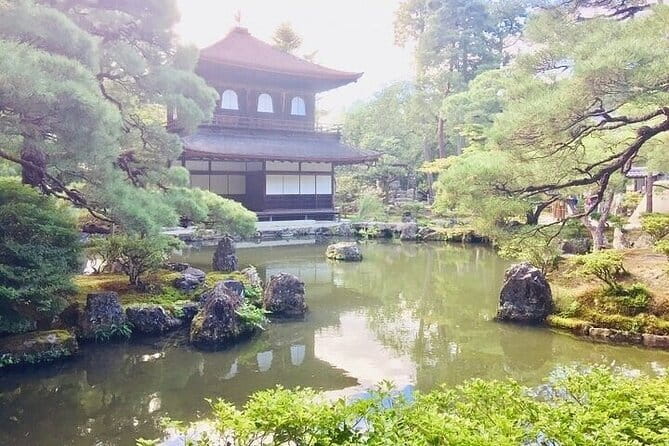
Nonomiya Shrine receives about 20 minutes. It is a small Shinto shrine in Arashiyama, recognized by its unusual black torii gate rather than the more familiar vermilion style found at many Japanese shrines.
This stop is short, but it adds texture to the day. You see that Kyoto’s shrines do not all share one visual formula. The shrine is also tied to the traditional atmosphere of the Arashiyama area, making it a useful pause between the bamboo path and the more commercial sights.
Do not expect a long guided visit. Twenty minutes is enough to look around and hear the main explanation, not enough for a slow ritual or extended photography session.
Kimono Forest: a modern photo stop
The Arashiyama Kimono Forest is a public art installation made of 600 clear acrylic cylinders, each about two meters tall. The cylinders hold colorful kimono fabrics in different patterns.
I see this as a quick visual interlude rather than a major cultural attraction. It gives you polished photographs and a modern counterpoint to the shrine and temple stops. Some people will enjoy the fabric designs and evening-style atmosphere; others may prefer more time inside a temple.
The scheduled visit is about 20 minutes. That is probably enough for a walk through the installation and a few pictures. If your personal priority is Kyoto’s religious architecture, this is the stop you may find least essential. One visitor specifically wished the time had gone to Tenryu-ji instead, a fair criticism given how much there is to see in Arashiyama.
Tenryu-ji: pay attention to the extra cost
Tenryu-ji is a UNESCO World Heritage Site and is ranked first among Kyoto’s five great Zen temples. The tour sets aside about 20 minutes, but admission is not included. You pay 500 yen if you want to enter.
That extra charge is small, yet the short time makes the decision worth considering. If you want to see the temple’s grounds and garden, paying the fee can add an important historic dimension to the day. If you would rather spend every minute outdoors, you may choose to remain in the surrounding Arashiyama area.
The schedule can feel tight here. Tenryu-ji deserves more than a hurried glance, and the tour’s many nearby stops compete for the same limited time. Confirm with your guide exactly where to meet afterward, especially if you enter the grounds.
Rilakkuma Tea House and Togetsukyo Bridge
The Rilakkuma Tea House and shop receive about 15 minutes. Rilakkuma is a relaxed bear character, and the shop fits the playful side of Arashiyama with themed goods and a cafe setting.
This is a niche stop. Families and character fans may enjoy it, while other people may prefer to use the time for a snack, shopping, or a longer walk. The tour does not include lunch, so you should not count on this short visit as your main meal.
Togetsukyo Bridge also gets about 15 minutes. Originally built during the Heian Period and most recently reconstructed in the 1930s, the bridge crosses the Katsura River and is Arashiyama’s signature landmark.
Fifteen minutes is enough to see the bridge, take photos, and enjoy the river setting. It is not enough for a relaxed riverside stroll. Still, the stop helps tie the district together: bamboo, temples, modern art, character culture, and a historic bridge all appear within one compact area.
The guides and how the day feels in practice
The strongest pattern in the guide feedback is organization. Guides named Amy, Fiona, Mia, Laura, Tina, Willa, Theodore, Tracy, Fredrick, and others are praised for lively explanations, clear directions, and keeping a large group moving.
That matters more than it might sound. On a packed day, you need someone to explain where to meet, how long you have, and what not to miss. Tina was especially praised for sending meeting guidance and maps, while Mia received warm marks for helping a family member with walking difficulty. Fiona was often described as energetic and entertaining, and Laura was praised for practical shopping and food tips.
The guide’s style may vary. One account found the talking pace too fast and wished for more direct explanations. Another felt the day had plenty of free time and was only lightly guided at the sites. Both points can be true: the guide organizes the day, but you often explore independently once you are dropped near an attraction.
The bus seats may feel narrow if you have a larger frame. That is a useful consideration for a nine-hour day. Bring water, keep your belongings compact, and be ready for repeated boarding and walking.
Who should book this tour?
I would choose this tour if you have only one open day, are staying in Osaka, or want to see the major photo stops without planning several train journeys. It also works well for first-time visitors who need an overview before deciding where to return on a later day.
Families may like the deer, the short attraction blocks, and the guide support. The air-conditioned vehicle is useful after a long morning of walking, and the mobile ticket keeps the booking simple.
I would think twice if your main goal is slow temple study, a full Fushimi Inari climb, or a relaxed Arashiyama afternoon. Independent visitors can spend far longer at one site and skip the Kimono Forest or Rilakkuma stop if those do not interest them.
The tour can also function as a practical day transfer in some circumstances. A participant used it while moving between Kyoto and Osaka, and another appreciated being dropped at Kyoto Station after the tour. Treat that as something to confirm for your specific booking, not a guaranteed feature.
Should you book the Kyoto and Nara day tour?
Book it if coverage and convenience matter more to you than lingering. For $60, you get a full day of transport, a guide, Nara’s deer, Fushimi Inari’s torii gates, and a broad sampling of Arashiyama.
Skip it if you dislike group schedules or want to visit the Great Buddha, climb all of Fushimi Inari, and explore Tenryu-ji at leisure. The best way to enjoy this tour is to accept its purpose: it is a brisk introduction to Kyoto and Nara, with enough memorable stops to help you choose what deserves a second visit.
FAQ
How long does the tour last?
The tour lasts approximately nine hours.
Where can I start the tour?
You can depart from Kyoto or Osaka.
What are the main places visited?
The route includes Nara Park, Fushimi Inari Taisha, Arashiyama, the Arashiyama Bamboo Forest, Nonomiya Shrine, the Kimono Forest, Tenryu-ji Temple, the Arashiyama Rilakkuma Tea House, and Togetsukyo Bridge.
Is lunch included?
No. Lunch is not included, so plan to bring money for food.
Is Tenryu-ji Temple admission included?
No. Tenryu-ji admission costs 500 yen and must be paid separately.
How large can the group be?
The activity can have a maximum of 45 participants.
Can I cancel for a full refund?
Yes, if you cancel at least 24 hours before the experience start time. Cancellations or changes made less than 24 hours in advance are not accepted for a refund.
Just added in Kyoto
- Private Cooking Class Udon in Kyoto Japan★ 5.0 · 23 reviews
- Your Private Vacation Photography Session In Kyoto★ 5.0 · 110 reviews
- Kyoto: Zen Meditation at a Private Temple with a Monk★ 5.0 · 25 reviews
- Private Pewter Sake Cup Experience with a Kyoto Artisan★ 5.0 · 31 reviews
- Kyoto Wagashi(Japanese sweets) Cooking Class near Fushimiinari★ 5.0 · 60 reviews
- Kyoto:Family-Friendly Kimono & Yukata Experience at WARGO★ 5.0 · 147 reviews
- Private Guided Traditional Buddhist Cooking in Japan★ 5.0 · 16 reviews
- Kyoto: Gion Geisha District & Sake-in-Hand Walking Tour★ 5.0 · 37 reviews
Nara & the Deer Park, compared.
World Heritage Kyoto & Nara Uji Authentic Matcha Experience
Read our review →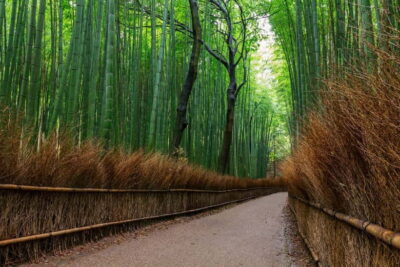
Kyoto/Osaka: Nara, Fushimi Inari Taisha, Arashiyama Bus Tour
Read our review →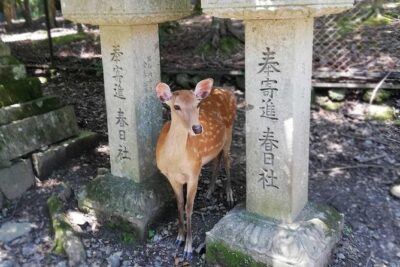
Nara Half Day Trip Walking Tour (Private Option Available)
Read our review →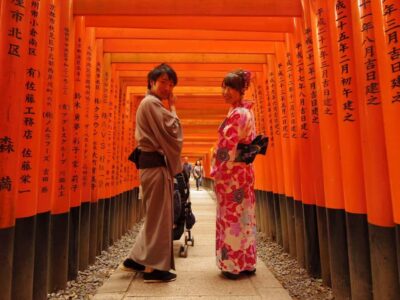
Osaka/Kyoto: Arashiyama, Nara & Fushimi Inari Shrine w/Lunch
Read our review →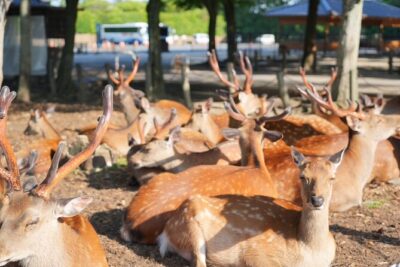
Nara Early Morning Tour (Kyoto or Osaka Departure Available)
Read our review →
Full Day Guided Tour to Kyoto and Nara from Osaka by Van
Read our review →
Browse the lists this tour appears in