
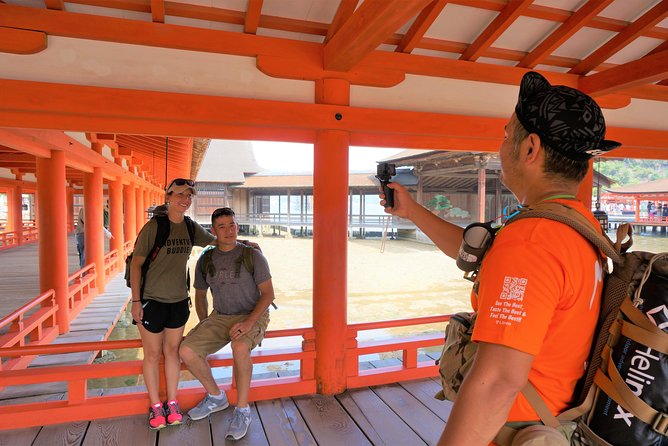
Reviewed · HIROSHIMA & MIYAJIMA DAY TRIPS
Miyajima Half-day Trip Historical Walking Tour
Miyajima is more than a quick photo of a red torii gate. This small-group walking tour links the island’s sacred buildings, coastal views, Buddhist traditions, and local food into one well-paced visit. I like the maximum of six people, which gives you room to ask questions, and I like that lunch includes local specialties such as oysters and momiji dumplings.
The guides add real value, especially if names such as Hika, Eri, Hiro, Kiki, Mariko, or Yuji happen to appear on your booking. They are praised for clear explanations, personal attention, and taking good pictures. The main drawback is the amount of walking, including stairs and hills at Daishoin Temple, plus the 500-yen ferry charge and limited options for strict dietary needs.
Five things to know before you book
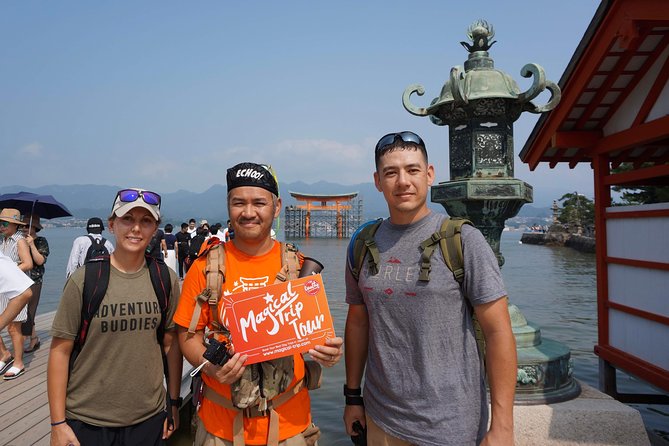
- The group is limited to six people: You get a more personal walk than on a large coach excursion.
- The ferry costs extra: Round-trip ferry fare is 500 yen, or about $4, and is not part of the tour price.
- Lunch is part of the experience: Expect Hiroshima-style local food, including fresh or grilled oysters and momiji dumplings.
- Daishoin is a highlight for many people: The temple offers Buddhist statues, quiet corners, and a climb that requires comfortable shoes.
- The tour works in wet weather: Rain does not erase Miyajima’s appeal, but you should dress for the conditions and bring water in hot weather.
- Food restrictions need careful planning: Vegetarian and vegan meals are limited, and gluten-free lunch is not available.
Why this Miyajima walk is worth your time
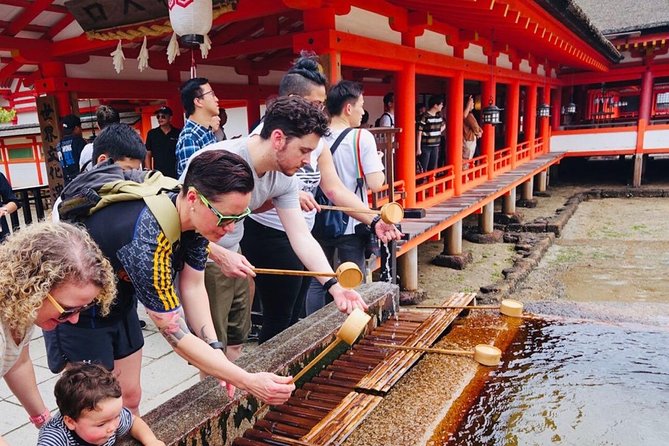
Miyajima can be visited on your own with little trouble. You can take the ferry, follow the crowds, photograph the torii gate, and wander through the shopping street. What you do not get as easily is the connection between Shinto worship, Buddhist practice, island life, architecture, and food.
That is where this tour earns its price. At $109.43 per person, it is not the cheapest way to reach Miyajima. You still pay the 500-yen ferry fee, and the tour lasts only about five and a half hours. But the cost includes a certified guide, shrine and temple admissions, tour photos, and lunch.
I see the best value in the interpretation. A guide can explain why Itsukushima Shrine was built over the water, point out details you might walk past, and help you understand why the island has such a strong spiritual identity. You also avoid spending part of your day finding the right route or guessing where to eat.
The small group matters, too. A maximum of six people allows the guide to adjust the pace, answer questions, and help with photos. Several people have ended up with a private tour when no one else booked that departure, though you should treat that as a possible bonus, not a promise.
Other walking tours in Hiroshima people book:
- Hiroshima Historical Walking Tour – Why A-Bomb was Dropped
★ 4.8 · 893 reviews - Hiroshima Peace (Heiwa) Walking Tour at World Heritage Sites
★ 5.0 · 872 reviews - Hiroshima City 4hr Private Walking Tour with Licensed Guide
★ 5.0 · 437 reviews
Taking the ferry from Miyajimaguchi
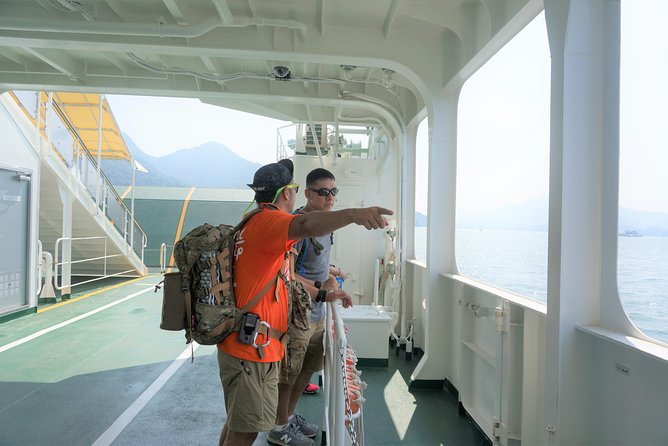
The meeting point is at 1-chōme-3-26 Miyajimaguchi in Hatsukaichi, near public transportation. From there, you board the ferry to Miyajima. The crossing is short enough to fit easily into a half-day visit, but it gives you a fine opening view of the Seto Inland Sea and the island’s famous Otorii gate.
This first section helps set the mood. Miyajima is not simply a collection of buildings. The sea, tide, wooded slopes, deer, shrine architecture, and ferry approach all form part of the experience.
The ferry fee is paid separately, at 500 yen round trip. Keep that small extra cost in your budget. The tour ends back at the meeting point, so you are not left to arrange a separate return route.
Walking the coast toward the Otorii Gate
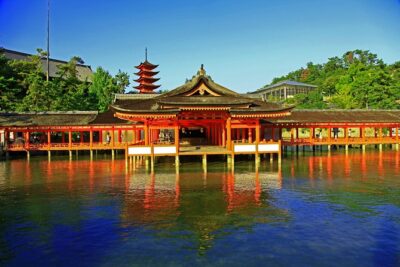
After arriving, the tour follows the coast toward the Otorii Gate and Itsukushima Shrine. This is one of the most photogenic stretches of the day, with the water opening around the shrine buildings and the gate creating the classic Miyajima view.
Tide levels change the scene. At some times, the torii appears to float offshore. At low tide, you might be able to walk closer to it, as one particularly memorable outing allowed people to approach and touch its weathered surface. That opportunity depends on the tide and should never be expected as a fixed part of the tour.
Your guide can also help with photographs. Guides such as Tomohiro, known as Tommy, and several others have been praised for finding good picture spots and taking pictures for the group. This is a small but useful benefit if you are traveling alone or want a photo with the gate behind you.
The coast can be exposed to sun, wind, or rain. Wear shoes with a good grip, and do not count on the weather staying pleasant throughout the morning or afternoon.
Itsukushima Shrine and the meaning of the water
Itsukushima Shrine is the central cultural stop. Built during the Heian period, from 794 to 1192, the shrine is famous for its unusual placement over the tidal water. Its design gives the complex a sense of movement as the sea rises and falls.
A guide helps you see more than the bright colors and elegant lines. The tour focuses on Japanese spirituality and the relationship between sacred space, nature, and ritual. You can ask questions as you walk rather than trying to piece together the meaning from a signboard.
The formal shrine visit is included in the tour price. You should allow time for photographs, but the point is not only to collect another famous image. Itsukushima is one of the places where the island’s religious importance becomes clear.
Crowds can affect this part of the day. Miyajima is a well-known destination, and the most famous views may be busy. A small group and a guide who knows the route can help, but they cannot remove other people from the shrine or guarantee an empty viewpoint.
Other long days west of Hiroshima:
- Peaceful Hiroshima & Miyajima UNESCO 1 Day Bus Tour
★ 5.0 · 5,309 reviews - Hiroshima: Hiroshima and Miyajima UNESCO Sites 1-Day Tour
★ 4.9 · 2,330 reviews - Hiroshima / Miyajima Full-day Private Tour with Government Licensed Guide
★ 5.0 · 1,298 reviews - Hiroshima in a Nutshell: Morning Bike Adventure
★ 5.0 · 524 reviews
Daishoin Temple, the quiet reward of the route
Daishoin Temple is often the emotional high point of the walk. It is the main temple of the Omuro school of Shingon Buddhism, and the guide explains the Buddhist statues and the temple’s role as you explore.
The atmosphere differs from Itsukushima Shrine. The shrine feels open, formal, and closely tied to the sea. Daishoin feels more layered and contemplative, with statues and religious details that reward a slower look.
You should prepare for stairs and uphill walking here. The climb is manageable for many people, but it is still a walking tour, not a vehicle-based sightseeing trip. Eri, one of the guides praised for this route, is noted for allowing enough breaks on stairs and hills. That kind of pacing can make a major difference for older people or anyone unused to walking in humid weather.
Bring comfortable shoes. This is not the place for thin sandals or footwear with poor grip. If you have limited mobility, ask about the route before booking, since the supplied information says most people can participate but does not promise a fully step-free experience.
Momijidani Park and Senjokaku
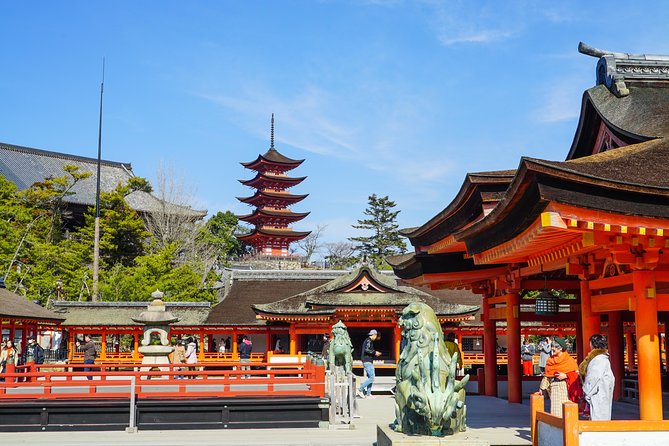
Momijidani Park provides a change of pace after the religious sites. The stop is mainly for photographs, and the setting gives you a chance to enjoy Miyajima’s wooded surroundings without the formal structure of a shrine or temple visit.
Season and weather will shape this stop. On a clear day, the park can be a pleasant break beneath the trees. In rain, it may feel less like a picture stop and more like a brief pause before continuing. The tour still operates in poor weather, so bring a rain layer when the forecast calls for showers.
The route also includes Senjokaku, the common name for Toyokuni Shrine’s main hall. The building is associated with Itsukushima Shrine’s terminal shrine and is notable for its large, open interior. The guide provides an explanation of the site rather than simply leading you through for a quick photograph.
Together, these two stops broaden the visit. You get a park, a large shrine hall, and a sense that Miyajima has more to offer than its waterfront icon.
Lunch with oysters and momiji dumplings
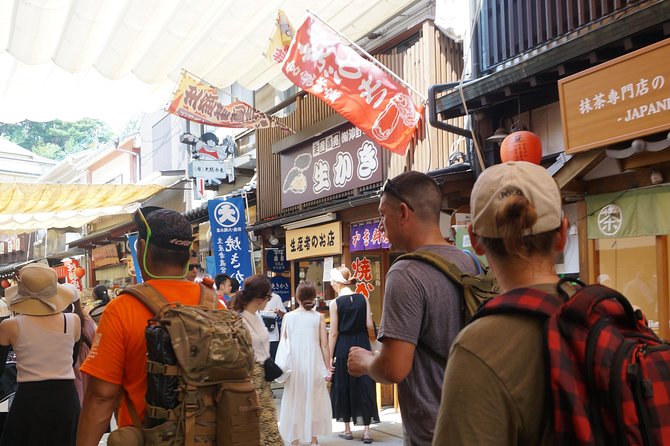
Food is one of the tour’s practical strengths. Lunch is included, and the experience is built around Hiroshima local specialties. Depending on the food stop, you may have fresh or grilled oysters, along with momiji dumplings, the maple-leaf-shaped sweet associated with Miyajima.
The meal gives you a useful introduction to island food without asking you to choose a restaurant on your own. A guide can point you toward familiar local dishes and explain what you are eating. Some outings have also included foods such as unagi and a sweet treat at a favorite café.
Still, read the food restrictions carefully. Vegetarian and vegan options are available but limited. Gluten-free lunch is not available, and the operator cannot guarantee an allergy-free meal because the food is prepared in kitchens it does not control.
Tell the operator about allergies or dietary requests at least one day before the tour. Same-day requests cannot be accommodated, and substitutions may not be possible at every stop. If your diet is strict, you may find this tour less suitable despite the included lunch.
Miyajima Omotesando Shopping Street
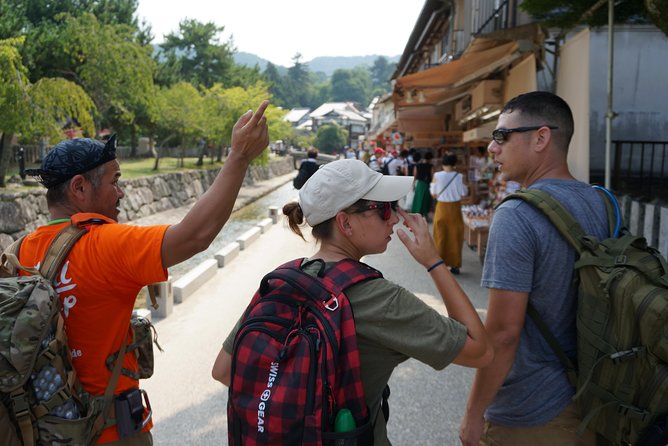
The final major stop is Omotesando Shopping Street, where food stalls and souvenir shops line the route. This is your chance to try additional island snacks or buy momiji treats to take away.
The tour includes the local lunch, but extra food and drinks cost more. Carry some spending money if you want to sample more oysters, sweets, or other foods along the street.
I like ending here because it lets you shift from temples and formal buildings to everyday commerce. The street can be busy, but that is part of its purpose. You see how Miyajima presents its local food and crafts to people arriving for the day.
The tour finishes back at the original meeting point. Its five-and-a-half-hour length gives you a meaningful visit without taking the entire day, though you may want additional independent time if you hope to shop at length or ride higher into the island’s hills.
The guide can make or break the experience
The strongest part of this tour is the human element. Guides have included Mariko, Hiro, Yuji, Kaori, Hika, Shun, Meri, Eri, Kiki, and Tomohiro. The supplied guide names do not mean you can choose a particular person, but they show the range of guides used for this experience.
The most useful guide qualities here are clear historical explanations, warmth, flexibility, and practical help. Hika is praised for covering the key sights while adjusting to the group. Kiki is noted for adding small stories and lesser-known corners. Hiro is described as professional, friendly, and easy to follow.
Meri has also shown flexibility when meeting directly on the island was requested at short notice. That kind of personal handling is valuable, but you should not assume every special meeting arrangement will be possible.
A guide can also keep the route from feeling like a checklist. The best moments are not always the largest buildings. They may be a story about a Buddhist statue, a better place for a family photograph, or a suggestion for a good momiji manju shop.
Weather, walking, and the best type of participant
Summer in Japan can be extremely hot and humid, with possible highs around 40°C, or 110°F. Bring water, wear a hat, and plan for sweat. Winter can also be cold, with possible lows around -5°C, or 20°F, so check the forecast and dress properly.
Rain does not necessarily ruin the tour. Miyajima can feel calm and atmospheric under gray skies, and the major shrines and temples remain worth seeing. Still, wet paths, umbrellas, and damp clothing can make the hills and stairs more tiring.
This tour suits you best if you want cultural context, local food, and a planned route in a compact group. It is also a good choice for a first visit to Miyajima, for solo visitors who want help with photos, and for families that prefer a guide who can manage the day’s sequence.
You may prefer to go independently if you want to set your own pace, avoid a fixed lunch, or spend many hours shopping and exploring. The tour has a clear schedule, and the group will keep moving even if one stop captures your interest.
Price, cancellation, and practical value
At $109.43 per person, the tour is a mid-to-high priced half-day activity. The price becomes easier to justify when you add the included shrine and temple admissions, certified guide, photos, and lunch. The ferry is separate, but only 500 yen round trip.
Free cancellation is available up to 24 hours before the start time for a full refund. Changes or cancellations made less than 24 hours before the start time are not accepted for a refund, and the cut-off follows local time.
One serious practical warning is worth noting. A single poor experience involved a guide not appearing at the meeting point because the reservation had not been checked. The overwhelming pattern is much more positive, but you should still keep your booking confirmation and contact details handy on the day of the tour.
Should you book this Miyajima walking tour?
Book it if you want Miyajima explained rather than simply photographed. The combination of Itsukushima Shrine, Daishoin Temple, the torii gate, local lunch, and a group capped at six gives you a strong introduction to the island in half a day.
I would especially recommend it for first-time visitors, families, solo visitors, and anyone who wants help understanding Japanese religious sites. The guides’ personal attention and photo help add value that a self-guided ferry ride cannot easily provide.
Think twice if you need gluten-free food, have strict allergy concerns, dislike hills and stairs, or want complete control over your schedule. For everyone else, this is a well-rounded way to meet Miyajima’s sacred side, coastal beauty, and local flavors without wasting time finding your way around.
FAQ
How long does the Miyajima walking tour last?
The tour lasts approximately 5 hours and 30 minutes. It begins and ends at the meeting point near Miyajimaguchi.
What is the maximum group size?
The tour has a maximum of six people. Some departures may operate with fewer people, depending on bookings.
Is the ferry to Miyajima included?
No. The round-trip ferry costs 500 yen, or about $4, and is paid separately.
Is lunch included?
Yes. The tour includes a Hiroshima local lunch, with dishes such as fresh or grilled oysters and momiji dumplings. Additional food and drinks are available for purchase.
Are vegetarian or vegan meals available?
Vegetarian and vegan lunch options are available but limited. Gluten-free lunch is not available, and allergy-free meals cannot be guaranteed. Dietary requests must be sent at least one day before the tour.
What should I bring for the tour?
Wear comfortable walking shoes and prepare for stairs and hills, especially at Daishoin Temple. In summer, bring water and a hat. Check the forecast and dress for rain, heat, or cold.
More walking tours elsewhere in Japan
- Hiroshima Walking Tour Why A Bomb was dropped to Hiroshima
★ 5.0 · 347 reviews - Hiroshima: History of Hiroshima Group Walking Tour
★ 4.8 · 266 reviews - Hiroshima: Food and Culture Guided Walking Tour with Dinner
★ 4.9 · 212 reviews - Kyoto Geisha Walking Tour: Gion District & Hidden Gems
★ 4.7 · 3,273 reviews
Just added in Hiroshima
- Day Trip to Hiroshima & Miyajima with Itsukushima Shrine★ 4.6 · 124 reviews
- Hiroshima 3hr Peace Cycling Tour with Local Guide★ 5.0 · 131 reviews
- Hiroshima: Best of Hiroshima Guided Bike Tour★ 4.9 · 89 reviews
- Hiroshima & Miyajima 6.5h Guided Tour – Dome, Park & Shrine★ 4.9 · 83 reviews
- Hiroshima: Food and Culture Guided Walking Tour with Dinner★ 4.9 · 212 reviews
- Hiroshima Local guided Hiking Tour&Open-air Tea Ceremony★ 5.0 · 213 reviews
- Hiroshima & Miyajima: Full-Day Private Tour & Licensed Guide★ 4.8 · 252 reviews
- Hiroshima Izakaya Food and Drink Night Tour★ 5.0 · 297 reviews
Hiroshima & Miyajima Day Trips, compared.
Peaceful Hiroshima & Miyajima UNESCO 1 Day Bus Tour
Read our review →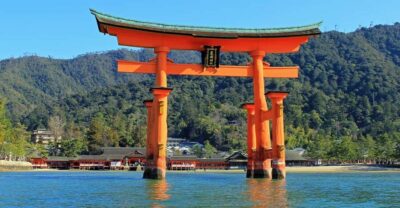
Hiroshima and Miyajima UNESCO Sites 1-Day Tour
Read our review →
Hiroshima / Miyajima Full-day Private Tour with Government Licensed Guide
Read our review →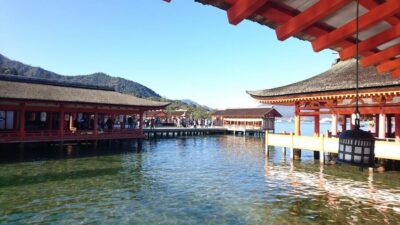
Osaka/Kyoto: Hiroshima Miyajima Bus Tour & Shinkansen Ticket
Read our review →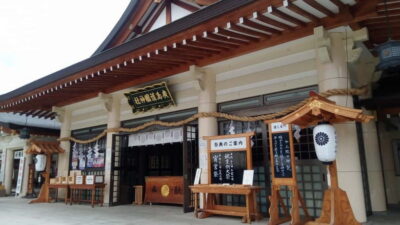
Hiroshima Historical Walking Tour – Why A-Bomb was Dropped
Read our review →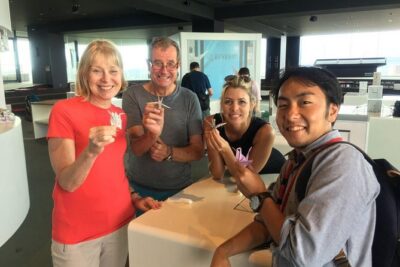
Hiroshima Peace (Heiwa) Walking Tour at World Heritage Sites
Read our review →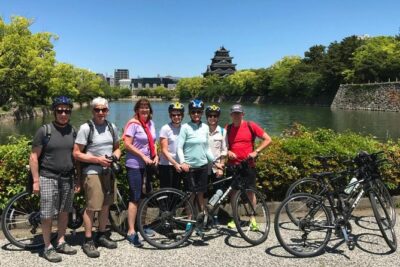
Hiroshima in a Nutshell: Morning Bike Adventure
Read our review →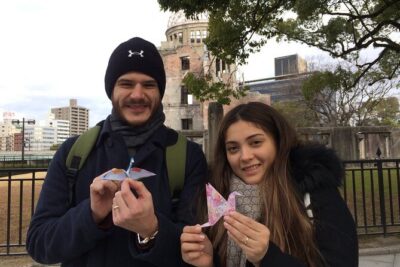
Hiroshima City 4hr Private Walking Tour with Licensed Guide
Read our review →Browse the lists this tour appears in