
Reviewed · HIROSHIMA & MIYAJIMA DAY TRIPS
Hiroshima: History of Hiroshima Group Walking Tour
The most powerful part of this tour is the way it links Hiroshima’s monuments to real people. You don’t simply look at the Atomic Bomb Dome or the Children’s Monument. You hear why each place matters, how survivors were affected, and how the city rebuilt itself after August 6, 1945. The tour also explains Hiroshima before the bombing and why it became a target, giving you more context than a quick walk through the park.
I like the personal stories, especially when guides such as Moe and Cva share family connections to survivors. I also like the careful pacing. The tour covers a lot in two hours, yet there is room for questions and quiet moments. The main drawback is that a larger group can make it harder to hear or stay close to the guide, so arrive ready to pay attention and ask if you miss something.
Key points at a glance
- Survivor stories give the monuments a human scale: Guides connect memorials with accounts from people affected by the bombing.
- The route covers the park’s major sites: You visit the Peace Gates, Cenotaph, Peace Memorial Hall, Children’s Monument, Atomic Bomb Dome, and hypocenter.
- The Atomic Bomb Dome comes near the end: This creates a strong visual finish before the final stop at the exact center of the blast.
- The guide quality is a major strength: Cva, Moe, Tomas, Nisa, Aya, Sada, and others have been praised for warmth, clear English, and thoughtful storytelling.
- Two hours is useful but tightly packed: You get a strong introduction, though the Peace Memorial Museum is not part of this walking route.
- The tour is wheelchair accessible: Wear comfortable shoes and dress for the weather, since nearly all of the route is outdoors.
Why this two-hour walk works in Hiroshima
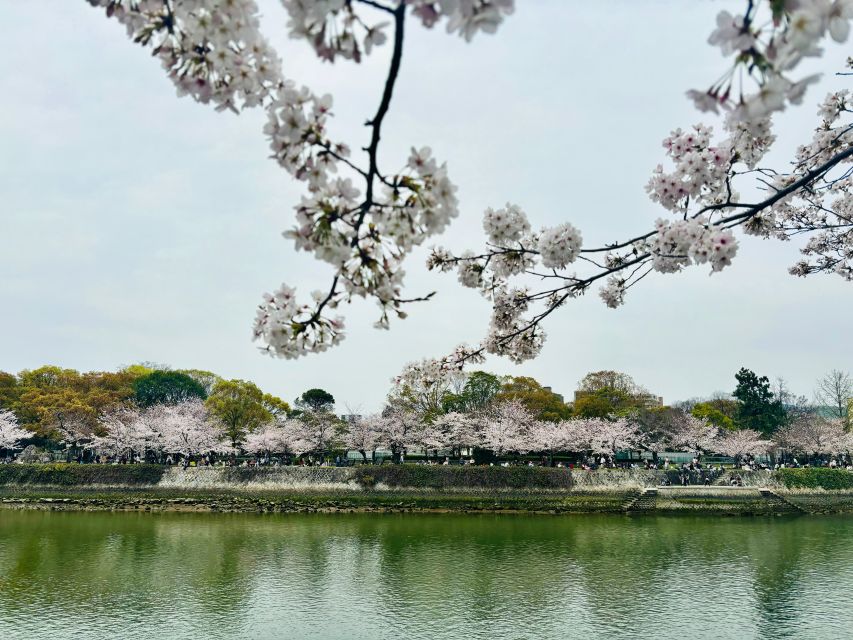
Hiroshima Peace Memorial Park can feel simple at first glance. It is an open area beside the river, filled with monuments, paths, and trees. Without guidance, you can easily walk past a meaningful memorial without realizing what it represents.
This tour gives the park a clear order and purpose. You begin at the Gates of Peace and move through memorials that tell different parts of Hiroshima’s story. Some honor children, some remember foreign victims, some recognize medical workers, and others express the city’s wish for a world without nuclear weapons.
I find that useful because Hiroshima’s story is not only about the blast itself. It is also about the people who died immediately, those who suffered later, the survivors who rebuilt their lives, and the city’s decision to make peace part of its public message.
The guides come from varied academic and cultural backgrounds, including tourism, anthropology, history, and peace studies. Several guides praised in the feedback, including Cva, Moe, Tomas, and Sada, were especially good at balancing facts with human stories. Names and guides can change from one departure to another, but the format remains focused on explanation, questions, and respectful discussion.
Other walking tours in Hiroshima people book:
- Hiroshima Historical Walking Tour – Why A-Bomb was Dropped
★ 4.8 · 893 reviews - Hiroshima Peace (Heiwa) Walking Tour at World Heritage Sites
★ 5.0 · 872 reviews - Hiroshima City 4hr Private Walking Tour with Licensed Guide
★ 5.0 · 437 reviews
Starting at the Gates of Peace
The meeting point is in front of the Gates of Peace, next to the Italian restaurant Mario. This is a practical starting point because it places you at the edge of the memorial area rather than sending you across the city first.
The opening section sets up Hiroshima before the bombing and explains why the city was selected as a target. That background matters. It keeps the tour from becoming a string of isolated facts and helps you understand the military and urban context before looking at the damage.
Your guide also introduces the tone of the visit. This is not a casual sightseeing stroll. The subject is painful, and parts of the route can be emotional. The strongest guides handle that weight without turning the walk into a lecture. They explain clearly, leave room for questions, and allow quiet when the subject calls for it.
Memorials that are easy to miss on your own
The early stops include Mother and Baby in the Storm and the Prayer Fountain. Each visit is short, but together they show how many different human experiences are represented in the park.
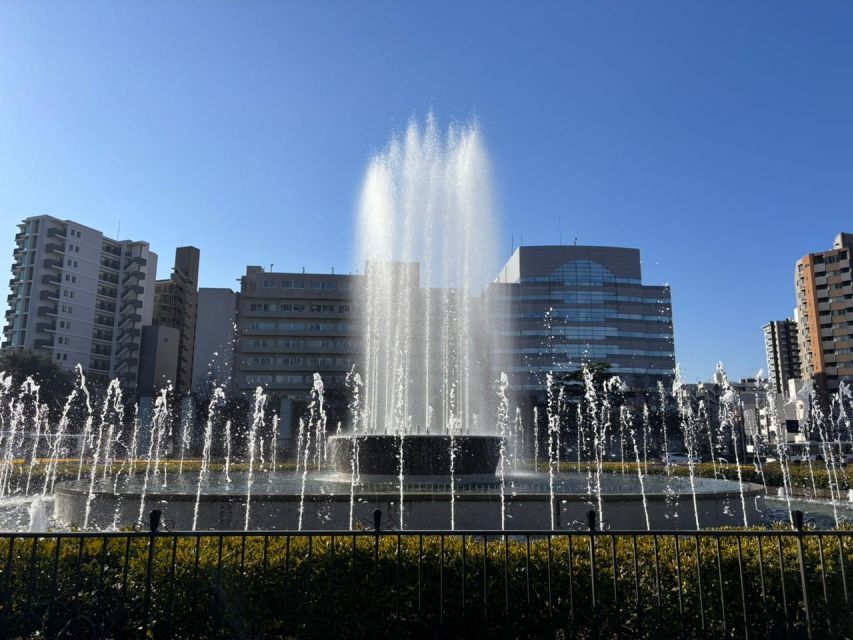
Mother and Baby in the Storm focuses attention on families caught in the bombing and its aftermath. The Prayer Fountain brings another layer, connected to the desperate need for water among people suffering from burns and injuries. These are not just decorative features. Your guide explains the symbols and the stories connected with them, making the route more than a parade of famous landmarks.
You then reach the Hiroshima Victims Memorial Cenotaph. This is one of the park’s central memorials, and the guide explains its purpose and the names and lives it represents. It is a place where the tour pauses to consider the victims as individuals rather than as a number.
The Flame of Peace follows. Its message reaches beyond Hiroshima and ties the park’s memorial work to the hope that nuclear weapons will no longer be used. I appreciate this progression because the tour moves from personal suffering toward Hiroshima’s present-day peace message without pretending that the past can be set aside.
The Peace Memorial Hall and time to reflect
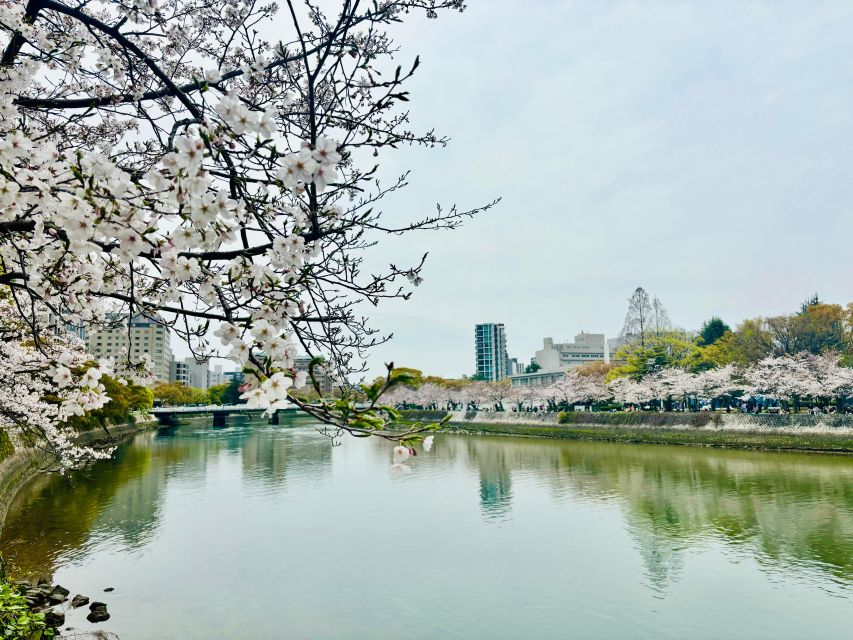
Entrance to the Hiroshima National Peace Memorial Hall for Atomic Bomb Victims is included. The visit lasts about 15 minutes, followed by a period of free time of about 20 minutes in the itinerary.
This is one of the more important inclusions in the $35 price. You are not paying only for an outdoor walk. You also receive access to an indoor memorial space where the focus shifts toward remembrance and personal testimony.
The exact use of the free time can depend on the guide and the group. You may have time to look more closely at the memorial setting, ask follow-up questions, or collect your thoughts before continuing. Do not expect a full museum visit in this tour. The schedule is too short for that, and the Peace Memorial Museum is not listed as part of the route.
If you want a slower visit to Hiroshima’s museum collections, plan separate time before or after the walk. This tour works best as an introduction and an organized way to understand the outdoor memorial park.
Other long days west of Hiroshima:
- Peaceful Hiroshima & Miyajima UNESCO 1 Day Bus Tour
★ 5.0 · 5,309 reviews - Hiroshima: Hiroshima and Miyajima UNESCO Sites 1-Day Tour
★ 4.9 · 2,330 reviews - Hiroshima / Miyajima Full-day Private Tour with Government Licensed Guide
★ 5.0 · 1,298 reviews - Hiroshima in a Nutshell: Morning Bike Adventure
★ 5.0 · 524 reviews
Children, families, and the long aftermath
The Children’s Peace Monument is one of the most recognizable stops. It is connected with the story of children affected by the bombing and the long-term effects of radiation exposure. Your guide explains the meaning behind the monument and the paper cranes associated with it.
This section can be especially affecting for families, but it is not presented only for children. The guide places the monument within the wider story of survivors, illness, memory, and the way young people became part of Hiroshima’s peace movement.
The Atomic Bomb Memorial Burial Mound offers another reminder that the bombing created enormous numbers of unidentified or unclaimed dead. The Korean Atomic Bomb Victims Cenotaph broadens the story again by recognizing Korean victims. That stop is valuable because it prevents the tour from presenting Hiroshima as a single, simple national story. People from different backgrounds were caught in the attack and its aftermath.
The Peace Bell comes next. You can stop for photographs and hear about its message. These stops are close enough to walk between, but comfortable shoes still matter. The itinerary includes many brief visits, and you will spend most of the two hours standing or walking outdoors.
The Atomic Bomb Dome and the exact hypocenter
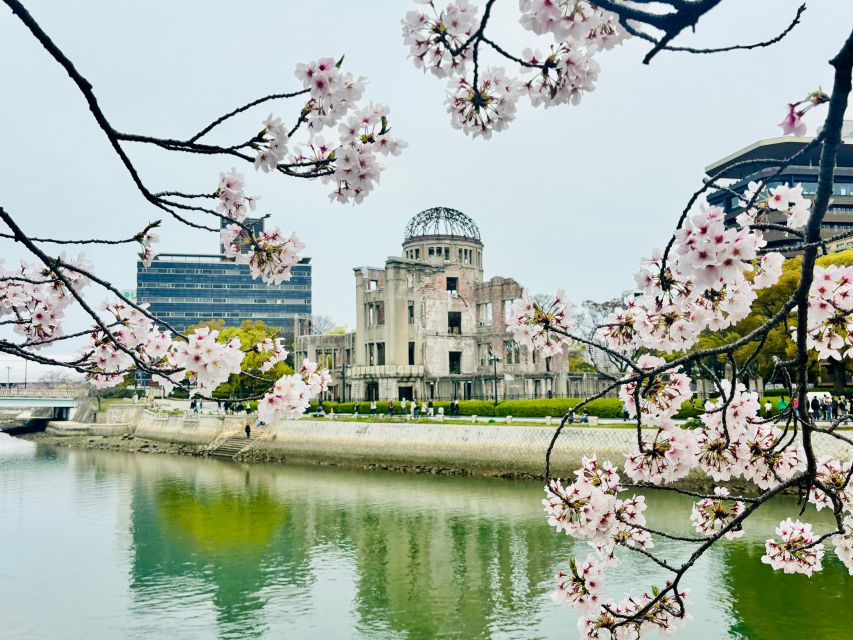
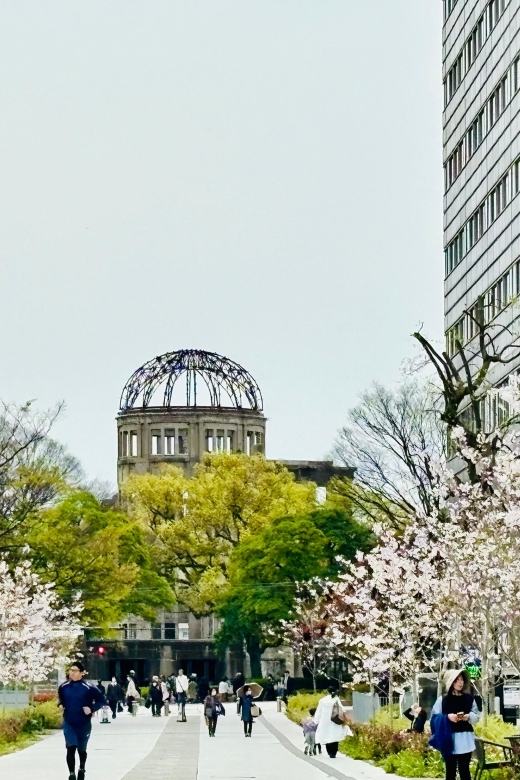
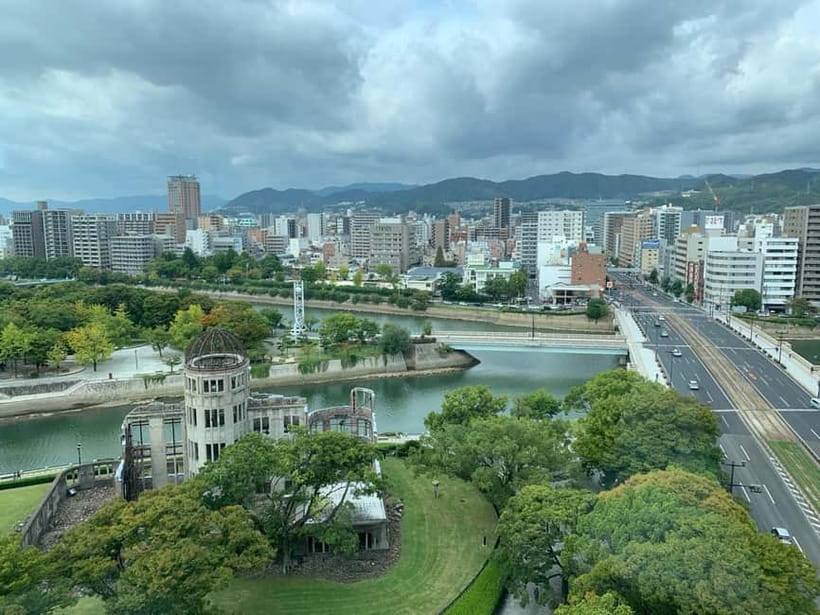
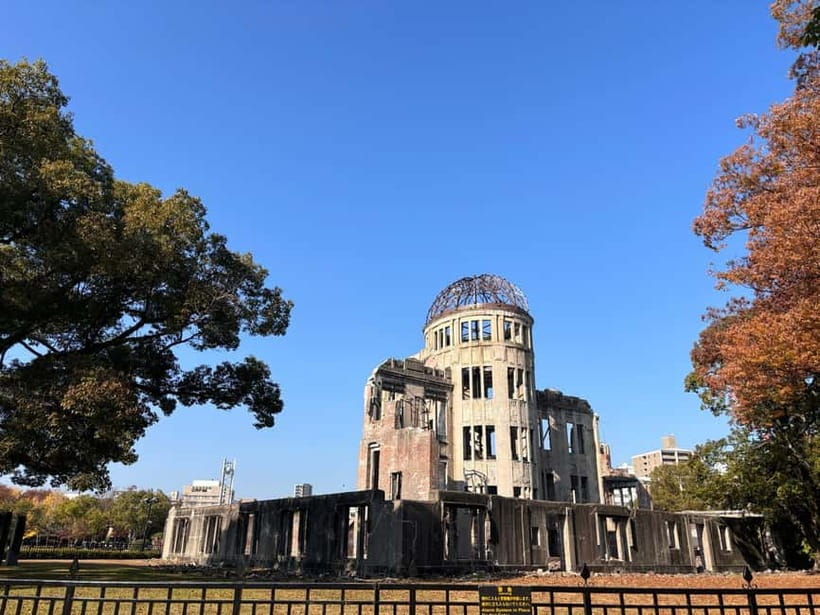
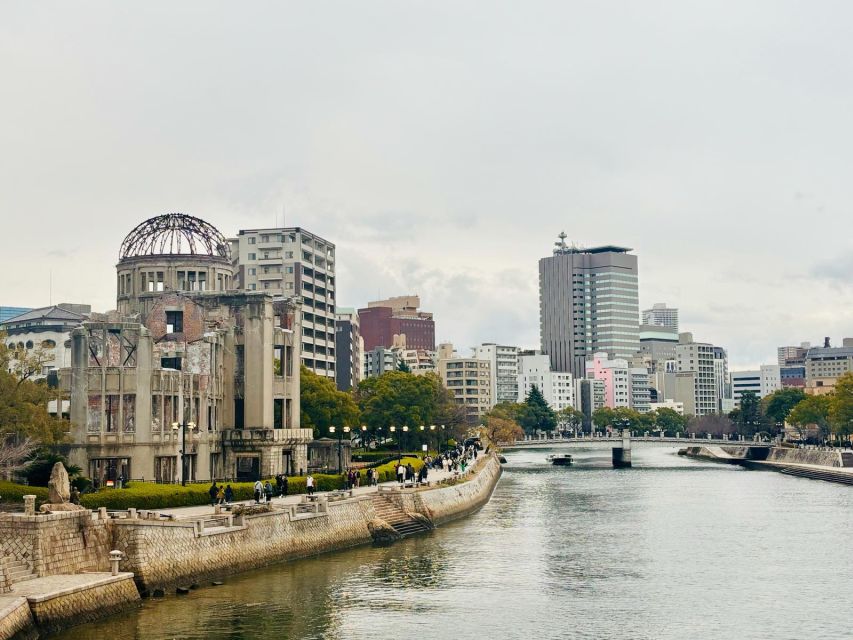
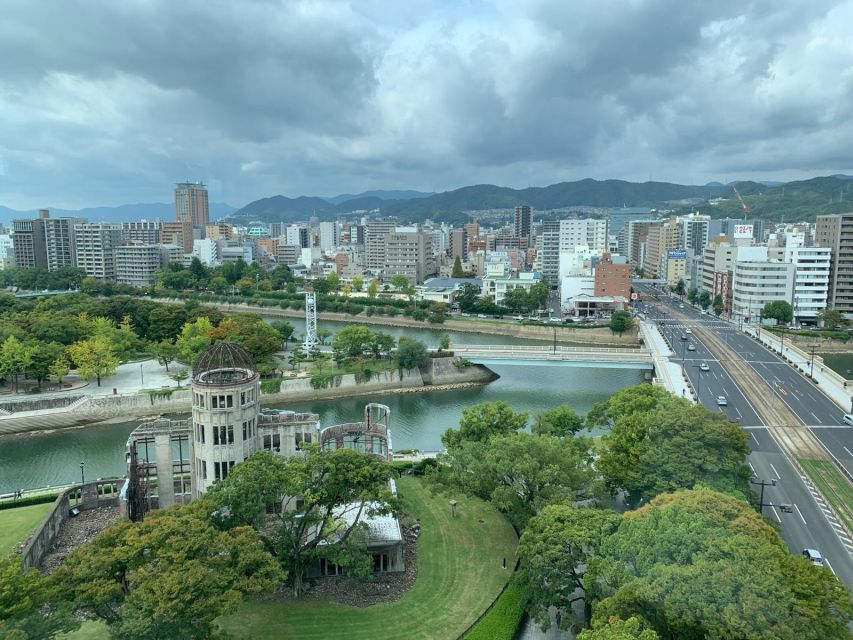
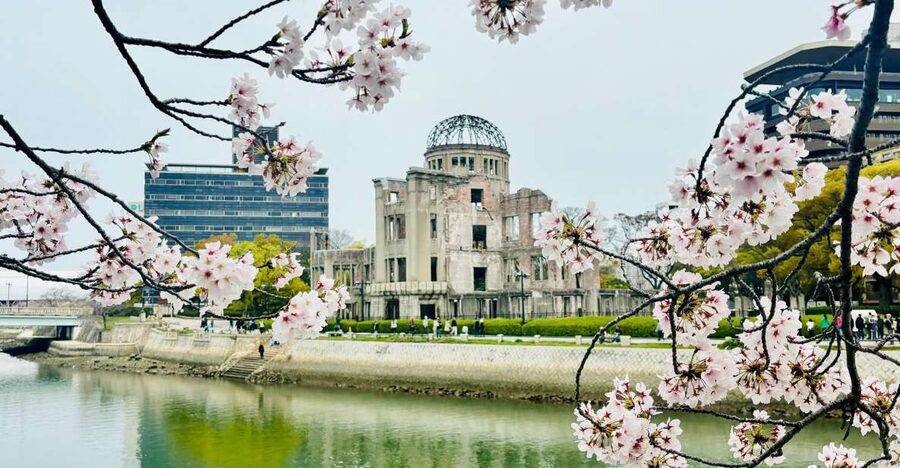
The Atomic Bomb Dome is the visual centerpiece of the tour. The building’s ruined frame survived the blast, and it is now the best-known reminder of the destruction. Your guide explains what the structure was before the bombing and why its remains were preserved.
Seeing it after hearing the earlier stories changes the way you read the building. It is not simply an old ruin beside the river. It is a physical marker of the force of the blast and a memorial to the people who died.
The final stop is the Atomic Bomb Hypocenter Monument. This marks the point directly below the detonation. Ending here gives the tour a precise geographic finish. You have heard about the city, walked through its memorials, and then reached the spot where the bombing’s center was located.
The final stop is not a grand viewpoint or dramatic attraction. That is part of its force. You are standing at a modest marker in an ordinary part of the city, close to the place where thousands of lives were changed in an instant. A good guide lets that fact settle without overplaying it.
The guides make the difference
The strongest part of this activity is the guide. The tour is built around explanation, but the delivery matters greatly with a subject this serious.
Cva has been praised for inviting questions, involving the group, and explaining difficult events with both warmth and care. Moe has shared family stories connected with the bombing, while Tomas has been praised for passion and clear storytelling. Nisa, Aya, Sada, Ali, Syed, Wajid, and others have also guided departures, with comments emphasizing clear English, personal insight, humor used carefully, and respect for the subject.
You should not book expecting one specific guide unless the booking system confirms that in advance. Still, the repeated pattern is useful: guides are selected for their connection to Hiroshima and their ability to make a complicated subject understandable.
Some guides have family links to survivors. That can make the discussion feel immediate, but the best approach is not to expect a personal story on demand. These accounts belong to the guide and their family. When shared, they add a human layer that textbooks often cannot provide.
The tone also varies slightly by guide. One may use questions and group participation, while another may give a more structured historical explanation. Both approaches can work. The tour is conducted in English, and the feedback indicates that clear communication is one of its dependable strengths.
Price, group size, and practical comfort
At $35 per person, this is a fair price for a two-hour guided walk that includes admission to the Hiroshima National Peace Memorial Hall for Atomic Bomb Victims. The value comes from the connections between sites. You could walk through the park without paying for a guide, but you would likely miss the meaning behind smaller monuments and the links between them.
The price is especially reasonable if you have only a short stay in Hiroshima or want a clear introduction before visiting more places on your own. If you already know the subject well, you can still benefit from the local stories and the chance to ask questions. One participant who arrived with substantial background knowledge still found new material in the guide’s answers.
The main practical concern is group size. One departure was described as large, which can make it harder to hear and stay engaged. The route is outdoors and spread across the park, so keep near the guide and speak up if you lose the explanation.
The tour is listed as wheelchair accessible. The walk lasts two hours, and weather can affect comfort, so wear shoes you can walk in and bring suitable clothing. Snow, rain, heat, or wind will not change the subject matter, but they can change how tiring the route feels.
Free cancellation up to 24 hours before the start and the option to reserve now and pay later make the booking fairly flexible. Check the available starting times when you book, since the duration is fixed but departure times can vary.
Who should book this Hiroshima tour
I would recommend this walk to a first-time visitor who wants help understanding Peace Memorial Park. It is also a good fit for families with older children, couples, solo visitors, and anyone who prefers stories and conversation to reading every sign alone.
You will get the most from it if you are willing to listen carefully. This is not a light city stroll with a few historical facts added in. It deals with death, injury, radiation, grief, and the long work of rebuilding. Some moments may be upsetting, but the tour’s message is not limited to destruction. It also explains Hiroshima’s recovery and its call for peace.
If you want a quiet independent visit, a large group or an especially talkative guide may feel less comfortable. If you want a full museum study session, two hours will not be enough. In that case, use this walk to get your bearings, then spend additional time at the Peace Memorial Museum and other sites independently.
Should you book it?
Book this tour if you want the main memorials explained in a logical route, with survivor accounts and local context woven into the walk. The combination of the Peace Memorial Hall, the outdoor monuments, the Atomic Bomb Dome, and the final hypocenter stop gives you a strong introduction for $35.
I would be less likely to recommend it to someone seeking a private, slow-paced visit with long periods at each site. For most visitors, though, the two-hour format is a good balance. It gives you the facts, the human stories, and enough structure to continue exploring Hiroshima with a clearer understanding of what you are seeing.
FAQ
How long is the Hiroshima history walking tour?
The tour lasts two hours.
What language is the tour conducted in?
The tour is conducted in English with a live English-speaking guide.
Where does the tour begin?
Meet in front of the Gates of Peace, next to the Italian restaurant Mario.
Where does the tour finish?
The tour finishes at the Hiroshima Atomic Bomb Hypocenter Monument.
Is entrance to the Hiroshima National Peace Memorial Hall included?
Yes. Entrance to the Hiroshima National Peace Memorial Hall for Atomic Bomb Victims is included.
Does the tour visit the Atomic Bomb Dome?
Yes. The route includes a guided visit and photo stop at the Atomic Bomb Dome.
Is the walking tour wheelchair accessible?
Yes, the activity is listed as wheelchair accessible.
What should I bring?
Bring comfortable shoes and clothing suited to the weather, since much of the activity takes place outdoors.
More walking tours elsewhere in Japan
- Hiroshima Walking Tour Why A Bomb was dropped to Hiroshima
★ 5.0 · 347 reviews - Miyajima Half-day Trip Historical Walking Tour
★ 5.0 · 284 reviews - Hiroshima: Food and Culture Guided Walking Tour with Dinner
★ 4.9 · 212 reviews - Kyoto Geisha Walking Tour: Gion District & Hidden Gems
★ 4.7 · 3,273 reviews
Just added in Hiroshima
- Hiroshima 3hr Peace Cycling Tour with Local Guide★ 5.0 · 131 reviews
- Day Trip to Hiroshima & Miyajima with Itsukushima Shrine★ 4.6 · 124 reviews
- Hiroshima: Best of Hiroshima Guided Bike Tour★ 4.9 · 89 reviews
- Hiroshima & Miyajima 6.5h Guided Tour – Dome, Park & Shrine★ 4.9 · 83 reviews
- Hiroshima: Food and Culture Guided Walking Tour with Dinner★ 4.9 · 212 reviews
- Hiroshima Local guided Hiking Tour&Open-air Tea Ceremony★ 5.0 · 213 reviews
- Hiroshima & Miyajima: Full-Day Private Tour & Licensed Guide★ 4.8 · 252 reviews
- Hiroshima: Peace Cycling Tour with Local Guide★ 4.8 · 286 reviews
Hiroshima & Miyajima Day Trips, compared.
Peaceful Hiroshima & Miyajima UNESCO 1 Day Bus Tour
Read our review →
Hiroshima and Miyajima UNESCO Sites 1-Day Tour
Read our review →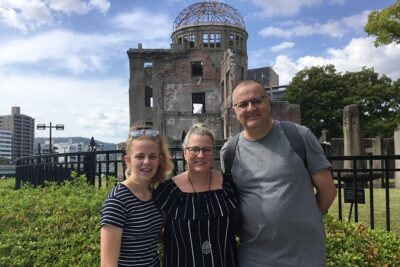
Hiroshima / Miyajima Full-day Private Tour with Government Licensed Guide
Read our review →
Osaka/Kyoto: Hiroshima Miyajima Bus Tour & Shinkansen Ticket
Read our review →
Hiroshima Historical Walking Tour – Why A-Bomb was Dropped
Read our review →
Hiroshima Peace (Heiwa) Walking Tour at World Heritage Sites
Read our review →
Hiroshima in a Nutshell: Morning Bike Adventure
Read our review →
Hiroshima City 4hr Private Walking Tour with Licensed Guide
Read our review →Browse the lists this tour appears in