
Reviewed · HIROSHIMA & MIYAJIMA DAY TRIPS
Hiroshima Walking Tour Why A Bomb was dropped to Hiroshima
Hiroshima is best understood on foot, where a quiet shrine, a rebuilt castle, and the scars of August 6, 1945, sit within a short walk of one another. This tour connects those places while explaining why the atomic bomb was dropped, what happened afterward, and how the city chose a future centered on peace.
I like the small-group format, which makes it easier to ask questions, and I like the way guides use maps, photographs, and personal family stories. The main caution is that the tour may spend more time on broad Japanese history than you expect, and the advertised group limit varies between 12 and 15 people.
Key points at a glance
- Starts at Hiroshima Gokoku Shrine: A calm beginning that places the city’s wartime story within its older political and religious setting.
- Covers Hiroshima Castle and the Peace Park: You see both the city before the bombing and the memorial spaces created afterward.
- Guides add human detail: Chihiro, Thomas, Katya, Emi, and Chisa are noted for clear explanations, warmth, and personal connections to Hiroshima.
- Uses maps and photographs: These visual aids help you follow the blast, the city’s destruction, and its rebuilding.
- Mostly easy walking: The route is described as mostly flat, with pauses for talks, questions, and photographs.
- Ends near the Peace Memorial Museum: You can continue with the museum after the guided walk, allowing the tour to provide context first.
A thoughtful walk from old Hiroshima to the atomic bomb memorials
This is not simply a checklist of Hiroshima sights. The route moves from the city’s older identity to the modern memorial district, giving you a useful before-and-after structure.
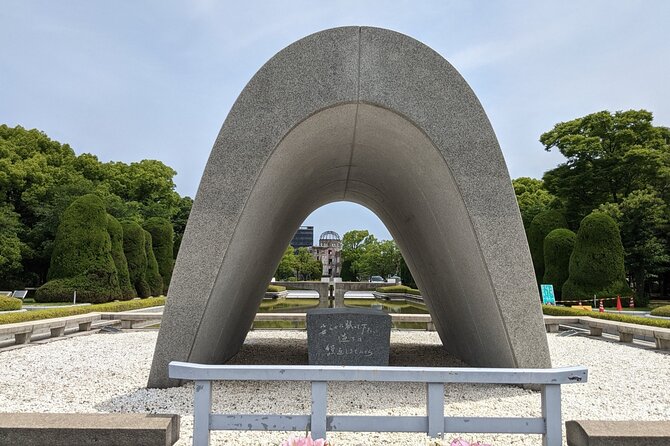
You begin at Hiroshima Gokoku Shrine, near Hiroshima Castle. From there, the tour passes through castle grounds and continues toward Hiroshima Green Arena, Orizuru Tower, the Atomic Bomb Dome, the Children’s Peace Monument, and the Victims Memorial Cenotaph in Peace Memorial Park.
The route takes about two and a half hours. The distance between the major stops is manageable, and the walk includes periods when you sit and listen. That matters in Hiroshima, where a clear explanation often requires more than a quick stop and a photograph.
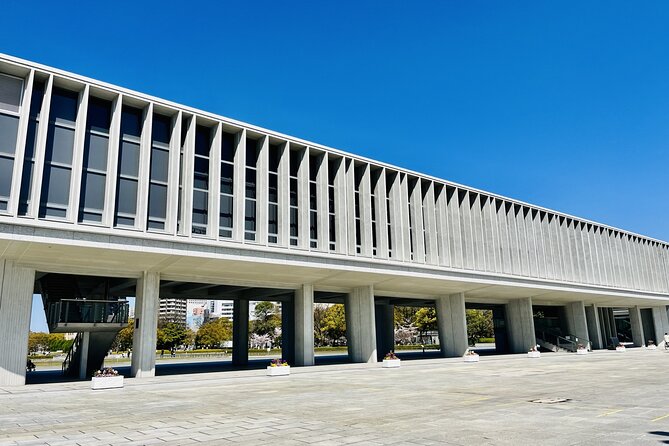
The tour ends in front of the Hiroshima Peace Memorial Museum, not inside it. That is a useful arrangement. You first hear the historical framework from your guide, then you can visit the museum with better context.
Other walking tours in Hiroshima people book:
- Hiroshima Historical Walking Tour – Why A-Bomb was Dropped
★ 4.8 · 893 reviews - Hiroshima Peace (Heiwa) Walking Tour at World Heritage Sites
★ 5.0 · 872 reviews - Hiroshima City 4hr Private Walking Tour with Licensed Guide
★ 5.0 · 437 reviews
Hiroshima Gokoku Shrine gives the tour an older starting point
Hiroshima Gokoku Shrine is a peaceful place to begin. Its architecture and quiet grounds offer a sharp contrast with the subject ahead, but that contrast is part of the point.
The shrine was established to honor protective deities connected with the old Hiroshima domain. Starting here helps you see Hiroshima as more than the site of one wartime event. Before 1945, this was a regional center with political, military, religious, and civic importance.
Your guide may use this opening to explain the city’s earlier development and Japan’s road toward World War II. This background is valuable, especially if your knowledge of Japanese history begins and ends with the atomic bomb.
The drawback is that the shrine itself receives only about 20 minutes. If you are hoping for a detailed architectural tour, this is not that. Think of it as a calm introduction and a place to get oriented.
Hiroshima Castle shows the city before 1945
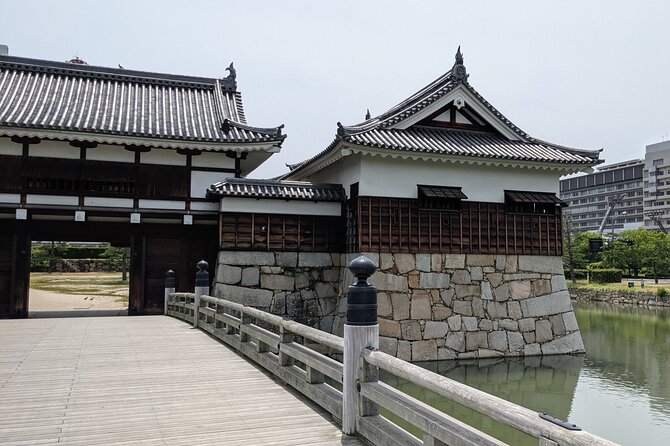
Hiroshima Castle, also called Carp Castle, was first built in the 1590s as the home of the local feudal lord. Its grounds give the tour a physical link to the city’s premodern past.
The castle was destroyed in the atomic bombing and later rebuilt. That makes it especially useful on this walk. You are not looking at an untouched medieval structure, but at a place that reflects both Hiroshima’s long history and its postwar rebuilding.
The walking tour visits the castle grounds, but you should not expect an interior castle tour. That detail is easy to miss when planning your day. If entering the castle is important to you, plan separate time for it.
I like this stop because it prevents the tour from treating Hiroshima as if its story began in 1945. You see a city with centuries of identity before moving toward the wartime period. The castle visit lasts about 20 minutes, so the explanation remains focused.
Hiroshima Green Arena adds modern city life to the route
Hiroshima Green Arena is a multipurpose indoor sports center. It may seem like an unusual stop on a tour about the atomic bombing, but it helps show how ordinary city life occupies the rebuilt Hiroshima of today.
The stop lasts about 30 minutes, longer than the castle visit. Your guide may use this pause to explain more about Hiroshima’s development, daily life, or the way the city has changed after the war. Several guides also use seated talks during the walk, which gives you a break from standing and makes the larger historical story easier to follow.
This is also the section most likely to feel less directly tied to the bombing. One piece of feedback describes the tour as spending too much time on general Japanese history and not enough on Hiroshima and the atomic bomb. If you want a tightly focused memorial tour, keep that in mind.
Still, the broader setting has value. Hiroshima is not only a memorial site. It is a functioning city, and seeing normal public spaces helps you understand the contrast between the destroyed city of 1945 and the place you are visiting now.
Other long days west of Hiroshima:
- Peaceful Hiroshima & Miyajima UNESCO 1 Day Bus Tour
★ 5.0 · 5,309 reviews - Hiroshima: Hiroshima and Miyajima UNESCO Sites 1-Day Tour
★ 4.9 · 2,330 reviews - Hiroshima / Miyajima Full-day Private Tour with Government Licensed Guide
★ 5.0 · 1,298 reviews - Hiroshima in a Nutshell: Morning Bike Adventure
★ 5.0 · 524 reviews
Orizuru Tower marks the transition to the Peace Park
Orizuru Tower is a modern building beside Hiroshima Peace Memorial Park. Opened in 2016, it brings a newer architectural presence to an area dominated by memorials and historic ruins.
The listed route includes this area, although the details do not specify a separate admission or a lengthy interior visit. You should treat it as part of the walk rather than assume that a ticket to the observation areas is included.
Its position matters. From this point, the tour moves more firmly into the memorial district, where the focus shifts from the city’s older story to the bombing, its victims, and Hiroshima’s peace message.
The Atomic Bomb Dome is the walk’s defining sight
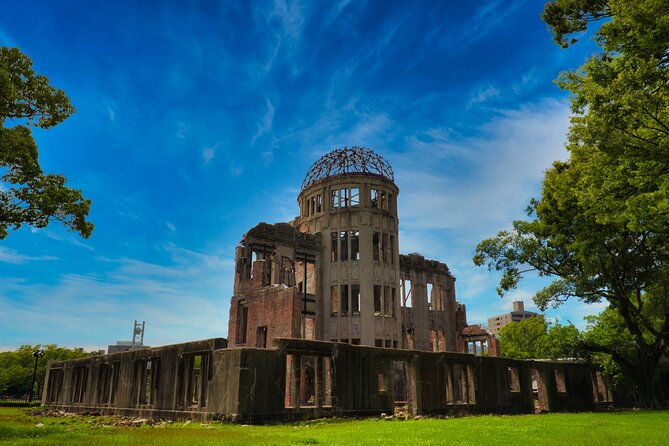
The Atomic Bomb Dome is the most instantly recognizable place on the route. Before the bombing, the building was the Hiroshima Prefectural Industrial Promotion Hall. It stood close to the blast’s center and remained partly upright after the surrounding city was destroyed.
Your guide can explain why the structure survived in such a damaged form and why it was preserved. The building is not a museum display. Its exposed framework and broken walls are the evidence.
You have about 20 minutes here. That is enough for a careful look, photographs, and questions, but not for an extended historical lecture. The best approach is to listen first, then take in the building quietly.
This is also where the title’s question becomes more serious. A good guide should move beyond the simple fact that the bomb was dropped and explain the wider wartime setting, the decisions leading to August 6, 1945, and the effects on civilians. Guides including Chihiro and Thomas are described as especially clear when covering those causes and consequences.
The subject can be painful. The strongest guiding style here is calm, direct, and respectful rather than theatrical. Several guides are praised for making difficult material understandable without turning it into a spectacle.
The Children’s Peace Monument brings the story to young lives
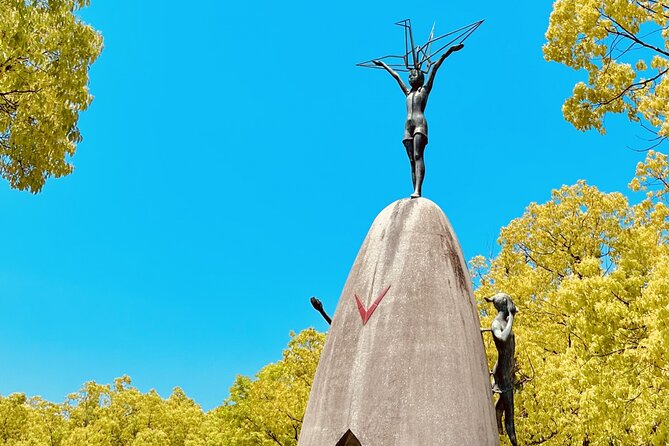
The Children’s Peace Monument honors children who died in the bombing and is closely associated with Sadako Sasaki. The monument is one of the most emotionally direct stops in Peace Memorial Park.
You spend about 10 minutes here. That may sound brief, but the compact stop works well after the Atomic Bomb Dome. It gives a human focus to an event that can otherwise become a sequence of dates, numbers, and political decisions.
This is a good place to ask questions about how Hiroshima remembers children and how the city communicates its peace message to younger generations. If you are visiting with children, the guide’s ability to adjust the explanation matters. Thomas, in particular, is praised for keeping children around ages nine and eleven interested, with even a little Pokémon knowledge helping him connect with them.
The Victims Memorial Cenotaph and Peace Park slow the pace
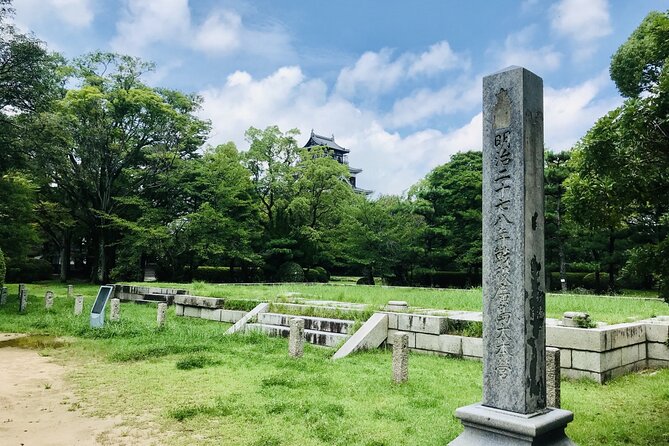
The Hiroshima Victims Memorial Cenotaph is located in Peace Memorial Park, the tour’s main memorial setting. The park is dedicated to those killed by the atomic bomb and sits close to the blast’s center.
This is the longest listed stop, at about 30 minutes. That extra time allows your guide to explain the park’s layout, the memorials around it, and the meaning of Hiroshima’s peace appeal. You are not just passing through a public garden. You are moving through a carefully planned place of remembrance.
Guides sometimes use photographs and maps here to show the damage caused by the blast and the scale of the city’s destruction. This is one of the most useful parts of the tour because the modern city makes it hard to picture what happened without visual help.
Personal connections can add another layer. One guide is described as the granddaughter of a bomb survivor, while another guide shared family information that made the walk more personal. Such stories can make the past feel closer, but they also require a sensitive guide. The experience is strongest when personal detail supports the wider history rather than replacing it.
What the guides do well, and where the experience varies
The biggest strength is the quality of the explanations. Chihiro is praised for her local perspective and clear English. Thomas is repeatedly described as prepared, engaging, and able to explain difficult material in a way that children can follow. Katya is noted for her enthusiasm and her discussion of Hiroshima before and after 1945.
Emi and Chisa are also associated with energetic explanations of Hiroshima’s history and the reasons behind the bombing. Names matter here because the tone may differ slightly depending on who leads your group, but the shared pattern is clear: expect a guide-led interpretation rather than a silent walk between landmarks.
Guides use maps, photographs, and short talks. One detailed account describes two seated 10-minute lectures covering the reasons for the bombing and its effects. That format is practical. You can only absorb so much while walking, and the pauses make the material easier to follow.
The main weakness is focus. The tour title promises a close look at why the bomb was dropped, but the route also covers the development of Japan and Hiroshima more generally. That context can help you understand the subject, yet some people may find it too broad.
I would choose this tour if you want a clear introduction. If you already have a strong grasp of Japanese wartime history and want a specialist discussion of nuclear strategy, you may want a more focused option or extra time at the museum.
Price, group size, and practical value at $28
At $28 per person, the tour offers good value if you want structure and explanation. The main cost is not entry to expensive attractions. The major stops are viewed from public spaces, and the listed admissions are free. You are paying for the guide’s time, route planning, historical interpretation, and the chance to ask questions.
That value is strongest on a first visit. Hiroshima’s memorial district is easy to walk through, but it is not always easy to understand. A plaque can tell you what a building is. A guide can connect that building to the city before the war, the decision to use the bomb, the human cost, and the postwar peace movement.
The tour is advertised as a small group, with a maximum of 12 people in the overview and up to 15 in the additional information. I would plan for a group in that range rather than expect a private walk. Even 15 people is still small enough for questions if the guide manages the pace well.
Bring water. Bottled water is not included. Comfortable shoes are sensible, and you should allow for weather because this is an outdoor walk with several stops. The route is mostly flat, according to detailed feedback, but the tour still lasts two and a half hours.
Mobile tickets make arrival simple, and confirmation is provided at booking. Service animals are allowed, and the meeting point is near public transportation. Most people can take part, though anyone concerned about walking or standing should confirm the current arrangements before booking.
Free cancellation is available up to 24 hours before the start time. Changes or cancellations inside that window are not accepted for a refund.
Who should book this Hiroshima walk
I recommend it for a first-time visitor who wants a guided framework for Hiroshima. It also suits families, especially when the guide uses pictures, maps, humor, and age-appropriate explanations.
It is a good fit if you want to see the main memorial landmarks without spending the whole day on a formal tour. The walk is also useful for people who want to visit the Peace Memorial Museum afterward, since the tour ends at its entrance area.
You may want something else if you prefer a private experience, a detailed architectural tour of Hiroshima Castle, or a specialist examination of American and Japanese military decision-making. The tour covers those subjects, but it does not appear designed as an academic seminar.
Should you book it?
Book this tour if you want Hiroshima’s major sites tied together by a thoughtful local guide. The strongest features are the small-group setting, the visual aids, the mostly flat route, and the guides’ ability to explain both the bombing and the city’s rebuilding.
Go with realistic expectations. You will not receive a full castle visit, museum admission is not described as part of the walk, and some time may go toward wider Japanese history. For $28, though, the tour gives you a clear path through one of the world’s most important memorial cities and leaves you at the museum with the background needed to make that visit more meaningful.
FAQ
How long does the Hiroshima walking tour last?
The tour lasts approximately 2 hours and 30 minutes.
Where does the tour begin?
It begins at Hiroshima Gokoku Shrine, at 21-2 Motomachi, Naka Ward, Hiroshima.
Where does the tour end?
The tour ends in front of the Hiroshima Peace Memorial Museum at 1-2 Nakajimacho.
Does the tour visit Hiroshima Castle?
Yes. The route visits the grounds of Hiroshima Castle, but the tour does not specify an interior castle visit.
What places are included on the route?
The route includes Hiroshima Gokoku Shrine, Hiroshima Castle, Hiroshima Green Arena, the Orizuru Tower area, the Atomic Bomb Dome, the Children’s Peace Monument, and the Hiroshima Victims Memorial Cenotaph in Peace Memorial Park.
Is bottled water included?
No. Bottled water is not included, so you should bring your own.
What is the cancellation policy?
You can cancel up to 24 hours before the start time for a full refund. Cancellations or changes made less than 24 hours before the tour are not accepted for a refund.
More walking tours elsewhere in Japan
- Miyajima Half-day Trip Historical Walking Tour
★ 5.0 · 284 reviews - Hiroshima: History of Hiroshima Group Walking Tour
★ 4.8 · 266 reviews - Hiroshima: Food and Culture Guided Walking Tour with Dinner
★ 4.9 · 212 reviews - Kyoto Geisha Walking Tour: Gion District & Hidden Gems
★ 4.7 · 3,273 reviews
Just added in Hiroshima
- Hiroshima: Best of Hiroshima Guided Bike Tour★ 4.9 · 89 reviews
- Hiroshima & Miyajima 6.5h Guided Tour – Dome, Park & Shrine★ 4.9 · 83 reviews
- Day Trip to Hiroshima & Miyajima with Itsukushima Shrine★ 4.6 · 124 reviews
- Hiroshima 3hr Peace Cycling Tour with Local Guide★ 5.0 · 131 reviews
- Hiroshima Local guided Hiking Tour&Open-air Tea Ceremony★ 5.0 · 213 reviews
- Hiroshima: Food and Culture Guided Walking Tour with Dinner★ 4.9 · 212 reviews
- Hiroshima & Miyajima: Full-Day Private Tour & Licensed Guide★ 4.8 · 252 reviews
- Hiroshima: History of Hiroshima Group Walking Tour★ 4.8 · 266 reviews
Hiroshima & Miyajima Day Trips, compared.
Peaceful Hiroshima & Miyajima UNESCO 1 Day Bus Tour
Read our review →
Hiroshima and Miyajima UNESCO Sites 1-Day Tour
Read our review →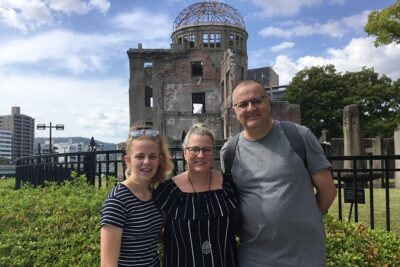
Hiroshima / Miyajima Full-day Private Tour with Government Licensed Guide
Read our review →
Osaka/Kyoto: Hiroshima Miyajima Bus Tour & Shinkansen Ticket
Read our review →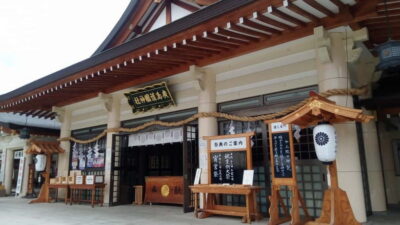
Hiroshima Historical Walking Tour – Why A-Bomb was Dropped
Read our review →
Hiroshima Peace (Heiwa) Walking Tour at World Heritage Sites
Read our review →
Hiroshima in a Nutshell: Morning Bike Adventure
Read our review →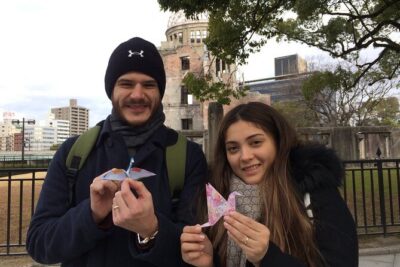
Hiroshima City 4hr Private Walking Tour with Licensed Guide
Read our review →Browse the lists this tour appears in