
Reviewed · HIROSHIMA & MIYAJIMA DAY TRIPS
Hiroshima & Miyajima 6.5h Guided Tour – Dome, Park & Shrine
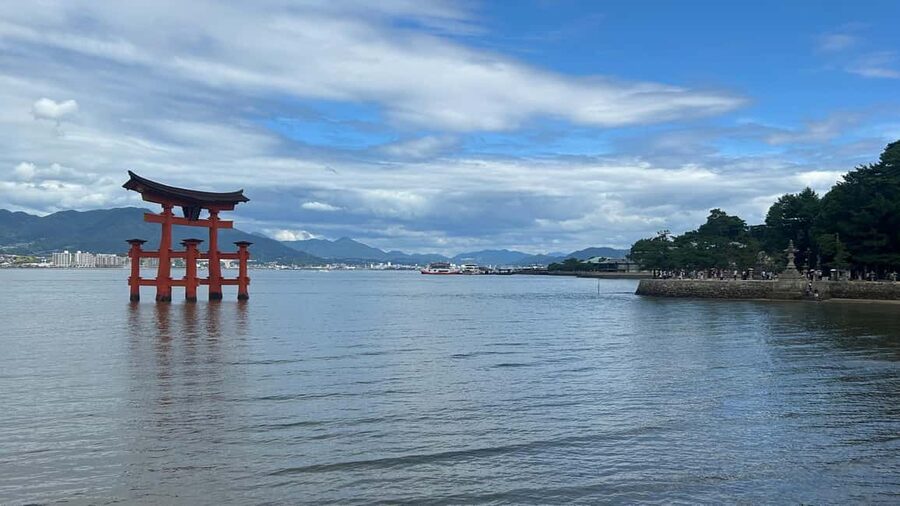
Hiroshima’s two essential sights are far apart in character: Miyajima’s Itsukushima Shrine, with its red torii gate on the water, and the quiet, sobering grounds of Peace Memorial Park. This tour links them in one well-planned day by train and ferry, with an English-speaking guide keeping the connections and context clear.
I like the small group, limited to 10, and the way the day mixes scenery, food, local streets, and serious history. I also like that guides such as Shion, Bo, Rie, and Rei have been praised for personal stories and practical help, including getting people back to their trains. The main drawback is time: six and a half hours is tight, especially when Miyajima is crowded or the Peace Memorial Museum is busy.
Key points at a glance
- Miyajima by train and ferry: Your route includes a 25-minute train ride and a 15-minute ferry crossing each way.
- Two UNESCO World Heritage Sites: Visit Itsukushima Shrine and the Atomic Bomb Dome in one outing.
- A small English-speaking group: With no more than 10 people, it is easier to ask questions and keep up with the guide.
- A serious finish: The Peace Memorial Park and Museum give the Hiroshima portion emotional weight.
- Cash and walking matter: Transportation and meals are extra, and comfortable shoes are essential.
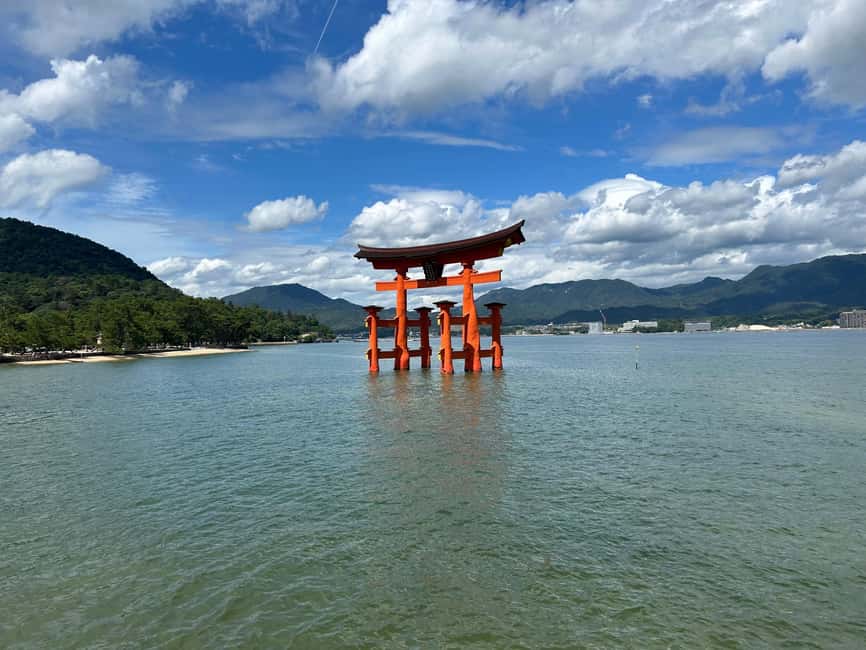
- Tides change the view: The torii gate may appear surrounded by water or exposed mud and shore, depending on the tide.
From Hiroshima Station to Miyajima by public transport
The tour begins at Hiroshima Station’s North Exit, specifically the Shinkansen Exit on the second floor. Do not go to the South Exit, which serves the tram and bus side. Look for the benches between the JR Green Ticket Office, called Midori no Madoguchi, and the Starbucks directly opposite it.
Your guide will have a bright fluorescent green band attached to their bag. That small detail matters in a busy station, where a vague meeting point can turn the first few minutes into a scavenger hunt.
From the station, you travel by train for about 25 minutes, followed by a 15-minute ferry ride to Miyajima. This is not a private coach tour. You are using Japan’s regular public transport, so you should be ready to walk between platforms, board with the group, and keep your belongings close.
That public-transport format is part of the appeal. You see how the two major Hiroshima sights fit together in real life, rather than spending the day behind a coach window. It also means the pace depends on train and ferry connections, crowds, and the group staying together.
Bring Japanese yen in cash. Fares are not included, and you will also want money for food and small purchases on the island. Meals are not part of the tour either, so plan to eat during the free period on Omotesando Street or before and after the excursion.
Other temples and shrines in Hiroshima people book:
- Hiroshima and Miyajima Day Trip with Itsukushima Shrine & Ferry
★ 5.0 · 378 reviews - Miyajima: Cultural Experience in Zen Temple
★ 5.0 · 258 reviews - Day Trip to Hiroshima & Miyajima with Itsukushima Shrine
★ 4.6 · 124 reviews
Itsukushima Shrine and the changing torii view
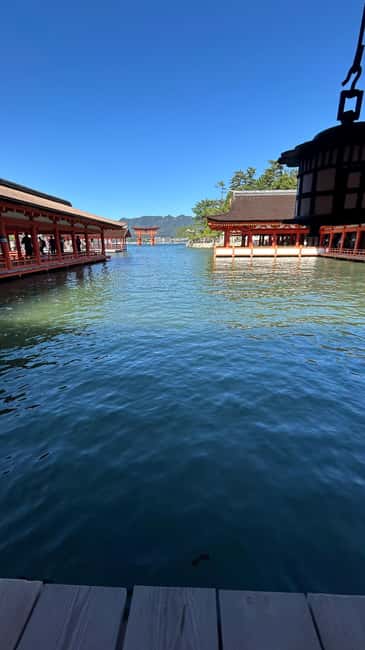
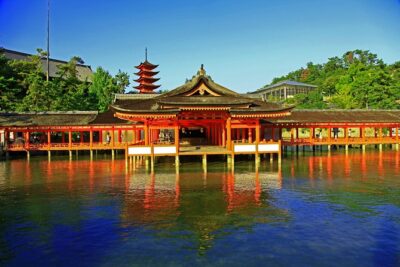
Miyajima is the scenic half of the day. Itsukushima Shrine is famous for its vermilion torii gate, which can appear to float in the sea when the tide is high. The view is never quite fixed. Tide levels may leave the gate surrounded by water, partly exposed, or approached from the shore, so do not expect one guaranteed postcard scene.
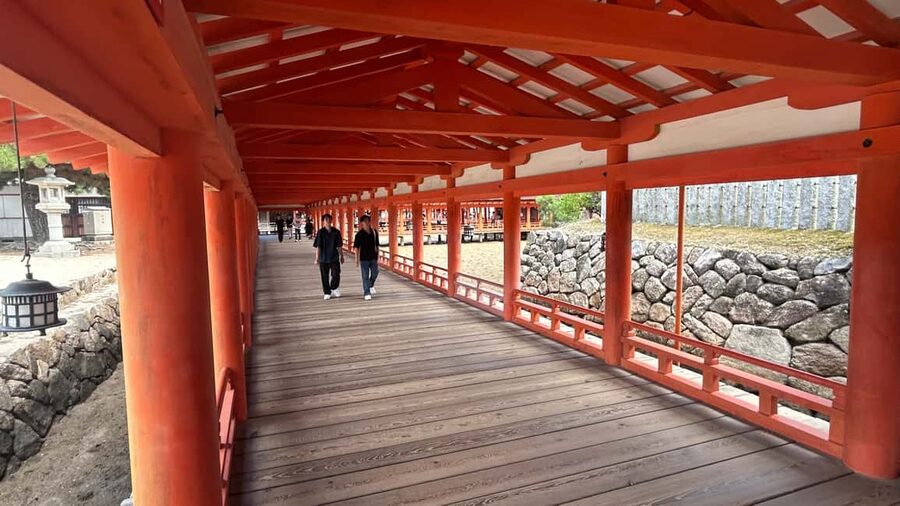
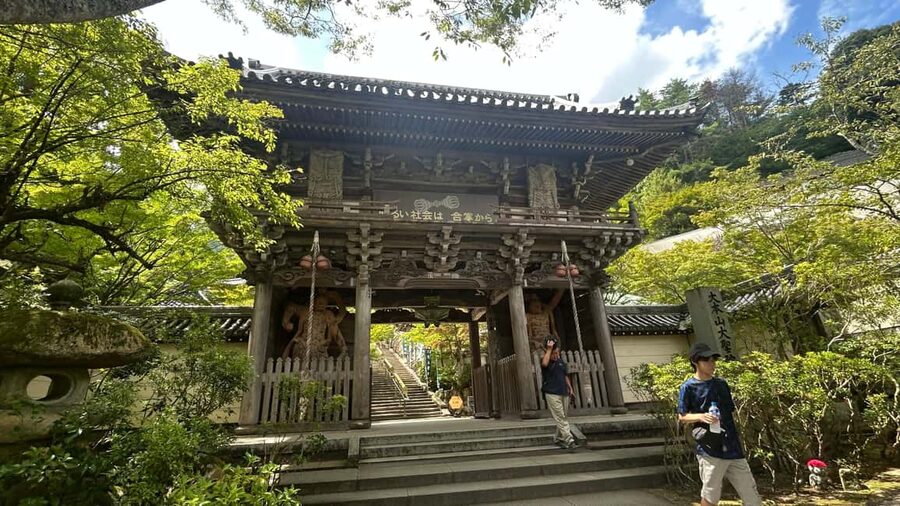
The shrine visit lasts about 80 minutes and includes guided sightseeing and time for photographs. That is enough to get the setting, understand the shrine’s importance, and take in the main views, but it is not a slow, unhurried exploration of every corner of Miyajima.
Crowds are the biggest variable. The island can be very busy, and one guide reported that the line for the temple became so long that the group chose not to go inside. The guide then showed them other sights instead. That is a useful reminder to value the guide’s judgment rather than treating every listed stop as a fixed promise of uninterrupted access.
Guides have made this section especially memorable for some groups. Shion, a Hiroshima local, has been praised for adding local context and for finding an unexpected dark tunnel beneath a temple. Another group happened upon monks training. These moments are not guaranteed, but they show why a small guided visit can be more revealing than simply following the main street with a map.
The island also offers a welcome change in mood. After the later visit to the Peace Memorial Museum, Miyajima’s gardens, shrine buildings, and sea views can feel like a needed pause. The contrast is one of the strongest reasons to combine both places in one day.
Omotesando Street, oysters, and momiji manju
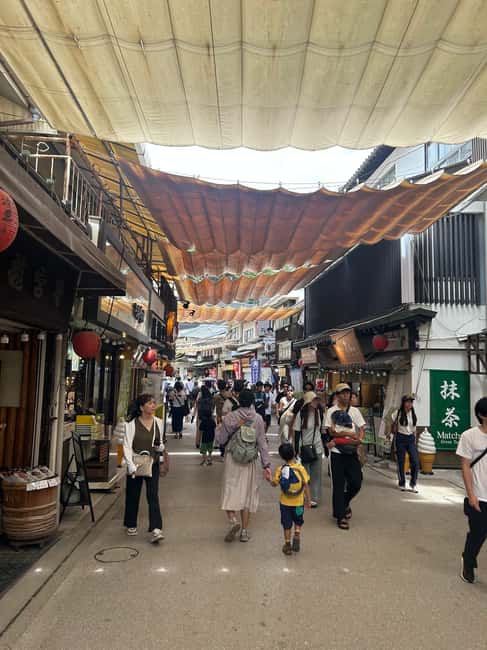
After the shrine, you have about 45 minutes around Miyajima Omotesando Shopping Street. This is your chance to browse, eat, and enjoy the island’s lively side before returning to Hiroshima.
Look for local specialties such as oysters and momiji manju, a maple-leaf-shaped sweet associated with Miyajima. The tour does not include meals, so this is a useful place to buy a snack or make a quick lunch choice.
Forty-five minutes goes quickly. You can browse the main street and try a local treat, but you will not have much room for a long meal, extended shopping, and extra sightseeing all at once. If food is a major goal, decide before you arrive what you want to try.
The guide can help you use this short break well. Several guides, including Shion and Bo, have been praised for recommendations and friendly personal interaction. Still, keep an eye on the meeting time. The return ferry and train are part of the shared schedule.
Returning to Hiroshima and facing the Atomic Bomb Dome
The return journey includes another ferry ride of about 15 minutes, followed by a train ride of about 45 minutes. That is a substantial transfer, but it gives you a little time to rest before the more serious part of the day.
The first Hiroshima stop is the Atomic Bomb Dome, visited for about 30 minutes. The preserved building is one of the city’s most powerful places because its damaged structure remains near the site of the 1945 atomic bombing. Your guide explains what you are seeing and helps connect the building to the wider story of Hiroshima.
Thirty minutes is enough for photographs, a close look from several angles, and an introduction to the site. It is not enough to absorb every detail, so listen closely while the guide speaks. The setting can be busy, but the subject calls for a quiet and respectful approach.
This is where a local guide can make a real difference. Shion has been described as a Hiroshima local with family connections to people who survived and people who died in the bombing. Other guides, including Bo, have been praised for clear explanations of the events of August 6, 1945. Guide quality can vary, but the strongest accounts point to personal, careful storytelling rather than a dry list of dates.
Other long days west of Hiroshima:
- Peaceful Hiroshima & Miyajima UNESCO 1 Day Bus Tour
★ 5.0 · 5,309 reviews - Hiroshima: Hiroshima and Miyajima UNESCO Sites 1-Day Tour
★ 4.9 · 2,330 reviews - Hiroshima / Miyajima Full-day Private Tour with Government Licensed Guide
★ 5.0 · 1,298 reviews - Hiroshima Historical Walking Tour – Why A-Bomb was Dropped
★ 4.8 · 893 reviews
Walking through Peace Memorial Park
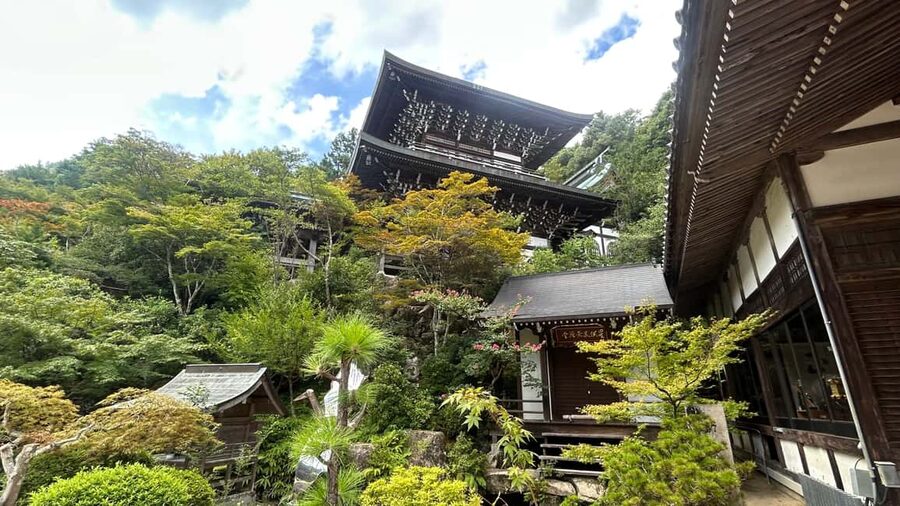
From the Dome, the tour continues through Peace Memorial Park for about 40 minutes. The park contains monuments dedicated to those who died, and your guide helps explain what each place means.
This portion works best when you give it time and attention. You will walk from monument to monument rather than simply check off a viewpoint. The park links the physical remains of the Dome with the city’s ongoing message of peace, so it provides the setting needed before entering the museum.
The contrast with Miyajima is deliberate and useful. The island offers beauty and religious tradition; the park asks you to consider loss, memory, and the consequences of war. Doing both in one day creates a fuller understanding of Hiroshima than either stop alone.
You should also expect a fair amount of walking by this point. The tour uses trains, ferries, streets, shrine grounds, and park paths. Wear comfortable shoes and bring rain gear when needed, since the tour operates in wet weather as well as fair weather.
The Peace Memorial Museum in a one-hour visit
The final major stop is the Hiroshima Peace Memorial Museum, scheduled for about one hour. Its exhibits provide direct insight into the bombing and its effects. For many people, this is the emotional high point of the tour.
One hour gives you an important introduction, but it may not feel generous. The museum can be crowded, and one group wished it had more time there. If you want to read every panel carefully, this tour may leave you wanting a longer return visit.
The tour finishes at the museum, which is practical if you want to continue exploring the Peace Memorial area afterward. It is less convenient if you must immediately return to Hiroshima Station or catch a train to another city. One guide, Shion, went out of his way to help a group reach its train back to Kyoto, but you should not build a tight rail connection around the tour’s scheduled finish.
The museum visit is skipped from February 16 through 21 because it is closed during that period. The rest of the tour continues, including Miyajima, the Atomic Bomb Dome, and Peace Memorial Park.
How much value do you get for $96?
At $96 per person, the price is reasonable if you want a guide to connect the sites and manage the day’s public transport. Admission fees are included, while transportation and meals are extra.
The value is not simply in getting from one place to another. You are paying for a small group, an English-speaking guide, historical explanation, help with the train and ferry route, and the chance to ask questions as you go. A guide can also adjust the day when a shrine queue becomes too long or help you find a better use of limited time.
The extra transportation cost needs to be part of your budget. You should also carry cash for fares and food. Since meals are not provided, the final cost depends on how much you eat and buy on Miyajima.
For a visitor with only one day in Hiroshima, the price can make sense. You see the major island shrine and the core Peace sites without spending time working out every connection yourself. If you already know Hiroshima well or prefer long, quiet museum visits, a self-guided plan may offer more freedom.
Who should book this Hiroshima and Miyajima tour?
This experience suits you best if you are visiting Hiroshima for the first time and want the main sights explained in English. It is also a good fit if you have limited time and want to combine Miyajima with the Peace Memorial area rather than split them across separate days.
The small group is helpful if you like asking questions. Guides such as Bo, Shion, Rie, Rei, Hayato, Lena, Angel, and Kana have been praised for clear English, warmth, local insight, and practical assistance. The actual guide for your departure will determine the tone, but the format allows more personal contact than a large bus tour.
You should reconsider it if you dislike walking, public transport, crowds, or a firm schedule. The activity is not suitable for children under six, people with mobility impairments, or wheelchair users. Oversize luggage, large bags, pets, and electric wheelchairs are not allowed.
Free cancellation is available up to 24 hours before departure, and you can reserve now and pay later. Check the available starting time carefully, since the experience lasts 390 minutes and finishes at the Peace Memorial Museum rather than Hiroshima Station.
Should you book it?
Book this tour if you want Miyajima’s shrine and Hiroshima’s peace sites in one guided day, and if you value local explanation more than having unlimited time at each stop. The route is efficient, the group is small, and the combination of ferry scenery, island food, the Atomic Bomb Dome, and the museum gives you a strong first look at the city.
Skip it if the Peace Memorial Museum is your main reason for visiting and you want several hours there. You should also choose another plan if you need wheelchair access, dislike walking, or have a tight train connection after the tour.
For most first-time visitors with a full half-day plus, this is a sound way to see Hiroshima’s two very different faces. Go with comfortable shoes, cash, rain gear, and realistic expectations about crowds and museum time.
FAQ
Where does the tour meet?
Meet at Hiroshima Station’s North Exit, also called the Shinkansen Exit, on the second floor. Wait on the benches between the Midori no Madoguchi JR Green Ticket Office and the Starbucks opposite it.
How will I recognise the guide?
The guide will have a bright fluorescent green band attached to their bag.
How long does the tour last?
The tour lasts 390 minutes, or six and a half hours.
What languages are available?
The live tour guide language is English.
How large is the group?
The tour is limited to 10 participants.
Are train and ferry fares included?
No. Transportation is not included, so bring Japanese yen in cash for the train and ferry.
Are meals included?
No. Meals are not included. You have free time on Miyajima’s Omotesando Shopping Street for food and shopping.
What should I wear?
Wear comfortable walking shoes. The tour uses public transportation and includes extended walking. Bring suitable clothing and rain gear because the tour operates rain or shine.
Does the tour visit the Peace Memorial Museum all year?
The museum visit is skipped from February 16 through 21 because the museum is closed during that period. The other planned stops continue.
Is the tour suitable for wheelchair users?
No. The tour is not suitable for wheelchair users, people with mobility impairments, or children under six.
More temples and shrines elsewhere in Japan
- Kyoto: Tea Ceremony Ju-An at Jotokuji Temple
★ 4.9 · 3,207 reviews - Tokyo: Meiji Shrine, Asakusa, Skytree Bus Tour and Cruise
★ 4.7 · 1,986 reviews - Tokyo: Asakusa Walking Tour with Sensoji Temple Visit
★ 4.8 · 1,583 reviews - Nikko: Kegon Falls, Lake Chuzenji & Toshogu Temple
★ 4.6 · 1,577 reviews
Just added in Hiroshima
- Hiroshima 3hr Peace Cycling Tour with Local Guide★ 5.0 · 131 reviews
- Day Trip to Hiroshima & Miyajima with Itsukushima Shrine★ 4.6 · 124 reviews
- Hiroshima: Best of Hiroshima Guided Bike Tour★ 4.9 · 89 reviews
- Hiroshima Local guided Hiking Tour&Open-air Tea Ceremony★ 5.0 · 213 reviews
- Hiroshima: Food and Culture Guided Walking Tour with Dinner★ 4.9 · 212 reviews
- Hiroshima & Miyajima: Full-Day Private Tour & Licensed Guide★ 4.8 · 252 reviews
- Miyajima: Cultural Experience in Zen Temple★ 5.0 · 258 reviews
- Hiroshima Izakaya Food and Drink Night Tour★ 5.0 · 297 reviews
Hiroshima & Miyajima Day Trips, compared.
Peaceful Hiroshima & Miyajima UNESCO 1 Day Bus Tour
Read our review →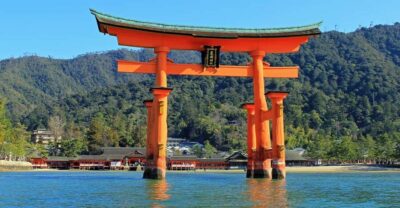
Hiroshima and Miyajima UNESCO Sites 1-Day Tour
Read our review →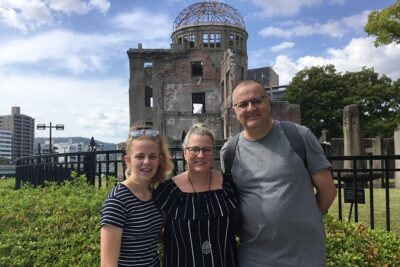
Hiroshima / Miyajima Full-day Private Tour with Government Licensed Guide
Read our review →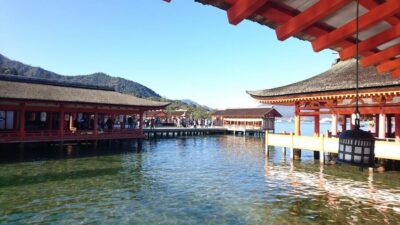
Osaka/Kyoto: Hiroshima Miyajima Bus Tour & Shinkansen Ticket
Read our review →
Hiroshima Historical Walking Tour – Why A-Bomb was Dropped
Read our review →
Hiroshima Peace (Heiwa) Walking Tour at World Heritage Sites
Read our review →
Hiroshima in a Nutshell: Morning Bike Adventure
Read our review →
Hiroshima City 4hr Private Walking Tour with Licensed Guide
Read our review →Browse the lists this tour appears in