
Reviewed · HIROSHIMA & MIYAJIMA DAY TRIPS
Hiroshima: Private City Highlights Walking Tour
Hiroshima’s story is told most clearly on foot, moving from the Peace Memorial Museum and Atomic Bomb Dome to the quieter memorials that many visitors miss. This private tour gives you a guide to explain what you are seeing, not just a checklist of famous places.
I like the private format, which lets you ask direct questions and adjust the pace. I also like the way the walk reaches beyond Peace Memorial Park to Hiroshima Castle and lesser-known places linked to August 6, 1945. The main drawback is time: four hours on foot can feel long in heat or rain, and the itinerary is full.
The guides make a real difference. Maria is praised for her calm, thoughtful explanations and flexible pacing, while Ali and Ihsan are often singled out for detailed history, local stories, and useful food advice. The tour costs $90 per person, includes museum admission, and ends back at the starting point.
Key points at a glance
- A private four-hour walk: Your group gets a guide rather than joining a large crowd, with room for questions and changes of pace.
- The Peace Memorial Museum is central: One hour is set aside for the collections connected to August 6, 1945.
- You see more than the famous sights: Guides may point out a school, bank, or other places outside the main park that carry links to the bombing.
- The walk continues to Hiroshima Castle: This adds prewar and earlier city history to a tour focused heavily on 1945.
- Several languages are offered: Guides speak English, Malay, Urdu, Hindi, and Punjabi.
- The price includes admission: At $90 per person, the private guiding and museum ticket are the main value, while food and transport cost extra.
Why a walking tour helps you understand Hiroshima
Hiroshima can be visited independently, but the meaning of its monuments is not always obvious at first glance. The park contains memorials, bells, flames, cenotaphs, and sculptures, each with a particular purpose. A guide helps you connect them instead of treating them as a series of photo stops.
The private setting is especially useful here. You can ask about the city before the bombing, the rebuilding that followed, or the meaning of a particular monument without waiting for a group to catch up. If your interests lean toward military history, personal stories, architecture, religion, or food, the guide can shape the conversation.
The route also gives you a broader view of Hiroshima. It does not present the city only as the site of a tragedy. After the memorial park, you walk toward Hiroshima Castle and see a city that rebuilt itself and continued as a living regional center.
That balance matters. The morning can be sobering, but it does not end at the Atomic Bomb Dome. It moves toward the wider story of Hiroshima, past and present.
Other walking tours in Hiroshima people book:
- Hiroshima Historical Walking Tour – Why A-Bomb was Dropped
★ 4.8 · 893 reviews - Hiroshima Peace (Heiwa) Walking Tour at World Heritage Sites
★ 5.0 · 872 reviews - Hiroshima City 4hr Private Walking Tour with Licensed Guide
★ 5.0 · 437 reviews
Beginning at Nakajimacho and the Gates of Peace
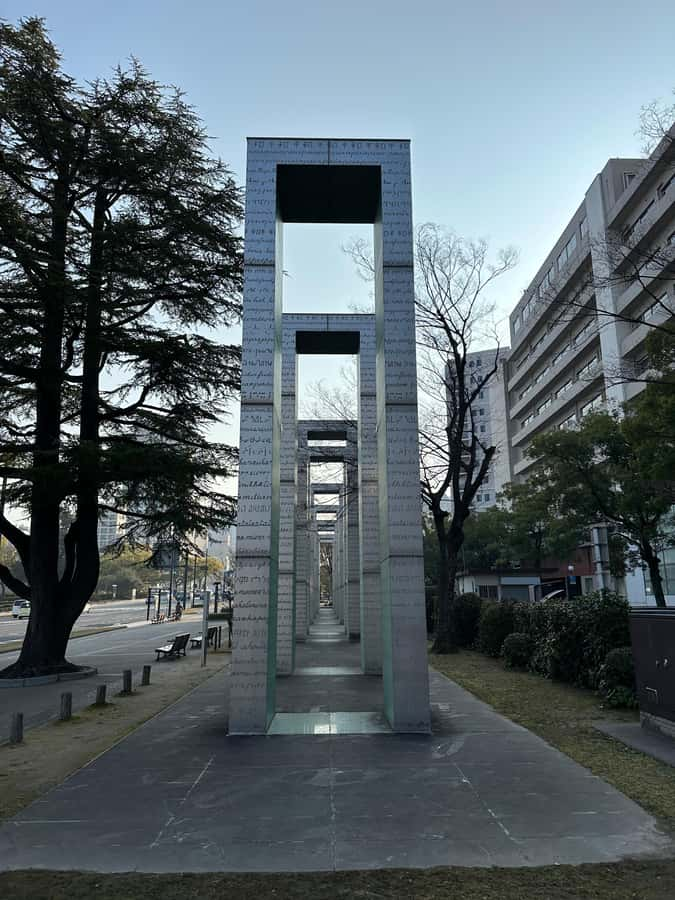
The meeting point is at 1-2 Nakajimacho in Naka Ward, close to the Peace Memorial Park. The tour begins with the Gates of Peace, a natural first stop because they introduce the park’s message before you reach the museum.
The Gates of Peace are planned as a brief visit and photo stop, about 15 minutes. Your guide can set the scene for the walk and explain how the park presents remembrance and peace to the public.
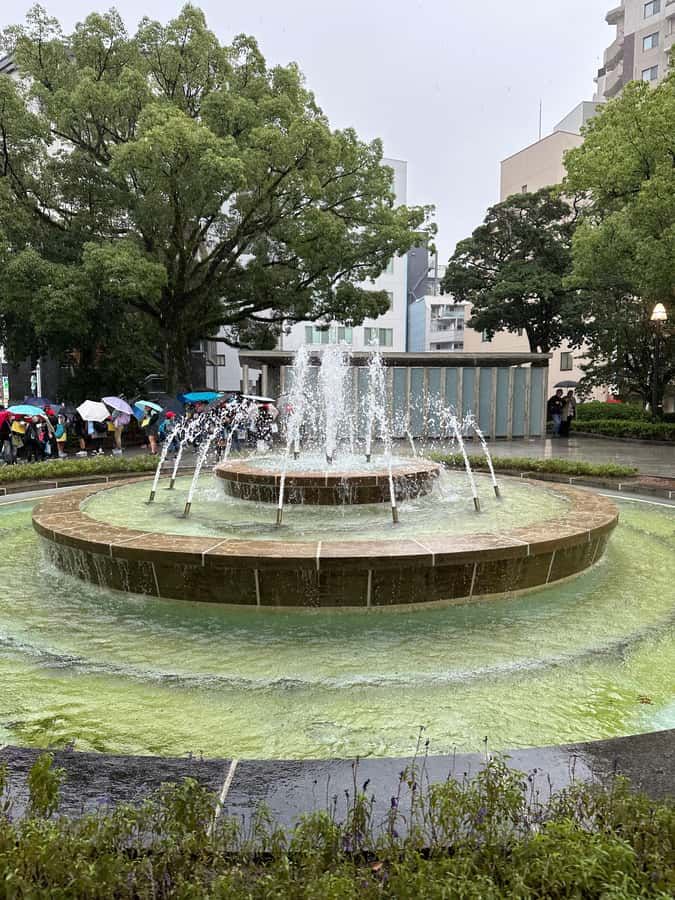
Next comes the Prayer Fountain, with about 10 minutes for a visit and explanation. These early stops are short, but they help you slow down before entering the museum. You are not simply racing toward the best-known landmark.
If you are visiting in summer, remember that the tour is outdoors for much of its length. Reviews describe guides offering cold juice, orange juice, or even an ice cream break when needed, but food and drinks are not included. That sort of flexibility is helpful, though you should still bring water.
One hour inside the Hiroshima Peace Memorial Museum
The Hiroshima Peace Memorial Museum receives the largest single block of time, about one hour. Your admission is included, so you do not need to arrange a separate museum ticket.
This is the emotional center of the tour. The collections deal with the events of August 6, 1945, and the effects on Hiroshima and its people. The material is difficult, and the museum often works through objects, photographs, written accounts, and personal evidence rather than theatrical presentation.
Your guide’s role is useful before and after the museum. Inside, the experience is largely quiet and self-directed, so you should expect to spend time reading and looking rather than listening to a continuous guided talk. Guides such as Ihsan and Ishan are praised for explaining the context of important displays, answering questions patiently, and helping families understand the significance of what they see.
One hour is enough for a meaningful visit, but not for every display at a slow pace. If you know you need a long time in museums, tell your guide at the start. The private format may allow some adjustment, though staying longer could mean shortening another stop.
The cenotaph, flame, and the names remembered
After the museum, the route returns to several important memorials in the park.
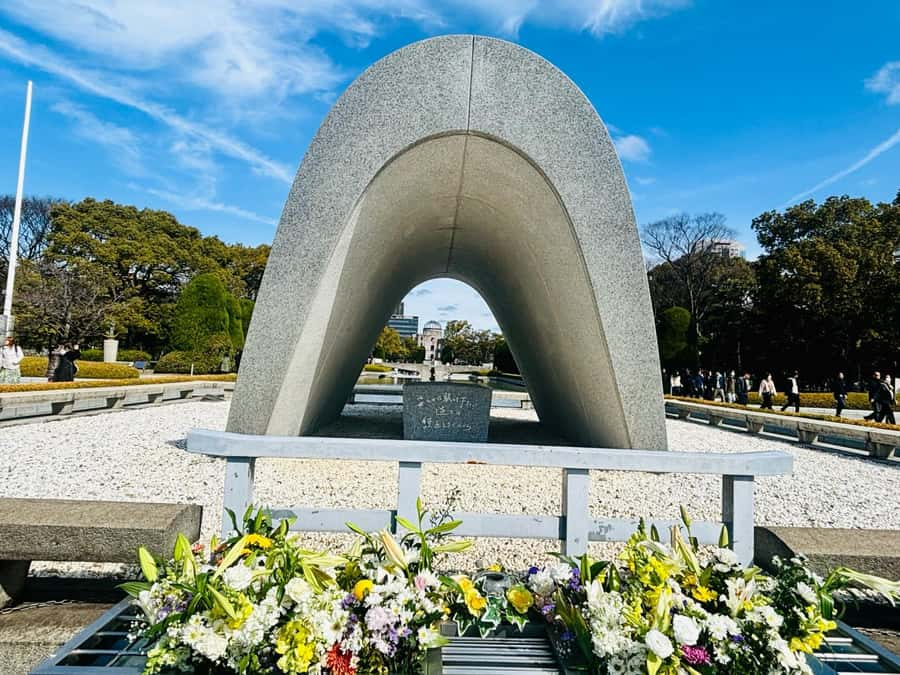
The Hiroshima Victims Memorial Cenotaph receives roughly 15 minutes. This is one of the park’s key places of remembrance, and your guide can explain its purpose and the way it relates to the victims of the bombing.
The Flame of Peace is a shorter stop, about five minutes. Its brief timing does not mean it lacks importance. It forms part of the park’s larger message of remembrance and the hope for an end to nuclear weapons.
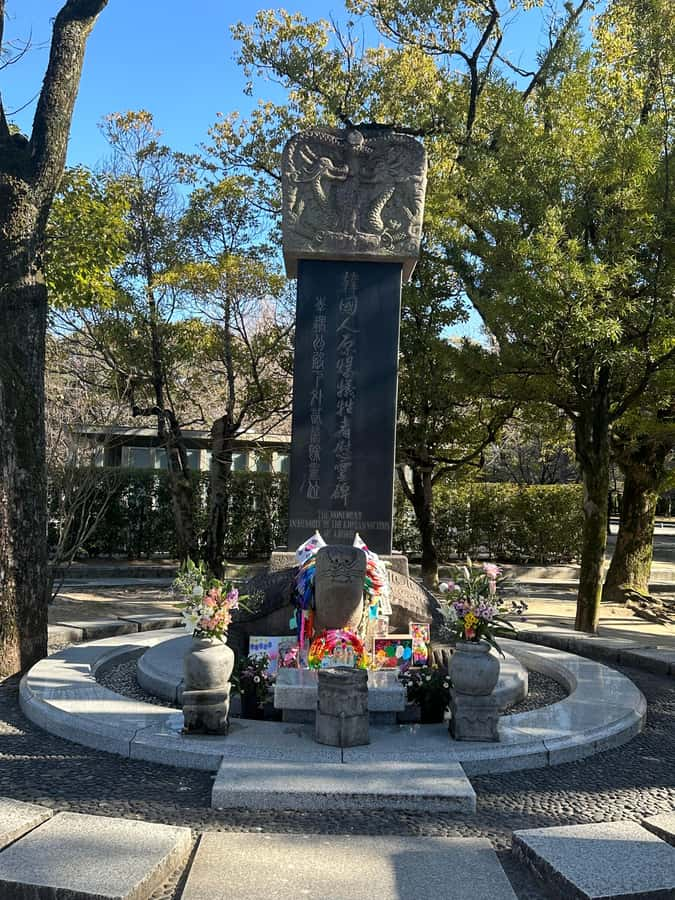
The Korean Atomic Bomb Victims Cenotaph is scheduled for about 15 minutes. This stop broadens the story beyond the most familiar accounts of Hiroshima. It reminds you that people from different communities were affected by the bombing, and that remembrance in Hiroshima includes more than one national experience.
The Bell of Peace is another 15-minute visit. The sound and symbolism of the bell give the park a more active form of remembrance. Depending on the guide and the pace of your group, you may have time to ask about how the monuments fit together.
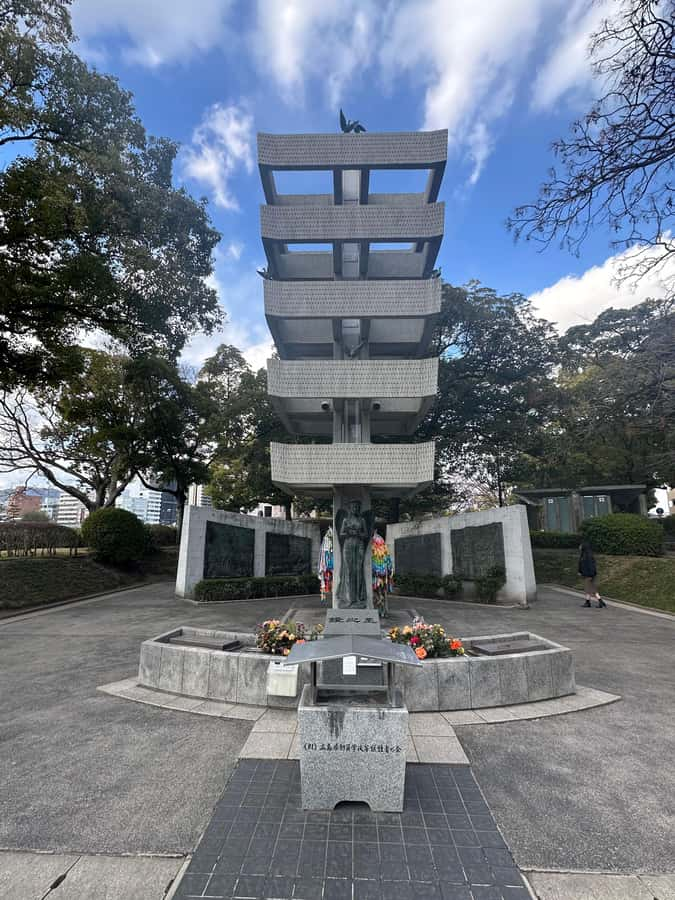
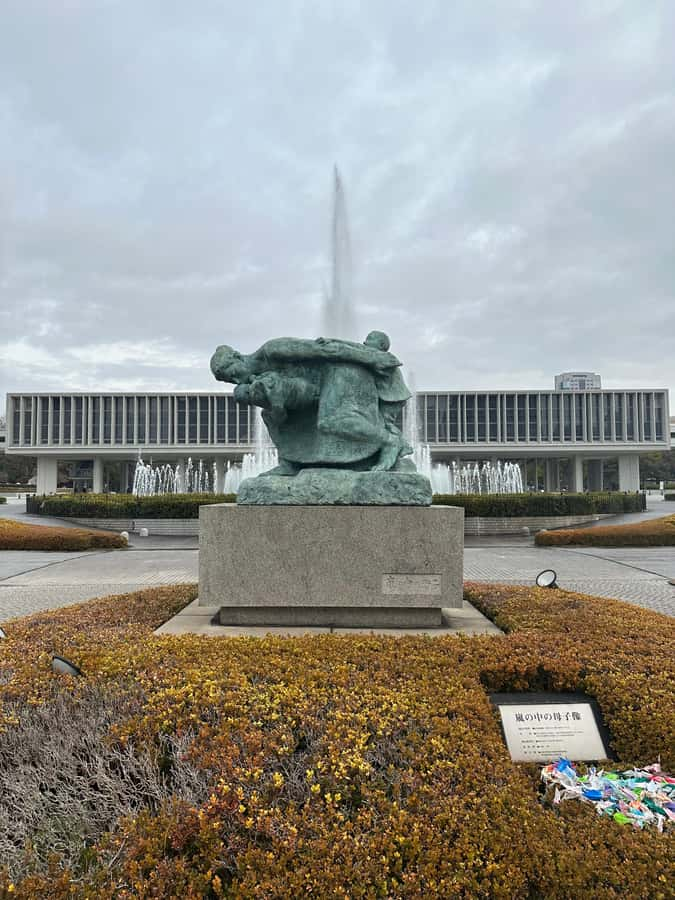
The Children’s Peace Monument follows, also with about 15 minutes. It is closely associated with children affected by the bombing and with the thousands of paper cranes offered in remembrance. This is often a moving stop for families, but it can also be difficult for younger children. A private guide gives you room to handle the subject at your own pace.
Other long days west of Hiroshima:
- Peaceful Hiroshima & Miyajima UNESCO 1 Day Bus Tour
★ 5.0 · 5,309 reviews - Hiroshima: Hiroshima and Miyajima UNESCO Sites 1-Day Tour
★ 4.9 · 2,330 reviews - Hiroshima / Miyajima Full-day Private Tour with Government Licensed Guide
★ 5.0 · 1,298 reviews - Hiroshima in a Nutshell: Morning Bike Adventure
★ 5.0 · 524 reviews
The Atomic Bomb Dome and the view before and after
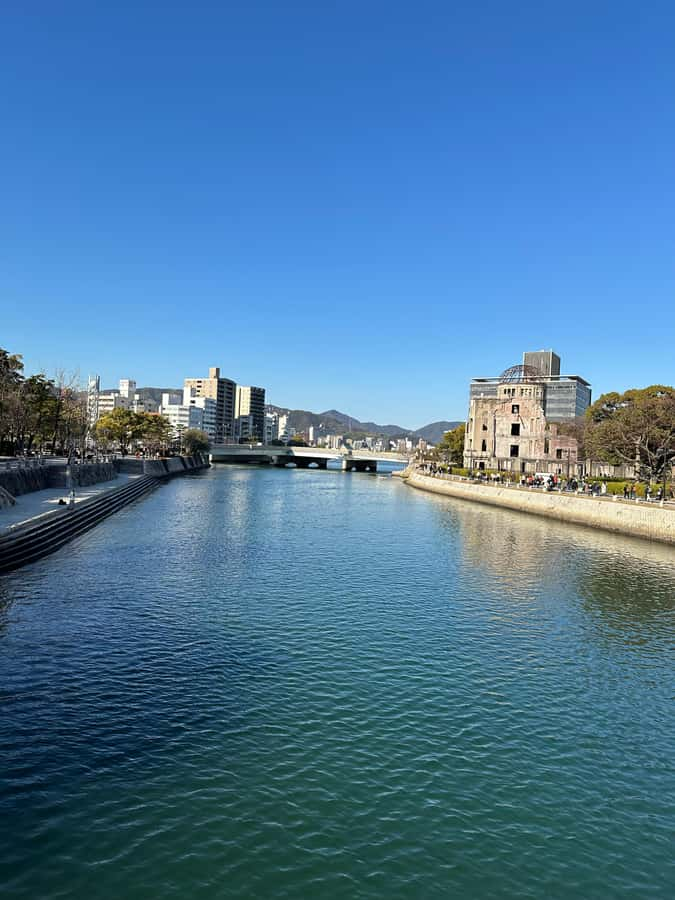
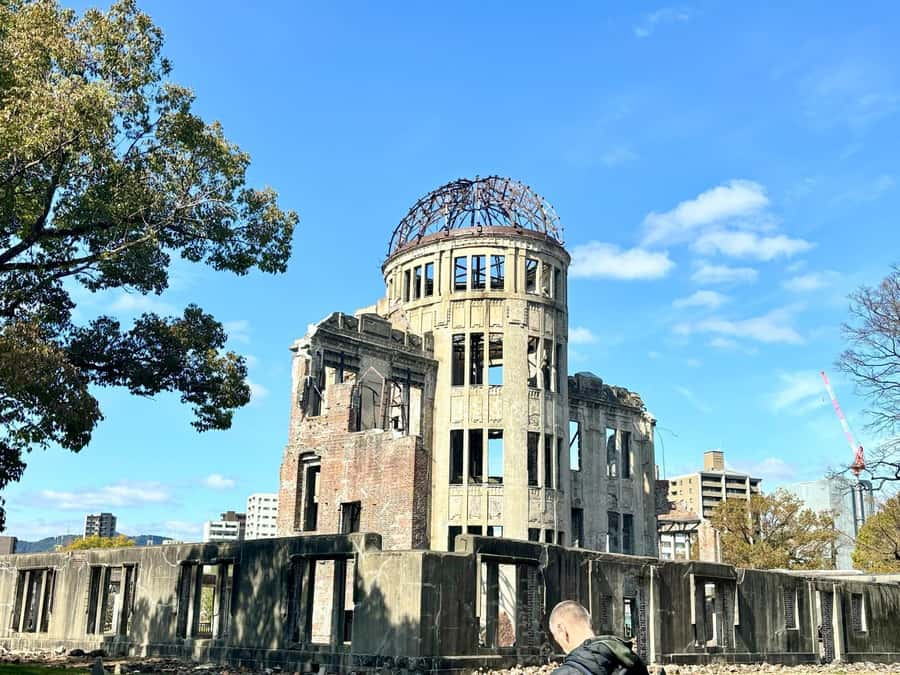
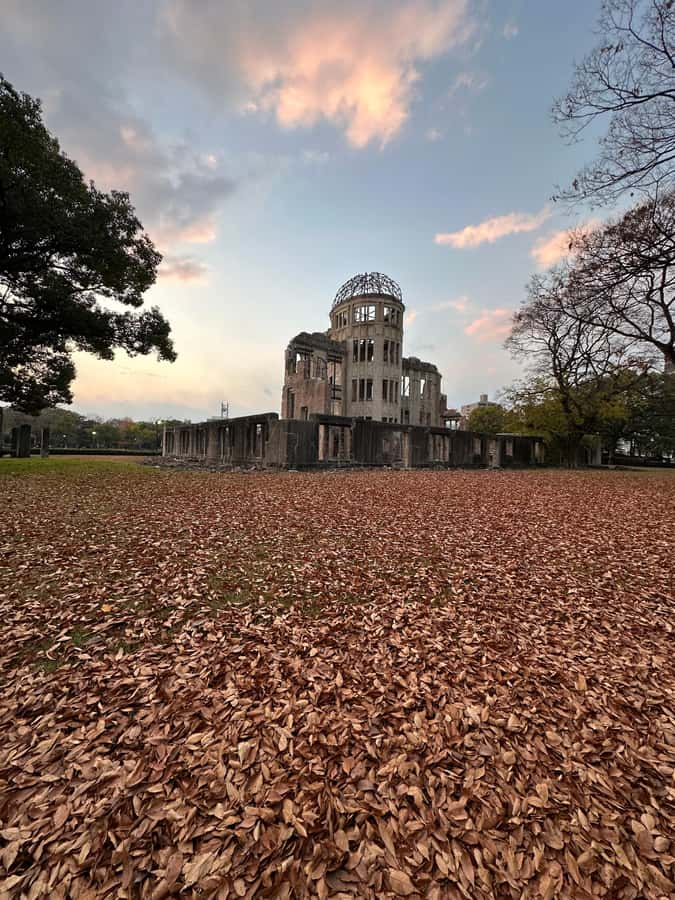
The Atomic Bomb Dome is allocated about 20 minutes. This is one of Hiroshima’s most recognizable buildings, and its damaged frame gives you a direct visual connection to the destruction of 1945.
The tour description includes an entry ticket to the Atomic Bomb Dome, though the main experience is viewing the preserved structure from around the site. Your guide can point out what remains and explain why the building was preserved rather than removed.
This is also a useful place to ask about Hiroshima before and after the bombing. Several guides are praised for showing more than the park itself, including places such as a school and a bank outside the central memorial area. Those ordinary buildings help you understand that the bombing struck a functioning city, not an empty historic site.
The Dome is an important photo stop, but I would resist treating it as just a picture opportunity. Take time to look at the exposed brick, steel, and shape of the remains. The guide’s explanation gives the structure its full weight.
Walking onward to the 16th-century Hiroshima Castle
The route then leaves the Peace Memorial Park and continues to Hiroshima Castle, with about 40 minutes for the visit and walk. This shift in subject is one of the tour’s strongest features.
The castle helps place Hiroshima in a longer timeline. It introduces the city’s earlier political and military importance, before the focus returns to the twentieth century. You get a change of scenery and a chance to see how Hiroshima’s identity extends beyond the events of 1945.
The itinerary lists a guided visit and walk, with the castle described as 16th-century-old. Admission to the castle interior is not clearly included in the stated inclusions, so you should confirm what is planned if entering the building matters to you. One group missed the inside after a delayed train, but the guide still explained the castle’s history and adapted the ending.
This is also where the schedule can become tight. The park and museum alone can fill a morning, and the castle is reached on foot. If you stop often for questions or photographs, you may see the castle grounds but have less time inside. That is not necessarily a flaw, but it is worth knowing before you book.
Local guides who shape the experience
The tour uses different guides, so the feel may vary. Maria is repeatedly praised for clear English, warmth, empathy, and her ability to adjust the walk to the group. She has also been described as especially good at finding less obvious places around the park.
Ali is noted for explaining the history of Hiroshima and its people, including landmarks beyond the main tourist route. He is also praised for helping with practical needs, such as finding a pharmacy or guiding a group back toward its hotel.
Ihsan, also called Ishan in some feedback, is described as energetic, well prepared, and comfortable answering a large number of questions. He has taken groups to local restaurants serving Hiroshima-style okonomiyaki and offered fresh juice stops along the way.
Wajid is praised for combining history, heritage, and food, even taking extra time to show a favorite restaurant. Marie and Meg are also described as clear and pleasant guides who explained the museum, park, and monuments in detail.
These details point to the tour’s strongest quality: you get a person who can connect the sites. The exact guide is important, so check the language and guide assignment when booking if a particular name has been recommended to you.
Is $90 per person good value?
At $90 per person, this is not the cheapest way to see Hiroshima. You can walk through much of the Peace Memorial Park without paying a guide, and local transport is available separately.
The value comes from the private attention. You receive four hours with a guide, museum admission, and explanations at a series of monuments that can be confusing without context. A private group also means you do not have to match the pace of strangers.
I think the price is fair for first-time visitors who want a serious introduction in a half day. It is especially useful for families, couples, and small groups with different questions or interests. The cost is harder to justify if you prefer to read every museum panel slowly, explore alone, or already know Hiroshima well.
Food, drinks, and transportation are not included. Plan for your own refreshments, and remember that the activity begins and ends at 1-2 Nakajimacho rather than at your hotel or the station.
Comfort, weather, and the four-hour pace
This is a walking tour, not a bus tour. You move between memorials, the museum, and the castle, so comfortable shoes matter. The tour is wheelchair accessible, which is useful, though a private guide should still know about your group’s mobility needs in advance.
Weather can shape the day. Groups have completed the route in rain, and guides have continued to explain the sites and adjust the pace. Heat and humidity can be more tiring, especially when the park and castle are combined.
The schedule is full, but private guiding helps. You can pause for a drink, ask for a slower pace, or spend less time at a stop that does not hold your interest. One person felt four hours was longer than necessary, so this is not an automatic choice for anyone who dislikes extended walks.
The tour is offered in English, Malay, Urdu, Hindi, and Punjabi. That range can make the historical material easier to discuss in the language that suits your group.
Who should book this Hiroshima tour?
I would choose this tour if you want the main memorial sites explained in person and you also want a little of Hiroshima beyond the park. It suits first-time visitors, families, and anyone who wants to ask difficult questions without feeling rushed by a large group.
It is also a good choice if you want local food advice at the end. Guides have pointed groups toward Hiroshima-style okonomiyaki and other local places, though meals are not part of the tour.
I would hesitate if you want a slow, museum-heavy day, since the four-hour route covers a lot. I would also think twice if the $90 price is a concern and you are happy exploring independently.
For most first visits, the private format earns its cost. Hiroshima deserves more than a quick photograph at the Dome, and a good guide helps you see both the tragedy and the city that came after it.
FAQ
How long does the Hiroshima walking tour last?
The scheduled duration is four hours. Some groups have spent longer with their guide, but the advertised tour length is four hours.
Where does the tour begin and end?
You meet the guide at 1-2 Nakajimachō in Naka Ward, Hiroshima. The activity ends back at the meeting point.
Is admission to the Hiroshima Peace Memorial Museum included?
Yes. The entry ticket to the Hiroshima Peace Memorial Museum is included in the tour price.
Is the Atomic Bomb Dome entry ticket included?
Yes. The listed inclusions include an entry ticket to the Atomic Bomb Dome.
What languages are available?
The live guide languages are English, Malay, Urdu, Hindi, and Punjabi.
Is the tour private and wheelchair accessible?
Yes. It is offered as a private group tour and is listed as wheelchair accessible.
More walking tours elsewhere in Japan
- Hiroshima Walking Tour Why A Bomb was dropped to Hiroshima
★ 5.0 · 347 reviews - Miyajima Half-day Trip Historical Walking Tour
★ 5.0 · 284 reviews - Hiroshima: History of Hiroshima Group Walking Tour
★ 4.8 · 266 reviews - Hiroshima: Food and Culture Guided Walking Tour with Dinner
★ 4.9 · 212 reviews
Just added in Hiroshima
- Iya Valley BROMPTON Slow Cycling Tour★ 5.0 · 28 reviews
- Iya Valley All Must-Sees Private Chauffeur Full-day Tour with a Driver★ 5.0 · 20 reviews
- Shore Excursion from Hiroshima Port : Private Tour in Hiroshima★ 5.0 · 17 reviews
- Hiroshima & Miyajima All-Inclusive Tour w/Licensed guide Pancho★ 5.0 · 54 reviews
- Okunoshima Rabbit Island Cycling Tour with Local Guide★ 4.5 · 17 reviews
- The Peace Memorial to Miyajima : Icons of Peace and Beauty★ 4.5 · 31 reviews
- Hiroshima Private Tour with a Local – Highlights & Hidden Gems★ 4.5 · 24 reviews
- Private Full Day Hiroshima Tour★ 4.5 · 29 reviews
Hiroshima & Miyajima Day Trips, compared.
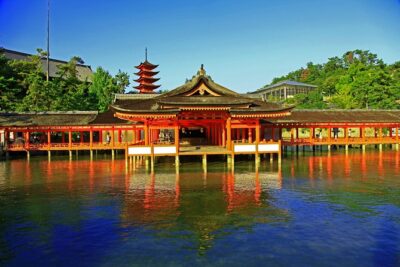
Peaceful Hiroshima & Miyajima UNESCO 1 Day Bus Tour
Read our review →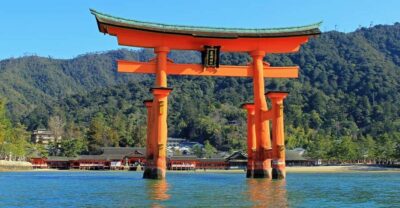
Hiroshima and Miyajima UNESCO Sites 1-Day Tour
Read our review →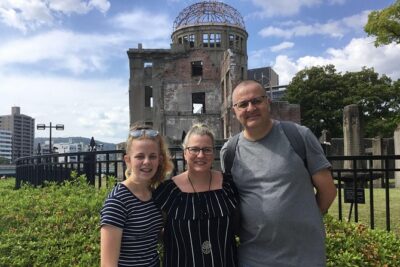
Hiroshima / Miyajima Full-day Private Tour with Government Licensed Guide
Read our review →
Osaka/Kyoto: Hiroshima Miyajima Bus Tour & Shinkansen Ticket
Read our review →
Hiroshima Historical Walking Tour – Why A-Bomb was Dropped
Read our review →
Hiroshima Peace (Heiwa) Walking Tour at World Heritage Sites
Read our review →
Hiroshima in a Nutshell: Morning Bike Adventure
Read our review →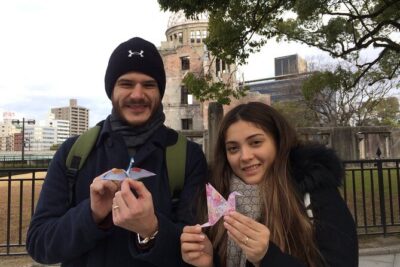
Hiroshima City 4hr Private Walking Tour with Licensed Guide
Read our review →Browse the lists this tour appears in