
Reviewed · RAMEN TOURS & WORKSHOPS
Kyoto: Ramen Cooking Class at a Ramen Factory with Souvenir
Making ramen from a bag of flour to a finished bowl is the heart of this Kyoto class. You knead and fold the dough more than 100 times, season the chicken, choose your soup and sauce, then cook and eat the result. It is a hands-on lesson, not just a demonstration.
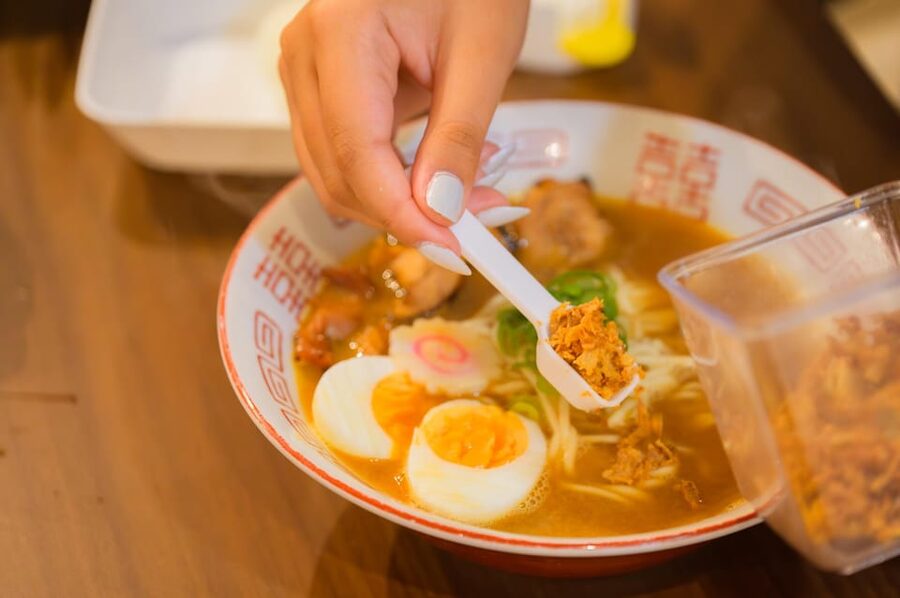
I like the custom-built bowl, since you can mix miso, salt, and soy flavors and choose toppings and condiments to suit your taste. I also like the practical souvenir and recipe sent by email, which give you a real chance to repeat the meal at home.
The main consideration is the price: $127 per person is a serious spend for a 90-minute meal. Drinks and transportation are extra, so this makes the most sense if you want a guided food activity, not simply a cheap bowl of noodles.
Key points to know before you book
- Make noodles from flour: Knead, punch, fold, drain, and shake the dough until it becomes ramen noodles.
- Choose your own flavor: Mix and taste miso, salt, and soy sauces before selecting a soup combination.
- Suitable for beginners: The staff explain each step clearly and help with the practical work.
- Good for families: Children, teenagers, solo visitors, and couples can all take part.
- Useful take-home extras: You receive a selected souvenir and the full recipe by email.
- Easy Demachiyanagi location: The factory is about five minutes from the Keihan Line station, in a basement space.
Why this ramen class works in a busy Kyoto itinerary
Kyoto can fill a day with temples, gardens, and long walks. This class gives you something different: a short indoor activity where you work with your hands, eat a proper meal, and learn a skill you can try again later.
The 90-minute length is especially useful. You do not need to give up a whole afternoon, and the factory is close to Demachiyanagi Station. That makes it a sensible side trip before or after sightseeing in the area.
I would not treat this as a full substitute for eating ramen at a respected restaurant. You are paying for instruction, participation, ingredients, staff support, and a souvenir. The value comes from making the dish yourself and learning how the parts fit together.
The class is run by Factory Alliance at a ramen school established by Menbaka Fire Ramen, a well-known Kyoto ramen house. The connection gives the activity a clear food focus, while the instructors keep the mood lively and approachable. Instructors may include Sakura, Fuku, Akemi, Moeka, Kazuma, Haruka, or other members of the team. Names and staff assignments can change.
Other cooking classes in Kyoto people book:
- Ramen Cooking Class at Ramen Factory in Kyoto
★ 5.0 · 1,937 reviews - Kyoto: Ramen, Gyoza, and Onigiri Cooking Class
★ 5.0 · 445 reviews - Kyoto: Japanese Washoku Bento Small Group Cooking Class
★ 5.0 · 380 reviews
Finding the basement entrance near Demachiyanagi Station
The meeting point is about a five-minute walk from Demachiyanagi Station on the Keihan Line. You will go to a basement-level location rather than a shopfront that is immediately obvious from the street.
The stated directions point you to the staircase on the right side of the supermarket. Some visitors have found the entrance easier to spot from the street side behind the bus stop. Allow a few extra minutes to locate the stairs, especially if you are arriving close to the start time.
Transportation is not included, but the station access keeps this part simple. You can reach the activity without arranging a separate tour transfer. Drinks are also not included, so plan accordingly if you want something besides the ramen you prepare.
Getting ready with the apron and headscarf
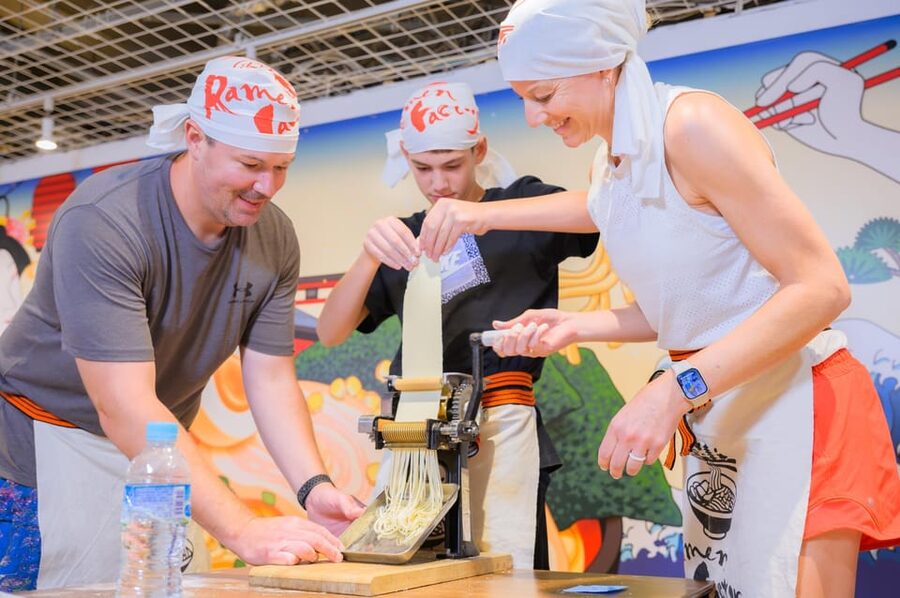
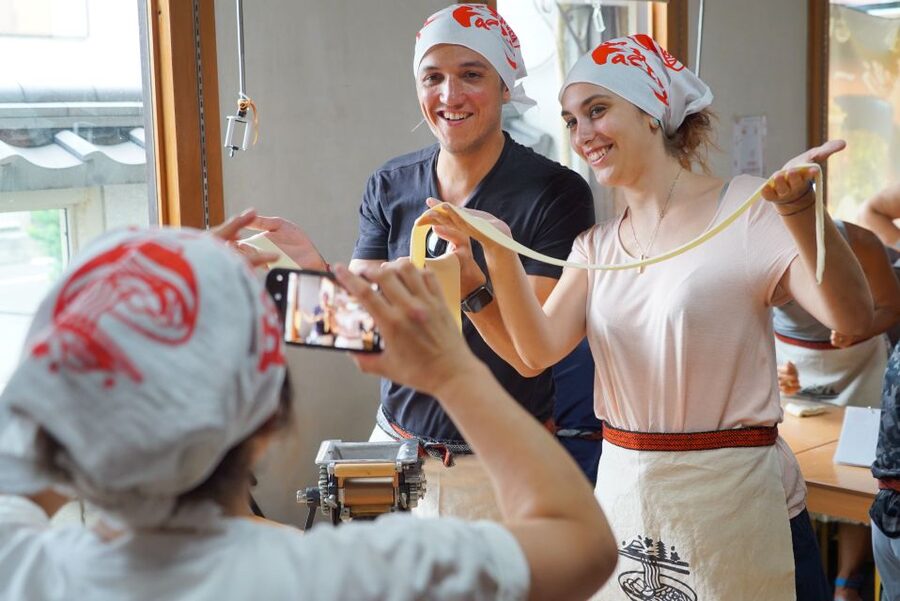
The class begins by putting on a ramen apron and headscarf. This is a small detail, but it helps turn the lesson into an activity rather than a standard restaurant meal. You are dressed for the work and ready to handle the ingredients.
An overview video explains the process before you start. That introduction matters because ramen has several moving parts: dough, noodles, chicken, broth, sauce, toppings, and timing. Seeing the complete sequence first makes the later instructions easier to follow.
The atmosphere is energetic, but the activity is organized. Staff members prepare equipment and ingredients so you can focus on the steps in front of you. They also help take photos and videos during the process, which is useful if you want a record of the flour-covered noodle making.
You should expect a group setting, although the exact group size is not given. A solo visitor may sometimes end up with a more personal lesson if the session is quiet, but you should not book expecting a private class.
Turning flour and dough into ramen noodles
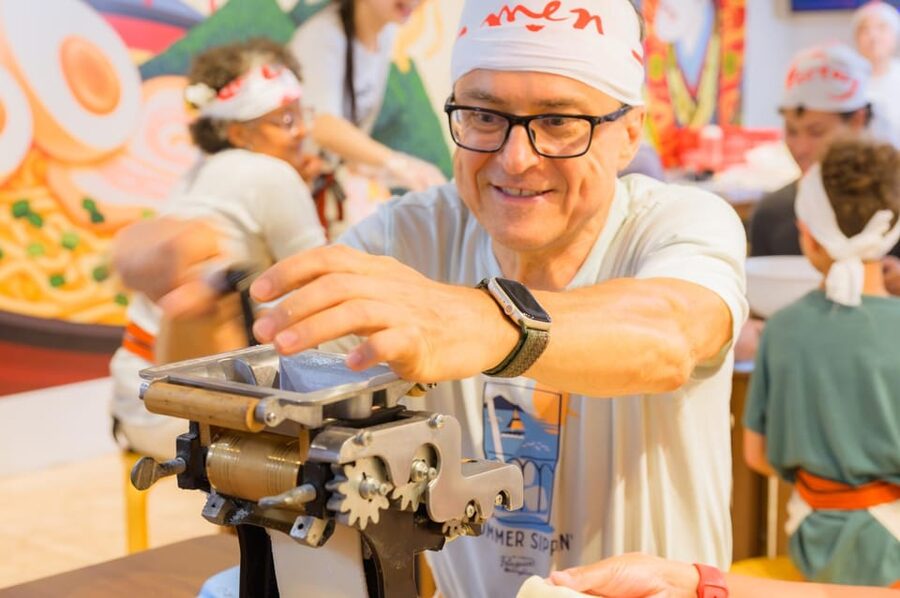
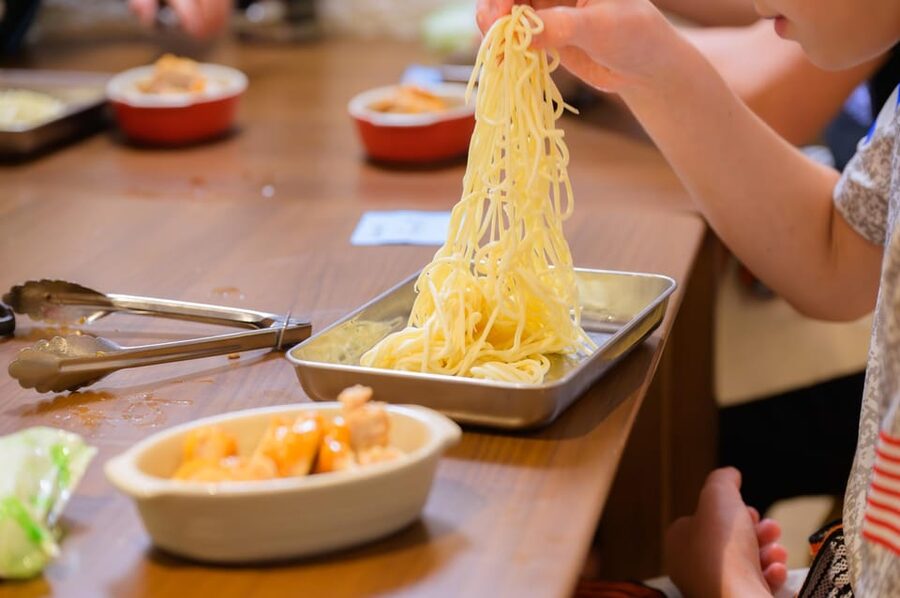
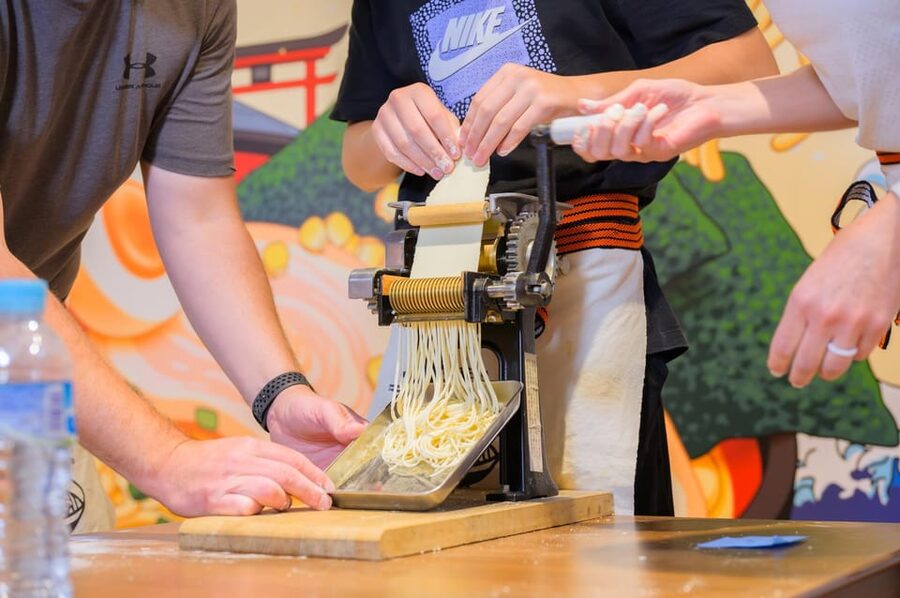
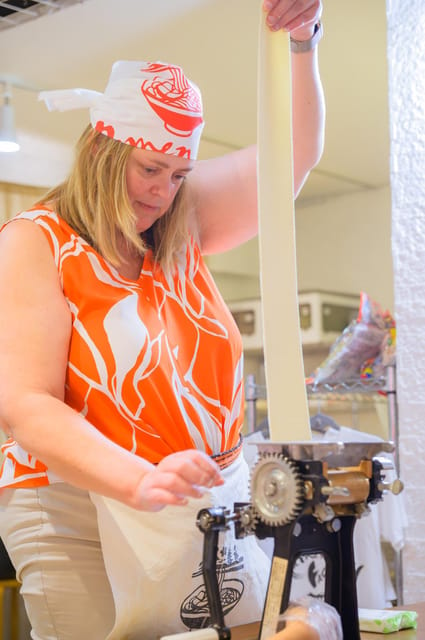
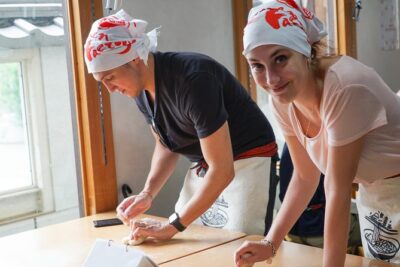
The most distinctive part is making the noodles from flour. You mix, punch, knead, fold, drain, and shake the dough until it becomes a finished noodle portion.
The repeated folding is part of the lesson. You are asked to fold the noodle dough more than 100 times, which shows why ramen making takes patience even before the soup reaches the bowl. It is also the part most likely to make you laugh, especially when the dough refuses to behave exactly as planned.
You do not need professional cooking skills. The instructors break the work into clear actions and help you through the difficult parts. Several elements are prepared in advance because a complete ramen broth can take days to make, but the class still gives you meaningful work from flour to finished noodles.
That distinction is worth understanding. You are not producing every component from raw ingredients over several days. You are learning the important hands-on steps that fit into a 90-minute course, while the longer preparation is handled ahead of time.
The noodle section is active and slightly messy. Wear something comfortable and avoid clothing you would worry about around flour or food preparation. The class supplies the apron and headscarf.
Other bowls worth queuing for in Kyoto:
- Kyoto Ramen and Gyoza Cooking Class with Professional Chefs
★ 5.0 · 282 reviews - Eat and Drink Like a Local: Tokyo Ueno Food Tour-Taverns&Ramen
★ 5.0 · 957 reviews - Ramen & Gyoza Cooking Class in Tokyo with Local Supermarket Visit
★ 5.0 · 823 reviews - Tokyo: Ramen Tasting Tour with 6 Mini Bowls of Ramen
★ 4.9 · 432 reviews
Seasoning the chicken for a fast, satisfying meal
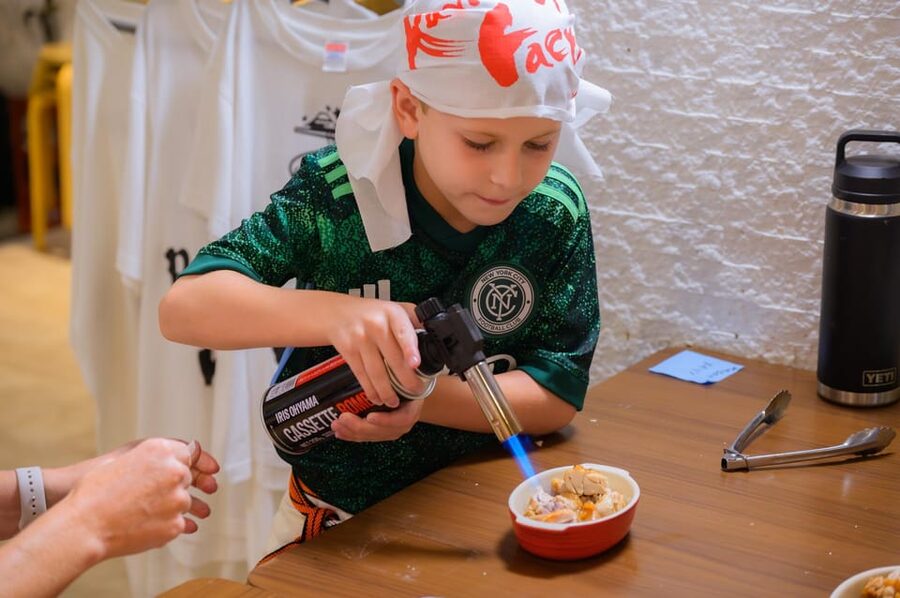
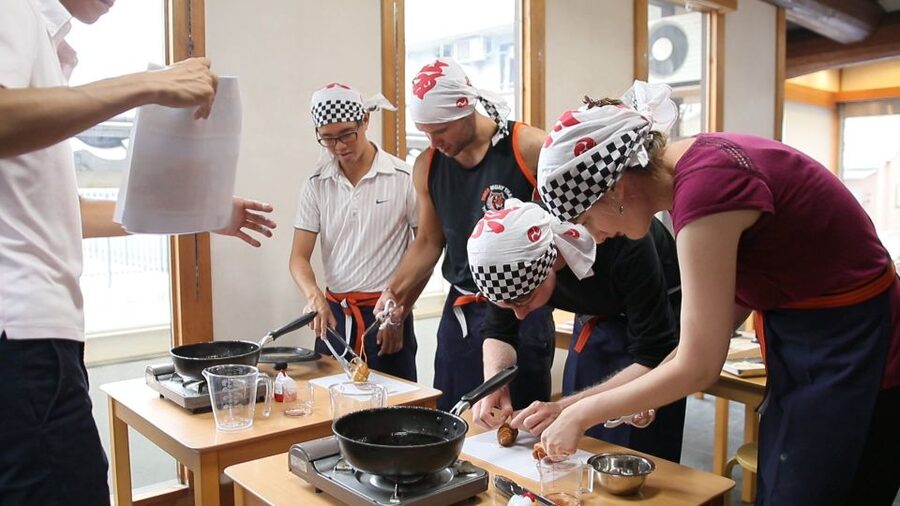
The course also includes preparing chicken with seasonings. Chicken chashu is used in place of pork, which allows the dish to be completed within the short class period.
This is a useful choice for both timing and preference. The chicken is prepared quickly enough for you to cook and eat it during the same session, and it gives the ramen a substantial topping without extending the course to several hours.
You take part in seasoning the chicken rather than simply finding it already placed in your bowl. That gives the meal another handmade element beyond the noodles. You also get a better sense of how a small amount of seasoning changes the final taste.
The supplied information does not specify every topping available in every session. You can expect a ramen bowl with toppings, an egg, and condiments, then arrange them according to your preference. If you have allergies or dietary needs, contact the local supplier after booking rather than waiting until you arrive.
Comparing miso, salt, and soy flavors
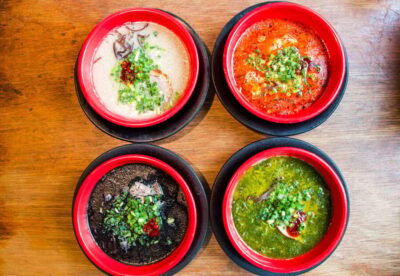
After the noodle work, you taste and mix three featured ramen sauces: miso, salt, and soy. You then choose a soup and sauce combination for your bowl.
This is one of the most useful parts for anyone who wants to cook ramen at home. The class shows that ramen flavor is not one fixed recipe. The base, sauce, oil, chicken, noodles, and toppings all affect the final balance.
Miso gives you a fuller, savory direction. Salt keeps the flavor cleaner and lighter. Soy brings a familiar salty depth. The class lets you test the choices before committing, so you are not stuck with a combination you do not like.
You can also customize the finished bowl with condiments. That control makes the meal work for different tastes in one group. One person can choose a stronger flavor while another keeps the soup simpler.
Dietary accommodation is possible in some cases, but it must be arranged with the supplier after booking. A pescatarian option with tofu and fish broth has been provided in at least one session, and vegan needs have also been handled individually. Treat this as a request, not a guarantee, and provide clear information before your visit.
Assembling and eating your finished bowl
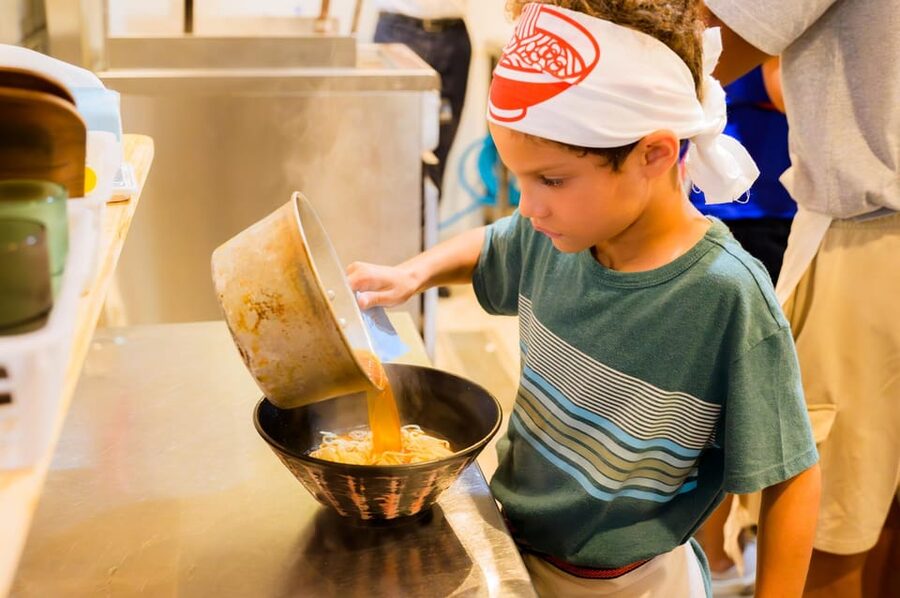
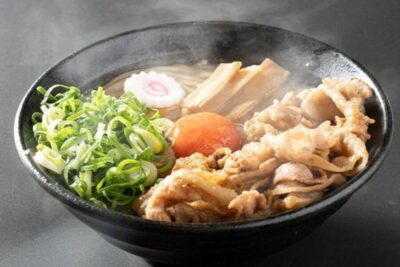
Once the noodles, chicken, soup, sauce, egg, toppings, and condiments are ready, you assemble your ramen bowl. This is the payoff of the class, but it is also a small lesson in presentation.
You can arrange the ingredients to make the bowl your own. The staff may help you display it before you eat, and photos can capture the finished result. This is a nice touch for families and couples, since the final bowl gives everyone something personal to compare.
Then you eat the ramen you made while looking back at the process. The end result is designed to be a proper meal, not a token sample. You should finish the class feeling fed as well as entertained.
The food quality is a strong part of the experience. The ingredients are described as high quality, and the chicken, noodles, and broth are made to work within the class format. Still, taste depends partly on your choices. If you prefer a mild soup, do not feel pressured to select the strongest sauce simply because it seems more traditional.
The souvenir and recipe make the price easier to judge
Each participant can choose one of four souvenir types. The exact options are not specified, so you should not book with one particular item in mind. The souvenir is an extra reason the class feels like a complete activity rather than a meal with a demonstration attached.
Some sessions also provide a printed photo, a certificate, or a headscarf to keep, but these extras may vary. The confirmed inclusions are the 90-minute chef course and a selected souvenir.
The full recipe is sent by email, giving you a practical way to repeat the dish at home. That matters more than a decorative keepsake if you want lasting value from the class. You can try the noodle process again, recreate the soup combination, and adjust it based on what you learned.
At $127 per person, the class is not a budget lunch. A restaurant ramen meal would cost much less. The price becomes easier to justify if you value instruction, hands-on work, photos, a souvenir, and a memorable Kyoto activity all at once.
I would compare it with other cooking classes rather than with restaurant prices. For a family, the shared activity may be worth more than another sightseeing stop. For a solo visitor focused only on food, the cost may feel high.
Who will enjoy the 90-minute format most
This class suits first-time ramen makers, families, couples, teenagers, and anyone who enjoys food with a practical side. You do not need to be a confident cook. The steps are designed for beginners, and staff assistance is part of the experience.
It also works well for a mixed-age group. Younger children may enjoy the flour and kneading most, while older children and adults may pay closer attention to the soup and sauce choices. The activity has enough movement to keep it from feeling like a lecture.
Solo visitors are welcome. The staff have accommodated solo participants and helped with photos and videos. If you are traveling alone, this gives you a social food activity without committing to a full-day group tour.
Ramen fans will get the most from the details of dough, sauce, and soup. If you already make ramen often, the class may feel basic, but the chance to work with fresh noodles and compare three flavor directions still has appeal.
This is less suitable if you want a quiet, formal cooking lesson. The instructors are lively and playful, and the group atmosphere can include plenty of encouragement and laughter. That energy is a major part of the appeal, but it may not suit someone seeking a slow, private culinary workshop.
Practical details that affect your decision
The activity lasts 90 minutes, with starting times available according to the booking schedule. The course is taught in English and Japanese, so international visitors can take part without needing Japanese cooking vocabulary.
Book dietary requests in advance. The staff have handled pescatarian and vegan needs, but the supplier needs notice to prepare an appropriate option. Also mention allergies clearly before arrival.
The location is on a basement floor, and the entrance may not be obvious from Google Maps. Use the supermarket and bus stop landmarks, then look for the stairs leading down. This is the one arrival detail most likely to cause unnecessary stress.
You can cancel up to 24 hours ahead for a full refund, and the reserve-now-pay-later option lets you hold a place without paying immediately. Those policies are useful if your Kyoto schedule is still shifting.
You may be photographed or filmed during the visit, including by professional cameras or 360-degree equipment. The material may be used on the provider’s website, in media coverage, or in worldwide advertising. If that raises concerns for you, ask the local supplier about it before booking.
Should you book Ramen Factory Kyoto?
I would book this class if you want a compact, cheerful food activity that gives you something to do, something to eat, and something to take home. The handmade noodles, sauce choices, chicken preparation, recipe, and souvenir create more value than a simple ramen tasting.
I would think twice if your main goal is the cheapest possible meal or a quiet, highly technical cooking lesson. At $127, the experience needs to be judged as entertainment and instruction, not as lunch alone.
For families and couples, it is one of the easier Kyoto activities to recommend. For solo visitors, it offers friendly contact and a useful skill. For anyone with dietary needs, contact the supplier first. If those points fit your plans, reserve a time near Demachiyanagi and allow extra minutes to find the basement stairs.
FAQ
How long does the ramen cooking class last?
The class lasts 90 minutes.
How much does the experience cost?
The price is $127 per person.
Where is Ramen Factory Kyoto located?
It is about a five-minute walk from Demachiyanagi Station on the Keihan Line, on the basement floor. Use the staircase to the right of the supermarket. The street-side stairs behind the bus stop may also help you identify the entrance.
What languages are spoken during the class?
Instruction is available in English and Japanese.
Do I make the ramen noodles from scratch?
You make the noodles from flour and dough during the class. The process includes mixing, punching, kneading, draining, shaking, and repeated folding.
What ramen flavors can I choose?
You can taste and mix three featured sauces: miso, salt, and soy. You then select a soup and sauce combination for your bowl.
Is a recipe provided for cooking ramen at home?
Yes. The full recipe is sent by email after the experience.
Are dietary options available?
Dietary options may be arranged, but you must contact the local supplier after booking. Pescatarian and vegan accommodations have been provided in some sessions.
What is included in the price?
The price includes the 90-minute chef course and one selected souvenir. Transportation and drinks are not included.
More cooking classes elsewhere in Japan
- Kyoto: Afternoon Japanese Izakaya Cooking Class
★ 4.9 · 241 reviews - Izakaya Style Cooking Class
★ 5.0 · 219 reviews - Osaka: Ramen and Gyoza Cooking Class in Dotonbori
★ 5.0 · 378 reviews - Osaka: Sumo Stage Show with Bento or Snack + Fight & Photo
★ 4.3 · 364 reviews
Just added in Kyoto
- Kyoto Rickshaw Tour★ 5.0 · 210 reviews
- Kyoto: Private Photoshoot Service★ 5.0 · 158 reviews
- Izakaya Style Cooking Class★ 5.0 · 219 reviews
- Kyoto: Traditional Concert at Townhouse or Bathhouse★ 4.9 · 224 reviews
- Ninja 2-hour Hands-on Lesson by Japanese master in Kyoto -Medium★ 5.0 · 218 reviews
- Kyoto: Arashiyama Bamboo, Temple, Matcha, Monkeys & secret spots★ 5.0 · 219 reviews
- Kyoto: Kimono Tea Ceremony with Matcha and Sweet★ 4.9 · 249 reviews
- South Kyoto in a Nutshell: Gentle Backstreet Bike Tour!★ 5.0 · 225 reviews
Ramen Tours & Workshops, compared.
Ramen Cooking Class at Ramen Factory in Kyoto
Read our review →
Eat and Drink Like a Local: Tokyo Ueno Food Tour-Taverns&Ramen
Read our review →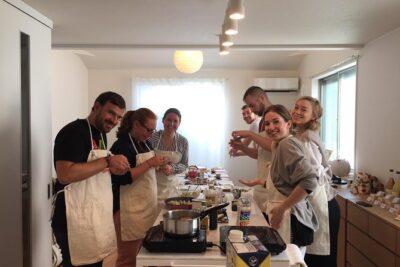
Ramen & Gyoza Cooking Class in Tokyo with Local Supermarket Visit
Read our review →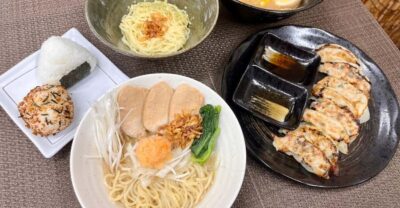
Five Must-See Highlights Walking Tour & Ramen Lunch
Read our review →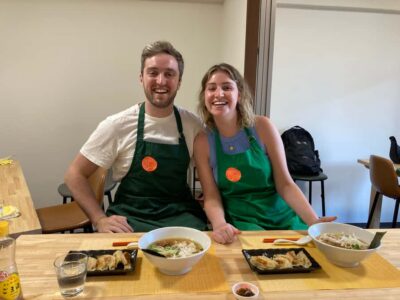
Easy Ramen Cooking Experience in Kabukicho, Shinjuku
Read our review →Browse the lists this tour appears in