
Reviewed · RAMEN TOURS & WORKSHOPS
Osaka: Ramen and Gyoza Cooking Class in Dotonbori
Making ramen from a packet is easy. Making the noodles yourself is another matter. At this hands-on Dotonbori class, you knead wheat, rest the dough, cut it with a noodle machine, prepare a chicken filling for gyoza, and build a bowl of soy sauce ramen from the ground up.
I like two things here. First, you do real work rather than simply watching a chef. Second, the class gives you recipes and practical tips you can use at home. The main consideration is time: allow roughly two to three hours, and remember that the meeting point is in a building that some people find tricky to locate.
Key points at a glance
- Noodles made from wheat dough: Knead and work the dough yourself before cutting it into ramen noodles.
- Broth with Japanese basics: Learn how chicken bones, dried sardines, soy sauce, and miso shape the soup.
- Gyoza from scratch: Mix a minced chicken filling, fold the dumplings, and cook them as part of your meal.
- Small English-speaking classes: The class has been described as having no more than eight participants, with two instructors helping keep everyone on pace.
- Adaptable recipes: Fish-broth and plant-based substitutions have been provided when requested.
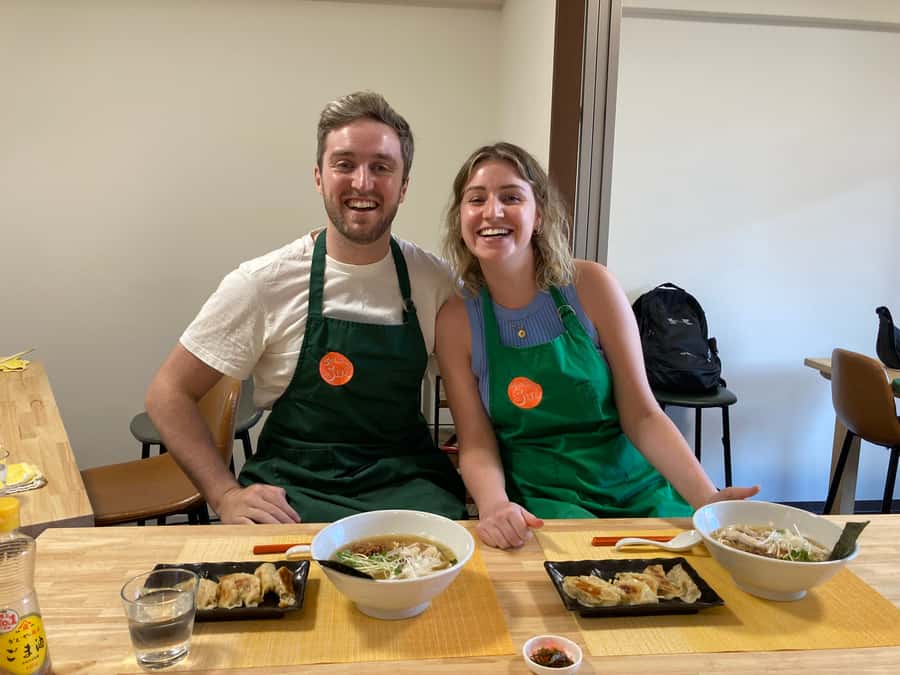
- A full meal at the end: You eat the ramen and gyoza you prepared, rather than leaving with only a demonstration.
Ramen dough, not instant noodles
This class gets to the point quickly: you make ramen. The lesson begins with wheat and the process of turning it into noodles, a task that gives you a better sense of why fresh ramen has a different bite from dried or instant noodles.
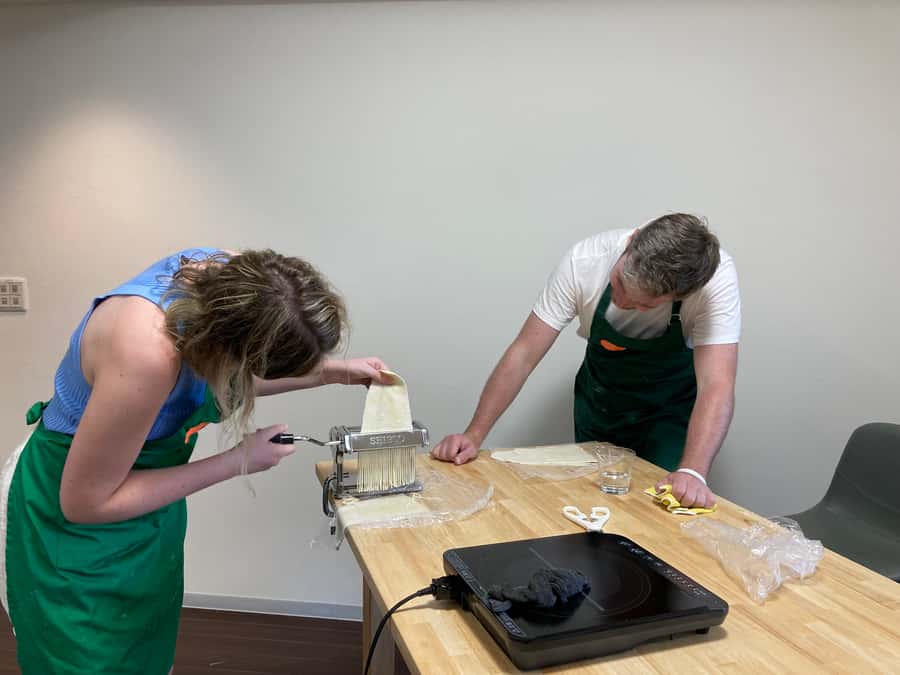
You knead the dough, work it until it is ready, and then use a noodle machine to cut it. That machine is a useful touch. It gives beginners a clean result while still letting you take part in the important stages. You are not expected to master the craft in one afternoon, but you leave with a clear idea of how the noodles are formed.
The dough needs time to rest, and the class uses that pause well by moving on to the gyoza. This keeps the session active instead of leaving you standing around waiting. It also creates a natural rhythm: noodle preparation, dumpling making, broth and toppings, then cooking and eating.
Other cooking classes in Osaka people book:
- Osaka: Sumo Stage Show with Bento or Snack + Fight & Photo
★ 4.3 · 364 reviews - Osaka Cooking Class: Okonomiyaki &Japanese cuisines experience
★ 5.0 · 261 reviews - Ramen and Gyoza Cooking Class in Osaka
★ 5.0 · 202 reviews
Building a soy sauce ramen bowl
The standard bowl here is soy sauce ramen. The soup uses chicken bones and dried sardines, giving you a chance to learn about the base flavors behind a familiar Japanese dish.
The lesson also introduces miso as an option. You can add toppings to make the bowl your own, or add miso to shift the soup toward a miso ramen style. This is a small but useful lesson in how one basic preparation can lead to different bowls.
I like this part because ramen is often treated as a single food, when it is really a combination of separate elements. The noodles, broth, seasoning, and toppings each affect the finished bowl. By preparing them in stages, you can tell what each ingredient contributes.
The broth work also helps explain why this is more than a quick cooking demonstration. Ingredients such as different kinds of miso and the use of dried fish are discussed during the class. You get context for the ingredients, not just instructions to stir them together.
If you do not like fish broth, tell the instructors when you arrive. A fish-free substitution has been provided for participants who requested one. Plant-based adjustments have also been made for vegan participants, with a separate option prepared rather than leaving someone to eat around the main dish.
Folding minced chicken gyoza
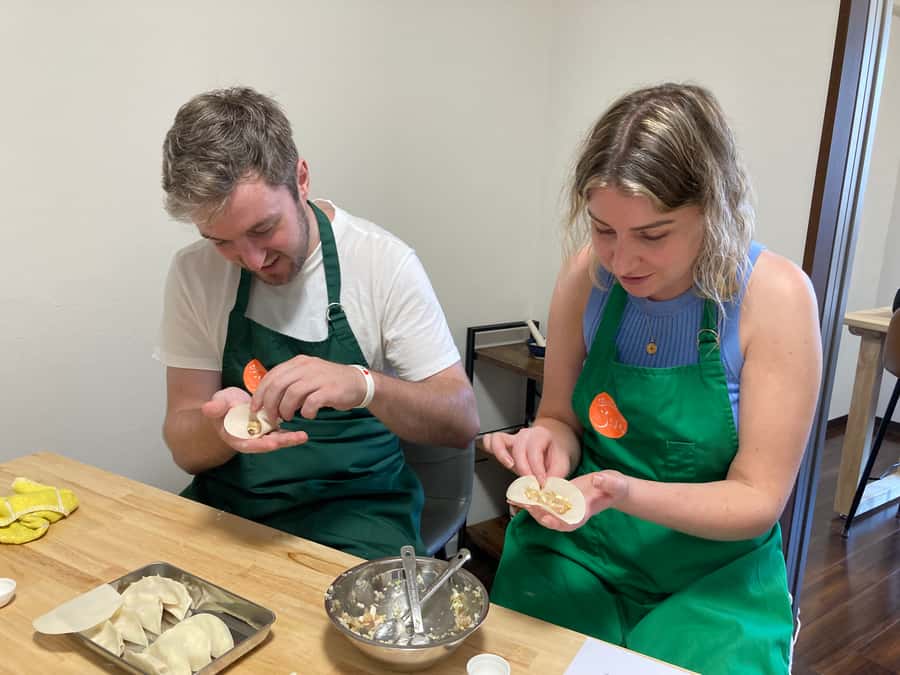
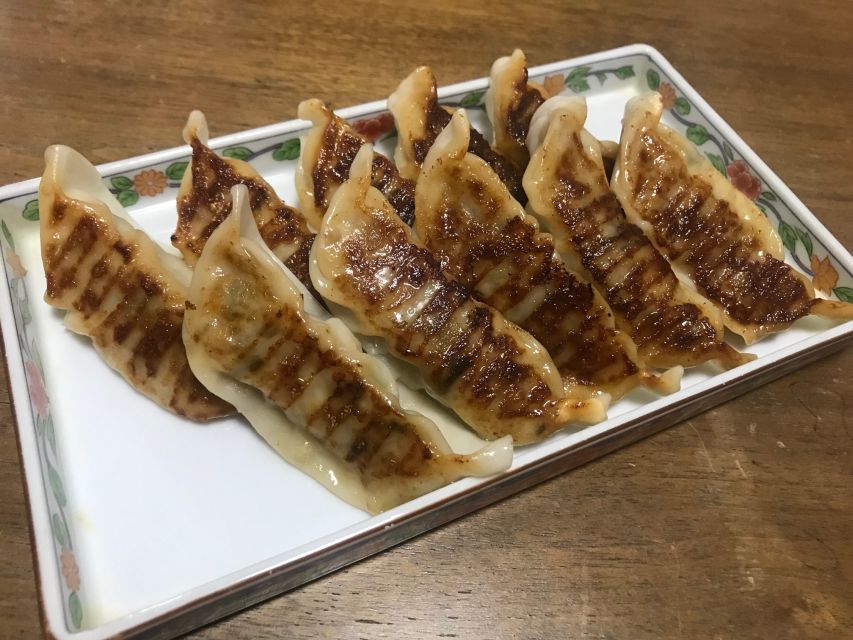
While the ramen dough rests, you prepare the gyoza filling. The filling uses minced chicken, and you shape the dumplings yourself before cooking them.
This is likely to be the most social part of the class. Gyoza folding is simple enough to follow, but getting each dumpling to look tidy takes a little practice. You can expect the instructors to show you the method and step in if you fall behind.
The gyoza also balance the ramen well. The soup is the main bowl, while the dumplings provide a different texture and a savory filling. By making both dishes in one class, you learn the standard Japanese pairing of ramen and gyoza that you often see on a ramen-shop menu.
The food is not treated as a display piece. You eat the finished dumplings and ramen at the end. That matters because you can judge the result while the instructions are still fresh in your mind. It also gives the class a satisfying finish after the preparation work.
June, Miki, Yoshi, and Kasa’s teaching style
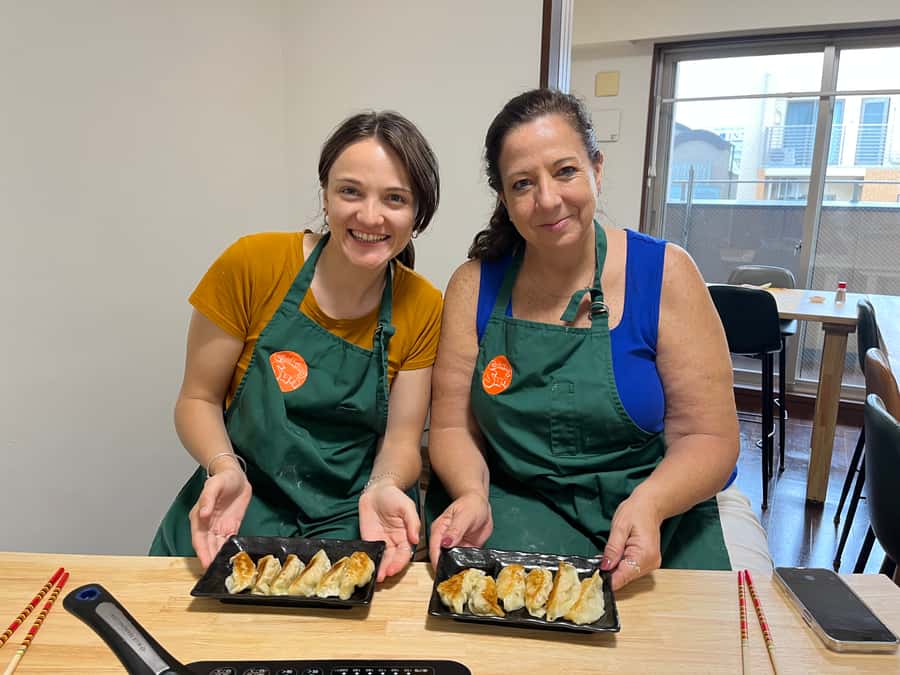
The instructors work in English, and the class has been praised for clear explanations and patient help. June and Miki are named as instructors for some sessions, while Yoshi and Kasa are also mentioned by participants. Staff may vary, but the teaching approach appears consistent: explain each stage, watch the pace, and help when someone needs a hand.
Two instructors for a small group is useful in a practical class. Someone can be working with the dough while another person needs help folding gyoza or adjusting the soup. You are less likely to lose the thread if one step takes you longer than expected.
The pace is another strength. Several participants describe the class as well timed, with enough room to work without feeling rushed. At the same time, the instructors keep the group moving so the session does not drag.
This is suitable for beginners. You do not need prior cooking experience, and one nervous participant found the process easy to follow once the class began. The instructors explain the steps in sequence and can help you catch up if your noodles or dumplings take longer than expected.
Other bowls worth queuing for in Osaka:
- Osaka: Five Must-See Highlights Walking Tour & Ramen Lunch
★ 4.7 · 411 reviews - Ramen Cooking Class at Ramen Factory in Kyoto
★ 5.0 · 1,937 reviews - Eat and Drink Like a Local: Tokyo Ueno Food Tour-Taverns&Ramen
★ 5.0 · 957 reviews - Ramen & Gyoza Cooking Class in Tokyo with Local Supermarket Visit
★ 5.0 · 823 reviews
A small group with room to cook
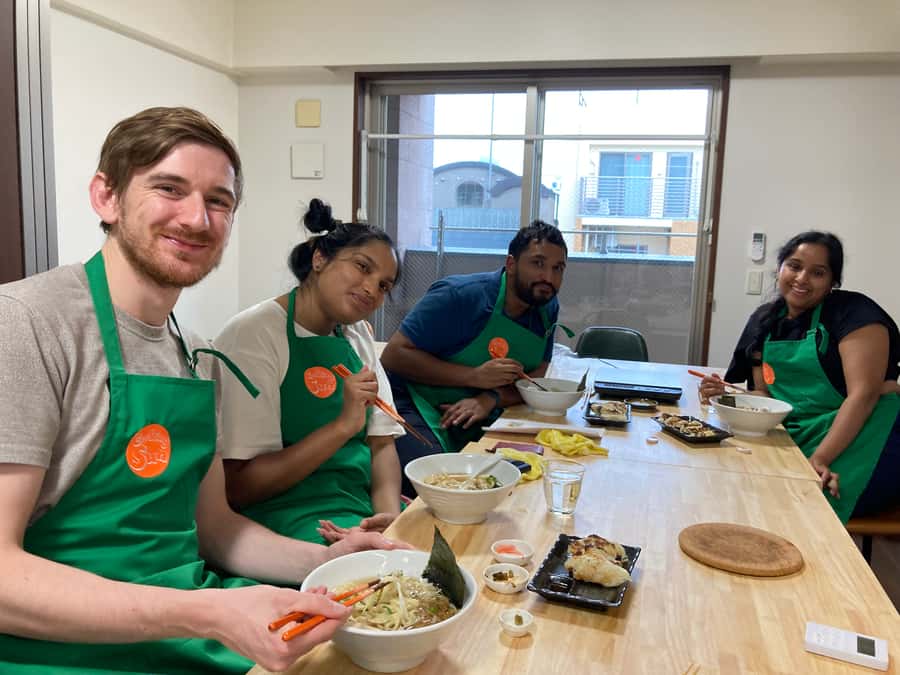
The class has been described as intimate, with a maximum of eight participants. That number matters in a cooking lesson. You get more direct help than you would in a large demonstration, and you have a better chance to ask about ingredients or technique.
The kitchen itself has been described as spacious and clean, with enough room for everyone to work. That is important when several people are kneading dough, preparing fillings, and handling cooking equipment at the same time.
Families can make good use of this format. A family of three, including an 11-year-old, enjoyed the class, and another family with a 14-year-old found it suitable. Children still need to take part safely and follow instructions, but the hands-on format gives them something concrete to do.
Couples and solo participants also fit naturally into the class. You can share the cooking process with a partner, or meet other people around the workstations. The meal at the end gives everyone an easy chance to compare results and talk about the food.
What the full session is like
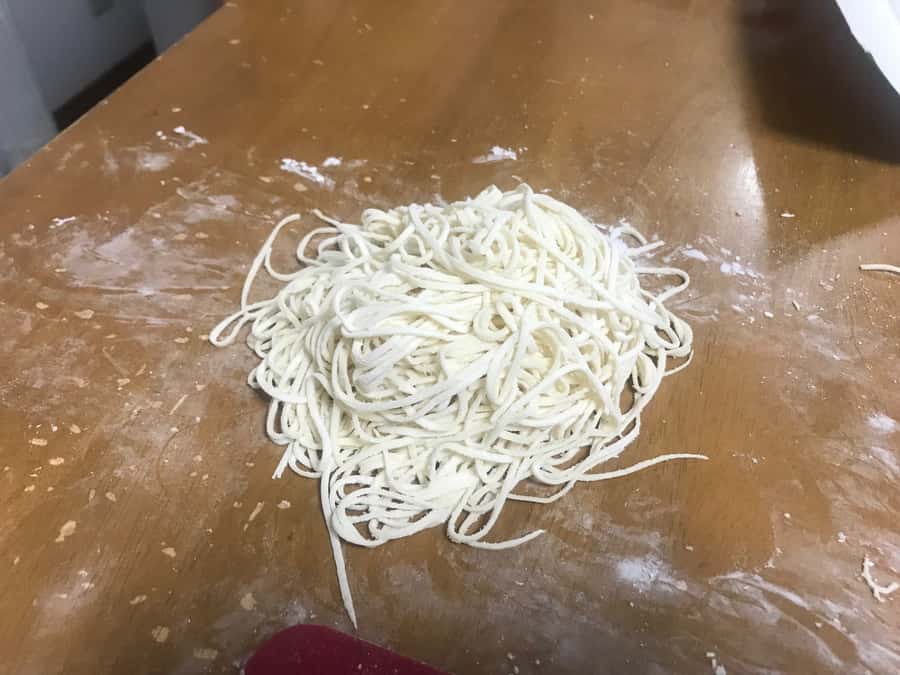
Plan for about two to three hours. The official information does not give one fixed duration, but class participants describe sessions lasting around two hours and others lasting three. The exact pace may depend on the group and the amount of help needed.
A typical flow looks like this:
- You meet at Cooking Sun Osaka and receive instructions in English.
- You prepare and knead the wheat dough for the ramen noodles.
- The dough rests while you prepare the minced chicken filling for the gyoza.
- You fold and cook the dumplings.
- You cut the ramen dough with a noodle machine.
- You prepare the soup with chicken bones, dried sardines, and soy sauce, with miso and toppings available as variations.
- You cook the noodles, assemble the bowls, and sit down to eat.
The order may shift slightly, but the important point is that the work is spread across the session. You are not asked to make every component at once.
Bring an appetite. The finished meal includes both ramen and gyoza, and one participant specifically advised arriving hungry. You are eating the food you prepared, so the meal is part of the lesson rather than an extra snack at the side.
Why the $70 price can make sense
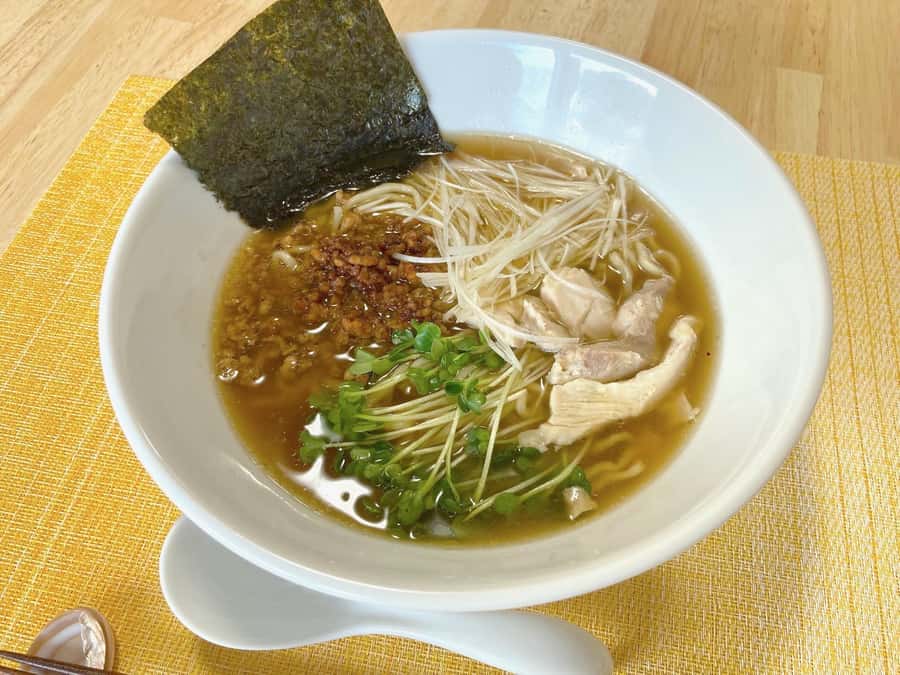
At $70 per person, this is not the cheapest way to eat ramen in Osaka. If all you want is a bowl of noodles and a few gyoza, a restaurant will cost much less.
The value comes from the work and instruction. Your fee covers all ingredients, an English-language lesson, use of the cooking setup, help from the instructors, and a complete meal. You also receive recipes to take home, which gives the experience some use beyond the day itself.
I would compare the price with other structured cooking classes rather than with a restaurant meal. You are paying for the chance to make ramen noodles from flour, use a noodle machine, prepare dumplings, learn about miso and broth, and receive guidance throughout the process.
The class is especially good value if you want a food activity that teaches a repeatable skill. Participants have left feeling able to make the dishes again at home. If you are already an experienced ramen cook, the basic level may feel too introductory, but most people will find enough detail to make the fee reasonable.
Dietary changes and ingredient questions
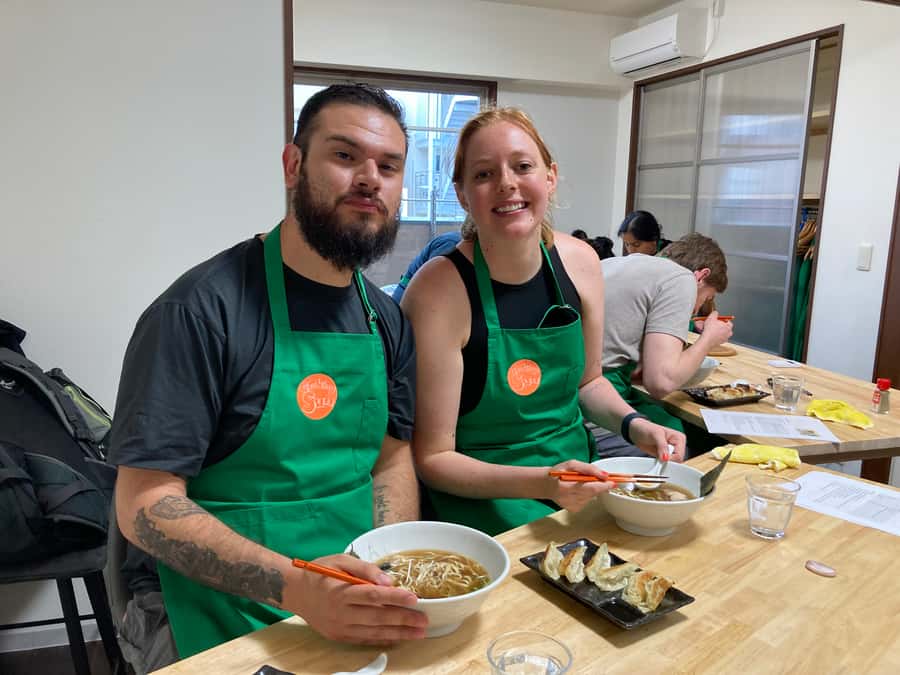
The standard gyoza filling uses minced chicken, and the ramen broth includes chicken bones and dried sardines. If you avoid meat, fish, or animal products, raise the issue at booking or on arrival.
Plant-based substitutions have been made for vegan participants, and a fish-broth replacement has been provided for people who do not like fish broth. The available information does not promise every possible dietary request, so you should not assume that all restrictions can be handled without advance notice.
The class is also useful for people who want to understand Japanese ingredients. You can learn about different kinds of miso, when to use them, and how the broth is built. That makes the experience more useful than a recipe with no explanation behind it.
Finding Cooking Sun Osaka
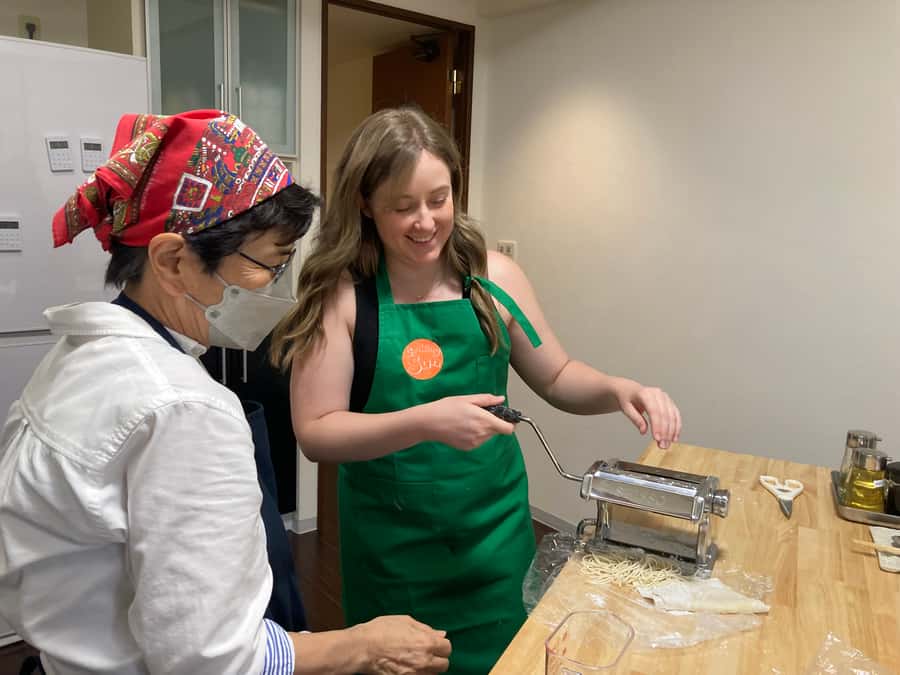
The meeting point is Cooking Sun Osaka, room 807. At the entrance, press 807 and then press the 呼出 call button.
This is the one practical weak spot to plan for. The building can be difficult to find, so do not leave the search until the last minute. Give yourself extra time, check the room number carefully, and have the Japanese characters 呼出 ready to recognize at the entrance.
The class ends back at the meeting point. There is no hotel pickup or drop-off, so you arrange your own way to and from the venue. The activity is in Dotonbori, making it easy to combine with time in central Osaka, but the class itself does not include transport.
The activity is offered in English. That is a major benefit if you want detailed cooking instructions without relying on translation.
Who should book this class?
I would choose this for anyone who likes to understand a dish by making it. It works well for couples, families, first-time visitors to Japan, and people who want a food-centered activity between sightseeing stops.
It is also a good choice for a last day in Osaka. You finish with a proper meal, and the recipes give you a way to recreate part of Japan at home. It can be a pleasant change from simply visiting one more attraction.
You may want to skip it if you have very limited time, dislike hands-on cooking, or only want a quick meal. The class takes a substantial part of the day, and the meeting point requires a little care to find.
Should you book the ramen and gyoza class?
Yes, if you want more than a restaurant meal and enjoy learning by doing. The strongest reasons are the fresh noodles, the small class size, the patient English instruction, and the chance to eat a complete meal made by you.
The class is not a shortcut to becoming a ramen chef. It is a friendly introduction to the main parts of ramen and gyoza, with enough practical detail to try the recipes again. At $70, the price is fair for the ingredients, instruction, and meal, especially if you value an activity you can remember and repeat.
Book it when you have two to three hours, arrive hungry, and allow extra time to find room 807. If you have dietary needs, mention them before the cooking begins. For a hands-on food experience in Osaka, this is a sensible pick.
FAQ
Where does the cooking class meet?
The class meets at Cooking Sun Osaka, room 807. At the entrance, press 807 and then press the 呼出 call button.
Where does the activity end?
The activity ends back at the meeting point at Cooking Sun Osaka.
How much does the class cost?
The listed price is $70 per person.
What food do you make?
You make ramen noodles from wheat and prepare ramen with a soy sauce-based soup. You also make gyoza with a minced chicken filling.
Are ingredients included?
Yes. All ingredients used in the cooking class are included.
Is the class taught in English?
Yes. The listed language for the activity is English.
How long does the class take?
Allow about two to three hours. The provided class information does not give one fixed duration, while participants describe sessions lasting around two hours and others lasting three.
Can the class accommodate vegan or fish-free requests?
Plant-based substitutions and a fish-broth alternative have been provided for participants. Tell the instructors about your needs when you arrive, and if possible, mention them before the class.
Can I cancel for a full refund?
Yes. You can cancel up to 24 hours in advance for a full refund. You can also reserve and pay later, so no payment is required today.
More cooking classes elsewhere in Japan
- Kyoto: Ramen Cooking Class at a Ramen Factory with Souvenir
★ 4.9 · 532 reviews - Kyoto: Ramen, Gyoza, and Onigiri Cooking Class
★ 5.0 · 445 reviews - Kyoto: Japanese Washoku Bento Small Group Cooking Class
★ 5.0 · 380 reviews - Ramen and Sushi Cooking Class with Sake Pairing Set in Tokyo
★ 5.0 · 291 reviews
Just added in Osaka
- Osaka Temple Cool Foot Bath & Matcha Experience〈45min〉★ 4.9 · 82 reviews
- Osaka: Mind & Spirit Balance Temple Reiki Healing★ 5.0 · 41 reviews
- Full Day Kyoto Tour : Bamboo Forest, Golden Temple, Fushimi Inari★ 5.0 · 84 reviews
- Osaka: Minoh, Katsuoji Temple, & Minoh Falls Full-day Tour★ 4.9 · 172 reviews
- OSAKA NIGHT FUSION Japanese Taiko Kabuki Samurai Dance Show★ 4.8 · 155 reviews
- Ramen and Gyoza Cooking Class in Osaka★ 5.0 · 202 reviews
- Osaka: A Modern Samurai, Kabuki, Taiko, & Dance Show★ 4.5 · 66 reviews
- Osaka: Samurai Training Experience KENDO in Osaka★ 5.0 · 111 reviews
Ramen Tours & Workshops, compared.
Ramen Cooking Class at Ramen Factory in Kyoto
Read our review →
Eat and Drink Like a Local: Tokyo Ueno Food Tour-Taverns&Ramen
Read our review →
Ramen & Gyoza Cooking Class in Tokyo with Local Supermarket Visit
Read our review →
Ramen Cooking Class at a Ramen Factory with Souvenir
Read our review →
Five Must-See Highlights Walking Tour & Ramen Lunch
Read our review →
Easy Ramen Cooking Experience in Kabukicho, Shinjuku
Read our review →Browse the lists this tour appears in