
Reviewed · HIDDEN-GEM TOURS
Kyoto Full Course Tour: Explore 10 Must-See Sights & Hidden Gems
Kyoto’s major sights are scattered across the city, and this nine-and-a-half-hour route tackles nearly all of them in one ambitious sweep. You’ll begin at Saga-Arashiyama, ride public transport, and finish in Gion after temples, shrines, old lanes, bamboo, and a conveyor-belt sushi lunch.
I like two things here. First, a local guide handles Kyoto’s confusing transport system, saving you from losing half a day to maps and transfers. Second, you get both famous places, such as Kinkaku-ji and Fushimi Inari, and atmospheric streets around Kiyomizu-dera and Gion.
The catch is simple: this is a very demanding walking day. Expect roughly 20,000 or more steps, quick visits, crowded paths, and little time to linger. It works best as a first-day orientation, not as a slow study of Kyoto’s temples.
Key points to know before booking
- See nine major areas in one day: Arashiyama, Ryoan-ji, Kinkaku-ji, Fushimi Inari, Kiyomizu-zaka, Kiyomizu-dera, Sanneizaka, Yasaka Pagoda, and Gion.
- Expect a workout: The route combines long walks, slopes, stairs, buses, trains, and the Randen tram.
- Local guides make the difference: Guides named Masako, Megumi, and Masa have led the route, explaining customs, transport, etiquette, and Kyoto life.
- Lunch is flexible but not fully tailored: The conveyor-belt restaurant offers sushi, vegetable sushi, ramen, kara-age, beer, and mochi, with food ordered separately.
- Budget extra cash: Transport, food, and temple admission add about $27.80 to $35.80 per person beyond the tour price.
- Arrive early: The meeting point is Saga-Arashiyama Station, and late arrivals are not accepted.
What this Kyoto day is really designed to do
This is a sightseeing sprint. The goal is not to spend an hour studying each garden or shrine. The goal is to help you see Kyoto’s main postcard locations, learn how the city fits together, and gain enough transport confidence to return to the places you like best.
That focus makes sense for a short stay. Kyoto is spread out, and the attractions do not line up in a neat tourist corridor. Arashiyama is on the western side of the city, Fushimi Inari is in the south, and Kiyomizu-dera and Gion sit farther east. Getting between them by yourself takes planning.
Your guide leads the transfers and explains how to use local public transport. You pay those fares separately, about ¥1,340, or roughly $10 per person in the supplied estimate. Have a SUICA or PASMO card ready if possible, and keep some cash with you.
The group is limited to 10 people. That is small enough for a guide to keep the party together, but you still need to stay close. The instructions are strict: if you leave the group, the host will not search for you, and no refund is offered.
Other quiet corners of Kyoto:
- Kyoto Geisha Walking Tour: Gion District & Hidden Gems
★ 4.7 · 3,273 reviews - Private Kyoto Tour with a Local, Highlights & Hidden Gems, Personalised
★ 5.0 · 1,543 reviews - Arashiyama Bamboo Forest & Hidden Gems Bike Tour (Early Bird)
★ 5.0 · 613 reviews
Starting in Arashiyama with bamboo and old Kyoto scenery
The day begins at Saga-Arashiyama Station. The meeting information gives both 8:30 and 8:50 in different places, while the specific instruction says the tour starts at 8:50. Treat 8:50 as the firm departure time and arrive well before then. Late arrivals cannot join.
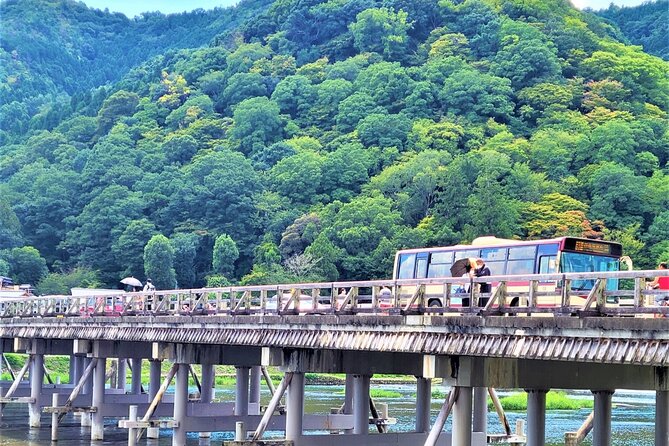
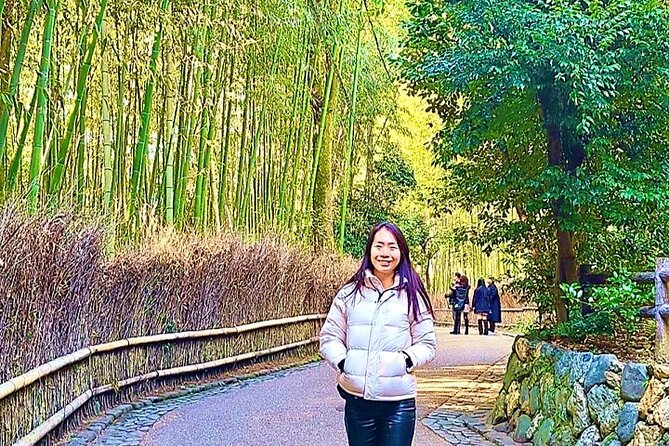
Arashiyama gives you an immediate visual introduction to Kyoto. The bamboo forest is the headline attraction, but the surrounding forested hills and traditional streets help explain why this district is so popular. You will spend about 30 minutes here, so expect a walk and photo stop rather than a long, quiet visit.
This is also where the route begins to show its pace. The bamboo path can be crowded, and 30 minutes passes quickly. I would not book this tour if Arashiyama is your main reason for visiting Kyoto. You will want extra time there for a slower walk and additional sights.
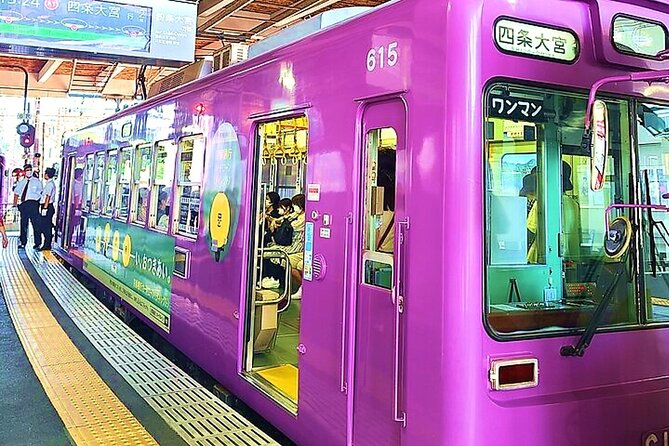
The route also includes the Randen tram line. This short railway is a useful part of the day because it gives you a taste of Kyoto’s local transport rather than keeping you in a private vehicle or tour bus. You learn by doing, which helps if you plan to explore independently afterward.
Ryoan-ji and the famous stone garden
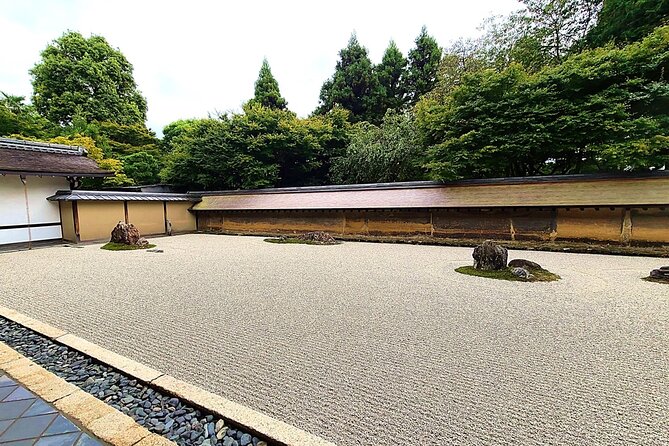
Ryoan-ji is the quieter, more reflective stop on a day filled with movement. Its stone garden is famous for its simple arrangement of rocks and gravel. You get about 30 minutes, with admission not included.
The garden rewards a moment of stillness, but this schedule does not allow much of it. If you are interested in Zen garden design, you will probably wish you had more time to sit and look. Still, the stop provides a useful contrast to the noise and color of the other locations.
The guide can add context about temple practice, Japanese values, and proper behavior at religious sites. That information matters here. Ryoan-ji is not simply a photo background, and a short explanation can help you understand why such a spare garden has become one of Kyoto’s best-known sights.
Kinkaku-ji, Kyoto’s golden landmark
Kinkaku-ji, the Golden Pavilion, is the day’s most instantly recognizable building. Its gold-covered exterior reflects over a pond, creating the kind of view that looks almost too polished to be real.
You get about 30 minutes, and admission is extra. The path through the grounds is arranged for visitors to view the pavilion and continue onward, so this is another place where the tour gives you an introduction rather than a complete visit.
Kinkaku-ji can be crowded, especially around the best viewing points. Your guide helps you move efficiently, but you will not have unlimited time for photographs. Bring a camera, but keep your expectations realistic. The value here is seeing one of Kyoto’s defining sights without having to work out the route yourself.
Same base, a different sort of day:
- PERFECT KYOTO 1-Day Bus Tour
★ 5.0 · 13,518 reviews - Kyoto: Fushimi Inari, Kinkakuji, Bamboo Grove 1 Day Bus Tour
★ 4.8 · 4,316 reviews - Kyoto: Tea Ceremony in a Traditional Tea House in Kiyomizu
★ 4.9 · 3,519 reviews - Kyoto: Tea Ceremony Ju-An at Jotokuji Temple
★ 4.9 · 3,207 reviews
Conveyor-belt sushi for a practical lunch break
Lunch takes place at a conveyor-belt sushi restaurant. Food is not included, and the stated estimate is ¥1,500, or about $6.80 to $14 depending on what you order.
The menu is broader than sushi alone. You may find sushi, vegetable sushi, ramen, kara-age, beer, and mochi, so the meal can suit different appetites. The format is also efficient, which matters on a day with many stops.
Vegetarians should plan carefully. Vegetable sushi is available, but the restaurant is not presented as a dedicated vegetarian venue, and one visitor found the lunch arrangement unsuitable. If your diet is strict, send a request before booking or consider a private tour arrangement. Do not assume the group lunch can be changed at the last minute.
Fushimi Inari and its thousand red gates
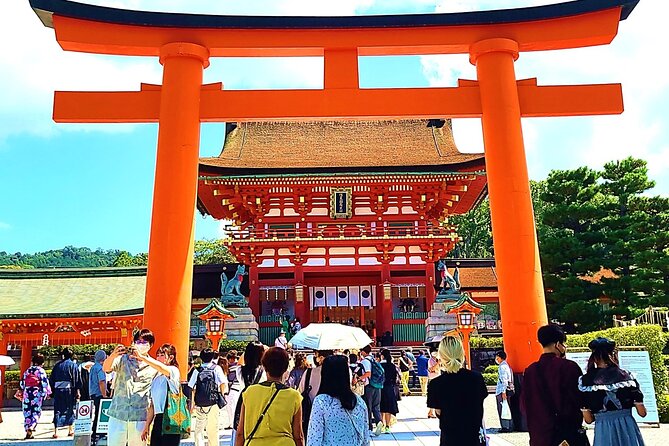
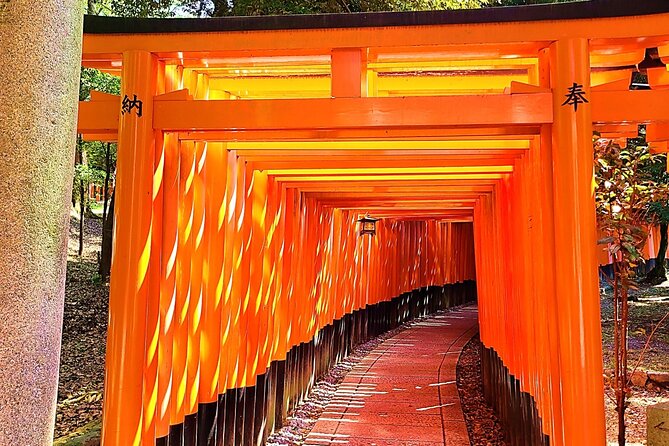
Fushimi Inari-taisha is one of Kyoto’s most memorable places. The shrine path runs beneath rows of red torii gates, creating a tunnel-like walk up the wooded hillside.
The tour allows about 30 minutes, with admission not included. That is enough to enter the shrine grounds and experience the first section of the torii path. It is not enough to climb the full mountain route, which takes far longer.
This stop is a good example of the tour’s tradeoff. You see the essential image and learn how to approach a Shinto shrine, but you will not explore the entire complex. If the orange gates are high on your personal list, return another morning when you have time to walk farther uphill.
Fushimi Inari also adds a different mood to the day. Kinkaku-ji is formal and polished; Fushimi Inari feels more expansive and active, with shrine buildings, fox imagery, wooded paths, and countless gates. The quick visit still gives you a strong sense of the place.
Kiyomizu-zaka and Sanneizaka, Kyoto’s shop-lined slopes
The route then moves into the Higashiyama area, where the streets around Kiyomizu-dera are among the most atmospheric parts of old Kyoto. Kiyomizu-zaka is lined with souvenir shops and local eateries, while Sanneizaka is a handsome pedestrian slope with traditional-looking storefronts.
You have about 30 minutes at each of these areas. That is enough to walk, take photographs, and perhaps identify something to buy later. It is not enough for a relaxed shopping session.
The slopes are part of the charm and part of the effort. They can be crowded, and the paving is not always easy for anyone with limited mobility. Wear shoes with good support and avoid bringing more than you can comfortably carry.
These streets are especially useful for first-time visitors because they connect the famous temple area with the older urban character many people hope to find in Kyoto. You see shops, snacks, souvenirs, and narrow lanes rather than only temple gates.
Kiyomizu-dera and its famous wooden stage
Kiyomizu-dera is one of Kyoto’s major temple sights and a central stop on the route. Its wooden stage projects from the hillside and gives the temple much of its fame. The structure is traditionally described as having been built without a single nail.
Admission is extra, and the visit lasts about 30 minutes. That is short for a large temple complex, particularly when you add crowds and the walk to the main viewing areas. Your guide keeps the visit moving and points out important features, but you should not expect time to explore every corner.
The temple is also reached through busy streets and slopes, so this stop adds to the physical demands of the day. If you use a wheelchair or have serious mobility limits, take the access concern seriously. Several major sights on this route are not fully accessible, and the pace and terrain may make the day difficult.
Yasaka Pagoda and the approach to Gion
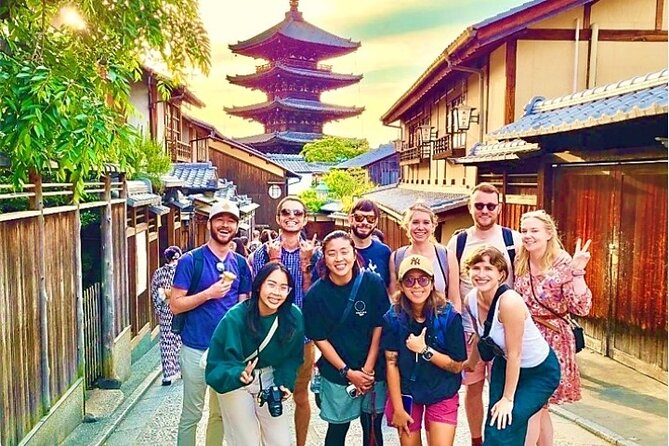
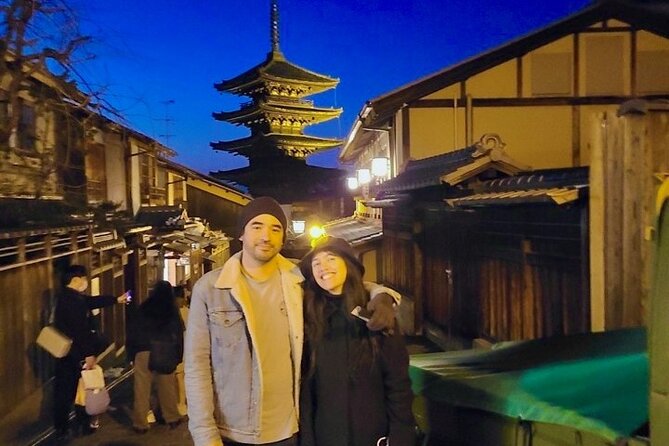
Hokan-ji Temple, better known through its Yasaka Pagoda, provides one of the most recognizable views in the Higashiyama district. The pagoda rises above the surrounding streets and acts as a useful visual marker as you move through the old neighborhood.
The stop is brief and admission is listed as free. You will mainly see the pagoda from the surrounding streets rather than make a long interior visit. That is enough for photographs and orientation, especially since the route continues toward Gion.
From here, the day shifts from temple grounds to historic streets. The old buildings, narrow lanes, and shopfronts give you a sense of Kyoto’s traditional city center. Keep your group in sight, since the streets can be crowded and it is easy to pause for a photo while everyone else moves ahead.
Ending in Gion after a long day
The tour ends in Gion, at the Gion Shopping Street area. This is a fitting finish because it brings together Kyoto’s old urban character, restaurants, shops, and traditional streets.
You may see a geisha or maiko during your time in the area, but that is not guaranteed. Treat Gion as a place to observe respectfully, not as a stage for photographs. Your guide can explain etiquette and local customs, which is useful in a district where visitors need to be especially considerate.
Ending here is practical. You are left in one of Kyoto’s best-known evening districts rather than returned to the starting station. The exact next step depends on your own plans, but Gion is a useful base for dinner or further exploring.
The guides and the value of local help
The strongest part of this experience is the human guidance. Guides named Masako, Megumi, and Masa have led the route, and the feedback consistently praises their warmth, patience, humor, and ability to keep a complicated day moving.
Masako is especially associated with lively explanations and a good sense of humor. Megumi is described as attentive and helpful with Kyoto’s transport system. Masa is noted for taking care of the group and answering questions along the way.
The guide is not only there to point at buildings. You learn about history, culture, social values, etiquette, daily life, and how to use public transport. For a first visit, that practical instruction may be more useful than a long lecture at each temple.
The tradeoff is that communication styles can vary. One person found an accent difficult to understand, and the fast schedule leaves little time to repeat every explanation. If you want detailed academic commentary at every site, a private or slower tour would suit you better.
Price, extra costs, and who gets good value
The tour costs $98.83 per person. Add about $10 for transportation, $6.80 to $14 for lunch, and $11 for entrance fees. Your realistic total is roughly $126.63 to $133.83 per person, depending on what you eat and the exchange rate.
That is fair value if you have only one day in Kyoto and would otherwise spend time planning routes between distant districts. You are paying for a small group, a local guide, route planning, and a packed introduction to the city.
It is less attractive if you have three or more days and enjoy planning your own temple visits. With more time, you can visit these areas at a slower pace and spend less on guided transport. This tour works best when your time is short and your priority is coverage.
The tour is non-refundable and cannot be changed after booking. Make sure the date works, confirm the meeting instructions, and be honest about your physical ability before paying.
Should you book this Kyoto tour?
Book it if you are visiting Kyoto for the first time, have only one or two full days, and want to see the major sights without solving the transport puzzle yourself. It is also a strong choice for someone who wants a fast orientation before exploring independently.
Skip it if you dislike long walking days, need frequent rest, want deep time at each temple, or have strict accessibility or dietary needs. The route is intense, and one poorly planned lunch or missed transfer can affect the whole day.
My practical advice is to treat this as a city overview. Wear comfortable shoes, carry water and cash, load a SUICA or PASMO card, arrive early at Saga-Arashiyama Station, and plan to return to your favorite stop later. For the right visitor, this is an efficient way to get Kyoto into focus in a single day.
FAQ
How long is the Kyoto Full Course Tour?
The tour lasts approximately 9 hours and 30 minutes.
Where does the tour begin?
It begins at Saga-Arashiyama Station, at 11-1 Sagatenryuji Kurumamichicho in Kyoto’s Ukyo Ward.
What time should I arrive?
The specific instructions give an 8:50 start and warn that late arrivals cannot participate. Arrive before 8:50. The meeting information also displays 8:30, so check your confirmation carefully and plan to be early.
Where does the tour end?
The tour ends at the Gion Shopping Street area in Higashiyama Ward.
Is transportation included in the tour price?
No. Transportation costs about ¥1,340, or approximately $10 per person, and you should prepare an IC card such as SUICA or PASMO.
Is lunch included?
No. Lunch is at a conveyor-belt sushi restaurant, and food costs about ¥1,500 per person depending on your order. Options include sushi, vegetable sushi, ramen, kara-age, beer, and mochi.
Are temple entrance fees included?
No. Entrance fees total about ¥1,600, or approximately $11 per person.
Is the tour suitable for children?
Anyone under 18 must be accompanied by a guardian. If you want to include a child under 13, you must request a private tour. A moderate level of physical fitness is required.
Just added in Kyoto
- Private Cooking Class Udon in Kyoto Japan★ 5.0 · 23 reviews
- Your Private Vacation Photography Session In Kyoto★ 5.0 · 110 reviews
- Kyoto: Zen Meditation at a Private Temple with a Monk★ 5.0 · 25 reviews
- Private Pewter Sake Cup Experience with a Kyoto Artisan★ 5.0 · 31 reviews
- Kyoto Wagashi(Japanese sweets) Cooking Class near Fushimiinari★ 5.0 · 60 reviews
- Kyoto:Family-Friendly Kimono & Yukata Experience at WARGO★ 5.0 · 147 reviews
- Private Guided Traditional Buddhist Cooking in Japan★ 5.0 · 16 reviews
- Kyoto: Gion Geisha District & Sake-in-Hand Walking Tour★ 5.0 · 37 reviews
Hidden-Gem Tours, compared.

Kyoto Geisha Walking Tour: Gion District & Hidden Gems
Read our review →
Private Kyoto Tour with a Local, Highlights & Hidden Gems, Personalised
Read our review →

Hotspots & Hidden Gems Walking Tour Private or Group
Read our review →
Ultimate Osaka Walking Tour: Castle, Dotonbori & Hidden Gems
Read our review →
3h Tokyo E-Bike Tour: Hidden Gems, and Local Life with guide
Read our review →
Arashiyama Bamboo Forest & Hidden Gems Bike Tour (Early Bird)
Read our review →
Private Osaka Walking Tour: Highlights & Hidden Gems
Read our review →Browse the lists this tour appears in