
Reviewed · GEISHA & GION DISTRICT TOURS
Kyoto: Gion Evening Walk with Hidden Gems, Geisha & Sake
Gion is at its most atmospheric after dark, when lanterns glow outside tea houses and the daytime crowds thin out. This 90-minute walk gives you a friendly introduction to the district, with stops at Yasaka Pagoda, Ninenzaka, Yasui Kompira-gū Shrine, and Yasaka Shrine. The small groups, limited to 10 people, make it easy to ask questions and keep the pace relaxed.
I like the local, conversational guiding style and the included sake, which gives the walk a social feel rather than making it a formal history lesson. I also like the photo help at each stop. The main drawback is time: 90 minutes is enough for an overview, but not enough for long visits or detailed temple tours. You’ll also need comfortable shoes and a little care on slopes and uneven streets.
Key points to know before booking
- Gion after dark: Lantern-lit streets give Hanamikoji, Ninenzaka, and the surrounding lanes a quieter mood.
- Small groups: The tour accepts up to 10 people, with a better chance for personal questions and photo assistance.
- Five major stops: The route includes Gion, Yasui Kompira-gū Shrine, Hōkan-ji Temple, Ninenzaka, and Yasaka Shrine.
- Sake included: You receive local sake during the walk, though responsible drinking matters in residential and sacred areas.
- English-speaking guides: Guides including Shumpei and Nick have led the experience, but the individual guide can vary.
- Good value at $32: You pay for a compact cultural orientation, local guidance, and a drink rather than an extended temple visit.
Why Gion works better at night
Gion can feel crowded and carefully staged during the day. After sunset, the district changes character. Wooden buildings, narrow lanes, and soft lantern light become the focus, while the busy sightseeing traffic eases in many spots.
This is not a tour built around entering a long list of attractions. It is a guided walk through streets and landmarks, with explanations along the way. That distinction matters. You are paying for context, company, and a well-planned route, not for admission to several major temple interiors.
The subject matter is also handled in a useful way. You learn about Geiko and Maiko traditions, local customs, and the relationship between Shinto and Buddhist sites. The explanations are designed for visitors who want clear answers in plain English, not a dense lecture.
Gion is also a working neighborhood. People live and work among the tea houses, restaurants, shrines, and tourist routes. Keeping voices low is part of the experience, not just a rule. If you treat the district with care, the evening walk feels more respectful and rewarding.
Other evenings in the old entertainment quarters of Kyoto:
- Kyoto Geisha Walking Tour: Gion District & Hidden Gems
★ 4.7 · 3,273 reviews - Kyoto: Gion Magical Night Walking Tour with Geisha Trivia
★ 4.9 · 2,393 reviews - Kyoto: Gion Geisha District Walking Tour – Stories of Geisha
★ 4.7 · 2,187 reviews
Finding the guide at Shijo Kiyamachi
The meeting point is at Shijo Kiyamachi, at 90-3 Shinchō. Look for a guide holding an Otatrip Guide sign between McDonald’s and the Japanese restaurant Kikunoi Roan, a little south along Kiyamachi Street.
Give yourself extra time to find this spot. The tour starts promptly, and the group may leave on schedule even if someone is late. One group arrived late and was still welcomed warmly, but you should not count on that. Missing the start could mean losing the opening explanation and struggling to catch up.
The meeting point is in a lively part of central Kyoto, so it can be a useful place to orient yourself before the walk. Once the tour begins, expect to stay on foot for roughly 70 to 90 minutes. Wear shoes that feel good on paved streets, slopes, and older stone surfaces.
Hanamikoji Street and the first look at Gion
The walk begins in Gion, including Hanamikoji Street, the district’s best-known geisha street. Traditional tea houses line the route, and the architecture gives you a quick sense of how different this part of Kyoto is from ordinary shopping streets.
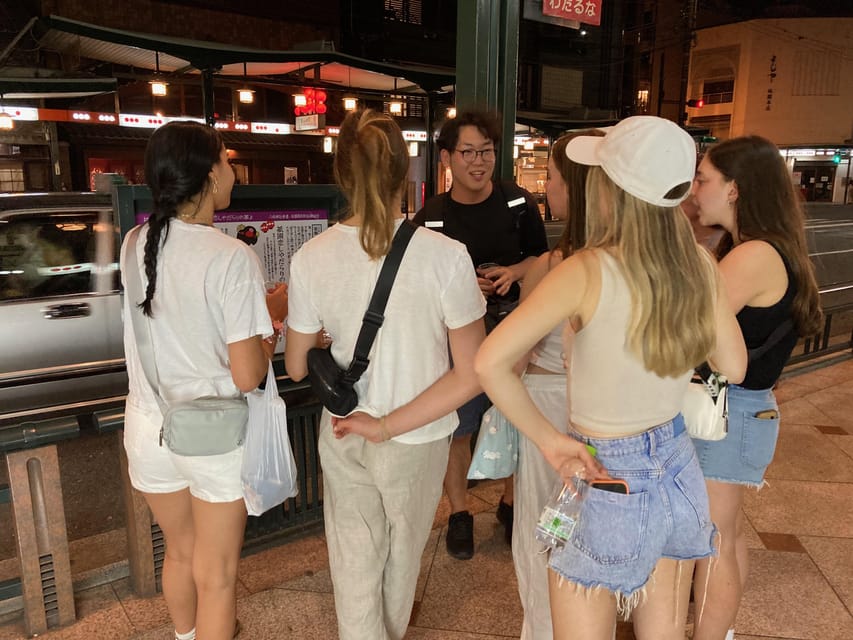
Your guide provides the background needed to read the scene. You’ll hear about Geiko and Maiko, the terms used for Kyoto’s professional entertainers, and the customs surrounding their work. This is especially useful if you have seen photographs of women in formal dress but do not know what you are looking at.
Do not expect a guaranteed geisha sighting. One participant did see two actual Geisha during a tour, but that is a matter of timing and chance, not a promised part of the outing. You should enjoy the architecture, atmosphere, and explanation rather than treat the walk as a search for people to photograph.
The guide can also help with photos. That may sound minor, but it is useful in a district where you want to capture the lanterns, wooden facades, and narrow streets without stopping in an awkward place. Remember that a photo opportunity does not mean permission to photograph local workers or residents.
Yasui Kompira-gū and its unusual power stone

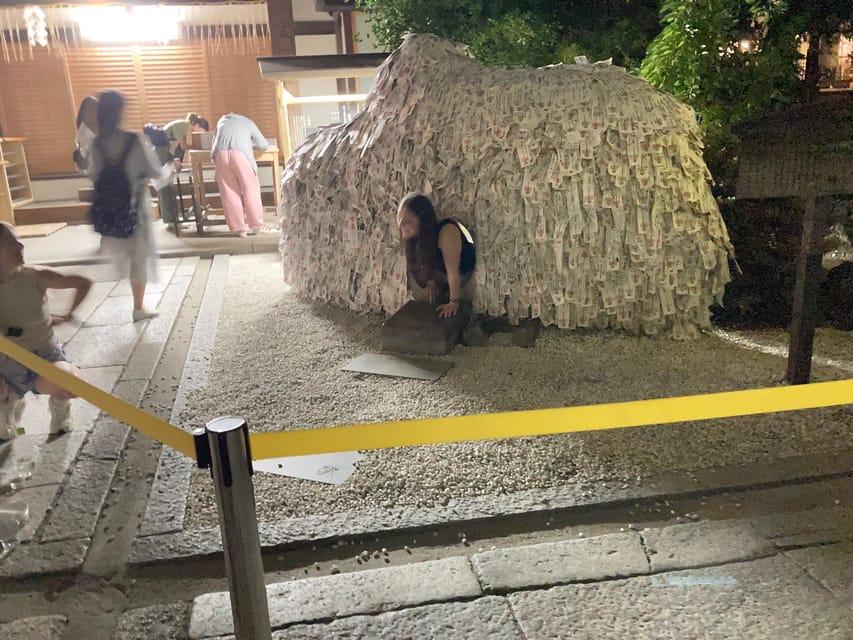
The next stop is Yasui Kompira-gū Shrine, a small but memorable place with a famous power stone. People visit the stone to cut bad ties and build good ones, giving the shrine a direct and personal purpose.
This stop adds variety to the walk. Instead of seeing only scenic streets, you get a look at a living religious practice. Your guide explains the shrine’s meaning and the difference between simply viewing a site and understanding why people come there.
The stop lasts about 10 minutes, so expect an introduction rather than a long ritual visit. Sacred spaces require a quieter manner, especially in the evening. Keep voices low, follow the guide’s directions, and avoid treating the shrine like a theatrical backdrop.
Other tasting rooms and breweries in Kyoto:
- Kyoto Night Foodie Tour in Gion (9+ dishes + 6 Sake tastings)
★ 5.0 · 1,762 reviews - 3-Hour Kyoto Insider Sake Brewery Tour with Tastings & Pairings
★ 5.0 · 917 reviews - Arashiyama Bamboo, Temple, Monkeys, or Secret Sake Brewery
★ 4.8 · 886 reviews - Kyoto: Insider Sake Brewery Tour with Sake and Food Pairing
★ 5.0 · 704 reviews
Hōkan-ji Temple and Yasaka Pagoda
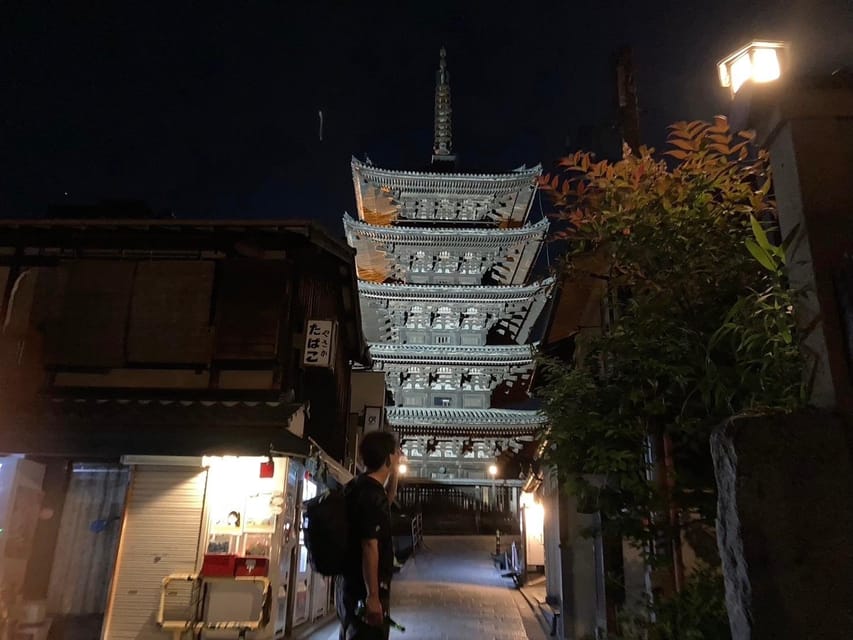
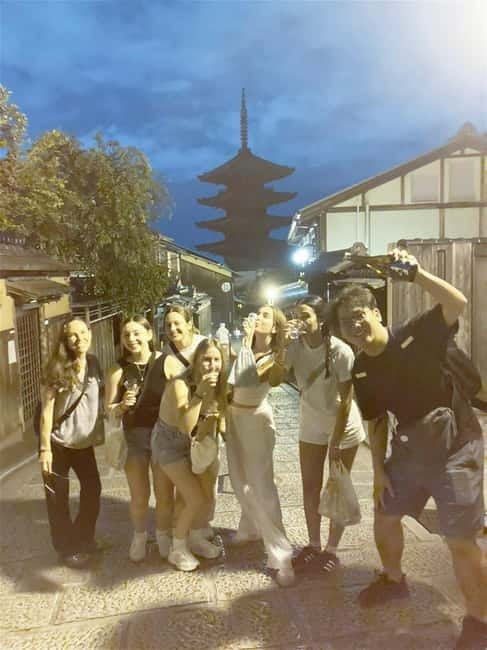
Hōkan-ji Temple, usually known by its five-story Yasaka Pagoda, is one of Kyoto’s most recognizable sights. At night, the illuminated pagoda has a clean, dramatic presence, and the reduced crowds can make it easier to appreciate the building.
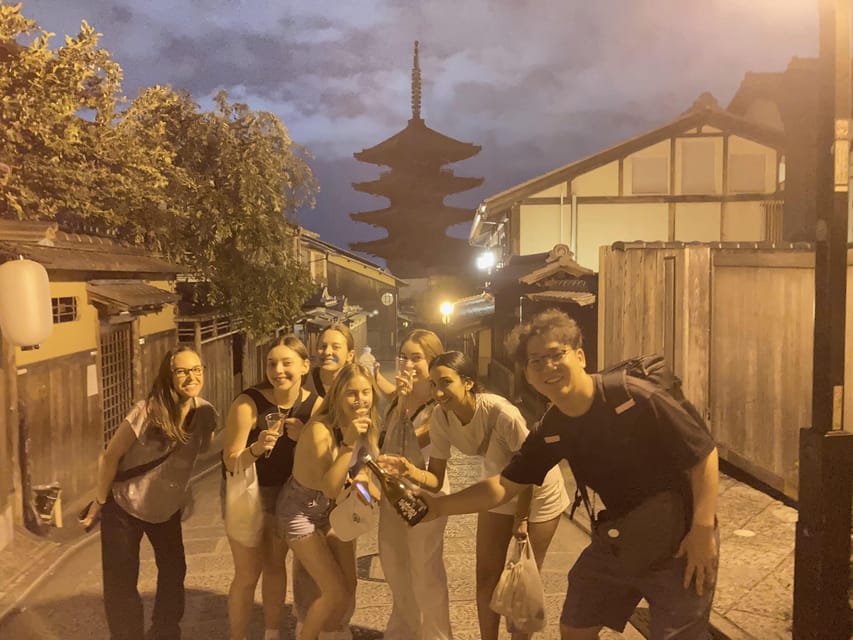
This is one of the strongest photo stops on the route. The guide helps you find a good angle and can take photos for you, leaving you free to look rather than spend the entire stop framing your phone.
There is a practical limit here. The tour visits the pagoda as a photo and explanation stop, not as a long temple visit. You should not expect an extended interior tour or time to explore every detail of the complex. The value comes from seeing a major Kyoto landmark in a more peaceful setting and learning how it fits into the surrounding district.
Ninenzaka, slopes, and old Kyoto streets
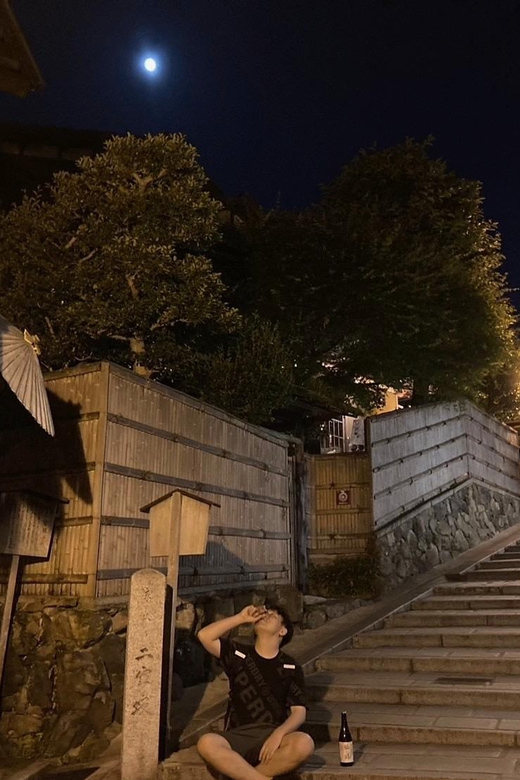
Ninenzaka is a traditional cobblestone slope lined with wooden townhouses and shops. By night, the street can feel much less commercial than it does during busy daytime hours, though the route remains a popular sightseeing area.
The slope is attractive, but it is also the point where footwear matters most. The walk is not described as strenuous, yet uneven paving and inclines can be uncomfortable if you have back problems or poor walking shoes. This activity is not suitable for people with back problems, and anyone who dislikes walking should take that seriously.
Ninenzaka also rewards patience. You may find that the best part is not a single landmark but the combination of sloping pavement, dark timber, and small pools of light. The guide’s photo help is useful here, since the street offers several possible views and it is easy to stop where you block others.
Sake gives the walk a social edge
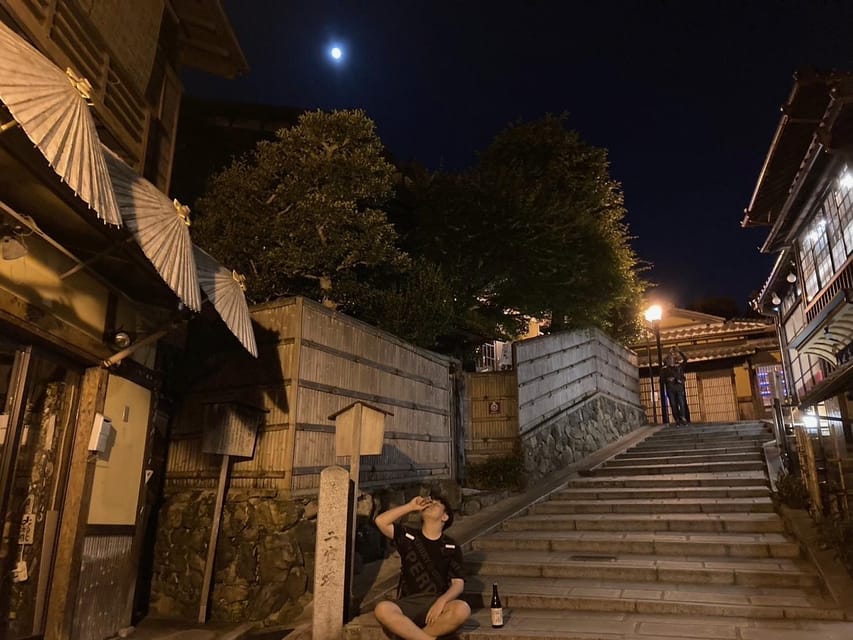
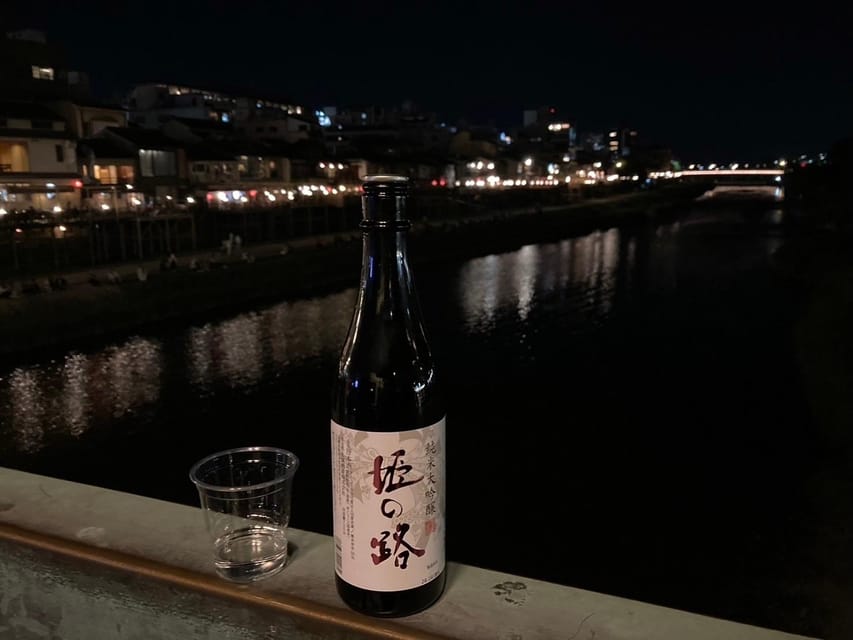
A cup of local sake is included, and the drink changes the tone of the experience. Instead of moving from one explanation to another, you have a small shared moment as you walk through Gion.
The sake is a nice touch for adults who enjoy trying local drinks, and it can make conversation with the group easier. Some guides have been generous with the sake, but you should still drink at a sensible pace. You are walking on slopes and older streets, and the tour takes place in residential and sacred areas where loud behavior is out of place.
The drink is not a substitute for a meal. The experience lasts only 90 minutes, and food is not listed as included. One guide has also helped participants find places to eat afterward, but you should treat that as useful local advice rather than part of the paid tour.
Smoking is not allowed. The same spirit applies to drinking: enjoy the sake, but keep the setting in mind.
Finishing at Yasaka Shrine
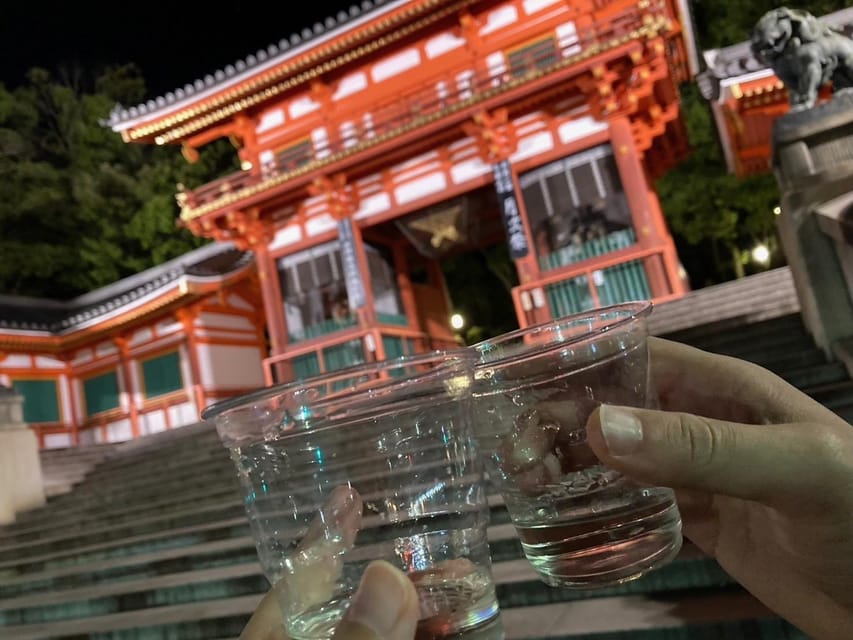
The route ends at Yasaka Shrine, one of Gion’s most important landmarks. The shrine has watched over the district for more than 1,300 years and gives the tour a strong final stop.
Ending here works well because the shrine is larger and more open than several of the smaller sites along the route. After walking through narrow lanes and residential streets, you finish at a major spiritual center with a clear connection to the wider history of Gion.
The tour does not include a return transfer. Plan your evening from Yasaka Shrine, and use the guide’s suggestions if you want advice on dinner, more sights, or nearby places to visit. The small group format makes these questions easier to ask than on a large bus tour.
How much value do you get for $32?
At $32 per person, this is a reasonable price for a guided introduction to Gion. You receive an English-speaking guide, a small group setting, photo assistance, local sake, and a route covering several of Kyoto’s best-known evening sights.
The value is strongest if you are new to Kyoto or want a clear orientation at the start of your stay. You can learn where Gion’s main areas are, understand basic Geiko and Maiko customs, and get suggestions for the rest of your evening.
The price is less compelling if you already know Gion well or prefer to explore independently. You can walk through the streets without paying, and the tour does not include special admission or a long private visit inside a temple. Its advantage is the guide’s local explanation and the ease of moving through the district with someone who knows where to stop.
A private experience is possible if other participants have booked an earlier time or do not join your departure, but you should not book expecting a private tour. The standard format is a small group of up to 10 people.
Who will enjoy this evening walk?
I would choose this tour if you want a short, friendly introduction to Gion rather than a full evening devoted to formal temple visits. It suits first-time visitors, couples, solo visitors, and small groups who want a guide they can talk with.
It is also useful for photographers who want help finding straightforward views of Yasaka Pagoda, Ninenzaka, and the lantern-lit streets. The guide can take photos, which is a welcome benefit if you are traveling alone or want a picture of the whole group.
You should think twice if you dislike walking, have back problems, or want a quiet self-guided stroll without conversation. The route covers several stops in a fixed 90-minute window, so you will not have much time to linger.
This is also not the right choice if your main goal is to meet a Geiko or Maiko. You might see one, but no sighting is guaranteed, and respectful behavior is essential. The cultural explanation is the dependable part of the experience.
Booking and practical details
You can cancel up to 24 hours before the start for a full refund, and you can reserve now while paying later. Check the available start times when booking, since this is an evening activity and the exact schedule matters if you have dinner plans.
The tour is conducted in English. Arrive at the Shijo Kiyamachi meeting point before the stated start time, look for the Otatrip Guide sign, and bring comfortable shoes.
I would also keep your evening flexible after the tour. It finishes at Yasaka Shrine, and you may want to continue exploring, find dinner, or ask the guide for suggestions. The walk is short enough to fit into a larger Kyoto plan, but it still gives you a useful sense of place.
Should you book this Gion tour?
Book it if you want a compact, social introduction to Gion at night, especially if you value local stories more than formal site admissions. The sake, photo help, and small group make the $32 price feel fair, and guides such as Shumpei and Nick have brought a warm, easygoing style to the walk.
Skip it if you already know Gion, dislike group activities, or need a fully accessible route. For most first-time visitors with comfortable shoes and 90 minutes to spare, this is a practical way to see Kyoto’s famous geisha district with more context and less daytime pressure.
FAQ
How long does the Gion evening walk last?
The activity lasts 90 minutes, with the walking portion described as roughly 70 to 90 minutes.
What language is the tour conducted in?
The tour is conducted in English with a live guide.
How large is the tour group?
The group is limited to 10 participants.
Where is the meeting point?
Meet at Shijo Kiyamachi, at 90-3 Shinchō. The guide waits between McDonald’s and Kikunoi Roan on Kiyamachi Street, holding an Otatrip Guide sign.
What sights are included?
The route includes Gion and Hanamikoji Street, Yasui Kompira-gū Shrine, Hōkan-ji Temple and Yasaka Pagoda, Ninenzaka, and Yasaka Shrine.
Is sake included?
Yes. A cup of local sake is included during the walk.
Will I definitely see a Geiko or Maiko?
No. The tour explains Geiko and Maiko culture, but an actual sighting is not guaranteed.
What should I bring?
Bring comfortable shoes suitable for walking through streets and along slopes.
Can I cancel the booking?
Yes. You can cancel up to 24 hours in advance for a full refund. You can also reserve now and pay later.
More hidden-gem tours in Kyoto
- Private Kyoto Tour with a Local, Highlights & Hidden Gems, Personalised
★ 5.0 · 1,543 reviews - Arashiyama Bamboo Forest & Hidden Gems Bike Tour (Early Bird)
★ 5.0 · 613 reviews - Kyoto: Hidden Gems E-Bike Tour with Local Japanese Guide
★ 4.9 · 189 reviews - Kyoto: Gion Hidden Gems & Geisha Culture Tour
★ 4.9 · 126 reviews
Just added in Kyoto
- Kyoto: Zen Meditation at a Private Temple with a Monk★ 5.0 · 25 reviews
- Private Cooking Class Udon in Kyoto Japan★ 5.0 · 23 reviews
- Your Private Vacation Photography Session In Kyoto★ 5.0 · 110 reviews
- Private Pewter Sake Cup Experience with a Kyoto Artisan★ 5.0 · 31 reviews
- Kyoto Wagashi(Japanese sweets) Cooking Class near Fushimiinari★ 5.0 · 60 reviews
- Kyoto:Family-Friendly Kimono & Yukata Experience at WARGO★ 5.0 · 147 reviews
- Private Guided Traditional Buddhist Cooking in Japan★ 5.0 · 16 reviews
- Kyoto: Gion Geisha District & Sake-in-Hand Walking Tour★ 5.0 · 37 reviews
Geisha & Gion District Tours, compared.

Kyoto Geisha Walking Tour: Gion District & Hidden Gems
Read our review →
Gion Geisha District Walking Tour – Stories of Geisha
Read our review →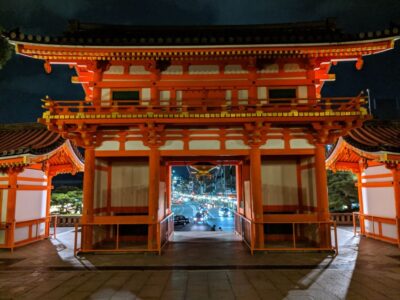
Best of Kyoto: Gion, Geisha, Pagodas & Cobblestones
Read our review →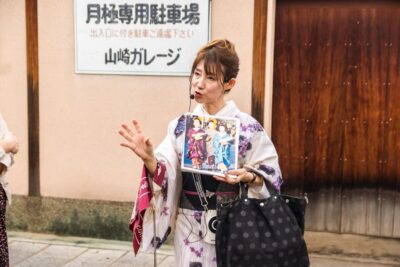
Kyoto Night Foodie Tour in Gion (9+ dishes + 6 Sake tastings)
Read our review →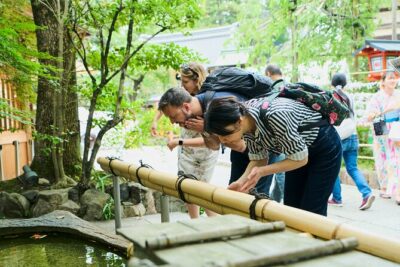
Kyoto Gion: 2-Hour Geisha Culture & History Walking Tour
Read our review →
Chopsticks Making Workshop in Gion with Engraving Option
Read our review →
Browse the lists this tour appears in