
Reviewed · NARA & THE DEER PARK
KYOTO-NARA: Giant Buddha Deer Pagoda “Geisya” (Italian, full day)
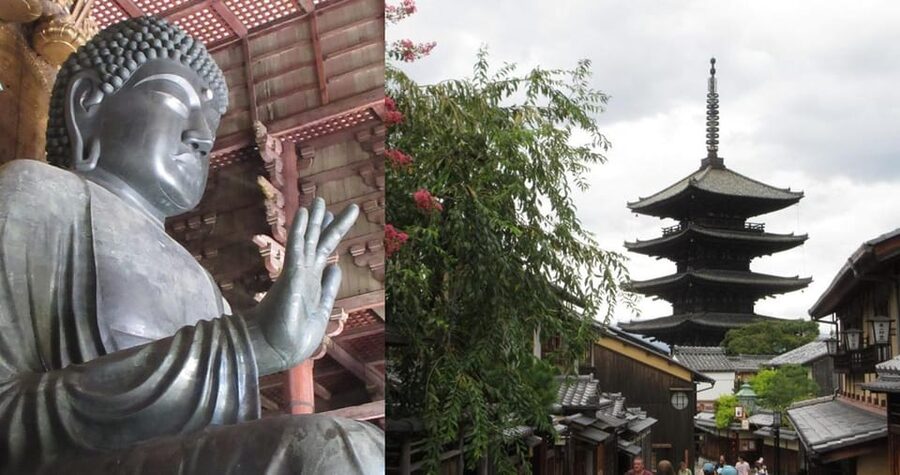
Nara’s giant Buddha and free-roaming deer make a memorable morning, but the real strength of this day is the way it links two very different sides of Japan. You get Tōdai-ji and Nara Park before lunch, then Kyoto’s Kiyomizu-dera and Gion-kobu in the afternoon.
I like the small group, capped at 15 people, and the fact that scheduled train, bus, and monument fees are included. I also like the Italian guidance, especially with Omae, whose polished Italian, humor, and explanations of local legends have earned especially warm praise. The drawback is pace: Nara and Kyoto each deserve much more than a few hours, so this is a highlights day rather than a slow, wandering visit.
Key points at a glance
- The day covers two major destinations: Nara in the morning and eastern Kyoto in the afternoon.
- Tōdai-ji’s giant Buddha is the morning centerpiece: You receive guided context about its monuments and national treasures.
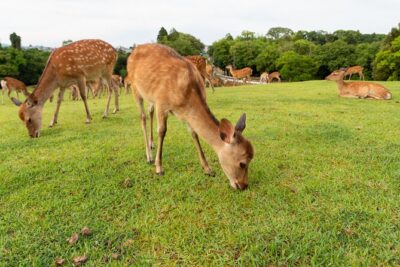
- Deer roam freely in Nara Park: Deer crackers are sold at special stalls so you can feed them.
- Omae may guide the day: He is Japanese, speaks excellent Italian, and lived in Italy for more than ten years.
- The route ends in Pontocho: This gives you a useful Kyoto location for continuing your evening.
- Transport and entry fees are included: The $176 price buys more than guiding alone, though lunch and personal purchases are not listed as included.
Why this full day works for Kyoto visitors
If you have only one open day for organized sightseeing, this tour gives you a sensible pairing. Nara supplies ancient temples, open parkland, and deer. Kyoto brings a pilgrimage road, a major Buddhist temple, traditional shopping streets, and Gion’s geiko and maiko culture.
I like the contrast. The morning feels spacious and monumental, while the afternoon becomes more urban and commercial. You move from an imperial capital of the eighth century to Kyoto, another historic capital, without having to plan the rail connections, bus ride, monument admissions, and walking route yourself.
The tour begins at Kyoto Station and lasts the full day. It is not a private tour, but the group limit of 15 keeps it smaller than a large coach outing. That matters most at the temples, where a guide can still answer questions without shouting across a crowd.
The tour costs $176 per person. That is not a cheap day out, but the price includes trains, buses, entrance fees, and an Italian-speaking guide. The value is strongest if you want history and cultural explanation in Italian, or if arranging a Nara and Kyoto combination on your own would add stress. If you are comfortable navigating trains and temples independently, you may prefer to spend less and set your own pace.
Other day trips out of Kyoto:
- Kyoto/Osaka: Nara, Fushimi Inari Taisha, Arashiyama Bus Tour
★ 4.7 · 1,275 reviews - Osaka/Kyoto: Arashiyama, Nara & Fushimi Inari Shrine w/Lunch
★ 4.4 · 754 reviews - Kyoto and Nara Day Trip from Kyoto
★ 4.5 · 445 reviews
Meeting at Kyoto Station without a false start
The meeting point is in the space between the four escalators in front of the taxi terminal, not the bus terminal. It is just outside the north central entrance to Kyoto Station, on the east side.
Use Kyoto Tower as your visual check. From the meeting space, you should see the tower in front of the station, toward the upper left rather than the right. This detail is worth taking seriously. Kyoto Station is large, and starting in the wrong terminal can cost you the calm beginning you want.
You receive confirmation and more detailed meeting instructions the day before. Still, allow time to find the north central entrance and identify the taxi terminal. The tour uses public transport, so a late arrival could affect the whole group.
The 45-minute train ride to Nara
The morning begins with a train ride of about 45 minutes from Kyoto to Nara Station. This is a practical start because Nara is close enough for a day visit but far enough that transport planning can feel like work if you are unfamiliar with Japan.
The guide helps keep the group together and provides the cultural frame before you reach the temple. You then take a bus for about 15 minutes toward Tōdai-ji. These transfers are not sightseeing stops, but having the fares included removes small decisions that can add up during a busy day.
The transport section also sets the rhythm. This is a guided public-transport excursion, not a private vehicle tour. You should expect walking, station movement, and ordinary city travel rather than door-to-door service.
Tōdai-ji and the giant Buddha
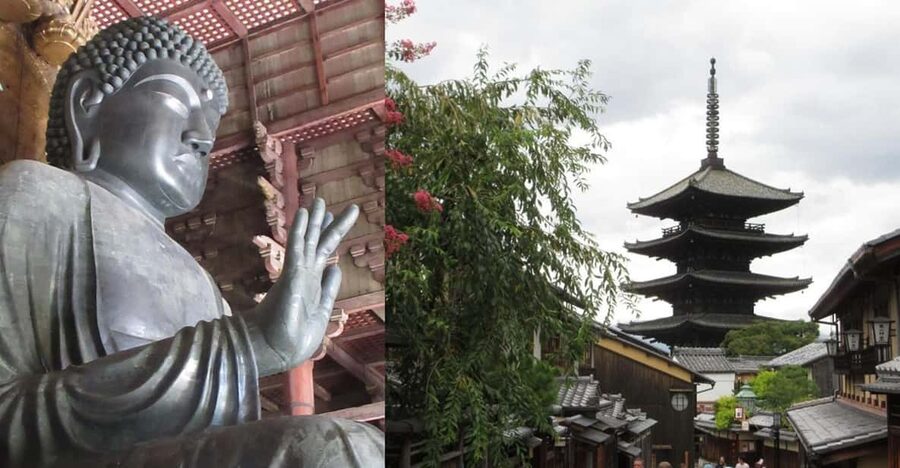
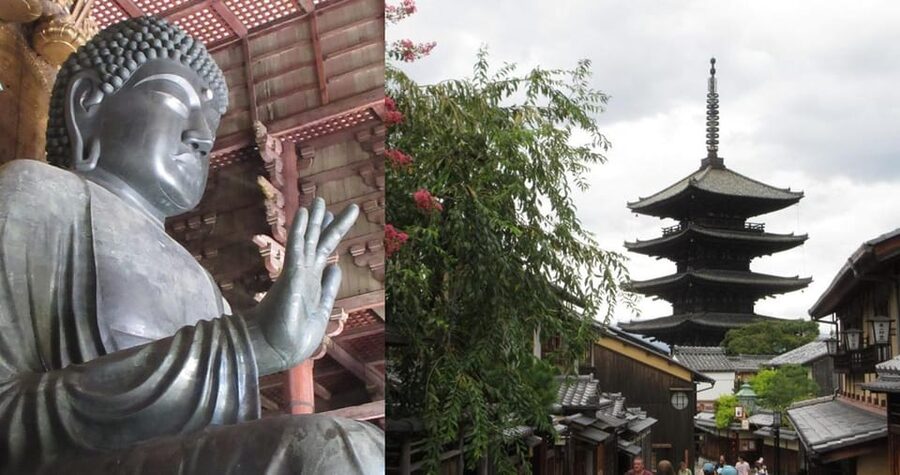
Tōdai-ji receives about an hour and a half, including the guided visit, sightseeing, and some time for shopping. Its giant Buddha statue is the headline attraction, and it is easy to see why. The scale gives the temple a sense of ceremony that photographs do not fully capture.
The guide explains the main monuments and points out features designated as national treasures of Japan. That extra layer is important. Without context, a huge wooden temple and enormous bronze Buddha can become a quick photo stop. With explanation, you get a clearer sense of how Buddhist devotion, architecture, and public life meet at the site.
The tour also promises explanations of popular Buddhist practices and local stories that are not always printed in standard tourist guides. The supplied information describes legends and mythological tales as part of the guiding style, and Omae has been praised for explaining both the objects and the stories connected with them.
I would use this portion for questions. The guide is there to explain what you are seeing, not just to point toward the Buddha. Participants have especially valued the chance to ask questions, hear detailed answers in Italian, and then have time to explore and take photographs on their own.
The main limitation is time. Ninety minutes is enough for a focused introduction and a look around, but not for every corner of the temple grounds. If you are passionate about Buddhist art or temple architecture, you may wish you had a longer stay.
Same base, a different sort of day:
- PERFECT KYOTO 1-Day Bus Tour
★ 5.0 · 13,518 reviews - Kyoto: Fushimi Inari, Kinkakuji, Bamboo Grove 1 Day Bus Tour
★ 4.8 · 4,316 reviews - Kyoto: Tea Ceremony in a Traditional Tea House in Kiyomizu
★ 4.9 · 3,519 reviews - Kyoto Geisha Walking Tour: Gion District & Hidden Gems
★ 4.7 · 3,273 reviews
Deer in Nara Park, with a little common sense
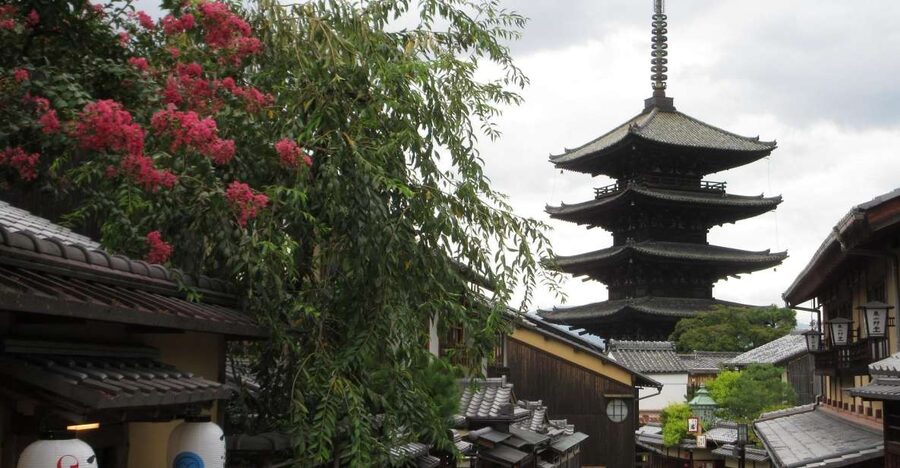
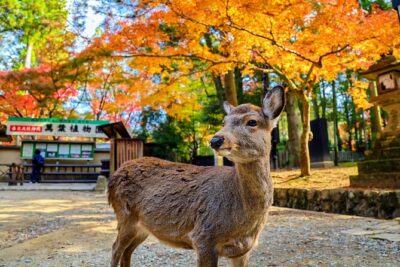
Nara’s deer live freely in the large park around the temple. Their presence is one of the day’s most distinctive experiences, because the animals move among people rather than staying behind fences.
Special stalls sell crackers for feeding them. This is a simple activity, but it gives the park a playful side after the solemnity of Tōdai-ji. You can watch the deer, offer food, and then move on toward the next stop.
Keep your feeding moment brief and pay attention to your belongings. The provided details describe the deer as tame, but tame does not mean predictable. The guide can help you understand how to handle the encounter sensibly.
Ukimido, a short pause beside the park
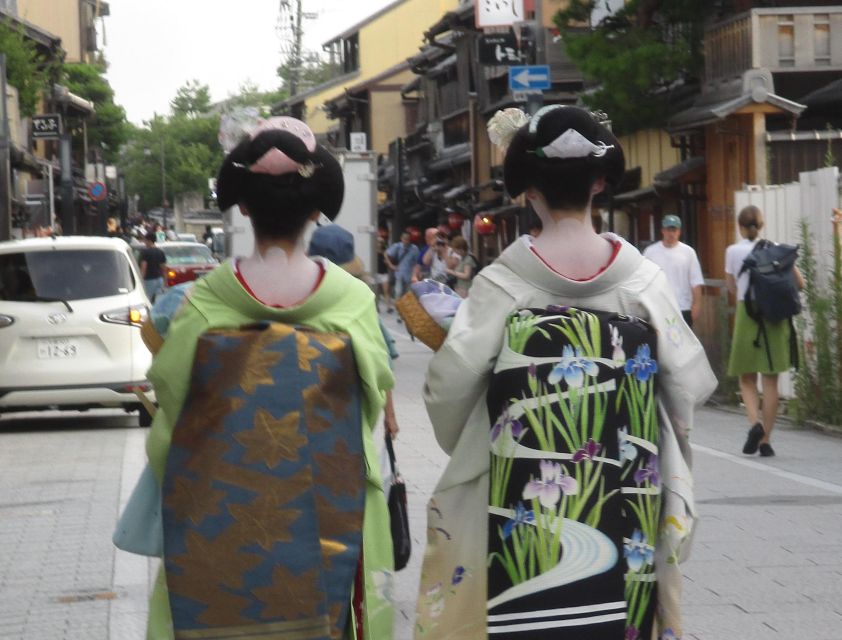
After Tōdai-ji, the route includes a short walk of about five minutes to Ukimido. The visit and walk last about ten minutes, followed by another ten-minute walk.
This is a brief stop, so do not expect a second major temple visit. Its value is as a change of scene and a quieter pause within the Nara portion of the day. The route allows you to see more of the park instead of moving directly from one major monument to the next.
The short timing also shows the nature of the tour. You receive a carefully selected introduction to Nara, not a full-day exploration of every temple and garden.
Returning to Kyoto before the afternoon tour
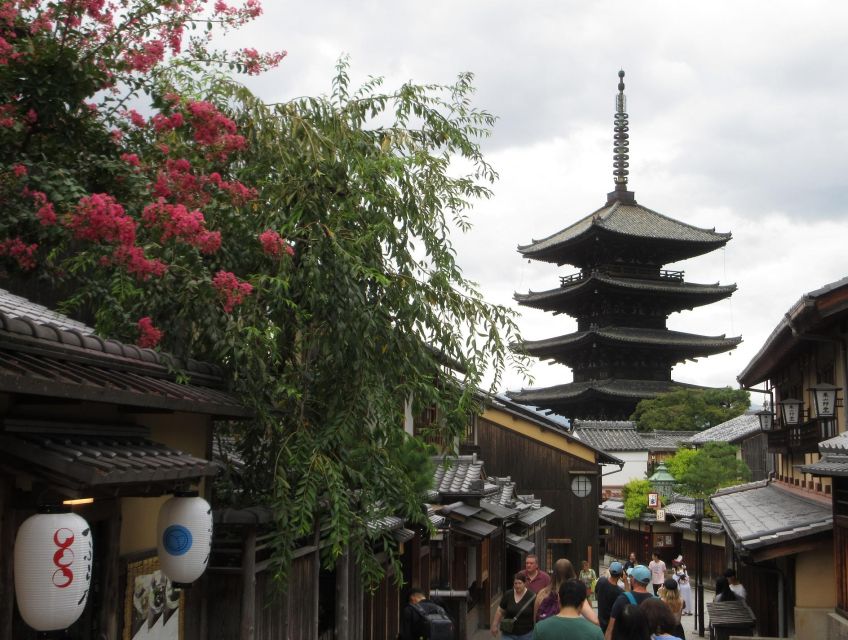
The return train takes about 45 minutes. Back at Kyoto Station, you have a one-hour break before the afternoon section begins.
This break gives you a chance to eat, use the station facilities, and reset before more walking. Lunch is not listed as included, so plan to arrange your own meal during this pause. Kyoto Station offers many food choices, but the exact selection and timing are your responsibility.
After the break, a bus ride of about 15 minutes brings you toward the Kiyomizu-dera area. A further 15-minute walk leads to the temple. The transfer is efficient, but you should wear comfortable shoes. The day includes walking at both destinations, plus station and bus movement.
The old pilgrimage route to Kiyomizu-dera
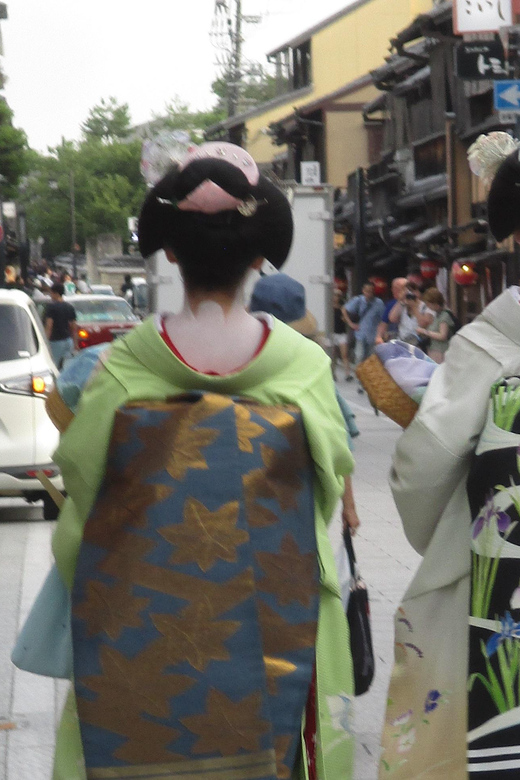
The approach to Kiyomizu-dera is part of the experience, not just a way to reach the entrance. The route follows old pilgrimage paths through streets lined with souvenir shops, sweet shops, bars, and other places aimed at visitors from across Japan and the world.
This area can feel busy and commercial. That is the honest trade-off. You get atmosphere, snacks, shopping, and plenty to look at, but not the quiet of a remote temple road.
The guide adds value here by explaining how the area developed from the eighth century to the present. You can ask about religious customs, local traditions, and the sights along the way. If you enjoy understanding how a sacred place functions in everyday city life, this is more useful than simply being led to the temple gate.
Kiyomizu-dera in one focused hour
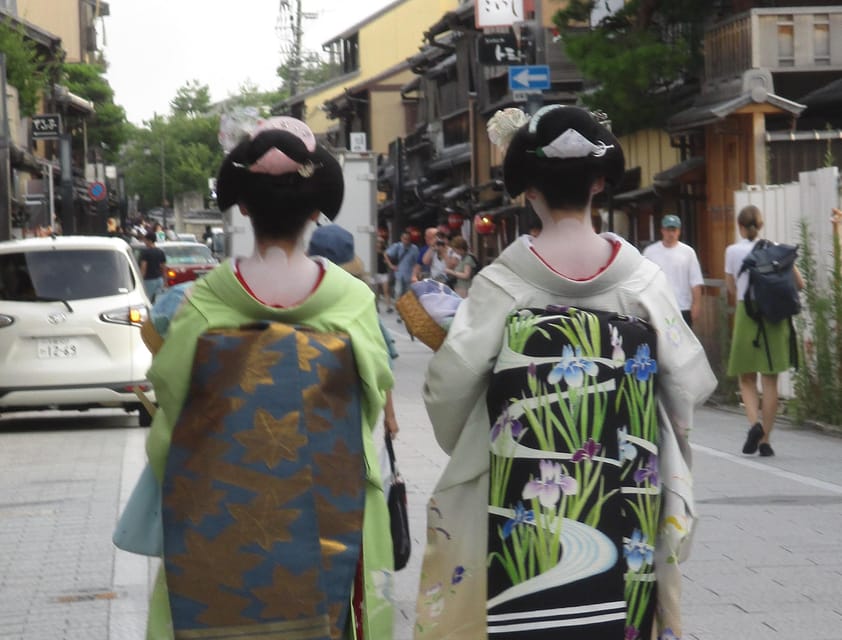
The guided visit to Kiyomizu-dera lasts about one hour. The temple is one of Kyoto’s essential stops, and the visit gives you a clear introduction without taking the entire afternoon.
The guide explains the temple’s historical, cultural, and religious meaning, while also pointing out details along the route. You should have time to look around and take photographs, though the schedule does not promise a long independent stay.
I like the way this stop follows Nara. Tōdai-ji gives you a massive temple complex and giant Buddha. Kiyomizu-dera shifts the focus to Kyoto’s pilgrimage culture and the streets that have grown around a major place of worship.
Again, the drawback is duration. One hour is enough for a guided overview, but not for a leisurely visit to every part of the grounds or surrounding lanes. If Kiyomizu-dera is your main Kyoto priority, a separate visit would let you linger.
Gion-kobu and Kyoto’s performing arts
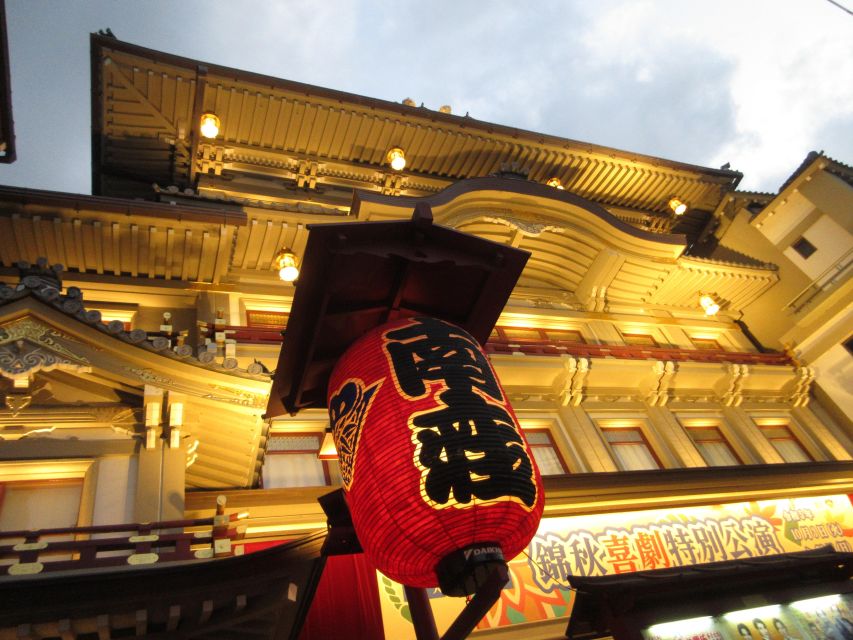
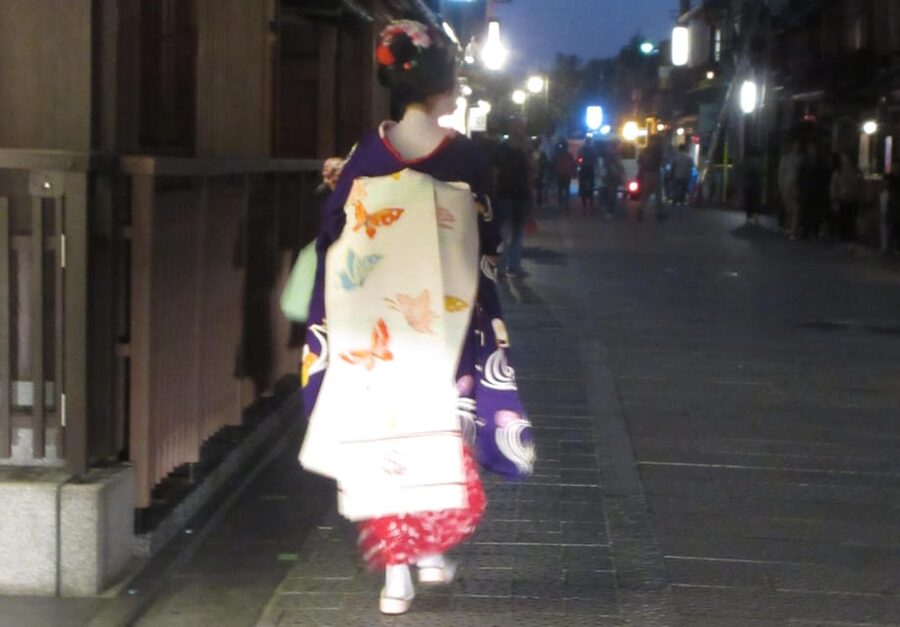
From Kiyomizu-dera, you walk for about 20 minutes to Gion, followed by a guided visit of around 20 minutes. The tour focuses on the Gion-kobu area, where professional maiko and geiko artists work. The description uses the familiar term Geisya, but maiko and geiko are the more precise local terms used in Kyoto’s traditional performing-arts world.
This is an area where respectful behavior matters. You are seeing a working cultural district, not a stage set created for sightseeing. The guide can help explain what you are looking at and answer questions about the area’s role in Kyoto life.
Twenty minutes is a short introduction. You should not expect a performance or a guaranteed encounter with a maiko or geiko. The value lies in orientation and context, especially if the district is new to you.
The final ten-minute walk leads to Pontocho. Ending here is practical. You can continue your evening in central Kyoto, find dinner, or make your own way back to your accommodation. The tour does not finish at Kyoto Station, so check your evening plans before booking.
The Italian guide is a major reason to choose it
The strongest feature is the live Italian guidance. Omae has received especially high praise for speaking polished Italian after living in Italy for more than a decade. His style is described as friendly, humorous, and careful, with explanations that include legends as well as basic monument facts.
That combination matters. A guide who can explain subtle religious and cultural points in your strongest language can make a temple visit far more rewarding. It also makes it easier to ask follow-up questions instead of simply memorizing a few dates.
The tour description also promises assistance with practical needs during the day and free practical information about travel in Japan upon request. Flexible itineraries and schedules may be possible when requested, within reason. Treat that as a possibility rather than a guarantee, since the tour still has fixed transport and group timings.
The listed rating is 4.7 out of 5 from 15 ratings. Most recorded scores are perfect, with one four-star assessment noting that the day could have included more considering the time and price. That is a useful warning: the guiding is a major strength, but the schedule is full.
Who will get the most from this day
I would recommend this tour to:
- Italian-speaking visitors who want detailed explanations without managing language barriers
- First-time visitors to Kyoto who want a structured introduction to Nara and eastern Kyoto
- People who prefer a small group to a large coach
- Families who want transport, entries, and a guide organized in one day
- Visitors who value stories, legends, and cultural background as much as photographs
I would think twice if you prefer to spend an entire day in one place, dislike public transport, or want long unplanned breaks. The route is active, with train rides, a bus, several walks, and timed temple visits.
The tour is listed as wheelchair accessible, but the route includes public transport and walking sections. If you need specific assistance, request it before booking and use the promised support service to clarify what can be arranged.
Free cancellation is available up to 24 hours before the tour for a full refund. You can also reserve now and pay later, which helps if your Kyoto plans are still shifting.
Should you book it?
Book this day if you want Nara’s giant Buddha and deer, Kyoto’s Kiyomizu-dera and Gion, and an Italian-speaking guide to connect the sights. The inclusion of transport and entrance fees makes the $176 price easier to justify, especially for first-time visitors.
Do not book it expecting a slow, private exploration. You will cover a lot of ground, and each major stop has a firm time limit. For Italian-speaking visitors who want cultural explanation, practical help, and a well-organized first look at two historic cities, this is a strong choice. For independent explorers, it may be better value to choose one destination and stay longer.
FAQ
Where does the tour begin?
It begins at Kyoto Station, in the space between the four escalators in front of the taxi terminal. This is outside the north central entrance, on the east side. Kyoto Tower should appear toward the upper left from the meeting point.
Is the tour conducted in Italian?
Yes. The live tour guide language is Italian, and the activity includes explanatory material in Italian. The guide can answer questions and provide cultural and historical explanations throughout the day.
What transport is included?
Scheduled train and bus fares are included. The morning train to Nara takes about 45 minutes, followed by a bus ride of about 15 minutes. The return train also takes about 45 minutes, and the afternoon bus ride takes about 15 minutes.
What places are visited?
The route includes Tōdai-ji in Nara, the surrounding deer park, Ukimido, Kiyomizu-dera in Kyoto, and the Gion-kobu area. The tour finishes in Pontocho.
Are entrance fees included?
Yes. Entrance fees for the monuments included in the program are covered. Personal purchases, including deer crackers and shopping, are not listed as included.
How large is the group?
The tour is a small-group experience limited to 15 participants. It is also listed as wheelchair accessible, and assistance can be requested during the itinerary.
Just added in Kyoto
- Private Cooking Class Udon in Kyoto Japan★ 5.0 · 23 reviews
- Your Private Vacation Photography Session In Kyoto★ 5.0 · 110 reviews
- Kyoto: Zen Meditation at a Private Temple with a Monk★ 5.0 · 25 reviews
- Private Pewter Sake Cup Experience with a Kyoto Artisan★ 5.0 · 31 reviews
- Kyoto Wagashi(Japanese sweets) Cooking Class near Fushimiinari★ 5.0 · 60 reviews
- Kyoto:Family-Friendly Kimono & Yukata Experience at WARGO★ 5.0 · 147 reviews
- Private Guided Traditional Buddhist Cooking in Japan★ 5.0 · 16 reviews
- Kyoto: Gion Geisha District & Sake-in-Hand Walking Tour★ 5.0 · 37 reviews
Nara & the Deer Park, compared.
World Heritage Kyoto & Nara Uji Authentic Matcha Experience
Read our review →
Kyoto/Osaka: Nara, Fushimi Inari Taisha, Arashiyama Bus Tour
Read our review →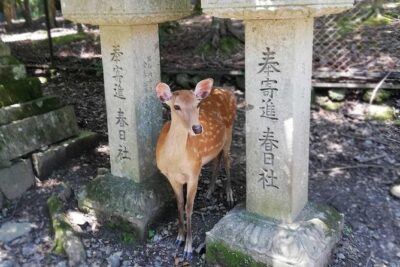
Nara Half Day Trip Walking Tour (Private Option Available)
Read our review →
Osaka/Kyoto: Arashiyama, Nara & Fushimi Inari Shrine w/Lunch
Read our review →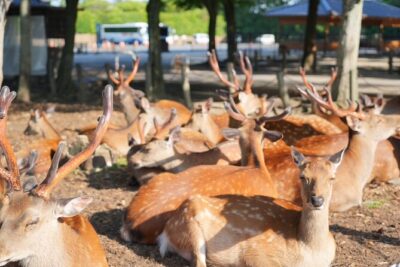
Nara Early Morning Tour (Kyoto or Osaka Departure Available)
Read our review →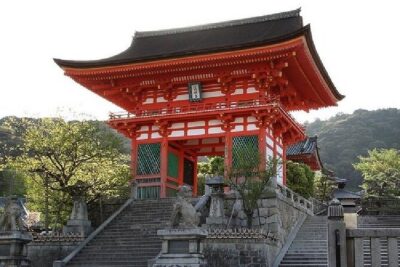
Full Day Guided Tour to Kyoto and Nara from Osaka by Van
Read our review →
Browse the lists this tour appears in