
Reviewed · NARA & THE DEER PARK
Kyoto Private Tour Full Day with Local Guide&Nara Option(PerGroup
Kyoto’s famous sights are scattered across the city, and this private tour solves the biggest problem: getting between them without losing half your day. You ride in an air-conditioned private vehicle, with pickup and drop-off included, then walk each site at your own pace.
I like the flexible feel and the chance to ask for help with mobility needs or family pacing. I also like that guide Riku focuses on local paths and practical sightseeing, while the Nara option adds Todaiji and Nara Park to the day. The drawback is simple: eight hours is a lot of ground to cover, and some stops may feel brisk, especially if you want long visits at every temple.
Key Points at a Glance
- Private transport for up to four people: The $480 price covers the vehicle and group, not each individual.
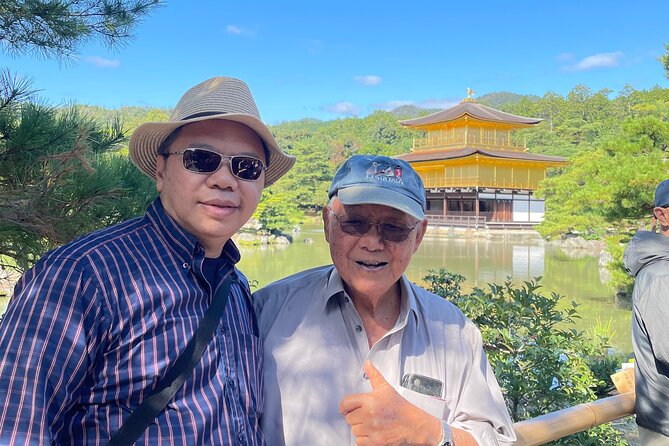
- Four major Kyoto stops: The standard Kyoto route includes Kinkakuji, Arashiyama, Gion, and Fushimi Inari.
- A useful Nara alternative: The Kyoto and Nara route visits Fushimi Inari, Todaiji, Nara Park, and Arashiyama’s Bamboo Grove.
- English-speaking guidance: Riku is the named guide, and Tatsuya has also led some tours.
- Good for mixed ages and abilities: Guides have adjusted plans for young children and partial wheelchair use.
- Admission is not fully included: Kinkakuji and some temple admissions cost extra at the site.
Why a Private Car Helps in Kyoto
Kyoto rewards careful planning, but it does not always make sightseeing easy. The main attractions are spread across different parts of the city, and several involve long walks, slopes, crowds, or confusing approaches.
A private vehicle gives you a practical base for the day. You are not figuring out each train connection, waiting for buses, or carrying bags through several transfers. The tour includes hotel pickup, parking, gasoline, expressway fees, and hotel drop-off, so the quoted price covers more than just a guide.
The vehicle is especially useful for families, small groups, and anyone who cannot manage a full day of walking. One booking included a family member who used a wheelchair part of the time, and the guide adjusted the pace. That does not make every site fully step-free, but it shows why a private arrangement can work better than a rigid group excursion.
The tradeoff is that a car cannot remove every walking challenge. Fushimi Inari involves a long torii-lined route up the mountain, while Arashiyama and temple grounds still require time on foot. You gain efficiency between sights, not a completely effortless day.
Other day trips out of Kyoto:
- Kyoto/Osaka: Nara, Fushimi Inari Taisha, Arashiyama Bus Tour
★ 4.7 · 1,275 reviews - Osaka/Kyoto: Arashiyama, Nara & Fushimi Inari Shrine w/Lunch
★ 4.4 · 754 reviews - Kyoto and Nara Day Trip from Kyoto
★ 4.5 · 445 reviews
Kinkakuji: Kyoto’s Gold Pavilion First
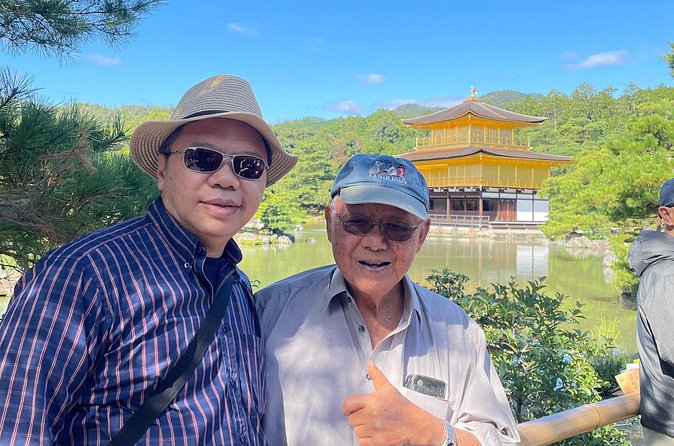
Kinkakuji, also called the Golden Pavilion, is usually the opening stop on the Kyoto route. The top two floors are covered in gold leaf and reflect in the pond, creating one of Kyoto’s most recognizable views.
The scheduled visit is about one hour. That is enough to see the main view, walk the grounds, and hear the basic story of the Zen Buddhist temple. It is not enough for a slow, detailed examination of every garden path, so tell the guide early if this is your top priority.
Admission is not included. The supplied price is about $5 per person, paid directly on site. Bring some flexibility for small additional costs, since temple admission prices can change.
The pavilion is photogenic, but its fame brings crowds. A private guide may help you move efficiently and find a better angle, yet no guide can guarantee an empty pond or a quiet courtyard. I would treat this stop as a strong visual introduction to Kyoto, not as the place to spend most of your day.
Arashiyama and the Bamboo Grove
Arashiyama receives about two hours, making it one of the longer stops. This western Kyoto district has long been associated with scenic outings, and its best-known path runs through the tall bamboo grove.
The bamboo is the headline attraction, but the area offers more than one photograph. You can expect time for a walk, nearby temple grounds, and the surrounding natural setting. The itinerary specifically includes the Bamboo Grove on the Kyoto and Nara route.
The timing matters. Two hours gives you room to walk without racing from the vehicle to the bamboo and back. It also gives the guide some freedom to respond to the group. Families with children may appreciate this breathing space more than a string of short temple visits.
One detail needs clarification before booking: the tour information lists Tenryuji as an extra admission, but gives two different figures, about $10 and $5 per person. Ask for the current amount and confirm whether you want to enter. If you skip it, you can devote more time to the grove and nearby streets.
Arashiyama can feel crowded, especially around the famous bamboo path. Do not expect the private tour to turn it into a private forest. Its value is in getting you there efficiently and helping you use the available time well.
Gion: A Short Walk Through Old Kyoto
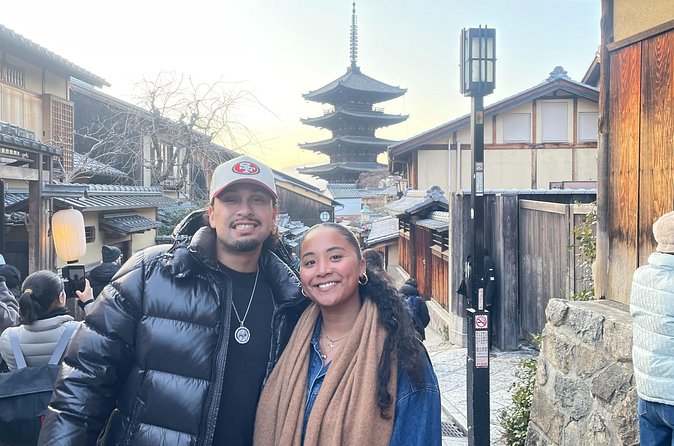
Gion is allotted about one hour on the Kyoto departure. This historic district is associated with geisha and maiko culture, traditional buildings, and narrow streets that give you a sense of old Kyoto.
An hour is enough for an introduction and a walk through the district. It is not a full evening of dining, performances, or cultural entertainment. The information provided does not promise a geisha sighting, so approach Gion as a place to observe respectfully, not as a guaranteed encounter.
Gion is also the most atmospheric stop on the route. After the bright pavilion, bamboo grove, and red shrine gates, its wooden façades and quieter lanes offer a change of pace. Ask the guide for context about what you are seeing rather than treating the district as a quick photo stop.
Gion is not included on the stated Osaka departure itinerary. If you are staying in Osaka and want this district, confirm the exact route before paying.
Same base, a different sort of day:
- PERFECT KYOTO 1-Day Bus Tour
★ 5.0 · 13,518 reviews - Kyoto: Fushimi Inari, Kinkakuji, Bamboo Grove 1 Day Bus Tour
★ 4.8 · 4,316 reviews - Kyoto: Tea Ceremony in a Traditional Tea House in Kiyomizu
★ 4.9 · 3,519 reviews - Kyoto Geisha Walking Tour: Gion District & Hidden Gems
★ 4.7 · 3,273 reviews
Fushimi Inari: The Most Demanding Walk
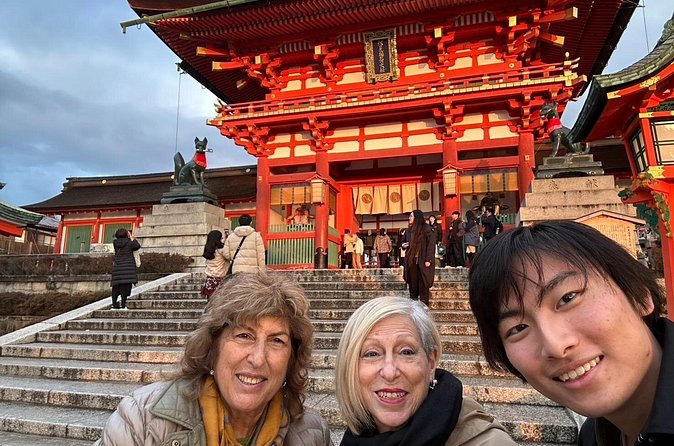
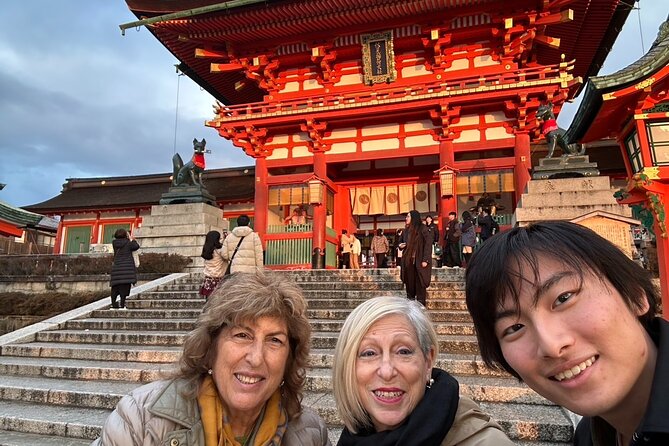
Fushimi Inari Taisha receives about two hours and is included on both the standard Kyoto route and the Kyoto and Nara option. Its famous tunnel of thousands of orange torii gates climbs the wooded slopes of Mount Inari.
This is often the emotional high point of the day. The gates create a strong sense of movement and repetition, and the route changes as you climb. You do not need to reach the summit to understand why the shrine is so popular, but the farther you walk, the more demanding the visit becomes.
Two hours is a sensible allotment. It allows you to pass through the lower gates and continue upward if your legs and schedule allow. Wear comfortable shoes and tell your guide if you need a shorter route. The private format makes it easier to turn around without forcing a whole bus group to change plans.
Fushimi Inari is a working Shinto shrine, not just a scenic corridor. Keep your behavior respectful, stay aware of other people on the path, and listen when the guide explains the setting. The red gates are the visual draw, but the shrine itself gives the walk its meaning.
The Kyoto Route Versus the Nara Option
The standard Kyoto itinerary includes:
- Kinkakuji Temple
- Arashiyama
- Gion
- Fushimi Inari Taisha Shrine
The Kyoto and Nara option usually includes:
- Fushimi Inari Taisha
- Todaiji Temple
- Nara Park
- Arashiyama and the Bamboo Grove
The choice depends on what you want from the day. Choose the standard Kyoto route if this is your first Kyoto visit and you want the city’s best-known mix of temple, shrine, bamboo, and historic district.
Choose the Nara option if Todaiji and Nara Park matter more to you than Gion and Kinkakuji. This version spreads the day across two destinations, so driving time becomes more important. You gain a second historic city, but you give up some Kyoto coverage.
The Nara itinerary is also a sensible choice for families. One family with children ages six and nine combined Nara, Fushimi Inari, the bamboo forest, and Gion in a single day. That is a full schedule, but private transport and a guide can make the transitions easier.
Do not assume every version includes every stop. The stated route changes according to departure city and option. Confirm your pickup location and selected itinerary before the tour begins.
Guide Style and Personal Attention
Riku is the named guide for the experience. His approach is described as warm, flexible, and focused on both major sights and less crowded paths. That matters because Kyoto is more rewarding when you understand what you are looking at, not just when you collect landmark photographs.
The tour is also organized by a young team, and Tatsuya has led some departures. One account describes him helping with mobility needs, honoring food requests, and suggesting a sushi restaurant. Those details point to a useful strength of a private tour: the day can respond to your interests instead of following a fixed script.
English is provided. The feedback includes strong comments on clear English, information at each stop, and handling special requests. Still, guide experiences can vary by person and date, so if you have a specific request, state it when booking or at pickup.
The private format means only your group participates. That is valuable for solo visitors, couples, and families who want to pause, ask questions, or change the pace without explaining themselves to strangers.
Is $480 Good Value for Four People?
At $480 per group of up to four, the full price works out to $120 per person for four people. For two people, it becomes $240 per person, and for a solo booking the cost is much harder to justify.
The value comes from combining a private English-speaking guide, a vehicle, hotel pickup and drop-off, parking, gasoline, and expressway fees. You are paying for time saved and easier movement, not simply entrance to temples.
For a family of four, the price can make sense, especially when compared with arranging several taxis or paying separate transport costs across Kyoto and Nara. It also gives you control over the pace and makes a long sightseeing day less tiring.
For a solo visitor on a tight budget, public transportation will cost less. This tour is best viewed as a convenience purchase, particularly useful when you have limited time, children, mobility concerns, or a strong wish to see several distant areas in one day.
Budget separately for lunch and admission. Lunch is not included. Kinkakuji costs about $5 per person according to the supplied details, and Tenryuji is extra if you choose to enter. The Tenryuji amount is shown inconsistently, so confirm the current fee.
Who Will Get the Most From This Tour?
I would recommend this experience most strongly to:
- Families with children who need flexible timing
- Small groups of up to four sharing the cost
- First-time visitors trying to cover several major sights
- People who prefer a private vehicle to buses and train changes
- Visitors with partial mobility limitations
- Solo visitors who place a high value on personal guidance
It is less suitable if you want a slow temple study day, long meals, or several hours at each attraction. The route is ambitious. You will see a lot, but you need to accept that some stops are introductions rather than extended visits.
The tour also works best when you tell the guide your priorities. If Fushimi Inari is your must-see, protect time for the gates. If you care most about Gion, confirm that you are taking the Kyoto route rather than an Osaka or Nara variation.
Practical Details Before You Book
The experience lasts about eight hours. Pickup is offered, and transportation is provided in an air-conditioned vehicle. Confirmation is received at booking, and the activity is private for your group only.
Most people can participate, and service animals are allowed. The tour is near public transportation, though its main advantage is that you do not need to depend on public transport between the stops.
Free cancellation is available up to 24 hours before the local start time for a full refund. Changes or cancellations made within 24 hours are not accepted or refunded.
The tour is popular enough that it is booked, on average, 111 days ahead. That does not guarantee every date sells out, but it is a good reason to reserve early if you need a particular day, pickup location, or guide.
Should You Book It?
Book this private Kyoto tour if you want to cover major sights efficiently, value personal attention, and like the idea of a car waiting while you walk each site. The strongest reasons are the flexible pacing, included transport costs, and ability to adjust for children or partial mobility needs.
Choose the standard Kyoto route for the broadest first-visit introduction. Choose the Nara option if Todaiji and Nara Park are priorities. Before booking, confirm the exact departure city, route, guide, and extra temple fees.
I would not choose it for a slow, unstructured day. But if you have only one full day and want Kyoto’s signature sights without handling every transfer yourself, the $480 group rate can be a sensible use of time and money.
FAQ
How long does the private Kyoto tour last?
The tour lasts approximately eight hours.
How many people can join for $480?
The price is $480 per group for up to four people.
Is this a private tour?
Yes. Only your group participates in the activity.
Is hotel pickup included?
Yes. Hotel pickup and drop-off are included.
Is transportation included?
Yes. Transportation is provided in an air-conditioned vehicle. Parking, gasoline, and expressway fees are also included.
Which guide leads the tour?
Riku is the named guide for the experience. Tatsuya has also led some departures.
What stops are included on the standard Kyoto route?
The standard Kyoto route includes Kinkakuji Temple, Arashiyama, Gion, and Fushimi Inari Taisha Shrine.
What does the Kyoto and Nara option include?
The Kyoto and Nara option usually includes Fushimi Inari Taisha, Todaiji Temple, Nara Park, and Arashiyama’s Bamboo Grove.
Is lunch included?
No. Lunch is not included in the tour price.
Are entrance fees included?
Not all entrance fees are included. Kinkakuji admission is paid directly on site and is listed as about $5 per person. Tenryuji admission is also separate if you choose to enter.
Can I cancel for a full refund?
Yes, if you cancel at least 24 hours before the experience start time. Cancellations made less than 24 hours in advance are not refunded.
Just added in Kyoto
- Private Cooking Class Udon in Kyoto Japan★ 5.0 · 23 reviews
- Your Private Vacation Photography Session In Kyoto★ 5.0 · 110 reviews
- Kyoto: Zen Meditation at a Private Temple with a Monk★ 5.0 · 25 reviews
- Private Pewter Sake Cup Experience with a Kyoto Artisan★ 5.0 · 31 reviews
- Kyoto Wagashi(Japanese sweets) Cooking Class near Fushimiinari★ 5.0 · 60 reviews
- Kyoto:Family-Friendly Kimono & Yukata Experience at WARGO★ 5.0 · 147 reviews
- Private Guided Traditional Buddhist Cooking in Japan★ 5.0 · 16 reviews
- Kyoto: Gion Geisha District & Sake-in-Hand Walking Tour★ 5.0 · 37 reviews
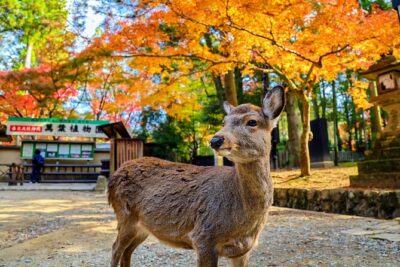
Nara & the Deer Park, compared.
World Heritage Kyoto & Nara Uji Authentic Matcha Experience
Read our review →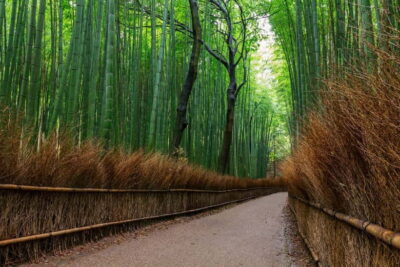
Kyoto/Osaka: Nara, Fushimi Inari Taisha, Arashiyama Bus Tour
Read our review →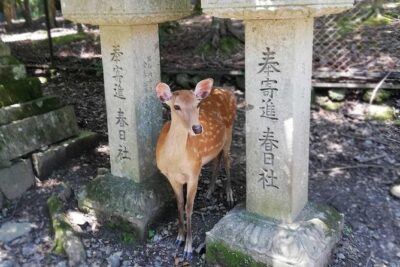
Nara Half Day Trip Walking Tour (Private Option Available)
Read our review →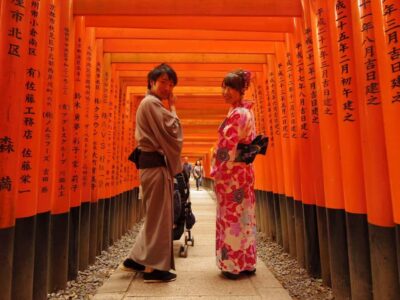
Osaka/Kyoto: Arashiyama, Nara & Fushimi Inari Shrine w/Lunch
Read our review →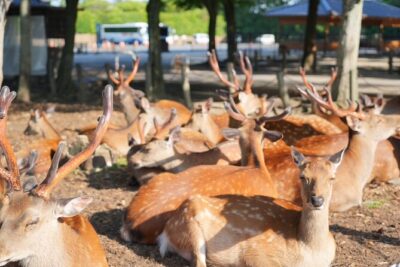
Nara Early Morning Tour (Kyoto or Osaka Departure Available)
Read our review →
Full Day Guided Tour to Kyoto and Nara from Osaka by Van
Read our review →
Browse the lists this tour appears in