
Reviewed · SAMURAI & NINJA EXPERIENCES
Samurai Ninja Museum Asakusa: Kid-Friendly Ninja Training
The best part of this Asakusa activity is that you do not just look at samurai displays. You put on a full ninja outfit, then test your aim with shuriken and a blowgun. The treasure hunt gives younger children a simple mission to follow, while the museum adds useful cultural context.
I like the mix of hands-on fun and short museum visit. I also like the English-speaking instruction, especially with guide Koki, who has been praised for his clear explanations and kind manner. The main drawback is the price: at $56 per person, this is a short activity, and one parent felt it was costly for a five-year-old.
Key points to know before booking
- A full ninja costume makes the experience feel special: You dress for the part rather than simply watching a demonstration.
- Shuriken throwing is run as a competition: This adds a playful challenge for children and adults.
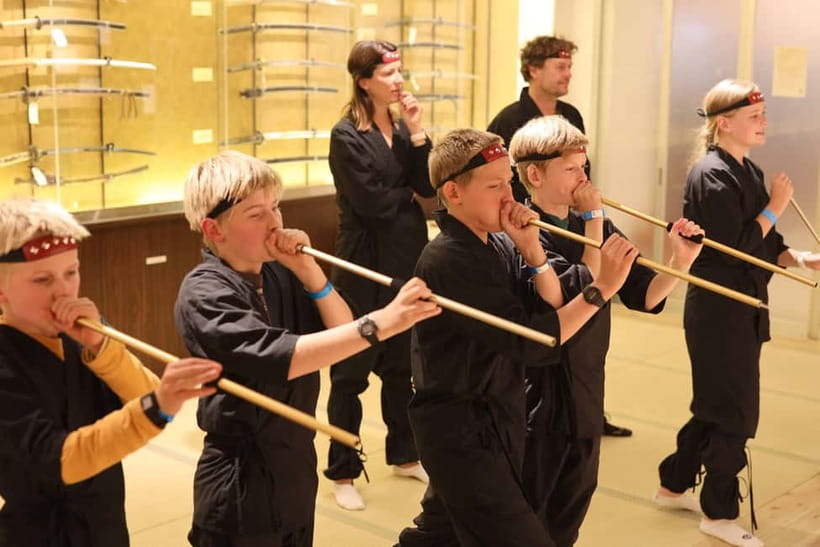
- The blowgun gives the session variety: You practice a second ninja skill instead of repeating one activity.
- The treasure hunt suits younger children: It gives the 75-minute visit a clear purpose and keeps little ones involved.
- Guide Koki is a name worth noting: His friendly style and clear explanations have drawn especially warm praise.
- The group information needs a close look: The activity is described as limited to five participants, while the venue information also gives a maximum of 20 people.
Dressing as a ninja in Asakusa
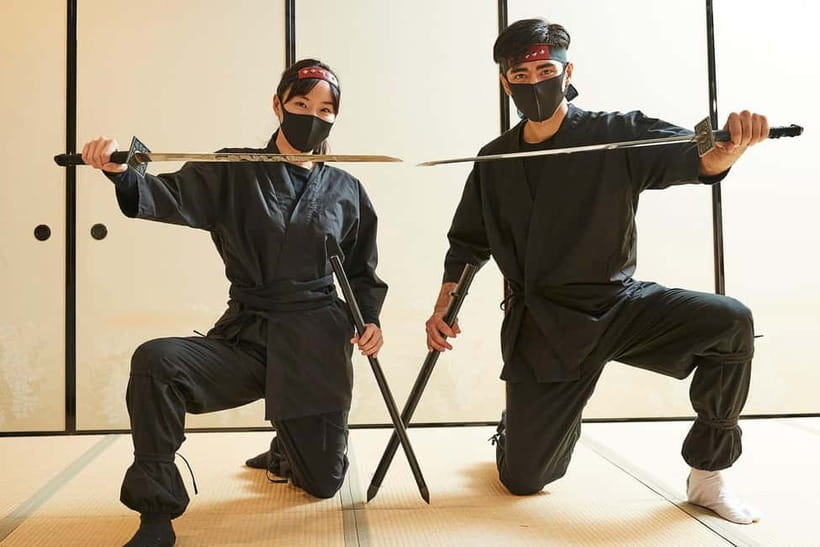
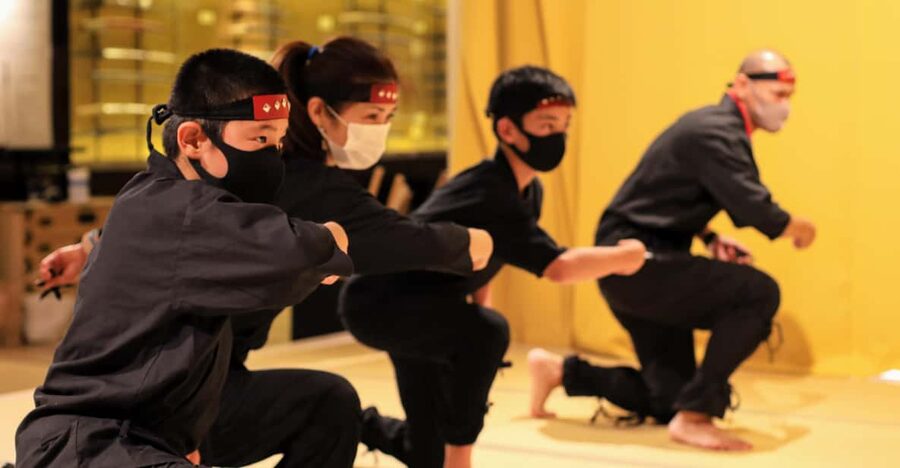
The costume is more than a photo prop. Putting on a full ninja outfit changes the mood at once, especially for children who may not care much about a standard museum visit. You get a clear role to play, and that role carries through the activities that follow.
The outfit also makes the included photo session worthwhile. You can capture a family picture in costume instead of taking the usual street photo in front of a Tokyo sign. Since the photo session is part of the package, you do not need to arrange a separate portrait experience.
You should expect the costume to be the central visual part of the visit, not a detailed theatrical production. The activity focuses on participation, basic techniques, and play. If you want a serious lesson in historical martial arts, this will feel light. If you want a memorable cultural activity with children, the format makes good sense.
The experience takes place at the Tokyo Samurai and Ninja Museum in Asakusa. That location makes it easy to pair the activity with other sightseeing in the district, though no transport or wider Asakusa tour is included in the price.
Other samurai and ninja experiences in Tokyo people book:
- Tokyo: Samurai Restaurant Show Ticket with 2 Drinks
★ 4.5 · 1,307 reviews - Tokyo: Samurai Ninja Museum Guided tour and Experience
★ 4.6 · 1,010 reviews - Tokyo: Samurai Sword & Archery Class from Samurai Descendant
★ 5.0 · 603 reviews
Museum entry before the ninja games
Your entrance ticket includes a complimentary tour of the Samurai and Ninja Museum. This gives the hands-on session some context. You see exhibits connected with samurai and ninja traditions before or around the practical part of the visit, depending on how the session is arranged on the day.
The museum portion is useful because the activities could otherwise feel like costume play alone. A short look at the displays helps you connect the clothing, weapons, and techniques with Japanese culture. The supplied information does not give a detailed gallery list or name individual artifacts, so you should not book this expecting a large museum visit.
At 75 minutes, the overall experience is built around movement and participation. The museum visit is one part of the program, not the whole event. I see that as a plus for families. Children get cultural background without having to spend a long stretch standing quietly in front of cases.
Adults who already know a great deal about samurai history may find the museum content brief. For most first-time visitors to Japan, though, the balance is sensible. You get enough setting to make the activities feel connected to Japan, then plenty of time for the children to do something.
Learning basic ninja techniques with an English guide
The instruction is in English, which matters when the activities involve timing, safety, and aiming. You are not left to guess how the equipment works. The experience promises an introduction to ninja secrets and techniques, but the supplied details do not present it as advanced training.
That is the right way to think about this visit: a guided introduction, not a formal martial arts class. You learn enough to take part in the games, understand the basic idea behind each tool, and enjoy the challenge.
Guide Koki received especially warm praise for being friendly and explaining things well. Another recent booking described the instructor as amazing, while a French-speaking visitor highlighted the good explanations. Those details point to one of the strongest parts of the activity: the tone of the instruction.
A good guide matters here more than a long lecture would. Children need clear directions and a little encouragement. Adults need someone who can keep the session moving without making it feel rushed. The activity’s strongest comments focus on the instructor, so I would place real value on that part of the experience.
Shuriken throwing turns the visit into a contest
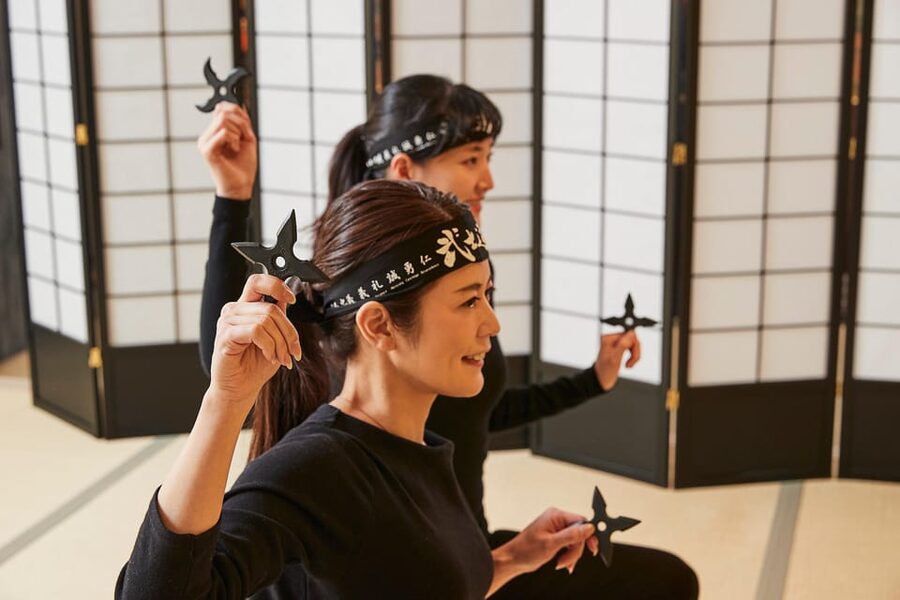
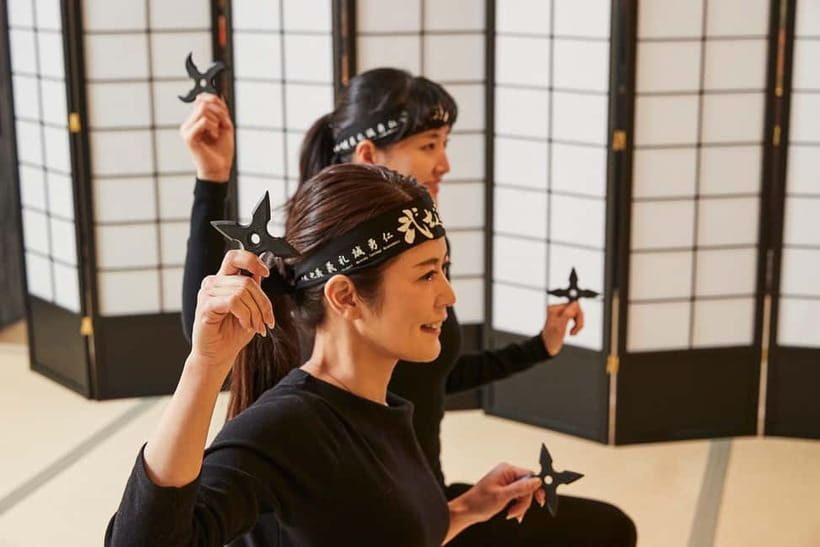
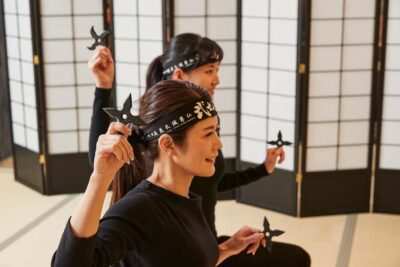
The ninja star throw is likely to be the most memorable activity for many families. You do not merely hold a prop or watch a display. You take part in a competition, which gives the session a simple goal: aim well and see how you compare.
The competitive format works best when children and adults treat it as a game rather than a test of skill. A child who misses the target can still enjoy the attempt, and a parent can join in without taking over. The activity gives everyone a reason to focus for a few minutes.
You should keep your expectations realistic. This is a short cultural activity, not a professional weapons course. The available information does not specify the number of throws, the target setup, or the exact scoring system. What is clear is that shuriken throwing is included and presented as a competition.
I like this part because it creates a shared family memory. Parents often spend much of a Tokyo trip managing bags, snacks, and directions. Here, you have a defined game where the children are the main participants and adults can play along.
Other swordplay and stealth sessions in Tokyo:
- Best Samurai Experience in Tokyo
★ 5.0 · 458 reviews - Ninja Experience (Family Friendly) at Samurai Ninja Museum TOKYO
★ 5.0 · 441 reviews - Tokyo: Samurai Entertainment Night Show in Kanda Shrine
★ 4.6 · 417 reviews - Tokyo Sword Experience – includes Museum Ticket/Ninja Experience
★ 5.0 · 314 reviews
The blowgun adds a second skill
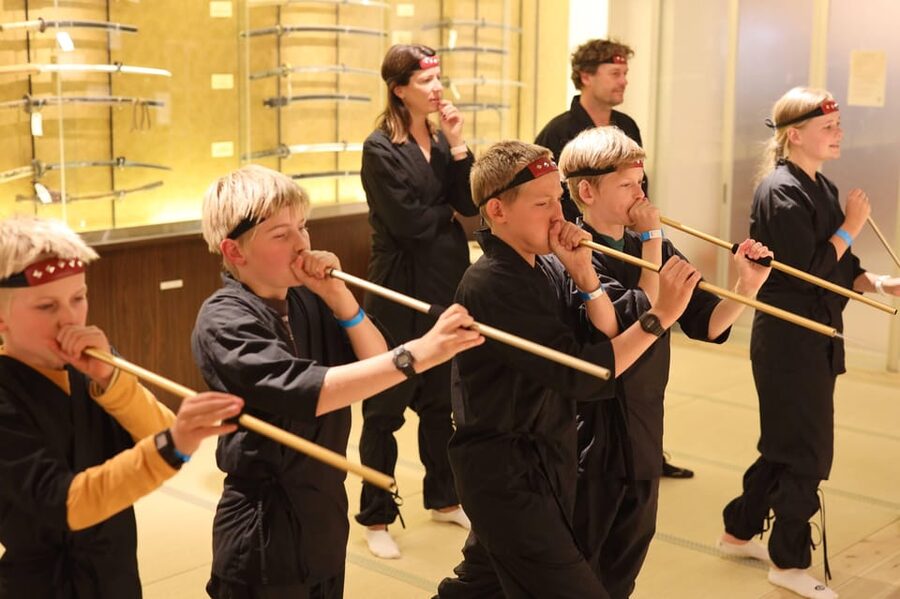
The ninja blowgun keeps the activity from becoming a one-game visit. After trying shuriken, you practice precision in a different way. That change matters for children, since some may prefer careful aiming over throwing.
The blowgun also gives the guide another chance to explain how ninja tools were used in popular culture and tradition. The information provided does not state how many shots each person gets or describe the targets, so you should expect a guided try rather than a long shooting session.
I would treat the blowgun as a highlight for children who like target games. It may be less exciting for anyone expecting dramatic action, but the short format keeps the visit accessible. You get two distinct activities without committing half a day to a theme park attraction.
As with the shuriken, the important point is participation. You are not being asked to watch a staged fight. You are handling the activity yourself under English-language guidance.
The treasure hunt gives children a mission
The ninja treasure hunt is a smart family feature. Children often enjoy a goal more than a general instruction to look around a museum. Searching for treasure gives them a reason to pay attention and keeps the museum portion from feeling separate from the costume and games.
The available details call the treasure hunt especially popular with children, but they do not explain the clues, prizes, or route. I would not promise a large-scale hunt. Think of it as a short activity built into the museum visit.
That simplicity can be an advantage. Younger children do not need a complex puzzle to feel involved. They need something they can understand, a task they can complete, and an adult who can encourage them. The treasure hunt helps create that structure.
Children under three cannot join the ninja experience, although they can enter the venue. This age rule is important for families with toddlers. An adult may need to stay with a child who is too young to take part, so consider your family’s ages before paying for every member.
Is $56 per person a fair price?
At $56 per person, the value depends on what you want from your Tokyo sightseeing. The price includes museum entry, the ninja treasure hunt, the activities, and a photo session. You are paying for a guided, costume-based experience rather than a simple admission ticket.
For a child who loves ninja stories, the full outfit, shuriken contest, blowgun, and treasure hunt may justify the cost. The activity gives you a planned 75 minutes with an English guide, which can be useful on a busy Tokyo day. You do not need to organize equipment or invent games yourself.
The price is harder to defend if only one family member is interested, or if you expect a long museum tour. One parent felt the experience was overpriced for a five-year-old, even while noting that the child enjoyed it and the guide was excellent. That is a fair warning: enjoyment and value are not always the same thing.
I would compare the price with the cost of other paid family activities in Tokyo, not just with a museum ticket. The costume and instruction are the main additions. If you only want to see samurai displays, a shorter visit elsewhere may suit you better. If you want a child-centered activity with photos and games, the package makes more sense.
Timing, group size, and access
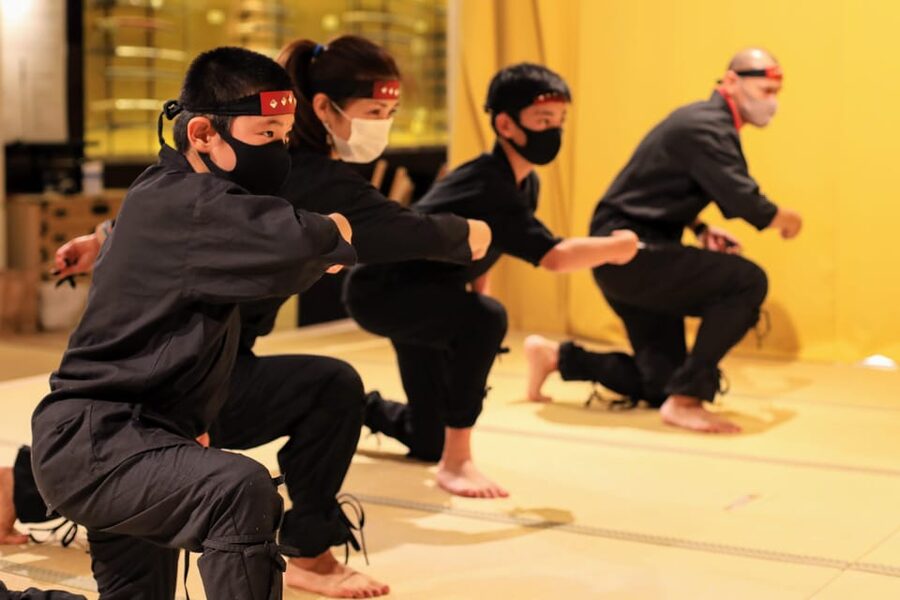
The session lasts 75 minutes. That is long enough for the costume, museum visit, treasure hunt, star throwing, blowgun practice, and photo session, but it is not a full morning program. You can fit it into a larger Asakusa plan without giving up most of your day.
The activity is described as a small group limited to five participants. A separate venue note gives a maximum of 20 travelers, so the published group details are not perfectly consistent. I would use the small-group figure as the more useful expectation for the activity, but confirm the exact setup when booking if personal space matters to you.
Wheelchair access is listed, which makes this option easier for visitors who need an accessible venue. The information does not explain the layout, costume adaptations, or whether every activity can be completed from a wheelchair, so you may want to ask the provider about those points in advance.
The tour is offered with a live English-speaking guide. No other language is listed. That makes it a practical pick for English-speaking families who want direct explanations rather than relying on translated signs.
Free cancellation is available up to 24 hours before the activity for a full refund. You can also reserve now and pay later, which helps if your Tokyo schedule is still changing. Those policies add some useful flexibility, especially on a family trip.
Who will enjoy this most?
I would choose this for families with children old enough to follow instructions and take part in target games. The five-year-old who enjoyed the visit is a helpful reference point, though children vary. A shy child may prefer the treasure hunt and photo session, while a competitive child may focus on the shuriken contest.
It also suits adults who want a light cultural activity rather than a formal lecture. You get samurai and ninja displays, but the main appeal is doing something together. The English guidance and small-group format can make the visit feel more personal than a large attraction.
You may want to skip it if your priority is a major museum collection, advanced martial arts training, or a long historical tour. The available program is short and playful. Its value comes from the combination of costume, games, instruction, and family photos.
The 4.7 rating from 67 reviews reflects a strong overall response, with the clearest praise directed at the guide and the fun factor. The less positive point is price, not the basic concept. That tells me the main decision is simple: decide how much you are willing to pay for a memorable child-focused activity.
Should you book the Asakusa ninja experience?
Book it if you want your children to do something active in Tokyo, especially if they enjoy costumes, contests, and treasure hunts. The full ninja outfit, English instruction, shuriken competition, blowgun, and photo session give the visit a clear identity.
Think twice if $56 feels high for 75 minutes or if you mainly want a serious museum experience. For the best value, bring family members who will actually take part, and check the group size and access details if those points are important to you. For the right family, this is a compact and cheerful way to add hands-on Japanese culture to an Asakusa day.
FAQ
Where is the ninja experience located?
It takes place at the Tokyo Samurai and Ninja Museum in Asakusa, Tokyo, on Honshu, Japan.
How long does the activity last?
The experience lasts 75 minutes.
How much does it cost?
The listed price is $56 per person.
What does the price include?
The price includes entrance, a ninja treasure hunt, and a photo session. The ninja activities and museum experience are part of the program.
Can children under three join?
Children under three cannot join the ninja experience, but they can enter the venue.
Is the experience offered in English?
Yes. It includes a live English-speaking guide.
Is the venue wheelchair accessible?
The activity is listed as wheelchair accessible.
Can I cancel for a full refund?
Yes. You can cancel up to 24 hours in advance for a full refund.
More museums in Tokyo
- Tokyo: teamLab Planets TOKYO Digital Art Museum Entry Ticket
★ 4.6 · 9,779 reviews - Tokyo Studio Ghibli Museum and Ghibli Film Appreciation Tour
★ 4.5 · 421 reviews - Samurai Ninja Museum Asakusa: Samurai Sword Lesson & Tour
★ 4.8 · 306 reviews - Tokyo: Art Aquarium Museum GINZA Entry Ticket
★ 4.5 · 278 reviews
Just added in Tokyo
- The 10 Tastings of Tokyo With Locals: Private Street Food Tour★ 5.0 · 48 reviews
- Small Town in the Big City: Tasting Tokyo’s Kichijoji★ 5.0 · 195 reviews
- Small Town in the Big City: Tasting Tokyo’s Kichijoji★ 5.0 · 16 reviews
- EXCLUSIVE Tokyo Secret: Kichijoji Small-Group Food & Bar Hopping★ 5.0 · 29 reviews
- Explore Kichijoji: Walk Through One of Tokyo’s Beloved Districts★ 5.0 · 21 reviews
- :Tokyo,Shibuya/ Pro Photography in Kimono / English-Friendly★ 5.0 · 26 reviews
- 【R34】Tokyo:Private Daikoku tour in Modified R34★ 4.9 · 92 reviews
- Tokyo:Calligraphy &Make your original folding fan in Asakusa★ 5.0 · 62 reviews
Samurai & Ninja Experiences, compared.
Samurai Ninja Museum Guided tour and Experience
Read our review →
Kendo and Samurai Experience with Uniform and Gear
Read our review →
Samurai Sword Class by Experts in Traditional Arts
Read our review →
Skip the lines Basic Ticket at SAMURAI NINJA MUSEUM KYOTO
Read our review →
Samurai Sword & Archery Class from Samurai Descendant
Read our review →
Browse the lists this tour appears in