
Reviewed · TEA CEREMONY EXPERIENCES
Stunning Private Tea Ceremony: Camellia Garden Teahouse
A private matcha ceremony at Camellia Garden Teahouse gives you something many Kyoto activities cannot: quiet. The 100-year-old property sits across from Ryoan-ji and looks onto two traditional Japanese gardens, so the setting does much of the teaching before your host even begins.
I like the private format, which keeps the hour personal and lets you ask plenty of questions. I also like the hands-on lesson: you do not simply watch tea being prepared, you use the scoop and whisk to make your own bowl. The seasonal sweets from a respected Kyoto confectioner add a tasty introduction.
The main drawback is the price, $118.60 per person for about one hour. That is a serious cost for a short activity, though the private setting and one-to-one attention make it more worthwhile for couples, families, and small groups than for budget-minded solo visitors.
Key points at a glance
- A 100-year-old tea house across from Ryoan-ji: The location connects your ceremony with one of Kyoto’s best-known temple areas.
- Private time for only your party: You do not share the activity with strangers, which keeps the room calm and gives you room to ask questions.
- A real hands-on matcha lesson: You watch the host prepare tea, then use a bowl, scoop, and whisk yourself.
- Seasonal sweets before the ceremony: The sweets come from one of Kyoto’s respected confectioners and pair naturally with the tea.
- Chairs are available in the tearoom: You can take part without sitting on the floor.
- About one hour, with free cancellation up to 24 hours ahead: That makes it easy to fit into a Kyoto day, provided you watch the deadline.
Entering Camellia Garden Teahouse near Ryoan-ji
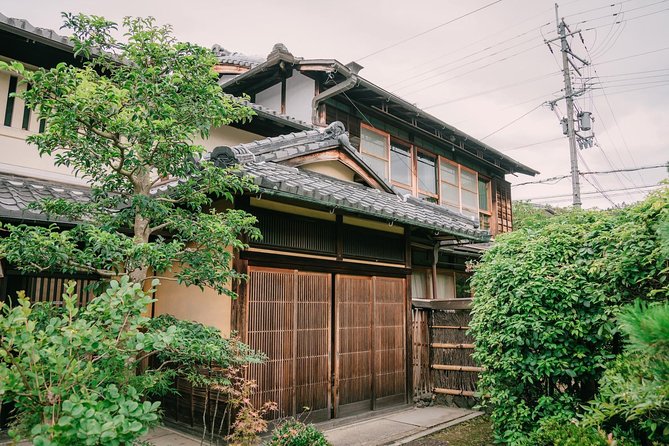
The experience begins at 18 Ryōanji Ikenoshitachō in Kyoto’s Ukyo Ward, directly across the road from Ryoan-ji. This is a useful location if you already plan to visit the temple, though you should allow time to find the entrance and arrive promptly for your scheduled start.
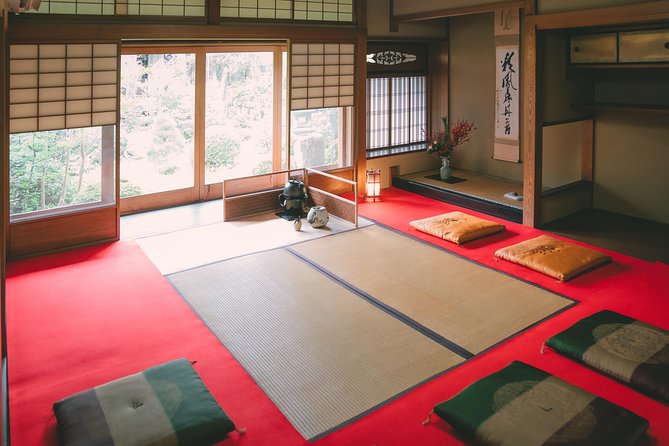
Camellia occupies a 100-year-old property surrounded by two traditional Japanese gardens. The house has long been connected with Ryoan-ji, and that link gives the ceremony a stronger sense of place than a modern hotel activity would.
You first enter a sofa room overlooking the front garden. This opening room matters because it makes the experience less formal at the start. You can settle in, look out toward the garden, and hear an introduction to Japanese tea culture before moving into the more traditional tearoom.
The private arrangement is especially useful here. With only your own party present, you can ask basic questions without feeling that you are slowing anyone down. If you are new to Japanese tea ceremony, that relaxed pace helps you notice the details instead of worrying about getting every movement right.
Other tea ceremonies in Kyoto people book:
- Kyoto: Tea Ceremony in a Traditional Tea House in Kiyomizu
★ 4.9 · 3,519 reviews - Kyoto: Tea Ceremony Ju-An at Jotokuji Temple
★ 4.9 · 3,207 reviews - Kyoto: 45-Minute Tea Ceremony Lesson Experience
★ 4.3 · 2,378 reviews
Seasonal sweets and the story of matcha
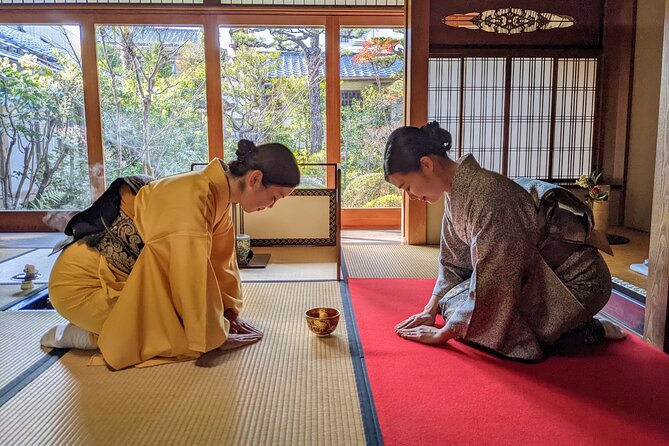
The opening talk covers the history and culture surrounding tea in Japan. You also receive seasonal sweets from one of Kyoto’s renowned confectioners.
These sweets are not just a snack between activities. In a tea ceremony, the sweetness prepares your palate for the bitter, grassy taste of matcha. Having them at the start gives you a clearer sense of why the food and tea are served together.
The sweets have been a highlight for many people who enjoyed this experience, particularly when paired with the matcha. The tea and mochi are described as delicious, but the exact sweet can vary with the season. Do not expect the same item on every visit.
Your host also explains tea-making rituals and the place of matcha in Japanese culture. This part is conversational rather than a long academic lecture. The best use of the time is to ask questions. You might ask about the tools, the order of the movements, or why particular actions are performed with such care.
The English guidance has been praised for being clear and polite. Yumiko is one host specifically named by people who attended, while another review describes a young male host who represented the spirit of the ceremony very well. The person leading your session may vary, but the format is designed around explanation and questions.
Watching the ceremony beside the main garden
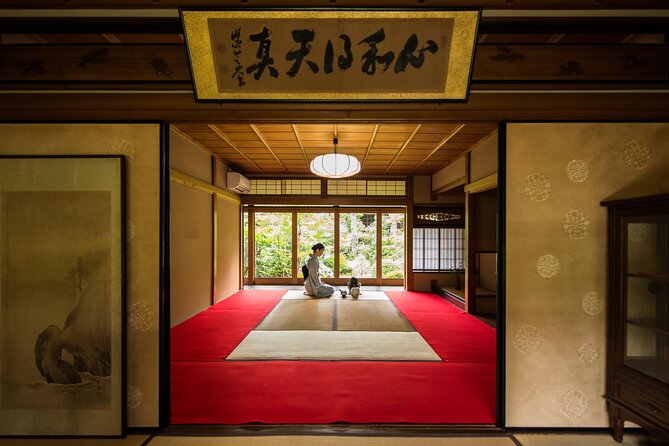
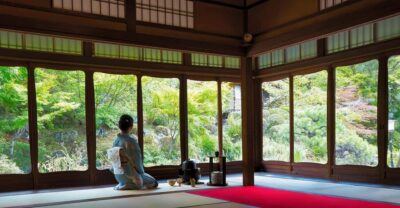
After the introduction, your host moves you into the tearoom. Here, the main garden becomes the backdrop for an authentic tea ceremony.
This change of room is one of the strongest parts of the activity. The sofa room is comfortable and conversational, while the tearoom gives you the formal setting needed to understand the ceremony’s gestures. The garden view adds a visual focus without requiring you to leave the property.
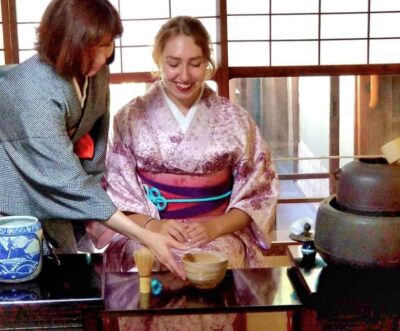
Your host prepares and serves the tea while explaining the ritual. Pay attention to the small movements: the handling of the scoop, the whisk, and the bowl; the order of preparation; and the calm rhythm of serving. The point is not speed. The ceremony asks you to focus on a sequence of simple actions and the moment in front of you.
You are served matcha before making your own. That first bowl lets you taste the finished drink and observe the correct technique without pressure. Matcha has a distinct flavor, and the seasonal sweet helps balance its bitterness.
The ceremony is intended to be tranquil, but it is not a silent performance where you must sit perfectly still for an hour. You have time to ask questions and take photographs. The private booking also means you can enjoy the setting without the interruptions that come with a large shared group.
Making your own bowl of matcha
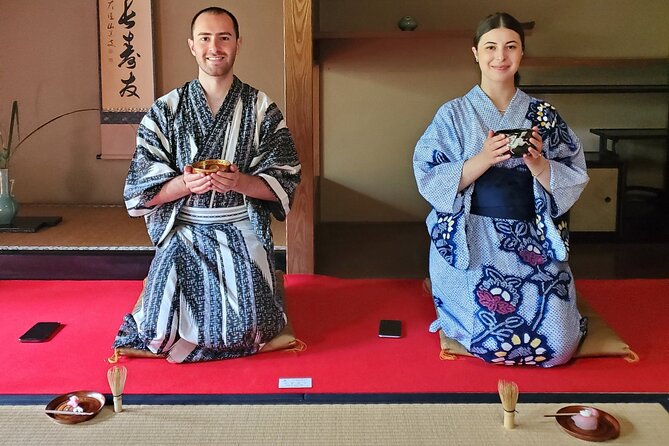
The hands-on section is where the experience becomes more than a demonstration. Tea bowls, tea scoops, and tea whisks are provided so you can prepare your own matcha.
Your host explains how to use the tools, then gives you a chance to try. You will not simply receive a pre-made drink and leave with a few photos. You take part in the preparation, which helps you understand how much care goes into a bowl of tea.
Do not worry about producing a perfect froth on your first attempt. The value is in learning the process and feeling the weight of the tools in your hands. You can ask for help, repeat a movement, and compare your bowl with the one prepared by the host.
This is also a good part of the activity for families and couples. Each person can have a turn, and the private room makes it easier to laugh at small mistakes without an audience. Children may appreciate the practical element more than a purely historical talk, though the supplied information does not specify an age requirement.
The hour passes quickly. One person described the experience as feeling much shorter than an hour, which makes sense because the time includes the introduction, sweets, a demonstration, serving, and your own preparation. If you want a long workshop with repeated practice, this is not that. It is a compact introduction to tea ceremony.
Other tea rooms and ceremonies in Kyoto:
- Kyoto: Table-Style Tea Ceremony at a Kyo-Machiya
★ 4.9 · 1,211 reviews - Kimono Tea Ceremony at Kyoto Maikoya, NISHIKI
★ 5.0 · 911 reviews - Kyoto: Arashiyama Bamboo Forest, Monkeys, Matcha & Temple Tour
★ 5.0 · 759 reviews - Kyoto: Tea Museum Tickets and Matcha Grinding Experience
★ 4.9 · 739 reviews
Why the private format matters
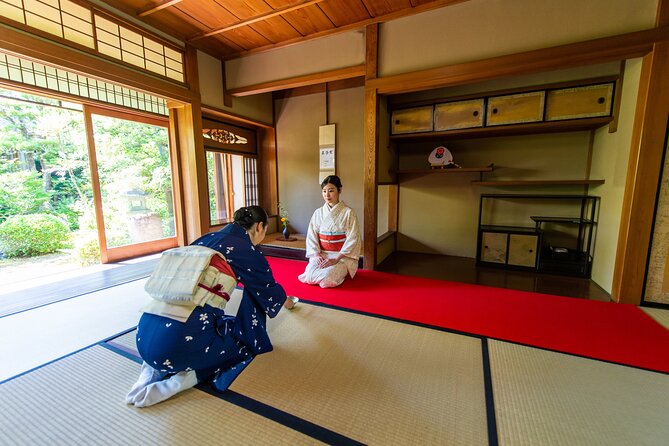
Kyoto has many tea experiences, but group size changes the mood. In a shared activity, you may have less time to ask questions, and the room can feel more like a scheduled demonstration. Camellia’s private format gives your party the whole session.
That privacy is the main reason to consider the price. At $118.60 per person, this is not an inexpensive way to drink matcha. You are paying for the house, the gardens, the host’s time, the sweets, the equipment, and the fact that strangers are not joining your ceremony.
I think the value is strongest for a special occasion or for people who care about Japanese customs and want a quieter setting. A couple may appreciate the calm atmosphere. A family can move at its own pace. A small group can discuss the ritual afterward without being rushed out by the next large booking.
The value is weaker if you only want to taste matcha or take a quick cultural photo. Kyoto offers less costly ways to do that. This activity makes sense when the private setting and direct instruction matter to you.
Group discounts are available, so check the current total for your party rather than assuming the per-person rate tells the whole story. The activity is booked by the group, and only your party participates.
Seating, photographs, and comfort
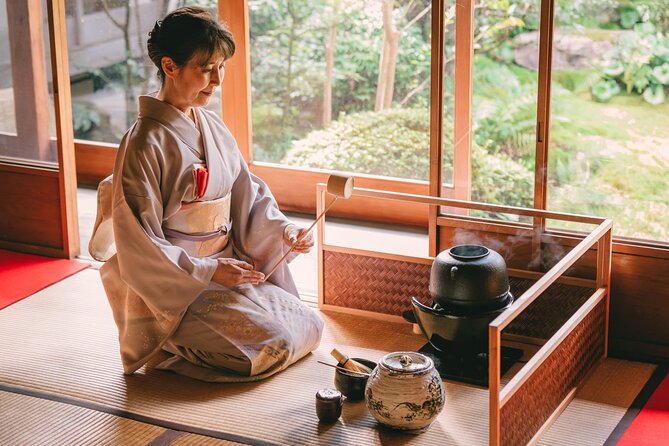
Traditional tea ceremony often involves sitting on the floor, which can be uncomfortable for people with knee, hip, or back problems. Camellia has chairs available for anyone who prefers not to sit on the floor.
That detail is easy to overlook, but it can decide whether the experience is enjoyable. Mention your preference when you arrive so the host can arrange the seating. The available information does not describe a fully wheelchair-accessible setup, so anyone with detailed mobility needs should confirm directly before booking.
You have time to take photographs during the ceremony. Be respectful of the atmosphere and follow your host’s guidance about when to use your camera. The garden, the tools, and the tea room provide natural subjects without requiring a staged photo session.
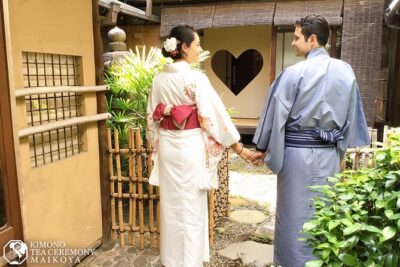
Kimono rental is not available at this location. The information mentions a kimono dresser in connection with the experience, but the included services clearly exclude kimono rental, so do not book expecting to dress here.
Service animals are allowed, and the property is near public transportation. The meeting point is also the end point, so you do not need to arrange a separate return transfer.
Fitting it into a Kyoto day
The activity lasts about one hour. That short length makes it easy to pair with a visit to Ryoan-ji, since the teahouse is across the road from the temple.
You could schedule the tea ceremony before or after visiting the temple, but leave enough time for walking between the entrance, the temple grounds, and the teahouse. The exact time you choose will affect the feel of the day. A morning ceremony may suit you if you want a quiet start, while an afternoon booking can provide a calm break after sightseeing.
The private format also protects the experience from the usual Kyoto rush. You can step away from busy streets and spend an hour focused on tea, gardens, and conversation. Still, this is not a substitute for visiting Ryoan-ji itself. The ceremony gives you a connection to the temple area, but the temple admission and visit are separate.
Confirmation is provided when you book, and mobile tickets are accepted. The activity requires good weather, and if poor weather causes cancellation, you are offered another date or a full refund. That policy matters when planning a tightly packed Kyoto itinerary.
Free cancellation is available up to 24 hours before the start time. Changes or cancellations inside that window are not accepted for a refund, so check the local start time carefully.
Who will enjoy this ceremony most
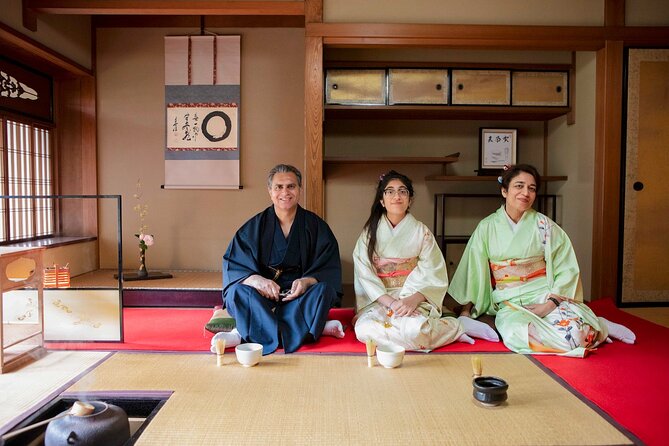
I would recommend Camellia to you if you want a quiet cultural activity with direct instruction. It suits people who enjoy learning by watching first and trying for themselves afterward.
It is particularly good for:
- Couples looking for a calm, private Kyoto experience
- Families who want an activity with a practical element
- Small groups who prefer not to share a room with strangers
- First-time visitors who want an introduction to matcha and tea ceremony
- People already visiting Ryoan-ji who want to add a nearby cultural activity
- Anyone who prefers chairs rather than sitting on the floor
You may want to skip it if your budget is tight or if you are looking for a longer tea-making course. The one-hour schedule gives you a thoughtful introduction, not advanced training.
The experience also suits you if you like asking questions. The hosts have been described as friendly, polite, clear in English, and well prepared to explain the ceremony. That personal contact is more valuable here than a long list of facts.
Should you book Camellia Garden Teahouse?
Book it if you want privacy, a beautiful traditional setting, and the chance to make your own matcha. The 100-year-old house across from Ryoan-ji, the two gardens, seasonal sweets, and calm instruction make this more meaningful than a quick cup of tea.
At $118.60 per person, I would not call it a bargain. I would call it a focused cultural experience with a premium for privacy. The price makes the most sense when you are traveling as a couple, family, or small group and want a peaceful hour that fits neatly beside Ryoan-ji.
Choose it for the setting and the personal attention, not just for the drink. If that sounds like your kind of Kyoto memory, this private ceremony is a strong choice.
FAQ
Where does the tea ceremony take place?
It takes place at Tea Ceremony Camellia GARDEN, 18 Ryōanji Ikenoshitachō, Ukyo Ward, Kyoto, 616-8003, Japan.
How long is the experience?
The ceremony lasts approximately one hour.
Is the ceremony private?
Yes. Only your own party participates in the activity.
What is included in the activity?
Tea bowls, tea scoops, and tea whisks are provided so you can make your own bowl of matcha. Seasonal sweets and tea are also part of the experience.
Can I sit on a chair instead of the floor?
Yes. Chairs are available for people who prefer not to sit on the floor.
Is kimono rental included?
No. Kimono rental is not available at this location.
Can I cancel for a full refund?
Yes, if you cancel at least 24 hours before the experience start time. Cancellations or changes made less than 24 hours ahead are not refunded or accepted.
What happens if poor weather cancels the ceremony?
You will be offered a different date or a full refund.
More gardens in Kyoto
- Kyoto Arashiyama Walking Tour: Bamboo, Monkeys, Gardens & Secrets
★ 5.0 · 1,216 reviews - Kyoto Zen Meditation & Garden Tour at a Zen Temple with Lunch
★ 5.0 · 441 reviews - Kyoto Arashiyama Bamboo forest & Garden Half-Day Walking Tour
★ 5.0 · 413 reviews - Kyoto: Zen Garden, Zen Mind (Private)
★ 5.0 · 126 reviews
Just added in Kyoto
- Private Cooking Class Udon in Kyoto Japan★ 5.0 · 23 reviews
- Your Private Vacation Photography Session In Kyoto★ 5.0 · 110 reviews
- Kyoto: Zen Meditation at a Private Temple with a Monk★ 5.0 · 25 reviews
- Private Pewter Sake Cup Experience with a Kyoto Artisan★ 5.0 · 31 reviews
- Kyoto Wagashi(Japanese sweets) Cooking Class near Fushimiinari★ 5.0 · 60 reviews
- Kyoto:Family-Friendly Kimono & Yukata Experience at WARGO★ 5.0 · 147 reviews
- Private Guided Traditional Buddhist Cooking in Japan★ 5.0 · 16 reviews
- Kyoto: Gion Geisha District & Sake-in-Hand Walking Tour★ 5.0 · 37 reviews
Tea Ceremony Experiences, compared.
Tea Ceremony in a Traditional Tea House in Kiyomizu
Read our review →

World Heritage Kyoto & Nara Uji Authentic Matcha Experience
Read our review →
Arashiyama Bamboo Forest, Monkeys, Matcha & Temple Tour
Read our review →Browse the lists this tour appears in