
Reviewed · SUSHI-MAKING CLASSES
Sushi Making Osaka Roll and Authentic Japanese Sushi Class
Osaka is a fine place to learn sushi, but this class is about more than rolling rice in seaweed. You’ll make maki rolls and nigiri, hear how sushi developed, and sit down to eat your own work. I like the ready-to-use ingredients and the easy location near Dotonbori and Shinsaibashi. I also like that instructors such as Reika, Fuko, Fujiko, Aina, and Arisa have been praised for patience, humor, and clear demonstrations.
The main thing to consider is the pace. The advertised class lasts about one hour and 40 minutes, yet the hands-on work, photos, eating, and cleanup can feel tightly packed. One class member felt there was too much history and not quite enough making time, while another found the session rushed. Arrive early, note dietary needs when booking, and do not expect a long, leisurely meal.
Key points at a glance
- Make both maki and nigiri: You learn two basic sushi styles rather than only assembling one simple roll.
- Ready-prepped ingredients: The class spends its time on shaping, cutting, and presentation instead of washing and chopping.
- Near Dotonbori: The meeting point at 1-chōme-16-20 Higashishinsaibashi is convenient for pairing with central Osaka sightseeing.
- English-speaking instruction: Staff explain the steps and answer sushi questions in English.
- A family-friendly activity: Children and first-time cooks can take part, with instructors offering help around the table.
- A real meal at the end: You eat the sushi you prepare, with enough food for many people to treat the class as lunch.
Making sushi in central Osaka
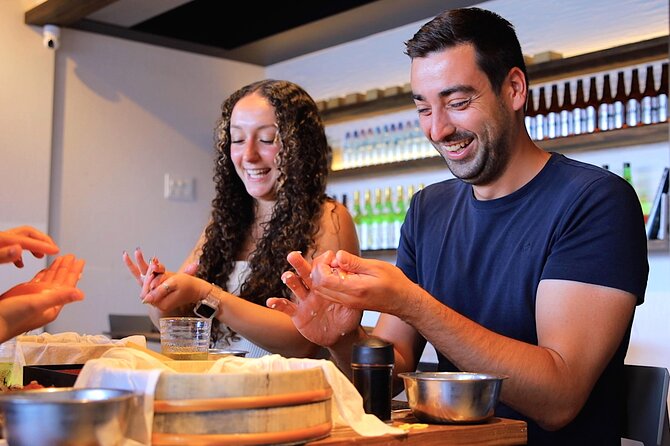
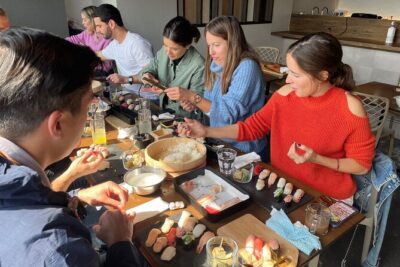
This is a practical cooking class with a cultural side. You are not simply watching a chef prepare a plate and then taking a photo. You work through the process yourself, which gives you a better feel for why professional sushi looks so simple and is harder to copy than it seems.
The class takes place at Sushi Making Osaka, near Dotonbori and Shinsaibashi. One detailed description places it about a block from Dotonbori, in a small room on the third floor. The location is useful because you can fit the class around a day of shopping, canal walks, and food stops in central Osaka.
The address is 1-chōme-16-20 Higashishinsaibashi, Chuo Ward, Osaka, 542-0083. The place is near public transportation, but the room can be tricky to locate. I would allow extra time, especially if you are arriving for a morning session or meeting the class during a busy evening in the Shinsaibashi area.
You meet at the class location and return there when the activity ends. There is no hotel pickup or drop-off, so you handle your own route to Higashishinsaibashi. A mobile ticket makes the entry simple, but it does not remove the need to find the building and go to the correct floor.
Other classes behind the counter in Osaka:
- Osaka Sushi Making Experience
★ 5.0 · 400 reviews - Osaka Sushi Making Class – Hands-On Nigiri & Rolls (Same-Day OK)
★ 5.0 · 352 reviews - Osaka: Roll and Authentic Sushi Making Class in Dotonbori
★ 4.9 · 239 reviews
What happens during the 1-hour-40-minute class
The ingredients are prepared before you arrive. That is a small detail with a useful payoff. You can focus on the sushi itself rather than spending the short session measuring rice, chopping fillings, or organizing a kitchen station.
The instructor introduces the class and explains what you will make. The teaching includes some background on sushi in Japan, and several instructors have been praised for adding humor and cultural context without making the class feel stiff. Fuko, for example, has been singled out for a brief but useful explanation of sushi history, while other instructors have kept the room lively with an energetic teaching style.
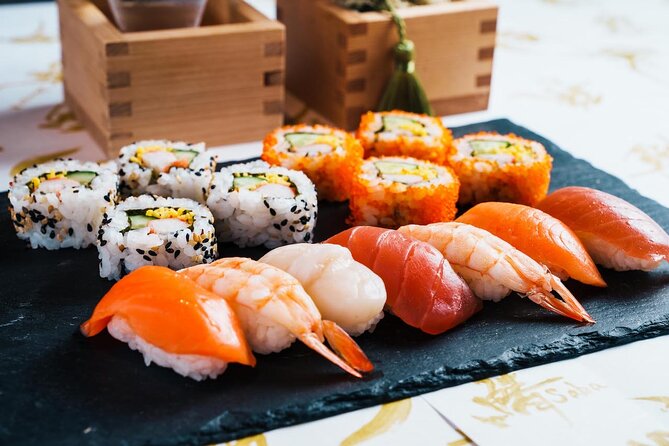
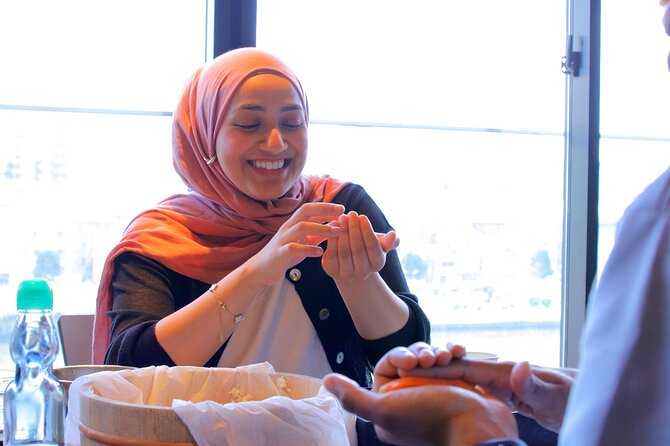
After the introduction, you begin the hands-on work. You learn how to form nigiri, the familiar hand-shaped rice topped with fish or another ingredient. You also prepare a maki roll, the style wrapped in seaweed and cut into pieces.
The appeal here is repetition. You are shown the motion, try it yourself, and receive help if your rice is too loose, your roll is uneven, or your pieces do not look like the neat examples on the table. Making sushi in a group means you see other people working through the same small problems. That makes the class less intimidating for a first attempt.
The exact amount you produce depends partly on your speed. One detailed account describes one maki roll and roughly four to eight pieces of nigiri. That is enough to make the activity feel like a meal rather than a tiny tasting, though the faster you work, the more pieces you may finish.
Once the sushi is ready, you eat it at the same location. You are not preparing food for an unknown dining room or handing your work to someone else. The satisfaction comes from seeing the finished pieces in front of you and knowing that you made them.
Maki rolls and nigiri, two different skills
Learning both styles gives the class more value than a roll-only workshop. Maki is often the easier form to recognize because the ingredients are enclosed in seaweed and sliced into rounds. The rolling motion still takes practice, particularly when you are trying to keep the filling centered and the rice evenly spread.
Nigiri is less forgiving. The rice must hold together without becoming a heavy block, and the topping needs to sit neatly on top. The instructor’s demonstrations and table-side corrections matter here. You begin to understand why a professional piece can look effortless while a first attempt may be a little lopsided.
The point is not to leave as a sushi chef. You leave with basic methods you can repeat at home, plus a better sense of proportion and handling. One person found the instruction useful enough to reproduce the techniques later, while another praised the balance of explanation, practice, and tasting.
The class can also answer the questions that come up when you are eating sushi in Japan. You can ask about the ingredients, the forms you are making, and the customs connected with the food. The cultural portion is not the main event, but it helps connect the cooking to Osaka and to Japanese dining traditions.
The instructors make the difference
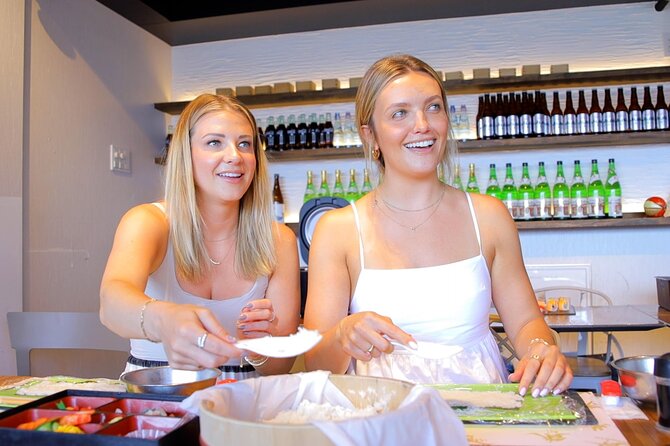
The strongest feature of this experience is the teaching. Names attached to individual sessions include Reika, Fuko, Fujiko, Aina, Arisa, Matty, Yui, and Ina. You may not have one of these exact instructors, but the class is built around English-speaking staff who guide people through the process.
Descriptions of the instructors repeatedly point to patience, energy, and a willingness to help. That is especially important when children are at the table or when someone has never handled sushi rice before. A family can work at its own level while still taking part in the same activity.
The tone seems more social than formal. You can ask questions, watch the people beside you, and enjoy a few laughs when the first roll does not come out perfectly. If you prefer a quiet, private lesson with one chef, this group format may not be your ideal choice.
The maximum group size is 20 people. That is large enough for a lively room and small enough for an instructor to move around the table, though individual attention may vary when the class is full. The best instruction comes when you ask for help rather than waiting silently for someone to notice your technique.
English is the working language, which removes a major barrier for international visitors. Still, one person found an instructor’s accent took patience to follow. If you miss a step, ask for a repeat or watch the demonstration closely before starting.
Same base, a different sort of day:
- Osaka Go Karting Tour with Funny Costume
★ 5.0 · 2,658 reviews - Osaka Castle: Museum and Tower Entry Ticket
★ 4.5 · 2,380 reviews - Osaka: Shinsekai Food Tour with 13-15 Dishes at 5 Eateries
★ 4.8 · 2,204 reviews - Osaka Food Tour: 13 Dishes at 5 Local Eateries
★ 5.0 · 2,149 reviews
A good choice for families and first-time cooks
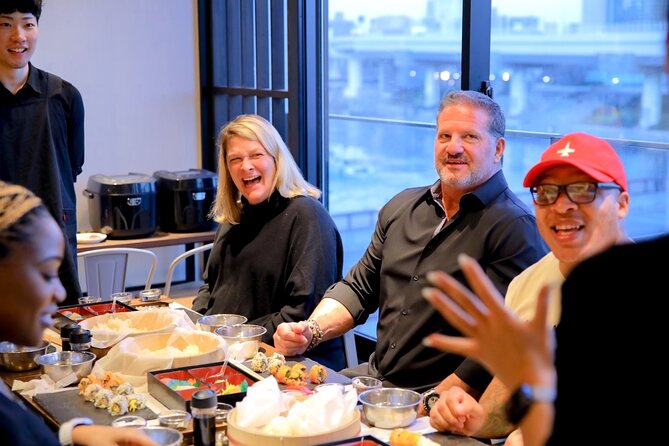
No cooking experience is required. That makes this a sensible choice for a family activity, a first food class, or a break from Osaka’s restaurant routine. Children have been able to take part with help from patient instructors, and teenagers can usually handle the hands-on work without finding it too childish.
The class also suits couples and small groups who want something more active than another meal. You create a shared memory, but the activity has a clear result: food on the plate. That is a stronger payoff than a workshop where you only watch a demonstration.
You should keep your expectations practical. This is an introductory group class, not professional culinary training. You will learn useful foundations, but the limited time means there is no extended practice with knife skills, fish preparation, rice cooking, or advanced presentation.
The ingredients are supplied, and the meal is included. That makes planning easy, especially if you are moving through Osaka on a tight sightseeing schedule. You do not need to shop for supplies or decide where to eat immediately afterward.
Dietary notes and food handling
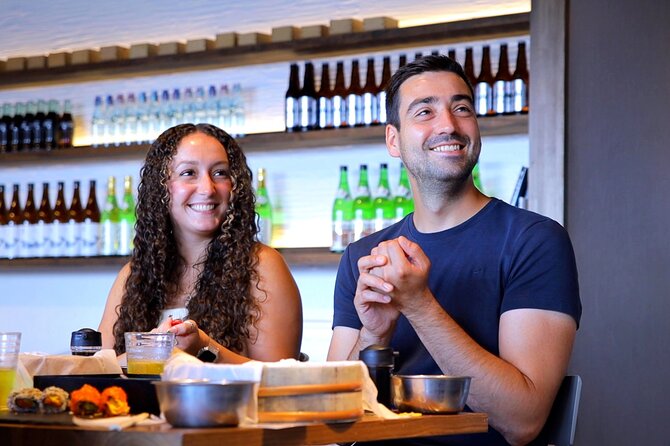
Vegetarian and fish options are available, and one session included tasty choices for both. Still, you should record dietary preferences when you book. A specific complaint involved a shrimp allergy or preference that could not be changed during the class because it had not been noted in advance.
Do not assume every ingredient can be swapped on the spot. If you do not eat shrimp, fish, or another listed ingredient, provide that information before the activity. The supplied information does not promise that every diet can be accommodated, so ask before booking if your needs are strict.
One person also raised a concern about fish sitting out at room temperature for much of the session and wished it had been kept over ice. This is worth noting if food handling is a major concern for you. The class is described as clean and well run, but the available information does not give a detailed food safety procedure.
The room lighting may not be ideal for photographs. If taking pictures is important, bring your phone and take a few early shots before the table becomes crowded with ingredients and finished sushi. You may not have much spare time once the group starts making and eating.
Is the $31.01 price good value?
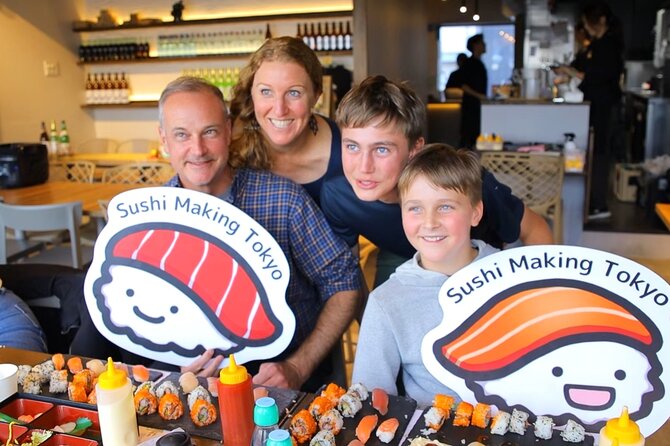
At $31.01 per person, the class is reasonably priced for a central Osaka activity that includes instruction, ingredients, and a meal. You are paying for more than the raw food. The price also covers an English-speaking instructor, a prepared workspace, guidance, and a structured activity that fits into a short day.
The value is strongest if you want to learn by doing. A meal at a sushi restaurant might cost a similar amount or more, but it would not give you the chance to make maki and nigiri or ask questions about the process. On the other hand, if you mainly want a relaxed meal and a drink, a restaurant may suit you better.
Alcohol is not included. One person wished there had been sake or beer during the class, but the stated inclusions are the instructor, ingredients, and the sushi meal. Treat it as a cooking lesson with food, not a drinks experience.
The amount of sushi appears generous for the time. One person reported making a maki roll and about four to eight nigiri, while another found there was enough food to count as lunch. That makes the price easier to justify for families, since you are not paying for a separate meal immediately afterward.
Timing, pace, and the best way to plan your visit
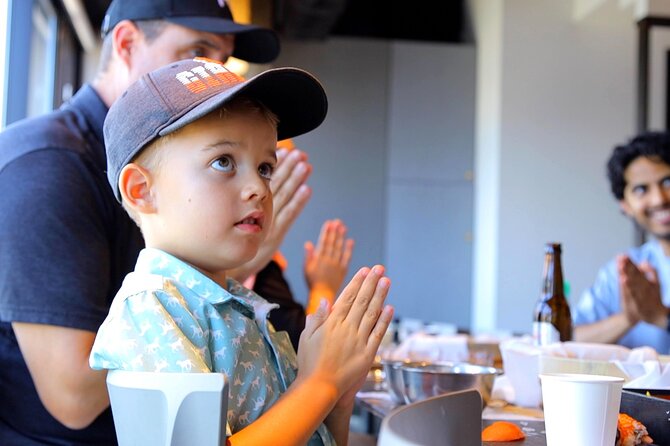
Morning, afternoon, and evening sessions are offered. The choice depends on your Osaka schedule, but the location makes the class easy to pair with time in Dotonbori or Shinsaibashi.
I would not schedule a major attraction with a strict entry time immediately afterward. The class is listed at about one hour and 40 minutes, and you also need time to find the building. Add a little margin for the walk, especially if you want to take photos or finish your food without watching the staff prepare for the next group.
The schedule can feel brisk. One person wanted more time for making and eating, while another found the pace just right. The difference may come down to how quickly you work, how many photos you take, and whether the class is full.
To get the most from the session, arrive ready to follow instructions and keep moving. Take photos at natural pauses rather than stopping the whole process. Ask questions while the instructor is nearby, and do not be shy about requesting help with your first roll or nigiri.
Free cancellation is available if you cancel at least 24 hours before the start time. Cancellations or changes made inside that window are not accepted for a refund. The experience allows service animals, and confirmation is provided at booking.
Who should book this Osaka sushi class?
I would recommend it to first-time sushi makers, families with children, couples, and anyone who wants a hands-on food activity near the center of Osaka. It is also a good choice if you want an English-language class without giving up much of your day.
You will get the most from it if you enjoy learning a simple skill, eating what you make, and sharing a table with other people. The class is friendly and active rather than polished and formal.
I would think twice if you need a private lesson, have strict dietary requirements that cannot be adjusted, or want a long meal with plenty of time for drinks and photographs. The class can feel hurried, particularly when cleanup begins as some people are still eating.
For most visitors, the combination of maki, nigiri, cultural background, central location, and included meal makes this a worthwhile Osaka add-on. Book it when you want to put your hands to work, not just order another plate of sushi.
FAQ
Where does the sushi-making class meet?
It meets at Sushi Making Osaka, Cooking Class in Japan, at 1-chōme-16-20 Higashishinsaibashi, Chuo Ward, Osaka, 542-0083, Japan.
How long does the class last?
The activity lasts approximately one hour and 40 minutes.
What types of sushi will I make?
You will learn to make maki rolls and nigiri sushi.
Is the class taught in English?
Yes. An English-speaking instructor leads the class and answers sushi-related questions.
Are ingredients included?
Yes. The ingredients used in the cooking class and the meal are included.
Is hotel transportation provided?
No. Hotel pickup and drop-off are not included. You travel to and from the meeting point yourself.
Can beginners and children take part?
Yes. No cooking experience is required, and the class is described as suitable for beginners and families.
What is the cancellation policy?
You can cancel at least 24 hours before the start time for a full refund. Cancellations or changes made less than 24 hours before the start time are not accepted for a refund.
Just added in Osaka
- Osaka Temple Cool Foot Bath & Matcha Experience〈45min〉★ 4.9 · 82 reviews
- Osaka: Mind & Spirit Balance Temple Reiki Healing★ 5.0 · 41 reviews
- Osaka: Samurai Training Experience KENDO in Osaka★ 5.0 · 111 reviews
- Full Day Kyoto Tour : Bamboo Forest, Golden Temple, Fushimi Inari★ 5.0 · 84 reviews
- Osaka: Minoh, Katsuoji Temple, & Minoh Falls Full-day Tour★ 4.9 · 172 reviews
- OSAKA NIGHT FUSION Japanese Taiko Kabuki Samurai Dance Show★ 4.8 · 155 reviews
- Ramen and Gyoza Cooking Class in Osaka★ 5.0 · 202 reviews
- Osaka: A Modern Samurai, Kabuki, Taiko, & Dance Show★ 4.5 · 66 reviews
Sushi-Making Classes, compared.
Sushi Making Tokyo Roll and Authentic Japanese Sushi Class
Read our review →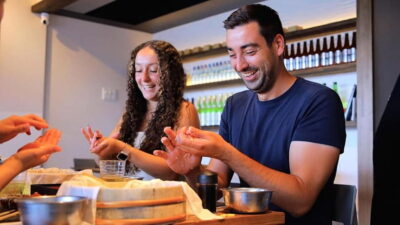
Roll and Authentic Sushi Making Class in Asakusa
Read our review →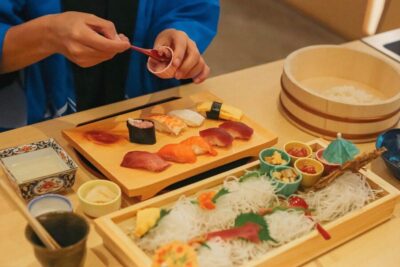
Sushi Making Class in a Happi Coat near a Famous Spot
Read our review →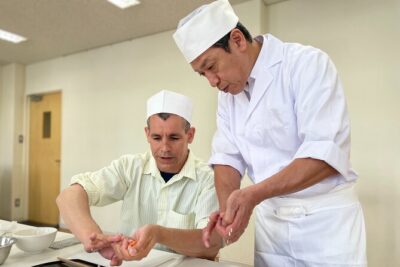
Tokyo Sushi Making Class in Tsukiji with Professional Chef
Read our review →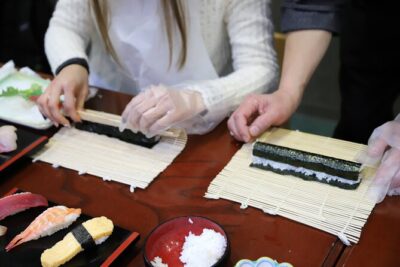
Tsukiji Fish Market Guided Tour and Sushi Making with Pro Chef
Read our review →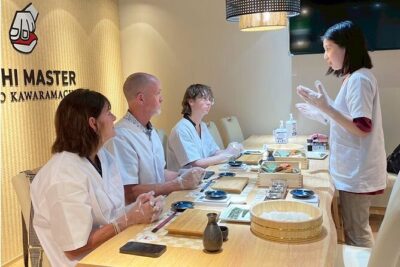
Sushi Making in Kyoto! Same-day bookings welcome!
Read our review →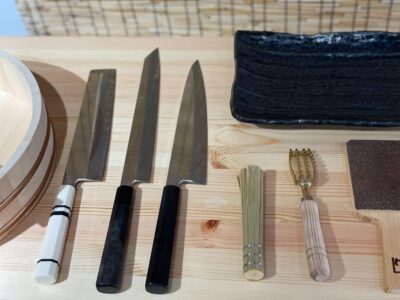
Tsukiji Fish Market Sushi Making Class with Pro Chef
Read our review →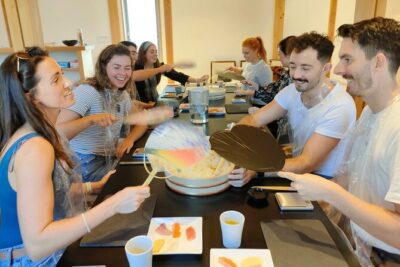
The Original Small-Group Sushi Making Class in Kyoto
Read our review →Browse the lists this tour appears in