
Reviewed · TSUKIJI & TOYOSU FISH MARKET TOURS
Tokyo: Tsukiji Fish Market Sushi Making Class with Pro Chef
Tsukiji is one of Tokyo’s best places to learn sushi because the lesson takes place inside the market district, not in a generic cooking studio. You’ll watch a professional chef break down fish, learn why Japanese knives matter, and make four kinds of nigiri plus one maki roll with fresh ingredients.
I like the hands-on teaching and the small-group feel reported by many participants. I also like the useful finish: you eat your own sushi, compare it with the chef’s faster, neater version, and get tea and dashi soup. The main drawback is practical: the classroom is on the third floor with stairs only, and the class may run past its stated end time.
Key points to know before booking
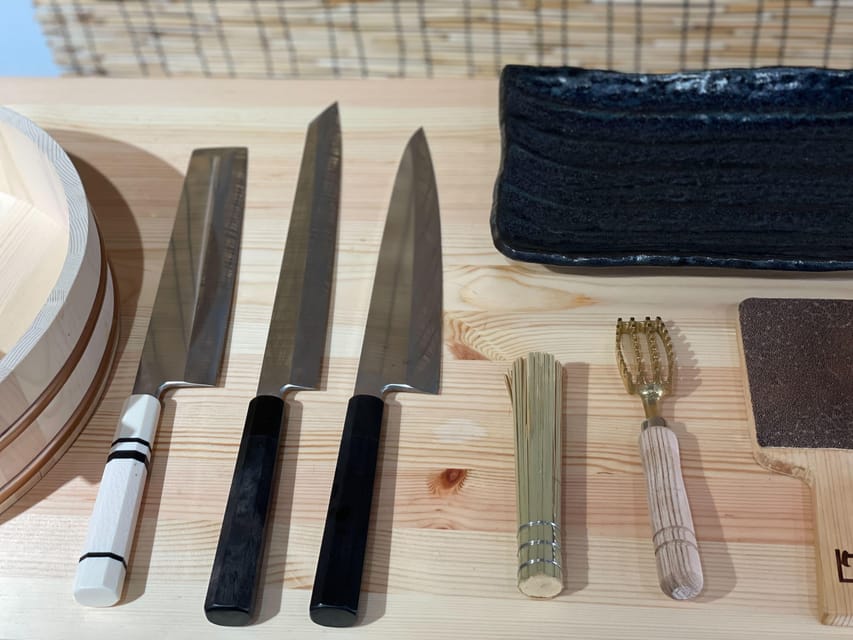
- Fish preparation comes first: Watch the sushi master prepare fish and explain the knives used for sushi and sashimi.
- You make five sushi styles: The class includes four different nigiri pieces and one maki roll.
- Tsukiji is right outside: You can visit the Outer Market before or after, though market guidance depends on the option booked.
- English support is built in: An English-speaking host interprets the chef’s instructions and helps you through each step.
- The meal is part of the lesson: Your sushi comes with extra pieces prepared by the chef, green tea, and traditional dashi soup.
- Access needs attention: The room is reached by stairs, and vegetarian, vegan, halal, kosher, and gluten-free requests are not generally accommodated.
Making sushi in the heart of Tsukiji
This class gets the setting right. You are not simply making sushi in a hotel kitchen and then being told that Tsukiji is nearby. The workshop takes place in a traditional Japanese-style building in the middle of the Tsukiji Outer Market area.
That location gives the class a useful sense of place. Before or after your lesson, you can walk through the market district, where food shops and small restaurants make the connection between the ingredients on your plate and the neighborhood around you. The class itself does not promise a market tour in every option, so check the exact booking details if a guided market walk is important to you.
The classroom is on the third floor. That means stairs only, with no wheelchair access, so plan accordingly. The room’s traditional setting sounds more appealing than a modern cooking school, but it also means less convenience for anyone with mobility limits.
The experience can last from 90 minutes to four hours, depending on the option and schedule you choose. That is a wide range. A basic workshop may be fairly compact, while versions with added market activity or extra time can take much of a morning or afternoon. I would not book a tight museum reservation, airport transfer, or restaurant booking immediately afterward.
Other market mornings in Tokyo:
- Tokyo Tsukiji Fish Market Food and Culture Walking Tour
★ 5.0 · 3,184 reviews - Tokyo: Tsukiji Fish Market Food and Walking tour
★ 5.0 · 1,724 reviews - Tokyo: Tsukiji Fish Market Guided Walking Tour
★ 4.9 · 1,397 reviews
The fish-cutting demonstration
The class begins with the part most home cooks cannot easily replicate: watching a sushi professional prepare fish. The chef shows the steps used to ready fish for sushi and sashimi, explaining how the knife works and why the cuts matter.
This is more than a show for the camera. Sushi depends on details that are easy to miss when you only see the finished piece. The angle of the knife, the direction of the cut, the size of the portion, and the way the fish sits on the rice all affect the final result.
The chef also explains Japanese knives. You will not become a sushi master in one short lesson, but you will leave with a clearer idea of why sushi preparation takes training. Several sessions have been led by chefs named Tanaka, Kate, Koro, Ike, Kana, and Ishii, with the specific instructor varying by date.
The fish demonstration also helps if you are unsure about raw seafood. One participant who did not normally eat raw fish still found the class approachable because the ingredients were fresh and the steps were clearly explained. That is not a guarantee that every ingredient will suit every palate, but it does suggest that beginners are not expected to arrive with a trained sushi palate.
Learning the difference between nigiri and maki
The practical lesson focuses on two familiar sushi forms. Nigiri is the hand-shaped rice topped with fish or another ingredient. Maki is rolled sushi, prepared with rice and fillings wrapped in nori.
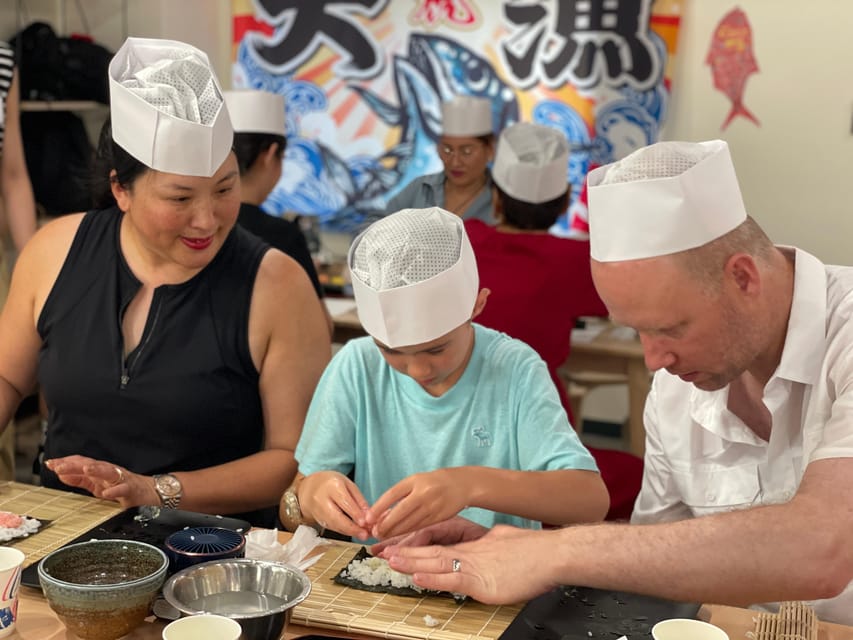
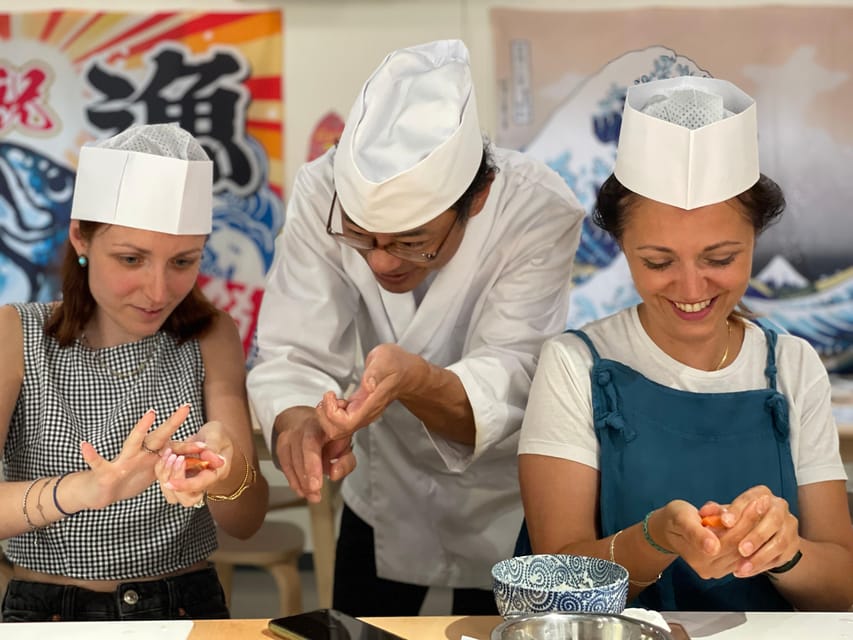
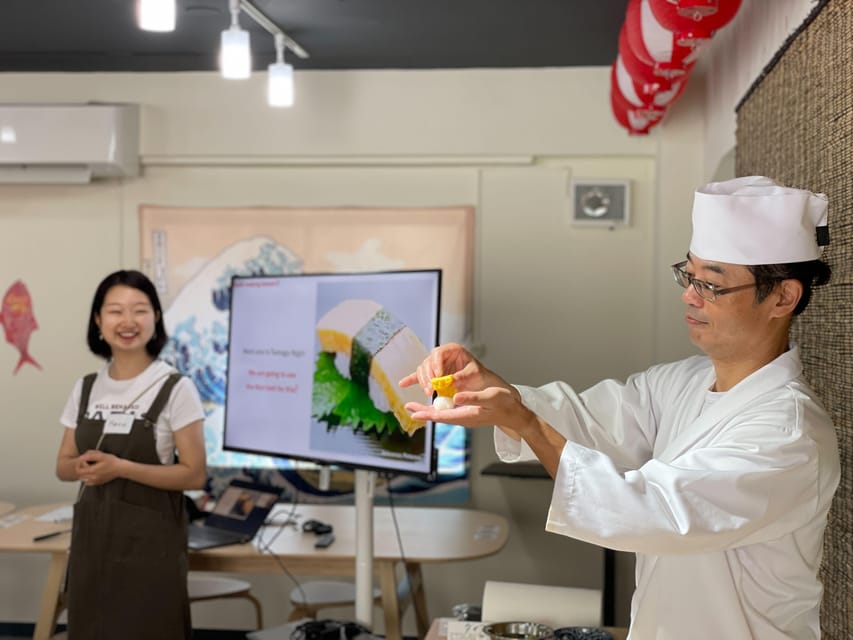
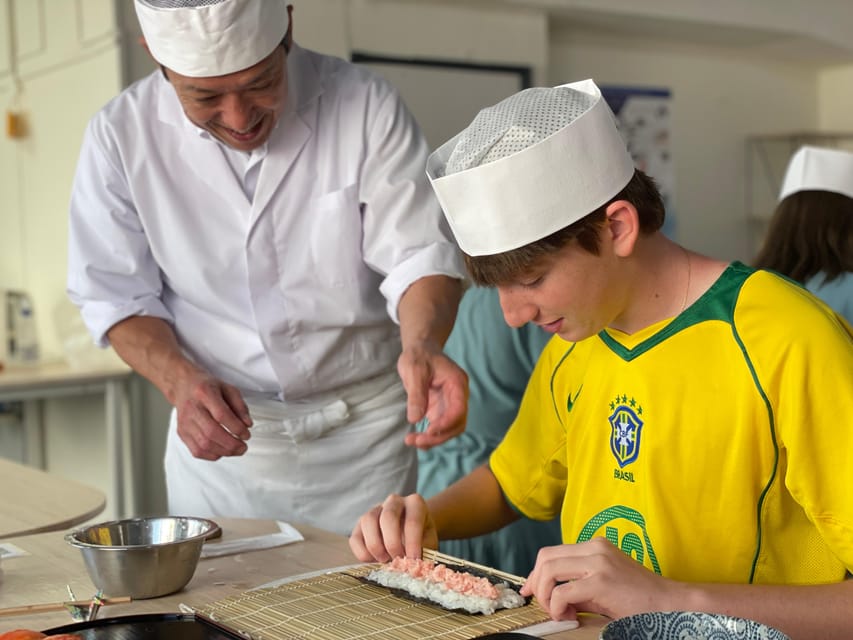
You will make four different nigiri sushi pieces and one maki sushi. The instructor and English-speaking host guide you step by step, showing how much rice to use, how to shape it, and how to place the topping. You will also learn basic handling and presentation.
This is a good level for a first class. You make enough pieces to practice, but not so many that the work becomes repetitive. You can ask questions as you go, and the teaching team can correct your technique before you repeat the same mistake several times.
Do not expect professional knife training or a full sushi apprenticeship. The class gives you an introduction to sushi preparation, basic shaping, and the cultural ideas behind the food. It is especially useful if you want to try making sushi at home, although you will still need to buy suitable ingredients and tools later.
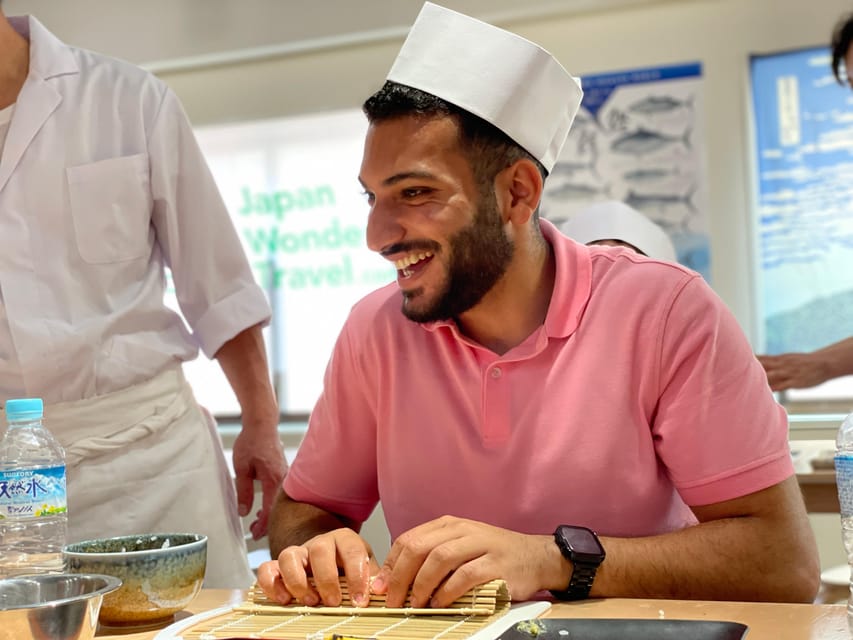
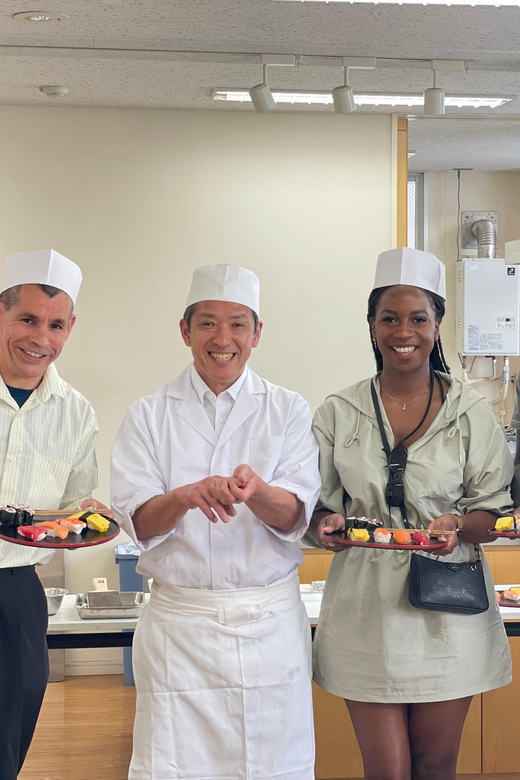
The proper utensils and tableware add to the experience. They are sourced through local shops, and they make the class feel like a real food lesson rather than a craft activity using whatever equipment happens to be available. You also receive a hat, which is a small touch but useful for photographs and for keeping the session tidy.
English guidance and the teaching style
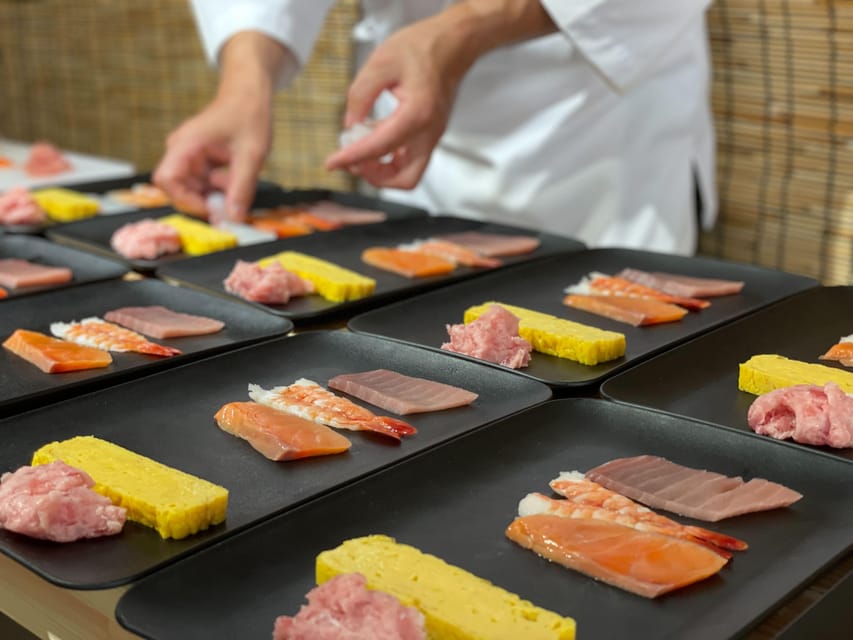
The chef may not be the person doing all the talking in English. The English-speaking host interprets, explains, and keeps the class moving. This arrangement works well because the chef can focus on the food while the host makes sure you understand the instructions.
The hosts named in different sessions include Satoko, Yuko, Shoko, AJ, Micky, Miky, Tack, Eri, Hina, Yugo, and Kayo. Names and roles vary, but the format remains similar: a host helps with translation and questions while the sushi master demonstrates and teaches.
That support matters with sushi. Small gestures can be hard to follow when the instructor is working quickly, especially during rice shaping or fish cutting. A patient host can slow down the explanation and make sure everyone gets a turn.
Group size also matters. Some sessions have been described as small, including a group of six, and that is the ideal scale for this sort of class. A smaller room lets you hear the instructions and get direct feedback. The exact group size is not stated as a fixed feature, so I would treat this as a likely benefit rather than a promise for every date.
Families can take part, but the official minimum age is four, while the practical advice from the sessions points toward children who can stay quiet and pay attention. Children around school age and older are likely to get more from the lesson. The stairs, raw ingredients, and need to follow knife-related demonstrations are also worth considering.
Other classes behind the counter in Tokyo:
- Sushi Making Tokyo Roll and Authentic Japanese Sushi Class
★ 5.0 · 3,971 reviews - Tokyo: Roll and Authentic Sushi Making Class in Asakusa
★ 4.9 · 1,957 reviews - Tokyo: Sushi Making Class in a Happi Coat near a Famous Spot
★ 4.9 · 1,377 reviews - Tokyo Sushi Making Class in Tsukiji with Professional Chef
★ 5.0 · 1,177 reviews
Eating your sushi beside the chef’s work
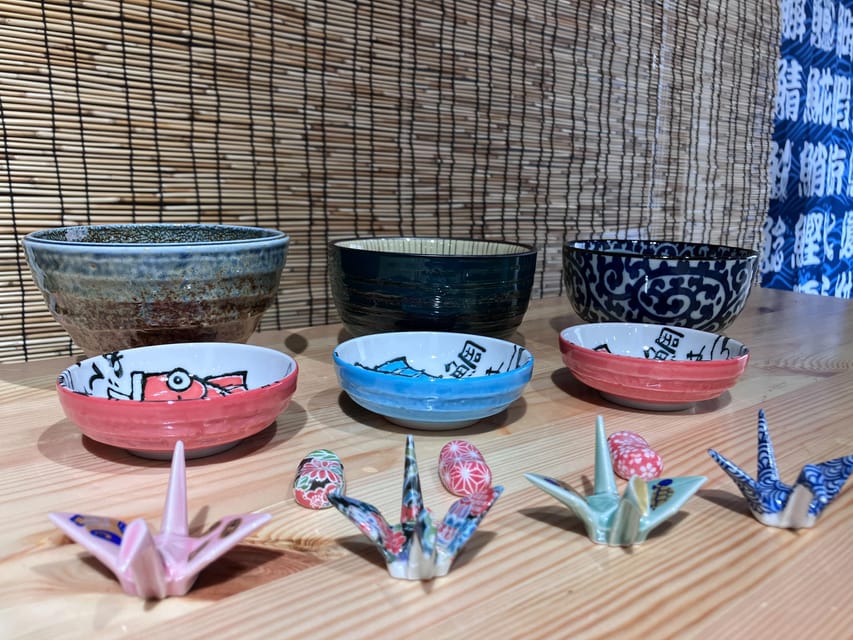
The best part comes after the shaping. You eat the sushi you made, along with extra sushi prepared by the master.
That comparison is valuable. Your pieces may taste fresh and satisfying, but the chef’s sushi shows what the same ingredients look like after years of practice. You can watch the speed, precision, and consistency of the professional preparation. The point is not to make you feel inadequate. It gives you a clear target and helps you see that good sushi is about technique as much as ingredients.
The meal includes four kinds of nigiri and one maki made by you, plus additional sushi made by the chef. Traditional dashi soup and green tea are also served. These simple pairings make the meal feel more complete and give you a taste of the quiet balance common in Japanese dining.
Extra food and drinks are not included, so do not assume this replaces a large lunch. It should satisfy many people, but appetite varies. If you plan to spend time eating around the Outer Market afterward, the class can work well as an introduction rather than your only food stop.
Why the Tsukiji location adds value
At $63 per person, this is not the cheapest way to eat sushi in Tokyo. It is also not just a meal. You are paying for the chef’s instruction, an English-speaking host, fresh ingredients, equipment, the fish demonstration, the sushi you make, extra sushi from the chef, soup, and tea.
The value is strongest if you want to understand what you are eating. A restaurant can serve you excellent sushi, but it may not explain how the fish was prepared or let you shape the rice yourself. This class gives you that background and a meal at the same time.
The Tsukiji setting adds another useful layer. You can connect the class with a walk through the market district, and the area gives you plenty to see before or afterward. Some versions have included a guided walk through the market and nearby shrines, with hosts explaining local food and religious customs. Other booking options do not include market guidance, so read the option details carefully instead of assuming every session has the same route.
For a family, couple, or small group, the price is easier to justify because the activity serves several purposes: cultural lesson, cooking class, meal, and a convenient stop in one of Tokyo’s best-known food neighborhoods.
Who should book this class
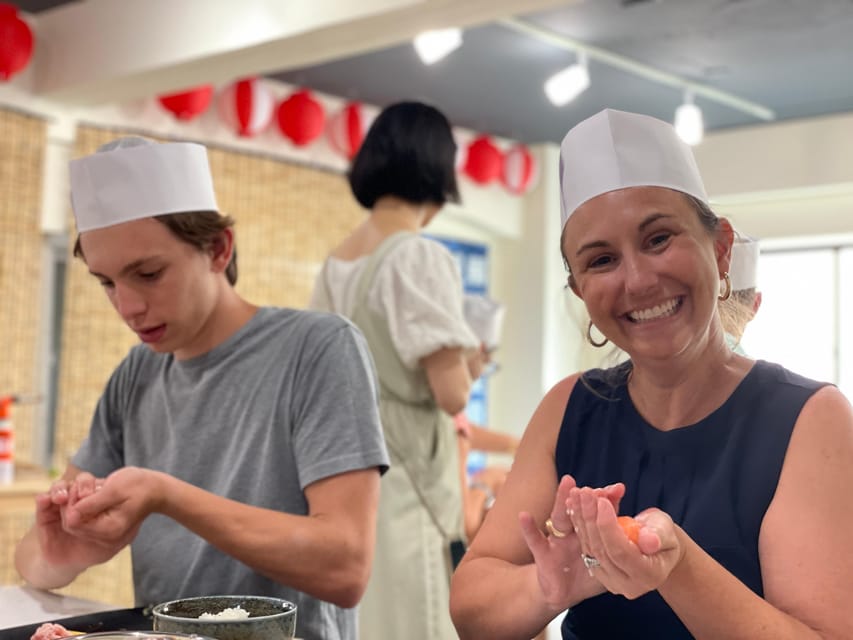
I would recommend it most strongly to first-time sushi makers, food-focused visitors, families with older children, and anyone who wants a practical cultural activity instead of another observation-only tour.
You do not need cooking experience. The instructions are designed for beginners, and the host helps translate the chef’s guidance. You also do not need to be a raw-fish expert. The class provides an introduction, and the freshness of the ingredients may make the food easier to appreciate.
This is less suitable for strict vegetarians and vegans. The activity does not accommodate vegetarian, vegan, halal, kosher, or gluten-free requests as a standard matter. Allergy requests should be sent at reservation time, but the operator may not be able to meet every need.
It is also not suitable for wheelchair users or people with mobility impairments because the classroom is on the third floor with stairs only. If you have a tight schedule, leave extra time. The activity may run beyond the scheduled end, and several people needed help after train delays or late arrivals.
Smart ways to plan your Tsukiji visit
Book the class as part of a flexible half-day in the Tsukiji area. The market is the natural companion to the lesson, but you do not need to force the two into a rushed schedule.
If your option does not include market guidance, use the class as your anchor and explore independently before or after. If your option does include a walking component, allow the full stated duration and confirm the meeting point, since it may vary by booking choice.
Wear comfortable clothes and arrive ready to participate. You will be handling food, shaping rice, and following demonstrations closely. The hat is provided, and the utensils are supplied, so you do not need to bring special cooking equipment.
The free-cancellation window is up to 24 hours before the activity, and the reserve-now, pay-later option can help if your Tokyo schedule is still shifting. Those policies are useful, but the more important planning detail is the time cushion. Do not schedule this directly before something you cannot miss.
Should you book the Tsukiji sushi class?
Book it if you want fresh sushi with a lesson attached, especially if you are already planning to visit Tsukiji. The class offers real hands-on work, a professional demonstration, English help, and enough food to make the $63 price reasonable for a 90-minute session.
I would skip it if you want a long market tour, a large meal, or a fully flexible dietary menu. I would also avoid it if stairs are a problem or if you need to leave at an exact time.
For most food lovers, this is a smart Tokyo choice because you do not simply take photographs of sushi. You learn how it is prepared, make your own version, and then see what a trained chef can do with the same basic ingredients.
FAQ
How long does the sushi-making activity last?
The available options range from 90 minutes to four hours. Check the starting time and duration for the specific option you select, and allow extra time because the session may run beyond its scheduled end.
What sushi will I make?
You will make four different nigiri sushi pieces and one maki sushi roll. The chef also prepares additional sushi for you to eat.
Is the class taught in English?
Yes. An English-speaking host interprets and guides the class, while a professional sushi master demonstrates and teaches the preparation techniques.
Is food and tea included?
Yes. The sushi you make, additional sushi prepared by the chef, traditional dashi soup, and green tea are included. Extra food and drinks are not included.
Can vegetarians or vegans join?
No. The activity is not suitable for vegans or vegetarians, and vegetarian, vegan, halal, kosher, and gluten-free requests are not generally accommodated. Allergy-related requests should be provided when you reserve, though they may not be possible to meet.
Is the classroom wheelchair accessible?
No. The classroom is on the third floor of a traditional Japanese building and can only be reached by stairs. The activity is not suitable for wheelchair users or people with mobility impairments.
Just added in Tokyo
- Nikko: Edo Wonderland Edomura Cultural Theme Park Ticket★ 4.3 · 205 reviews
- 《MEMBERS-ONLY-BAR-HOPPING》Discover Your Special Whiskey in Tokyo!★ 5.0 · 29 reviews
- Japanese Whisky Hunting《HIGH-QUALITY-ONLY》Rare Tasting Class★ 5.0 · 20 reviews
- Luxury Tokyo Sake, Cocktail, Whisky and Pairing Tour★ 5.0 · 18 reviews
- Wagyu & Sake Pairing in Shinjuku – Steak, Shabu-Shabu & More★ 5.0 · 112 reviews
- Small-Group Wagyu Beef and 7 Japanese Dishes Tokyo Cooking Class★ 5.0 · 190 reviews
- From Tokyo: Private Tour to Fuji/Hakone – Onsen, Art, Nature★ 5.0 · 116 reviews
- Tokyo: KABUKI Show at Kabukiza Theatre Admission Ticket★ 4.8 · 152 reviews
Tsukiji & Toyosu Fish Market Tours, compared.

Tokyo Tsukiji Fish Market Food and Culture Walking Tour
Read our review →
Tokyo Sushi Making Class in Tsukiji with Professional Chef
Read our review →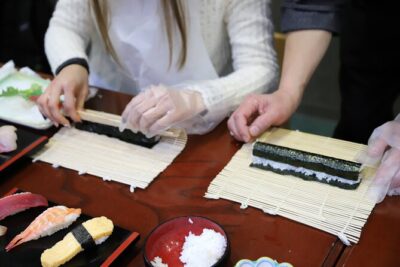
Tsukiji Fish Market Guided Tour and Sushi Making with Pro Chef
Read our review →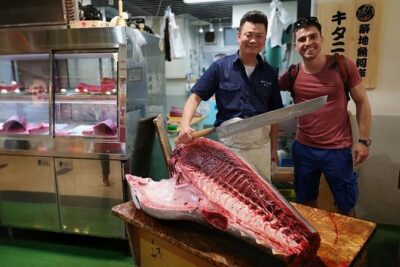
Tsukiji Fish Market Small-Group Food Walking Tour
Read our review →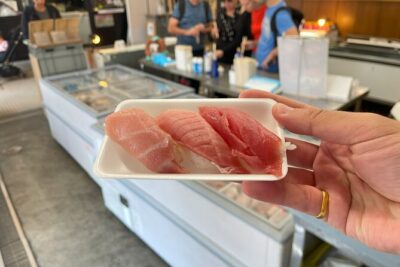
Tokyo Food Tour Taste Fresh Delights at Tsukiji Market
Read our review →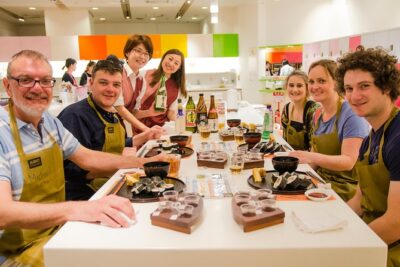
Tokyo Tsukiji Fish Market Tour and Sushi Making Lesson
Read our review →Browse the lists this tour appears in