
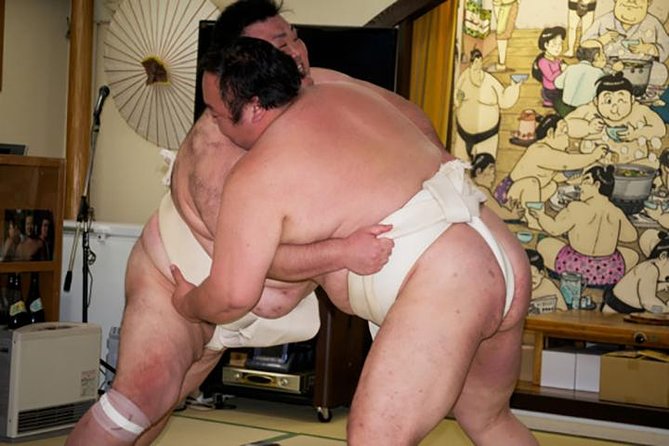
Reviewed · SUMO EXPERIENCES
the SUMO show
Sumo is much more than two enormous men pushing each other out of a ring. This 90-minute Tokyo show gives you the basic rules, training rituals, and history, then lets you see the sport up close with retired wrestlers who know how to make the lesson funny and friendly.
I like the small-ring atmosphere, where most people can see the action, and the chance to challenge a wrestler without needing athletic skill. I also like that lunch is part of the experience: tonkatsu and chanko soup make this feel like a cultural meal, not just a staged performance. The main catch is price. At about $89.54 per person, it is not a cheap lunch, and a few tables may sit farther from the dohyo than others.
Key points to know before booking
- Retired wrestlers lead the show: You learn directly from former sumo professionals and can ask questions during the session.
- Participation is optional: You may put on a sumo costume and enter the ring, but you can also watch from your seat.
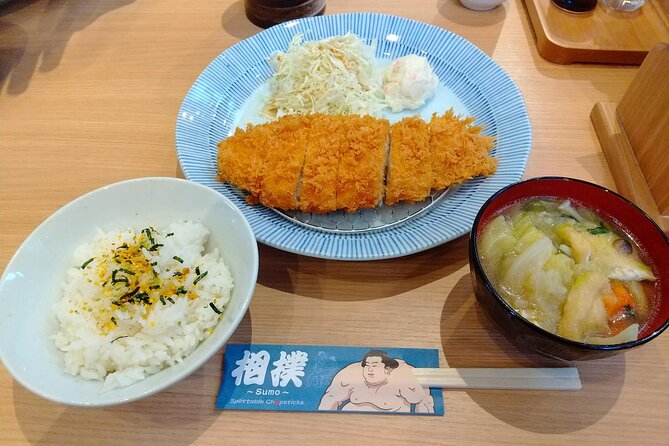
- Lunch is included: Tonkatsu and chanko soup are served, while drinks cost extra.
- The venue is in Sumida City: The meeting point is Yokozuna Tonkatsu, near public transportation.
- Plan dietary requests early: Allergies and special meals must be noted at booking, and requests made less than five days before the date may not be accepted.
- The group can reach 60 people: Seating is assigned by reservation order, but arriving early does not guarantee a better place.
Why this sumo show works so well
The best part of this activity is the personal contact. You are not watching a distant tournament from the upper seats of a huge arena. You are in a room with retired wrestlers, watching them demonstrate techniques, explain the rules, and joke with the audience.
That makes sumo easier to understand. The sport has rituals and rules that can seem confusing at first. The opening demonstration gives you a working introduction to footwork, pushing, balance, and the ways a wrestler can win. You do not need to memorize every rule, but you will understand what you are seeing when the sparring begins.
I also like the friendly tone. The wrestlers are there to teach and entertain, not to put you through a serious contest. If you volunteer for a bout, the humor usually comes from trying to use technique rather than brute force. One useful tip: do not expect to overpower a retired sumo wrestler. If you take part, listen to the instructions and use the tricks you are shown.
The activity has earned a 4.9 rating from 1,960 reviews, with 98 percent recommending it. Those numbers suggest a very dependable experience, but they do not erase the practical limits. Food portions may feel light to someone expecting a huge sumo-sized meal, and some seating positions are better than others.
Other ways to see sumo in Tokyo:
- Tokyo: Sumo Show Experience with Chicken Hot Pot and a Photo
★ 4.8 · 6,678 reviews - Tokyo: Sumo Show and Dining Experience
★ 4.8 · 2,742 reviews - Tokyo Shinjuku Sumo Show & Experience with Photo
★ 5.0 · 1,750 reviews
Arriving at Yokozuna Tonkatsu in Sumida City
The meeting point is Yokozuna Tonkatsu, 3-chome-1-11 Tatekawa, Sumida City, and the scheduled start is 1:00 p.m. The activity ends at the same place, which makes it easy to fit into a day of sightseeing without arranging a second pickup.
The venue is near public transportation, but the exact directions are provided after booking. Give yourself enough time to find the building. The show has a fixed start, and the seating plan is set by the order in which reservations arrive. Arriving early does not promise a better seat, so early arrival is useful for finding the venue, not for jumping ahead in the seating system.
The total group size can reach 60 people. That is not an intimate private lesson, but the ring is still close enough for the action to feel personal. You may be asked to share a table with another party, and larger groups may be split across several tables.
A little patience helps here. This is a shared cultural activity, not a private dining room. The upside is that a larger audience gives the show energy, especially when people volunteer for a match.
The opening lesson: rules, rituals, and training
The presentation starts with an explanation of sumo’s background, rules, and daily training customs. The retired wrestlers demonstrate several moves and exercises, giving you a visual lesson before the action starts.
This part is especially useful if sumo is new to you. A tournament broadcast can be hard to follow when you do not know what counts as a winning move. Here, the explanation comes before the sparring, so you have a better chance of spotting the strategy.
The historical section is an introduction rather than a scholarly lecture. One attendee described it as a useful overview instead of a detailed study, and that is the right expectation. You will learn enough to appreciate the performance and ask sensible questions, but this is not a full course on Japanese religious traditions, tournament rankings, or the professional sumo system.
The pace seems well judged for a family audience. Children can watch the physical demonstrations, while adults get a clearer sense of the discipline behind the sport. The presenter keeps the mood light, and audience participation prevents the history from becoming a long speech.
One small issue is sound during video portions. If a video is playing while the host talks, it may be harder to hear every word. Sit where you have a clear view of the speaker, and do not be shy about asking for a point to be repeated.
Watching retired wrestlers spar
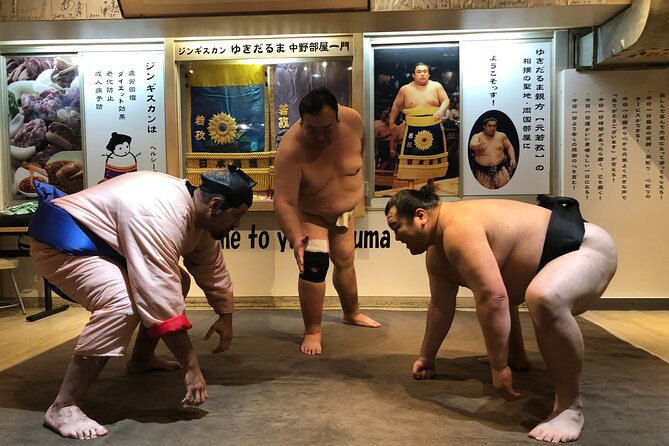
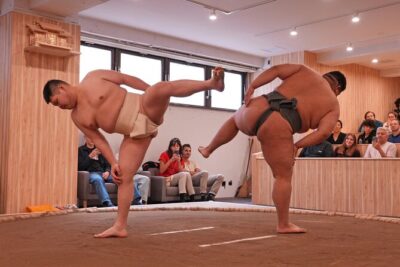
The live demonstrations are the center of the show. You see the wrestlers apply the moves and training methods introduced at the start, then watch a more playful bout in the dohyo.
The show is designed for entertainment, so expect humor and audience interaction rather than a formal tournament. The wrestlers are friendly and take time with the tables for photos and conversation. This personal attention is one reason the experience feels different from simply seeing a professional match on television.
The action is close enough to make the size and force of sumo clear. At the same time, the demonstrations are controlled for the setting. You are not attending a professional competition, and you should not book this expecting the intensity or ceremony of a major tournament day.
For families, this is a strong choice. Children aged nine and eleven have enjoyed the show, and the format gives them several ways to stay involved: watching the demonstrations, volunteering, taking photos, and eating lunch. A child who prefers to observe can remain seated. A child who wants to participate can volunteer if selected and willing.
Same base, a different sort of day:
- Mt Fuji and Hakone 1-Day Bus Tour Return by Bullet Train
★ 5.0 · 26,383 reviews - 1-Day Tokyo Bus Tour
★ 5.0 · 14,250 reviews - Tokyo: TOKYO SKYTREE® Admission ticket
★ 4.5 · 11,192 reviews - Tokyo: teamLab Planets TOKYO Digital Art Museum Entry Ticket
★ 4.6 · 9,779 reviews
Taking your turn in the ring
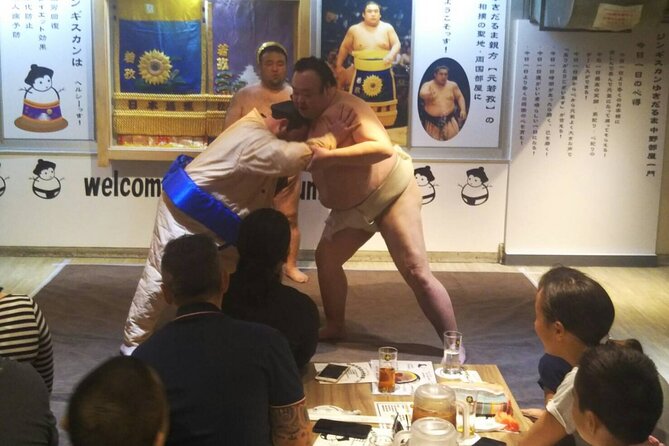
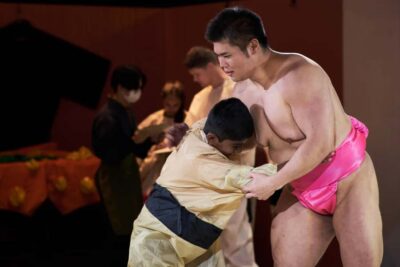
The interactive bout is optional, but it is the feature that turns the show from a performance into a personal memory. You may put on a traditional sumo costume and challenge one of the retired wrestlers.
Do not worry about athletic ability. The point is not to win through strength. The wrestlers show you techniques and encourage you to use balance and timing. The encounter is friendly, humorous, and carefully managed by the staff.
You should follow every instruction. The activity asks participants to use good judgment and consideration for others. Anyone causing trouble can be asked to leave without a refund.
If you do not want to wrestle, you still receive the main lesson and show. You can watch other people try, take photos, and speak with the wrestlers. This makes the activity suitable for mixed groups where one person wants to join in and another prefers a quiet seat.
The costume photo is another simple but effective touch. Sumo has a strong visual identity, and a picture in traditional clothing gives you something more personal than a standard group snapshot.
Tonkatsu and chanko soup at lunch
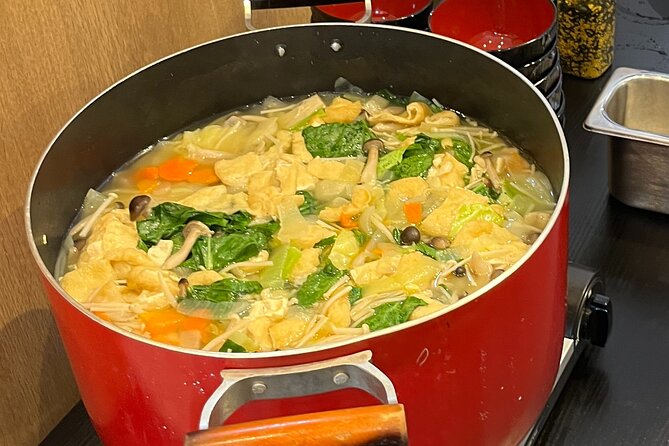
The meal includes tonkatsu and chanko soup, two foods closely tied to the experience. Tonkatsu is breaded pork cutlet, while chanko is the hearty hot-pot style soup associated with sumo wrestlers’ meals.
The food receives unusually strong praise for an activity where the performance is the main draw. The tonkatsu is described as tasty, and the chanko soup is a favorite for several people. Some diners even wished they could order a larger bowl of the soup instead of the cutlet.
Keep your expectations sensible. This is an included set meal, not an unlimited feast. One person left hungry and another noted that the cabbage portion was smaller than what they were used to in Japan. If you have a large appetite, you may want to plan a snack later.
Drinks are not included, so budget for those separately. Vegetarian and other dietary accommodations are available upon request, but you must provide allergies or restrictions in the booking notes. Requests received less than five days before the event may not be handled, so this is not a last-minute detail.
The meal adds real value because it gives the activity a clear cultural connection. You are not just watching wrestlers perform. You are also eating food associated with the sumo world and learning more about what it takes to train and compete.
Seating, photos, and the group atmosphere
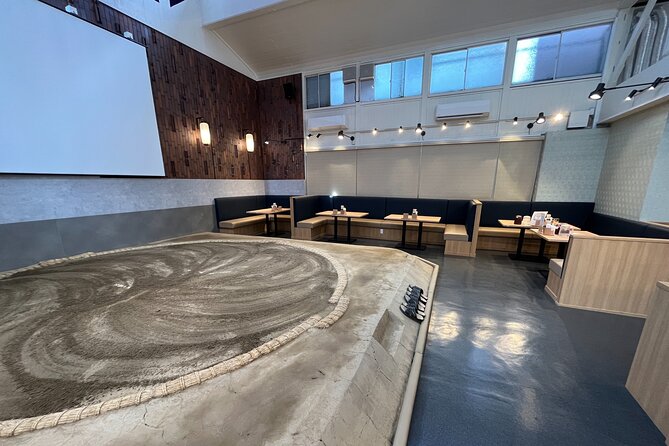
The room is arranged around the dohyo, but not every table is equally close. Some people have found that tables farther from the ring require standing at times for a better view.
That is the main physical drawback of the venue. A smaller audience can make the event feel intimate, but a group of up to 60 means sightlines vary. If clear viewing is important to you, keep this in mind before paying the price.
The staff and wrestlers spend time with each table, including photos. The interaction is not limited to the front row. Still, large groups may not sit together, and table sharing is possible.
The atmosphere suits people who like audience participation. The host keeps the pace moving and encourages the room to respond. You will get more from the event if you ask questions, volunteer, and join the photo session. If you prefer a quiet, formal presentation, the humor and crowd interaction may feel a little busy.
Is $89.54 a fair price?
At $89.54 per person, this is a premium lunch activity. You are paying for the food, the venue, the host, the production, and direct access to retired wrestlers. The price is easier to justify if you plan to participate and value a personal cultural experience.
It is less convincing if you only want to watch. You can learn some basic facts and see a show, but the value comes from the combination of instruction, sparring, food, costume photos, and the chance to enter the ring.
The 90-minute length is another plus. It is long enough to include teaching, demonstrations, participation, and lunch without taking up an entire afternoon. You can place it between other plans in Tokyo, though you should allow extra time for reaching Sumida City and finding the venue.
Group discounts may be available, which can help families or larger parties. Check the current price at booking, since the listed amount can change.
Who should book this experience?
I would recommend it most strongly to first-time visitors who want a straightforward introduction to sumo. It works well for families, couples, and mixed-age groups because participation is optional and the presentation does not demand prior knowledge.
It is also a good choice for anyone who could not attend a professional sumo tournament. You get close to the action and receive explanations that make the sport easier to follow.
You may want to skip it if you are seeking a serious sports event, a long academic presentation, or a very large meal. The show is light, social, and carefully made for international visitors. It offers a taste of the sport rather than a full account of professional sumo life.
The activity also suits people with limited time. Its fixed 1:00 p.m. start, 90-minute length, and return to the meeting point make planning simple. Just remember that date changes are not accepted within three days of the activity, and cancellations made less than 24 hours ahead are not refunded.
The final call
I would book the sumo show if you want an active, family-friendly way to understand Japan’s national sport. The retired wrestlers, friendly demonstrations, optional bout, and included tonkatsu and chanko soup create a well-rounded visit.
The price is the main question. If you only want lunch, it is too expensive. If you want a personal introduction to sumo with a chance to laugh, learn, eat, and take part, the $89.54 cost is easier to defend. Choose it with realistic expectations, note dietary needs early, and treat the ring participation as the main bonus rather than an obligation.
FAQ
Where does the sumo show take place?
The meeting point is Yokozuna Tonkatsu, at 3-chome-1-11 Tatekawa, Sumida City, Tokyo 130-0023, Japan. The activity ends at the same location.
What time does the activity start?
The scheduled start time is 1:00 p.m.
How long does the sumo experience last?
The sumo demonstration and meal take approximately 1 hour and 30 minutes.
Is lunch included?
Yes. Tonkatsu and chanko soup are included. Drinks are not included.
Do I have to wrestle a sumo wrestler?
No. Participation in a friendly bout is optional. You can watch the demonstrations, eat, take photos, and enjoy the presentation without entering the ring.
Can dietary restrictions be accommodated?
Vegetarian and other dietary accommodations may be available if you provide the details in the special notes when booking. Requests made less than five days before the event may not be accepted.
Can I cancel for a full refund?
You can cancel at least 24 hours before the local start time for a full refund. Cancellations or changes made less than 24 hours before the activity are not accepted for a refund.
Just added in Tokyo
- Nikko: Edo Wonderland Edomura Cultural Theme Park Ticket★ 4.3 · 205 reviews
- 《MEMBERS-ONLY-BAR-HOPPING》Discover Your Special Whiskey in Tokyo!★ 5.0 · 29 reviews
- Japanese Whisky Hunting《HIGH-QUALITY-ONLY》Rare Tasting Class★ 5.0 · 20 reviews
- Luxury Tokyo Sake, Cocktail, Whisky and Pairing Tour★ 5.0 · 18 reviews
- Wagyu & Sake Pairing in Shinjuku – Steak, Shabu-Shabu & More★ 5.0 · 112 reviews
- Small-Group Wagyu Beef and 7 Japanese Dishes Tokyo Cooking Class★ 5.0 · 190 reviews
- Tokyo Cyberpunk Street Photo Tour★ 5.0 · 165 reviews
- From Tokyo: Private Tour to Fuji/Hakone – Onsen, Art, Nature★ 5.0 · 116 reviews
Sumo Experiences, compared.
Sumo Show Experience with Chicken Hot Pot and a Photo
Read our review →
Tokyo Shinjuku Sumo Show & Experience with Photo
Read our review →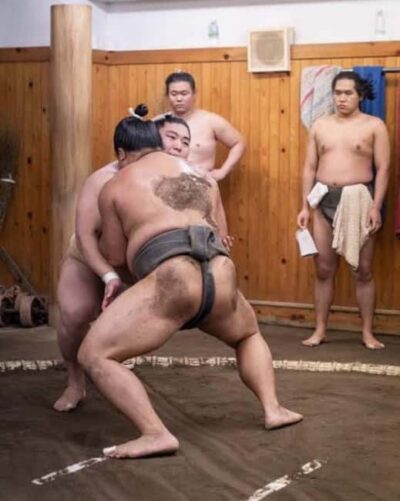
Sumo Show & Experience w/ Optional Kimono & Hot Pot
Read our review →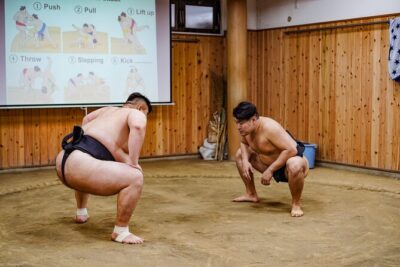
Authentic Sumo Experience in Tokyo: Enter the Sanctuary
Read our review →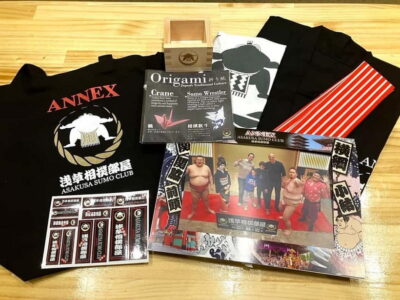
Luxury Sumo Show Experience & Japanese cuisine & Drink
Read our review →Browse the lists this tour appears in