
Reviewed · SUMO EXPERIENCES
Tokyo: Sumo Tournament Tour with Chair Seat Tickets
Tokyo sumo is not a staged dinner show or a tourist performance. It is a real tournament, with wrestlers competing for ranking, sponsors circling the ring, and a Japanese crowd reacting to every slap, shove, and sudden charge. I like the genuine sporting atmosphere and the chance to see the formal ring-entering ceremonies before the main bouts.
I also like having a guide such as Mieko, Taka, Mia, or Hiro explain the rules and point out wrestlers to watch. That help matters when you are new to sumo. The main drawback is that 2F seats can feel high and distant, even though the arena is compact and the view remains good from most sections.
Key points to know before booking
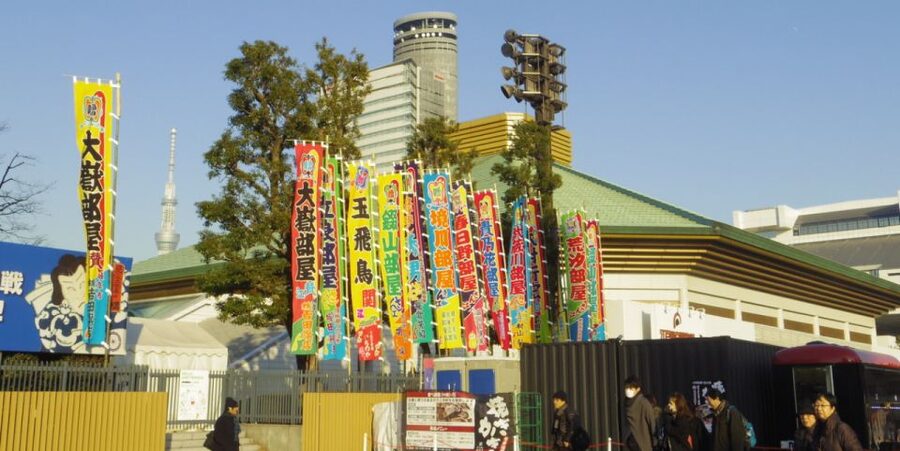
- Three Tokyo tournaments each year: This experience is available only when a tournament is taking place at Ryogoku Kokugikan.
- A real afternoon of sumo: The scheduled program runs from the 3:40 PM ring-entering ceremonies through the final bouts at 6:00 PM.
- English explanations add real value: Your guide can explain rankings, rituals, sponsors, match tactics, and why the crowd cheers for particular wrestlers.
- Several seating choices: Depending on your booking, you receive a 2F chair seat or a 1F box seat. Specific seats cannot be selected.
- Cheer kit and lunch vary by option: Do not assume every package includes food or supporter items.
- Plan for stairs and light luggage: The tour is not suitable for wheelchair users, strollers are not allowed, and large luggage cannot go into the seating area.
Why a Tokyo sumo tournament is worth your afternoon
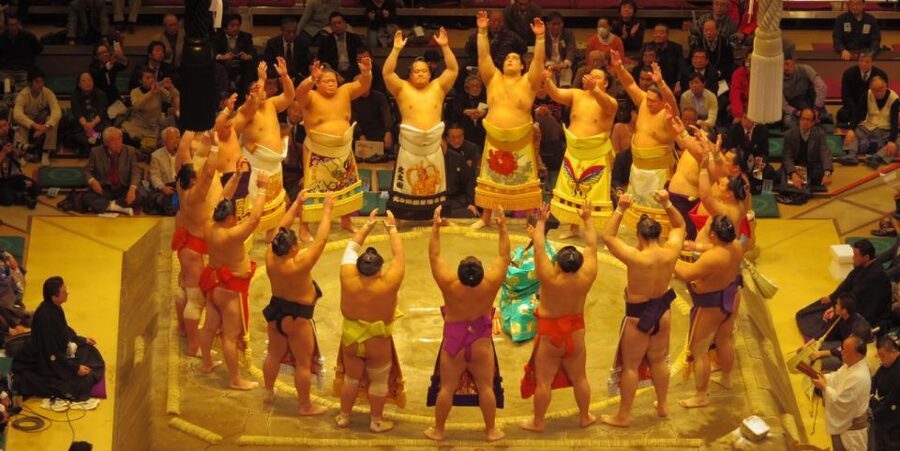
Sumo makes sense only when you see the whole event, not just a short bout on television. The match itself can last seconds, but the ceremony before it gives the sport its rhythm. Wrestlers enter, face the crowd, perform formal movements, and prepare for the clash with a calm that makes the sudden action even more striking.
This is one of the three annual tournaments held in Tokyo. The limited schedule matters. Sumo tournaments take place for only a set number of days each year, and Tokyo receives only part of that calendar. If your visit lines up with one, you have a rare chance to see the sport in its proper setting.
I especially like that this is not presented as a show created for tourists. You sit among a local audience watching the same competition that matters to Japanese sumo fans. With a good guide beside you, you get the best of both worlds: the excitement of the arena and enough context to understand what you are seeing.
Other ways to see sumo in Tokyo:
- Tokyo: Sumo Show Experience with Chicken Hot Pot and a Photo
★ 4.8 · 6,678 reviews - Tokyo: Sumo Show and Dining Experience
★ 4.8 · 2,742 reviews - the SUMO show
★ 5.0 · 1,960 reviews
Meeting at Ryogoku Station at 2:15 PM
The usual meeting point is the West Gate of JR Ryogoku Station at 2:15 PM, though the exact location can vary with the option you book. This is an important detail because several groups may meet in the same general area.
Read your booking instructions carefully before leaving your hotel. Some groups are sorted by a color and number system, and the meeting process can feel confusing if you arrive without those details. Arrive early enough to find the correct staff member without rushing.
The guide then takes the group to Ryogoku Kokugikan, Tokyo’s sumo arena. Some booking choices offer an entrance assistant rather than a full guided experience. In that case, staff help you reach the stadium but do not enter the building with you, so check the exact option before paying.
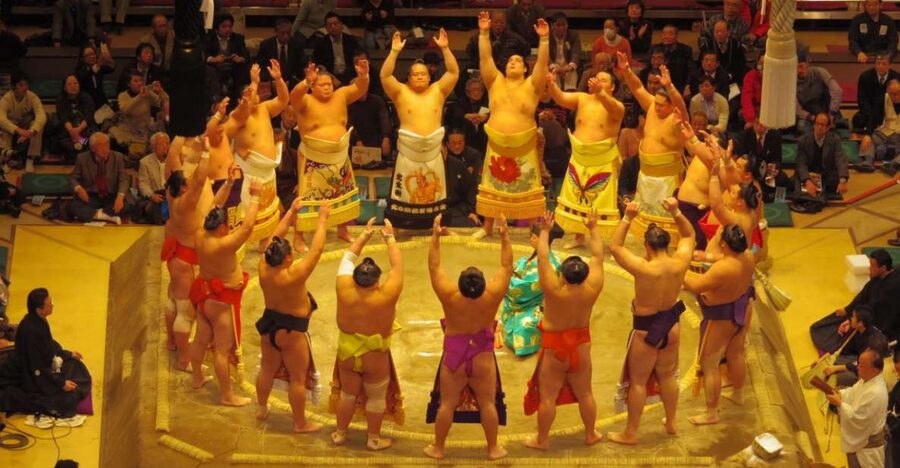
The ring-entering ceremonies at 3:40 and 3:55 PM
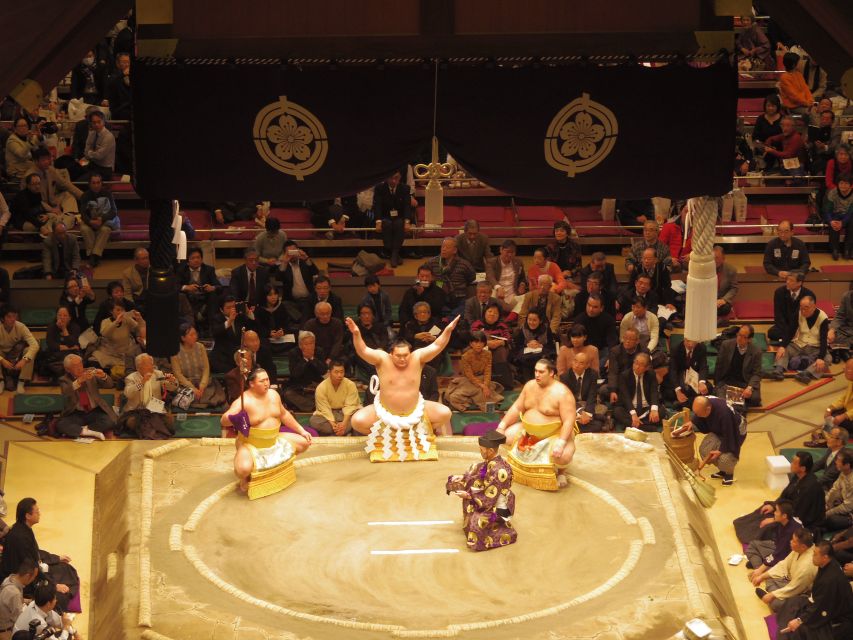
The afternoon builds toward the higher-ranked wrestlers. At 3:40 PM, the Makuuchi Division takes part in its ring-entering ceremony. This is the top main division, and the ceremony gives you a chance to see the wrestlers presented as a group before their matches begin.
At 3:55 PM, the Yokozuna, or highest-ranked wrestlers, make their ring entrance. These moments are more than decoration. The rituals show how sumo connects athletic competition with discipline, rank, ceremony, and religious tradition.
A guide can explain the meaning behind the movements and help you identify individual wrestlers. Guides such as Mieko and Mia have been especially good at turning a formal ceremony into something easy to follow, pointing out rankings and wrestlers with strong fan support.
The Makuuchi matches begin at 4:10 PM
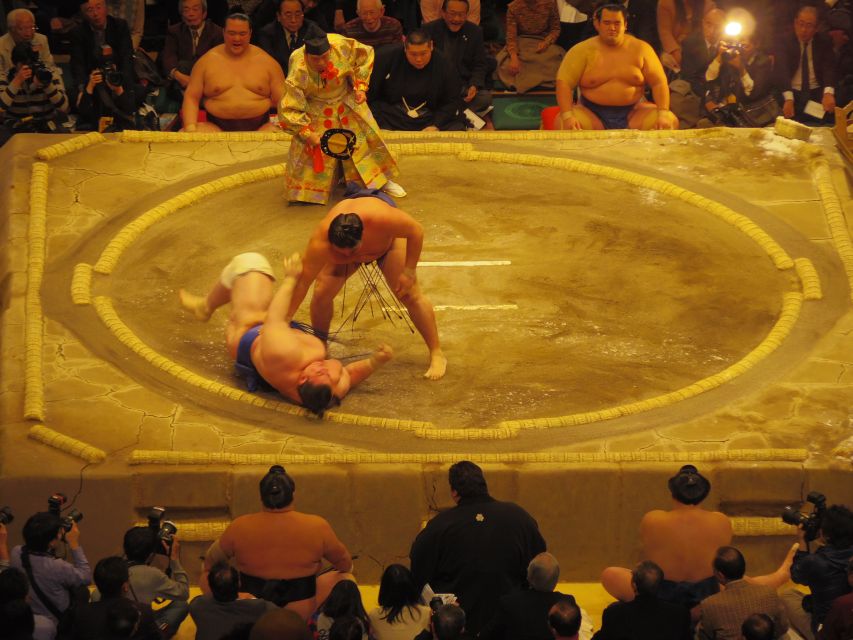
The main bouts start at 4:10 PM and continue until the tournament finishes at 6:00 PM. The basic aim is simple: force the opponent outside the ring or make any part of the opponent’s body, other than the soles of the feet, touch the ground.
The action is often much faster than newcomers expect. A wrestler may spend time building tension, then end the bout with one explosive push, belt grip, or sidestep. Your guide can explain the tactics as they happen, including why a wrestler may favor a particular move or why one competitor has more sponsor banners around the ring.
This is where the guide makes the biggest difference. Without help, you can still enjoy the size, noise, and force of the matches, but the rankings and customs may blur together. With an English-speaking guide, you can follow who is rising, who is under pressure, and why the crowd reacts more strongly to certain wrestlers.
Guides named Taka, Sho, Naomi, Michiko, Take, and Yuko have been praised for staying involved throughout the tournament rather than simply handing over tickets. Some prepare match sheets showing the day’s wrestlers and current positions. Others encourage the group to cheer for a favorite wrestler and explain the person’s style.
Same base, a different sort of day:
- Mt Fuji and Hakone 1-Day Bus Tour Return by Bullet Train
★ 5.0 · 26,383 reviews - 1-Day Tokyo Bus Tour
★ 5.0 · 14,250 reviews - Tokyo: TOKYO SKYTREE® Admission ticket
★ 4.5 · 11,192 reviews - Tokyo: teamLab Planets TOKYO Digital Art Museum Entry Ticket
★ 4.6 · 9,779 reviews
What your seat is really like
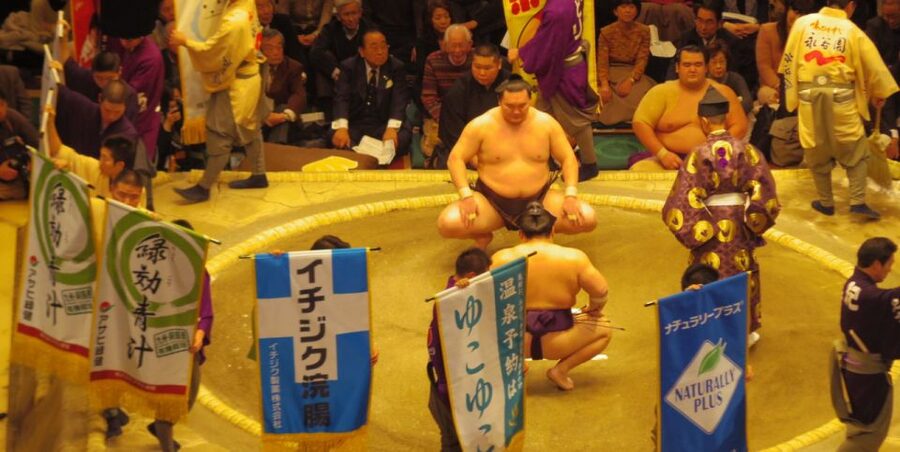
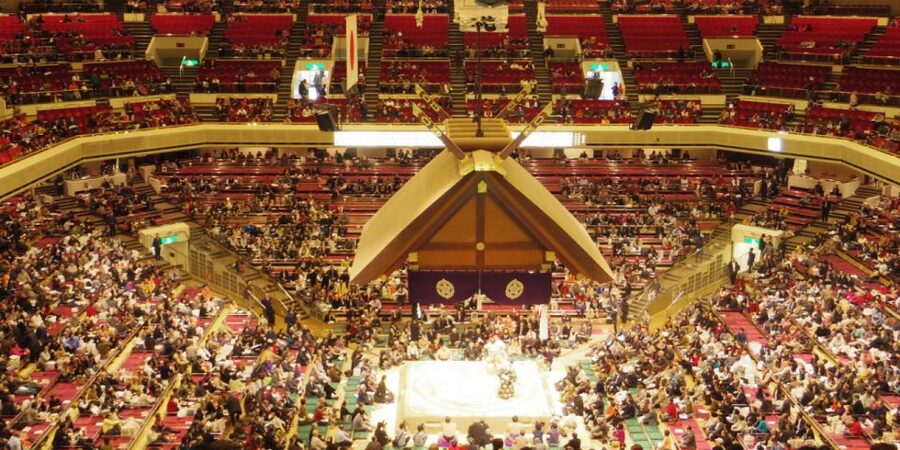
The standard option provides a 2F chair seat. You cannot choose the exact seat, and some chairs are high in the arena. That may sound disappointing if you imagine sitting close to the ring, but Ryogoku Kokugikan is compact, so even upper seats give you a useful view of the action.
The height can actually help you see the full ring and the patterns around it. You can watch the wrestlers enter, observe the referee and attendants, and follow the crowd response without being blocked by people in front. Still, if being close to the wrestlers is your main goal, the 2F option may leave you wanting more.
The 1F option uses box seats. These provide your own seating space without sharing with other groups, but the seating style is different from a normal individual chair. Check the package details carefully so you know whether you are buying a 2F chair or a 1F box.
Several people find the seats perfectly good for a first sumo experience, while others wish they had been closer. That difference usually comes down to expectations. Think of 2F seating as an arena-wide view, not a ringside encounter.
What the guide adds to the experience
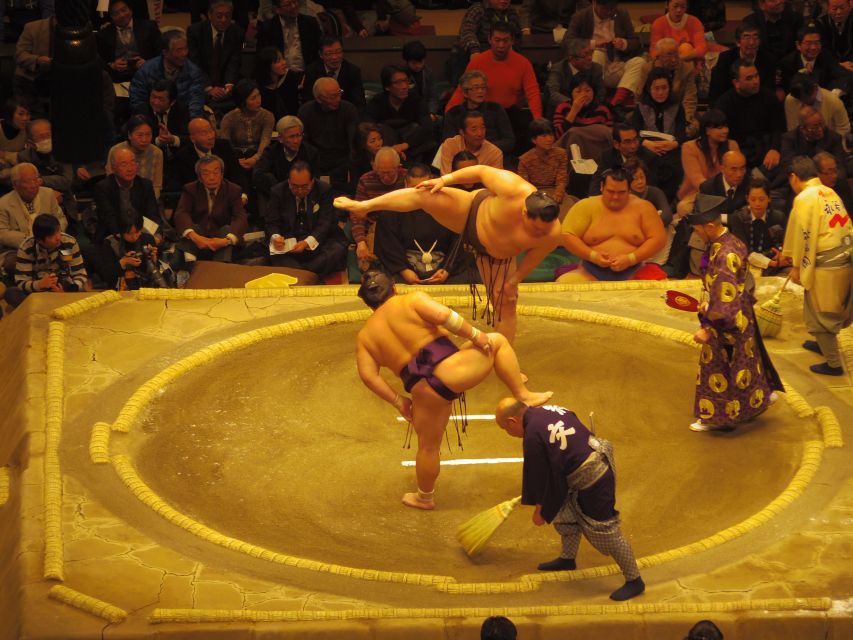
The strongest part of this tour is the human explanation. Sumo has a simple win condition but a large set of customs, rankings, rituals, and traditions. A guide helps you see why the event unfolds as it does.
You may learn how the divisions work, why the highest-ranked wrestlers receive special treatment, and why certain bouts attract more attention. You can also ask about a wrestler’s record, style, or likely importance to the tournament.
The best guides bring personal enthusiasm without turning the afternoon into a lecture. Mieko has used printed match information to help groups keep track of the day. Mia and Taka have been praised for their energy during the bouts. Yuko has added humor and helped groups cheer for particular wrestlers.
The amount of guiding can vary by package and by where you sit. This is not always a constant spoken commentary from every second of every match. You may have periods to watch independently, with the guide available for questions and explanations. That suits many people, since non-stop commentary would compete with the live event.
If you already follow sumo, you may find the basic introduction less important. You will still benefit from help finding the arena and understanding the schedule, but beginners receive the greatest value from the explanations.
Sumo supporter kits and local crowd energy
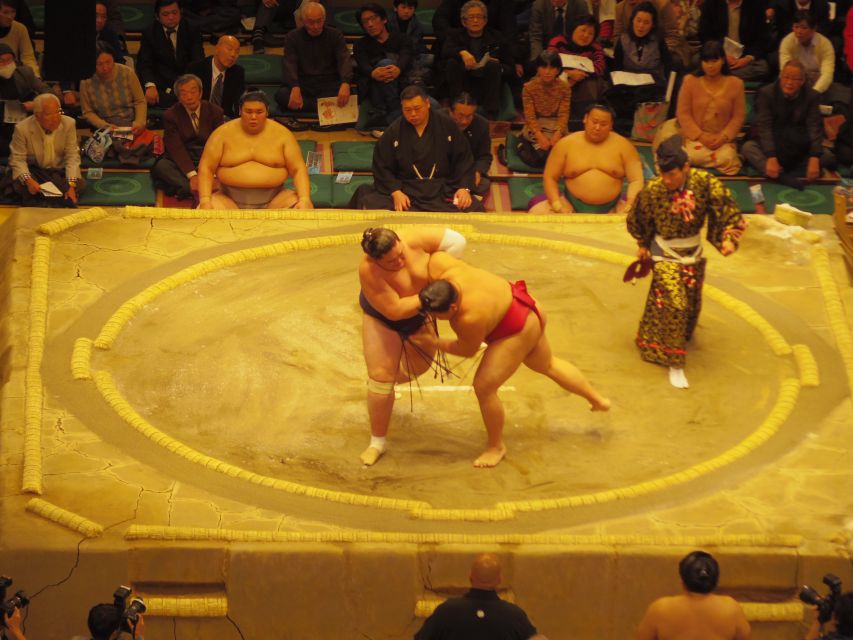
Selected options include a Sumo Fan Cheer Kit. This gives you something to use during the event and makes it easier to join the crowd, especially if you are unsure when or how to cheer.
Cheering feels more natural once you know which wrestlers your guide supports. Some guides bring signs or encourage the group to back a particular competitor. That small bit of participation can make the afternoon feel less like sitting quietly in a stadium and more like joining a local sporting crowd.
The audience response is part of the experience. You will notice that some wrestlers draw stronger support and that sponsor banners can signal a bout’s importance. A guide can explain those details instead of leaving you to guess.
Food, lunch options, and what to bring
Food and drinks are not included in the standard package. The arena has food and drinks for purchase, and some packages include a lunch option. The exact meal should be checked before booking because lunch is not part of every version.
A chanko nabe meal, a sumo-style hot pot, is included with some choices. Other packages provide a packed lunch. If you select lunch, report allergies or dietary restrictions when you book or as soon as possible after making the reservation.
Do not bring large luggage into the seating area. A small day bag is the sensible choice. Strollers are not allowed, and children aged three and under may enter free but must sit on an adult’s lap without their own seat. Children aged four and older need their own ticket.
Is $141 a fair price?
At $141 per person, this is not the cheapest way to spend an afternoon in Tokyo. The value depends on what you are paying for: a tournament ticket, access to a scarce event, help reaching the correct entrance, and, in many packages, a guide who explains the sport.
Buying a ticket directly may cost less when seats are available. The problem is availability. Tokyo tournament tickets can sell quickly, and finding the official purchase process may be difficult if you do not read Japanese or do not know the release schedule.
This tour makes the most sense when the tournament is a priority and you do not want to risk missing it. The markup can be reasonable for a sold-out event, especially if you are visiting Tokyo only once. It also saves you from trying to interpret the seating map, find the right entrance, and work out the ceremony schedule alone.
The value is weaker if you only want to see a few minutes of sumo or if you already understand the sport and can obtain a ticket directly. In that case, the guide may be less important. For a first visit, though, the explanations can make the difference between watching large athletes collide and understanding a national sport with a strict code.
Who should book this sumo experience?
I would recommend it most strongly to first-time sumo spectators, visitors with limited time in Tokyo, and anyone who wants a real tournament rather than a staged cultural performance. Families can enjoy it too, provided children can manage several hours in arena seating and the group selects suitable tickets.
It is also a good choice if you tried to buy official tickets and could not get through. The guided route takes away much of the stress, and the meeting point near JR Ryogoku Station is easy to reach.
You may want to skip it if you need wheelchair access, want to bring a stroller, or strongly dislike seats high above the ring. The activity is not suitable for wheelchair users, and the standard 2F chair option cannot guarantee a close view.
The activity ends back at the meeting point, but the main event itself runs until about 6:00 PM. Plan the rest of your evening around that time rather than booking a tight dinner reservation across town.
My verdict: book when the dates match
This is one of Tokyo’s more distinctive sports experiences because it puts you inside an actual tournament, not a substitute performance. I like the combination of formal ceremonies, sudden physical action, local crowd energy, and a guide who can explain what would otherwise be easy to miss.
Book it if a Tokyo tournament falls during your visit, especially if official tickets are sold out or you are new to sumo. Choose 1F box seats if personal space matters most, choose 2F chairs if you want a wider view at a lower package level, and confirm lunch and cheer-kit details before paying.
The one honest warning is simple: do not expect ringside seats from the standard option. Expect a high but useful view, a long afternoon of real competition, and far more meaning in each bout once your guide explains the traditions behind it.
FAQ
Where does the sumo tour begin?
The usual meeting point is the West Gate of JR Ryogoku Station at 2:15 PM. The meeting point can vary depending on the option booked, so check your booking details carefully.
What time does the sumo tournament begin?
The Makuuchi Division ring-entering ceremony is at 3:40 PM, the Yokozuna ceremony is at 3:55 PM, and the Makuuchi matches begin at 4:10 PM.
What time does the activity finish?
The tournament finishes at about 6:00 PM. The activity ends back at the meeting point.
Are the seats on the second floor?
The standard seating option provides 2F chair seats. Some options provide 1F box seats instead. You cannot choose a specific seat, and your guide hands out the ticket on the tour date.
Are food and drinks included?
Food and drinks are not included unless you select an option that includes lunch. Some lunch choices provide chanko nabe or a packed lunch, so check the details of your selected package.
Is an English-speaking guide included?
A professional English-speaking guide is included with the guided option. An entrance assistant option is also available, but that staff member takes you to the stadium and does not enter with you.
Can children attend the tournament?
Children aged three and under can enter free, but they do not receive their own seat and must sit on an adult’s lap. Children aged four and older need their own tickets.
Can I bring a stroller or large luggage?
Baby strollers are not allowed, and large luggage cannot be brought into the seating area.
Is the tour suitable for wheelchair users?
No. The activity is listed as unsuitable for wheelchair users.
Just added in Tokyo
- Small-Group Wagyu Beef and 7 Japanese Dishes Tokyo Cooking Class★ 5.0 · 190 reviews
- Nikko: Edo Wonderland Edomura Cultural Theme Park Ticket★ 4.3 · 205 reviews
- 《MEMBERS-ONLY-BAR-HOPPING》Discover Your Special Whiskey in Tokyo!★ 5.0 · 29 reviews
- Japanese Whisky Hunting《HIGH-QUALITY-ONLY》Rare Tasting Class★ 5.0 · 20 reviews
- Luxury Tokyo Sake, Cocktail, Whisky and Pairing Tour★ 5.0 · 18 reviews
- Wagyu & Sake Pairing in Shinjuku – Steak, Shabu-Shabu & More★ 5.0 · 112 reviews
- From Tokyo: Private Tour to Fuji/Hakone – Onsen, Art, Nature★ 5.0 · 116 reviews
- Tokyo: KABUKI Show at Kabukiza Theatre Admission Ticket★ 4.8 · 152 reviews
Sumo Experiences, compared.
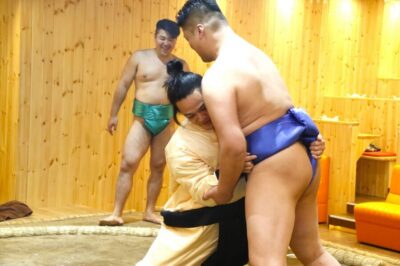
Sumo Show Experience with Chicken Hot Pot and a Photo
Read our review →
Tokyo Shinjuku Sumo Show & Experience with Photo
Read our review →
Sumo Show & Experience w/ Optional Kimono & Hot Pot
Read our review →
Authentic Sumo Experience in Tokyo: Enter the Sanctuary
Read our review →
Luxury Sumo Show Experience & Japanese cuisine & Drink
Read our review →Browse the lists this tour appears in