
Reviewed · CYCLING TOURS
Tokyo: 2-Hour Night Bike Tour of the City’s Hidden Gems
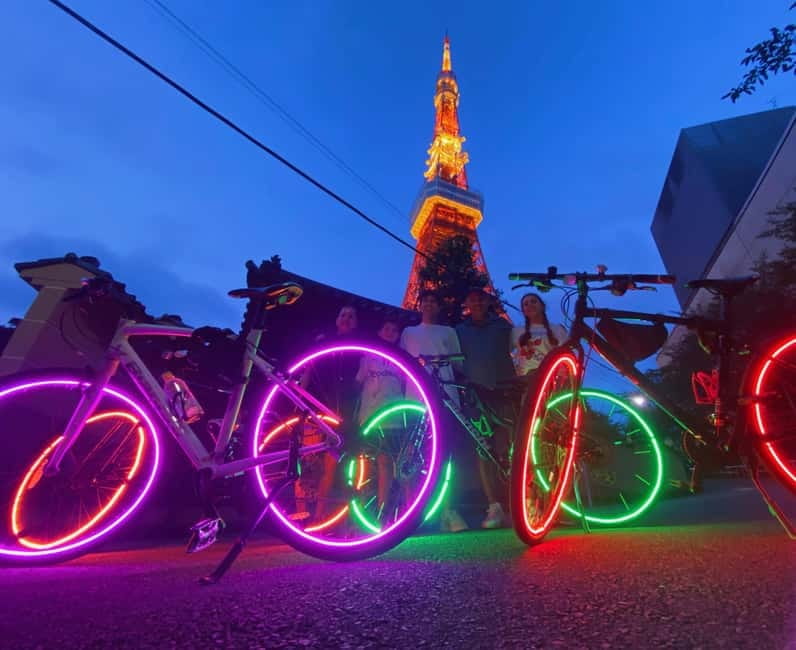
Tokyo looks different from a bicycle after sunset. On this two-hour ride, you pedal a neon-lit Bianchi or Fuji bike from Yoyogi Park through some of the city’s best-known night districts, finishing back where you began. The glowing wheels make the ride easy to spot and add a playful touch without turning the outing into a theme-park show.
I like two things in particular. First, the route links several very different parts of central Tokyo, from Shibuya’s bright crossing to the polished towers of Roppongi and the red-and-white outline of Tokyo Tower. Second, the guide can adjust the route to your interests. Kei, one of the guides named by riders, has been praised for answering questions and adding places beyond the planned route.
The catch is simple: you need to ride confidently. Tokyo cycling can mean sharing roads without bike lanes, and this is not a riding lesson. The tour is not suitable for children under 12, pregnant women, people with back problems, or anyone who cannot ride a bike.
Key points at a glance
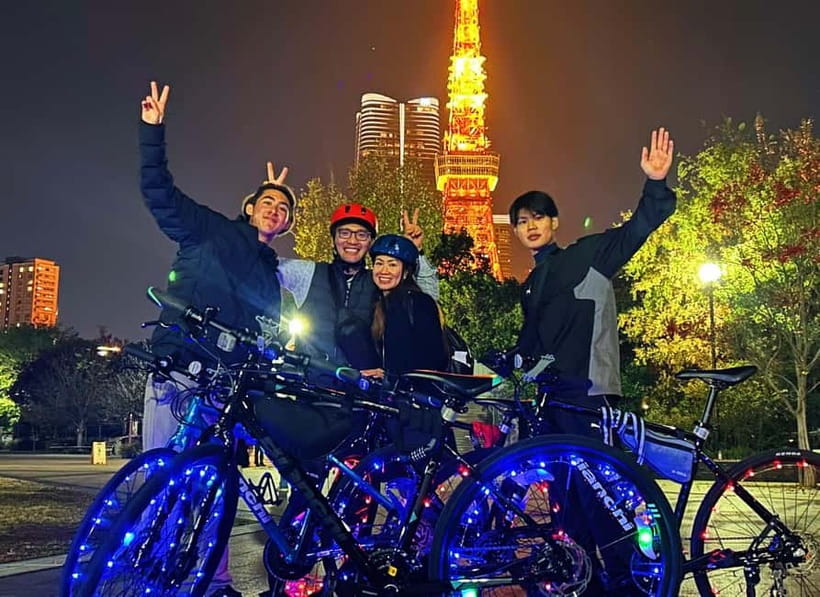
- Neon bikes from Yoyogi Park: Meet at the main entrance, where the illuminated bicycles should be easy to find.
- A five-part night route: Ride through Shibuya, Omotesando, Roppongi, Tokyo Midtown, and Tokyo Tower.
- English guidance: Your guide explains local sights, shares stories, and can respond to route preferences.
- Real city cycling: Expect roads without bike lanes in places, so confidence matters more than speed.
- Two hours for $73: The price includes the guide, customized bike, small bike pouch, and bike insurance.
- A flexible end point: You return to Yoyogi Park rather than finishing at a different station or district.
Starting beneath the trees at Yoyogi Park
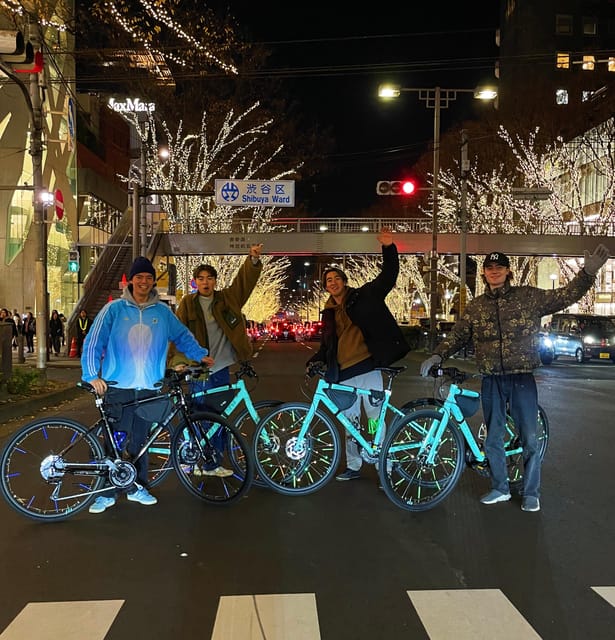
The ride begins at the main entrance of Yoyogi Park. Look for the bikes with their lights switched on. That detail matters in a busy city, since you are not hunting for a small office or trying to identify a guide from a crowd.
Yoyogi Park is a useful starting point for this kind of outing. It puts you close to several central districts, so the route can move quickly from leafy park surroundings into Tokyo’s bright commercial streets. The meeting point also makes the tour easy to find at night, especially if you are visiting Tokyo for the first time.
Your bike will be a customized neon-lit model from Bianchi or Fuji. A small pouch attached to the bike holds a phone, wallet, keys, or other compact items. You should still keep valuables to a minimum, but this is more convenient than stuffing everything into a jacket pocket.
Wear comfortable clothes and shoes, and bring water. There is no suggestion that the bikes are built for a leisurely fashion ride, so practical clothing is the sensible choice. The illumination is fun, but the real point is moving through Tokyo under your own power.
Other rides on two wheels around Tokyo:
- Tokyo Great Cycling Tour
★ 5.0 · 811 reviews - Tokyo Top Highlights 3h Guided E-bike Tour
★ 5.0 · 714 reviews - 3h Tokyo E-Bike Tour: Hidden Gems, and Local Life with guide
★ 5.0 · 670 reviews
Shibuya after dark, with the city moving around you
Shibuya is one of the tour’s main visual payoffs. The famous Scramble Crossing is surrounded by huge screens, bright signs, and streams of people, creating a scene that feels almost too busy to take in on foot. From a bike, you get a different rhythm. You are moving through the district rather than simply stopping at one viewpoint.
That does not mean you should expect a long sightseeing stop at the crossing. A two-hour cycling route must keep moving, and traffic conditions can affect how long you spend in each place. The value here is the changing view: one moment you are near the glare of the crossing, and the next you are riding through a quieter street.
Your guide adds context as you go. The experience includes local stories and explanations in English, which gives the ride more purpose than simply following lights through town. A strong guide can point out details you would miss from a taxi or train, while the bike lets you cover more ground than walking.
I would treat Shibuya as an orientation point rather than the whole attraction. If you want extended time for photos at the crossing, you may prefer to visit separately before or after the tour. If you want to connect Shibuya with several other districts in one evening, the bike route makes good use of your time.
Omotesando’s polished avenue and seasonal lights
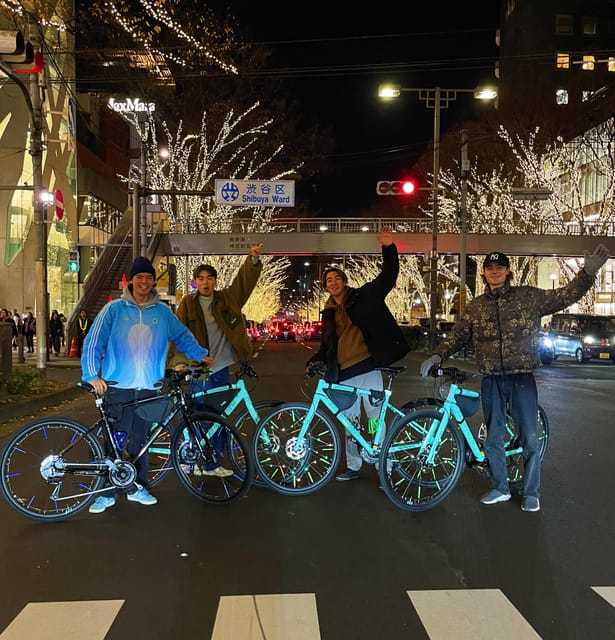
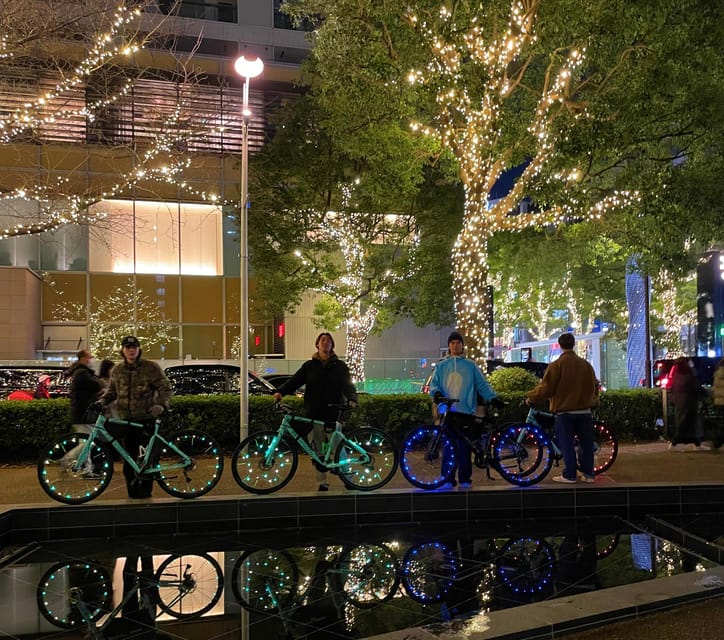
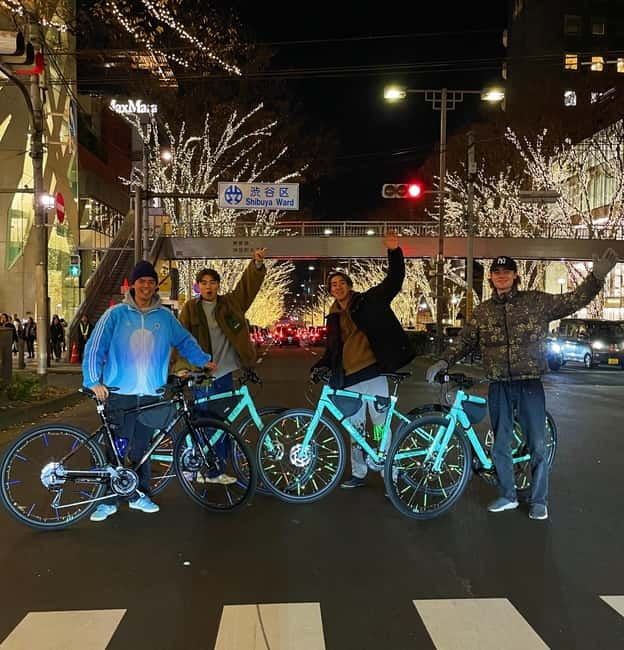
From Shibuya, the route continues toward Omotesando. This district is known for its broad avenue, upscale shops, and carefully designed streetscape. At night, seasonal illumination displays can add another layer of light to the ride.
Omotesando feels different from Shibuya. Shibuya is about giant signs and concentrated motion, while Omotesando has a more measured, design-focused look. That contrast is one reason the route works well. You are not seeing the same kind of city scene for two straight hours.
The lights here can be seasonal, so the exact display may change. That is worth keeping in mind if you are booking mainly for one particular installation. The tour promises illumination stops, but seasonal decorations are not fixed year-round.
A bicycle also gives you a useful middle ground. You can see the avenue at street level without committing to a long walk, and you are not sealed inside a vehicle. At the same time, you need to pay attention to the road, other cyclists, cars, and pedestrians. The guide leads the way, but you remain responsible for handling your bike.
Roppongi, Tokyo Midtown, and the glow of glass towers
The route then reaches Roppongi, where the tone shifts again. Here, contemporary buildings, bright signs, glass surfaces, and evening light create a more futuristic setting. Reflections from towers and installations can make the streets feel brighter than you expect.
The ride passes near Tokyo Midtown and may include seasonal illumination displays there. This is a strong section for travelers who enjoy modern architecture and city design more than old temples or traditional neighborhoods. The tour is focused on Tokyo’s night energy, not its historic side.
Tokyo Midtown also shows why a guided bike ride can be useful. A train can take you to Roppongi, but it does not show you the gradual change between districts. Walking covers the same distance slowly, while a car hides much of the street-level detail. Cycling connects the pieces at a manageable pace.
The tradeoff is road comfort. One rider specifically pointed out that Tokyo cycling sometimes means riding without bike lanes. That is the most important practical warning in the entire experience. If you normally ride only on protected paths, busy city streets may feel demanding. If you regularly cycle in traffic, you will likely find the route more natural.
Other quiet corners of Tokyo:
- Tokyo: Custom Hidden Gems & Highlights Tour with Local Guide
★ 4.7 · 272 reviews - Tokyo: 3-hour Guided E-Bike Tour of the City’s Hidden Gems
★ 4.8 · 251 reviews - Shibuya & Harajuku: Hidden Gems & Highlights Private Tour
★ 4.7 · 139 reviews - Tokyo: 3-Hour Bike or E-Bike Tour of City’s Hidden Gems
★ 4.7 · 81 reviews
Tokyo Tower, the final picture of the night
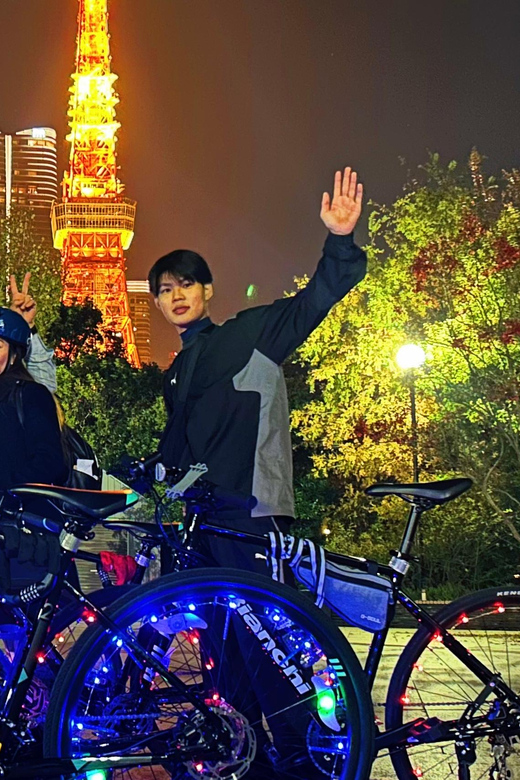
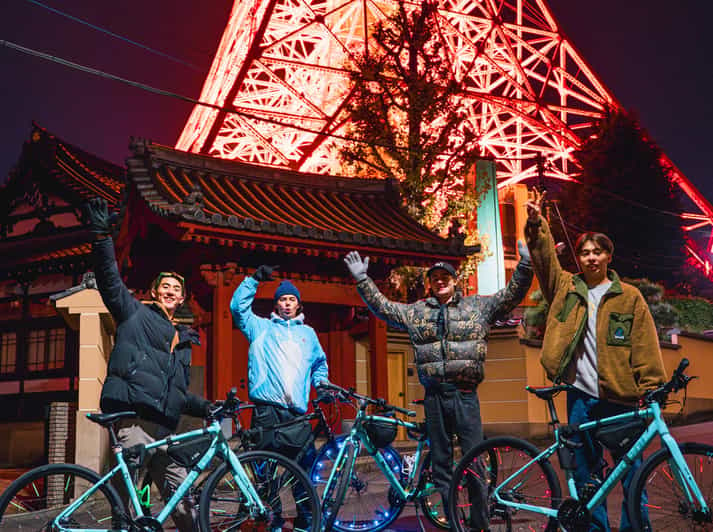
The ride’s final major sight is Tokyo Tower. Its red-and-white structure rises above the city and gives the tour a clear visual finish. After the changing lights of Shibuya, Omotesando, and Roppongi, the tower offers a more recognizable landmark and a strong backdrop for photographs.
Tokyo Tower is especially effective at night because its lighting separates it from the dark sky and surrounding buildings. You may find the final stop feels more spacious than the earlier districts, though the exact riding and stopping pattern depends on the guide and road conditions.
This is not a tower admission experience. The attraction is seeing Tokyo Tower from the outside as part of the route. If you want to go up the tower or spend a long time at its base, plan that for another visit. The bike tour gives you a moving city view, not a full attraction visit at every stop.
After the Tokyo Tower section, you return to the Yoyogi Park meeting point. That round-trip format is helpful because you do not need to work out late-night transport from a new neighborhood. It also means the outing ends where your belongings and starting arrangements are already familiar.
What the guide adds to the ride
The guide is central to the experience. You are not simply renting a bike and following a map. The package includes an English-speaking guide, local stories, and route help, so the quality of the evening depends partly on how well the guide handles the group.
Kei is one guide specifically named in the available information. He has been praised for being flexible, entertaining, and willing to adapt the route to personal interests. That is useful if you have already seen the major Tokyo sights and want to ask about something beyond the standard sequence.
The route can include places that are not part of the core plan when time and conditions allow. Do not treat that as a guarantee of extra stops, but it does suggest that you can speak up about what interests you. Tell the guide early if you care most about architecture, photo stops, famous crossings, or seasonal lighting.
An English-speaking guide also helps with the practical side of city cycling. You can ask about the road, the next stop, or the districts you pass through. The experience is still active and road-focused, but you are not left to interpret the city entirely on your own.
Is $73 a fair price?
At $73 per person, this is not the cheapest way to see Tokyo at night. Public transport costs far less, and you can walk through many of the same districts without paying for a guide or bicycle.
The price becomes easier to justify if you value the combination of equipment, guidance, and coverage. It includes a customized Bianchi or Fuji bike, bike insurance, a small pouch, an English-speaking guide, and two hours of organized riding. You are paying for a planned route between several districts, not just for bicycle use.
I see the value most clearly for first-time visitors who want a quick sense of central Tokyo at night. In two hours, you can connect areas that would feel separate on foot. It also suits repeat visitors who have already seen Tokyo from trains and sidewalks and want a different view.
The price is less appealing if you are an inexperienced cyclist, dislike traffic, or want long photo stops. In that case, a guided walking evening or self-planned train route may be more comfortable. The tour’s value depends on enjoying the ride itself, not just collecting a list of sights.
Who will enjoy this, and who should skip it?
I would recommend this experience to confident cyclists, couples, friends, and families with older children who already ride well. The neon bikes give the evening a social, lighthearted feel, and the route offers enough variety to keep a short tour interesting.
It is also a good fit for repeat visitors. One particularly useful part of the experience is the chance to see Tokyo from street level in a way that trains, cars, and ordinary sightseeing walks do not provide. A flexible guide can make the ride feel less like a fixed checklist.
You should think twice if you are uneasy around traffic. The tour is not suitable for anyone who cannot ride a bike, and the available information specifically warns about people who do not cycle confidently. Children under 12, pregnant women, and people with back problems should not book it.
Smoking, alcohol, drugs, and littering are not allowed. Those rules are basic, but they matter on a shared public-road experience. You should arrive ready to ride, not treat the outing as a bar crawl with bicycles.
Practical advice for making the ride easier
Bring water, wear shoes that grip the pedals comfortably, and choose clothing that allows easy movement. A small bag is better than a large backpack, since the bike pouch is intended for compact personal items.
Arrive at the main entrance of Yoyogi Park and look for the illuminated bikes. Since the ride begins and ends at the same place, note the meeting point before setting off. This is especially useful if you are meeting friends or plan to continue elsewhere afterward.
Be honest about your cycling level. If you have not ridden in traffic for years, a two-hour night route through central Tokyo may not be the right place to rebuild confidence. The guide can help with directions, but no guide can remove every road-related challenge.
The activity can be canceled up to 24 hours ahead for a full refund, and you can reserve while paying later. Those terms give you some flexibility while planning a Tokyo itinerary, though you should still check the final booking conditions before committing.
Should you book the neon bike tour?
Book it if you want to see Tokyo’s famous night districts in one moving sequence and you already feel comfortable cycling on city roads. The best parts are the mix of Shibuya, Omotesando, Roppongi, Tokyo Midtown, and Tokyo Tower, plus the guide’s ability to explain the city and adjust the route.
Skip it if you want a relaxed sightseeing outing with no traffic concerns, or if you cannot ride confidently. For the right cyclist, $73 buys more than a bicycle rental: it buys a guided route, illuminated equipment, local context, and a fresh way to connect central Tokyo after dark.
FAQ
How long is the Tokyo neon bike tour?
The tour lasts two hours.
Where does the tour begin?
It begins at the main entrance of Yoyogi Park. The neon-lit bikes should make the meeting point easy to identify.
Where does the tour end?
The activity ends back at the Yoyogi Park meeting point.
Which areas does the route visit?
The route includes Shibuya, Omotesando, Roppongi, Tokyo Midtown, and Tokyo Tower, along with the streets connecting these areas.
Is the tour offered in English?
Yes. The tour includes an English-speaking guide.
What type of bicycles are provided?
The tour provides customized neon bikes from Bianchi and Fuji.
Is the tour suitable for children?
It is not suitable for children under 12 years old.
What should I bring?
Bring comfortable shoes, water, and comfortable clothing. A mini pouch on the bike can hold small items such as a phone, wallet, or keys.
Just added in Tokyo
- The 10 Tastings of Tokyo With Locals: Private Street Food Tour★ 5.0 · 48 reviews
- Small Town in the Big City: Tasting Tokyo’s Kichijoji★ 5.0 · 195 reviews
- Small Town in the Big City: Tasting Tokyo’s Kichijoji★ 5.0 · 16 reviews
- EXCLUSIVE Tokyo Secret: Kichijoji Small-Group Food & Bar Hopping★ 5.0 · 29 reviews
- Explore Kichijoji: Walk Through One of Tokyo’s Beloved Districts★ 5.0 · 21 reviews
- :Tokyo,Shibuya/ Pro Photography in Kimono / English-Friendly★ 5.0 · 26 reviews
- 【R34】Tokyo:Private Daikoku tour in Modified R34★ 4.9 · 92 reviews
- Tokyo:Calligraphy &Make your original folding fan in Asakusa★ 5.0 · 62 reviews
Cycling Tours, compared.
3h Tokyo E-Bike Tour: Hidden Gems, and Local Life with guide
Read our review →
Arashiyama Bamboo Forest & Hidden Gems Bike Tour (Early Bird)
Read our review →
5 Top Highlights of Kyoto Full Day Bike Tour (E-bike option)
Read our review →
Hiroshima 2hr Peace Cycling Tour with Local Guide
Read our review →Browse the lists this tour appears in