
Reviewed · KIMONO DRESSING & PHOTOSHOOTS
Tokyo: Calligraphy Experience with yukata or Samue
Japanese calligraphy is more than writing with a brush. It is a slow, focused art in which each stroke has weight, direction, and meaning. In this 90-minute Tokyo class, you learn the basics from a professional instructor, practice on your own, and finish with a piece of artwork rather than a hurried souvenir.
I especially like the chance to wear a yukata or samue, then take a quiet break with Japanese tea. I also like the personal touch: instructors may write your name for you, and some participants have received help choosing a calligraphy set to continue practicing at home.
The main caution is simple: this is a hands-on art class, not a sightseeing tour. You need patience, clothes that can get dirty, and enough time to concentrate. Children under 4 and people over 70 cannot join.
Key points
- Your final kanji artwork goes home with you, mounted on a board or finished paper suitable for keeping.
- Hana, Tomo, and Koushi are among the instructors praised by name, with English and French support available.
- Traditional clothing adds a playful cultural layer, with yukata, kimono, or samue mentioned during the class.
- You learn brush handling before writing, including basic lines, pressure, and the order of strokes.
- Tea, snacks, and a welcoming setting slow the pace, making this a good break from Tokyo’s busy streets.
- The group is limited to 10 people, so the teacher can offer individual guidance.
What this Tokyo calligraphy class actually offers
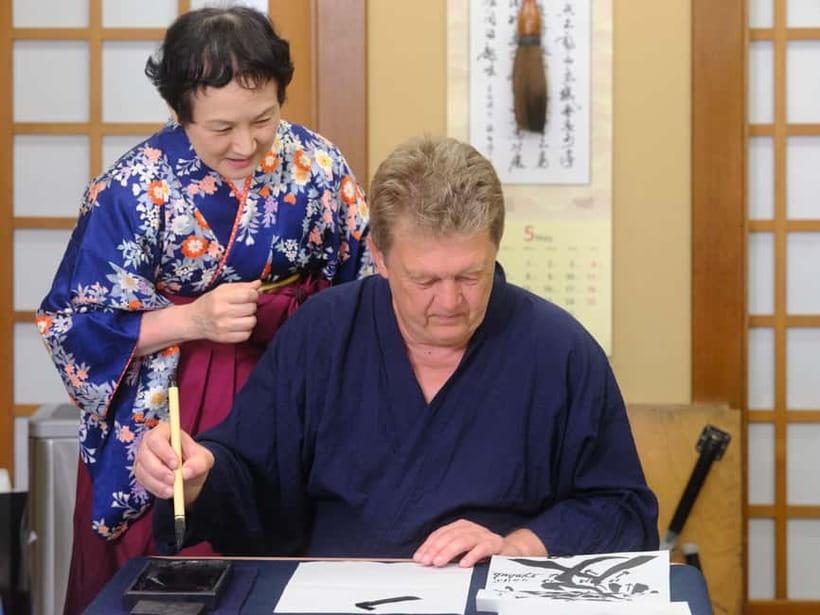
This is a cultural workshop with a clear goal: learn enough about Japanese calligraphy to create one finished work of your own. You are not simply watching a demonstration or posing in traditional clothing. You handle the brush, repeat the basic movements, write a kanji, and then produce a final piece to take home.
The class lasts 90 minutes and costs $64 per person. That price includes the instructor, all calligraphy tools, English or French guidance, tea, and your finished artwork. I consider that fair value if you want a structured cultural activity with a lasting keepsake. You are paying for instruction and materials, not just for access to a photo setting.
The group size is capped at 10. That matters here. Calligraphy depends on small corrections, such as how you hold the brush or where you pause during a stroke. A smaller group gives the teacher a better chance to watch your work and help before you move on to the final sheet.
Other dressing and photo sessions in Tokyo:
- Let’s make kimono !(Kimono is a gift for you
★ 5.0 · 252 reviews - Tokyo: Matcha and Kimono Experience
★ 4.7 · 219 reviews - Tokyo: Asakusa Kimono Dressing and Matcha Experience
★ 4.9 · 173 reviews
Meeting the instructor beside Kaideiji
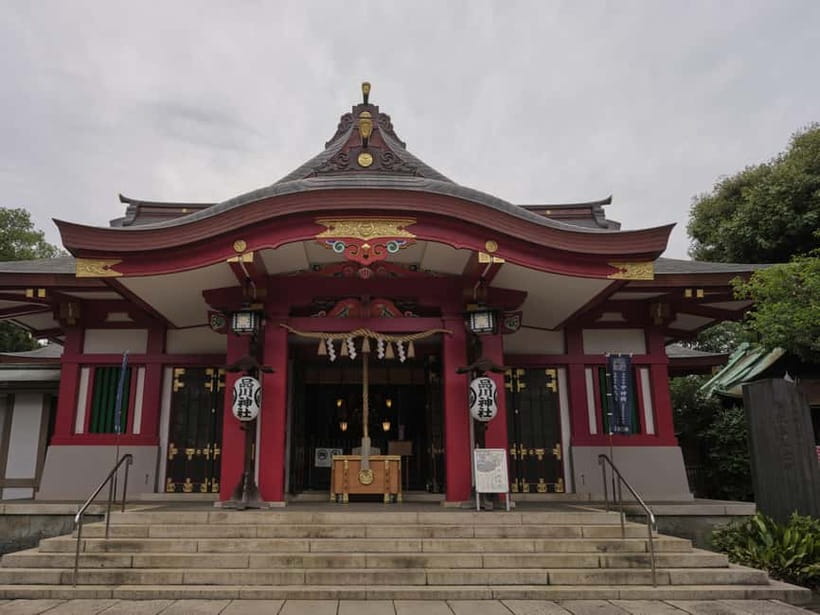
The meeting point is described using local landmarks: next to a daycare and beside Kaideiji, written 海德寺. You will need to follow the meeting instructions carefully, since this is not presented as a major station-side attraction with a large public entrance.
Transportation to the meeting point is not included. Plan your route before class and allow extra time for finding the correct building. Once you arrive, the mood shifts away from Tokyo’s fast pace. Tea and snacks are offered at the start, helping you settle in before the brush work begins.
The instructors include Hana, Tomo, and Koushi, with English and French interpretation available. The teaching style appears to be patient and step-by-step. That is useful for beginners, since Japanese calligraphy can look simple from a distance but feels precise once the brush touches paper.
Yukata, kimono, or samue before the first stroke
The clothing element gives the class a stronger sense of occasion. Several participants used the chance to wear a kimono or yukata, while samue is also part of the activity title. The exact clothing option may depend on the session, so check the current booking details if dressing up is especially important to you.
This is not only about photographs. Traditional clothing changes how the class feels. You slow down, sit differently, and become more aware of the ritual around the brush and paper. For families and couples, it also creates a shared activity before the more serious concentration begins.
Wear something that can get dirty. Ink and brushwork are controlled, but accidents happen, especially when you are learning pressure and movement for the first time. I would avoid treasured light-colored clothing and choose something comfortable enough for sitting and practicing.
Learning the brush one line at a time
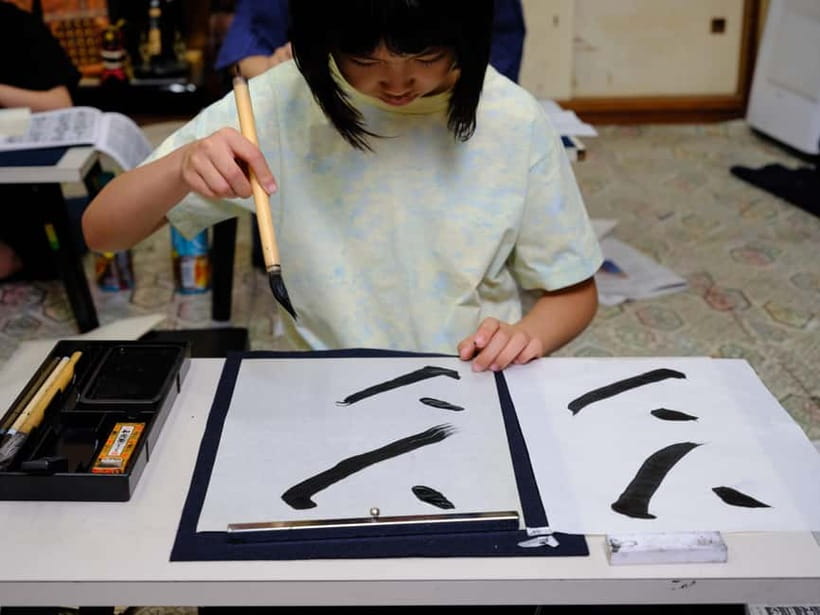
The class begins with the fundamentals. You learn how to use the brush, how much pressure to apply, and how to draw basic lines. These exercises can feel modest at first, but they explain why professional calligraphy has such a distinct look.
A brush does not behave like a ballpoint pen. A stroke can become thicker or thinner depending on pressure, speed, and angle. You may need to lift the brush cleanly, stop without leaving a blot, and keep the movement steady. The instructor guides you through these small actions before asking you to write a complete character.
You also learn about the history, spirituality, and meaning connected to the characters. This gives the activity more depth than simple handwriting practice. A kanji is not only a shape to copy. Its form, order, and meaning all matter, and the instructor helps connect the physical act of writing with Japanese cultural ideas.
French-speaking visitors have a particularly useful option here. The class can be conducted with French support, not only basic translation. English instruction is also available, making the session accessible to international visitors who have never studied Japanese.
Other things to make with your hands in Tokyo:
- Chopstick Making Workshop in Ginza
★ 4.8 · 1,366 reviews - Tokyo Chopstick Making Workshop with Artisan
★ 5.0 · 466 reviews - Tokyo: Matcha Making Experience with Mochi Sweets in Asakusa
★ 4.9 · 388 reviews - Tokyo: Calligraphy on Kanji Fan & Scroll with Drink
★ 5.0 · 210 reviews
Choosing and creating your kanji
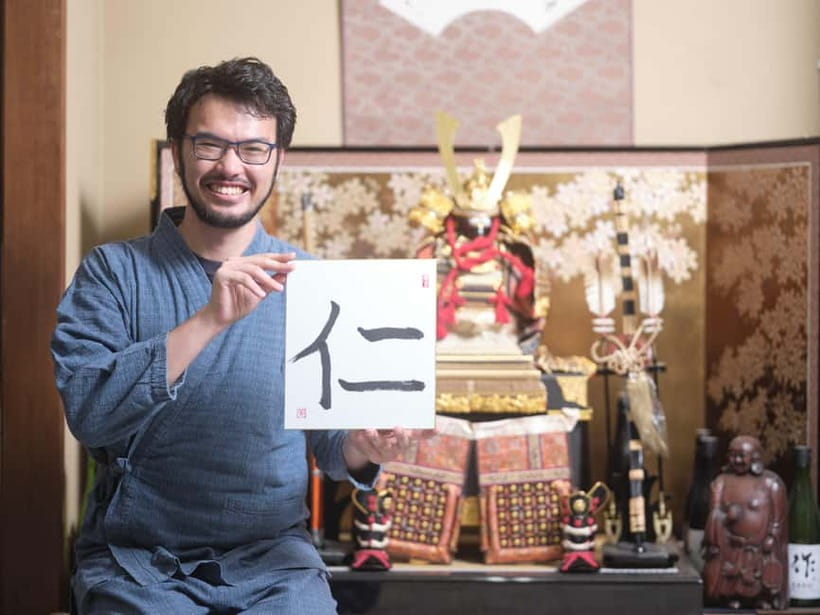
After practice, you move toward your own kanji artwork. The supplied information does not specify one fixed character for everyone, so the exact choice may depend on the class and your preferences. You can expect to receive guidance rather than being left to copy a character without context.
This is the part where concentration becomes important. You have practiced separate lines, but now those strokes must work together as one balanced character. The instructor can help you refine the shape and decide when a piece is ready for the final attempt.
Some participants also had their names written by the teacher. That makes a useful second souvenir, especially if you want something personal but do not feel ready to create a full name in Japanese calligraphy yourself. It is also a thoughtful option for children or family members who want a keepsake with their name.
Do not judge your final work by Western ideas of perfect handwriting. Calligraphy includes balance, energy, and the character of the stroke. Your piece will be connected to the process of learning, which is part of its value.
Tea, snacks, and a slower pace
The tea break is a small part of the schedule, but it helps shape the class. You are welcomed with Japanese tea and snacks, then given time to settle into the setting. After focused brush practice, this pause keeps the class from feeling rushed.
I like this combination of quiet instruction and simple hospitality. Tokyo offers plenty of high-energy activities, but calligraphy gives you a chance to sit still and pay attention. The tea is not a separate sightseeing stop. It is part of the rhythm of the workshop.
The calm setting may suit families especially well, though very young children cannot join. One family booked the class for a birthday and appreciated the help provided by the instructors, including assistance arranging a taxi and finding a calligraphy set for a child. Those extras are not guaranteed parts of the listed program, but they show the kind of personal help that may be available when time allows.
Taking home a real piece of your work
Your finished calligraphy is included, so you do not need to buy a separate souvenir at the end. You create the piece during the class and take it with you, giving the object a clear connection to your time in Tokyo.
Some participants described completing their final artwork on a board or firm backing. The precise presentation can vary, but the key point is that you leave with a finished piece rather than practice sheets alone.
This is good value for anyone who likes useful souvenirs. A shop-bought print may be more polished, but it will not carry the memory of learning the strokes yourself. Your work may not be perfect, and that is part of the story. It records your first attempt at a traditional Japanese art.
If you want to continue after the class, you can ask about buying a calligraphy set. Assistance with this was provided during one session, but a set is not listed as part of the $64 price.
How the 90 minutes feel
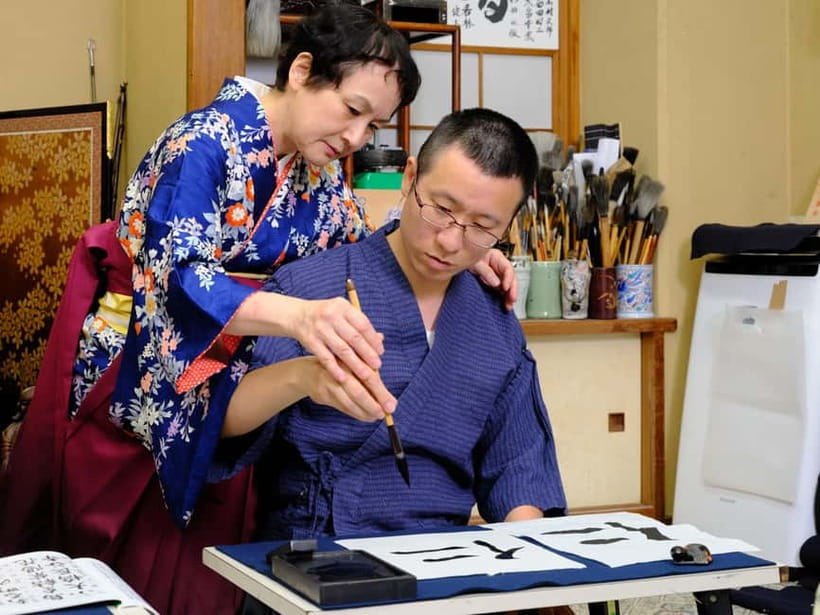
The schedule is compact but sensible. A typical flow is likely to include:
- Arrival, welcome tea, and a brief introduction
- Traditional clothing, when available
- An explanation of calligraphy’s background and meaning
- Demonstration of brush use and basic lines
- Practice with stroke control and character structure
- Creation of a final kanji artwork
- A closing presentation of your work and any name inscription
The class is long enough to produce something personal, but not long enough for advanced study. You will leave with an introduction, not professional-level skill. If you already practice Japanese calligraphy, you may find the basic instruction too easy. For a first class, however, the length works well.
The activity also requires concentration. This is not an ideal choice if you want constant movement or a casual drop-in session. The quiet focus is precisely what makes it different from many Tokyo activities, but it may not suit every mood.
The strongest part: patient, personal teaching
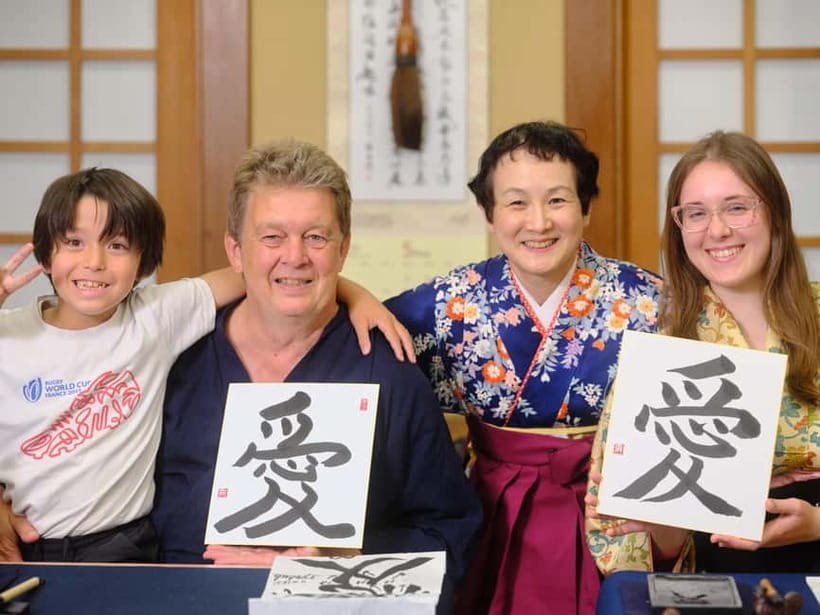
The most praised part of this class is the instruction. Hana is described as kind and clear, guiding participants through the brush, lines, and kanji one stage at a time. Tomo is noted for taking time with students, while Koushi is described as experienced and artistically skilled.
That individual attention matters because calligraphy can feel intimidating. A good teacher makes the first attempts manageable without taking the brush away from you. You get enough practice to understand the movement, then enough help to make the final piece feel deliberate.
The atmosphere also appears warm rather than formal. Tea, snacks, friendly introductions, and language support help lower the barrier for people who may know little about Japanese writing. French-speaking participants can take part fully, and English-speaking visitors have the same basic access to instruction.
Who should book this activity
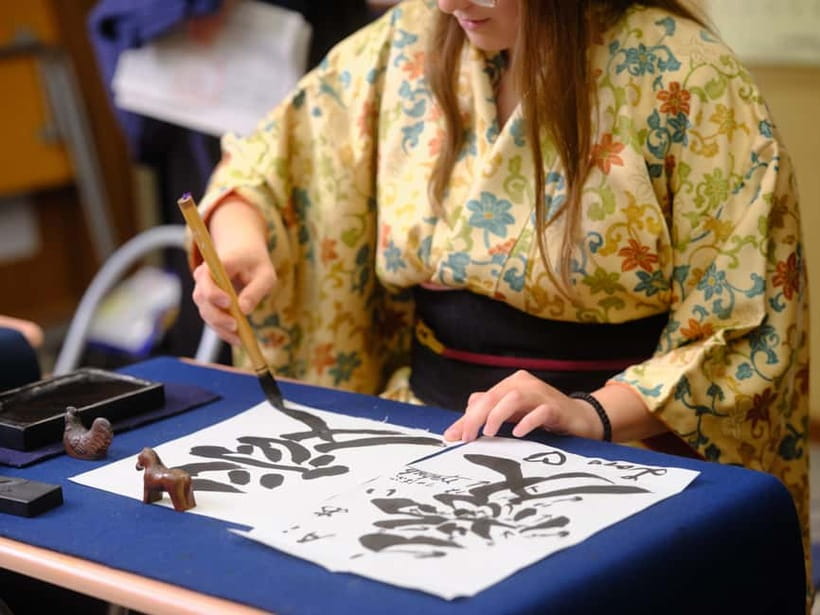
I would recommend this class to:
- First-time visitors who want a cultural activity with real participation
- Couples looking for a calm shared experience
- Families with children aged 4 to 70
- Anyone who enjoys making a physical souvenir
- Visitors interested in Japanese writing, ritual, or traditional clothing
- French-speaking visitors who want instruction in their own language
It is especially suitable for a birthday or another small celebration. The clothing, tea, and finished artwork give the session a sense of occasion without requiring a full-day commitment.
I would be more cautious if you dislike sitting still, have difficulty with careful hand movements, or want a tour that covers several Tokyo sights. You also need to protect your clothing from ink and follow the age limits. People over 70 and children under 4 are not accepted for this activity.
Is $64 a fair price in Tokyo?
At $64, the class is not the cheapest way to spend 90 minutes in Tokyo. The value comes from what is bundled into that time: professional instruction, tools, language support, traditional clothing when available, tea, and a finished work to take home.
A lower-cost activity might let you watch a demonstration or try a few strokes. Here, you receive a guided lesson and produce a personal result. If you value cultural context and direct contact with the art, the price is reasonable.
The value is also stronger for families and couples, since everyone can take part in the same process. Solo visitors may appreciate the quiet instruction and the chance to ask direct questions. If you only want a quick photo in a kimono, this class may offer more teaching than you need.
Free cancellation up to 24 hours before the start gives you some flexibility, and you can reserve now and pay later. Check the available starting times before planning the rest of your day, since the activity lasts 90 minutes and transport is not included.
Should you book this calligraphy class?
Book it if you want to slow down, learn a little, and leave Tokyo with something you made yourself. The combination of brush practice, cultural explanation, tea, traditional clothing, and personal guidance gives the session more substance than a simple souvenir stop.
I would choose this activity for a family afternoon, a birthday, or a break between larger Tokyo attractions. The strongest reasons are the small group, the patient instructors, the English and French support, and the finished artwork.
Skip it if you want a fast, casual attraction or if sitting quietly with a brush sounds tedious. For everyone else, $64 buys a focused cultural lesson with a personal result, and that is a useful addition to a Tokyo itinerary.
FAQ
How long does the Tokyo calligraphy class last?
The activity lasts 90 minutes.
How much does the calligraphy experience cost?
The listed price is $64 per person.
What languages are available?
Instruction is available in English and French.
What is included in the price?
The price includes professional instruction, calligraphy tools, the instructor fee, an English-speaking guide, Japanese tea, and your finished calligraphy work to take home.
Can I wear traditional Japanese clothing?
The experience includes the option to wear a yukata or samue. Participants have also worn kimono during the session, but you should check the current details to confirm the clothing available for your booking.
Do I need to bring calligraphy equipment?
No. All necessary calligraphy tools are provided.
What should I wear?
Wear clothes that can get dirty, since you will be using ink and a brush.
Are children allowed to join?
Children under 4 are not suitable for this activity. The stated age restriction also excludes people over 70.
Can I cancel the booking?
You can cancel up to 24 hours in advance for a full refund. The reserve-now, pay-later option also lets you keep your plans flexible.
Just added in Tokyo
- The 10 Tastings of Tokyo With Locals: Private Street Food Tour★ 5.0 · 48 reviews
- Small Town in the Big City: Tasting Tokyo’s Kichijoji★ 5.0 · 195 reviews
- Small Town in the Big City: Tasting Tokyo’s Kichijoji★ 5.0 · 16 reviews
- EXCLUSIVE Tokyo Secret: Kichijoji Small-Group Food & Bar Hopping★ 5.0 · 29 reviews
- Explore Kichijoji: Walk Through One of Tokyo’s Beloved Districts★ 5.0 · 21 reviews
- :Tokyo,Shibuya/ Pro Photography in Kimono / English-Friendly★ 5.0 · 26 reviews
- 【R34】Tokyo:Private Daikoku tour in Modified R34★ 4.9 · 92 reviews
- Tokyo:Calligraphy &Make your original folding fan in Asakusa★ 5.0 · 62 reviews
Kimono Dressing & Photoshoots, compared.
Sumo Show & Experience w/ Optional Kimono & Hot Pot
Read our review →
KYOTO Tea Ceremony with kimono near by Imamiya Jinjya Shrine
Read our review →
Kimono and Tea Ceremony Experience at Cultural Asset
Read our review →
Browse the lists this tour appears in