
Reviewed · TEMPLE & SHRINE TOURS
Nikko: Kegon Falls, Lake Chuzenji & Toshogu Temple
Nikko gives you a striking change of pace from Tokyo: cedar forests, mountain roads, a volcanic lake, and one of Japan’s most decorated shrines all fit into a single long day. Toshogu Shrine is the cultural centerpiece, while Kegon Falls and Lake Chuzenji bring the fresh air and open views.
I like the way the tour combines famous sights with useful guidance. Guides such as Melody, Jorge, Beru, and Eric have explained shrine symbols, Japanese customs, basic phrases, and lunch choices, while drivers such as Hashimoto-san and Kikuchi-san have handled the winding mountain roads carefully. I also like the free time at each stop, which lets you take photos and wander without being shepherded every minute.
The tradeoff is clear: you spend about six hours on the bus during an 11-hour day. The $89 price can be good value if you want transport and structure, but check the booking option closely because Toshogu entry and lunch may cost extra.
Key points to know before booking
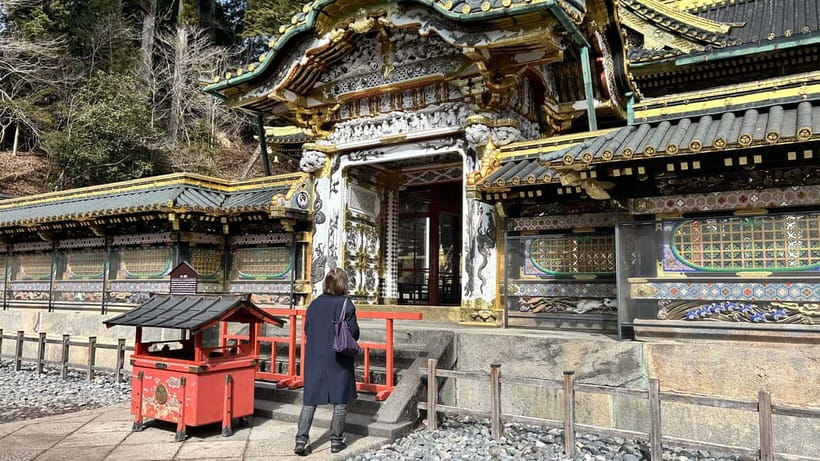
- Toshogu is the main event: The shrine’s gold details, carved gates, cedar setting, and famous wise monkeys make the admission option worth serious thought.
- Kegon Falls is a short but powerful stop: The nearly 100-meter waterfall is viewed from an observation deck, with time for lunch and photos.
- Lake Chuzenji adds calm after the shrine: You get about 40 minutes to walk along the shore and enjoy mountain scenery.
- The coach saves planning time: You avoid arranging several train, bus, and local transport connections from Tokyo.
- Guides add cultural context: English and Spanish commentary covers history, shrine etiquette, Japanese life, and practical directions.
- Winter changes the route: In January and February, weather may replace Kegon Falls and Lake Chuzenji with panoramic views of Rinnoji Temple and Futarasan Shrine.
Why Nikko works as a day trip from Tokyo
Nikko is far enough from Tokyo to feel like a proper escape, but close enough to reach on a long organized day. The tour leaves from Ginza, where you board an air-conditioned coach, then trades Tokyo streets for wooded roads and mountain scenery.
That transition is part of the appeal. You begin in one of the world’s busiest cities and end among cedar trees, rushing water, and a highland lake. You do not need to work out separate tickets or connections, and the guide can explain what you are seeing before you arrive.
You should set your expectations correctly, though. This is not a slow country retreat. The drive takes roughly two and a half hours each way, with a further 30-minute ride from Toshogu to the waterfall area and a short 10-minute transfer to Lake Chuzenji. The coach makes the day easy to organize, but the time in your seat is substantial.
Other temples and shrines in Tokyo people book:
- Tokyo: Meiji Shrine, Asakusa, Skytree Bus Tour and Cruise
★ 4.7 · 1,986 reviews - Tokyo: Asakusa Walking Tour with Sensoji Temple Visit
★ 4.8 · 1,583 reviews - Tokyo: Nikko Toshogu Shrine and Kegon Waterfall Tour
★ 4.5 · 1,266 reviews
Seeing Shinkyo Bridge from the coach
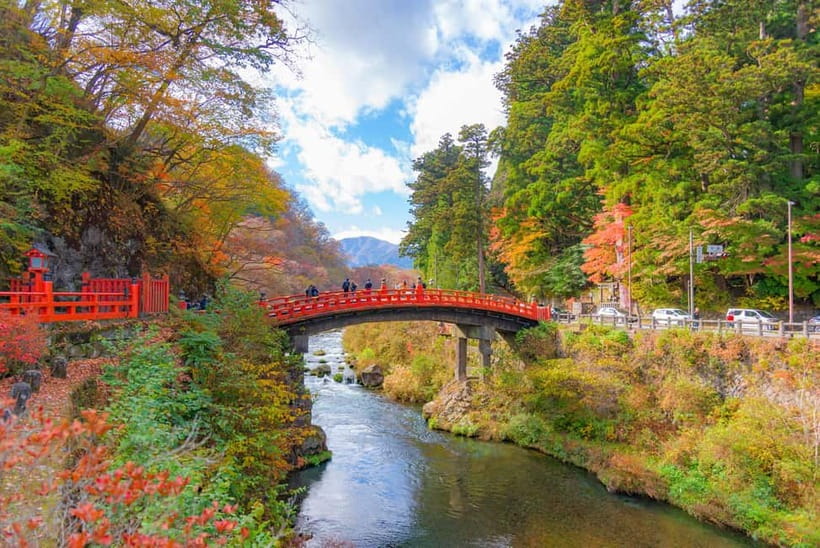
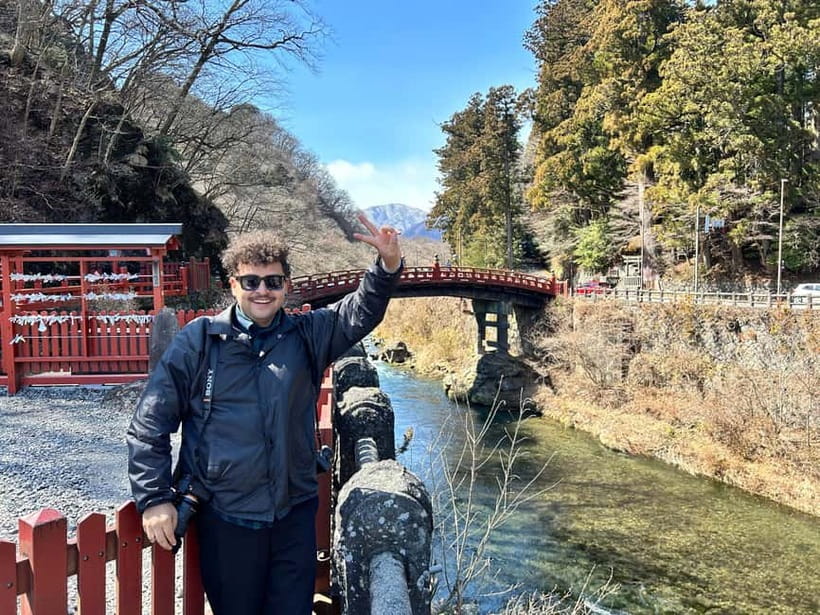
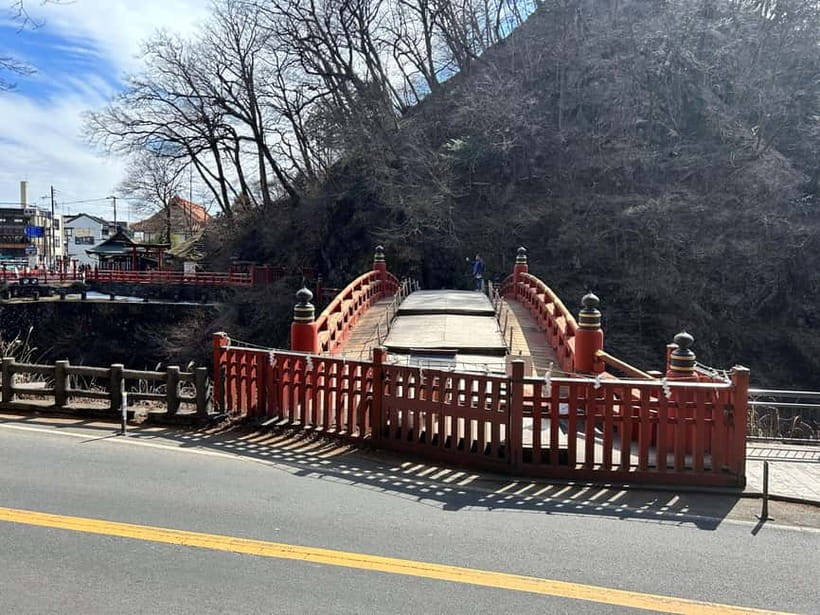
Your first Nikko sight is the Shinkyo Bridge, viewed during the scenic drive. Its deep red structure crosses the Daiya River and marks the entrance to Nikko’s sacred area.
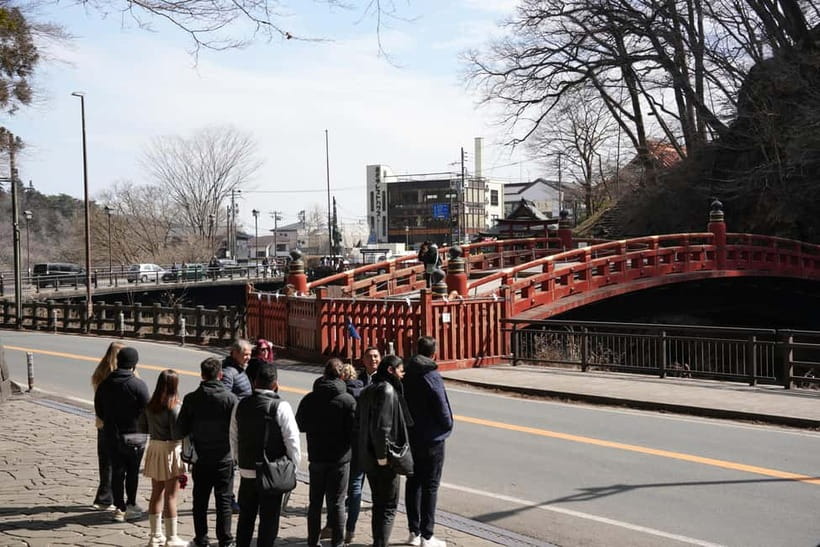
This is more of a photo opportunity than a full bridge visit. You should keep your camera ready and listen for the guide’s directions, since the coach continues toward Toshogu. The view works well as an introduction: red bridge, forest, river, and mountain surroundings in one frame.
Several people have praised guides for pointing out landmarks and making meeting points easy to find. That matters here because the opening view is brief. If you expect a long stop beside the bridge, you may be disappointed, but as a quick first glimpse it sets the tone nicely.
Toshogu Shrine and the Tokugawa world
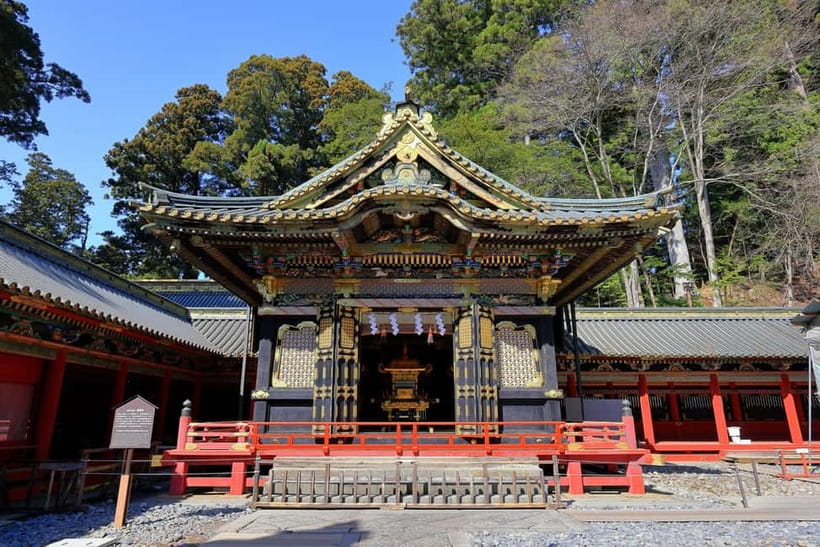
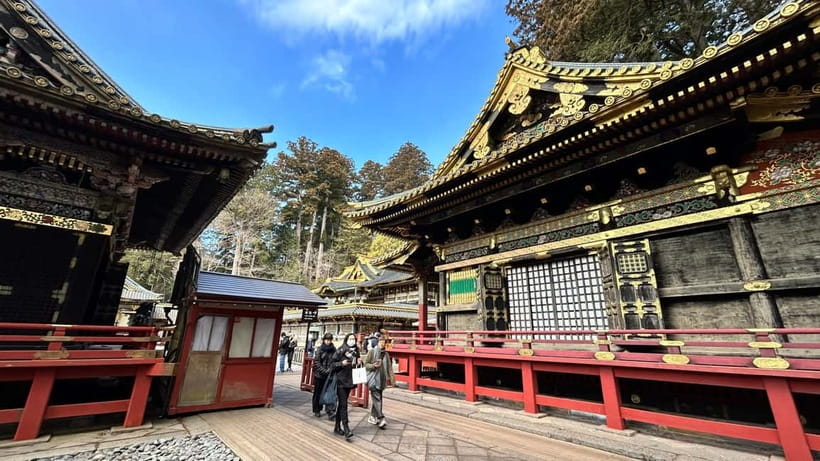
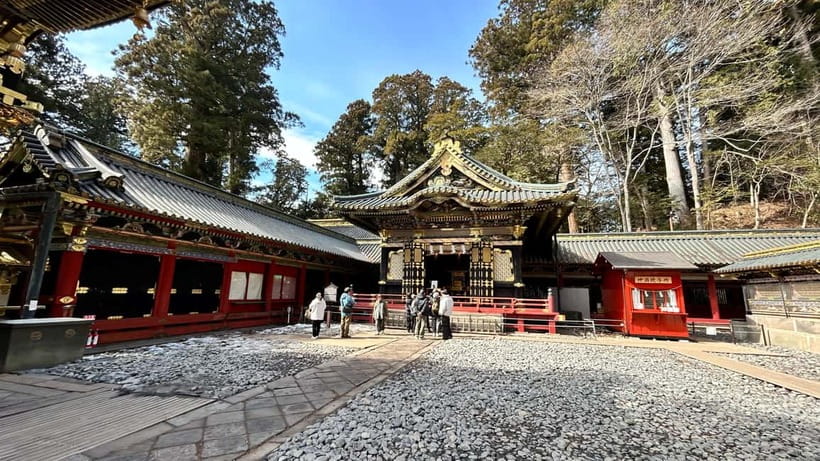
The 2-hour-15-minute Toshogu visit is the longest stop and the cultural heart of the day. Toshogu is a UNESCO World Heritage Site dedicated to Tokugawa Ieyasu, the founder of the shogunate that ruled Japan for centuries.
The setting is as important as the buildings. Tall cedar trees frame ornate gates and halls, and the contrast between dark forest and bright decoration gives the shrine its unusual character. Gold accents, detailed carvings, and strong colors reward a slower look than a quick photograph.
Look for the famous three wise monkeys, associated with the teaching of seeing no evil, hearing no evil, and speaking no evil. The guide can help connect these familiar carvings with the wider stories and symbols around the shrine. Several guides have also explained Buddhist and Shinto ideas, which makes the site easier to understand than it would be if you simply walked through taking pictures.
I recommend choosing the option that includes Toshogu admission if you want the full experience. Without the ticket, you have free time around the area, but the most impressive gates and sacred buildings require entry. One traveler specifically felt the ticket was expensive compared with buying it separately online, so compare the option price before paying. Others found the included entry worthwhile, especially because a guide can point out details you might miss.
Expect some walking and steps. The main complex is not a flat, effortless museum visit, and the route to the burial area includes about 200 steps according to one detailed account. Wear shoes with a firm sole, and allow time for the group to regroup after exploring.
The guides are one of the tour’s strongest features. Melody has been praised for explaining symbols and stories clearly in both English and Spanish. Jorge has helped people understand where to go next and how much time they have. Beru has mixed history with basic Japanese expressions and humor. These names may change on your departure, but the guide quality is a real part of the tour’s value.
Lunch near Kegon Falls
After Toshogu, the coach heads into the mountain area for lunch and the Kegon Falls stop. You have about 85 minutes here, so lunch needs to be handled efficiently if you also want time for the waterfall.
Lunch is included only with the premium option. Read the fare details carefully because the standard price does not necessarily cover a meal. The guide may help you use a ticket machine or choose from local food, which is useful if you are not familiar with Japanese ordering systems.
Bring some physical cash. One person specifically advised it after using local food stops, and it is sensible advice for a day outside central Tokyo. The tour does not promise a particular dish or restaurant, so think of lunch as a practical local meal rather than a formal food experience.
The 85-minute stop gives you a reasonable balance. You can eat, visit the observation area, and take photographs, but you do not have time to linger over a long meal. If food is a priority, keep your order simple and follow the guide’s return instructions.
Other places of worship worth the walk in Tokyo:
- Tokyo Panoramic 1 Day: Meiji Shrine, Asakusa, Odaiba and SKYTREE®
★ 4.5 · 1,222 reviews - Tokyo: Zen Meditation at a Private Temple with a Monk
★ 5.0 · 510 reviews - Mt. Fuji Heritage Tour: Traditional Villages, Lakes & Shrine
★ 4.5 · 509 reviews - Tokyo: Samurai Entertainment Night Show in Kanda Shrine
★ 4.6 · 417 reviews
Kegon Falls from the observation deck
Kegon Falls is one of Nikko’s most memorable natural sights. Water drops nearly 100 meters from Lake Chuzenji into a rocky valley, and the observation deck gives you a direct view of the cascade.
The waterfall changes with the season and weather. Autumn brings colorful trees around the cliffs, while mist and cloud can give the scene a more muted mood. The falls are not a long walk or a full-day hike on this tour. You arrive, take in the view, photograph the water, and move on.
That short format suits you if you want a major Nikko sight without a demanding walk. It may feel rushed if you want to explore every viewpoint or spend quiet time near the falls. The guide’s clear instructions are useful here, especially when you need to locate the coach again after wandering.
The winter qualification is important. In January and February, weather conditions may make the mountain stops unsuitable, and the itinerary replaces Kegon Falls and Lake Chuzenji with panoramic views of Rinnoji Temple and Futarasan Shrine. Do not book this trip in midwinter solely for the waterfall without accepting that change.
Lake Chuzenji at the foot of Mount Nantai
A 10-minute coach ride brings you to Lake Chuzenji, a highland lake formed by volcanic activity. You have around 40 minutes to walk along the shore, take photographs, and enjoy the cooler mountain air.
This stop is quieter than Toshogu and less dramatic than the waterfall, but it gives the day breathing room. Forested hills and misty views surround the water, and the shore offers a simple place to pause after the shrine and lunch.
Forty minutes is enough for a short stroll and photos. It is not enough for a long lakeside walk, a boat trip, or a relaxed café visit. Keep your watch visible and do not wander too far from the meeting area.
The lake is also a useful reminder that Nikko is more than temples. The tour links Japan’s political and religious past with mountain scenery shaped by volcanic forces. That variety is why this makes a strong first visit to the area, even if independent visitors could spend several days here.
What the long coach ride is really like
The transport is comfortable, air-conditioned, and rated highly for safety and comfort. Drivers such as Hashimoto-san, Kikuchi-san, Tanaka-san, and Ejima-san have been singled out for calm handling of the mountain roads. That is not a small detail: the route includes tight bends and changing traffic conditions.
The coach also gives you a chance to rest between stops. Guides often use the ride to explain Japanese history, language, daily customs, and sightseeing etiquette. Jorge has been praised for switching smoothly between English and Spanish, while Melody and Beru have kept the return journey lively with stories and cultural notes.
Still, you should bring water, snacks if needed, and something to occupy you during quiet stretches. The return trip can take more than three hours, and weekend traffic may stretch the schedule. The order of stops can also change because of traffic, weather, events, or local operating conditions.
Large coach windows help with views, but you should not expect a continuous sightseeing tour from your seat. The best scenery comes during the mountain approach and between the organized stops.
Price, options, and practical value
At $89 per person, this tour is priced for convenience rather than the absolute lowest cost. You are paying for round-trip transport from Tokyo, a bilingual English and Spanish guide, and a planned route covering several hard-to-combine sights.
The value improves if you want to see Nikko in one day and prefer not to manage local connections. It is also useful if you want historical explanations at Toshogu rather than simply walking through the shrine on your own.
Check three things before booking:
- Whether Toshogu admission is included
- Whether lunch is included
- Which Ginza meeting point and start time apply to your chosen option
The meeting point is listed around Ginza Inz 2, but the exact arrangements can vary by option. Arrive early, wear comfortable shoes, and carry a hat, sunscreen, water, and a camera.
You can cancel up to 24 hours before departure for a full refund, and the reserve-now-pay-later option gives you some flexibility. The tour is not suitable for wheelchair users, so anyone with mobility concerns should consider the steps, uneven shrine grounds, and mountain stops before booking.
Who should choose this Nikko tour
I would choose this trip if you have limited time in Tokyo and want a broad introduction to Nikko. It suits first-time visitors, couples, solo visitors, and families with older children who can manage a long day and plenty of walking.
It is especially useful if you value explanations. The guides do more than announce the next stop. They may explain shrine symbols, Japanese customs, basic language, lunch procedures, and the history behind the Tokugawa buildings.
I would hesitate if you dislike coaches, need a flexible pace, or want to spend a full day at Toshogu alone. The schedule is well filled, and the long return to Tokyo can feel tiring. Independent visitors may also find that buying shrine admission separately is cheaper, depending on the fare option.
For the best chance of strong scenery, autumn is appealing, with colorful trees around the shrine and falls. Winter requires more caution because Kegon Falls and Lake Chuzenji may be removed from the route due to weather.
Should you book it?
Book this tour if you want one organized day that combines Nikko’s major cultural and natural sights without solving the transport puzzle yourself. The strongest reasons are the detailed Toshogu visit, careful mountain driving, bilingual guidance, and the chance to see both Kegon Falls and Lake Chuzenji.
Before paying, compare the ticket options and decide if lunch and shrine entry are worth adding. Accept the long bus day, bring cash, and treat the schedule as a framework rather than a guarantee. For a first look at Nikko from Tokyo, that is a fair trade.
FAQ
How long does the Nikko tour last?
The experience lasts about 11 hours, including the coach journey from Tokyo and the return to Ginza.
Where does the tour begin and end?
The listed location is around Ginza Inz 2. The exact meeting point may vary depending on the option you book, so check your confirmation carefully.
Is Toshogu Shrine admission included?
It depends on the option selected. Some options include entrance to Toshogu Shrine, while others provide free time to explore the surrounding area independently.
Is lunch included?
Lunch is included with the premium option. It is not automatically included with every booking choice.
What happens to Kegon Falls and Lake Chuzenji in January and February?
Due to weather conditions, those two stops may be replaced with panoramic views of Rinnoji Temple and Futarasan Shrine.
What languages are available on the tour?
The live guide service is available in English and Spanish.
Just added in Tokyo
- Nikko: Edo Wonderland Edomura Cultural Theme Park Ticket★ 4.3 · 205 reviews
- 《MEMBERS-ONLY-BAR-HOPPING》Discover Your Special Whiskey in Tokyo!★ 5.0 · 29 reviews
- Japanese Whisky Hunting《HIGH-QUALITY-ONLY》Rare Tasting Class★ 5.0 · 20 reviews
- Luxury Tokyo Sake, Cocktail, Whisky and Pairing Tour★ 5.0 · 18 reviews
- Wagyu & Sake Pairing in Shinjuku – Steak, Shabu-Shabu & More★ 5.0 · 112 reviews
- Small-Group Wagyu Beef and 7 Japanese Dishes Tokyo Cooking Class★ 5.0 · 190 reviews
- From Tokyo: Private Tour to Fuji/Hakone – Onsen, Art, Nature★ 5.0 · 116 reviews
- Tokyo: KABUKI Show at Kabukiza Theatre Admission Ticket★ 4.8 · 152 reviews
Temple & Shrine Tours, compared.
Meiji Shrine, Asakusa, Skytree Bus Tour and Cruise
Read our review →
Asakusa Walking Tour with Sensoji Temple Visit
Read our review →
Kamakura & Enoshima Day Trip including Temple Tickets
Read our review →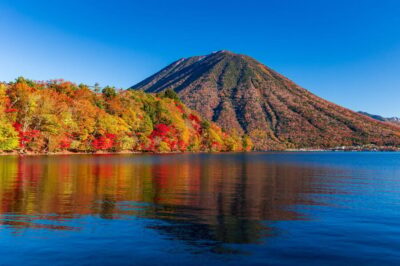
Nikko Toshogu Shrine and Kegon Waterfall Tour
Read our review →
Tokyo Panoramic 1 Day: Meiji Shrine, Asakusa, Odaiba and SKYTREE®
Read our review →
1-Day Snow Monkeys, Zenko-ji Temple & Sake in Nagano
Read our review →
Arashiyama Bamboo, Temple, Monkeys, or Secret Sake Brewery
Read our review →Browse the lists this tour appears in